LAKE COUNTY, Calif. – Pacific Gas and Electric said Sunday that it removed Lake and 12 other counties from the scope of its anticipated public safety power shutoff set to begin on Monday.
The shutoff originally was expected to impact 130,000 customers in portions of 15 counties, including 2,500 customers in the North Bay – among them 1,223 customers in Lake County.
That estimate was reduced to 92,000 in 16 counties on Saturday, at which point the number of Lake County customers was reduced to 24.
On Sunday, PG&E said it had further refined the shutoff to 8,500 customers in five counties – Fresno, Madera, Mariposa, Tuolumne and Tulare – and removed all of the North Bay customers.
PG&E said the reduced shutoff scope is due to substantial changes in terms of the severity and location of the strongest winds along with improved humidity.
Customers can look up their address online to find out if their location is being monitored for the potential safety shutoff, and find the full list of affected counties, cities and communities, at www.pge.com/pspsupdates.
Email Elizabeth Larson at This email address is being protected from spambots. You need JavaScript enabled to view it.. Follow her on Twitter, @ERLarson, or Lake County News, @LakeCoNews.
LAKEPORT, Calif. – The Board of Supervisors will discuss this week a proposal to continue the work of a committee tasked with finding financial assistance for local businesses, consider a new permanent remote work policy for county staff and get the update on the latest county crop report.
The meeting will begin at 9 a.m. Tuesday, Dec. 8.
The supervisors will meet in the board chambers on the first floor of the Lake County Courthouse, 255 N. Forbes St., Lakeport, for a hybrid meeting format which also will include the opportunity for community members to continue to participate virtually.
The meeting can be watched live on Channel 8, online at https://countyoflake.legistar.com/Calendar.aspx and on the county’s Facebook page. Accompanying board documents, the agenda and archived board meeting videos also are available at that link.
To participate in real-time, join the Zoom meeting by clicking this link at 9 a.m. The meeting ID is 928 6438 3312, password 563722.
To submit a written comment on any agenda item please visit https://countyoflake.legistar.com/Calendar.aspx and click on the eComment feature linked to the meeting date. If a comment is submitted after the meeting begins, it may not be read during the meeting but will become a part of the record.
In an untimed item, Supervisor Bruno Sabatier is asking the board to continue the CARES Act Committee to work on obtaining information and grant funds available for small businesses in order to help them survive.
“Grant funding has been recently made available in the sum of $500 million at the state level and potential new federal funds may be available in the near future as they continue to discuss new stimulus plans,” Sabatier wrote in his memo to the board. “This committee could be used to organize outreach to all businesses being impacted, advocate for federal and state, and initiate future programs such as the CARES funds that were just used to help support our businesses struggling through COVID-19 restrictions and economic impacts.”
In other untimed items, the board will discuss accepting a permanent policy for working remotely, which department heads have reported has had a positive impact on keeping positions filled, and consider appointing new Special Districts Administrator Scott Harter to the Blue Ribbon Committee member for the Rehabilitation of Clear Lake.
In a timed item set for 9:05 a.m., the board will get a presentation on the 2019 crop report.
The full agenda follows.
CONSENT AGENDA
5.1: Adopt resolution amending Resolution No. 2020-151 establishing salaries and benefits for management employees for the period from Nov. 1, 2020, to Oct. 31, 2021.
5.2: A) Adopt resolution of the Board of Supervisors of the county of Lake adopting an Amended conflict of interest code for the county of Lake agencies; B) adopt resolution of the Board of Supervisors of the county of Lake approving conflict of interest codes of certain local agencies located wholly within the county.
5.3: Adopt resolution approving the county of Lake application to the California Department of Housing and Community Development for Emergency Solutions Grant Program CARES Act funding and authorize the board chair to sign the resolution.
5.4: Approve the agreement between the county of Lake and Charis Youth Center for specialty mental health services for Fiscal Year 2020-21 for compensation of services provided during Fiscal Year 2019-20 in the amount of $30,136.85 and authorize the board chair to sign the agreement.
5.5: (a) Waive the formal bidding process, pursuant to Lake County Code Section 38.2, as it is not in the public interest due to the unique nature of goods or services; and (b) approve Amendment No. 1 to the agreement between county of Lake and Elijah House to increase total contract maximum to $376,834.73 for Fiscal Year 20-21 and authorize the board chair to sign the amendment.
5.6: Approve Amendment No. 1 to the agreement between the county of Lake and Mountain Valley Family and Child Services for specialty mental health services for Fiscal Year 2020-21 for service rate corrections and authorize the board chair to sign the amendment.
5.7: Adopt resolution authorizing the 2021-2022 Grant Project-Lake County Child Advocacy Center Program and authorize the chair to sign the certification and assurance of compliance.
5.8: (a) Adopt “Resolution Accepting Official Canvass of the General Election held on November 3, 2020 and Declaring County Supervisor Duly Elected”; and (b) accept the elections officials certification of the official canvass of the election results with the statement of votes as well as the certification of results of write-in votes cast for qualified candidates prepared by the Registrar of Voters Office.
5.9: Adopt resolution amending emergency operations plan for the county of Lake and the Lake County Operational Area.
5.10: Approve updated Community Corrections Partnership Plan.
5.11: Adopt resolution to authorize the Public Works director to execute Local Agency - State Cooperative Agreement No. 01-0388.
TIMED ITEMS
6.1, 9:01 a.m.: Public input.
6.2, 9:05 a.m.: 2019 crop report.
6.3, 9:30 a.m.: Consideration of cannabis ordinance revisions: A.) Processing in PDC, B.) Protection of important farmland, C.) Submission to Planning Commission to review increase of density in PDC.
6.4, 10:30 a.m.: Consideration of Proposition 64 final cannabis equity assessment.
6.5, 11 a.m.: Consideration of update on COVID-19.
UNTIMED ITEMS
7.2: Consideration to continue CARES Act Committee to work on obtaining information and grant funds available for small businesses.
7.3: Consideration of a permanent county of Lake policy for working remotely.
7.4: Consideration of appointment of Blue Ribbon Committee member for the Rehabilitation of Clear Lake for the purposes of discussion, reviewing research, planning and providing oversight regarding the health of Clear Lake.
CONSENT AGENDA
8.1: Conference with legal counsel: Significant exposure to litigation pursuant to Government Code section 54956.9(d)(2), (e)(3) – Claim of McQueen.
8.2: Conference with legal counsel: Decision whether to initiate litigation pursuant to Government Code section 54956.9 (d)(4) – One potential case.
8.3: Employee grievance complaint Pursuant to Gov. Code sec. 54957.
8.4: Public employee evaluations: County Counsel Anita Grant, Registrar of Voters Maria Valadez.
Email Elizabeth Larson at This email address is being protected from spambots. You need JavaScript enabled to view it.. Follow her on Twitter, @ERLarson, or Lake County News, @LakeCoNews.
LAKEPORT, Calif. – The Lakeport City Council is set to hold a special meeting to make appointments to a city commission and two committees.
The council will meet at 5:30 p.m. Monday, Dec. 7, and will continue the meeting at 5:30 p.m. Tuesday, Dec. 8, if more time for the interviews and discussion is needed.
The meeting will be by teleconference only. The city council chambers will not be open to the public.
To speak on an agenda item, access the meeting remotely here or join by phone by calling toll-free 669-900-9128 or 346-248-7799. The webinar ID is 944 7457 5790, access code is 235323; the audio pin will be shown after joining the webinar. Those phoning in without using the web link will be in “listen mode” only and will not be able to participate or comment.
Comments can be submitted by email to This email address is being protected from spambots. You need JavaScript enabled to view it.. To give the City Clerk adequate time to print out comments for consideration at the meeting, please submit written comments prior to 3 p.m. on Monday, Dec. 7.
Indicate in the email subject line "for public comment" and list the item number of the agenda item that is the topic of the comment. Comments that read to the council will be subject to the three minute time limitation (approximately 350 words). Written comments that are only to be provided to the council and not read at the meeting will be distributed to the council prior to the meeting.
On Monday night, the council will conduct interviews and consider three appointments to the Lakeport Planning Commission, four for the Lakeport Economic Development Advisory Committee and three for the Measure Z Advisory Committee.
Email Elizabeth Larson at This email address is being protected from spambots. You need JavaScript enabled to view it.. Follow her on Twitter, @ERLarson, or Lake County News, @LakeCoNews.
Many farmworkers who plant and harvest our food are forced to live and work under conditions that are ripe for transmission of COVID-19.
During the summer harvest season, coronavirus outbreaks popped up across the nation among farmworkers in agricultural communities, including many in California.
In a white paper published Dec. 2, public health researchers at the University of California, Berkeley, detail preliminary findings from the first long-term study on the prevalence of, and the risk factors for, COVID-19 infection among California’s agricultural laborers.
The paper reports that between mid-July and November 2020, 13 percent of the 1091 Salinas Valley farmworkers enrolled in the study tested positive for SARS-CoV-2, the virus that causes COVID-19.
In California as a whole, only 5 percent of the population has tested positive between the beginning of the pandemic and late November.
By the end of October, roughly 20 percent of farmworkers recruited for the study tested positive for antibodies to COVID-19, indicating prior infection. These figures are far higher than estimates of approximately 1 percent in the San Francisco Bay Area population at large from studies led by the Centers for Disease Control and by other UC Berkeley researchers during the spring and summer.
“These findings validate concerns from researchers, public health professionals and community advocates that farmworkers would suffer from the COVID-19 pandemic in California,” said Joseph Lewnard, assistant professor of epidemiology at UC Berkeley and a member of the study team. “We have failed to protect this population, while they have continued to engage in essential work through the pandemic.”
To conduct the study, UC Berkeley researchers partnered with the Clinica de Salud del Valle De Salinas, or CSVS, to recruit and test study participants. The CSVS is the main clinic network serving farmworkers and their families in Monterey County and has conducted testing throughout the pandemic, both at its clinics and through community outreach.
“Our study is an attempt to find answers about incidence and prevalence of this viral infection in the Hispanic farmworker community,” said Dr. Maximiliano Cuevas, CSVS chief executive officer. “Understanding the level of disease present in our community, and understanding how it spreads among these ‘essential workers,’ will provide guidance for developing policies that can be used to quickly reduce and reverse the spread of disease and ultimately protect our vital food supply for our nation.”
The research was a new collaboration within the UC Berkeley School of Public Health: Brenda Eskenazi, Professor of the Graduate School, and Ana Maria Mora, a researcher in the Center for Environmental Research and Children’s Health, have led longstanding studies of farmworkers in Salinas Valley and elsewhere in the world.
Lewnard has focused on respiratory and vaccine-preventable infections, and Eva Harris, a professor in the Division of Infectious Diseases and Vaccinology, leads serological studies of viruses, such as dengue and Zika.
COVID-19 in ‘America’s Salad Bowl’
California’s Salinas Valley, known as “America’s Salad Bowl,” is home to more than 50,000 farmworkers, many of whom are Mexican immigrants and undocumented.
Low wages and food insecurity make many fearful of missing work when they are sick, and fear of deportation may also deter them from seeking health care.
The community also faces higher rates of medical conditions like obesity, hypertension and diabetes that can make COVID-19 infections worse.
In early April, Eskenazi rapidly helped to organize a coalition of growers, county officials, farmworker advocates, doctors and scientists to protect farmworker health.
The coalition, the Monterey County Coalition of Agriculture, quickly helped to set COVID-19 safety guidelines for growers, distributed hundreds of thousands of face masks to workers and secured emergency housing for farmworkers needing to quarantine.
But, as epidemiologists, the study team members also wanted hard data to help guide the coalition’s efforts.
“We need numbers,” Eskenazi said. “And we don’t just need the positivity rate. We also need to know things like: What proportion of the community is living in crowded conditions? And is that related to having COVID-19? Or, what personal protective equipment is being provided to the farmworkers? And should they be provided more?”
Study participants include farmworkers who came to the CSVS clinic for testing, as well as those recruited through community outreach. A total of 140, or 13 percent, tested positive for COVID-19 using polymerase chain reaction testing. The positivity rate was 28 percent for symptomatic individuals and 8 percent for asymptomatic individuals.
Alarmingly, more than half or 58 percent, of individuals who were both symptomatic and infected said that they continued to go to work while sick.
“A big problem is that farmworkers were going to work symptomatic because they thought they'd lose their jobs, and they felt they needed to feed their families,” Eskenazi said. “A large portion of the farmworkers are food insecure, meaning they are going hungry during this pandemic, and these are the people that put food on our table.”
Most farmworkers who become sick with COVID-19 are entitled to replacement income and emergency housing, where they can safely quarantine.
However, some farmworkers also reported not receiving information about these resources from employers. And while a Monterey County Agricultural Advisory encourages growers to screen employees for symptoms, many study participants indicated that their employers did not have any such screening in place.
“It seems that employers are providing a lot of information about COVID-19 and are providing face coverings to farmworkers who don't have them,” Mora said. “But while the guidelines recommend that they perform temperature checks and ask for symptoms when people arrive to work, most employers are not doing that.”
Language barriers may also have prevented many farmworkers from taking advantage of these resources. Those who tested positive are more likely to speak Indigenous languages, rather than Spanish or English.
“I think we need a very strong media messaging campaign in multiple languages that reaches different groups within the farmworker community,” Mora said. “This campaign would have to include not only the resources available if you are infected, but also who can help you access those resources. For instance, it seems that the paperwork required to get replacement income is a headache. So, who can help you deal with that if you have a low level of education, or you don't have time?”
While the work of the growers and public health officials has gone a long way toward helping farmworkers weather the COVID-19 crisis, Eskenazi stresses the need for continued social and epidemiological interventions in these communities.
“We need rapid testing that gives immediate results, plus rapid contact tracing by people who are connected to and trusted by the farmworkers,” Eskenazi said. “We also need to provide immediate wraparound care, to let people know their benefits and to make sure that we help them get replacement income right away, because many are living paycheck to paycheck. As vaccination becomes available, it is imperative that we prioritize these farmworkers to safeguard their health and to secure our food supply."
The research team finished enrolling participants in the Salinas Valley at the end of November and hopes to expand the study to other agricultural regions of California.
The study was funded by the Innovative Genomics Institute at UC Berkeley and Clinica de Salud del Valle de Salinas.
Kara Manke writes for the UC Berkeley News Center.
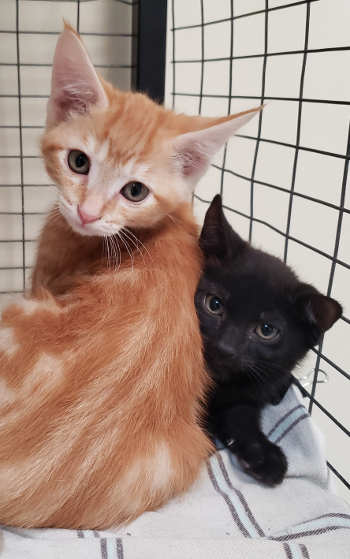
LAKE COUNTY, Calif. – Lake County Animal Care and Control has an adult cat and many kittens waiting for new homes.
The following cats at the shelter have been cleared for adoption.
Call Lake County Animal Care and Control at 707-263-0278 or visit the shelter online at http://www.co.lake.ca.us/Government/Directory/Animal_Care_And_Control.htm for information on visiting or adopting.
This male orange tabby kitten is in cat room kennel No. 1b, ID No. 14159. Photo courtesy of Lake County Animal Care and Control. Male orange tabby kitten
This male orange tabby kitten has a short coat and gold eyes.
He is in cat room kennel No. 1b, ID No. 14159.
This male brown tabby kitten is in cat room kennel No. 1c, ID No. 14160. Photo courtesy of Lake County Animal Care and Control. Male brown tabby kitten
This male brown tabby kitten has a short coat and gold eyes.
He is in cat room kennel No. 1c, ID No. 14160.
This female domestic short hair kitten is in cat room kennel No. 1f, ID No. 14163. Photo courtesy of Lake County Animal Care and Control. Female domestic short hair
This female domestic short hair kitten has a black coat and gold eyes.
She is in cat room kennel No. 1f, ID No. 14163.
This male brown tabby kitten is in cat room kennel No. 36b, ID No. 14190. Photo courtesy of Lake County Animal Care and Control. Male brown tabby kitten
This male brown tabby kitten has a short coat and gold eyes.
He is in cat room kennel No. 36b, ID No. 14190.
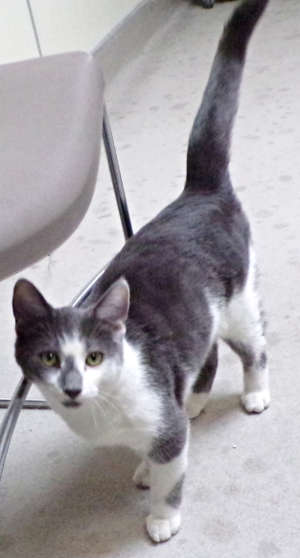
This male domestic short hair kitten is in cat room kennel No. 108, ID No. 14169. Photo courtesy of Lake County Animal Care and Control. Male domestic short hair kitten
This male domestic short hair kitten has a gray and white coat and green eyes.
He is in cat room kennel No. 108, ID No. 14169.
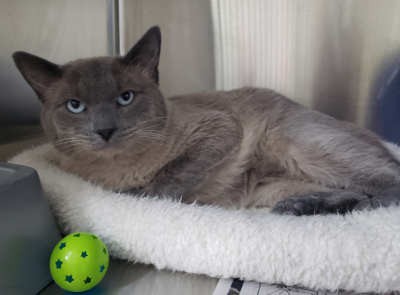
‘Loki is a female domestic short hair in cat room kennel No. 132, ID No. 14207. Photo courtesy of Lake County Animal Care and Control. ‘Loki’
“Loki” is a female domestic short hair with a seal point and gray coat and blue eyes.
She is in cat room kennel No. 132, ID No. 14207.
This female domestic short hair kitten is in cat room kennel No. 142, ID No. 14165. Photo courtesy of Lake County Animal Care and Control. Female domestic short hair kitten
This female domestic short hair kitten has a black and gray tabby coat and gold eyes.
She is in cat room kennel No. 142, ID No. 14165.
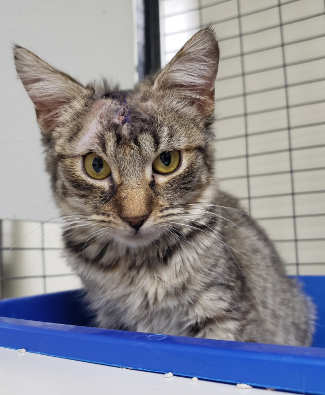
This female domestic short hair kitten is in cat room kennel No. 147, ID No. 14219. Photo courtesy of Lake County Animal Care and Control. Female domestic short hair kitten
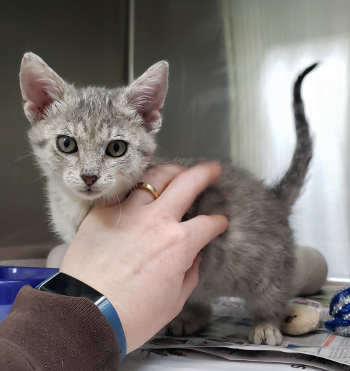
This female domestic short hair kitten has a gray tabby coat and green eyes.
She is in cat room kennel No. 147, ID No. 14219.
Email Elizabeth Larson at This email address is being protected from spambots. You need JavaScript enabled to view it.. Follow her on Twitter, @ERLarson, or Lake County News, @LakeCoNews.
LAKE COUNTY, Calif. – The Clearlake Police Department is investigating a fatal crash that occurred Saturday afternoon on Highway 53.
Sgt. Ryan Peterson said that at 1:50 p.m. Saturday, officers from the Clearlake Police Department responded to a report of a single-vehicle traffic collision that had occurred on Highway 53 near Olympic Drive.
When the officers arrived, they found an early 2000s Chrysler PT Cruiser had crashed into a tree with major damage, Peterson said.
Peterson said the officers located a single person at the scene – believed to have been the driver – who had been ejected from the vehicle during the crash.
Medical staff from the Lake County Fire Protection District arrived on scene and evaluated the male, who is believed to be in his 60s. Peterson said the man had significant injuries which he succumbed to at the scene, and he was pronounced dead by medical staff.
The identity of the driver is being withheld pending notification of next of kin, Peterson said.
Peterson said the preliminary indications of the traffic collision are that the driver was traveling northbound on Highway 53 and drifted off the roadway. After drifting off the road, the vehicle hit the tree causing significant vehicle damage and injuries to the male.
Radio reports at the time of the incident also reported that a small fire was started by the crash.
This case is pending further investigation and review for final determination and cause, Peterson said.
Peterson offered an additional reminder to drivers and pedestrians to be vigilant while on the roadways.
With the days being shorter and the weather changes, drivers are encouraged to be extra careful of their safety and that of others, he said.
Anyone with information in this case is encouraged to contact Officer Mauricio Barreto at 707-994-8251, Extension 507.
 How to resolve AdBlock issue?