 How to resolve AdBlock issue?
News
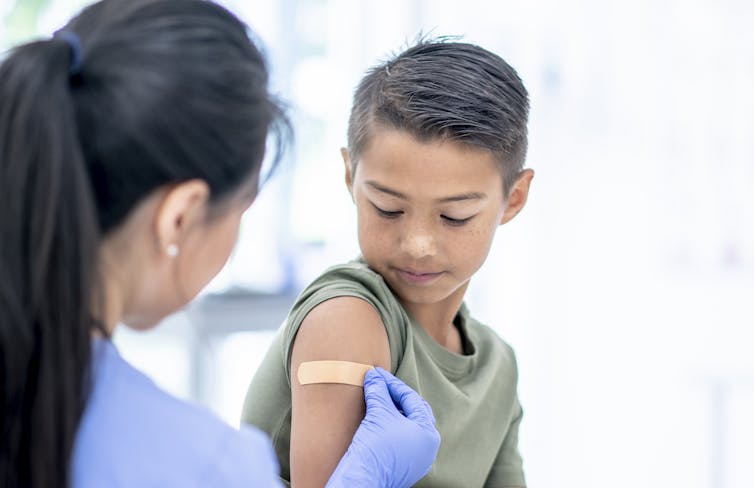
The first COVID-19 vaccine has been authorized for use in the U.S., and states have been drawing up plans for who should get vaccinated first.
But one important group is absent: children.
So far, the vaccine is allowed only for adults and older teens. Testing is only now getting started with children – and just with adolescents. There are still a lot of unknowns.
As an infectious disease pharmacist and professor who helps manage patients hospitalized with COVID-19, I frequently hear questions about vaccines. Here’s what we know and don’t know in response to some common questions about vaccinating kids for COVID-19.
When can my child be vaccinated?
Right now, it appears unlikely that a vaccine will be ready for children before the start of the next school year in August.
Adult trials of the two leading vaccines have had promising results. On Dec. 11, the U.S. Food and Drug Administration issued an emergency use authorization for Pfizer’s vaccine for people ages 16 and older, and a second vaccine, from Moderna, is expected to be cleared for adult use soon. Vaccinations are already underway in the U.K., and Canada has also authorized the vaccine’s use for the same age range.
But clinical trials involving children are only just getting started.
Pfizer, working with Germany’s BioNTech, expanded its COVID-19 vaccine testing to children ages 12 and older only in October. Moderna announced on Dec. 2 that it planned to begin COVID-19 vaccine trials in children ages 12-17 soon.
The vaccine’s efficacy and safety will have to be evaluated for each age group, and testing hasn’t started for infants, toddlers or kids in the U.S.
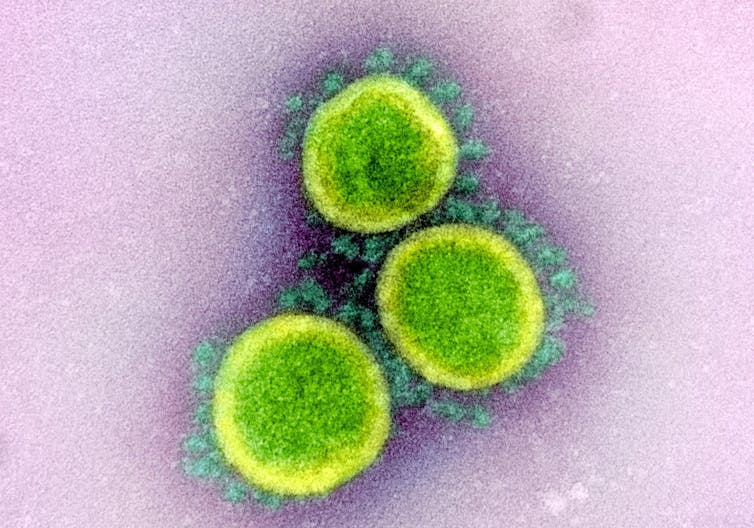
Clinical trials are designed to ensure that the vaccine is safe and effective. Typically, it takes 10 to 15 years from the start of development until the vaccine is licensed, but the COVID-19 vaccines are being developed faster in response to the pandemic.
Will children need more shots than adults?
It does not appear that the schedule of COVID-19 vaccine doses will be different for children, but that could change as testing goes on.
Pfizer’s vaccine is being tested in adolescents with a two-dose series, three weeks apart, just like in adults. Moderna also plans to use its adult schedule – two doses four weeks apart – in an upcoming trial with 3,000 adolescents.
The second dose serves as a “booster shot,” since the first dose alone doesn’t provide optimal immunity. This is consistent with several other vaccines, including hepatitis B, measles, mumps and rubella.
Right now, only those two doses are planned, but that could change. It’s unclear how long the immune response from these COVID-19 vaccines will last or if more doses will be necessary in the future. The flu vaccine, for example, requires a new dose every year because the virus changes. Recent promising data from Moderna indicate immunity is sustained for at least three months after receiving the COVID-19 vaccine.
Are the vaccines safe for kids?
So far, no serious safety concerns have been identified with either the Pfizer or Moderna vaccines, but the trials are still in the early stages for children. Several other vaccines are also under development around the world, and a few drugmakers have started trials with younger children in other countries.
Another concern has been temporary side effects.
Children tend to have stronger immune systems than adults, and they may have stronger temporary reactions to the vaccine. That could mean more pain and swelling at the injection site for a few days and possibly a fever.
These side effects are common with vaccines. They are evidence that the immune system is doing what it should be doing, but they can be scary.
In the U.K, health officials warned on Dec. 9 that anyone with a history of anaphylaxis shouldn’t get the vaccine after two adults, both with past experience with anaphylaxis, had severe reactions.
Both the safety of the vaccine and the likelihood of temporary side effects are important to understand, because adults and children will need both doses for the vaccine to provide optimal immunity.
Is vaccinating adults enough?
Just vaccinating adults would not be enough to end the pandemic. Children can still become infected, transmit the virus and develop complications. If a vaccine is not available, children will likely serve as a reservoir of the virus, making it harder to end the pandemic.
Both leading vaccines have reported promising results in adults so far: The efficacy rate is approximately 94% for Moderna’s vaccine and 95% for Pfizer’s. That means that under the best conditions, about 95% percent of adults who get the vaccine have been found to be protected. That’s higher than expected.
[Get the best of The Conversation, every weekend. Sign up for our weekly newsletter.]
Whether the same holds for children remains to be seen.
Children typically have milder COVID-19 symptoms than adults, but they can still transmit the virus to others.
Receiving the vaccine also carries other benefits, including allowing a safer return to schools and activities.
Do we have to keep wearing masks and social distancing?
In the meantime, it will be important to continue standard preventive measures, including social distancing, wearing face masks, washing hands and following other official guidance.
While the hope is that a vaccine will allow people to get back to a more “normal” way of living, these preventive measures will still be needed, even after receiving the vaccine, until more information is known about the extent of protection from the vaccine.
There are still many unanswered questions. As time goes on, we’ll have more answers.
This article was updated with the FDA issuing the emergency use authorization on Dec. 11.
Wesley Kufel, Clinical Assistant Professor, Pharmacy Practice, Binghamton University, State University of New York
This article is republished from The Conversation under a Creative Commons license. Read the original article.
The Burned Area Emergency Response, or BAER, team has identified 30 miles of road work that needs to be done around the Thomes drainage on the Grindstone Ranger District of the Mendocino National Forest.
To date, more than 30 miles of roads have been repaired across the August Complex fire area, forest officials said.
Road 24N01 will be temporarily closed to traffic to replace a culvert as part of this necessary road work. The crew will reopen the road as quickly as possible. In addition, please use extra caution driving around the M2 and M4 roads west of Paskenta due to ongoing road repair and the presence of logging trucks.
“We are very appreciative of the crews that have come from other regions and forests to assist us with BAER work on the August Complex,” said Loren Everest, acting Grindstone District Ranger. “They have accomplished an incredible amount of work and we are grateful for their contribution to this massive restoration effort.”
Equipment operators and assistants have come from all over the county to help the Mendocino National Forest including Wisconsin, Colorado, Idaho, Wyoming and Nevada.
The BAER work will continue as long as the weather cooperates and staffing is available.
The following cats at the shelter have been cleared for adoption.
Call Lake County Animal Care and Control at 707-263-0278 or visit the shelter online at http://www.co.lake.ca.us/Government/Directory/Animal_Care_And_Control.htm for information on visiting or adopting.
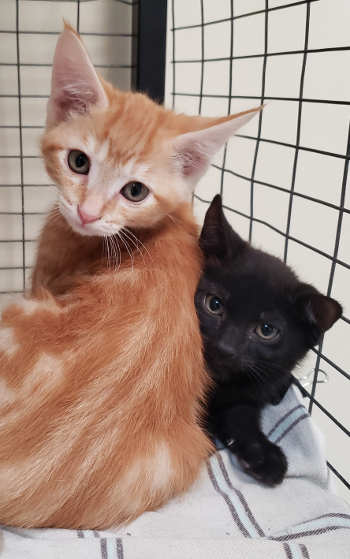
Male orange tabby kitten
This male orange tabby kitten has a short coat and gold eyes.
He is in cat room kennel No. 1b, ID No. 14159.

Male brown tabby kitten
This male brown tabby kitten has a short coat and gold eyes.
He is in cat room kennel No. 1c, ID No. 14160.
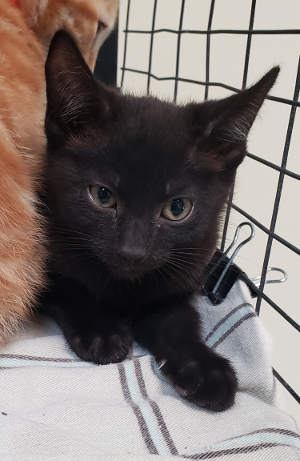
Female domestic short hair
This female domestic short hair kitten has a black coat and gold eyes.
She is in cat room kennel No. 1f, ID No. 14163.

Male brown tabby kitten
This male brown tabby kitten has a short coat and gold eyes.
He is in cat room kennel No. 36b, ID No. 14190.
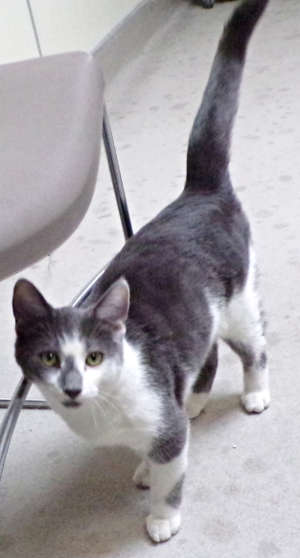
Male domestic short hair kitten
This male domestic short hair kitten has a gray and white coat and green eyes.
He is in cat room kennel No. 108, ID No. 14169.

Female domestic short hair kitten
This female domestic short hair kitten has a tortie coat and gold eyes.
She is in cat room kennel No. 135, ID No. 14224.
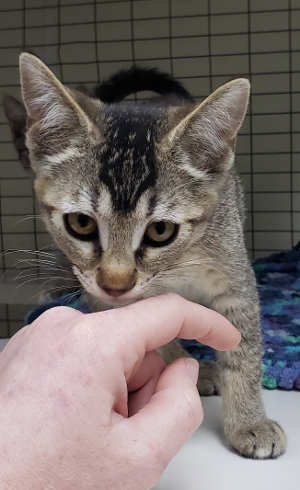
Female domestic short hair kitten
This female domestic short hair kitten has a brown tabby coat and gold eyes.
She is in cat room kennel No. 135, ID No. 14225.

Female domestic short hair kitten
This female domestic short hair kitten has a brown tabby coat and gold eyes.
She is in cat room kennel No. 135, ID No. 14226.
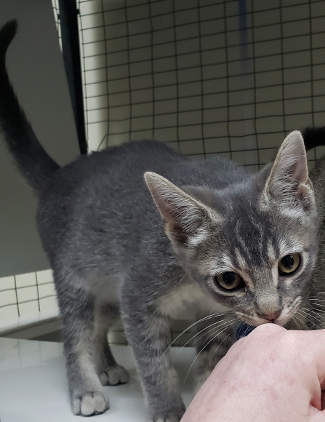
Male domestic short hair kitten
This male domestic short hair kitten has a gray tabby coat and gold eyes.
He is in cat room kennel No. 135, ID No. 14227.
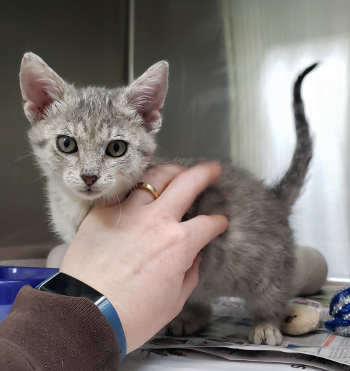
Female domestic short hair kitten
This female domestic short hair kitten has a gray tabby coat and green eyes.
She is in cat room kennel No. 147, ID No. 14219.
Email Elizabeth Larson at
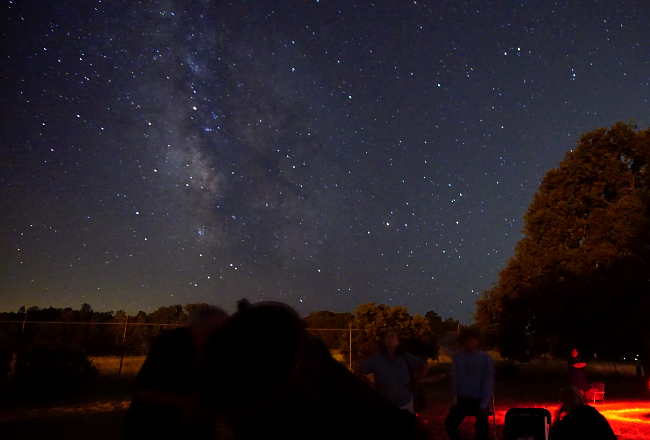
LAKE COUNTY, Calif. – These crisp, cold winter nights got me thinking about how we as a species evolved beneath a dome of stars.
Before we were subject to human-made light, the long winter nights were ripe with storytelling and stargazing.
Nearly every culture has stories depicting the constellations, moons and planets. For example, Cree Indians called December's full moon “Drift Clearing Moon,” the Western Abenaki named it “Winter Maker Moon” and the Mohicans said it was “Long Night Moon” since it arrived at the winter solstice – the longest night of the year.
Here in Lake County we are blessed with inky-dark skies throughout most of our hills and valleys which makes observing the celestial phenomena well, phenomenal. Poet Rainer Maria Rilke said it best: “It is breathtaking simply to be here.”
Some stars appear to glisten and glitter, but in reality the cold air that is our lens to the universe causes the quivering we detect.
After our star, the sunsets we play witness to a trillion other stars in our spiral-shaped Milky Way Galaxy. Then we are spectators to shimmering, shining stars with a range of sizes, temperatures and brilliance.
Following is an interview I conducted with William “Bill” Haddon, Ph.D., president and CEO of our local Taylor Observatory.
Due to the pandemic, the observatory's in-person events and field trips have been canceled, but Bill tells some remarkable, or should I say, out of this world astronomical tales.
1.You've enjoyed a long history at Taylor. How did you become involved in our observatory?
At the age of 5, while growing up in Denver, Colorado, my dad dragged me into our backyard at three in the morning to watch Perseid meteors. I don’t recall seeing meteors, and I hated the experience. But the idea of viewing interesting objects in the sky was placed in my brain.
In my room, there were glowing stars affixed on the ceiling. But what I recall most vividly was my mother’s description of her own activities involving comet Halley during its 1910 visit. She never actually talked about seeing the comet but instead that she and her three older siblings were ordered to stuff wet rags under the doors and windows at night to prevent poisoning by the cyanide gas that astronomers had identified in the comet’s tail.
My mother had always said she was born in 1907 and for years I wondered how she could have such a vivid memory of events at age 3. The truth is that when mom was 25 she enrolled in a class in Denver with an age limit of 20. So she listed her age as 20 and no one questioned it. She was born in the territory of New Mexico in 1902, and there were few official records. Thus she retired from Bank of America five years after their mandatory retirement!
The children were raised by their grandmother, Dada, in Denver. Dada was a professional clairvoyant and an astrologer. We found out the truth when mom admitted, in her 80s, the discrepancy in her age. I’ve had a life-long interest in comets as a result.
When Barbara and I moved to Lake County in 2008 I wanted to start an astronomy hobby. We quickly discovered Lake County’s wonderful Taylor Observatory-Norton Planetarium and Barbara McIntyre’s informative monthly programs there. Pretty quickly I was attending Friends of Taylor (FOTO) board meetings, not realizing that Walt Lyon was ready to pass the leadership baton. My arm got twisted.
We have an especially talented, resourceful and active group in FOTO. Tim Gill, assistant superintendent of Kelseyville Unified School District, is a math teacher with an astronomy interest that has led to seven lectures at Taylor. Because the Kelseyville school district owns the land under Taylor, Tim’s membership has special importance. The Honorable Judge David Markham is our treasurer/CFO.
Barbara McIntyre serves a secretary of FOTO, but most importantly she designed and now operates our website, www.friendsoftaylor.org. The site includes a capability to receive donations and Taylor memberships via the web.
Dr. David Velasquez, former head of the Lake County Symphony and its current vice president is our one member with a formal astronomy education. Dave has a degree in astronomy and physics from the University of New Mexico.
We have a local artist on our board, Emily Whittlesey of Kelseyville, in recognition of the historic relationship between art and astronomy. Six years ago, Mr. Tom Shleif appeared. As a former director of the Southbridge Lighthouse Museum in Kenosha, Wisconsin, and a professional exhibit designer at the famous Field Museum in Chicago, Tom is an optimal board member. And if that was not sufficient, Tom has become a first-rate astrophotographer with a developing national reputation in that difficult field.
Finally, our favorite board member is Mr. Eduardo Alatorre. Eduardo was an observatory assistant in a student volunteer program run by Barbara McIntyre. He’s lectured regionally and locally, including many talks given at Taylor on Solar System topics. Currently, Eduardo is a Mendocino College math major, and also serves as an official LCOE Taylor docent.
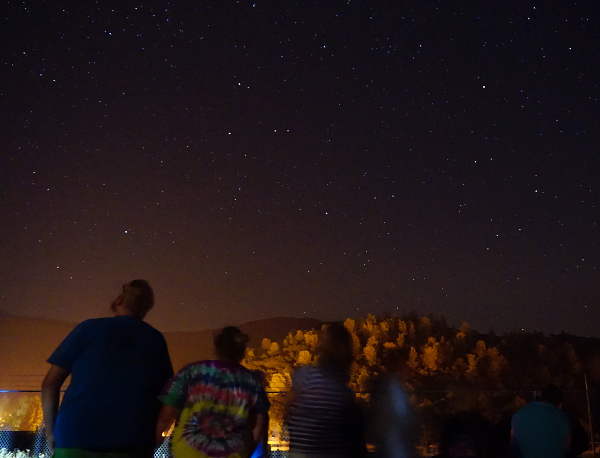
2. Since the observatory is linked with the Lake County Office of Education, are there distance learning programs in place, or are the wonderful STEM projects going to resume later, when schools are open for in-person learning?
LCOE owns the Taylor buildings. Two years ago, with encouragement and support from County Education Superintendent Brock Falkenberg two staff positions were created to oversee and operate Taylor. Elisa Prather, LCOE’s STEM specialist, manages Taylor along with Mr. Angelo Parisi, the resident astronomer.
Angelo was one of two extremely well-qualified applicants for the position. He is a co-founder of Ferguson Observatory, our sister observatory in Kenwood, Sonoma County. Notably, his vocal group the “Big Bang Band Travelling Star Show” won the Astronomical Society of the Pacific’s coveted Los Cumbres award for educational outreach.
Angelo is a great teacher with a love of astronomy. For distance learning, he’s formed an Astronomy Club, which is described on the LCOE website. Weekly online learning sessions are conducted in which students are challenged with interesting astronomy problems.
3. Looking back, astronomically, what would you consider to be the most exciting event of 2020?
Without question it is the appearance of comet Neowise, officially “C/2020 F3 NEOWISE,” in March 2020. While not a “great” comet like 1P Halley or comet Hale-Bopp (1996), Neowise was visible, naked eye, in the northern sky during the summer. It was a circumpolar comet, first seen in the early morning NE sky, and later in the early evening in the NW. In history comets have been seen as portents of disaster, including the Black Plague. Surprisingly I’ve not seen any suggestion that comet Neowise predicted the COVID-19 pandemic.
Lake County residents who are interested in astronomy might want to monitor our Facebook page “Friends of Taylor Observatory” for updates on important astronomy events. For example on Dec. 21, four days before Christmas, the planets Jupiter and Saturn will nearly coalesce in the sky, perhaps reminding us that such a planetary conjunction is a leading theory to explain the Star of Bethlehem.
We are hoping that our popular planetarium show “Mystery of the Christmas Star” can be shown over the internet. Keep your eye on the Facebook page for developments. But in any case, cast your eyes to the west in the days around Dec. 21 to see these two planets, and judge for yourself if such a conjunction guided the Magi to Bethlehem.
4. My family has resided where impressive observatories are located, in Hawaii and the Canary Islands where there are Dark Sky Initiatives. Lake County's skies are one of its many great features. What can you tell us about the exciting Dark Skies Initiative here in our county?
We have two goals for the Dark Sky Initiative: First, to preserve dark skies for future generations of Lake County students. Second, to promote an Astro-tourism Industry for Lake County, encouraging the eight million residents of the Bay Area, Sacramento Sonoma and Napa Counties, where light interference is severe, to visit here. Because an overnight trip is required, lodging, restaurant, wineries and other businesses will benefit.
In November 2018 then-Supervisor Jim Steele successfully introduced a Lake County Board of Supervisors resolution to establish Dark Skies as the official policy of the county. There have already been positive outcomes of Jim’s efforts. FOTO board member David Velasquez has played an especially important role. Cal-Pine has been receptive to improving the lighting at their facility to minimize vertical light pollution.
We encourage Lake County residents to join our Facebook page “Dark Skies – Lake County CA” as part of a long term effort to build a case for certifying all or part of Lake County as an official “Dark Sky Community.”
The Redbud Audubon Society partners with FOTO in the dark sky effort. Much work remains. A Dark Sky Initiative group needs to be formed to promote sustained dark skies and the astrotourism industry. New lighting regulations are needed, as are a collection of locations where visitors can safely view the night sky. Taylor Observatory and the Clear Lake State Park are two obvious viewing choices.
In partnership with LCOE, FOTO had started weekend openings at Taylor prior to COVID-19 restrictions. Additionally, Angelo Parisi, runs a Dark Sky company in the county to accommodate small groups of visitors who want an in-depth viewing experience. These activities will resume at some point.
Bill, thank you and your team at Taylor for all you do.
Kathleen Scavone, M.A., is a retired educator, potter, freelance writer and author of “Anderson Marsh State Historic Park: A Walking History, Prehistory, Flora, and Fauna Tour of a California State Park” and “Native Americans of Lake County.”
The show runs Dec. 18, 19, 20 and 24 at 7:30 p.m. on YouTube. You’ll want to tune in at 7:00 to view the pre-show interviews.
The show is billed as a virtual journey of self-discovery and growth as Scrooge, tight-fisted and mean as ever, creates a life of hardship for his loyal employee, Bob Cratchit and his family. It takes the ghost of his old business partner, Jacob Marley, and three Christmas spirits to try to save his “rotten soul.”
The audience gets a glimpse into Scrooge’s past and into his soul via a series of virtual Zoom calls. The end result is a family-friendly take on a Christmas classic.
The show is narrated by Charles Dickens, played by KPFZ radio host Alan Fletcher. Local teacher, James Paton, plays Scrooge.
The cast is composed of mostly LCTC veteran adult and child actors with a few new faces. While the company is always excited when they can draw new actors to their shows, the virtual aspect meant they were able to cast actors with whom they would not normally get to work such as Ashley Ann Pearse of Eastern Washington, who plays the love of Scrooge’s life, and Natalie Ferrell of San Francisco.
This production will be recorded and played over YouTube. The decision to record the show was made early on. The sentiment going in was that this was new territory and that in order to produce a quality show in just under two and a half months and in a new medium, the company really needed to control as many variables as possible the first time out. They plan to switch to live performances once the learning curve is over.
If you would like to watch the performance you can purchase tickets in advance at www.LCTC.us.Tickets are only $5 per household. The link to the YouTube Channel will be emailed to you the day before the performance selected.
Be sure to check the company’s website in December for food and beverage recipes to make ahead of time to enhance your viewing experience.
Dogs available for adoption this week include mixes of Australian Cattle Dog, border collie, Dalmatian, Great Pyrenees husky, Labrador Retriever, pit bull and heeler.
Dogs that are adopted from Lake County Animal Care and Control are either neutered or spayed, microchipped and, if old enough, given a rabies shot and county license before being released to their new owner. License fees do not apply to residents of the cities of Lakeport or Clearlake.
The following dogs at the Lake County Animal Care and Control shelter have been cleared for adoption (additional dogs on the animal control Web site not listed are still “on hold”).
Call Lake County Animal Care and Control at 707-263-0278 or visit the shelter online at http://www.co.lake.ca.us/Government/Directory/Animal_Care_And_Control.htm for information on visiting or adopting.

Male pit bull mix
This male pit bull mix has a short gray and white coat.
He is in kennel No. 15, ID No. 14196.

Pit bull-Australian Cattle Dog
This male pit bull-Australian Cattle Dog mix has a short tricolor coat.
He is in kennel No. 16, ID No. 14197.

Male pit bull mix
This male pit bull terrier mix has a short gray and brindle coat.
He is in kennel No. 18, ID No. 14138.
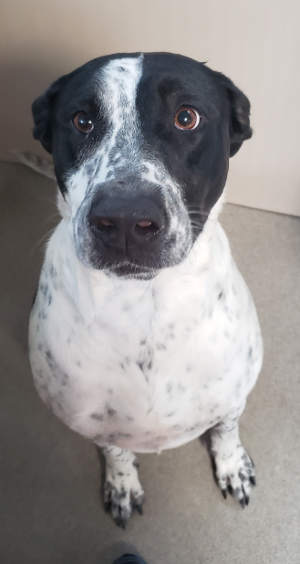
‘Opal’
“Opal” is a female Dalmatian-pit bull mix with a short white coat with black markings.
She has been spayed.
She’s in kennel No. 19, ID No. 14213.
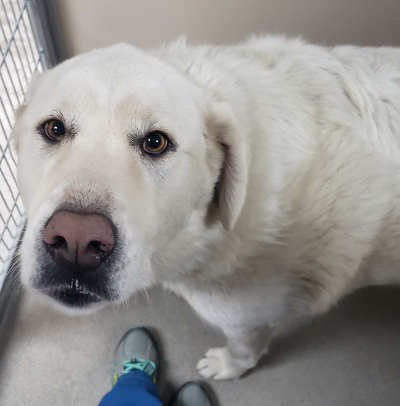
Female Great Pyrenees
This female Great Pyrenees has a medium-length white coat.
She is in kennel No. 20, ID No. 14231.

Male husky mix
This male husky mix has a long red and white coat.
He is in kennel No. 21, ID No. 14230.

Female pit bull
This female pit bull has a short brown coat.
She has been spayed.
She’s in kennel No. 24, ID No. 14217.
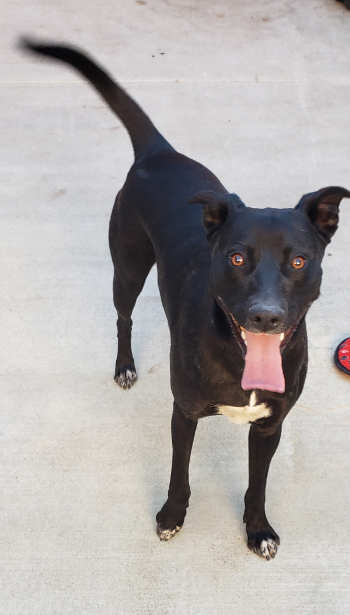
‘Mable’
“Mable” is a young female Labrador Retriever-border collie mix with a short black and white coat.
She is in kennel No. 26, ID No. 14206.

Male pit bull terrier
This male pit bull terrier has a short tan and white coat.
He has been neutered.
He’s in kennel No. 27, ID No. 14216.
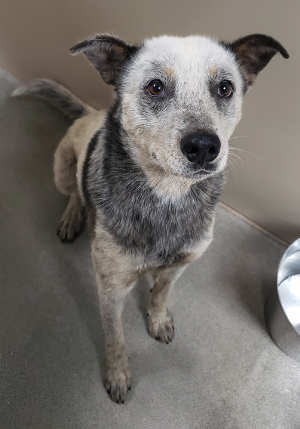
Male heeler-Labrador Retriever
This male heeler-Labrador Retriever mix has a short black and white coat.
He is in kennel No. 29, ID No. 14178.

Male pit bull terrier
This male pit bull terrier has a short brindle and brown coat.
He is in kennel No. 33, ID No. 14218.
Email Elizabeth Larson at