 How to resolve AdBlock issue?
News
LAKE COUNTY, Calif. – The Lakeport City Council held a special meeting over the course of two evenings this week to appoint 10 community members to fill seats on two city committees and the Lakeport Planning Commission.
On Monday night, the council interviewed and appointed the new planning commissioners and continued the meeting on Tuesday evening when it selected members for the Lakeport Economic Development Advisory Committee and the Measure Z Advisory Committee.
Lakeport Planning commissioners Michael Froio and Michael Green were elected to the city council in the November election, leaving their two seats vacant, with the term of a third seat, currently held by Ken Wicks Jr., up on Dec. 31.
The commission reviews planning and development matters and advises the city council on land use issues. The commission currently meets monthly on the second Wednesday at 5:30 p.m.
Applicants for the three seats were David Brown, Scott Barnett, Kurt Combs, Kipp Knorr, Nathan Maxman and Derek Pool.
On Monday night, following virtual interviews with applicants, the council appointed Barnett and Combs to four-year terms. Maxman, who ran for city council and narrowly lost out on winning a seat, was appointed to fill the remaining two years on Froio’s term, said City Clerk/Administrative Services Director Kelly Buendia.
Barnett, Combs and Maxman will join a commission that also includes Mark Mitchell and Jeff Warrenburg, whose terms run through the end of December 2022.
Froio, Green and Wicks took part in their last planning commission meeting in their capacity as commissioners on Wednesday night. The new members will be seated at the commission’s Jan. 13 meeting.
On Tuesday night, the council discussed the Lakeport Economic Development Advisory Committee, or LEDAC, and the Measure Z Advisory Committee, or MZAC, Buendia said.
LEDAC, which has 11 members, meets bimonthly. It advocates for a strong business community and works with the city and community on the city’s economic and business goals and activities, including business recruitment and retention, recommendations for the implementation of the city’s economic development strategic plan, and coordinating and reporting on the annual business walk.
Membership is open to anyone who lives, works, shops or does business in the city of Lakeport, including those who live in the unincorporated Lakeport trade area.
Applicants included Denise Combs, Bonnie Darling, Bill Eaton, Mary Phillips, Alicia Russell, Wilda Shock and Gene Yoon. Combs, Eaton and Shock currently serve on LEDAC.
Buendia said the council appointed Shock, Darling, Combs and Russell, and gave staff direction to appoint Eaton as an ex-officio research committee chair.
The new appointees will join Pam Harpster, Andy Lucas and Laura Sammel, whose terms expire at the end of December 2021.
In November 2016, city voters approved the 1-percent Measure Z transactions and use tax, which requires independent audits and citizens’ oversight.
As a result, MZAC was formed to review all revenues and expenditures of the tax revenue. It also makes recommendations to the city council on expenditures for tax proceeds.
MZAC’s five members serve four-year terms and the committee meets quarterly. Membership is open to residents of the city.
Applicants included Meg Harper and Zack Jordan, and incumbent Dennis Rollins.
The council appointed all three to the three open seats, Buendia said.
They will join Susan King and Verna Schaffer, whose terms run through the end of December 2022.
Email Elizabeth Larson atThis email address is being protected from spambots. You need JavaScript enabled to view it. . Follow her on Twitter, @ERLarson, or Lake County News, @LakeCoNews.
On Monday night, the council interviewed and appointed the new planning commissioners and continued the meeting on Tuesday evening when it selected members for the Lakeport Economic Development Advisory Committee and the Measure Z Advisory Committee.
Lakeport Planning commissioners Michael Froio and Michael Green were elected to the city council in the November election, leaving their two seats vacant, with the term of a third seat, currently held by Ken Wicks Jr., up on Dec. 31.
The commission reviews planning and development matters and advises the city council on land use issues. The commission currently meets monthly on the second Wednesday at 5:30 p.m.
Applicants for the three seats were David Brown, Scott Barnett, Kurt Combs, Kipp Knorr, Nathan Maxman and Derek Pool.
On Monday night, following virtual interviews with applicants, the council appointed Barnett and Combs to four-year terms. Maxman, who ran for city council and narrowly lost out on winning a seat, was appointed to fill the remaining two years on Froio’s term, said City Clerk/Administrative Services Director Kelly Buendia.
Barnett, Combs and Maxman will join a commission that also includes Mark Mitchell and Jeff Warrenburg, whose terms run through the end of December 2022.
Froio, Green and Wicks took part in their last planning commission meeting in their capacity as commissioners on Wednesday night. The new members will be seated at the commission’s Jan. 13 meeting.
On Tuesday night, the council discussed the Lakeport Economic Development Advisory Committee, or LEDAC, and the Measure Z Advisory Committee, or MZAC, Buendia said.
LEDAC, which has 11 members, meets bimonthly. It advocates for a strong business community and works with the city and community on the city’s economic and business goals and activities, including business recruitment and retention, recommendations for the implementation of the city’s economic development strategic plan, and coordinating and reporting on the annual business walk.
Membership is open to anyone who lives, works, shops or does business in the city of Lakeport, including those who live in the unincorporated Lakeport trade area.
Applicants included Denise Combs, Bonnie Darling, Bill Eaton, Mary Phillips, Alicia Russell, Wilda Shock and Gene Yoon. Combs, Eaton and Shock currently serve on LEDAC.
Buendia said the council appointed Shock, Darling, Combs and Russell, and gave staff direction to appoint Eaton as an ex-officio research committee chair.
The new appointees will join Pam Harpster, Andy Lucas and Laura Sammel, whose terms expire at the end of December 2021.
In November 2016, city voters approved the 1-percent Measure Z transactions and use tax, which requires independent audits and citizens’ oversight.
As a result, MZAC was formed to review all revenues and expenditures of the tax revenue. It also makes recommendations to the city council on expenditures for tax proceeds.
MZAC’s five members serve four-year terms and the committee meets quarterly. Membership is open to residents of the city.
Applicants included Meg Harper and Zack Jordan, and incumbent Dennis Rollins.
The council appointed all three to the three open seats, Buendia said.
They will join Susan King and Verna Schaffer, whose terms run through the end of December 2022.
Email Elizabeth Larson at
KELSEYVILLE, Calif. – The Kelseyville Food Pantry is planning to expand its long-running services to the community in the new year.
Since 2012, the Kelseyville Food Pantry – a collaboration of the Presbyterian, United Methodist, and Unitarian Universalist churches in Kelseyville – has been feeding the hungry not just in Kelseyville but all of Lake County twice a month.
The food pantry offered its thanks to the Hunger Task Force of Lake County and to Sutter Lakeside Hospital for their very generous donations.
Thanks to the generosity of these two organizations, beginning on Jan. 15, the Kelseyville Food Pantry will begin offering an additional pantry to supply guests with a bag of canned items.
The distribution will be from 11 a.m. until 1 p.m. on the third Friday of each month.
The food pantry’s monthly giveaways – which include nonperishable items as well as fresh produce, eggs and bread – will continue on the second and fourth Tuesdays from 3:30 to 5:30 p.m., all at the Kelseyville Presbyterian Church, located at 5340 Third St., behind WestAmerica Bank.
Everyone is welcome; the food pantry’s only criteria is that you are hungry and that you share what you cannot use.
“Our sincere thanks to the Lake County community that has sustained and supported us over the past eight years. Your generous spirit has helped us maintain our goal to feed the hungry, and as that need continues to grow during these uncertain times, we appreciate you even more!” pantry organizers said.
If you would like to become a volunteer, the food pantry can use people to shop for canned items and be reimbursed. They can also use a few more socially-distanced hands to help on pantry day to fill the bags.
For more information please call Julie Berry at the Kelseyville Presbyterian Church office at 707-279-1104 or email her atThis email address is being protected from spambots. You need JavaScript enabled to view it. .
Since 2012, the Kelseyville Food Pantry – a collaboration of the Presbyterian, United Methodist, and Unitarian Universalist churches in Kelseyville – has been feeding the hungry not just in Kelseyville but all of Lake County twice a month.
The food pantry offered its thanks to the Hunger Task Force of Lake County and to Sutter Lakeside Hospital for their very generous donations.
Thanks to the generosity of these two organizations, beginning on Jan. 15, the Kelseyville Food Pantry will begin offering an additional pantry to supply guests with a bag of canned items.
The distribution will be from 11 a.m. until 1 p.m. on the third Friday of each month.
The food pantry’s monthly giveaways – which include nonperishable items as well as fresh produce, eggs and bread – will continue on the second and fourth Tuesdays from 3:30 to 5:30 p.m., all at the Kelseyville Presbyterian Church, located at 5340 Third St., behind WestAmerica Bank.
Everyone is welcome; the food pantry’s only criteria is that you are hungry and that you share what you cannot use.
“Our sincere thanks to the Lake County community that has sustained and supported us over the past eight years. Your generous spirit has helped us maintain our goal to feed the hungry, and as that need continues to grow during these uncertain times, we appreciate you even more!” pantry organizers said.
If you would like to become a volunteer, the food pantry can use people to shop for canned items and be reimbursed. They can also use a few more socially-distanced hands to help on pantry day to fill the bags.
For more information please call Julie Berry at the Kelseyville Presbyterian Church office at 707-279-1104 or email her at
The California Department of Fish and Wildlife is directing approximately $550,000 in grant funding to 45 nonprofit wildlife rehabilitation organizations to immediately support care for injured, sick and orphaned wildlife.
The funds are made available from taxpayer contributions to the Native California Wildlife Rehabilitation Voluntary Tax Contribution Fund.
“California’s injured, sick and orphaned native wildlife need our help now more than ever,” said CDFW Director Charlton H. Bonham. “We are proud to quickly make funds available to help these important partner organizations operate during difficult economic times.”
In 2017, Assemblymember Marie Waldron’s Assembly Bill 1031 created the Native California Wildlife Rehabilitation Voluntary Tax Contribution Fund on the state’s income tax form, and thanks to taxpayers’ generosity, more than $820,000 has been donated as of October 2020.
“I am so pleased these organizations will receive the funding they desperately deserve,” Waldron said. “Without them, California’s wildlife would suffer, which would mean we all suffer. I’m honored to have played a role in conserving California’s abundant natural beauty.”
In 2019, these 45 organizations collectively cared for nearly 112,000 orphaned or injured wild animals, including bats, opossums, skunks, raptors, reptiles, foxes, songbirds, fawns, sea birds, coyotes, bears and many other native species.
CDFW acted swiftly to stand up the new competitive grant program to support and advance the recovery and rehabilitation of injured, sick or orphaned wildlife and conservation education. Funds may be used to support activities such as operations and ongoing facility needs, innovation in animal care (e.g., wildlife rehabilitation techniques, enclosure designs, diet and behavioral enrichment), post-release monitoring and conservation education for the public.
“The California wildlife rehabilitation community is incredibly grateful for this much-needed support,” said Rachel Avilla, president of the California Council for Wildlife Rehabilitators Board of Directors. “While 2020 has certainly taken its toll on many small organizations, our commitment to helping wildlife remains strong as injured and orphaned animals continue to need our help daily. We want to thank Assemblymember Waldron and her team for pushing this landmark legislation through and CDFW for being an excellent ally. We are profoundly grateful for their continued collaboration and support to help care for California’s precious wildlife.”
Consistent with the legislation, eligible organizations were required to document their status as a nonprofit organization that operates a permitted wildlife rehabilitation facility, complies with all conditions of its Wildlife Rehabilitation Memorandum of Understanding, and maintains active participation in the Wildlife Rehabilitation Medical Database.
A full list of wildlife rehabilitation organizations, both nonprofit and for-profit entities, can be found at https://wildlife.ca.gov/conservation/laboratories/wildlife-investigations/rehab/facilities.
In Lake County, organizations that offer wildlife rehabilitation are as follows:
– Clearlake Wildlife Rescue, Clearlake, telephone 707-350-3337;
– Clearlake Veterinary Clinic, Clearlake, 707-994-9100;
– Wasson Memorial Veterinary Clinic, Lakeport, 707-263-5380.
The funds are made available from taxpayer contributions to the Native California Wildlife Rehabilitation Voluntary Tax Contribution Fund.
“California’s injured, sick and orphaned native wildlife need our help now more than ever,” said CDFW Director Charlton H. Bonham. “We are proud to quickly make funds available to help these important partner organizations operate during difficult economic times.”
In 2017, Assemblymember Marie Waldron’s Assembly Bill 1031 created the Native California Wildlife Rehabilitation Voluntary Tax Contribution Fund on the state’s income tax form, and thanks to taxpayers’ generosity, more than $820,000 has been donated as of October 2020.
“I am so pleased these organizations will receive the funding they desperately deserve,” Waldron said. “Without them, California’s wildlife would suffer, which would mean we all suffer. I’m honored to have played a role in conserving California’s abundant natural beauty.”
In 2019, these 45 organizations collectively cared for nearly 112,000 orphaned or injured wild animals, including bats, opossums, skunks, raptors, reptiles, foxes, songbirds, fawns, sea birds, coyotes, bears and many other native species.
CDFW acted swiftly to stand up the new competitive grant program to support and advance the recovery and rehabilitation of injured, sick or orphaned wildlife and conservation education. Funds may be used to support activities such as operations and ongoing facility needs, innovation in animal care (e.g., wildlife rehabilitation techniques, enclosure designs, diet and behavioral enrichment), post-release monitoring and conservation education for the public.
“The California wildlife rehabilitation community is incredibly grateful for this much-needed support,” said Rachel Avilla, president of the California Council for Wildlife Rehabilitators Board of Directors. “While 2020 has certainly taken its toll on many small organizations, our commitment to helping wildlife remains strong as injured and orphaned animals continue to need our help daily. We want to thank Assemblymember Waldron and her team for pushing this landmark legislation through and CDFW for being an excellent ally. We are profoundly grateful for their continued collaboration and support to help care for California’s precious wildlife.”
Consistent with the legislation, eligible organizations were required to document their status as a nonprofit organization that operates a permitted wildlife rehabilitation facility, complies with all conditions of its Wildlife Rehabilitation Memorandum of Understanding, and maintains active participation in the Wildlife Rehabilitation Medical Database.
A full list of wildlife rehabilitation organizations, both nonprofit and for-profit entities, can be found at https://wildlife.ca.gov/conservation/laboratories/wildlife-investigations/rehab/facilities.
In Lake County, organizations that offer wildlife rehabilitation are as follows:
– Clearlake Wildlife Rescue, Clearlake, telephone 707-350-3337;
– Clearlake Veterinary Clinic, Clearlake, 707-994-9100;
– Wasson Memorial Veterinary Clinic, Lakeport, 707-263-5380.
LAKE COUNTY, Calif. – The Middletown Area Town Hall, the longest-running town hall in Lake County, is looking for new faces to join its board in the coming year and will be taking more nominations for three board seats when it holds its final meeting of the year this week.
MATH will meet at 7 p.m. Thursday, Dec. 10, via Zoom. The meeting is open to the public.
To join the Zoom meeting click on this link; the meeting ID is 872 2935 2332. Call in at 888-788-0099.
In an item timed for 7:15 p.m., MATH will take nominations for three seats – one at large and two representing Middletown proper.
The MATH Board includes Chair Tom Darms, Vice Chair Sally Peterson, Secretary Paul Baker, and at-large members Rosemary Córdova and Lisa Kaplan.
The seats up for election currently are held by Darms, Peterson and Baker, all of whom have declined to serve another term.
At the November meeting, the group said no nominations had yet come in, but Kaplan told Lake County News in the following weeks that some community members have come forward and expressed interest in serving.
Kaplan said that to be eligible to serve on the MATH Board, individuals must be qualified, which means they must live and be registered to vote in the South Lake Fire Protection District.
Other agenda items for Thursday include a discussion on the bylaws regarding clarification to the board election procedures, timed for 7:40 p.m.; public input, scheduled for 8 p.m.; and items for discussion and action in January, set for 8:15 p.m.
MATH will hold its first meeting of 2021 on Jan. 14.
MATH – established by resolution of the Lake County Board of Supervisors on Dec. 12, 2006 – is a municipal advisory council serving the residents of Anderson Springs, Cobb, Coyote Valley (including Hidden Valley Lake), Long Valley and Middletown.
For more information emailThis email address is being protected from spambots. You need JavaScript enabled to view it. .
Email Elizabeth Larson atThis email address is being protected from spambots. You need JavaScript enabled to view it. . Follow her on Twitter, @ERLarson, or Lake County News, @LakeCoNews.
MATH will meet at 7 p.m. Thursday, Dec. 10, via Zoom. The meeting is open to the public.
To join the Zoom meeting click on this link; the meeting ID is 872 2935 2332. Call in at 888-788-0099.
In an item timed for 7:15 p.m., MATH will take nominations for three seats – one at large and two representing Middletown proper.
The MATH Board includes Chair Tom Darms, Vice Chair Sally Peterson, Secretary Paul Baker, and at-large members Rosemary Córdova and Lisa Kaplan.
The seats up for election currently are held by Darms, Peterson and Baker, all of whom have declined to serve another term.
At the November meeting, the group said no nominations had yet come in, but Kaplan told Lake County News in the following weeks that some community members have come forward and expressed interest in serving.
Kaplan said that to be eligible to serve on the MATH Board, individuals must be qualified, which means they must live and be registered to vote in the South Lake Fire Protection District.
Other agenda items for Thursday include a discussion on the bylaws regarding clarification to the board election procedures, timed for 7:40 p.m.; public input, scheduled for 8 p.m.; and items for discussion and action in January, set for 8:15 p.m.
MATH will hold its first meeting of 2021 on Jan. 14.
MATH – established by resolution of the Lake County Board of Supervisors on Dec. 12, 2006 – is a municipal advisory council serving the residents of Anderson Springs, Cobb, Coyote Valley (including Hidden Valley Lake), Long Valley and Middletown.
For more information email
Email Elizabeth Larson at
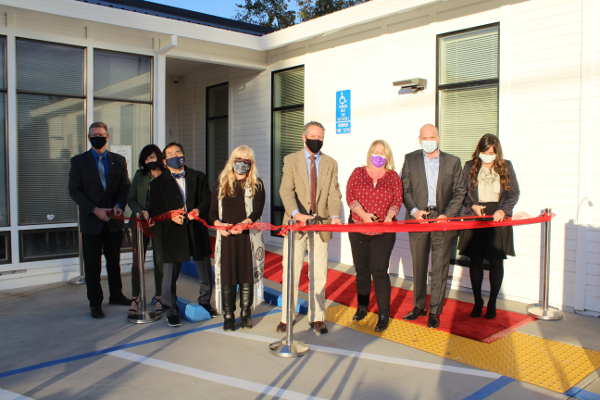
CLEARLAKE, Calif. – Homeless community members in Clearlake now have a transitional housing hub along with increased community support, thanks to the opening of Hope Center, a joint project of Adventist Health Clear Lake and Hope Rising and funded through $4.6 million in state and local grants.
The center, a project years in the making, is located at 3400 Emerson St. in Clearlake.
It’s the first permanent facility dedicated to finding solutions for Lake County’s homeless residents.
Hope Center was celebrated in a ribbon-cutting held on Nov. 12, as Lake County News has reported.
Adventist Health reported that the first patient arrived last week.
Hope Rising Lake County will operate Hope Center, which will house 14 men and six women enrolled in services that lead to sustainable permanent housing.
The facility involves local health systems, county support services, nonprofit organizations, and other organizations in a united effort to serve individuals in the community experiencing homelessness.
Eight employees will staff Hope Center, including a program director, case manager, program assistants, licensed social worker, and drivers. There will be on-site management 24 hours a day.
In addition to dorm-style rooms provided on opposite ends of the building, the center includes a commercial demonstration kitchen with a dining area, communal living room, one-on-one support services rooms, a group meeting/conference room, and shared offices for service providers.
"Hope Center is committed to helping, sheltering, and taking care of our neighbors experiencing homelessness," said Allison Panella, executive director of Hope Rising, at the ribbon-cutting celebration on Nov. 12. "We are opening our doors to endeavor what we set out nearly three years ago to do; to restore a sense of hope to a community that has been battered by floods, fires, power outages, and now a pandemic."
Adventist Health Clear Lake is thrilled to help lead this transformational project, David Santos, president of Adventist Health Clear Lake, said at the socially distanced event.
"Hope Center allows us to live into the reality that we can lift ourselves from something that haunted our city, community and county,” Santos said. “Today, we reached a tipping point. With our combined forces and support, Hope Rising is changing Lake County and creating a model to impact and change the health outcomes for rural counties across our country. What we are doing today can have a monumental impact on generations to come."
The facility is the first low-barrier transitional housing hub in Lake County, offering comprehensive services for vulnerable members of the community experiencing homelessness. The center’s wraparound services are provided through a team approach that focuses on building individual strengths to help them achieve goals and improve well-being.
A $2.4 million Homekey grant for the center was provided by the California Business, Consumer Services and Housing Agency, working hand in hand with the California Department of Housing and Community Development. The grant will fund staff and services at Hope Center for two years.
"I am thrilled to see leaders of Lake County receive this significant grant to house 20 homeless clients as they prepare for permanent housing," Assemblymember Cecilia Aguiar-Curry said at the celebration. "This facility is the result of all of us coming together, building and maintaining strong partnerships and working to improve our community one step at a time."
Adventist Health Clear Lake's Project Restoration House served as a pilot program for Hope Center.
Established in 2017 by Adventist Health Clear Lake’s Community Wellness director, Project Restoration House provides intense case management and services to support clients who are homeless.
It has substantially reduced the high utilization of emergency medical services, police encounters, 911 calls, and incarceration days resulting in $1.2 million savings in the first year.
"As we look at the work that is going to happen at Hope Center, a love ethic is at the center of it," said Shelly Trumbo, Well Being executive for Adventist Health. "There is nothing soft about standing alongside a human being and supporting them in their transformation. That is the work that will be happening here, and it is strong, and it is solid. It leads to trust where organizations lock arms together for justice and equity."
Hope Center received an initial $1.3 million grant from Partnership HealthPlan of California to begin building the facility. Additional funding by the City of Clearlake, Lake County Continuum of Care, Lake County Behavioral Health, and Adventist Health Clear Lake helped complete the building's construction.
Adventist Health Clear Lake owns the property and will continue to maintain it in compliance with the 15-year grant agreement regarding the property's use. "Adventist Health truly wants to lead the way in convening this concept of transforming the health and wealth status of Lake County," Santos said.
Following the ribbon-cutting, attendees planted a garden at the front of the building, then were invited inside for tours. "Consider the roots you are planting here today," said Panella, "the seeds of hope and a continued connection to our community."
More information about Hope Center is available at Hope Rising at www.HopeRisingLC.org.

LAKEPORT, Calif. – The Lakeport Police Department is seeking leads in its investigation into illegal hunting that has been reported at the city’s wastewater treatment facility.
The City of Lakeport Municipal Sewer District wastewater treatment plant is located on Linda Lane in south Lakeport.
Police said there has been an increase in the hunting activity as reported by neighbors, who have heard gunshots, and facility workers, who have found evidence of this activity, especially during weekends.
“This crime is very serious and poses a significant danger to nearby residents,” the police department said.
Anyone with information about current or previous illegal hunting activities at that location is encouraged to report it to the Lakeport Police Department at 707-263-5491, option 1.
The City of Lakeport Municipal Sewer District wastewater treatment plant is located on Linda Lane in south Lakeport.
Police said there has been an increase in the hunting activity as reported by neighbors, who have heard gunshots, and facility workers, who have found evidence of this activity, especially during weekends.
“This crime is very serious and poses a significant danger to nearby residents,” the police department said.
Anyone with information about current or previous illegal hunting activities at that location is encouraged to report it to the Lakeport Police Department at 707-263-5491, option 1.