 How to resolve AdBlock issue?
News
With winter just around the corner, all visitors to California’s National Forests should continue to plan ahead before visiting and recreate responsibly once there.
Early snowfall has already begun on some forests and road conditions will begin to impact access so please ensure that your vehicle is snow ready before you go.
Visitors are encouraged to view the Recreate Responsibly Winter Toolkit, which provides resources on planning ahead, weather conditions, avalanche awareness, and Leave No Trace principles. Additionally, a Spanish version of the toolkit can be found here.
A web map was developed to help visitors find out which recreation areas are open on nearby forests, including campgrounds, day use sites, and trails on National Forests in California. View the GIS map for winter updates at https://go.usa.gov/xwurX.
Please follow posted campfire, parking, and camping restrictions. Be prepared to find alternative areas if your trail or campground is full. Additionally, please note that fireworks are not permitted on any National Forest.
Forest officials recommend that you not travel long distances to recreate and, again, check with your local National Forest before visiting. If you or anyone in your household is feeling sick, please remain at home and plan your trip for another time. All visitors should practice self-sufficiency during your visits to national forests.
Recreating responsibly will help ensure that expanded access to recreational facilities, services, and opportunities continues.
Responsible recreation practices should be maintained at all times, including:
• Research winter road conditions and make sure your vehicle is snow ready;
• Maintaining at least six feet distancing from others;
• Do not gather in groups and please follow the latest guidance from officials;
• Communicate with others as you pass. Alert trail users of your presence and step aside to let others pass;
• Pack out your trash and leave with everything you bring in and use; and
• All services may not be available, so please plan accordingly.
Early snowfall has already begun on some forests and road conditions will begin to impact access so please ensure that your vehicle is snow ready before you go.
Visitors are encouraged to view the Recreate Responsibly Winter Toolkit, which provides resources on planning ahead, weather conditions, avalanche awareness, and Leave No Trace principles. Additionally, a Spanish version of the toolkit can be found here.
A web map was developed to help visitors find out which recreation areas are open on nearby forests, including campgrounds, day use sites, and trails on National Forests in California. View the GIS map for winter updates at https://go.usa.gov/xwurX.
Please follow posted campfire, parking, and camping restrictions. Be prepared to find alternative areas if your trail or campground is full. Additionally, please note that fireworks are not permitted on any National Forest.
Forest officials recommend that you not travel long distances to recreate and, again, check with your local National Forest before visiting. If you or anyone in your household is feeling sick, please remain at home and plan your trip for another time. All visitors should practice self-sufficiency during your visits to national forests.
Recreating responsibly will help ensure that expanded access to recreational facilities, services, and opportunities continues.
Responsible recreation practices should be maintained at all times, including:
• Research winter road conditions and make sure your vehicle is snow ready;
• Maintaining at least six feet distancing from others;
• Do not gather in groups and please follow the latest guidance from officials;
• Communicate with others as you pass. Alert trail users of your presence and step aside to let others pass;
• Pack out your trash and leave with everything you bring in and use; and
• All services may not be available, so please plan accordingly.
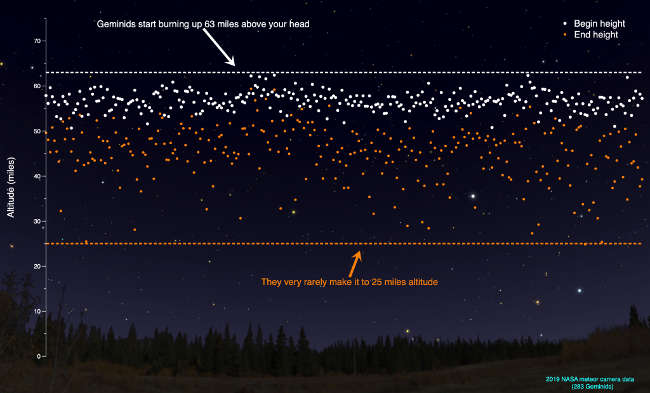
The Geminids are widely recognized as the best annual meteor shower a stargazer can see, occurring between Dec. 4 to Dec. 17, with the best nights for viewing on Dec. 13 and 14.
The parent of the Geminids is 3200 Phaethon, which is arguably considered to be either an asteroid or an extinct comet. When the Earth passes through trails of dust, or meteoroids, left by 3200 Phaethon, that dust burns up in Earth’s atmosphere, creating the Geminid meteor shower.
The Geminid rate will be even better this year, as the shower’s peak overlaps with a nearly new moon, so there will be darker skies and no moonlight to wash out the fainter meteors. That peak will happen on the night of Dec. 13 into the morning of Dec. 14, with some meteor activity visible in the days before and after.
Viewing is good all night for the Northern Hemisphere, with activity peaking around 2 a.m. local time, and after midnight for viewers in the Southern Hemisphere.
Why are they called the Geminids?
All meteors associated with a shower have similar orbits, and they all appear to come from the same place in the sky, which is called the radiant. The Geminids appear to radiate from a point in the constellation Gemini, hence the name “Geminids.”
How fast are Geminids?
Geminids travel 78,000 mph (35 km/s). This is over 1000 times faster than a cheetah, about 250 times faster than the swiftest car in the world, and over 40 times faster than a speeding bullet!
How to observe the Geminids?
If it’s not cloudy, get away from bright lights, lie on your back, and look up. Remember to let your eyes get adjusted to the dark – you’ll see more meteors that way. Keep in mind, this adjustment can take approximately 30 minutes. Don’t look at your cell phone screen, as it will ruin your night vision!
Meteors can generally be seen all over the sky. Avoid watching the radiant because meteors close to it have very short trails and are easily missed. When you see a meteor, try to trace it backwards. If you end up in the constellation Gemini, there’s a good chance you’ve seen a Geminid.
When is the best time to observe Geminids?
The best night to see the shower is Dec. 13 to 14. The shower will peak around 01:00 UTC (Coordinated Universal Time). Sky watchers in the Northern Hemisphere can see Geminids starting around 7:30 to 8 p.m. local time on Dec. 13, with the rate of meteors increasing as 2 a.m. approaches. In the Southern hemisphere, good rates will be seen between midnight and dawn local time on Dec. 14. Geminid watchers who observe from midnight to 4 a.m. should catch the most meteors.
How many Geminids can observers expect to see Dec. 13-14?
Realistically, the predicted rate for observers in the northern hemisphere is closer to 60 meteors per hour. This means you can expect to see an average of one Geminid per minute in dark skies at the shower peak. Observers in the southern hemisphere will see fewer Geminids than their northern hemisphere counterparts – perhaps 25 percent of rates in the northern hemisphere, depending on their latitude.
Where will NASA stream the Geminids meteor shower?
We will broadcast a live stream of the shower’s peak Dec. 13-14 from a meteor camera at NASA’s Marshall Space Flight Center in Huntsville, Alabama, (if our weather cooperates!) from 8 p.m. to 4 a.m. CST on the NASA Meteor Watch Facebook page.
Meteor videos recorded by the All Sky Fireball Network are also available each morning to identify Geminids in these videos – just look for events labeled “GEM.”
Happy viewing stargazers!
Lance D. Davis writes for NASA. This article originally appeared at www.NASA.gov.
LAKE COUNTY, Calif. – On Friday, the U.S. Food and Drug Administration issued the first emergency use authorization for a COVID-19 vaccine, and Lake County’s Public Health officer reported that nearly 1,000 doses will soon be heading to the county.
The FDA’s approval of the Pfizer-BioNTech COVID-19 vaccine allows it to be distributed in the United States, and with COVID-19 cases rising significantly in Lake County and statewide, Dr. Gary Pace said the progress surrounding vaccines offers great hope.
“The approval and shipping processes are underway, and we expect delivery of the first doses in the county sometime next week,” Pace said.
As of Friday, Lake County had documented 1,215 COVID-19 cases – an increase of nearly 200 over the week – and 22 deaths. Eleven residents are currently hospitalized, with seven of them in care out of the county, Public Health reported.
Lake County remains in the purple tier, the most restrictive tier on the state’s Blueprint for a Safer Economy. Out of California’s 58 counties, 54 – accounting for 99.9 percent of the population – were in the purple tier as of Friday.
County Public Health departments across California reported Friday that there are more than 1.52 million confirmed COVID-19 cases statewide and more than 20,850 deaths.
Pace said the Pfizer vaccine is to be shipped out by next week, with Lake County to receive an allotment of 975 doses.
“The fact this vaccine was developed so quickly is truly remarkable, yet some people are expressing concerns about its safety, due to its rapid arrival on the market,” Pace said. “The FDA approval process has been followed, and before it gets distributed, a group of experts in California will review the studies and safety data.”
He said the first priority is vaccinating and protecting hospital staff who face repeated exposure working on the front lines. “If the surge comes, as projected, they need to be healthy to provide care.”
The county will continue to pursue more vaccine doses in the coming weeks and Pace said it will be administered in priority order, as determined by the state and the Centers for Disease Control and Prevention.
Hospital staff and medical first responders are vaccinated first, then nursing home staff and then residents. The second tier of priority includes medical clinic staff, other essential workers – law enforcement, firemen, school staff and other people working in public – and then people at higher risk due to age or medical conditions, Pace said.
Pace said he plans to get his shot as soon as he’s able to, noting, “At this point, the risk of COVID is far greater than any risk associated with the vaccine. The more people get vaccinated, the sooner we can move back to a more normal life.”
‘A tremendous step’
On Friday, Gov. Gavin Newsom visited an ultra-low temperature storage facility at the University of California, Davis Medical Center, which is preparing for the imminent arrival of the Pfizer COVID-19 vaccine.
Newsom on Friday night called the FDA’s approval of the new vaccine “a tremendous step toward safe and equitable vaccine distribution in California.”
He said through the Western States Scientific Safety Review Workgroup, the state’s scientists and experts have worked concurrently with the federal process to review the safety and efficacy of a COVID-19 vaccine and the workgroup’s recommendations are expected within 48 hours.
News of the vaccine’s approval came as California’s available intensive care beds continued to dwindle. On Friday, Pace said they were down to 11 percent vacancy statewide.
Dropping below 15 percent in a given region triggers more restrictive regional stay at home orders. So far, however, the Northern California region – which includes Lake, Del Norte, Glenn, Humboldt, Lassen, Mendocino, Modoc, Shasta, Siskiyou, Tehama and Trinity counties – has not entered that category yet. As of Friday, the Northern California region had 26 percent of its ICU capacity remaining.
“Projections suggest we will continue to see a significant increase in cases due to the increase in travel and socializing at Thanksgiving. If we are unable to slow the expected spread, we will have trouble caring for everyone, due to inadequate hospital beds and staffing,” Pace said.
Pace said the state is preparing for this surge and helped increase ICU beds by 80 in Northern California. They are also opening a special facility at the Sleep Train Pavilion in Sacramento which can hold up to 220 people and will serve those that are improving but not ready to leave the hospital.
“Local hospitals have surge plans in place, as well, and can expand to some extent, but the availability of qualified care providers tends to be a real limiting factor. Any steps we can take now to prevent the surge will be very helpful in a few weeks,” Pace said.
In light of its worsening caseload and decreasing hospital capacity, Sonoma County instituted a new stay at home order that went into effect at 12:01 a.m. Saturday.
The Bay Area region, which includes Sonoma County, was at 16.7 percent of ICU capacity on Friday night, a decrease since Thursday, which is down from yesterday. The state will impose a regionwide stay at home order when an area drops below 15 percent ICU capacity.
Pace said the Bay Area and Sacramento are Lake County’s main transfer sites for hospitalized patients. “We are monitoring the situation closely, and if we get to the point local hospitals are unable to transfer patients needing outside care, or we are overcrowded locally, we will need to consider further actions to slow the spread of the virus.”
Posts began circulating on social media on Friday that suggested Lake County was about to be placed in a new shelter in place order, but Pace told Lake County News on Friday night that while they were watching hospital capacity for the ability to transfer patients out when needed, “There are no imminent plans at this point to put in more restrictions.”
He said a glitch that caused a Wireless Emergency Alert about a stay-at-home order going into effect that was intended only for Sacramento County residents was sent to some Lake County residents mistakenly on Friday, which he suggested may have led to the posts about further local restrictions.
There also were claims online that patients from Sonoma County were being sent to Lake County due to a lack of bed capacity. In response, Pace said there was a transfer, “done for appropriate reasons for a Lake County resident,” and it wasn’t related to COVID-19.
“The next few months are going to be very trying. Please stay home and follow all of the guidelines,” said Pace.
He urged people to avoid traveling for Christmas, “but if you do go see family and friends, definitely take precautions.”
Pace added, “We are optimistic that in a few months, things will be improving. The vaccine will be getting out there to folks, and the weather will be improving, allowing us to be outdoors more. If we support each other, we will get through these challenging few months together.”
Email Elizabeth Larson atThis email address is being protected from spambots. You need JavaScript enabled to view it. . Follow her on Twitter, @ERLarson, or Lake County News, @LakeCoNews.
The FDA’s approval of the Pfizer-BioNTech COVID-19 vaccine allows it to be distributed in the United States, and with COVID-19 cases rising significantly in Lake County and statewide, Dr. Gary Pace said the progress surrounding vaccines offers great hope.
“The approval and shipping processes are underway, and we expect delivery of the first doses in the county sometime next week,” Pace said.
As of Friday, Lake County had documented 1,215 COVID-19 cases – an increase of nearly 200 over the week – and 22 deaths. Eleven residents are currently hospitalized, with seven of them in care out of the county, Public Health reported.
Lake County remains in the purple tier, the most restrictive tier on the state’s Blueprint for a Safer Economy. Out of California’s 58 counties, 54 – accounting for 99.9 percent of the population – were in the purple tier as of Friday.
County Public Health departments across California reported Friday that there are more than 1.52 million confirmed COVID-19 cases statewide and more than 20,850 deaths.
Pace said the Pfizer vaccine is to be shipped out by next week, with Lake County to receive an allotment of 975 doses.
“The fact this vaccine was developed so quickly is truly remarkable, yet some people are expressing concerns about its safety, due to its rapid arrival on the market,” Pace said. “The FDA approval process has been followed, and before it gets distributed, a group of experts in California will review the studies and safety data.”
He said the first priority is vaccinating and protecting hospital staff who face repeated exposure working on the front lines. “If the surge comes, as projected, they need to be healthy to provide care.”
The county will continue to pursue more vaccine doses in the coming weeks and Pace said it will be administered in priority order, as determined by the state and the Centers for Disease Control and Prevention.
Hospital staff and medical first responders are vaccinated first, then nursing home staff and then residents. The second tier of priority includes medical clinic staff, other essential workers – law enforcement, firemen, school staff and other people working in public – and then people at higher risk due to age or medical conditions, Pace said.
Pace said he plans to get his shot as soon as he’s able to, noting, “At this point, the risk of COVID is far greater than any risk associated with the vaccine. The more people get vaccinated, the sooner we can move back to a more normal life.”
‘A tremendous step’
On Friday, Gov. Gavin Newsom visited an ultra-low temperature storage facility at the University of California, Davis Medical Center, which is preparing for the imminent arrival of the Pfizer COVID-19 vaccine.
Newsom on Friday night called the FDA’s approval of the new vaccine “a tremendous step toward safe and equitable vaccine distribution in California.”
He said through the Western States Scientific Safety Review Workgroup, the state’s scientists and experts have worked concurrently with the federal process to review the safety and efficacy of a COVID-19 vaccine and the workgroup’s recommendations are expected within 48 hours.
News of the vaccine’s approval came as California’s available intensive care beds continued to dwindle. On Friday, Pace said they were down to 11 percent vacancy statewide.
Dropping below 15 percent in a given region triggers more restrictive regional stay at home orders. So far, however, the Northern California region – which includes Lake, Del Norte, Glenn, Humboldt, Lassen, Mendocino, Modoc, Shasta, Siskiyou, Tehama and Trinity counties – has not entered that category yet. As of Friday, the Northern California region had 26 percent of its ICU capacity remaining.
“Projections suggest we will continue to see a significant increase in cases due to the increase in travel and socializing at Thanksgiving. If we are unable to slow the expected spread, we will have trouble caring for everyone, due to inadequate hospital beds and staffing,” Pace said.
Pace said the state is preparing for this surge and helped increase ICU beds by 80 in Northern California. They are also opening a special facility at the Sleep Train Pavilion in Sacramento which can hold up to 220 people and will serve those that are improving but not ready to leave the hospital.
“Local hospitals have surge plans in place, as well, and can expand to some extent, but the availability of qualified care providers tends to be a real limiting factor. Any steps we can take now to prevent the surge will be very helpful in a few weeks,” Pace said.
In light of its worsening caseload and decreasing hospital capacity, Sonoma County instituted a new stay at home order that went into effect at 12:01 a.m. Saturday.
The Bay Area region, which includes Sonoma County, was at 16.7 percent of ICU capacity on Friday night, a decrease since Thursday, which is down from yesterday. The state will impose a regionwide stay at home order when an area drops below 15 percent ICU capacity.
Pace said the Bay Area and Sacramento are Lake County’s main transfer sites for hospitalized patients. “We are monitoring the situation closely, and if we get to the point local hospitals are unable to transfer patients needing outside care, or we are overcrowded locally, we will need to consider further actions to slow the spread of the virus.”
Posts began circulating on social media on Friday that suggested Lake County was about to be placed in a new shelter in place order, but Pace told Lake County News on Friday night that while they were watching hospital capacity for the ability to transfer patients out when needed, “There are no imminent plans at this point to put in more restrictions.”
He said a glitch that caused a Wireless Emergency Alert about a stay-at-home order going into effect that was intended only for Sacramento County residents was sent to some Lake County residents mistakenly on Friday, which he suggested may have led to the posts about further local restrictions.
There also were claims online that patients from Sonoma County were being sent to Lake County due to a lack of bed capacity. In response, Pace said there was a transfer, “done for appropriate reasons for a Lake County resident,” and it wasn’t related to COVID-19.
“The next few months are going to be very trying. Please stay home and follow all of the guidelines,” said Pace.
He urged people to avoid traveling for Christmas, “but if you do go see family and friends, definitely take precautions.”
Pace added, “We are optimistic that in a few months, things will be improving. The vaccine will be getting out there to folks, and the weather will be improving, allowing us to be outdoors more. If we support each other, we will get through these challenging few months together.”
Email Elizabeth Larson at
LAKE COUNTY, Calif. – Just days after the Lake County Superior Court announced it was canceling trials until the end of December and moving most hearings online due to the rise of COVID-19 cases in the county, officials said a court employee has contracted the coronavirus.
In a Friday statement, the court reported that it was notified late Thursday about the employee testing positive for COVID-19.
The employee last worked at the Lakeport Courthouse on Wednesday and at the Clearlake Courthouse on Monday, the court reported.
“The individual did not have any symptoms while at work. The individual did not work in a courtroom and did not have close contact with attorneys, law enforcement officers or any member of the public,” the statement said.
In order to protect the employee’s privacy, the court did not provide any other details.
Court officials said they have been in contact with Lake County Public Health and are following all guidance provided.
Any employee who was in close contact with the individual who tested positive has been sent home and will isolate for 14 days, the court said.
A “thorough deep cleaning and decontamination” was conducted on Thursday evening, as recommended by the Centers for Disease Control and Prevention, the court statement said.
On Monday, the court announced it was canceling trials until Dec. 30 and moving most of its in-person hearings to online as COVID-19 cases continue to rise, an action similar to that taken by the Mendocino County Superior Court last week.
Court officials on Friday asked individuals who use the court to comply with the precautionary measures put in place earlier this year.
Those measures include:
– Maintaining at least 6 feet of distance from others at all times. If that is not possible, notify the bailiff or court staff immediately.
– Wearing face coverings over the nose and mouth at all times.
– Sick individuals are required to stay home.
– Any individuals with close contact to a COVID-19 positive individual, or a pending COVID-19 test are required to stay home.
The court’s orders and operational updates are available at its website.
Email Elizabeth Larson atThis email address is being protected from spambots. You need JavaScript enabled to view it. . Follow her on Twitter, @ERLarson, or Lake County News, @LakeCoNews.
In a Friday statement, the court reported that it was notified late Thursday about the employee testing positive for COVID-19.
The employee last worked at the Lakeport Courthouse on Wednesday and at the Clearlake Courthouse on Monday, the court reported.
“The individual did not have any symptoms while at work. The individual did not work in a courtroom and did not have close contact with attorneys, law enforcement officers or any member of the public,” the statement said.
In order to protect the employee’s privacy, the court did not provide any other details.
Court officials said they have been in contact with Lake County Public Health and are following all guidance provided.
Any employee who was in close contact with the individual who tested positive has been sent home and will isolate for 14 days, the court said.
A “thorough deep cleaning and decontamination” was conducted on Thursday evening, as recommended by the Centers for Disease Control and Prevention, the court statement said.
On Monday, the court announced it was canceling trials until Dec. 30 and moving most of its in-person hearings to online as COVID-19 cases continue to rise, an action similar to that taken by the Mendocino County Superior Court last week.
Court officials on Friday asked individuals who use the court to comply with the precautionary measures put in place earlier this year.
Those measures include:
– Maintaining at least 6 feet of distance from others at all times. If that is not possible, notify the bailiff or court staff immediately.
– Wearing face coverings over the nose and mouth at all times.
– Sick individuals are required to stay home.
– Any individuals with close contact to a COVID-19 positive individual, or a pending COVID-19 test are required to stay home.
The court’s orders and operational updates are available at its website.
Email Elizabeth Larson at
LAKE COUNTY, Calif. – Following a rainy Friday, Lake County is expected to have more precipitation in the weekend ahead.
Rain fell throughout the day on Friday and into the night, offering the most substantial rainfall in more than a month.
The National Weather Service’s observation stations reported the following 24-hour rainfall totals in inches through 12 a.m. Saturday:
– Bartlett Springs: 0.31.
– Cache Creek near Lower Lake: 0.49.
– County line (at Colusa side): 0.15.
– Hidden Valley Lake: 0.30.
– High Glade Lookout (above Upper Lake): 0.47.
– Kelseyville: 0.60.
– Knoxville Creek: 0.28.
– Soda Creek: 0.44.
– Upper Lake: 0.14.
– Whispering Pines: 0.52.
The forecast called for showers to continue overnight Friday into Saturday. Saturday’s forecast is for slight chances of more rain during the daytime and nighttime hours.
Overnight rain is again forecast from Saturday into Sunday, which is expected to see still more showers, according to the forecast.
Monday through Friday are forecast to be mostly cloudy, with a slight chance of showers on Tuesday night.
Temperatures into next week are forecast to be in the high 30s to low 40s at night and into the low 60s in the daytime, forecasters said.
Email Elizabeth Larson atThis email address is being protected from spambots. You need JavaScript enabled to view it. . Follow her on Twitter, @ERLarson, or Lake County News, @LakeCoNews.
Rain fell throughout the day on Friday and into the night, offering the most substantial rainfall in more than a month.
The National Weather Service’s observation stations reported the following 24-hour rainfall totals in inches through 12 a.m. Saturday:
– Bartlett Springs: 0.31.
– Cache Creek near Lower Lake: 0.49.
– County line (at Colusa side): 0.15.
– Hidden Valley Lake: 0.30.
– High Glade Lookout (above Upper Lake): 0.47.
– Kelseyville: 0.60.
– Knoxville Creek: 0.28.
– Soda Creek: 0.44.
– Upper Lake: 0.14.
– Whispering Pines: 0.52.
The forecast called for showers to continue overnight Friday into Saturday. Saturday’s forecast is for slight chances of more rain during the daytime and nighttime hours.
Overnight rain is again forecast from Saturday into Sunday, which is expected to see still more showers, according to the forecast.
Monday through Friday are forecast to be mostly cloudy, with a slight chance of showers on Tuesday night.
Temperatures into next week are forecast to be in the high 30s to low 40s at night and into the low 60s in the daytime, forecasters said.
Email Elizabeth Larson at
The Hubble Space Telescope turned 30 this year, and for the occasion, it’s sharing a present with you.
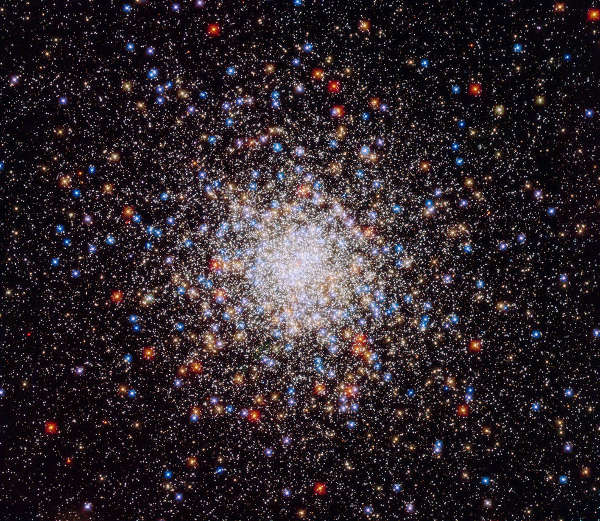
NASA has just released dozens of newly processed Hubble images featuring 30 dazzling galaxies, sparkling star clusters and ethereal nebulae.
And there’s something extra special about these 30 celestial gems: All of them can be seen through backyard telescopes. Some of them can also be spotted with binoculars or even the naked eye.
All of these celestial objects belong to a collection known to amateur astronomers as the Caldwell catalog.
Compiled by British amateur astronomer and science communicator Sir Patrick Caldwell-Moore, the catalog was published by Sky & Telescope magazine 25 years ago, in December 1995.
It was inspired by the Messier catalog, assembled by French comet-hunter Charles Messier, which includes 110 relatively bright but fuzzy objects in the skies of the Northern Hemisphere that could accidentally be mistaken for comets.
Caldwell’s catalog highlights 109 galaxies, star clusters, and nebulae that are not included in Messier’s catalog but are also bright enough to be seen by amateur astronomers.
In addition, the Caldwell objects are split between the northern and southern hemisphere skies, providing interesting targets to pursue for amateur astronomers around the world.
This newly released collection of more than 50 Hubble images feature 30 objects in the Caldwell catalog. (Some of these 30 Caldwell objects appear in more than one new Hubble image.)
These images have been taken by Hubble throughout its career and used for scientific research or for engineering tests, but NASA had not fully processed the images for public release until now.
Because of Hubble’s detailed field of view, some of its pictures do not capture the entirety of a Caldwell object, sometimes instead zooming in on clusters of young stars in the arms of a spiral galaxy, stars on the outskirts of a cluster, or the zombie star at the heart of a nebula.
But in other cases, a mosaic of Hubble observations assemble to create a complete or nearly complete portrait of the celestial marvel.
These new images join Hubble’s existing gallery of Caldwell objects, first published in December 2019. Hubble’s collection now includes 87 of the 109 Caldwell objects.
For each listing in Hubble’s Caldwell catalog, a basic star chart shows observers when and where they can find that object in the night sky, and a description suggests what type of observing equipment can be used to view it.
The individual articles also explain Hubble’s images for those who prefer to just enjoy the telescope’s exquisite views.
The Hubble Space Telescope was launched aboard Space Shuttle Discovery in April 1990.
After being upgraded five times by crews of spacewalking astronauts, Hubble is today, at 30 years old, even better than when it was launched and continues to make groundbreaking discoveries that challenge and advance our fundamental understanding of the cosmos.
To see all of the new images in Hubble’s Caldwell catalog, click here.
Vanessa Thomas works for NASA's Goddard Space Flight Center.