 How to resolve AdBlock issue?
News
The CHP will continue to offer this in-person and virtual traffic safety program emphasizing roadway safety and mobility for California’s senior drivers.
The Age Well, Drive Smart class is an education program specifically designed to help seniors tune up their driving skills, refresh their knowledge of the rules of the road, and discuss normal age-related physical changes and how they affect driving ability.
Since 2015, the CHP has conducted over 1,800 senior driver traffic safety presentations, reaching more than 100,000 people.
“The CHP is committed to helping seniors drive safer,” said CHP Commissioner Amanda Ray. “This course is designed to assist the state’s most experienced drivers in refreshing their driving skills and ultimately saving lives.”
The CHP invites California’s older drivers to attend a free two-hour Age Well, Drive Smart class that provides senior drivers the tools to drive safer and drive longer.
The class is offered at local CHP Area offices as well as many community centers. It is a great way for seniors to educate themselves, evaluate their driving abilities, and improve their driving skills.
To attend a class, either in person or virtually, contact a CHP Area office near you for available dates and times.
The CHP’s Clear Lake Area office can be reached at 707-279-0103.
Funding for this program was provided by a grant from the California Office of Traffic Safety, through the National Highway Traffic Safety Administration.
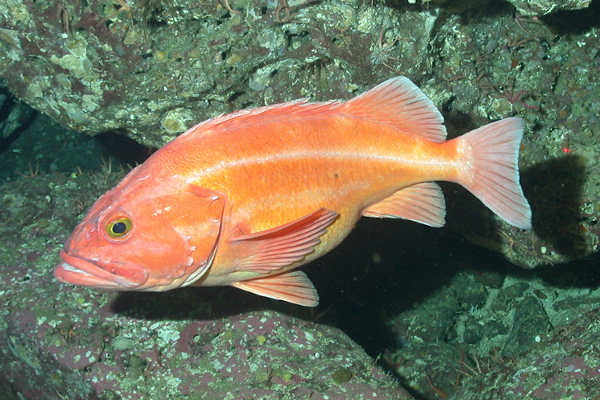
BERKELEY — Rockfish is on the menu around the Pacific Rim, for the most part with little regard for the fish’s origin or which of the 137 species is on the plate — it’s typically identified simply as rockfish or, incorrectly, as rock cod or red snapper.
But this seemingly anonymous fish — among the longest-lived vertebrates on Earth — holds clues to the genes that determine life span and the pluses and minuses of living longer.
In a study appearing this week in the journal Science, biologists at the University of California, Berkeley, compare the genomes of nearly two-thirds of the known species of rockfish that inhabit coastal waters around the Pacific Ocean and uncover some of the genetic differences that underlie their widely varying life spans.
Some rockfish, like the colorful calico rockfish (Sebastes dallii), live for little more than a decade, while the most long-lived of the genus Sebastes — the rougheye rockfish (Sebastes aleutianus), which can be found from Japan to the Aleutian Islands — can hang out on the seabed in cold, deep coastal waters for more than 200 years.
Their wide range of life spans, not to mention differences in size, lifestyle and ecological niche, which scientists call their phenotypes, evolved over a mere 10 million years — one of the most rapid radiations among all fishes.
To uncover the genetic determinants of life span in rockfish, the researchers obtained tissue samples — and occasionally tasting samples — from 88 species and sequenced their complete genomes with a state-of-the-art technique known as Pacbio, or SMRT, sequencing.
They found a variety of genes associated with longer life span, though some of these genes involve adaptations to living at greater depth and growing larger, both of which are associated with increased life span. Among mammals, for example, elephants live longer than rats.
The findings also highlight the trade-offs of a long life span, which include smaller populations — something also seen in mammals, with short-lived rats vastly outnumbering long-lived elephants.
"In this study, we identified both the genetic causes and consequences of adaptation to extreme life span," said senior author Peter Sudmant, UC Berkeley assistant professor of integrative biology. "It's very exciting to be able to look at a group of species and see how their phenotype has been shaped through time and the genetic changes that drive that phenotype, and simultaneously, how that phenotype then feeds back and influences the genetic diversity of that population."
Sudmant acknowledges that many of the biological pathways he and his team found to be associated with life span have been identified before in genetic studies of variation within a single animal species, though this study does implicate several new genes in these pathways. Nevertheless, the natural variation within this one genus of fish that has radiated throughout the Pacific Ocean uniquely encapsulates most of the many genetic factors that influence life span.
"You could think of rockfish as sort of the perfect storm. in some ways, both on an individual level — having individual fish able to live for a really long time because of size and depth adaptations — but also just having all these different species that are showing these different trends," he said. "They're a perfect set of individuals to look at, where other people just had a single species to look at."
The study also has implications for understanding human life span. Sudmant and his colleagues found that longer-lived species had more immune modulating genes — in particular, a group called butyrophilins — than shorter-lived species. Because the immune system is involved in regulating inflammation, and increased inflammation has been implicated in human aging, the findings point to genes that could be targets of therapeutics to slow age-related damage in the body.
"There is an opportunity here to look in nature and see how natural adaptations have shaped life span and to think about how those same sorts of genes are acting in our own bodies," he said.
Size and habitat explain a lot of life span variation in fishes
The researchers looked for DNA variations that were more common in fish with longer lives and found 137 longevity-associated gene variations.
Not all of these have a direct effect on life span, however. The researchers took care to separate out the genetic variations that allowed rockfish to adapt to deeper depths and grow to larger size, since those adaptations themselves have the side-effect of increasing life span. Deeper, cooler waters slow metabolism, for example, which is associated with a longer life span in many animals.
"We can explain 60% of the variation in life span just by looking at the size at maturity and the depth at which a fish lives," Sudmant said. "So, you can predict life span with pretty high accuracy just from these factors. This allowed us to identify the genes that allow them to do those things."
The remainder of the longevity-associated variation primarily involved three types of genes: an enrichment in the number of genes for repairing DNA; variations in many genes that regulate insulin, which has long been known to influence life span; and an enrichment for genes that modulate the immune system. More DNA repair genes could help protect against cancer, while more immune genes could help ward off infections, as well as cancer.
"Six different members of the insulin signaling pathway are under selection in these fish," Sudmant said. "If you look at the textbooks, there's about nine or 10 core members of the pathway, so the majority of them are under selection in rockfish."
Essentially, Sudmant said, some rockfish species extended their life span simply by adapting to live in deeper, colder waters and increasing their size. The longest-lived species, however, boosted their life span even further by tweaking their DNA repair, insulin signaling and immune-modulation genes.
From the 88 rockfish genomes, the researchers also were able to infer what the ancestral rockfish genome looked like and how species evolved from that common ancestor 10 million years ago.
With increased life span, they found, also came decreased population levels. Some of the longest-lived species survive today in small numbers that rely on very old, but very fertile, females to replenish the population.
These big, old, fat, fecund female fish, or BOFFFF, as they are known in fish conservation circles, produce the majority of offspring — sometimes in the millions per year, though with a low survival rate — that seed the next generation.
"In these rockfish, we can actually watch this evolution happening over this 10-million-year time period, and we observe that when some species evolve a short life span, their population sizes expand, and when they evolve a long life span, their population sizes contract," he said. "We can see a signature of that in their genomes, in the genetic variation that exists in these species. So, there is a consequence to adapting to long and short life."
One intriguing finding, he said, is that long-lived species have an excess of certain kinds of DNA mutations — specifically, the conversion of the nucleotide pair CG (cytosine-guanine) to TG (thymine-guanine) — known to accumulate in tumors with aging. Because the oldest females of these long-lived species produce most of the offspring, these unusual genetic alterations are passed along to the rest of the long-lived population.
Sudmant and his lab colleagues are currently involved in similar genome comparisons among bats, primates and other organisms, looking at the genes correlated with life span, aging, stress and other phenotypic differences. But the rockfish project was something special, he said.
"Often, in genetics, we're derided for doing experiments that are fishing expeditions," he said. "This was both literally and figuratively a fishing expedition."
UC Berkeley postdoctoral researchers Sree Rohit Raj Kolora and Gregory Owens, now at the University of Victoria in British Columbia, Canada, are co-first authors of the paper. Other co-authors are Juan Manuel Vazquez, Alexander Stubbs, Kamalakar Chatla and professor Doris Bachtrog of UC Berkeley; Conner Jainese, Katelin Seeto, Merit McCrea and Milton Love of UC Santa Barbara; Michael Sandel of the University of West Alabama; Juliana Vianna of the Pontificia Universidad Católica de Chile; and Katherine Maslenikov and James Orr of the University of Washington. The work was funded by an award from the National Institute of General Medical Sciences of the National Institutes of Health (R35GM142916).
Robert Sanders works for the UC Berkeley News Center.

For more than 50 years, Snoopy has contributed to the excitement for NASA human spaceflight missions, helping inspire generations to dream big.
NASA has shared an association with Charles M. Schulz and Snoopy since Apollo missions and continues under Artemis with new educational activities. Up next — Snoopy will ride along as the zero gravity indicator on Artemis I.
Artemis I is an uncrewed flight test of the Space Launch System, or SLS, rocket and Orion spacecraft around the Moon launching in early 2022 before missions with astronauts. Zero gravity indicators are small items carried aboard spacecraft that provide a visual indicator when a spacecraft has reached the weightlessness of microgravity.
Without astronauts aboard Orion, Snoopy will help share the journey with the world as he rides along in the cabin with a manikin and two other “passengers.”
Apollo era
Already a well-known household character, Snoopy was used to encourage NASA’s spaceflight safety initiative during the time of Apollo. Schulz created comic strips of Snoopy on the Moon, capturing public excitement about America’s achievements in space.
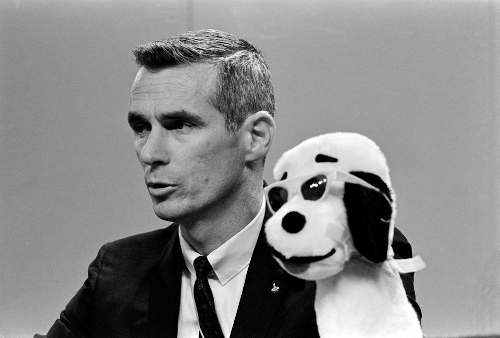
In May 1969, Apollo 10 astronauts Gene Cernan, John Young and Thomas Stafford traveled all the way to the Moon for one final checkout before the lunar landing attempt.
The mission required the lunar module to skim the Moon's surface to within 50,000 feet and "snoop around" scouting the Apollo 11 landing site, leading the crew to name the lunar module "Snoopy."
The Apollo command module was labeled "Charlie Brown," after Snoopy’s loyal owner. Snoopy’s first flight to space was in 1990 when he was able to catch a ride on the space shuttle Columbia during the STS-32 mission.
The agency’s Silver Snoopy award was created during the Apollo era and remains to this day. It is a high honor awarded to NASA employees and contractors by astronauts, celebrating achievements related to mission success and human flight safety.
Each silver pin given with this award, depicting astronaut Snoopy, was flown in space. Continuing the tradition, Artemis I will also carry a package of silver snoopy pins for future recognitions.

Apollo 50th anniversary
In 2019, NASA and Peanuts Worldwide celebrated the 50th Anniversary of the launch of Apollo 10 and the history of their partnership in NASA’s safety and human space flight awareness program.
Leading up to the anniversary, NASA and Peanuts collaborated on STEM activities, a mini-documentary and other new products that share the excitement of science, technology, engineering and math with the next generation of explorers.
The collaboration, formalized through a Space Act Agreement, provided an opportunity to update Snoopy’s spacesuit and introduce new space-themed programming with content about NASA’s deep space exploration missions, 50 years after the initial collaboration began during the Apollo era.
Under the anniversary collaboration, NASA provided support for a number of new Peanuts programs that focused on modern-day astronaut Snoopy and space themes, including a STEM-based curriculum for students in kindergarten through fifth grade about America’s deep space exploration objectives.
NASA centers across the nation joined the celebration as well with local exhibits or STEM activities capitalizing on the Apollo 10 mission’s unique call sign for the Lunar Lander of Snoopy. Snoopy also participated in the celebration on the National Mall in Washington to celebrate the 50th Apollo 11 Moon landing, which also took place in 1969.
NASA participated in other Apollo anniversary collaborations with Peanuts and its partners. Peanuts partnered with McDonalds for a "Discover Space with Snoopy" Happy Meal featuring Snoopy in his persona as the "world famous astronaut" and "the first beagle on the Moon," as well as STEM-focused books, activities, and toys.
Peanuts and its partner company WildBrain also premiered the first season of “Snoopy in Space,” on Apple TV+ in 2019. NASA supported Peanuts and its partners with reviews of STEM content and NASA mission information.
Astronaut Snoopy was featured as a balloon in the 2019 Macy's Thanksgiving Day Parade and as a plush doll floating aboard the International Space Station. During coverage of the holiday celebration, NASA astronauts Jessica Meir and Christina Koch delivered a message alongside Snoopy from aboard the space station, highlighting the partnership along with the 20th anniversary of continuous human presence on station, which is helping prepare future exploration with Artemis.
Astronaut Snoopy launched to the station aboard a Cygnus spacecraft on Northrop Grumman’s 12th cargo resupply mission. In the parade and on the space station, Snoopy sported a spacesuit modeled after NASA's Orion Crew Survival System, which is worn by astronauts while inside the Orion spacecraft on Artemis missions to the Moon. The Astronaut Snoopy balloon will appear again in the 2021 Macy's Thanksgiving Day Parade.
Snoopy, Artemis generation
Today, the partnership continues. For Snoopy’s flight on the Artemis I mission, he will be outfitted in a custom orange flight suit complete with gloves, boots, and a NASA patch. Peanuts is releasing a new suite of curriculum and short videos with its partner, GoNoodle, to encourage kids to learn about gravity, teamwork, and space exploration while they follow Snoopy along on his Artemis I journey.
In addition to the doll and Silver Snoopy pins, a pen nib from Charles M. Schulz’s Peanuts studio will make the trek on Artemis I wrapped in a space themed comic strip as part of a collection of mementos selected by NASA to fly aboard the Orion spacecraft.
A new season of “Snoopy in Space” will also be released on Apple TV+ that explores the planets and what conditions are necessary to find life in the universe. NASA supported Peanuts with the series through reviews of STEM content and NASA mission information.
Under Artemis, NASA is working to land the first woman and the first person of color on the Moon and lead the next steps of human exploration for future missions to Mars. Artemis I will pave the way for a series of increasingly complex missions to establish a long-term presence at the Moon.
Learn more about Artemis at https://www.nasa.gov/artemis.
LAKEPORT, Calif. — The Lakeport Main Street Association is planning to kick off the holiday season with its Dickens Fair and Christmas Market later this month.
The fourth annual Dickens Fair takes place from 11 a.m. to 5:30 p.m. Saturday, Nov. 27, in downtown Lakeport.
In 2016 the Lakeport Main Street Association was asked to bring back the Dickens Fair to downtown Lakeport and the group reports that it is pleased that the event has been growing each year since.
The association’s aim is that the Dickens Fair becomes a “must attend event'' for not only Lake County residents, but for visitors that seek out this small town as a holiday destination.
The fair has grown over the years with the addition of a sledding hill and many activities for young and old.
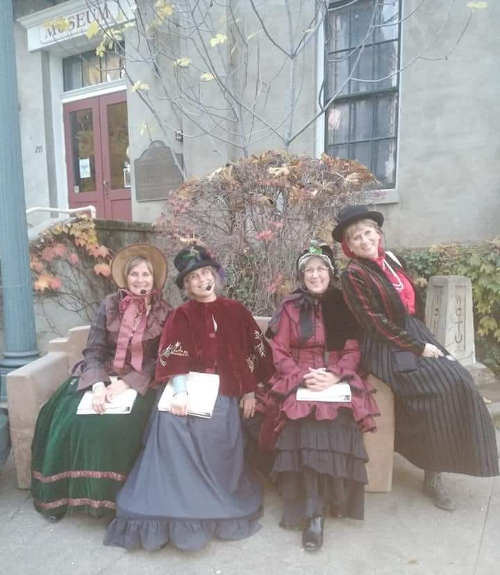
A highlight is the lighting of the holiday tree in Museum Park, where dozens were gathered singing holiday favorites and awaiting the countdown to light it up.
In 2021 organizers are looking forward to presenting a Dickens Fair that has lots of activities for “kids” of all ages.
They will offer the sledding hill, cookie decorating, kids crafts, kids games, a snow globe for cute family pictures, a pet parade, costume contest, an ugly sweater contest, strolling carolers, craft vendors, food vendors, beverages for sale, dance performances, doughnut walk, photos with Santa and music all day.
There will be plenty of shopping available with vendors and downtown businesses.
The tree lighting will take place at 5:30 p.m. with none other than Santa himself.
For more information, contact the Lakeport Main Street Association at
Each month, as we consider Lake County’s real estate sales, we look at last year’s statistics compared to this year with an overview of changes from the previous month. This helps to see how the market is trending month over month and changes from last year at this time.
Countywide changes from August to September show that sales were down, from 93 to 70; the median price was up, from $335,000 to $372,000; active listings rose from 228 to 251; median days on the market went from 13 to 17; the sales to list price dropped slightly, from 100% to 99.7%; and price reductions were up from 33.3% to 43%
Sales numbers range across communities
Countywide, existing single-family residential sales were at 70 in September, which is down from 93 in August and down 38.6% from last year, showing an overall slowing of home sales.
Lakeport’s sales were at 13, which is up by three over August and up by 8.3% over September of last year.
Kelseyville’s sales totaled were at 12, that’s down 50% from last month and down 63.6% from the previous September.
In Clearlake, sales totaled 13, up only one from August and down 7.1% from September of 2020.
Hidden Valley Lake’s sales were at 14, down by one in August and down 36.4% from September last year.
Median price continues to increase
Lake County’s median price for existing single family residences totaled $372,000 in September, compared to August’s $335,000 and up 21% in a year-over comparison.
By community, the median prices for September broke down this way:
• Lakeport: median price, $435,000, up from $389,000 in August, up 12.3% from September 2020.
• Kelseyville: median price, $360,000, up from $353,000 in August and up 9.6% from the previous September.
• Clearlake: median price, $255,000, up from August’s $223,000, and up 32.5% from September 2020.
• Hidden Valley Lake: median price, $377,000, up from $355,000 in August and up 14.1% in a year-over comparison.
Active listings up
Countywide, active listings were at 251, which is up over August’s 228 and up 55.9% over September of last year.
By community, listings for September were as follows:
• Lakeport: active listings, 45, up two from August; up 125% over September 2020.
• Kelseyville: active listings, 56, up five from August; up 55.6% over last September.
• Clearlake: active listings, 31, up two over August; down 6.1% from September 2020.
• Hidden Valley Lake: active listings, 31, up three from August; up 34.8% in a year-over comparison.
Days on market
Across Lake County, the median days on the market was 17, sales to list price was 99.7%, and 43% of active listings had reduced prices.
Lakeport’s median days on the market was 13, sales to list price was 99.5% and 53.3% of active listings had reduced prices.
Kelseyville’s median days on the market was 11, sales to list price was 100% and 50% of active listings had price reductions.
Clearlake’s median days on the market was 14, sales to list price was 100% and 41.9% of active listings had price reductions.
Tama Prokopowich is president-elect of the Lake County Association of Realtors.
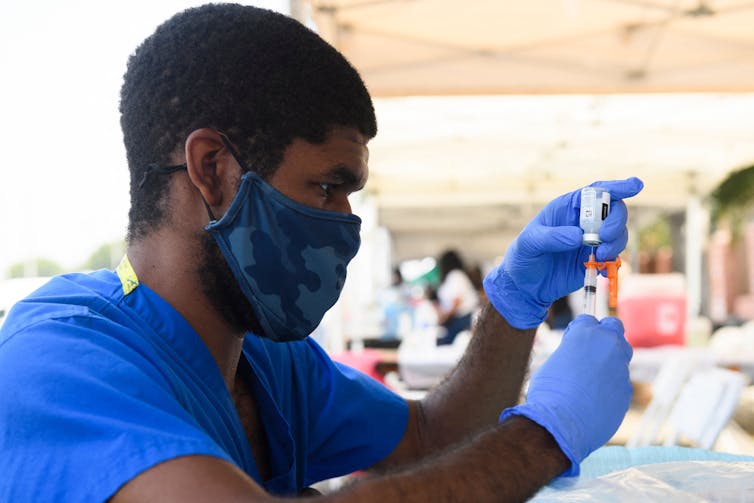
Now that kids ages 5 to 11 are eligible for COVID-19 vaccination and the number of fully vaccinated people in the U.S. is rising, many people may be wondering what the endgame is for COVID-19.
Early on in the pandemic, it wasn’t unreasonable to expect that SARS-CoV-2 (the virus that causes COVID-19) might just go away, since historically some pandemic viruses have simply disappeared.
For instance, SARS-CoV, the coronavirus responsible for the first SARS pandemic in 2003, spread to 29 countries and regions, infecting more than 8,000 people from November 2002 to July 2003. But thanks to quick and effective public health interventions, SARS-CoV hasn’t been observed in humans in almost 20 years and is now considered extinct.
On the other hand, pandemic viruses may also gradually settle into a relatively stable rate of occurrence, maintaining a constant pool of infected hosts capable of spreading the virus to others. These viruses are said to be “endemic.”
Examples of endemic viruses in the United States include those that cause the common cold and the seasonal flu that appear year after year. Much like these, the virus that causes COVID-19 likely won’t die out, and most experts now expect it to become endemic.
We are a team of virologists and immunologists from the University of Colorado Boulder studying animal viruses that infect humans. An essential focus of our research is to identify and describe the key adaptations that animal viruses require to persist in the human population.
What determines which viruses become endemic?
So why did the first SARS virus from 2003 (SARS-CoV) go extinct while this one (SARS-CoV-2) may become endemic?
The ultimate fate of a virus depends on how well it maintains its transmission. Generally speaking, viruses that are highly contagious, meaning that they spread really well from one person to the next, may never die out on their own because they are so good at finding new people to infect.
When a virus first enters a population with no immunity, its contagiousness is defined by scientists using a simple mathematical term, called R0, which is pronounced “R-naught.” This is also referred to as the reproduction number. The reproduction number of a virus represents how many people, on average, are infected by each infected person. For example, the first SARS-CoV had an R0 of about 2, meaning that each infected person passes the virus to two people on average. For the delta variant strain of SARS-CoV-2, the R0 is between 6 and 7.
The goal for public health authorities is to slow the rate by which viruses spread. Universal masking, social distancing, contact tracing and quarantines are all effective tools to reduce the spread of respiratory viruses. Since SARS-CoV was poorly transmissible, it just took a little bit of public health intervention to drive the virus to extinction. Given the highly transmissible nature of the delta variant, the challenge for eliminating the virus will be much greater, meaning that the virus is more likely to become endemic.

Is COVID-19 ever going away?
It’s clear that SARS-CoV-2 is very successful at finding new people to infect, and that people can get infected after vaccination. For these reasons, the transmission of this virus is not expected to end. It’s important that we consider why SARS-CoV-2 moves so easily from one person to the next, and how human behavior plays into that virus transmission.
SARS-CoV-2 is a respiratory virus that is spread through the air and is efficiently transmitted when people congregate. Critical public health interventions, like mask use and social distancing, have been key in slowing the spread of disease. However, any lapse in these public health measures can have dire consequences. For instance, a 2020 motorcycle rally brought together nearly 500,000 people in Sturgis, South Dakota, during the early phases of the pandemic. Most of the attendees were unmasked and not practicing social distancing. That event was directly responsible for an increase in COVID-19 cases in the state of South Dakota and nationwide. This shows how easily the virus can spread when people let their guard down.
The virus that causes COVID-19 is often associated with superspreading events, in which many people are infected all at once, typically by a single infected individual. In fact, our own work has shown that just 2% of the people infected with COVID-19 carry 90% of the virus that is circulating in a community. These important “supercarriers” have a disproportionately large impact on infecting others, and if they aren’t tracked down before they spread the virus to the next person, they will continue to sustain the epidemic. We currently don’t have a nationwide screening program geared toward identifying these individuals.
Finally, asymptomatically infected people account for roughly half of all infections of COVID-19. This, when coupled with a broad range of time in which people can be infectious – two days before and 10 days after symptoms appear – affords many opportunities for virus transmission, since people who don’t know they are sick generally take few measures to isolate from others.
The contagious nature of SARS-CoV-2 and our highly interconnected society constitute a perfect storm that will likely contribute to sustained virus spread.
What will our future with COVID-19 look like?
Given the considerations discussed above and what we know about COVID-19 so far, many scientists believe that the virus that causes COVID-19 will likely settle into endemic patterns of transmission. But our inability to eradicate the virus does not mean that all hope is lost.
Our post-pandemic future will heavily depend on how the virus evolves over the coming years. SARS-CoV-2 is a completely new human virus that is still adapting to its new host. Over time, we may see the virus become less pathogenic, similar to the four coronaviruses that cause the common cold, which represent little more than a seasonal nuisance.
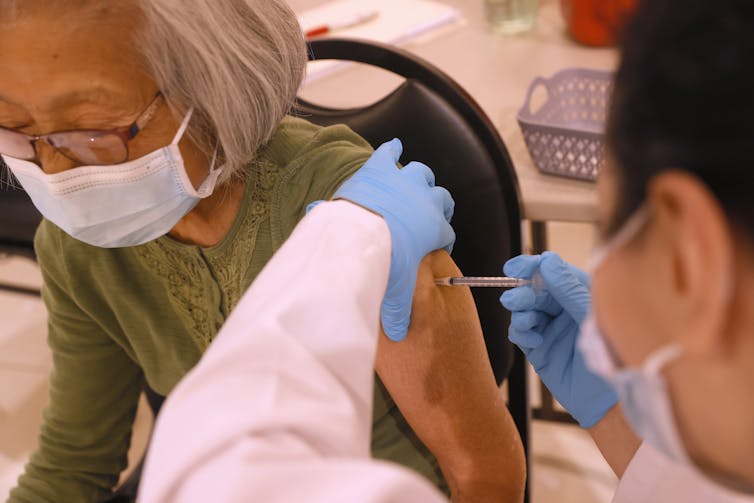
Global vaccination programs will have the greatest impact on curbing new cases of the disease. However, the SARS-CoV-2 vaccine campaign so far has touched only a small percentage of people on the planet. In addition, breakthrough infections in vaccinated people still occur because no vaccine is 100% effective. This means that booster shots will likely be needed to maximize vaccine-induced protection against infection.
With global virus surveillance and the speed at which safe and effective vaccines have been developed, we are well poised to tackle the ever-evolving target that is SARS-CoV-2. Influenza is endemic and evolves quickly, but seasonal vaccination enables life to go on as normal. We can expect the same for SARS-CoV-2 – eventually.
How will we know if and when SARS-CoV-2 becomes endemic?
Four seasonal coronaviruses circulate in humans endemically already. They tend to recur annually, usually during the winter months, and affect children more than adults. The virus that causes COVID-19 has not yet settled down into these predictable patterns and instead is flaring up unpredictably around the globe in ways that are sometimes difficult to predict.
[Over 115,000 readers rely on The Conversation’s newsletter to understand the world. Sign up today.]
Once rates of SARS-CoV-2 stabilize, we can call it endemic. But this transition may look different based on where you are in the world. For instance, countries with high vaccine coverage and plentiful boosters may soon settle into predictable spikes of COVID-19 during the winter months when the environmental conditions are more favorable to virus transmission. In contrast, unpredictable epidemics may persist in regions with lower vaccination rates.
Sara Sawyer, Professor of Molecular, Cellular and Developmental Biology, University of Colorado Boulder; Arturo Barbachano-Guerrero, Postdoctoral Researcher in Virology, University of Colorado Boulder, and Cody Warren, Postdoctoral Fellow in Virology and Immunology, University of Colorado Boulder
This article is republished from The Conversation under a Creative Commons license. Read the original article.