 How to resolve AdBlock issue?
News
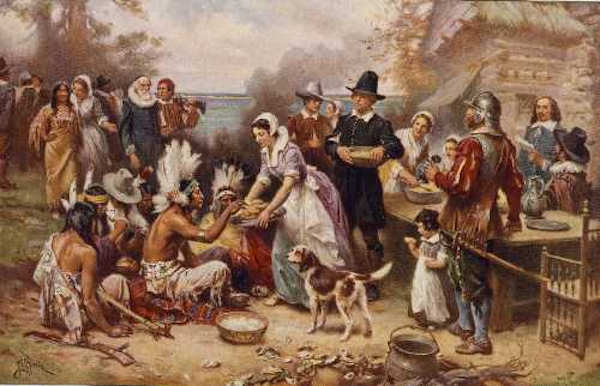
Thanksgiving is fast approaching, and in honor of the holiday, I thought it would be fun to look back on a column about the evolution of the Thanksgiving meal. I enjoyed digging up these facts when I researched it more than 10 years ago.
Several months after its initial publication by Lake County News in 2010, I discovered quite by chance that the column was picked up by a newspaper in Plymouth, Massachusetts. This means what you’re about to read has also been read by those who live near the site of the first Thanksgiving meal.
I’ve kept the recipe I offered when first published, a colonial recipe for pumpkin pie, and have added another, my own pumpkin-apple soup. That way you’ll have recipes to open and close your Thanksgiving dinner.
Sit back, relax, and enjoy the column … and most of all, I hope you have a wonderful Thanksgiving!
In less than two weeks, most of us will be celebrating the quintessential American holiday, Thanksgiving. Roasted turkey with stuffing, bowls of sweet and white potatoes, gravy, cranberry sauce, pumpkin pies and more will fill our tables.
While we consider this delicious fare traditional for the Thanksgiving feast, the truth is that what we serve on this day has evolved over time. What the Pilgrims and Indians ate in 1621 New England bears little resemblance to what we serve today.
In 1841, more than 200 years after what we now refer to as “the first Thanksgiving,” New England historian Alexander Young discovered a letter from Edward Winslow, one of the original colonists, mentioning the 1621 feast. It was Young that gave that feast the moniker mentioned above.
Winslow describes four hunters killing enough fowl to feed the camp for a week. While turkey was plentiful in North America — and eaten by the colonists and Wampanoag Indians — it’s speculated that the “fowl” mentioned in the letter consisted of seasonal waterfowl such as ducks and geese.
Turkey eventually became the fowl of choice on Thanksgiving menus, but not right away. A menu for a New England Thanksgiving dinner circa 1779 mentions roast turkey, but only as one of the meats offered at the meal, not as the star. Also listed are venison, pork, pigeon, and goose. In contrast, this year more than 240 million turkeys will have been raised as the mainstay of our Thanksgiving dinners.
What about the stuffing? Historians tell us that the practice of stuffing the cavities of fowl and other animals with mixtures of breads, spices, and other items is ancient. Romans and Arabs employed this cooking technique. The terms “stuffing” and “dressing” as they relate to cookery derive from Medieval European culinary practices.
The English settlers and Wampanoag did occasionally stuff birds and fish, but if stuffing was used, it likely consisted of herbs and onions, rather than bread.
Any cranberries served at the harvest celebration were likely only in Wampanoag dishes. They enjoyed them raw or sweetened with maple sugar. It would be 50 years before an Englishman mentioned boiling this New England berry with sugar for a “sauce to be eaten with … meat.” Since sugar was expensive in England in 1621, it’s quite possible that there was not any of this imported sweet in New Plymouth at that time.
Today turkey and cranberries are a much-loved food marriage.
The tradition of serving fruit with meat, particularly citrus fruit with fatty meat, goes back thousands of years, likely originating in the Middle East. Examples are found in many cultures and cuisines. The acid in the fruit cuts the fat in the meat. In the case of lean meats such as turkey and chicken, cranberries add flavor to what is generally considered a bland food.
Other classic meat and fruit combos include pork and applesauce, goose and cherry sauce, fish and lemon, and duck l’orange.
It’s hard to imagine Thanksgiving without mashed potatoes, but the original feast didn’t include them. Potatoes, which originated in South America, had made their way across the Atlantic to Europe, but had not been generally adopted into the English diet. The potato was virtually unknown there in the 17th century. At that point they were not included in the diet of the Wampanoag Indians, either (though they did eat other varieties of local tubers).
Today’s Thanksgiving meals typically include a version of a sweet potato (or yam) dish, but that wouldn’t have been included in the original harvest meal.
The sweet potato, which originated in the Caribbean, had also made its way to Europe, but was rare and available only to the wealthy. King Ferdinand and Queen Isabella of Spain liked them and had them planted in their court gardens. Their nephew, King Henry VII of England, liked them as well, and considered them to be an aphrodisiac.
Yams are native to Africa and are often confused with sweet potatoes. Most sweet potato dishes — pies included — are just as successfully made with yams.
Like the white potato, neither yams nor sweet potatoes were part of the diet of the Wampanoag Indians or, for the most part, the English at the time of the first feast.
Have you ever wondered why marshmallows are so often paired with sweet potatoes on the Thanksgiving table? During the late 19th and early 20th centuries, marshmallows were very trendy. They were mass produced, plentiful, and very inexpensive, and were aggressively marketed by the companies that manufactured them.
The earliest recipes found pairing marshmallows and sweet potatoes date to the 1920s. There were typically casseroles where marshmallows were layered with the potatoes. To a lesser extent, they were also paired with candied yams.
Often signature dishes from the 1920s were very sweet, and some historians speculate that this is a reaction to Prohibition.
Pumpkin, native to the New World, was likely available as part of the harvest feast, but not in the form of pie. It may have been baked, possibly by placing it in the ashes of a dying fire, then mixed with animal fat, maple syrup, or honey, and made into a soup, a common way of using it by American Indians.
As for our beloved Thanksgiving pumpkin pie, recipes for stewed pumpkin tempered with sugar, spices, and cream wrapped in pastry have roots in Medieval times, when similar pies were made with squash and gourds.
Corn was part of the earliest Thanksgiving feast, though it was hard Indian corn, unlike the corn we know today. American Indians were cooking with corn long before European settlers arrived, and the English colonists learned to grind it for use in breads, pancakes, porridge, and puddings as a substitute for the grains they were used to.
While we don’t know exactly what was served at the first Thanksgiving, historians can be pretty certain about it included at least some of the bounty available to them, such as cultivated parsnips, carrots, collards, turnips, parsley, spinach, cabbage, sage, thyme, onions, and marjoram, as well as native cranberries, pumpkin, nuts, grapes, lobster, oysters, and other seafood.
In the spirit of the colonial U.S., I’ll leave you with a modern interpretation of Abigail Adams’ Pumpkin Pie, courtesy of The Thirteen Colonies Cookbook by Mary Donovan, et al, as well as a more modern recipe, my own “Thanksgiving Pumpkin Soup with Apples and Sage.” Enjoy!
Abigail Adams' pumpkin pie
1 1/2 cups pumpkin
3/4 cup brown sugar, firmly packed
1/2 teaspoon fresh ginger root, grated
1 teaspoon freshly grated nutmeg
1/2 teaspoon salt
1 cup heavy cream
3/4 cup milk
1/4 cup dark rum, or brandy
3 eggs, lightly beaten
Pecans
Whipped cream
10-inch pie shell, unbaked
Mix all ingredients together and pour them into the prepared pastry shell. Bake at 425 degrees Fahrenheit for 10 minutes. Reduce heat to 350 degrees F and bake for 40 minutes more, or until a knife inserted in the center comes out clean. Garnish with pecans and whipped cream flavored with rum or brandy.
Thanksgiving pumpkin soup with apples
2 tablespoons extra-virgin olive oil
1 tablespoon butter (unsalted preferred)
1 medium yellow onion, peeled and diced
4 sweet, flavorful apples (such as Fuji), peeled, cored, and diced
2 large garlic cloves, peeled and minced
1 quart vegetable or chicken broth
1 large (29 ounce) can pure pumpkin
1 cup apple juice (unfiltered preferred)
1 teaspoon salt
½ teaspoon nutmeg
½ cup half and half
Heat olive oil and melt butter in a Dutch oven or large stockpot.
Add onions and apples and cook over medium heat until tender and caramelized to a golden brown color, about 15 to 20 minutes, stirring to prevent burning.
Add garlic and cook a minute longer, stirring to prevent burning.
Add about a cup of broth to deglaze pot, stirring to pick up caramelized bits of apple and onion. Add the rest of the broth and the pumpkin and stir to combine.
Bring to a boil, then reduce heat and simmer for about 10 minutes, stirring to prevent burning. Remove from heat.
Puree the soup in batches in a blender until smooth, being sure not to overfill the blender. (Note: Be sure the blender lid is sealed well and hold it tight with a towel when blending soup. Hot liquids in a blender can cause the lid to blow off.)
Return soup to pot over low heat to keep warm. Add apple juice, nutmeg, and salt and stir to combine. Taste and adjust seasonings, if necessary.
Just before serving, add half and half and stir to combine.
This makes over two quarts of soup, plenty for six to eight servings.
Recipe by Esther Oertel.
Esther Oertel is a writer and passionate home cook from a family of chefs. She grew up in a restaurant, where she began creating recipes from a young age. She’s taught culinary classes in a variety of venues in Lake County and previously wrote “The Veggie Girl” column for Lake County News. Most recently she’s taught culinary classes at Sur La Table in Santa Rosa. She lives in Middletown, California.
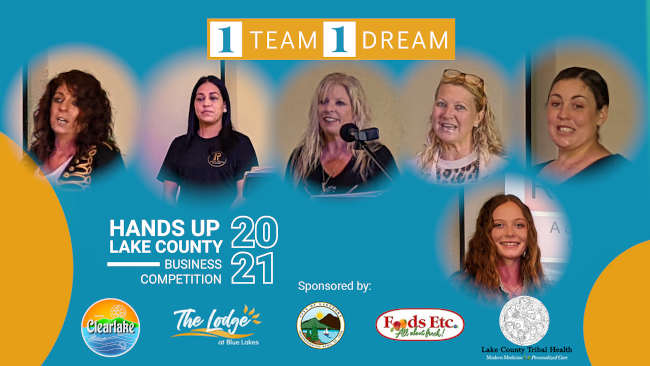
LAKE COUNTY, Calif. — The Hands Up Lake County Small Business “Mini” Competition announced it has narrowed selected its finalists in this year’s event.
The event’s board also offered congratulations to the competitors in this year’s event, noting that each of the 17 participants deserve notice and appreciation.
All are working to make a living in, and be a part of, the local small business economy that is so vital to Lake County.
Five winners selected by a team of judges will now advance to the final competition on Dec. 12: BottleRock Candle Studio, Jennifer Marie Gayda, Cobb; Party Ideas, Anahi Maria Silva, Clearlake; Reese Ranch Retreat, Catherine Ann Reese, Witter Springs; Send Rover on Over, Valeri Ann Stallings, Lakeport; and Wild Hope Bakery, Ashley Ruth Garrigus, Middletown.
Brianna Elisabeth Thomas was selected as the alternate. Thomas’ business, Red Feather Leather, is in Lakeport. She will prepare alongside the five finalists and step in should there be a cancellation.
In its second year, the small business competition drew 50 applicants; 20 were selected to go to phase two, a one-day workshop and training on business planning and digital marketing.
Nineteen attended the training and 17 participated in the next phase, a mini competition which took place on a recent rainy Saturday at the Konocti Vista Casino, Resort & Marina event center in Lakeport.
Judges for the mini competition had a very tough decision — to select the five businesses (and one alternate) who would advance to the final competition and the chance to win one of five cash awards totaling $50,000.
Dennis Darling, owner of Foods Etc. was judging the event for the second time. He believes in the mission of and need for the small business competition.
“Without the businesses and services available locally, buyers go elsewhere to nearby counties for their shopping,” Darling said. “By giving our local entrepreneurs a boost to help with their inventory, equipment, distribution, and other expenses while also investing in their training and development, we can help solve the problem of people taking their business outside the County. This benefits all of us.”
An early supporter of the small business competition, Darling has contributed his time and made a generous donation to the effort. He will be one of several donors who will present the cash awards at the final competition.
The presenters were required to hit key points — a business plan with financial projections, a compelling story about their start in business, a marketing plan and understanding of market ups and downs, among other factors.
Tasked with judging the outcomes Bobby Dutcher, president of the Lake County Chamber of Commerce, said he wished they could award every presenter with the $20,000 1st prize.
“I appreciated being asked to judge the competition, and enjoyed the experience, though I have to say I wasn’t expecting the decision to be so challenging,” he said. “The organizers did a very good job preparing the competitors.”
Judge Sabrina Andrus, owner of three small businesses in Kelseyville — A + H General Store, maker and paper & poppy, said, “What I saw during the competition was a remarkable expression of determination, enthusiasm and dedication — many of the attributes needed to make it in a tough business environment. The diversity of ideas was impressive, our task was incredibly daunting.”
Nic and Mayra Lam, owners of Lam Printing in Clearlake and last year’s first place winners, will be on hand at the Dec. 12 final competition.
“We’ll be there to support small businesses and the dream team who put this all together,” they said.
The Lams also said they wanted to encourage small businesses to apply next year because in the end, all businesses benefit from the opportunity to hone their business plans, polish their ideas and presentation skills, and expand their business networks.
“The publicity on social, online and print media all participating businesses receive is icing on the cake,” they said.
Monica Rosenthal of “R” Vineyards, one of last year’s judges and a recent addition to the 1Team 1Dream Board said, “Getting into the final competition and winning one of the cash prizes is, of course, important. But more than that, the project is helping to build a network of entrepreneurs and startup businesses who now better understand how to develop or enhance their business models for long term sustainability. Too often, we see small businesses close their doors, sometimes in their first year. The idea is to build resiliency. We want to support small businesses for the benefit of the entire County.”
Hands Up Lake County is the signature project of the 1Team 1Dream nonprofit formed to support small businesses who are dedicated to making a home and raising their families in Lake County.
“We believe small businesses are essential to our rural economy and that with a hand up, ideas can become realities,” said founder and major sponsor, Maryann Schmid, who along with her husband, Peter, owns The Lodge at Blue Lakes. “We raised $50,000 for cash prizes this year, up from $28,400 in our first year. For our third annual competition, we’re setting a much higher fundraising goal so we can increase our support for small businesses.”
“The public is invited to support the small businesses and alternate selected for the final competition by voting for the Fan Favorite,” said 1Team 1Dream Board Chair Olga Steele.
From Nov. 17 to Dec. 11 voting will take place on the 1Team 1Dream Facebook page. The winner (and award) will be announced at the final competition.
The Dec. 12 event will be livestreamed, from 11 a.m. to 2 p.m., also on Facebook.
To sponsor the event or for more information contact Olga Steele at 916-849-8170 and visit www.1team1dream.net.
Dogs available for adoption this week include mixes of American bulldog, American Staffordshire terrier, border collie, Doberman, German shepherd, Great Pyrenees, hound, husky, Labrador retriever, mastiff, pit bull and Rottweiler.
Dogs that are adopted from Lake County Animal Care and Control are either neutered or spayed, microchipped and, if old enough, given a rabies shot and county license before being released to their new owner. License fees do not apply to residents of the cities of Lakeport or Clearlake.
The following dogs at the Lake County Animal Care and Control shelter have been cleared for adoption (additional dogs on the animal control website not listed are still “on hold”).
Call Lake County Animal Care and Control at 707-263-0278 or visit the shelter online at http://www.co.lake.ca.us/Government/Directory/Animal_Care_And_Control.htm for information on visiting or adopting.
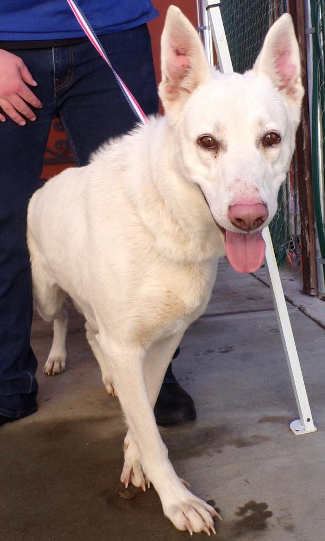
‘Luna’
“Luna” is a 3-year-old female German shepherd-Great Pyrenees mix with a white coat.
She is in kennel No. 2, ID No. LCAC-A-1906.
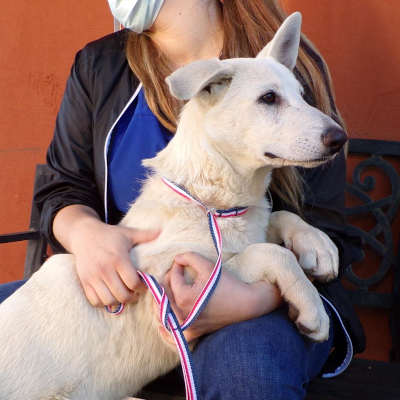
‘Lucy’
“Lucy” is a female German shepherd-Great Pyrenees mix puppy with a white coat.
She is in kennel No. 3, ID No. LCAC-A-1909.

‘George’
“George” is a 1-year-old male American bulldog mix with a short gray coat.
He is in kennel No. 4, ID No. LCAC-A-1430.

Male German shepherd
This 1-year-old male German shepherd has a black and tan coat.
He is in kennel No. 6, ID No. LCAC-A-1892.

Female shepherd-husky
This female shepherd-husky has a short tan coat with black markings and blue eyes.
She is in kennel No. 9, ID No. LCAC-A-1745.

Female shepherd-husky
This 1-year-old female shepherd-husky mix has a short tricolor coat and blue eyes.
She’s in kennel No. 10, ID No. LCAC-A-1746.
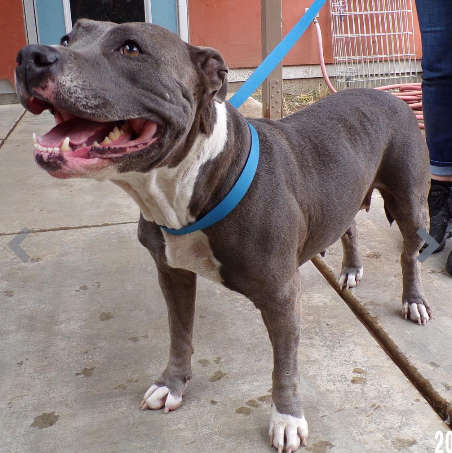
Female American Staffordshire terrier
This 7-year-old female American Staffordshire terrier has a short gray coat and white markings.
She is in kennel No. 11, ID No. LCAC-A-1890.
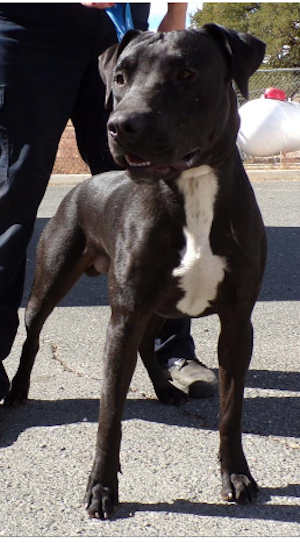
‘Einstine’
“Einstine” is a young Labrador retriever-pit bull mix with s short black coat with white markings.
He is in kennel No. 12, ID No. LCAC-A-1860.

Labrador-pit bull mix
This 5-year-old female chocolate Labrador retriever-pit bull mix has a short chocolate-colored coat.
She is in kennel No. 13, ID No. LCAC-A-1769.

Female mastiff
This 3-year-old female mastiff has a short brindle coat.
She is in kennel No. 15, ID No. LCAC-A-1868.

German shepherd mix pup
This male German shepherd mix puppy has a short tan coat.
He is in kennel No. 17b, ID No. LCAC-A-1849.

German shepherd mix pup
This male German shepherd mix puppy has a short black and tan coat.
He is in kennel No. 17c, ID No. LCAC-A-1850.

‘Cynthia’
“Cynthia” is a 1-year-old female Doberman pinscher-hound mix.
She is in kennel No. 18, ID No. LCAC-A-1891.

Female Rottweiler
This 5-year-old female Rottweiler has a short black and tan coat.
She is in kennel No. 20, ID No. LCAC-A-1833.
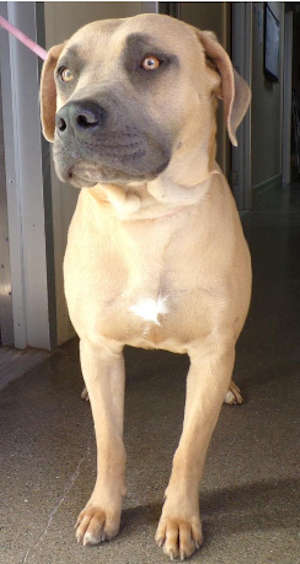
Male mastiff
This 2-year-old male mastiff has a short tan coat.
He is in kennel No. 21, ID No. LCAC-A-1869.
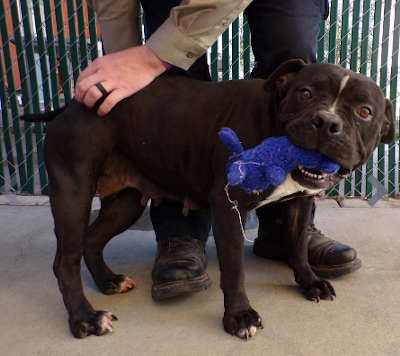
Female American Staffordshire mix
This 3-year-old female American Staffordshire mix has a short black coat with white markings.
She is in kennel No. 23, ID No. LCAC-A-1727.
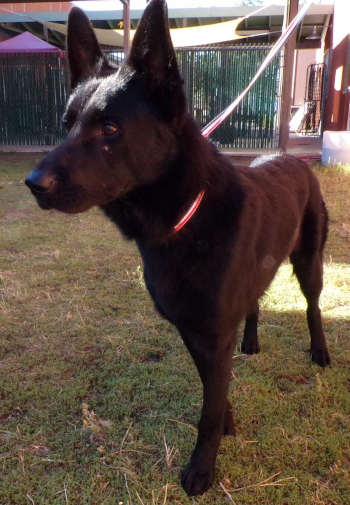
Male German shepherd
This 2-year-old male German shepherd has a black and tan coat.
He is in kennel No. 26, ID No. LCAC-A-1903.

Male shepherd mix
This 2-year-old male shepherd mix has a short black and tan coat.
He is in kennel No. 28, ID No. LCAC-A-1743.
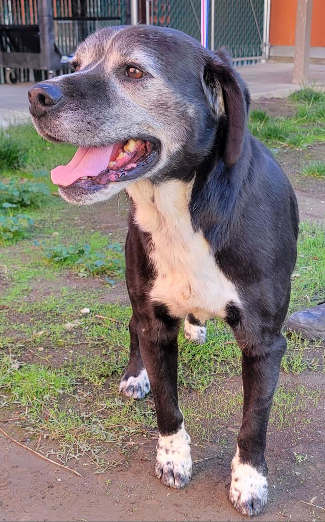
Labrador-border collie mix
This 12-year-old male Labrador retriever-border collie mix has a short black and white coat.
He is in kennel No. 30, ID No. LCAC-A-2101.

Female border collie
This 12-year-old female border collie has a long black and white coat.
She is in kennel No. 31, ID No. LCAC-A-2100.
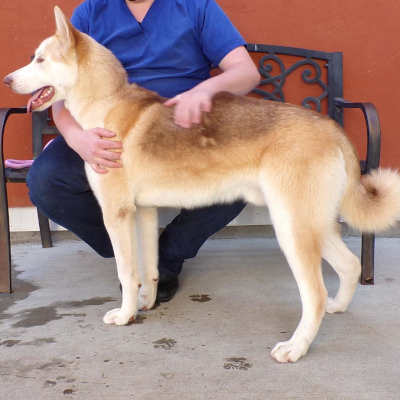
‘Canela’
“Canela” is a 1-year-old male husky mix with a tricolor coat.
He is in kennel No. 32, ID No. LCAC-A-1855.
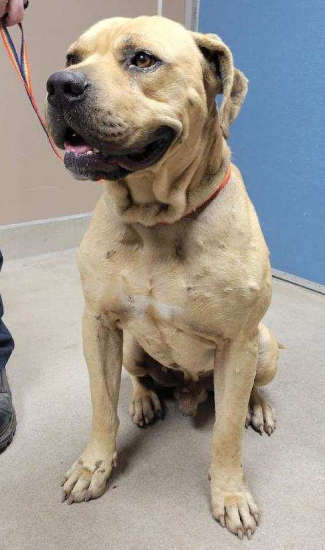
Male pit bull mix
This 3-year-old male pit bull mix has a short tan coat.
He is in kennel No. 34, ID No. LCAC-A-2119.
Email Elizabeth Larson at
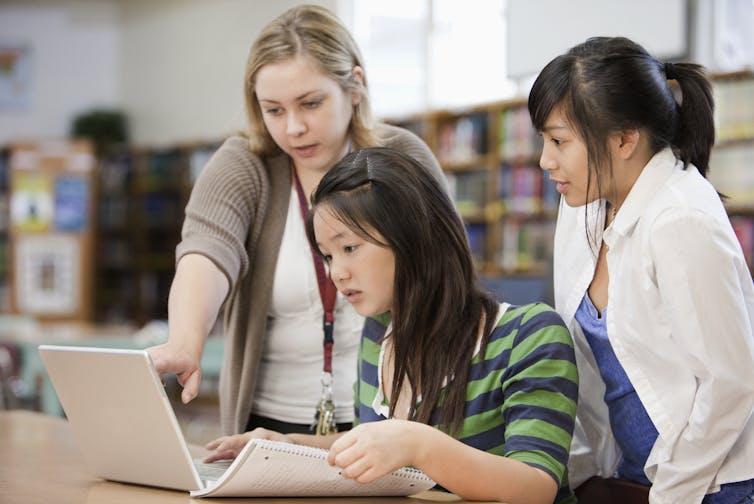
School librarians hear the question all the time: Why do we need school libraries and school librarians when students have the internet?
The perception is that a computer and Wi-Fi are all students need for their informational and recreational needs.
Meanwhile, the number of school librarians in the U.S. has dropped about 20% over the past decade, according to a July 2021 study funded by the Institute of Museum and Library Services. Many states, including Arizona, Texas and Pennsylvania, do not fund or mandate school librarian positions. And an analysis from the National Center for Education Statistics revealed that Hispanic, nonwhite and nonnative English speakers are the students most affected by the decline in librarian positions.
“Access to school librarians has become a major educational equity issue,” says Keith Curry Lance, who with Debra Kachel led the IMLS study. In a recent email he told me, “School districts losing librarians tend to be ones that can least afford the loss in a society characterized by increasing economic inequality.”
As a former school librarian who researches school library issues and trains future school librarians, I know that decades of research demonstrate that K-12 school librarians have a significant impact on student achievement.
Here are four functions that school librarians carry out that I believe make their role more important now than ever.
1. Foster digital literacy
As bestselling author Neil Gaiman put it, “Google can bring you back 100,000 answers. A librarian can bring you back the right one.”
Recently, there has been an alarming rise in misinformation and disinformation. This is bad news for democracy. A 2016 Stanford University study found that nearly 80% of high school students struggle to verify the credibility of a source.
A 2012 Pew Research study revealed that 83% of K-12 teachers think the amount of information available online today is “overwhelming for most students.” Over 70% believe that today’s digital technologies “discourage students from finding and using a wide range of sources for their research.”
School librarians are information literacy experts trained to teach students how to access and navigate the tsunami of digital information available to them, and how to determine the authenticity of that information.

2. Champion the joy of reading
School librarians collect and curate high-quality print and digital materials that help students develop a lifelong love of reading. Take, for example, Tamara Cox, librarian at Wren High School in Piedmont, South Carolina, and winner of the American Library Association’s I Love My Librarian Award in 2018. Cox partnered with the county election commission to bring in voting machines for a book award contest to creatively encourage both reading and civic education.
Findings from studies such as the 2014 South Carolina Association of School Librarians’ impact study affirm that students who attend schools with full-time certified school librarians score higher on standardized reading tests.
3. Help teachers enhance their lessons
School librarians collaborate with classroom teachers to locate resources that enhance and support authentic classroom instruction. For example, Cindy Symonds, the librarian at Round Top Elementary School in Blythewood, South Carolina, collaborated with fourth-grade teachers to have students use databases to research a historic weather event, such as Hurricane Katrina in 2005 or the Joplin Tornado in 2011. Then, with the help of a technology instructor, the students filmed themselves using a green screen to create a weather report.
[Over 115,000 readers rely on The Conversation’s newsletter to understand the world. Sign up today.]
School librarians also work to ensure that students are taught issues of intellectual freedom. They collaborate with teachers to help students understand the ethical use of ideas and information. These include lessons about acknowledging authorship, properly citing content and developing an understanding of how to correctly use and reproduce others’ work.
4. Seek out creative, diverse materials
School librarians select inclusive materials that represent diverse points of views. This ensures that students have materials that reflect their own experiences as well as the experiences of others.
Librarians often provide innovative and creative programs that promote active learning spaces where students share ideas, equipment and knowledge while they work on projects. For example, during Hispanic Heritage month, the students at James Simons Montessori School in Charleston, South Carolina, read books by Latino authors and researched the authors’ countries of origin. They also made artifacts, such as national flags and maps with landmarks and used Makey Makey invention kits to code and present their facts on interactive displays. The project combined research, literacy, coding, circuitry, self-expression and creativity.
Rosie Herold, who oversaw the project, says observers might be “taken aback by my library’s apparent disorder, the lack of desks, the constant movement of students, cardboard everywhere, the constant chatter and the energy level.”
“But,” Herold adds, “spend more than a cursory look, more than a quick investigation and you will find the future of education.”
Karen W. Gavigan, Professor of Information Science, University of South Carolina
This article is republished from The Conversation under a Creative Commons license. Read the original article.

Bombardment of Earth’s surface by asteroids six or more miles long likely delayed the accumulation of oxygen in Earth’s atmosphere.
New evidence shows the number of ancient, large celestial bodies that crashed into Earth was up to 10 times higher than previously believed. This finding has led a team including a UC Riverside scientist to conclude that these collisions likely shaped the development of Earth’s chemistry early in its history.
The team’s work is detailed in a recent Nature Geoscience article. Impacts by asteroids or comets during the earliest years of Earth’s history likely contributed to the beginnings of life and its early evolution, yet later they delayed the development of more complex life-forms that require oxygen.
“Asteroid impacts can enhance the release of gases from the Earth that consume oxygen,” explained research team member and UCR biogeochemistry professor Tim Lyons.
“In addition, it’s common for meteorites to contain large amounts of iron that can interact with water and generate gases that affect the composition of the atmosphere,” he said. For example, iron can increase the flux of hydrogen and methane, both of which consume oxygen.
The revised understanding of our atmosphere is based on recent discoveries in Earth’s crust that point to a frequency of impacts roughly 2.4 to 3.5 billion years ago that greatly exceeds previous estimates. When large asteroids or comets struck, energy was released and it vaporized rocky materials in the planet’s crust. Small droplets of molten rock in the impact plume condensed, solidified, and fell back to Earth, creating round, sand-sized particles.
These particles, or impact spherules, are markers of ancient collisions. “In recent years, a number of new spherule layers have been identified in drill cores and outcrops, increasing the total number of known impact events during the early Earth,” said Nadja Drabon, a Harvard University professor and research team member.

The research team, led by Simone Marchi at Southwest Research Institute, found that the impacts tapered off around 2.4 billion years ago. This reduction coincided with a major shift in surface chemistry triggered by the rise in atmospheric oxygen, dubbed the Great Oxidation Event.
“For eons, there was a dance between the rise and fall of oxygen before it became a permanent feature of our atmosphere,” Lyons said. “Then, finally, the balance tipped for a number of reasons, one of which was the declining frequency of impacts.”
Readers need not be concerned about the re-emergence of an era in which we are again bombarded by giant asteroids. Impacts are far less common over the second half of Earth’s history. And while there are thousands of near-Earth objects today, some with the potential to hit Earth, the vast majority are quite small, and NASA closely monitors the larger ones.
Remarkably, though, impacts played a major role in shaping the history of life on Earth over billions of years. In addition to affecting oxygen, they caused major extinction events and changed the composition of the atmosphere in ways that warmed Earth’s surface and triggered the formation of organic molecules that likely served as the initial building blocks of life.
Impacts were particularly large and frequent in our early history. As the frequency and size of extraterrestrial object impacts declined, their ability to hold back the accumulation of oxygen in the atmosphere also declined, contributing to the initial rise of oxygen in Earth’s atmosphere roughly 2.4 billion years ago.
“This change,” Lyons said, “set the stage for the complex, oxygen-requiring life that followed, including the first animals more than a billion and a half years later.”
Jules Bernstein is senior public information officer for the University of California, Riverside.

High cyanotoxin levels in September prompted the advisory for individual household intakes, not public water systems.
With the generous help and support of Golden State and Mt. Konocti Mutual Water companies, alternative water filling stations were established to provide safe drinking water for affected residents. County officials said this likely helped prevent acute health issues for many.
The most recent Clear Lake cyanotoxin sampling, conducted Oct. 26, showed one shoreline site is at the danger level for cyanotoxins, five sites are at the warning level and two sites are at the caution level.
The highest microcystin level, at Redbud Park in Clearlake, was 25.11 µg/L and there were no detections of anatoxin-a. View the most recent data here.
Now that microcystin and anatoxin levels in the lake are significantly reduced, the drinking water health advisory is being lifted.
Alternative water-fill stations will remain in place until the end of the year, to give people time to service their systems as recommended below. Recreational water advisory signs are also being updated.
Officials cautioned that the fact Clear Lake cyanotoxin levels have improved does not ensure it is safe to drink water from individual privately managed water systems. Earlier testing showed other contaminants may also be present in these systems. People using these private water systems must make sure they are regularly maintained and tested; for cyanotoxins, and also coliform and nitrates.
As high cyanotoxin levels subside, officials urge residents not on public water systems to flush their water treatment systems before starting to use the water for drinking, cooking, and other uses. Filters may be contaminated with algal — or cyanobacterial — matter that can release toxins, so it’s recommended that treatment system filters be replaced.
Toxins can also remain in holding tanks and pipes, so holding tanks should be drained and indoor spigots run for five to 10 minutes. Consult the company that services your treatment system for instructions or assistance specific to your system.
Find helpful guidance — issued by the Thurston County Public Health and Social Services Department in Washington state — for purging household plumbing after a cyanobacteria bloom here.
Remember: If you are getting water from a public water system, your drinking water is being monitored and treated for cyanotoxins, and meets state and federal standards. These precautions are listed only for people drawing water directly from the lake for their individual household use. Boiling and bleach will not reduce cyanotoxins, and may make the problem worse.
“Now that we have seen drought and climate change are bringing about historically high cyanobacteria toxin levels, we need to prepare for the coming season,” the Lake County Health Services and Water Resources departments and Big Valley Band of Pomo Indians said in a joint statement.
People who have their own water systems should consider alternative water sources or more robust treatment with frequent testing and monitoring.
Public Health and local water districts are planning community forums in the coming months to explore potential solutions.