 How to resolve AdBlock issue?
News
Health care decisions include whether to approve or to disapprove diagnostic tests, surgical procedures and medication, and other forms of health care.
Patients make their own health care decisions if they both can understand the nature and consequences of a health care decision — including understanding the significant benefits, risks and alternatives — and can communicate a decision.
However, if a patient loses their “capacity” to make health care decisions then decisions are made by the patient’s agent, conservator or a designated surrogate, as relevant.
A person with capacity can appoint an agent to make health care decisions. An Advance Health Care Directive, or AHCD, is used to appoint an agent, to designate a primary physician (optional), and to give specific health care instructions.
There are various different AHCD forms, such as, the California Medical Association AHCD, the Hospice AHCD, and the California Statutory AHCD.
The California Medical Association and Hospice AHCD invite the owner of the AHCD to consider their personal values and what activities and abilities allow for life to be enjoyable.
Providing such personal insights to one’s agent better enables the agent to evaluate the benefits, risks and alternatives to proposed health care treatment, including surgeries and artificial life support.
Agents are required to make health care decisions, “in accordance with the principal’s individual health care instructions, if any, and other wishes to the extent known to the agent.”
Otherwise, lacking patient instructions and wishes, such decisions are to be made in the “principal’s best interest,” taking into consideration the “principal’s personal values to the extent known to the agent.”
Therefore, a candid and thorough conservation between a person and their possible agents improves the likelihood of a favorable outcome. People should select agents whom they expect to comply with their wishes.
As an immediate safeguard, a patient with capacity may designate a temporary health care surrogate to make health care decisions while the patient is in hospital, ill or being treated.
To designate a surrogate, a patient must either do so in writing or personally inform their primary physician (or the person acting as such) of the designation; the designation then becomes part of the patient’s medical chart.
A surrogate’s designation ends once the patient is discharged from hospital, recovers from illness or completes their medical treatment, as relevant. However, a surrogate designation may not exceed 60 days.
What happens if someone has an Agent under an AHCD and also has either a designated surrogate or a court appointed conservator? The surrogate has first priority to make decisions during the period of the surrogate’s temporary authority. Thereafter, the authority of the agent resumes unless the AHCD was revoked.
With that exception, the authority of an agent under an AHCD has priority over the authority of any other person, including a conservator or a spouse.
The primary care provider should receive a copy of the AHCD, and a Health Insurance Portability & Accountability Act, or HIPAA, release regarding confidential medical information, to keep them on file so that such documents are available if and when needed.
A patient can revoke the authority of their agent or their surrogate for health care decisions so long as the patient has capacity. Such revocation can either be in writing signed by the patient or by the patient personally telling their primary physician.
People may wish to reconsider their health care instructions and wishes if and when significant changes in their health, life circumstances and wishes occur.
Such reconsiderations should involve additional conversations with agents and perhaps a new AHCD with revised instructions.
The foregoing is not legal advice. If needing legal guidance regarding health care decision planning consult an estate planning attorney.
Dennis A. Fordham, attorney, is a State Bar-Certified Specialist in estate planning, probate and trust law. His office is at 870 S. Main St., Lakeport, Calif. He can be reached at
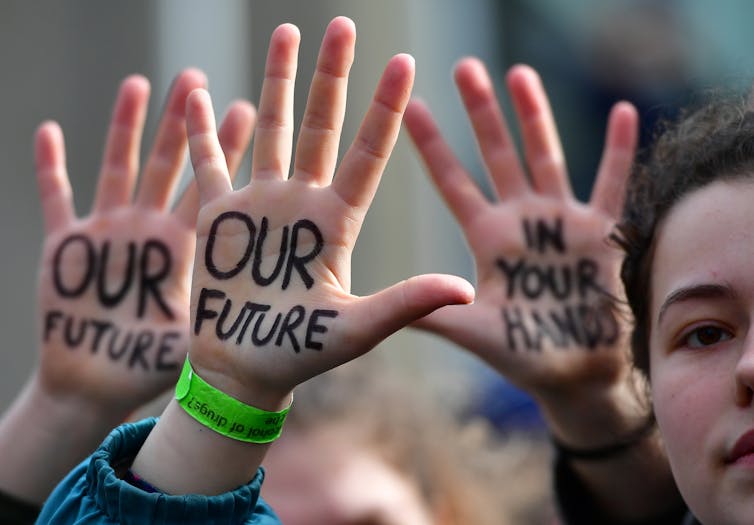
Humans do not capitalize nearly enough on our most significant evolutionary advantage: a unique ability to take forward-looking actions that influence the future for the better.
Exhibit A: Climate change is here, and things are changing quickly for the worse. However, even as dangerous and costly weather events grow more frequent and severe, we still don’t do what we need to do.
Ideally, everyone would ratchet up their efforts to protect the climate as smartly as possible. But how can each person help in the most valuable ways? As a professor of organizational behavior, I study leadership and proactive problem solving. Research in these fields offers some helpful advice.
Untapped human potential
“I’d love to change the world, but I don’t know what to do, so I leave it up to you.” - Alvin Lee, Ten Years After, 1971
When too many people think like those lyrics, problems don’t get solved.
The only way societies will do enough to keep climate change in check is if they reject passivity, experiment with new strategies and tactics, and wisely strengthen their coping repertoire.
People avoid doing much about climate change for many reasons: 1) They worry about time and cost; 2) they believe it’s difficult to change; 3) they have faulty assumptions, like feeling unable to help or that other people or new technologies will save the planet; 4) they have psychological biases, like caring more about the present than the future; and 5) they’re uncertain about the best ways to participate.
Laying a foundation for higher-impact action begins with changing common mindsets. Most essential, and a tough task, is to behave far more proactively than most people have up until now.
How to become more proactive
Based on psychological and organizational behavior research, here are some starting points:
1) View yourself as someone who cares about the planet and the future.
Your self-identity is how you view and describe yourself, and this generates corresponding behaviors. How you self-identify can help you think about your future, choose your preferred actions and provide a motivating standard or model to strive for. Take “caring” a step further by viewing yourself as a proactive person who thinks ahead and helps to make the future better than it would be without your contributions.

2) Assess, honestly, your efforts to reduce the harmful effects of climate change.
In the same way people tend to overestimate their driving, athletic and leadership skills, they also tend to believe they are more environmentally friendly than most other people. This misleading bias can breed complacency and hinder action.
If people assess themselves accurately compared to what they could and should be doing, most will see great untapped potential to make a difference. To unleash that potential, consider applying time management strategies found in business management that can free you from countless unpleasant and unproductive tasks and allow you to devote attention and time to impactful activities that take most advantage of your skills.
3) Assume responsibility for engaging more usefully in solving the problems of climate change.
Feeling responsible motivates action. A key question is how you define responsibility.
This is different from pinning all responsibility for fixing things on the guiltiest transgressors. In the blame game, fossil fuel companies have worked hard to shift responsibility for the world’s climate change predicament to consumers and not themselves. Remember this from George Bernard Shaw: “We are made wise not by the recollection of our past, but by the responsibility for our future.” What the future holds really is up to us.

4) Resolve to actively navigate the changing future.
In general, thinking more about the future – rather than just the present and past – yields more positive life and work outcomes. Regarding climate change, it is imperative to look ahead and act accordingly so you’re helping to forge the best possible outcomes rather than leaving them to chance.
Today’s leading psychologists strongly advise more mental prospecting – actively envisioning likely and possible futures, exploring for opportunities like old-time gold prospectors and salespeople searching for new leads – and continually seeking the best pathways forward.
5) Learn more about humanity’s biggest challenges.
Climate change affects everything, so it shouldn’t be hard to find an arena that’s personally interesting. Learn enough from accurate sources to discuss with others, consider how your skill sets can help and figure out where you can contribute best.
Here are a few places to start: Project Drawdown offers big-picture solutions for lowering greenhouse gas emissions. NOAA provides advice for what individuals can do and where to learn more. The BBC had a good list of 10 simple ways to take action on climate change a few years ago. Climate scientist Michael Mann’s new book discusses what individuals can do politically and collectively for the highest impact.
6) Help solve problems and seek constructive opportunities.
A common refrain in MBA and executive development programs is to turn problems into opportunities, and climate change offers many opportunities, from cleaner energy sources to better construction techniques and food production. This approach opens conversations about long-term change rather than just short-term damage control. It also uncovers diverse views, addresses underlying problems rather than just their visible symptoms and encourages more ideas – thus enhancing problem-solving.
7) Address the root causes and embrace “multisolving.”
In solving business problems, it’s important to not simply treat the most visible symptoms but to identify and address root causes. “Multisolving” identifies solutions that address a root cause of multiple problems.
Climate change is one root of many current problems, from disasters and species extinctions to food and water shortages to social injustice and wars. Military officials often refer to it as a “threat multiplier.” Stopping climate change could help alleviate pressures elsewhere. Backing up further in the cause-and-effect chain, carbon emissions cause global warming and climate change.
So, personal efforts to reduce your “carbon footprint,” like using less fossil fuel, help. So does pushing politicians and businesses to reduce carbon and methane emissions by limiting fossil fuel extraction and investing in zero-carbon energy.
The best climate solutions will reduce harm and spread all kinds of benefits. Stabilizing the climate will require help from every direction. It isn’t just an “all hands on deck” moment – the planet needs all heads and hands being proactive.
Thomas S. Bateman, Professor Emeritus of Organizational Behavior, University of Virginia
This article is republished from The Conversation under a Creative Commons license. Read the original article.
Could lava tubes, caves, or subsurface habitats offer safe refuge for future astronauts on Mars? Scientists with NASA’s Curiosity Mars rover team are helping explore questions like that with the Radiation Assessment Detector, or RAD.
Unlike Earth, Mars doesn’t have a magnetic field to shield it from the high-energy particles whizzing around in space. That radiation can wreak havoc on human health, and it can seriously compromise the life support systems that Mars astronauts will depend on, as well.
Based on data from Curiosity’s RAD, researchers are finding that using natural materials such as the rock and sediment on Mars could offer some protection from this ever-present space radiation. In a paper published this summer in JGR Planets, they detailed how Curiosity remained parked against a cliff at a location called “Murray Buttes” from Sept. 9 to 21, 2016.
While there, RAD measured a 4% decrease in overall radiation. More significantly, the instrument detected a 7.5% decrease in neutral particle radiation, including neutrons that can penetrate rock and are especially harmful to human health. These numbers are statistically high enough to show it was due to Curiosity’s location at the foot of the cliff rather than normal changes in the background radiation.
“We’ve been waiting a long time for the right conditions to get these results, which are critical to ensure the accuracy of our computer models,” said Bent Ehresmann of the Southwest Research Institute, lead author of the recent paper. “At Murray Buttes, we finally had these conditions and the data to analyze this effect. We’re now looking for other locations where RAD can repeat these kinds of measurements.”

A space weather outpost on Mars
Most of the radiation measured by RAD comes from galactic cosmic rays — particles cast out by exploding stars and sent pinballing throughout the universe. This forms a carpet of “background radiation” that can pose health risks for humans.
Far more intense radiation sporadically comes from the Sun in the form of solar storms that throw massive arcs of ionized gas into interplanetary space.
“These structures twist in space, sometimes forming complex croissant-shaped flux tubes larger than Earth, driving shock waves that can efficiently energize particles,” said Jingnan Guo, who led a study, published in September in The Astronomy and Astrophysics Review, analyzing nine years of RAD data while she was at Germany’s Christian Albrecht University.
“Cosmic rays, solar radiation, solar storms — they are all components of space weather, and RAD is effectively a space weather outpost on the surface of Mars,” says Don Hassler of the Southwest Research Institute, principal investigator of the RAD instrument.
Solar storms occur with varying frequency based on 11-year cycles, with certain cycles bearing more frequent and energetic storms than others. Counterintuitively, the periods when solar activity is at its highest may be the safest time for future astronauts on Mars: The increased solar activity shields the Red Planet from cosmic rays by as much as 30 to 50%, compared to periods when solar activity is lower.
“It’s a trade-off,” Guo said. “These high-intensity periods reduce one source of radiation: the omnipresent, high-energy cosmic ray background radiation around Mars. But at the same time, astronauts will have to contend with intermittent, more intense radiation from solar storms.”
“The observations from RAD are key to developing the ability to predict and measure space weather, the Sun’s influence on Earth and other solar system bodies,” said Jim Spann, space weather lead for NASA’s Heliophysics Division. “As NASA plans for eventual human journeys to Mars, RAD serves as an outpost and part of the Heliophysics System Observatory — a fleet of 27 missions that investigates the Sun and its influence on space — whose research supports our understanding of and exploration of space.”
RAD has measured the impact of more than a dozen solar storms to date (five while traveling to Mars in 2012), although these past nine years have marked an especially weak period of solar activity.
Scientists are just now starting to see activity pick up as the Sun comes out of its slumber and becomes more active. In fact, RAD observed evidence of the first X-class flare of the new solar cycle on Oct. 28, 2021. X-class flares are the most intense category of solar flares, the largest of which can lead to power outages and communications blackouts on Earth.
“This is an exciting time for us, because one of the important objectives of RAD is to characterize the extremes of space weather. Events such as solar flares and storms are one type of space weather that happens most frequently during increased solar activity — the time we are approaching now,” Ehresmann said. More observations are needed to assess just how dangerous a really powerful solar storm would be to humans on the Martian surface.
RAD’s findings will feed into a much larger body of data being compiled for future crewed missions. In fact, NASA even equipped Curiosity’s counterpart, the Perseverance rover, with samples of spacesuit materials to assess how they hold up to radiation over time.
For more information visit https://mars.nasa.gov/msl/home/ and https://www.nasa.gov/mission_pages/msl/index.html.

Following the open session of its regular Tuesday night meeting, the council went into a nearly hourlong closed session just before 6:45 p.m. to discuss the city’s lawsuit against opioid distributor AmerisourceBergen Drug Corp. as well as another potential case of litigation.
When the council emerged shortly after 7:35 p.m., City Attorney David Ruderman said the council had voted 5-0 to approve a settlement with McKesson, AmerisourceBergen, Cardinal Health and Janssen, also known as Johnson & Johnson, regarding the city’s lawsuit against them related to their contribution to the opioid epidemic.
The city reported that the settlement will provide up to $2.263 billion to California and its 431 eligible counties and cities.
On July 21, several states attorneys general, including California’s, entered into a $26 billion settlement with Cardinal, McKesson and AmerisourceBergen — the nation’s three major pharmaceutical distributors — and Johnson & Johnson, which manufactured and marketed opioids.
At that time, the California Attorney General’s Office said eligible cities and counties had until Jan. 2, 2022, to join the settlements.
City Manager Kevin Ingram confirmed to Lake County News that the council’s action was necessary to comply with the upcoming deadline.
“We do not have a good estimate to report yet on what Lakeport might receive,” said Ingram.
To determine amounts, he said there is a complicated formula based on the number of current litigants to approve the settlement and the number of other jurisdictions who are not currently litigants but would like to join as participants.
“Once this is known, likely at the end of January, we should have a better idea as to what the city will be entitled to,” Ingram said.
On Tuesday, Ruderman also announced a second council action from closed session, to initiate litigation against McKinsey and Co. for its role in furthering the opioid epidemic. That vote also was unanimous.
Earlier this year, McKinsey and Co., a global consulting firm, reached agreements with 49 states, along with several territories and the District of Columbia, to pay $600 million in settlements for its part in the opioid crisis.
Email Elizabeth Larson at
The Big Valley Basin Draft Groundwater Sustainability Plan, or GSP, is now available for review during a formal 21-day public comment period that ends Dec. 3.
The GSP is being prepared pursuant to the requirements of the Sustainable Groundwater Management Act of 2014, or SGMA, which was amended in 2015.
Deputy Water Resources Director Marina Deligiannis told Lake County News that the Big Valley Draft GSP is the first and only draft GSP prepared for Lake County as required by SGMA.
She said Lake County has only one priority basin, Big Valley Basin (5-015), a “medium” priority basin as identified under California Department of Water Resources Bulletin 118.
Bulletin 118 is the state’s official publication on the occurrence and nature of groundwater in California. An updated version of the plan was just released this week.
In 2018, the state was considering the reclassification of the Upper Lake groundwater basin as a priority basin, but after efforts from the Lake County Water Resources Department, Department of Agriculture and Farm Bureau to update the irrigated acres in the basin, the state dropped the classification to “very low,” Deligiannis said.
On April 13 the county brought on Luhdorff & Scalmanini, Consulting Engineers, and Stantec Consulting Services to develop and implement the Big Valley GSP, she said.
“Since then, the team has been hard at work to develop the GSP with anticipation of GSP adoption by the SGMA deadline of Jan. 31, 2022,” Deligiannis said.
County officials offered the following suggestions for providing written comments.
• When submitting comments, please include the Draft GSP section number to which you are referring, along with any line numbers that relate to the content you are referencing. Each section is labeled, and you will find line numbers on the left side of each document.
• If you have comments on tables or figures in the Draft GSP, please provide the number and title for tables and figures you are referencing.
• If you have multiple comments, please organize them by section.
• Please also note, any comments submitted become part of the public record.
All comments on the Draft GSP must be submitted by Dec. 3 in one of three ways:
• By email to
• By postal mail: Big Valley Basin Draft GSP Comments, c/o Lake County Water Resources Department, 255 N. Forbes St., Room 309, Lakeport, CA 95453.
• In-person drop-off: Water Resources front desk, Big Valley Basin Draft GSP Comment, Attention: Lake County Water Resources Department, 255 N. Forbes St., Room 309, Lakeport, CA 95453.
If you have questions regarding the Draft GSP public comment period, or if you have any issues accessing the Draft GSP files, contact Water Resources at
You can find all GSP-related meetings, including meeting agendas, presentation materials, and recordings, in the archive here.
To receive updates about GSP development and future implementation, sign up for the Big Valley Basin GSP Interested Parties list here.
The center, or LFRC, is now accepting donations at any branch of WestAmerica Bank. These donations go toward the purchase of food for residents of Lake County only and are much
appreciated by all who receive them.
This program is funded 100% from generous community donations and that support will help keep this program going year after year.
A gift to the program also allows donors to write a dedication to loved ones past and present, if desired.
The 2021 Holiday Food Program will be drive-thru only. Participants will receive one gift card per family to either Foods Etc. in Clearlake, or Bruno’s Shop Smart in Lakeport, depending on the home address of the recipient.
To sign up and receive a card you must bring photo identification and proof of physical address. All participants must wear masks, no exceptions.
Residents of Glenhaven, Clearlake Oaks, Spring Valley, Clearlake and Lower Lake, are invited to sign up and receive their gift card on Dec. 4 at the Burns Valley School parking lot from 10 a.m. until 400 households have applied.
Residents of Kelseyville, Finley, Lakeport, Upper Lake, Nice and Lucerne are invited to sign up and receive their gift card on Friday, Dec. 17, starting at 9 a.m. until 400 gift cards have been distributed. That sign-up event will be held in the Lake Family Resource Center parking lot at 896 Lakeport Boulevard, Lakeport.
For more information on how to receive a card or to donate please call 707-279-0563, Extension 135, or contact the center at www.facebook.com/LakeFRC.