LAKE COUNTY, Calif. — Lake County Animal Care and Control has another large and interesting lineup of dogs for adoption this week.
Dogs available for adoption this week include mixes of American bulldog, American Staffordshire terrier, border collie, Doberman, German shepherd, Great Pyrenees, hound, husky, Labrador retriever, mastiff, pit bull and Rottweiler.
Dogs that are adopted from Lake County Animal Care and Control are either neutered or spayed, microchipped and, if old enough, given a rabies shot and county license before being released to their new owner. License fees do not apply to residents of the cities of Lakeport or Clearlake.
The following dogs at the Lake County Animal Care and Control shelter have been cleared for adoption (additional dogs on the animal control website not listed are still “on hold”).
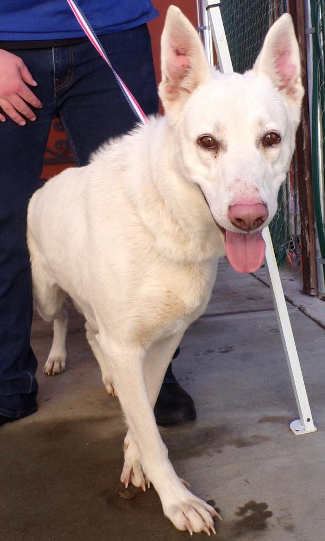
“Luna” is a 3-year-old female German shepherd-Great Pyrenees mix in kennel No. 2, ID No. LCAC-A-1906. Photo courtesy of Lake County Animal Care and Control. ‘Luna’
“Luna” is a 3-year-old female German shepherd-Great Pyrenees mix with a white coat.
She is in kennel No. 2, ID No. LCAC-A-1906.
“George” is a 1-year-old male American bulldog mix in kennel No. 4, ID No. LCAC-A-1430. Photo courtesy of Lake County Animal Care and Control. ‘George’
“George” is a 1-year-old male American bulldog mix with a short gray coat.
He is in kennel No. 4, ID No. LCAC-A-1430.
This 1-year-old male German shepherd is in kennel No. 6, ID No. LCAC-A-1892. Photo courtesy of Lake County Animal Care and Control. Male German shepherd
This 1-year-old male German shepherd has a black and tan coat.
He is in kennel No. 6, ID No. LCAC-A-1892.
This female shepherd-husky is in kennel No. 9, ID No. LCAC-A-1745. Photo courtesy of Lake County Animal Care and Control. Female shepherd-husky
This female shepherd-husky has a short tan coat with black markings and blue eyes.
She is in kennel No. 9, ID No. LCAC-A-1745.
This 1-year-old female shepherd-husky mix is in kennel No. 10, ID No. LCAC-A-1746. Photo courtesy of Lake County Animal Care and Control. Female shepherd-husky
This 1-year-old female shepherd-husky mix has a short tricolor coat and blue eyes.
She’s in kennel No. 10, ID No. LCAC-A-1746.
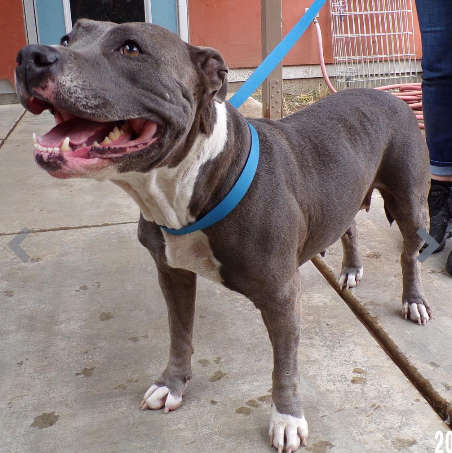
This 7-year-old female American Staffordshire terrier is in kennel No. 11, ID No. LCAC-A-1890. Photo courtesy of Lake County Animal Care and Control. Female American Staffordshire terrier
This 7-year-old female American Staffordshire terrier has a short gray coat and white markings.
She is in kennel No. 11, ID No. LCAC-A-1890.
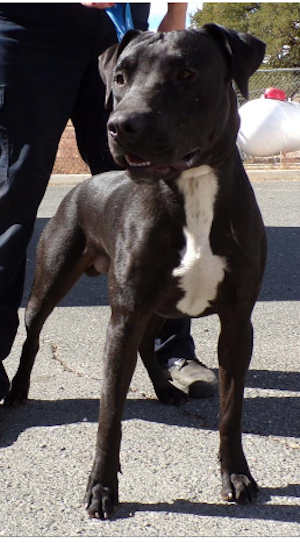
“Einstine” is a young Labrador retriever-pit bull mix in kennel No. 12, ID No. LCAC-A-1860. Photo courtesy of Lake County Animal Care and Control. ‘Einstine’
“Einstine” is a young Labrador retriever-pit bull mix with s short black coat with white markings.
He is in kennel No. 12, ID No. LCAC-A-1860.
This 5-year-old female chocolate Labrador retriever-pit bull mix is in kennel No. 13, ID No. LCAC-A-1769. Photo courtesy of Lake County Animal Care and Control. Labrador-pit bull mix
This 5-year-old female chocolate Labrador retriever-pit bull mix has a short chocolate-colored coat.
She is in kennel No. 13, ID No. LCAC-A-1769.
This 3-year-old female mastiff is in kennel No. 15, ID No. LCAC-A-1868. Photo courtesy of Lake County Animal Care and Control. Female mastiff
This 3-year-old female mastiff has a short brindle coat.
She is in kennel No. 15, ID No. LCAC-A-1868.
This male German shepherd mix puppy is in kennel No. 17b, ID No. LCAC-A-1849. Photo courtesy of Lake County Animal Care and Control. German shepherd mix pup
This male German shepherd mix puppy has a short tan coat.
He is in kennel No. 17b, ID No. LCAC-A-1849.
“Cynthia” is a 1-year-old female Doberman pinscher-hound mix in kennel No. 18, ID No. LCAC-A-1891. Photo courtesy of Lake County Animal Care and Control. ‘Cynthia’
“Cynthia” is a 1-year-old female Doberman pinscher-hound mix.
She is in kennel No. 18, ID No. LCAC-A-1891.
This 5-year-old female Rottweiler is in kennel No. 20, ID No. LCAC-A-1833. Photo courtesy of Lake County Animal Care and Control. Female Rottweiler
This 5-year-old female Rottweiler has a short black and tan coat.
She is in kennel No. 20, ID No. LCAC-A-1833.
This 3-year-old female American Staffordshire mix is in kennel No. 23, ID No. LCAC-A-1727. Photo courtesy of Lake County Animal Care and Control. Female American Staffordshire mix
This 3-year-old female American Staffordshire mix has a short black coat with white markings.
She is in kennel No. 23, ID No. LCAC-A-1727.
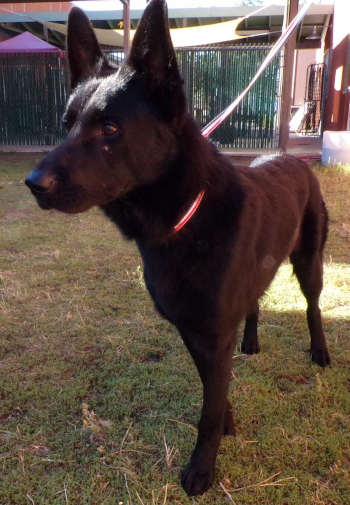
This 2-year-old male German shepherd is in kennel No. 26, ID No. LCAC-A-1903. Photo courtesy of Lake County Animal Care and Control. Male German shepherd
This 2-year-old male German shepherd has a black and tan coat.
He is in kennel No. 26, ID No. LCAC-A-1903.
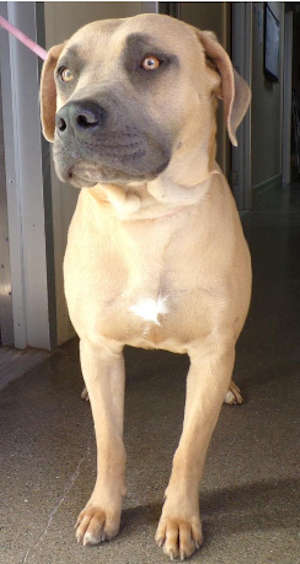
This 2-year-old male mastiff in kennel No. 27, ID No. LCAC-A-1869. Photo courtesy of Lake County Animal Care and Control. Male mastiff
This 2-year-old male mastiff has a short tan coat.
He is in kennel No. 27, ID No. LCAC-A-1869.
This 2-year-old male shepherd mix is in kennel No. 28, ID No. LCAC-A-1743. Photo courtesy of Lake County Animal Care and Control. Male shepherd mix
This 2-year-old male shepherd mix has a short black and tan coat.
He is in kennel No. 28, ID No. LCAC-A-1743.
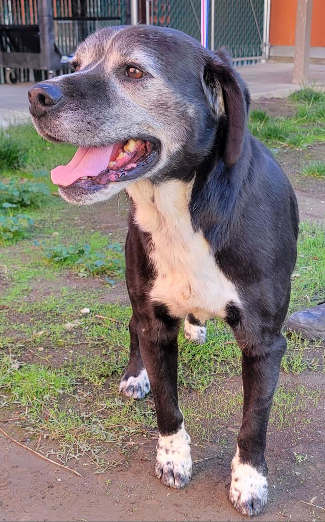
This 12-year-old male Labrador retriever-border collie mix is in kennel No. 30, ID No. LCAC-A-2101. Photo courtesy of Lake County Animal Care and Control. Labrador-border collie mix
This 12-year-old male Labrador retriever-border collie mix has a short black and white coat.
He is in kennel No. 30, ID No. LCAC-A-2101.
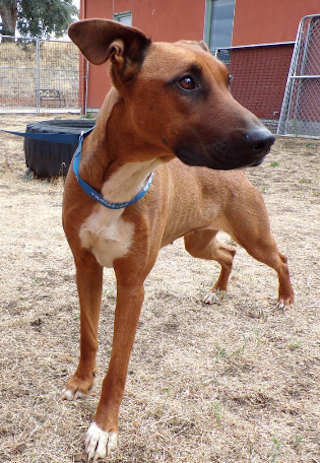
This 3-year-old male pit bull mix is in kennel No. 34, ID No. LCAC-A-2119. Photo courtesy of Lake County Animal Care and Control. Male pit bull mix
This 3-year-old male pit bull mix has a short tan coat.
He is in kennel No. 34, ID No. LCAC-A-2119.
Email Elizabeth Larson at This email address is being protected from spambots. You need JavaScript enabled to view it.. Follow her on Twitter, @ERLarson, or Lake County News, @LakeCoNews.
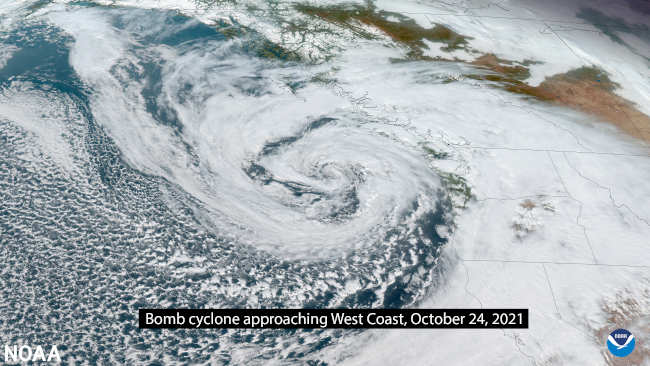
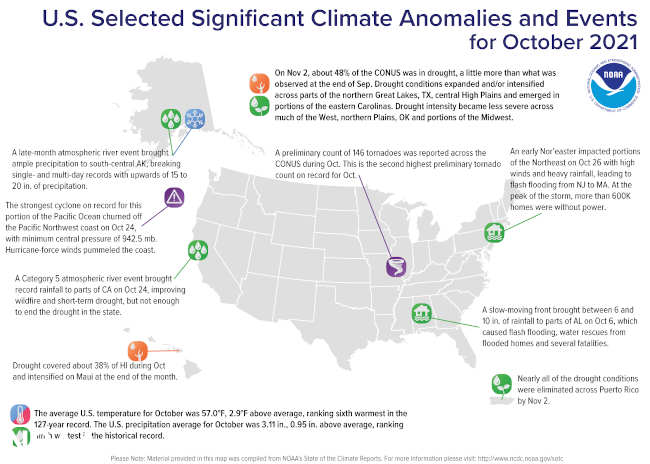
A view from NOAA’s GOES-17 satellite of a “bomb cyclone” approaching the Pacific Northwest of the United States on October 24, 2021. This powerful storm set a record-low pressure reading for this part of the Pacific Ocean. Photo credit: NOAA Satellites. October 2021 was an unusually balmy month for the contiguous U.S., as several states recorded their warmest October on record.
Abundant Pacific moisture also dumped excessive rainfall over the western U.S. that created hazardous flood conditions in some places but helped snuff out some wildfire activity in the West.
Here are more highlights from NOAA’s latest monthly U.S. climate report:
Climate by the numbers
October 2021
The average October temperature across the contiguous U.S. was 57.0 degrees F, 2.9 degrees above the 20th-century average, making it the sixth-warmest October in 127 years.
Several states ranked even higher on record for heat. Maryland and Ohio had their warmest October on record, while Delaware, Maine, Massachusetts, New Jersey, Pennsylvania and Rhode Island each saw their second-warmest October.
The average precipitation was 3.11 inches — 0.95 of an inch above average — making it the ninth-wettest October.
Above-average precipitation was observed across parts of the West, Plains, Great Lakes, Midwest, Southeast and Northeast. California and Illinois both saw their fourth-wettest October on record.
Year to date: January through October 2021
The average U.S. temperature for the YTD was 57.0 degrees F, 2.0 degrees above the 20th-century average, making it the ninth-warmest such period in the climate record.
Maine saw its second-warmest YTD on record, while New Hampshire and Vermont had their third warmest. In contrast, temperatures this year so far ran below average across parts of the Deep South.
The U.S. precipitation total for the YTD was 26.74 inches — 1.38 inches above average — which placed it in the wettest third of the record. Massachusetts and Mississippi had a third-wettest YTD, while Louisiana saw its fourth wettest.
Precipitation was below average across portions of the West, northern Plains, Great Lakes and New England. Montana saw its fourth-driest YTD on record.
Other notable climate events in October
Pacific Northwest smacked by record bomb cyclone: An all-time record low pressure system for the region developed in the eastern Pacific and strengthened rapidly on October 24, generating hurricane force winds and wave heights up to 45 feet off the coast of Washington and Oregon. Wind gusts toppled trees and knocked out power around the Seattle metro area and Puget Sound.
Atmospheric river deluged the West Coast: Conveyor belts of Pacific moisture, known as atmospheric rivers, impacted much of the central West Coast from October 19-26. On October 24, a Category 5 (exceptional) atmospheric river event brought record rainfall to portions of central California. Sacramento, Blue Canyon and Santa Rosa each reported their wettest 24-hour period on record. The heavy rain near wildfire burn scars triggered multiple landslides, but helped to partially quench the wildfire season and drought severity across parts of the West.
Tornadoes touched down: Preliminary tornado counts across the U.S. during October were the second most on record for the month with a count of 146. Only preliminary counts in 2018 ranked higher with 159 tornadoes reported. Oklahoma reported a record 31 tornadoes for October, which exceeds the previous record of 27 set in 1998.
A map of the United States plotted with significant climate events that occurred during October 2021. Please see the story below as well as the full climate report highlights at http://bit.ly/USClimate202110. Photo credit: NOAA NCEI.
From its vantage point high above Earth’s atmosphere, NASA’s Hubble Space Telescope has completed this year's grand tour of the outer solar system — returning crisp images that complement current and past observations from interplanetary spacecraft.
This is the realm of the giant planets — Jupiter, Saturn, Uranus and Neptune — extending as far as 30 times the distance between Earth and the Sun.
Unlike the rocky terrestrial planets like Earth and Mars that huddle close to the Sun’s warmth, these far-flung worlds are mostly composed of chilly gaseous soups of hydrogen, helium, ammonia, methane, and deep water around a packed, intensely hot, compact core.
Though robotic spacecraft have sent back snapshots of their visits to these four enormous planets over the past 50 years, their swirling, colorful atmospheres are constantly changing. While robotic spacecraft that fly close to the planets can take sharper images, Hubble frequently revisits these distant worlds to reveal new surprises, offering fresh insights into their wild weather, driven by still largely unknown dynamic forces working under the cloud tops.
Hubble’s snapshots of the outer planets reveal both extreme and subtle changes rapidly taking place in these distant worlds. Hubble’s sharp view gleans insights into the fascinating, dynamic weather patterns and seasons on these gas giants and allows astronomers to investigate the very similar — and very different — causes of their changing atmospheres.
These Hubble images are part of yearly maps of each planet taken as part of the Outer Planets Atmospheres Legacy program, or OPAL. The program provides annual, global views of the outer planets to look for changes in their storms, winds, and clouds.
Hubble’s longevity, and unique vantage point, has given astronomers a unique chance to check in on the outer planets on a yearly basis. Knowledge from the OPAL program can also be extended far beyond our own solar system in the study of atmospheres of planets that orbit stars other than our Sun.
Jupiter
This year’s Hubble images of Jupiter track the ever-changing landscape of its turbulent atmosphere, where several new storms are making their mark, and the pace of color changes near the planet’s equator is continuing to surprise researchers.
Hubble’s Sept. 4 photo puts the giant planet’s tumultuous atmosphere on full display.
The planet’s equatorial zone has remained a deep orange hue for a much longer time, compared to previous darkening episodes. While the equator has changed from its traditional white or beige appearance for a few years now, scientists were surprised to find the deeper orange color to persist in Hubble’s recent imaging, instead expecting the zone to lose its reddish haze layer.
Just above the equator, researchers note the appearance of several new storms, nicknamed “barges” during the Voyager era. These elongated red cells can be defined as cyclonic vortexes, which vary in appearance. While some of the storms are sharply defined and clear, others are fuzzy and hazy. This difference in appearance is caused by the properties within the clouds of the vortexes.
“Every time we get new data down, the image quality and detail in the cloud features always blow me away,” said Amy Simon of the Goddard Space Flight Center in Greenbelt, Maryland. “It strikes me when I look at Jupiter, in the barges or in the red band right below, you can see cloud structures that are clearly much deeper. We’re seeing a lot of structure here and vertical depth variation.”
Researchers also note that a feature dubbed “Red Spot Jr.” (Oval BA), below the Great Red Spot, where Hubble just discovered winds are speeding up, is still a darker beige color, and is joined by a string of white, anticyclonic storms to the south.
Saturn
Hubble’s new look at Saturn on September 12th shows rapid and extreme color changes of the bands in the planet’s northern hemisphere, where it is now early autumn. The bands have varied throughout Hubble observations in both 2019 and 2020.
Notably, Saturn’s iconic hexagonal storm, first discovered in 1981 by the Voyager 2 spacecraft, was difficult to distinguish in 2020, but it is again clearly evident in 2021. Hubble’s Saturn image catches the planet following the southern hemisphere’s winter, evident in the lingering blue-ish hue of the south pole.
In the past, Hubble has allowed researchers to closely track the northern hemisphere's seasonal changes.
“This is something we can best do with Hubble. With Hubble’s high resolution, we can narrow things down to which band is actually changing,” said Michael Wong of the University of California, Berkeley. “If you were to look at this through a ground-based telescope, there’s some blurring with our atmosphere, and you’ll lose some of those color variations. Nothing from the ground will get visible-light images as sharp as Hubble’s.”
Uranus
Hubble’s Oct. 25 view of Uranus puts the planet’s bright northern polar hood in the spotlight. It’s springtime in the northern hemisphere and the increase in ultraviolet radiation absorbed from the Sun seems to be causing the polar region to brighten.
Researchers are studying how the brightening polar hood results from changes in the concentration of atmospheric methane gas and the characteristics of haze particles, as well as the atmospheric flow patterns.
Curiously, even as the atmospheric hood gets brighter, the sharp southernmost boundary remains fixed at the same latitude. This has been constant over the past several years of OPAL observations, perhaps because a jet stream is setting up a barrier at that latitude of 43 degrees.
Neptune
In observations taken on Sept. 7, researchers found that Neptune’s dark spot, which recently was found to have reversed course from moving toward the equator, is still visible in this image, along with a darkened northern hemisphere.
There is also a notable dark, elongated circle encompassing Neptune’s south pole. Neptune's and Uranus’ blue color is a result of the absorption of red light by the planets’ methane-rich atmosphere, combined with the same Rayleigh-scattering process that makes the Earth's sky blue.
In 2021, there are few bright clouds on Neptune, and its distinct blue with a singular large dark spot is very reminiscent of what Voyager 2 saw in 1989.
The Hubble Space Telescope is a project of international cooperation between NASA and the European Space Agency. NASA’s Goddard Space Flight Center in Greenbelt, Maryland, manages the telescope. The Space Telescope Science Institute (STScI) in Baltimore, Maryland, conducts Hubble science operations. STScI is operated for NASA by the Association of Universities for Research in Astronomy in Washington, D.C.
Gov. Gavin Newsom on Friday announced that he has granted pardons to two members of California tribes, the Koi Nation of Northern California and the Resighini Rancheria.
The Governor’s Office said tribal leaders support these pardons, which recognize the grantees’ efforts and successes in rehabilitation post-conviction, as well as their extraordinary service to their communities.
These pardons coincide with Native American Heritage Month, which honors the vibrancy and resiliency of Native American culture.
Newsom extended clemency for Robert Morgan, a member of the Koi Nation, based in Lower Lake, and Frank Spa-ghe Dowd, a member and elected leader of the Resighini Rancheria, based in Klamath.
On Aug. 3, 2006, Morgan was convicted in Sonoma County Superior Court of assault with a deadly weapon for striking two people during a fight at a party. He was sentenced to three years of probation and 91 days in jail.
Morgan submitted a formal application for executive clemency in the form of a gubernatorial pardon, provided evidence that he is living an upright life and has demonstrated his fitness for restoration of civic rights and responsibilities, the Governor’s Office reported.
On March 15, 2002, Dowd was convicted in Del Norte County Superior Court on March 15, 2002, of assault with a deadly weapon for striking an individual with a bat during a fight at a party. He was sentenced to five months of probation and 270 days in jail.
The Governor’s Office said Dowd has complied with the provisions of California Penal Code sections 4852.01 through 4852.22, which provide a procedure after completion of sentence to seek restoration of civic rights and responsibilities.
On Oct. 9, 2020, the Del Norte County Superior Court granted Dowd a certificate of rehabilitation on evidence that he has been living an upright life and, in doing so, recommended that Mr. Dowd be granted a full pardon.
The California Constitution gives the governor the authority to grant executive clemency in the form of a pardon, commutation or reprieve.
The governor regards clemency as an important part of the criminal justice system that can incentivize accountability and rehabilitation and increase public safety by removing counterproductive barriers to successful reentry.
A pardon may remove counterproductive barriers to employment and public service and restore civic rights and responsibilities. A pardon does not expunge or erase a conviction.
Pardons recognize a person’s efforts in self-development after their crime and their efforts to make amends. Clemency does not forgive or minimize the harm caused by a crime.
The governor carefully reviews every clemency application and considers a number of factors, including an applicant’s self-development and conduct since the offense, the applicant's remorse and efforts to make amends, whether the grant is consistent with public safety and in the interest of justice, and the impact of a grant on the community, including crime victims and survivors.
The pardons announced Friday do not restore firearm rights.
While in office, Gov. Newsom has granted a total of 88 pardons, 91 commutations and 29 reprieves.
The Governor’s Office encourages victims, survivors and witnesses to register with the California Department of Corrections and Rehabilitation’s Office of Victims and Survivors Rights and Services to receive information about an incarcerated person’s status. For general Information about victim services, to learn about victim-offender dialogues, or to register or update a registration confidentially, visit www.cdcr.ca.gov/Victim_Services/ or call 1-877-256-6877 (toll free).
Copies of the gubernatorial clemency certificates announced Friday can be seen below.
Additional information on executive clemency, including how to apply, can be found here.
On Friday, Lake County’s two members of the House of Representatives voted to pass the Build Back Better Act, which invests in families, workers, the economy and tackling climate change.
Congressman John Garamendi (D-CA-03), who represents the northern half of Lake County, and Congressman Mike Thompson (D-CA-05), who represents the county’s southern portion, were among the House members who voted to pass the legislation.
The bill passed the house in a vote of 220 to 213. It now heads to the Senate for consideration.
Thompson, chairman of the House Ways and Means Select Revenue Measures Subcommittee, said the legislation also includes his GREEN Act, which tackles climate change by providing tax incentives to reduce greenhouse gas emissions.
“This bill makes a historic investment in American workers, families and communities and includes the most ambitious climate policies ever passed by Congress, my GREEN Act. The bill is paid for,” Thompson emphasized.
He said the GREEN Act uses the tax code to increase the use of renewable energy, reducing greenhouse gas emissions enough to meet President Biden’s long-term emissions goals. “I’m deeply humbled that my legislation will play a key role in our nation’s effort to address the threat of climate change.”
“The ‘Build Back Better Act’ is the result of months of negotiations and compromise,” said Garamendi, who called it the largest relief package for the middle class in a generation.
“America has reached a positive turning point,” Garamendi said. “Right now, we have an opportunity to create the largest expansion of the middle class in a generation and show the American people that their government works for them — not just those at the top.”
For workers and families, the bill provides paid family leave, universal pre-K education for 3- and 4-year-olds and another year of expanded Child Tax Credit, a tax cut for working families.
“These programs invest in our children. In fact, the Child Tax Credit has already helped to cut child poverty in half,” Thompson said.
The Build Back Better Act also helps families get back into the workforce. It makes health insurance more affordable, supports local cities and towns, cuts taxes for homeowners, reduces the cost of medications and includes parts of Thompson’s Disaster Tax Relief Act to incentivize investments in disaster resiliency.
Garamendi said the bill is paid for by requiring the very largest corporations and wealthiest Americans — who often avoid paying any taxes at all — to finally pay their fair share. No one making under $400,000 will pay a penny more in taxes under this legislation, he added.
“All of this is supported without costing the middle class a single penny. No public school teacher, nurse or first responder should pay a higher tax rate than a billionaire. Yet that has been the case in America for far too long. The ‘Build Back Better Act’ rights this wrong and uses the revenue it generates to provide tax cuts, jobs, lower health care costs, and affordable housing for the middle class,” Garamendi continued.
He added, “The ‘Build Back Better Act’ is also our best shot to attack climate change and protect the air, water and land we all rely on for our children and grandchildren’s generations. With the ‘Build Back Better Act,’ we will finally unlock the green energy economy of the future we so desperately need.”
Benefits of the bill include the following.
Children, families and caregiving:
• Universal preschool for all 3- and 4-year-olds; • Four weeks of paid family leave; • Affordable high-quality child care; • Affordable, high-quality care for hundreds of thousands of older Americans and people with disabilities in their homes and communities; and • An expanded Child Tax Credit.
Clean energy and combating climate change:
• $320 billion in clean energy tax credits; • $105 billion in resilience investments; • $110 billion in investments and incentives for clean energy technology, manufacturing, and supply chains; and • $20 billion in clean energy procurement.
Affordable care for millions of hardworking Americans through:
• Affordable Care Act premium tax credits; • New tools to negotiate lower prices of medications; • Ensuring Americans with diabetes don’t pay more than $35 per month for their insulin; • Creating a new, out-of-pocket cap of $2,000 on what seniors pay for their drugs in Medicare Part D; • Allowing Medicare to cover the cost of hearing.
Bringing down costs, reducing inflationary pressures, and strengthening the middle class through:
• $150 billion investment in housing affordability and reducing price pressures, including in rural areas; • Education beyond high school and workforce; • Earned Income Tax Credit for 17 million low-wage workers; • Raising the State and Local Tax deduction cap to $80,000 through 2030.
There also are protections and work permits for millions of immigrants consistent with the Senate’s reconciliation rules.
CLEARLAKE, Calif. — Clearlake Animal Control has added new dogs to its list of adoptable pets.
The City of Clearlake Animal Association also is seeking fosters for the animals waiting to be adopted.
Call the Clearlake Animal Control shelter at 707-273-9440, or email This email address is being protected from spambots. You need JavaScript enabled to view it. to inquire about adoptions and schedule a visit to the shelter.
Visit Clearlake Animal Control on Facebook or on the city’s website.
The newest dogs are listed at the top of the following list.
“Bella.” Photo courtesy of Clearlake Animal Control. ‘Bella’
“Bella” is a female American pit bull mix with a short gray brindle coat.
She has been spayed.
She is dog No. 48448381.
“Fiona.” Photo courtesy of Clearlake Animal Control. ‘Fiona’
“Fiona” is a female pit bull terrier mix with a short gray coat.
She is dog No. 48750483.
“Levi.” Photo courtesy of Clearlake Animal Control. ‘Levi’
“Levi” is a male golden retriever-Labrador retriever mix.
He has a short golden coat.
He is dog No. 48975687.
“Luscious.” Photo courtesy of Clearlake Animal Control. ‘Luscious’
“Luscious” is a male pit bull terrier mix with a short gray coat.
He has been neutered.
He is dog No. 48757611.
“Mitzi.” Photo courtesy of Clearlake Animal Control. ‘Mitzi’
“Mitzi” is a female Australian cattle dog mix with a medium-length black and white coat.
She has been spayed.
She is dog No. 48443306.
“Nala.” Photo courtesy of Clearlake Animal Control. ‘Nala’
“Nala” is an 11-month-old female German shepherd mix.
She has a medium-length black and tan coat.
She is dog No. 48289638.
“Turk.” Photo courtesy of Clearlake Animal Control. ‘Turk’
“Turk” is a male chocolate Labrador retriever mix.
He is dog No. 48911836.
Email Elizabeth Larson at This email address is being protected from spambots. You need JavaScript enabled to view it.. Follow her on Twitter, @ERLarson, or Lake County News, @LakeCoNews.
 How to resolve AdBlock issue?