 How to resolve AdBlock issue?
News

Michael Chase works two jobs in southeast Ohio: one as a hotel night clerk and one as retail support – sorting through donations, setting new merchandise out, cleaning – at a nonprofit.
His schedule is not fixed in either job, and his hours are not guaranteed. Some weeks he works back-to-back eight-hour shifts. Some weeks he works fewer than 30 hours. Neither job offers sick leave, vacation time or health insurance.
Chase shares an apartment with three other people, something he finds stressful. And he is not always confident that he can make his portion of the rent. Between the two jobs, Chase earns less than US$16,000 a year. While it may not sound like a lot, that places him well above the federal poverty line for a single person: $12,760.
As a sociologist concerned with inequality, I spent one year conducting field work and interviews across the country for my recent book, which examines how Americans cope with economic struggles amid stagnant wages and rising costs of living.
Nearly everyone I interviewed worked multiple service industry jobs. Yet I didn’t meet anyone who thought of themselves as poor.
More commonly they referred to themselves as the struggling class: They struggle economically and hold an often unfounded hope that things will get better. But you can’t work your way out of poverty in low-wage jobs.
Low-wage jobs in the 21st century are not only the lowest rung on a career ladder, they are often the only rung.
Across the country, millions of low-wage workers like Chase struggle to pay their bills each month, despite holding multiple jobs.
Defining poverty
“I’m fine,” Chase told me. “I don’t consider myself poor … I guess I would say I am struggling a little bit. For me, people who don’t have food are poor. Or someone who can’t feed their kids, or you might not have running water or even electricity. You don’t have the right things you need to even survive.”
Chase was not unusual in his assessment of poverty.
The economic struggles of millions in the United States are erased by the federal definition of the poverty line and by outdated conceptions of low-wage work.
A recent study by the Brookings Institution defined low-wage work as a median hourly wage of $10.22, or $17,950 per year. By this measure, 44% of all workers in the U.S. are low-wage earners.
In 2021, according to the National Low Income Housing Coalition, a worker needs to earn $20.40 per hour to be able to afford a modest one-bedroom apartment anywhere in the country. That’s an annual salary of $40,800 – more than twice what Brookings refers to as the median wage for low-wage work.

Federal data shows that roughly 51% or workers live on less than $35,000 annually. Low wages, unreliable hours and a lack of benefits have come to dominate the U.S. economic landscape.
To understand the economic hardship that more than half of Americans face, it is critical that researchers shift their thinking away from an outdated federal measure of poverty. Instead, they should focus on measures of self-sufficiency.
Economic self sufficiency
Economic self-sufficiency is the ability to reliably meet basic needs, including food, housing, transportation, child care, medical expenses and other necessities.
The Economic Policy Institute, a nonpartisan think tank, provides a Family Budget Calculator that calculates measures of economic self-sufficiency across the country.
The organization provides a transparent estimate of what it costs to be economically self-sufficient. It is not a calculation of poverty.
The calculations are based on Department of Agriculture data such as food costs and Fair Market Rent, a measure developed by the Department of Housing and Urban Development to determine payments for housing assistance programs.
In southeast Ohio, the self-sufficiency budget for Chase provided by the Economic Policy Institute calculator is $34,545 – more than twice what he earns and nearly three times the federal poverty line.
If Chase lived in San Francisco, his economic self-sufficiency budget would be $69,072. Across the bay in Oakland, California, it would be $57,383. Keep in mind that the federal poverty line for a single person living anywhere in the U.S. is $12,760.
For families, the gap between the federal poverty line and economic self-sufficiency is even wider. Self-sufficiency for two adults with two children who live in San Francisco requires an annual income of $148,440, while the federal poverty line for this same family of four in 2020 was $25,701.
[Get The Conversation’s most important politics headlines, in our Politics Weekly newsletter.]
Self-sufficiency calculations vary by region. For example, self-sufficiency for this same family of four in Athens County, Ohio, would require an income of $72,284; in the Sioux City metro area of South Dakota, this family would need $78,935 to meet all of their basic needs.
Self-sufficiency measures are not perfect.
The Economic Policy Institute calculations do not consider debt, which can be significant. Further, the calculation relies on Fair Market Rent, which designates regional rents in the 40th percentile as fair market. This means that in any area, 60% of housing is more expensive than Fair Market Rent.
For Chase in Ohio, a livable one-bedroom apartment runs $800 to $1,300 a month, but Fair Market Rent allocates only $605 for rent.
Despite these problems, measures of self-sufficiency are more effective than the federal poverty line. By delineating the costs of basic expenses, they draw a far more accurate line of where poverty begins.
It might seem like a matter of common sense that the nation needs to calculate how much families actually need to spend on basic expenses in order to understand where poverty begins. But policymakers still rely on the federal poverty line for calculating economic safety nets. A measure of self-sufficiency would enable the nation to identify levels of economic need as they exist – and therefore to establish effective safety nets.
Celine-Marie Pascale, Professor of Sociology, American University
This article is republished from The Conversation under a Creative Commons license. Read the original article.
The board will meet beginning at 9 a.m. Tuesday, Nov. 16, in the board chambers on the first floor of the Lake County Courthouse, 255 N. Forbes St., Lakeport.
The meeting can be watched live on Channel 8, online at https://countyoflake.legistar.com/Calendar.aspx and on the county’s Facebook page. Accompanying board documents, the agenda and archived board meeting videos also are available at that link.
To participate in real-time, join the Zoom meeting by clicking this link.
The meeting ID is 914 1460 1371, pass code 529662. The meeting also can be accessed via one tap mobile at +16699006833,,91414601371#,,,,*529662##.
All interested members of the public that do not have internet access or a Mediacom cable subscription are encouraged to call 669-900-6833, and enter the Zoom meeting ID and pass code information above.
To submit a written comment on any agenda item visit https://countyoflake.legistar.com/Calendar.aspx and click on the eComment feature linked to the meeting date. If a comment is submitted after the meeting begins, it may not be read during the meeting but will become a part of the record.
At 10:15 a.m., the supervisors will hold a public hearing that was continued from Oct. 19 to consider an appeal filed against the Sourz HVR commercial cannabis project on the 1,640-acre High Valley Ranch, located at 11650 High Valley Road in Clearlake Oaks, formerly the site of PSI World.
Neighbors Don and Marge Van Pelt are appealing the project, approved earlier this year by the Lake County Planning Commission, over a variety of issues, among them, air quality, biology, cultural resources, environmental study, grading, odor, noticing, traffic, water availability, security and alleged noncompliance with the Lake County Zoning Ordinance.
County staff is recommending the supervisors deny the appeal.
In other business, at 9:06 a.m., the board will get an update on COVID-19 and will present a proclamation designating the month of November 2021 as Native American Heritage Month, an item timed for 9:50 a.m.
In an untimed item, the board will consider a letter of opposition to a proposed 4.9% rate increase expected to impact most of Pacific Gas and Electric’s residential customers.
The full agenda follows.
CONSENT AGENDA
5.1: Adopt proclamation designating the month of November 2021 as Native American Heritage Month.
5.2: Approve revisions to the cellphone/smartphone wireless-communication device policy.
5.3: Adopt Resolution Authorizing Department of Water Resources 2021 Urban and Multibenefit Drought Relief Program Grant Application, acceptance and execution for a firemain linked auxiliary supply hydraulic energy storage (FLASHES) disaster, energy and climate change resiliency project in north Lakeport.
5.4: Approve time change to Board of Supervisors meeting calendar for special meeting on Dec. 9 to 9 a.m.
5.5: Approve Amendment No. 1 to the agreement between the county of Lake and Hilltop Recovery Services for substance use disorder intensive outpatient program and outpatient drug free service for FY 2020-21 in the amount of $182,082.67.
5.6: Approve Amendment No. 1 to the agreement between the county of Lake — Lake County Behavioral Health Services as lead agency for the Lake County Continuum of Care and Social Solutions Global Inc. for the service and coordination of activities involved with the Lake County Continuum of Care Homeless Management Integration System Software for fiscal years 2020-24 and authorize the board chair to sign the amendment.
5.7: Approve agreement between the county of Lake — Lake County Behavioral Health Services as Lead Agency for the Lake County Continuum of Care and Adventist Health Clear Lake for Fiscal Year 2021-24 for a contract maximum of $350,000.00 and authorize the board chair to sign the agreement.
5.8: Approve Agreement between the county of Lake — Lake County Behavioral Health Services as Lead Agency for the Lake County Continuum of Care and Adventist Health Clear Lake Hospital, Inc. for a contract maximum of $343,000.00 for Fiscal Year 2021-22 and authorize the board chair to sign the agreement.
5.9: Approve Kelseyville Fire Protection District Resolution No. 2022-10 requesting approval of the Lake County Board of Supervisors for election services to be provided by the Registrar of Voters.
5.10: Approve Amendment No. 3 to agreement with Gary Pace, MD, MPH, to provide public health officer services.
5.11: Approve revised agreements between the county of Lake and Enterprise Fleet Management for two leased vehicles and authorize the director of Public Works to sign the agreements.
5.12: Adopt resolution approving final parcel map for 5400 Gaddy Lane L.P. (Kelseyville Apartments) PM 19-02.
5.13: Appoint Michael A. Mueller as interim county surveyor.
5.14: a) Adopt resolution approving the Lake County Sheriff's Office to apply for state of California, Department of Parks and Recreation Off-Highway Vehicle Grant funds and authorize the Lake County sheriff/coroner or his designee to sign the project agreement and (b) consideration of a delegation of authority to Lake County Sheriff/Coroner Brian Martin or his designee to execute the attached Project Agreement, Number G21-03-64-L01 and to act as the county’s agent in the negotiation, execution, and submittal of all related documents, including amendments to the project agreement and requests for payments.
5.15: (a) Waive the formal bidding process, pursuant to Lake County Code Section 2-38.4, Cooperative Purchases; (b) approve purchase of a 2022 Ford F150 Regular Cab Pickup 4X4; and (c) authorize the Special Districts administrator/assistant purchasing agent to issue and sign a purchase order not to exceed $35,000 to Matt Mazzei Chevrolet-Chrysler, Jeep, Dodge, Ram of Lakeport.
5.16: Sitting as the Board of Directors, Lake County Watershed Protection District, approve agreement with Lake Marine Construction for the abatement services for lakebed structures RFQ Number 21-13, in the amount not to exceed $70,000 and authorize the chair of the board of directors of the Watershed Protection District to sign the agreement.
5.17: Sitting as the Board of Directors, Lake County Watershed Protection District, approve agreement with All In One Auto Repair & Towing for the Abatement Services for abandoned and surrendered vessel abatement towing and disposal services RFQ Number 21-14, in the amount not to exceed $30,000 and authorize the chair of the board of directors of the Watershed Protection District to sign the agreement.
5.18: Sitting as the Board of Directors, Lake County Watershed Protection District, approve the grant agreement in the amount of $5,411 for miscellaneous boating safety and enforcement equipment from the California Division of Boating and Waterways through the Boating Safety and Enforcement Equipment Grant Program, and authorize the director of the Water Resources Department to sign the grant agreement.
TIMED ITEMS
6.2, 9:06 a.m.: Consideration of update on COVID-19.
6.3, 9:30 a.m.: Consideration of annual Mental Health Advisory Board report and presentation for fiscal year 2020-21.
6.4, 9:50 a.m.: Presentation of proclamation designating the month of November 2021 as Native American Heritage Month.
6.5, 9:55 a.m.: Consideration of a presentation by United Way of the Wine Country regarding possible expansion of 2-1-1 Lake County from disaster-only to full service.
6.6, 10:15 a.m.: Public hearing, continued from Oct. 19: Discussion and consideration of appeal (AB 21-04) of the Planning Commission approval of major use permit (UP 21-10) and adoption of initial study (IS/MND 21-10) for a commercial cannabis cultivation license (Sourz HVR, Clearlake Oaks); APN’s 006-004-07 (Project Location) and contiguous parcels 006-002-04, 006-004-06, 006-002-09, 006-04-24, 00-004-25 and 006-009-36.
UNTIMED ITEMS
7.2: Consideration of a letter of opposition to A.21-09-008, which would be expected to result in an effective 4.9% rate increase for most Pacific Gas and Electric residential customers.
7.3: Consideration of (a) board appointment of delegate and alternate to the Rural County Representatives of California, or RCRC, Board of Directors for 2022; (b) board appointment of delegate and alternate to the RCRC Golden State Finance Authority Board of Directors for 2022; (c) board appointment of delegate and alternate to the RCRC Golden State Connect Authority Board of Directors for 2022; and (d) board appointment of delegate and alternate to the RCRC Environmental Services Joint Powers Authority Board of Directors for 2022.
7.4: Consideration of advisory board appointments: First Five Lake County.
ASSESSMENT HEARING
8.1: Approve withdrawal on the following Assessment Appeal Applications: No. 22-2020 Ferrigno Family Trust APN 039-485-610-000.
CLOSED SESSION
9.1: Conference with negotiators regarding the sale of county-owned property located at 1111 Whalen Way, Lakeport, CA (APN: 21-1781-01); price and terms of payment (a) county negotiators C. Huchingson, S. Parker, S. Carter and (b) Elijah House.
9.2: Public employee appointment pursuant to Gov. Code Section 54957(b)(1): Appointment of Health Services director.
9.3: Public employee appointment pursuant to Gov. Code Section 54957(b)(1): Appointment of Public Health officer.
9.4: Public employee evaluation: Interim Health Services director.
9.5: Existing litigation pursuant to Gov. Code sec. 54956.9 (d)(1) — IN RE NATIONAL PRESCRIPTION OPIATE LITIGATION MDL NO. 2804 Case No. 17-MD-2804.
9.6: Conference with legal counsel — decision whether to initiate litigation pursuant to Gov. Code sec. 54956.9 (d)(4) — One potential case.
Email Elizabeth Larson at
The council will meet at 6 p.m. Tuesday, Nov. 16, in the council chambers at Lakeport City Hall, 225 Park St.
The agenda can be found here.
The council chambers will be open to the public for the meeting. In accordance with updated guidelines from the state of California and revised Cal OSHA Emergency Temporary Standards, persons who are not fully vaccinated for COVID-19 are required to wear a face covering at this meeting.
If you cannot attend in person, and would like to speak on an agenda item, you can access the Zoom meeting remotely at this link or join by phone by calling toll-free 669-900-9128 or 346-248-7799.
The webinar ID is 973 6820 1787, access code is 477973; the audio pin will be shown after joining the webinar. Those phoning in without using the web link will be in “listen mode” only and will not be able to participate or comment.
Comments can be submitted by email to
Indicate in the email subject line "for public comment" and list the item number of the agenda item that is the topic of the comment. Comments that are read to the council will be subject to the three minute time limitation (approximately 350 words). Written comments that are only to be provided to the council and not read at the meeting.
The main item on the Tuesday agenda is a discussion regarding the California Citizens Redistricting Commission’s redistricting process, which takes place every 10 years based on the U.S. Census results.
Staff is asking the council for direction on prioritizing redistricting efforts to ensure that Lake County is not split into separate districts and to keep Lake County aligned with its strategic
agricultural and economic partners of Sonoma and Napa counties.
Over the past three weeks, the commission has released several “visualizations” — or scenarios — of potential groupings and then issued draft maps last week.
In his report to the council, City Manager Kevin Ingram explained, “Since the City Council’s last meeting the visualization maps have once again been updated and contain drastic changes compared to those reviewed previously by the City Council. Most notably the most recent visualization maps from November 8th show the County divided into two Congressional districts
with Lakeport and the north county in a district encompassing a large portion of the NE section of California including Colusa, Glenn, Tehama, Trinity, Siskiyou, Del Norte, Modoc, Shasta, Butte, Lassen and a portion of Sutter counties. By contrast, Clearlake and the southern portion of the County are in a district with Napa, Yolo and Solano counties.”
Ingram added, “It seems likely that additional visualization maps will be published over the next few weeks that may again include significant changes to Lake County’s representational districts. As such, rather than attempt to prepare specific comments to any one set of visualization map set, staff would recommend the Council iterate its priority objectives for the community to better enable staff to respond to subsequent map changes proposed by the Commission. This way staff could craft a tailored response to each proposal mapping change and ensure that the City of Lakeport’s voice is presented to the Commission”
In other business, the council also will consider authorizing the cancellation of the regular meeting on Dec. 21.
On the consent agenda — items usually accepted as a slate on one vote — are ordinances; minutes of the council’s regular meeting on Nov. 2; the Nov. 5 warrant register; adoption of a resolution authorizing continued remote teleconference meetings of the Lakeport City Council and its legislative bodies pursuant to Government Code section 54953(e); confirmation of the continuing existence of a local emergency for the COVID-19 public health emergency; approval of event application 2021-014, amended to request the closure of Second Street between Forbes and Main Streets, to cancel the closure of Main Street between Third and Fourth Streets, and to add a sled hill/slide to the Dickens Faire event.
The council also will hold a closed session to discuss a case of existing litigation, City of Lakeport et al. v. Amerisourcebergen Drug Corporation et al., and a potential case.
Email Elizabeth Larson at
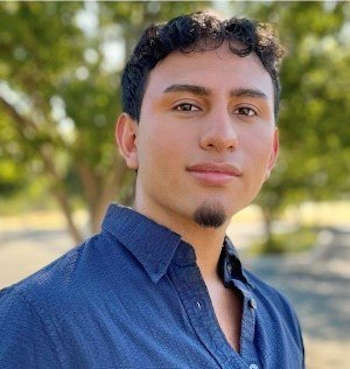
LAKE COUNTY, Calif. — A Kelseyville college student has been named to the California Student Aid Commission.
On Friday, Gov. Gavin Newsom’s office said he appointed Leonardo Rodriguez, 20, to the commission.
“I am honored to be appointed by Gov. Gavin Newsom to the California Student Aid Commission, the largest state-run financial aid agency in the country,” Rodriguez told Lake County News.
“As a Dreamer and Undocumented Student, my community is often barred from opportunities like these due to legal and economic issues, but California continues to show us that we are the state of progress,” Rodriguez said. “Within higher education students like myself are able to find our true potential and are able to work towards our dreams, regardless of our backgrounds. This is why we must work hard to expand access to higher education while relentlessly working to break down barriers that stand between students and their goals.”
Rodriguez grew up in Lake County and graduated from Kelseyville High School in 2019, going on the same year to begin his studies at Mendocino College. He’s a first-generation college student.
Earlier this year, he was elected by the student body to serve as student trustee on the Mendocino-Lake College District Board of Trustees.
Then, in August, he was elected to the 21-member California Community College Trustees Board as its student member for the 2021-22 academic year.
The California Student Aid Commission administers financial aid programs for students attending public and private universities, colleges and vocational schools in the state.
Its website states that it “serves as a resource for policymakers and the public on college affordability and financing issues, and advocates for policy changes to eliminate cost as a barrier to any qualified California student pursuing a higher education.”
Rodriguez received letters of support for his appointment from Second District Assemblymember Jim Wood; Ukiah City Mayor Juan Orozco; Mendocino County Superintendent of Schools Michele Hutchins; Minerva Flores, Mendocino College director of institutional effectiveness, research, grants and equity; Lake County District 5 Supervisor Jessica Pyska; and the California Community Colleges Trustee Board.
He has been a registered behavioral technician at Autism Intervention Professionals since 2019, and previously worked in retail and construction.
This position requires Senate confirmation and the compensation is $100 per diem. Rodriguez is a Democrat.
Email Elizabeth Larson at

Consumer prices soared in October 2021 and are now up 6.2% from a year earlier – higher than most economists’ estimates and the fastest increase in more than three decades. At this point, that may be no surprise to most Americans, who are seeing higher prices while shopping for shoes and steaks, dining at restaurants and pumping fuel in their cars.
One of the big debates going on right now among economists, government officials like Treasury Secretary Janet Yellen and other observers is whether these soaring costs are transitory or permanent.
The Federal Reserve, which would be responsible for fighting inflation if it stays too high for too long, insisted again on Nov. 3, 2021, that it’ll be temporary, in large part because it’s tied to the supply chain mess bedeviling economies, companies and consumers.
Not everyone agrees – including some within the Fed itself – and there’s been a growing chorus of economists, strategists and business executives sounding the alarm that high inflation will likely be with us well into 2022 and beyond.
I study supply chains and their impact. It’s true that prices are surging largely because of the severe shortages of both goods and labor in supply chains, but based on my research, that doesn’t mean it’ll be temporary. Rather, it suggests that inflation is here to stay.
Demand is up
Inflation began to soar in early 2021 and has been hovering at above 5% or so, year on year, since May. That’s more than double the 2% pace that the Fed has set as a target.
The reasons prices are rising are complex and many. But one of the most important relates to the dynamic of supply and demand. And both are to blame.
Let’s start with demand.
Even though early in the pandemic consumer demand dropped as people hunkered down amid lockdowns and unemployment skyrocketed, it has soared over the past year – not for services like restaurants and travel, but for goods, mostly ordered online.
E-commerce activity has simply mushroomed to levels that never existed before the pandemic. Demand for products has significantly outstripped the market’s capacity to produce or ship what is ordered. Some people aren’t even going to the supermarket, hardware store or restaurant anymore because they do all their ordering online.
Many retailers, such as Macy’s, Target and others, have had to navigate this economy with scarce inventories and higher freight costs to stay alive during the pandemic.
These trends have created more demand than the delivery carriers can accommodate, stretching their ability to deliver products. For example, the holiday shopping season is predicted to have 4.7 million packages a day beyond what the system can possibly absorb or deliver. Storing these packages for even a short period costs money.
Given there is great difficulty finding drivers, containers and labor across industries, big retailers are offering generous education and other benefits to both attract and keep employees on hand as a means of adding capacity.
All these added costs – to hire, store and deliver – are usually passed on to consumers.
Supply is down
At the same time, supply chains remain a mess – and are only getting worse.
Bottlenecks have piled up all across Asia, putting great strains on the capacity of supply chains to deliver in a timely fashion. And severe global shortages of drivers and other workers are making it difficult to expand capacity or fix other problems plaguing the supply chains, so they can’t break free of the thick mud they’re in.
This creates a shortage of products getting through that limit competition, causing price increases.
There are dozens of huge container ships continually idling near ports in Los Angeles, New York and elsewhere around the world, which is tying up large quantities of merchandise waiting to be unloaded. There are over 500,000 shipping containers with about 12 million metric tons of goods near Southern California alone.
Ports have tried to lengthen their operating hours – U.S. President Joe Biden has made it a key issue and plans to spend billions of dollars fixing the problems – but there are not enough workers and drivers to unload the cargo.
Such delays cost money, because businesses choose then to carry more inventory, which they pass on to customers.
As an illustration, let’s look at Nike, which largely depends on Vietnam for much of its shoe production. It lost 10 weeks of production because of lockdowns within that country. And it’s taking an average of 80 days to get shoes from Asia to retailers in North America – twice as long as before the pandemic. As a result, shoe prices are soaring like everything else.
Or consider Malouf, a Utah-based furniture retailer, which reports that it has only 55% of its normal inventory on hand because of freight delays. Cars get stuck in garages because of the shortage of spare parts. Living room, kitchen and dining room furniture prices are up 13.1% from a year ago.
Another way to think about it is to examine one single product: Bullfrog Spa’s M9 hot tub. It requires 1,850 separate parts. Supply chain disruptions have pushed manufacturing time from six weeks to six months.
There is no industry unaffected.
Why there’s no easy fix
In other words, there’s no end to the supply chain problems. Consumer demand is only going to increase through the holiday season and beyond. And that’s why inflation isn’t going away anytime soon.
Corporate executives – who in many ways will determine whether prices keep rising at a fast clip – are already warning that all of these challenges are going to continue into 2022 at the earliest. Some say the problems will extend into 2023 as well.
Economists surveyed by Bloomberg in October expect inflation to slow to 3.4% next summer and hit 2.6% by the end of the year. While that would be encouraging, it’s still well above the pre-pandemic average of 1.8% and outside the Fed’s target. It’s unclear whether economists are recalibrating their expectations after the October Consumer Price Index report.
Regardless, consumers should get used to the higher prices. They’re the new normal.
[Over 115,000 readers rely on The Conversation’s newsletter to understand the world. Sign up today.]
Craig Austin, Assistant Teaching Professor of Logistics & Supply Chain Management, Florida International University
This article is republished from The Conversation under a Creative Commons license. Read the original article.
Call Lake County Animal Care and Control at 707-263-0278 or visit the shelter online at http://www.co.lake.ca.us/Government/Directory/Animal_Care_And_Control.htm for information on visiting or adopting.
The following cats at the shelter have been cleared for adoption.

Male domestic shorthair kitten
This male domestic shorthair kitten has a white coat and blue eyes.
He is in cat room kennel No. 68a, ID No. LCAC-A-1863.

Male domestic shorthair kitten
This male domestic shorthair kitten has a white coat and blue eyes.
He is in cat room kennel No. 68b, ID No. LCAC-A-1864.

Female domestic shorthair kitten
This female domestic shorthair kitten has an orange tabby coat.
She is in cat room kennel No. 68c, ID No. LCAC-A-1865.

Female domestic shorthair kitten
This female domestic shorthair kitten has an orange tabby coat.
She is in cat room kennel No. 68d, ID No. LCAC-A-1866.

Male domestic shorthair kitten
This male domestic shorthair kitten has an orange tabby coat.
He is in cat room kennel No. 96a, ID No. LCAC-A-1871.

Male domestic shorthair kitten
This male domestic shorthair kitten has an orange tabby coat.
He is in cat room kennel No. 96b, ID No. LCAC-A-1872.

Male domestic shorthair kitten
This male domestic shorthair kitten has an orange tabby coat.
He is in cat room kennel No. 96c, ID No. LCAC-A-1873.

Female domestic shorthair kitten
This female domestic shorthair kitten has an orange tabby coat.
She is in cat room kennel No. 96d, ID No. LCAC-A-1874.

Female domestic shorthair kitten
This female domestic shorthair kitten has a gray tabby coat.
She is in cat room kennel No. 101a, ID No. LCAC-A-1945.

Female domestic shorthair kitten
This female domestic shorthair kitten has a gray tabby coat.
She is in cat room kennel No. 101b, ID No. LCAC-A-1946.
Email Elizabeth Larson at