 How to resolve AdBlock issue?
News
The board will meet beginning at 9 a.m. Tuesday, Nov. 23, in the board chambers on the first floor of the Lake County Courthouse, 255 N. Forbes St., Lakeport.
The meeting can be watched live on Channel 8, online at https://countyoflake.legistar.com/Calendar.aspx and on the county’s Facebook page. Accompanying board documents, the agenda and archived board meeting videos also are available at that link.
To participate in real-time, join the Zoom meeting by clicking this link.
The meeting ID is 989 2102 5973, pass code 917285. The meeting also can be accessed via one tap mobile at +16699006833,,98921025973#,,,,*917285#.
All interested members of the public that do not have internet access or a Mediacom cable subscription are encouraged to call 669-900-6833, and enter the Zoom meeting ID and pass code information above.
To submit a written comment on any agenda item visit https://countyoflake.legistar.com/Calendar.aspx and click on the eComment feature linked to the meeting date. If a comment is submitted after the meeting begins, it may not be read during the meeting but will become a part of the record.
In an item timed for 9:06 a.m., which was held over from last week, the board will discuss the letter in opposition to PG&E’s application for “Recovery of Recorded Expenditures Related to Wildfire Mitigation, Catastrophic Events, and Other Recorded Costs.”
“We are aware approval of this application would be expected to result in a 4.9% rate increase for most residential customers. In Lake County, this would mean increasing the energy costs for vulnerable residents in communities that have seen poor energy reliability in recent years,” the draft letter states.
It continues, “Customers reliant on PG&E’s Middletown Substation, for example, experienced 205 outages in the period from January 1 to September 13, 2021, alone, the average duration of which was 8.2 hours. Our residents served by the Konocti substation experienced 155 outages in the same period, with those outages spanning an average of 11.9 hours. 83% of all outages faced by Lake County residents in the just over 8 months surveyed were due to planned work, PG&E equipment, or PSPS Events, and this surveyed period notably omits the fall 2020 season that included multiple PSPS Events.”
The letter also notes that PG&E’s application is outside of the “normal cycle of anticipated PG&E rate increases,” and will increase ratepayer costs “without adding considerable certainty that power will be available is inappropriate.”
Board Chair Bruno Sabatier also plans to send his own letter to the CPUC, which points out that the proposed increase is especially unfair to residents of Lake County, who don't have access to natural gas but must rely on electricity and propane.
The full agenda follows.
CONSENT AGENDA
5.1: Approve revisions to the procedure for placing items on the Board of Supervisors agenda.
5.2: Approve agreement between county of Lake and Hope Rising for the Smart Start — Bright Future Initiative for $75,000 for fiscal year 2021-22 and $75,000.00 for fiscal year 2022-23 for a total amount of $150,000.00 and authorize the chair to sign.
5.3: Approve Amendment No. 1 to the agreement between the county of Lake and Hilltop Recovery Services for Substance use disorder intensive outpatient program and outpatient drug free service for FY 2020-21 in the amount of $182,082.76.
5.4: Approve Amendment No. 2 to the agreement between the county of Lake – Lake County Behavioral Health Services as lead agency for the Lake County Continuum of Care and Social Solutions Global Inc. for the service and coordination of activities involved with the Lake County Continuum of Care Homeless Management Integration System Software for fiscal years 2020-24 and authorize the board chair to sign the amendment.
5.5: Adopt resolution authorizing the Behavioral Health director to execute and sign any subsequent amendments or modifications to the original standard agreement between the county of Lake and the Department of Housing and Community Development for the California Emergency Solutions and Housing Program grant funds.
5.6: Approve Board of Supervisors meeting minutes for Oct. 26, Nov. 4 and Nov. 5.
5.7: Adopt resolution authorizing the 2022-2023 Grant Project-Lake County Child Advocacy Center Program and authorize the chair to sign the certification and assurance of compliance.
5.8: Approve Budget Transfer in BU 1451, Registrar of Voters, to add a capital asset in account 62-71 for the purchase of workstations.
5.9: Approve the continuation of a local health emergency related to the 2019 Coronavirus (COVID-19) as proclaimed by the Lake County Public Health officer.
5.10: Approve the continuation of a local health emergency and order prohibiting the endangerment of the community through the unsafe removal, transport, and disposal of fire debris for the LNU Complex wildfire.
5.11: Approve continuation of a local health emergency by the Lake County Health officer for the Cache fire.
5.12: Approve the continuation of a local emergency due to the Pawnee fire incident.
5.13: Approve the continuation of a local emergency In Lake County in Response to the LNU Lightning Complex wildfire event.
5.14: Approve the continuation of an emergency declaration for drought conditions.
5.15: Approve the continuation of a local emergency due to COVID-19.
5.16: Approve the continuation of a local emergency due to the Mendocino Complex fire incident (River and Ranch fires).
5.17: Approve the agreement between the county of Lake and VFA Inc. for facility condition assessments and capital planning software, and authorize the chair to sign.
5.18: Approve the agreement between the county of Lake and SCS Engineers for phase one engineering design services for the Eastlake Landfill Expansion Project.
5.19: Approve continuation of a local emergency by the Lake County Sheriff/OES director for the Cache fire.
5.20: Approve the Department of Boating and Waterways 2022/23 application for financial aid in the amount of $ 472,784.28 ; and authorize the sheriff to sign.
5.21: (a) Waive the formal bidding process, pursuant to Lake County Code Section 2-38.4, Cooperative Purchases. (b) Approve purchase of a 2022 Ford F150 Regular Cab Pickup 4X4; and (c) authorize the Special Districts administrator/assistant purchasing agent to issue and sign a purchase order not to exceed $35,000 to Downtown Ford Sales, Sacramento.
TIMED ITEMS
6.2, 9:06 a.m.: Consideration of a letter of opposition to A.21-09-008, which would be expected to result in an effective 4.9% rate increase for most PG&E residential customers.
UNTIMED ITEMS
7.2: Consideration of ordinance amending Urgency Ordinance No. 3108 requiring all persons, regardless of COVID-19 vaccination status, wear face coverings in county facilities.
7.3: Consideration of (a) board appointment of delegate and alternate to the Rural County Representatives of California, or RCRC, Board of Directors for 2022; (b) board appointment of delegate and alternate to the RCRC Golden State Finance Authority Board of Directors for 2022; (c) board appointment of delegate and alternate to the RCRC Golden State Connect Authority Board of Directors for 2022; and (d) board appointment of delegate and alternate to the RCRC Environmental Services Joint Powers Authority Board of Directors for 2022.
7.4: Consideration of the following advisory board appointments: Child Care Planning and Development Council.
7.5: Consideration of Amendment No. 1 to the agreement between the county of Lake and Sierra Vista for acute inpatient psychiatric hospital services and professional services associated with acute inpatient psychiatric hospitalizations for fiscal years 2020-21, 2021-22, and 20202-23.
7.6: Consideration of agreement between county of Lake — Lake County Behavioral Health Services as lead agency for the Lake County Continuum of Care and Worldwide Healing Hands for Fiscal Year 2021-22.
7.7: a) Consideration to waive the formal bidding process according to Purchasing Requirements Section 38.2(a) 2) as the unique nature of services precludes the competitive bidding requirements, and b) consideration to approve contract between county of Lake and North Coast Opportunities Inc. for the Emergency Child Care Bridge Program for Children in Foster Care, in an amount that shall not exceed the California Department of Social Services allocation, from July 1, 2021, to June 30, 2024, and authorize the chair to sign.
CONSENT AGENDA
8.1: Conference with negotiators regarding the sale of county-owned property Located at 1111 Whalen Way, Lakeport, CA (APN: 21-1781-01); price and terms of payment (a) county negotiators C. Huchingson, S. Parker, S. Carter and (b) Elijah House.
8.2: Public Employee Evaluation: Title: Interim Health Services Director Carol Huchingson.
8.3: Existing Litigation pursuant to Gov. Code sec. 54956.9 (d)(1) — IN RE NATIONAL PRESCRIPTION OPIATE LITIGATION MDL NO. 2804 Case No. 17-MD-2804.
8.4: Conference with legal counsel: Existing Litigation pursuant to Gov. Code sec. 54956.9 (d)(1) — City of Clearlake v. County of Lake, et al.
8.5: Public employee appointment pursuant to Gov. Code Section 54957(b)(1): Interview of Health Services director and appointment of Health Services director.
8.6: Public Employee Evaluation: Title: Director: Registrar of Voters Maria Valadez.
Email Elizabeth Larson at
Now a new study by researchers at UC San Francisco has identified one factor that buffers the likelihood of a “health shock” culminating in a nursing home stay of at least 30 days.
Older adults who said they could count on a friend or relative to “help with personal care if needed,” in the event of a hospitalization of at least two days or a new diagnosis of a life-threatening condition, reduced their risk of requiring institutional care over a two-year period from 14.2% to 10.9%.
In the study, which published in JAMA Internal Medicine on Nov. 15, the UCSF researchers tracked data from 4,772 adults who had been enrolled in the Health and Retirement Study, a nationally representative, longitudinal study that assessed changes in disability, health and wealth as participants transitioned from the workforce to retirement.
The UCSF cohort was restricted to those aged 65 and older who lived alone in the community and managed activities of daily living, ranging from basic self-care to finances and home maintenance. They found that 68% of these participants experienced a sudden adverse change in their health status.
‘Unnerving’ number of seniors without assistance
Among the older adults living alone, 38% were unable to identify a friend or family member to help them in the event of a serious health issue, a number that lead author Sachin Shah, MD, from the UCSF Division of Hospital Medicine, described as “unnerving.”
“I think they are quite vulnerable. We see it in the hospital all the time,” he said. “We admit people who could be OK at home if they only had a little support.”
Many older adults are able to take care of themselves until they experience a health crisis, said senior author Kenneth Covinsky, MD, of the UCSF Division of Geriatrics. “They may have been able to walk without help, shower, dress and manage their medications, but after a health shock, they can no longer do so. This question can identify those at risk.”
Possible solutions, according to the researchers, is for more cities to implement programs in which older adults requiring assistance in their home can be matched with salaried caregivers or have a friend or family member receive a salary for their own caregiving.
“This would be in keeping with the preferences of most older adults to remain in their homes, and would reduce the tremendous cost of institutional care both to older adults and to insurers,” said Shah.
The researchers found no difference in mortality and self-care ability between those older adults living alone who could identify social support and those who could not.
Co-authors: Other authors are Margaret C. Fang, MD, from the UCSF Division of Hospital Medicine; S. Rae Wannier, MPH, of the UCSF Department of Epidemiology and Biostatistics; and Michael Steinman, MD, from the UCSF Division of Geriatrics.
Funding: The study was supported by the National Institute on Aging (R03AG060090, P30AG044281, K24AG049057), the National Heart Lung and Blood Institute (K24HL141354) and the UCSF Division of Hospital Medicine.
Competing Interests: Dr. Fang reports grants from NHLB/NIH during the study and grants from PCORI outside the submitted work. The other authors report grants from NIH/NIAS during the study.
Suzanne Leigh writes for UC San Francisco.
Call Lake County Animal Care and Control at 707-263-0278 or visit the shelter online at http://www.co.lake.ca.us/Government/Directory/Animal_Care_And_Control.htm for information on visiting or adopting.
The following cats at the shelter have been cleared for adoption.

Male domestic shorthair kitten
This male domestic shorthair kitten has an orange tabby coat.
He is in cat room kennel No. 96a, ID No. LCAC-A-1871.

Male domestic shorthair kitten
This male domestic shorthair kitten has an orange tabby coat.
He is in cat room kennel No. 96c, ID No. LCAC-A-1873.

Female domestic shorthair kitten
This female domestic shorthair kitten has an orange tabby coat.
She is in cat room kennel No. 96d, ID No. LCAC-A-1874.

Female domestic shorthair kitten
This female domestic shorthair kitten has a gray tabby coat.
She is in cat room kennel No. 101a, ID No. LCAC-A-1945.
Email Elizabeth Larson at

Nearly two years into the pandemic, it has become starkly clear that we need better treatments for COVID-19 for people in the earlier stages of disease.
Two new antiviral drugs could soon be the first effective oral treatments for COVID-19 to help keep people out of the hospital. An advisory committee to the Food and Drug Administration plans to review the data supporting molnupiravir – a pill made by Merck and partner Ridgeback Therapeutics – on Nov. 30, 2021.
And in early November, Pfizer released preliminary results for its antiviral pill, Paxlovid, another potentially promising tool for COVID-19 treatment. On Nov. 16, Pfizer formally requested emergency use authorization of the oral pill from the FDA.
If these drugs get authorized in the coming weeks, they could be an important new treatment option for people with COVID-19, especially for those at high risk in the early stages of infection. The ability to treat COVID-19 with a pill rather than an injection or infusion means more people can be treated faster.
As an infectious diseases physician and scientist at the University of Virginia, I have helped care for hundreds of people with COVID-19. I’ve also helped conduct clinical trials to find new treatments. Molnupiravir and Paxlovid would fill a need that hasn’t been met by other COVID-19 drugs, which are either difficult to administer or only suitable for patients in the hospital.
Here’s a preview of why these new antiviral drugs are important, how they work and how they could be used.
Filling a gap in treatment
Researchers have so far found just a few drugs that are effective for the treatment of COVID-19. Until now, only antiviral monoclonal antibodies could be used to treat patients who are not hospitalized. However, these antibody drugs – which work by blocking the virus from entering cells – have to be given in a monitored setting like a doctor’s office.
And many patients who could benefit from monoclonal antibodies don’t have access because administration sites aren’t located nearby. They are also not affordable for many people outside the U.S. In the U.S., monoclonal antibodies are free to patients under emergency use authorization but could ultimately become far more expensive if and when they receive full approval by the FDA.
Early data suggests that both molnupiravir and Paxlovid are effective new drugs that patients can take at home to prevent complications of COVID-19 – which could be particularly beneficial for those at high risk of severe disease. Once authorized, these pills will allow patients to be treated earlier in the course of infection, at the point when antiviral drugs are more effective. By stopping the virus from growing in the body early on, the drugs can prevent the inflammation that causes severe COVID-19.

How molnupiravir and Paxlovid work
Molnupiravir works by causing the virus to record inaccurate genetic information. SARS-CoV-2 stores its instructions for making new viruses in a strand of RNA. Inside the cell, the virus makes copies of the RNA and then continues to make duplicates of those copies. When a patient takes molnupiravir, the drug masquerades as one of the key molecules in RNA and gets incorporated into the strands that the virus produces. When an RNA strand containing molnupiravir gets copied in turn, the virus makes errors in the copy. Over multiple rounds of copying, molnupiravir forces more and more mistakes until the virus is no longer able to function – a phenomenon in virology called “error catastrophe.”
Paxlovid uses a different mechanism to prevent the virus from replicating. SARS-CoV-2 creates proteins that are needed to build new viruses as one long string, called a polyprotein. But the polyproteins have to be chopped into smaller parts by a viral enzyme called a protease in order to become active. Paxlovid blocks the virus’s protease from doing this job, thereby preventing the virus from completing its life cycle.
How COVID-19 pills would be used
There are currently two primary forms of treatment for COVID-19 in the U.S.: antiviral and anti-inflammatory medications. Antiviral drugs stop the virus from growing in the body and are given within the first few days of symptoms to prevent severe disease. Anti-inflammatory drugs moderate the immune response and are used to help sicker patients who need oxygen.
Molnupiravir and Paxlovid were studied in separate clinical trials with similar designs. In both studies, the drugs were tested in outpatients with risk factors for severe COVID-19 who were at an early stage in their illness. Both studies also looked at how likely patients were to either die or be hospitalized. However, neither study has yet been peer-reviewed.
Molnupiravir reduced the risk of death or hospitalization by about 50% in non-hospitalized adult patients with mild to moderate COVID-19 when treated within five days of symptom onset. Paxlovid reduced this risk by about 89% for patients treated within three days of symptoms and 85% for patients treated within five days. Importantly, no patients who took either drug died in the studies. Because the drugs were not studied head to head, it’s difficult to say whether one will be better than the other in the real world. In early November, Britain became the first country to approve molnupiravir for use.
Molnupiravir did not help hospitalized patients recover faster from COVID-19. It is likely that Paxlovid would also not be useful at the point of hospitalization. Most patients who are in the hospital with COVID-19 are sick because of unregulated inflammation and not because the virus is still replicating in their bodies.
If and when these drugs get authorized in the U.S., they will probably be used for the same higher-risk patients who are eligible for monoclonal antibodies today. Monoclonal antibodies may still be used, though, for pregnant people, people on dialysis and some immune-compromised patients.
The U.S. has already purchased millions of doses of both molnupiravir and Paxlovid in anticipation of their authorization. However, the pills will only be useful if people also have access to cheap, fast and accurate COVID-19 tests, which are currently in short supply. If COVID-19 is diagnosed too late, patients will already be outside the window of time when antiviral drugs can be helpful.
[More than 140,000 readers get one of The Conversation’s informative newsletters. Join the list today.]
Other antiviral drugs are in development, including an oral form of the first COVID-19 drug, remdesivir and long acting injectable monoclonal antibodies.
Researchers are also working on repurposing existing drugs to treat COVID. Inhaled steroids like budesonide and an antidepressant called fluvoxamine are particularly promising.
While it’s exciting to see new treatments for COVID-19, prevention is still the best strategy. The COVID-19 vaccines continue to be the most effective tool for helping to end the pandemic.
[Understand new developments in science, health and technology, each week. Subscribe to The Conversation’s science newsletter.]
Patrick Jackson, Assistant Professor of Infectious Diseases, University of Virginia
This article is republished from The Conversation under a Creative Commons license. Read the original article.
Dear Lady of the Lake,
I just moved to Lake County and live next to the lake. I heard the other day that Lake County doesn’t have water rights to Clear Lake? Is that correct? Can I take water from the lake to irrigate my garden? I also have a pond on my property and a well, who has rights to those sources of water?
Thanks for clearing this up!
— Wondering about Water Rights Walter
Walter,
Thank you for asking these questions. I get asked about water rights quite a bit actually. You are right about Clear Lake’s water rights — they actually belong to Yolo County. Anyone who takes water from the Lake — beyond riparian rights (we will talk about these below) — has to compensate Yolo County. This also applies to the streams that flow into Clear Lake. Basically, any water that would eventually flow through Clear Lake and into Cache Creek and through the Cache Creek dam is considered “property of Yolo County” and they can charge a user for diverting or selling that water.
The story about Clear Lake water rights is old, going back more than 100 years. There have been some modifications to the rights over the years to protect the sustainability of Clear Lake, to ensure there is water in the Lake to provide for the residents of Lake County who live around the lake and to protect the habitat of the lake for wildlife and recreation.
Water rights is a big topic, but very important. Water rights — and the registration and accounting of those rights — are important to the local, regional, and state managers of water resources. Without an accurate record of who is using water, where the water is coming from and what the water is being used for, water in the west can not be managed for long-term sustainability and the resource will literally go dry.
Please note that today’s column will not cover California Tribal Water rights, but know that in general tribal water rights, for federally recognized tribes, are governed by the Winters doctrine. This doctrine basically contains two principals; 1) federally reserved lands have a right to use sufficient water to fulfill the “primary purpose” of the reservation, and 2) these water rights cannot be destroyed by state water law or by water users acting in accordance with state law.
However, there are specific uses and rights determined by each individual tribe and lands in hand. For more information on the Winters Doctrine, I recommend this brief review from the Congressional Research Service by C. Broughner (2011).
There are also many complex issues arising when conflict around water rights and resources are strained, especially when it comes to tribal beneficial use and the demands of agriculture and hydropower generation that maintains the economy of the state. Again, this important and vital topic is way beyond the scope of today’s column, but a great book to read that dives into tribes, water use and conflict in California is “Upstream: Trust Lands and Power on the Feather River” By Dr. Beth Middleton of UC Davis (Available from University of Arizona Press). I highly recommend this read.
If you have questions about current rules and regulations for water rights in general, I suggest you refer to the State Water Resource Control Boards Water Rights Frequently Asked Questions. This page provides a plethora of information in a quick, easy format to find information related to any situation regarding water rights or water law in California.
Yolo County water rights
While I will cover some details here, and there are many details, be aware that there is a nice historical summary provided on the Water Resources Department webpage on “How Yolo County Acquired Water Rights.”
About 1908, the Yolo Water and Power Co., which purchased holdings and land from the Moore Ditch Company based in Yolo County, applied for 300,000 miners inches of water rights from Cache Creek, including Clear Lake and her tributaries. A miner’s inch is actually a unit of flow, but it varies between 1/36 and 1/60 cubic feet per second depending on where in the world the term is being used. The “inch” reference actually indicates the size, in square inches, of a hole and how much water would pass through in hydraulic mining operations. Today, this is translated to about 230,000 acre-feet of Clear Lake water.
In 1912 the Yolo Water and Power Co. application for Cache Creek water coincided with the construction of a dam on Cache Creek, near the current location of the Cache Creek Dam. It’s unclear exactly how much interest Lake County had in the water flowing through Cache Creek, but when the Board of Supervisors was asked if they wanted to also apply for the water rights, apparently they said no, and the Yolo Water and Power Co. was given priority rights.
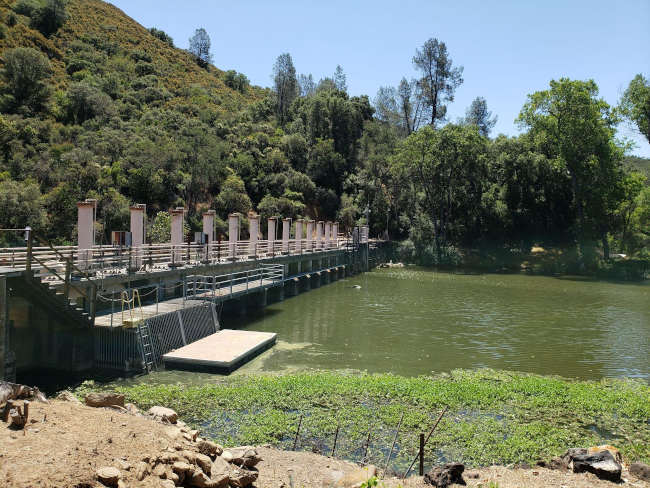
In 1927, Yolo Water and Power Co. was purchased by the Clear Lake Water Company, and in 1967, Yolo County residents voted to purchase the Clear Lake Water Company (and it’s rights) for about $2M in bonds. Before this in 1951, the Yolo County Flood Control and Water Conservation District, or YCFCWCD, was established by the state legislature to conjunctively manage surface and ground water resources in Yolo County. The YCFCWCD now manages the Cache Creek dam,
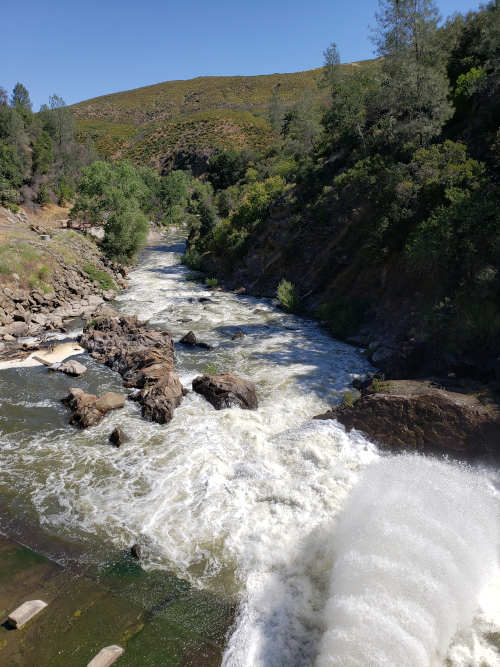
Indian Valley Reservoir, Chapman Reservoir, and manages the “world’s longest inflatable rubber dam” as part of the Capay Diversion Dam project.
YCFCWCD can continue to hold rights to Cache Creek, Clear Lake storage, and her tributaries as long as they continue to put the water to beneficial use and irrigation. This is called a “vested right”. As long as YCFCWCD is demonstrating that they are 1) Using the water and 2) using the water for beneficial use (i.e. irrigation, drinking water, storage), or uses accepted as appropriate or non improper exercise of the right, they can continue to hold their permitted right to Clear Lake waters and her tributaries.
Yolo has an even longer history using water from Cache Creek, according to the YCFCWCD, “The appropriated water right on Cache Creek in Yolo County has a priority of December 4, 1855. Through Permit No. 19162, issued by the State Water Resources Control Board (State Board), the District also has the right to utilize water from Clear Lake for hydroelectric power generation.”
Additionally there have been three decrees that have modified and clarified when and how Yolo can take and use water:
The 1920 Gopcevic Decree maintains Clear Lake water level between zero and 7.76 Rumsey. Basically Yolo can’t take water when Clear Lake is below the level where it naturally flows through Cache Creek and they can’t close the dam when they have too much water, creating lake level to exceed 7.76 Rumsey, leading to flooding. This Decree helps regulate water storage and prevents flooding of shoreline properties around Clear Lake.
The 1940 Bemmerly Decree prevents anyone from altering the shape or size of Cache Creek between Clear Lake and the Dam so that water that flows from the lake past the Grigsby riffle is a natural flow and not altered to allow more/less flow then what would naturally be occurring. For more details on the Grigsby Riffle, refer to my column from Oct. 17, “Learning about Lake Levels.”
The 1978/1995 Revised Solano Decree maintains the timing of water withdrawal by Yolo from Clear Lake based on spring water levels. Much like what happened during the 2021 drought season, the Lake did not reach a level above 3.22 feet Rumsey on May 1, so Yolo could not release any water.
Waters not beholden to Yolo County water rights
Walter, you asked about other surface waters and if they are included in the rights of Yolo County. If there is a natural flow of water to Clear Lake, and that water would contribute to the 230,000 acre feet of water they have rights to, then that water belongs to Yolo. If the water stays in an isolated pond, marsh, wetland, or a creek or stream that does not flow Clear Lake, then it’s not subjected to Yolo water rights.
There are some other types of rights to be aware of when it comes to surface and groundwater sources of water. Here are some terms and descriptions, but keep in mind that there are some variations among these terms depending on the sources you are referencing.
Riparian rights. A Landowner who has land adjacent to a water source can use that water on their land. Riparian rights are as old as California’s statehood, originally used to encourage agriculture development in the early formation of the state. One thing to note about riparian rights is that they are not lost if not used, which can create some uncertainty to neighbors or water users downstream, for example.
Anyone who uses water from Clear Lake (or her tributaries), who uses water exceeding the rights afforded for riparian rights (The maximum use allowed under such a registration is 4,500 gallons per day for immediate use or 10 acre-feet per year for storage in a pond or reservoir) are responsible for compensating YCFCWCD, as they are the legal holder of the water right of that water source and these amounts exceed reasonable riparian right use.
Drinking water systems and purveyors located along the lake have an appropriative right agreement with YCFCWCD, meaning they report the monthly amount of water they take from the lake and what they sell. Some of the water sold by the purveyors goes to those properties who would have natural riparian rights, so there is some “littoral credit” given back to offset overall costs of water to the purveyors based on the number of properties who could claim riparian rights.
There could be a need for small domestic or diversion to storage permit if you are using water for livestock watering, irrigation, and storage for times when there is less water. That type of permit is more like a registration, through the state, requires an annual report and can help ensure that a specific water source is not being depleted when considering all the water uses and users. The state would really like all water users to register and report on their water use so that tracking and accounting of all water uses is comprehensive and actually effective.
Riparian rights apply to a pond or stream that is located on private property; only the landowner can use the water from those sources as long as they don’t interfere with someone else’s riparian right. In other words, someone downstream also has a right to access and use that water and your upstream activities can’t dry up the stream therefore inhibiting the downstream users rights.
Walter, you had asked about being able to use Clear Lake water for private use in your garden, and the answer is yes, as long as you only use the water on your own property and aren’t selling it or diverting it to someone who does not have riparian rights. Unless of course there is an agreement in place for an appropriative right between you, the state, and another water user.
Appropriative water rights. These are basically diversion or diverter rights, usually made with an agreement to a riparian rights holder. According to the Water Education Foundation, “California law allows surface water to be diverted at one point and used (appropriated) beneficially at a separate point….This is in contrast to a riparian right, which is based on ownership of the property adjacent to the water.”
Appropriative rights require a permit or license and can apply to surface water and groundwater, but according to the 1914 Water Commission Act, all diversions must acquire a permit with the State Water Resources Control Board, and the Board is charged with keeping records of all appropriations. This record-keeping is very important so that water can be managed appropriately so the resource doesn’t become exhausted.
In times of water shortage or drought, the most recent appropriative claims on the water source will be denied or curtailed, and in cases where there is extreme water shortage, all claims could be retracted to prevent exhaustion of the water source.
Groundwater law and groundwater water rights
This last type of water right — and management — is very tricky, and dare I say, evolving in real-time, as we all learn more about the amount of water that exists sub surface, or in the ground, from an aquifer, known as groundwater.
In California a landowner has rights to pump a reasonable amount of groundwater from a well on their own property and use it for an appropriate, non-wasteful manner. That definition might sound ambiguous and subjective to you, but that is why the groundwater law and groundwater management is such a topical subject of California water resource efforts right now. The courts are constantly refining these types of terms and definitions.
A groundwater basin is an area where all ground water in an area is connected, think of this as the underground “watershed.” Groundwater management focuses on safe yield of a basin, meaning the amount of water being extracted from the aquifer does not exceed the water entering the aquifer over a water year. When water extraction is greater than water inputs (precipitation, snowmelt, storm water runoff, etc) ,overdraft is occurring in a groundwater basin.
According to the Water Education Foundation, “Overdraft occurs when, over a period of years, more water is pumped from a groundwater basin than is replaced from all sources – such as rainfall, irrigation water, streams fed by mountain runoff and intentional recharge.” Some residents of Lake County experienced lowering of groundwater levels (overdraft has not been documented, the basin rebounds during a wet year) first hand this year during the drought where their well ran dry, limiting their ability to access clean, fresh water for private, commercial, or domestic use.
Across all of California we use more groundwater, two million acre-feet to be exact, than is being replaced, or recharged into the source. Some areas are at higher risk of overdraft than others, and the state is prioritizing those areas for improved groundwater management. The Big Valley Basin is the highest priority groundwater basin in Lake County (technically labeled a medium priority basin) and the subject of an intense and expensive groundwater sustainability plan development.
For more information on that project and how you can be involved (and if you live in the Big Valley - Finley - Kelseyville area, you should be!) you can visit the Lake County Department of Water Resources Big Valley Groundwater Webpage here.
For general groundwater information, including opportunities for well monitoring and well maintenance resources like grants and loans, you can visit the general Groundwater Management website here.
Now Walter, if you are interested in having your well monitored so that you can track your use and the status of the aquifer, Lake County Water Resources is looking for more landowners to participate in a local well monitoring program. Participation in the program includes two measurements a year (spring and fall) and your well data is available by your request at any time and would only be used by the County to better understand the current state of the groundwater resources and how to manage them going into the future.
If you are interested there is a simple survey here that will connect you and the groundwater monitoring staff at Water Resources. Once you fill out this survey, a staffer will contact you to get more information and answer any of your questions. If you are interested but want more information first, you can call Water Resources directly at 707-263-2344.
The connection between surface and groundwater
Due to the unique nature of groundwater compared to surface water, the historic management of groundwater use has been left up to local officials and agencies. For example, the local Lake County Environmental Health Department issues well permits for new wells in Lake County, although they are not a water management resource agency.
The roots in groundwater in the state have been separate from those governing surface water, almost as if they are disconnected concepts. However, the fields of ecology, geology, hydrology, and biology have demonstrated that surface and groundwater are very much connected and influence each other in the physical, chemical, and biological sense. You can not effectively manage one without managing the other.
Healthy and plentiful surface water depends on a healthy aquifer and vice versa. Therefore the state is rethinking and reinventing the management of groundwater - mostly through the development of localized basin-specific Groundwater Sustainability Plans. This management need is becoming more and more urgent as climate change has led to the reduction in the snow melt and precipitation predicted and available to recharge groundwater - and surface water supplies- to meet everyone's needs.
While this topic is vast and I could write 100 columns or more on water rights and water as a resource, I will end today with a quote from the California Water Blog. This post, from October 2014, was written by Dr. Ted Grantham, currently of UC Berkerely, who has worked on many projects involving the intersections of water quantity, quality, science and politics. This quote is more than five years old - but it still very much applies.
“California is suffering the third driest year in a century and demands for water are at an all-time high. The huge gap between allocations and natural flows — coupled with great uncertainty over water-rights holders’ actual usage — is increasingly creating conflicts between water users and confusion for water managers trying to figure out whose supplies should be curtailed during a drought. [Basically, when it comes to ] Water Rights: You can’t manage what you can’t measure.”
Sincerely,
Lady of the Lake
Angela De Palma-Dow is a limnologist (limnology = study of fresh inland waters) who lives and works in Lake County. Born in Northern California, she has a Master of Science from Michigan State University. She is a Certified Lake Manager from the North American Lake Management Society, or NALMS, and she is the current president/chair of the California chapter of the Society for Freshwater Science. She can be reached at
If you think someone is illegal diverting water from Clear Lake or her tributaries, meaning they are taking water without a permit or without a riparian right (i.e. does not live on the lake) you can report this activity directly to Yolo County Flood Control and Water Conservation District at Phone: 530-662-0265 or to the email
Thanks to Kristin Sicke (YCFCWCD), Ted Grantham (UC Davis Center for Watershed Sciences), and Joshua Viers (Center for Information Technology Research in the Interest of Society (CITRIS) at UC Merced.) and for providing information for this column.
KELSEYVILLE, Calif. — The third annual Festival of Trees Spectacular Party and Christmas Tree Auction is scheduled for Saturday, Dec. 4.
It will take place beginning, at 3855 Main St., adjacent to Sophie’s Day Spa, in downtown Kelseyville.
Tickets are on sale now and can be purchased by visiting www.lakecountyhospice.org or calling 707-263-6222.
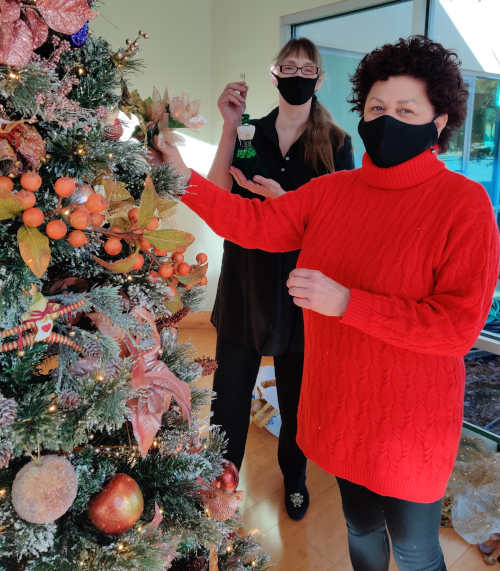
This event will feature over 21 Christmas trees exquisitely decorated and donated by community members and representatives of organizations and businesses.
Trees will be auctioned off with proceeds benefiting the special needs of Hospice/Palliative Care patients; and the Wings of Hope bereavement camp and school-based counseling program, both opportunities for children in the community to receive professional support when someone special in their life has died.
A silent auction with beautiful holiday décor and other unique items will be featured at the event.
Community members are invited to view trees in advance of the event from Nov. 26 through Dec. 2, between 11 a.m. and 6 p.m., and Friday, Dec. 3, from 4 to 9 p.m. Trees will be displayed in the event venue and selected business.
This event is sponsored and supported by many generous businesses, organizations and individuals including Next Home Realty, Lake Parts, Empire Mortuary Services, Lucerne Roofing, Clearlake Veterinary Practice, High Country Security, Roto Rooter of Lake and Mendocino Counties, Savings Bank of Lake and Mendocino Counties, Rotary Club of Lakeport, ProCare Hospice Care, Jonas Energy Solutions, Delta Iota Tau, Bruno’s Property Management, Michaels Insurance, Vanderwall Engineering, Strong Financial Network, Lake County Electric, Lincoln-Leavitt Insurance, Kelly Butcher, Lake County Tribal Health Consortium, Bill and Dana Kearney, Bell Haven Flower Farm, Foods Etc., Mendo-Lake Respiratory, Lake Event Design, California Exterminators, UCC Rentals and Action Sanitary.
Party guests will enjoy a savory and sweet small plate meal prepared by multiple culinary professionals from the Saw Shop Public House, Ripe Choice Catering, Wild Hope Bakery, Mother Lovin’ From the Oven, Chef Cheryl Foberg, Lake Event Design and more. Local breweries and wines will be featured at a no host bar.
Hospice Services Community Relations Manager Beth Havrilla and development team members are excited to bring back this live festive event.
“Come and enjoy a spectacular party while supporting an amazing organization. Talent, delectable food and generosity will highlight an evening of celebration benefiting an important cause,” said Havrilla.
For event and ticket information, call 707-263-6222 or email
Tickets are $75 each and may be purchased from Eventbrite by visiting www.lakecountyhospice.org.
Hospice Services of Lake County is a nonprofit health care organization that has been providing compassionate comfort care for Lake County patients and families experiencing life threatening conditions for 43 years. These services are available due to the generous support from community members and fundraising activities.
Janine Smith-Citron is director of development for Hospice Services of Lake County.