 How to resolve AdBlock issue?
News
The California COVID-19 Rent Relief program is now covering 100% of past due and future rent for renters that have experienced financial hardship due to COVID-19.
To check your eligibility, text “RENT” to 211-211 or call an NCO case manager today at 707-467-3200.
To apply, visit http://HousingisKey.com or contact a bilingual NCO case manager at 707-467-3200.
Who is eligible?
• Renters who experienced a hardship due to COVID-19, are experiencing housing instability and can confirm proof of hardship.
• Landlords who have one or more eligible renters who have unpaid rent accrued.
• If eligible, either a landlord or a renter can initiate the application process.
• If you are being evicted, help is still available.
What support is available?
• The program has increased rental assistance payments to cover 100% of unpaid rent.
• Income eligible renters whose landlords don’t participate in the program can still receive 100% of unpaid rent accrued. Those renters will be required to pay their landlord within 15 business days
• Eligible renters can also receive future rent assistance equal to 100% of their monthly rent.
The application:
• Application has been simplified. Applicants can apply in as little as one hour.
• Applicants will not be asked about their immigration status nor required to show proof of citizenship.
• Applications will continue to be accepted until all funds are exhausted.
• The funds are not administered on a first-come, first-served basis. Applications from households with greatest risk of eviction will be prioritized.
Call Lake County Animal Care and Control at 707-263-0278 or visit the shelter online at http://www.co.lake.ca.us/Government/Directory/Animal_Care_And_Control.htm for information on visiting or adopting.
The following cats at the shelter have been cleared for adoption.
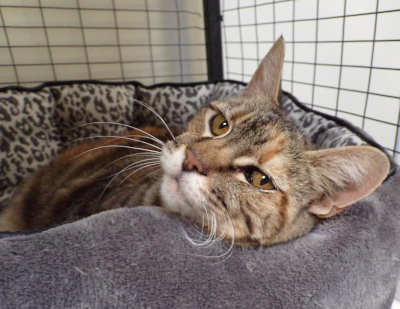
Female domestic shorthair
This 5-year-old female domestic shorthair has a brown tabby coat.
She is in cat room kennel No. 7, ID No. LCAC-A-1770.
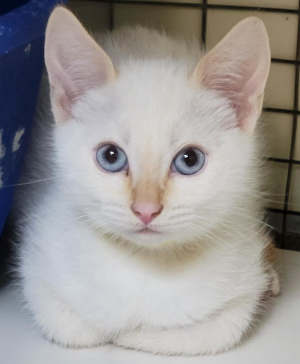
Male domestic shorthair kitten
This male domestic shorthair kitten has a white coat and blue eyes.
He is in cat room kennel No. 68a, ID No. LCAC-A-1863.
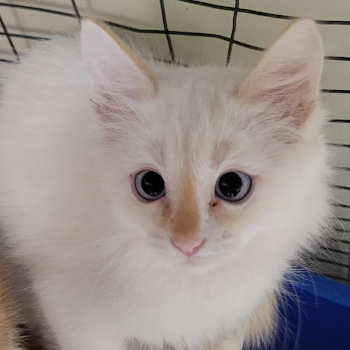
Male domestic shorthair kitten
This male domestic shorthair kitten has a white coat and blue eyes.
He is in cat room kennel No. 68b, ID No. LCAC-A-1864.
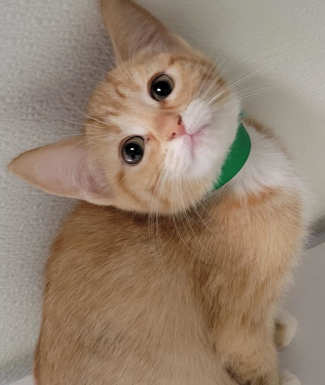
Female domestic shorthair kitten
This female domestic shorthair kitten has an orange tabby coat.
She is in cat room kennel No. 68c, ID No. LCAC-A-1865.
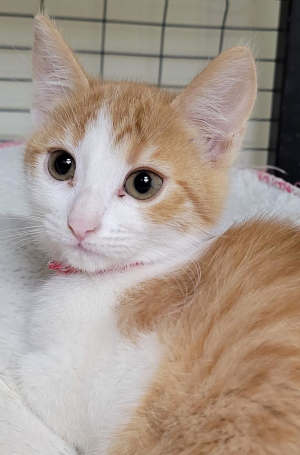
Female domestic shorthair kitten
This female domestic shorthair kitten has an orange tabby coat.
She is in cat room kennel No. 68d, ID No. LCAC-A-1866.
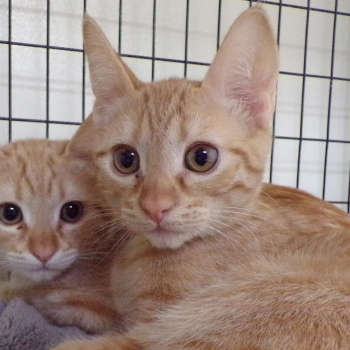
Male domestic shorthair kitten
This male domestic shorthair kitten has an orange tabby coat.
He is in cat room kennel No. 96a, ID No. LCAC-A-1871.
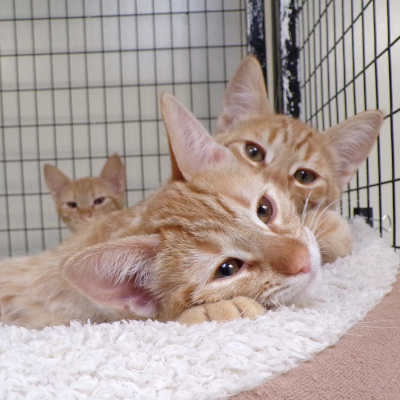
Male domestic shorthair kitten
This male domestic shorthair kitten has an orange tabby coat.
He is in cat room kennel No. 96b, ID No. LCAC-A-1872.
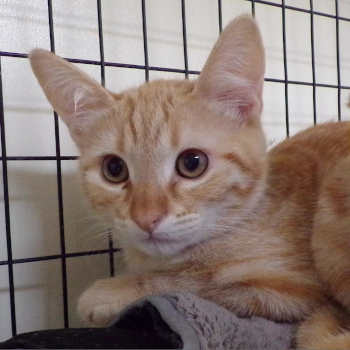
Male domestic shorthair kitten
This male domestic shorthair kitten has an orange tabby coat.
He is in cat room kennel No. 96c, ID No. LCAC-A-1873.
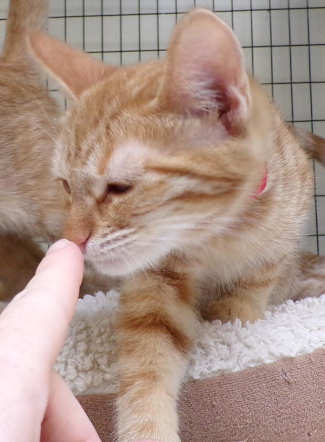
Female domestic shorthair kitten
This female domestic shorthair kitten has an orange tabby coat.
She is in cat room kennel No. 96d, ID No. LCAC-A-1874.
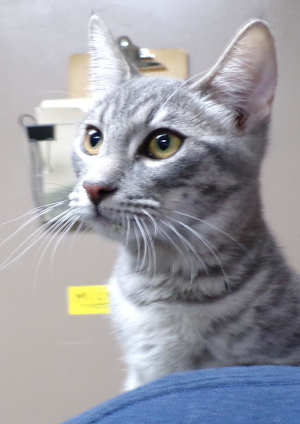
Female domestic shorthair kitten
This female domestic shorthair kitten has a gray tabby coat.
She is in cat room kennel No. 101a, ID No. LCAC-A-1945.
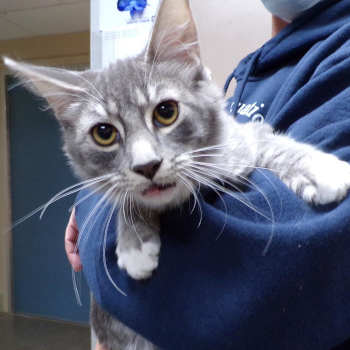
Female domestic shorthair kitten
This female domestic shorthair kitten has a gray tabby coat.
She is in cat room kennel No. 101b, ID No. LCAC-A-1946.
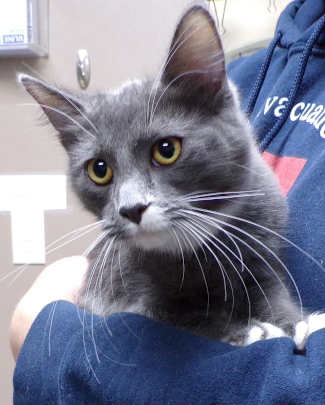
Female domestic shorthair kitten
This female domestic shorthair kitten has a gray tabby coat.
She is in cat room kennel No. 101c, ID No. LCAC-A-1947.
Email Elizabeth Larson at
That was the question the First 5 Lake Commission sought to answer when they published a lengthy online survey in June.
In the process of sifting through the 269 individual responses to the survey, they not only gained insight into the struggles faced by Lake County families, but they also discovered many unsung heroes in the community that stepped up and made things better for many.
The results of the survey have been summarized in the agency’s recently released, 2021 COVID-19 Impact Report, which is now posted in full on the First 5 Lake County website.
First 5 Lake staff worked with evaluation consultants from Social Entrepreneurs Inc., or SEI, to create and launch the comprehensive online survey.
The survey link was then shared with the community through targeted emails to families of young children who participate in the Imagination Library program, as well as through social media posts.
Families who completed the survey were invited to enter a drawing for a Walmart gift card or a Golden Poppy Annual Pass to California State Parks.
The survey asked participating Lake County parents of young children (birth to age 5) about a list of common needs and whether their family had trouble meeting those needs during the past year of the pandemic.
Families were then asked to indicate whether the need or barrier was a big problem or small problem and if their need was met.
Respondents who indicated their needs were met were asked to provide information about how they went about meeting their needs, whether it was their own resilience, local nonprofit organizations or government agencies, or their own social connections with family and friends that provided the needed support.
It was important to the First 5 Lake Commission to not only hear about and understand the struggles families were facing, but also to find out which systems and supports in the community were having a positive impact.
First 5 Lake’s Strategic Plan is built around the Strengthening Families Protective Factors Framework, and the commission continually seeks to learn more about how the Protective Factors are present and effective within the community, keeping children safe and families strong.
With this in mind, the responses to the survey were categorized by the Protective Factors which include parental resilience, concrete support in times of need, social connections, knowledge of child development, and the social-emotional competence of children.
The areas of greatest struggle
The 11 areas of need included in the survey were child care, children’s medical care, employment, groceries/food (including baby formula), housing, internet access, personal hygiene items (including diapers), rent/mortgage, transportation and utilities.
Analysis of the survey data revealed that the area where the greatest number of families expressed difficulty during the past year of the pandemic was in paying for utilities (106 out of 269), and 44% of those families noted that this was a big problem for them.
This was followed by families reporting they had trouble with employment (105), families reporting trouble meeting child care or day care needs (98), and families reporting trouble paying rent or mortgage (95).
Needs that went unmet
The needs that went unmet most frequently in the past year of the pandemic, according to survey respondents, were employment (61%) and child care (51%).
Other frequently unmet needs included getting children in for medical appointments (53% of those with this need, say it went unmet), and trouble with internet access (44% of respondents with this need were unable to resolve it).
“We’re scraping by. We had to pay rent and can’t pay our utilities,” shared one survey respondent.
Another responded, “Our day care closed. We had to find more expensive private child care.”
Still another noted, “We were able to get enough to feed our family but are still having a hard time affording food.”
One of the more desperate situations described by survey respondents was from a parent who struggled to find child care for her children so that she could see a doctor.
COVID restrictions at the time did not allow anyone to accompany a patient to appointments, so this parent had to keep canceling and rescheduling her medical appointments when child care was unavailable. She described experiencing a mental breakdown as a result.
Community heroes emerge
“When I was a boy and I would see scary things in the news my mother would say to me, ‘Look for the helpers. You will always find people who are helping.’” This quote from Fred Rogers, which he shared on Mr. Rogers’ Neighborhood many years ago, is one that many parents have shared with their children.
It turns out it is excellent advice for grown-ups as well.
When asked about where they found help with specific struggles during the pandemic, 85 parents (the most by far) shared that it was their social connections with friends and family members that helped the most.
Friends and family members stepped up to help with financial support, babysitting, sharing resources, and in many other ways to help parents of Lake County’s youngest children throughout the pandemic, and continue to do so.
The next largest number of respondents (54) described relying on their own resilience and perseverance to overcome obstacles.
Comments included:
• “I sold our belongings and worked double shifts.”
• “My husband worked a lot of overtime to make sure we could pay our mortgage.”
• “My husband stopped working to stay home with our child.”
• “We used our own savings and depended on credit cards much more than we normally would have.”
• “My partner was able to work a ton of side jobs in a neighborhood.”
• “I just had to go back to work sooner than I wanted after having a baby (10 weeks).”
• “We were able to set up reasonable payment plans with our utility companies and make supplemental payments as finances allowed.”
For those who described finding concrete support in their times of need through community resources, the most frequently mentioned local heroes were Lake County Department of Social Services, E-Center WIC, Home Energy Assistance Program, Redwood Empire Food Bank, North Coast Opportunities, Lake County Tribal Health Consortium, and local and regional tribes including Scotts Valley Band of Pomo Indians.
“I believe this data is vital in understanding how our community can best support future generations by focusing on protective factors and how a community can come together to support the needs of families, allowing our children to most successfully develop into their adult selves,” said Crystal Markytan, director of Lake County Department of Social Services and First 5 Lake Commissioner.
First 5 Lake Executive Director Carla Ritz agreed. “The findings of this survey clearly depict the very real struggles of many Lake County families with young children over the past year and demonstrate the power of protective factors in buffering the stress and challenges of the pandemic. As we build back through and from this difficult season, it is my hope that funding for perinatal and early childhood mental health, accessibility of child care, and other family supports will be prioritized as important investments in the future of our county.”
Parents of children under age 5 can find information about community resources that may benefit their families at www.smartstartlakecounty.org and can get a personalized list of programs and services they are likely to qualify for at www.smartstartwizard.org.
For more information about these and other First 5 Lake initiatives, email
Since its inception in 2000, First 5 Lake has invested in programs, services and systems change efforts designed to help thousands of Lake County children grow up healthy and ready to succeed in school and life. Current First 5 Lake Commissioners are Chair Tina Scott, Vice Chair Carly Sherman, Carol Huchingson, Brock Falkenberg, Crystal Markytan, Allison Panella, Fawn Rave, Justin Gaddy and Tarin Benson.
10.F5L COVID-19 Impact Report by LakeCoNews on Scribd
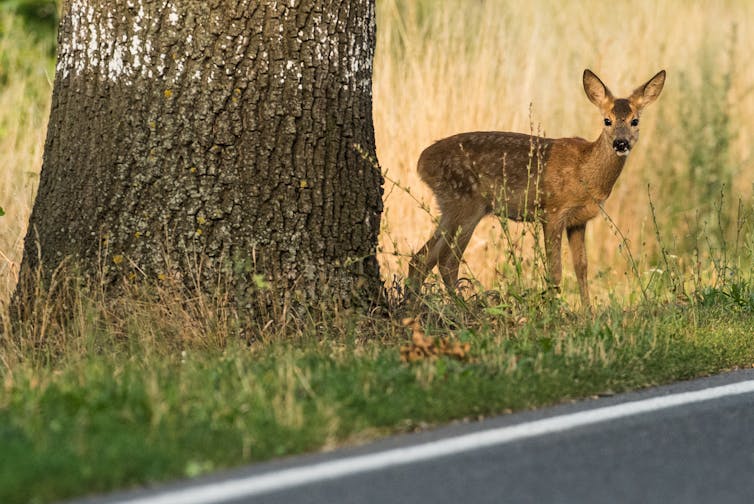
Daylight saving time ends in the U.S. and Canada on Nov. 7, 2021, and most of us will be setting our clocks back an hour. There is a long-running debate about the benefit of the time change, given how it disrupts humans’ circadian rhythms, causing short-term stress and fatigue.
Another risk accompanying the time change is on the roads: As more people drive at dusk during an active time of year for deer, the number of deer-vehicle accidents rises.
Deer cause over 1 million motor vehicle accidents in the U.S. each year, resulting in more than US$1 billion in property damage, about 200 human deaths and 29,000 serious injuries. Property damage insurance claims average around $2,600 per accident, and the overall average cost, including severe injuries or death, is over $6,000.
While avoiding deer – as well as moose, elk and other hoofed animals, known as ungulates – can seem impossible if you’re driving in rural areas, there are certain times and places that are most hazardous, and so warrant extra caution.
Transportation agencies, working with scientists, have been developing ways to predict where deer and other ungulates enter roads so they can post warning signs or install fencing or wildlife passages under or over the roadway. Just as important is knowing when these accidents occur.
My former students Victor Colino-Rabanal, Nimanthi Abeyrathna and I have analyzed over 86,000 deer-vehicle collisions involving white-tailed deer in New York state using police records over a three-year period. Here’s what our research and other studies show about timing and risk.
Time of day, month and year matters
The risk of hitting a deer varies by time of day, day of the week, the monthly lunar cycle and seasons of the year.
These accident cycles are partly a function of driver behavior – they are highest when traffic is heavy, drivers are least alert and driving conditions are poorest for spotting animals. They are also affected by deer behavior. Not infrequently, deer-vehicle accidents involve multiple vehicles, as startled drivers swerve to miss a deer and collide with a vehicle in another lane, or they slam on the breaks and are rear-ended by the vehicle behind.
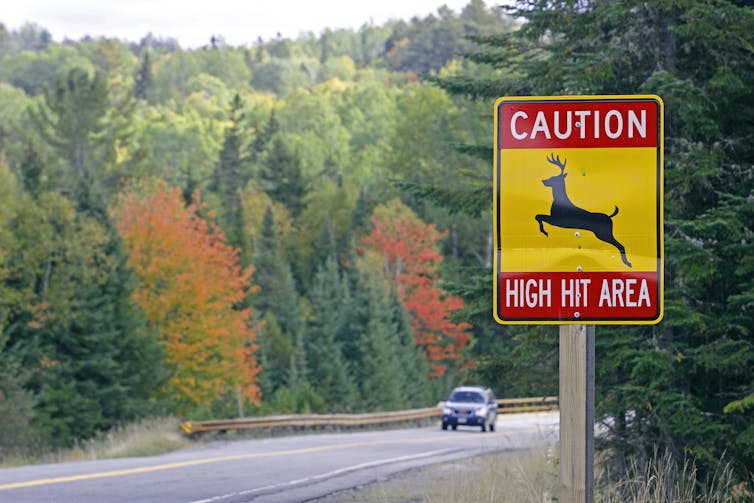
In analyzing thousands of deer-vehicle collisions, we found that these accidents occur most frequently at dusk and dawn, when deer are most active and drivers’ ability to spot them is poorest. Only about 20% of accidents occur during daylight hours. Deer-vehicle accidents are eight times more frequent per hour of dusk than daylight, and four times more frequent at dusk than after nightfall.
During the week, accidents occur most frequently on days that have the most drivers on the road at dawn or dusk, so they are associated with work commuter driving patterns and social factors such as Friday “date night” traffic.
Over the span of a month, the most deer-vehicle accidents occur during the full moon, and at the time of night that the moon is brightest. Deer move greater distances from cover and are more likely to enter roadways when there is more illumination at night. The pattern holds for deer and other ungulates in both North America and Europe.
Over a year, by far the highest numbers of deer-vehicle accidents are in autumn, and particularly during the rut, when bucks search and compete to mate with does. In New York state, the peak number of deer-vehicle accidents occurs in the last week of October and first weeks of November. There are over four times as many deer-vehicle accidents during that period as during spring. Moose-vehicle accidents show a similar pattern.
The problem with daylight saving time
We have also found that the daylight saving time clock shift of one hour affects the number of deer-vehicle accidents.
In spring, when deer-vehicle accidents are at an annual low, the start of daylight saving time means a later sunrise and sunset. It results in a small decrease in deer-vehicle accidents. However, in fall, when deer-vehicle accidents are at an annual high because of deer rut, the earlier sunrise and sunset cause a significant increase in deer-vehicle accidents.
The clock shift results in more commuters on the road during the high-risk dusk hours. The consequence is more cars driving at the peak time of day and during the peak time of the year for deer-vehicle accidents. The clock shift results in a 37% reduction in deer-vehicle accidents during morning commuter hours, since fewer commuters are on the road before sunrise, but a 72% increase in accidents during evening commuter hours. Overall, there is a 19% increase in accidents during commuter hours the week after the fall time change in New York.
Deer still cross roads at any time
It’s important to remember that deer-vehicle accidents can occur at any time of day or night, on any day of the year – and that deer can show up in urban areas as well as rural ones.
The insurance company State Farm found that on average, U.S. drivers have a 1 in 116 chance of hitting an animal, with much higher rates in states such as West Virginia, Montana and Pennsylvania. Over the 12 months ended in June 2020, State Farm counted 1.9 million insurance claims for collisions with wildlife nationwide. Around 90% of those involved deer.
Where deer or other ungulates are likely to be present, drivers should always be alert and cautious, especially at dawn, dusk, on bright moonlit nights and during the fall rut. In addition, drivers should be aware that after the fall time change, they may be more fatigued, and their evening commute from work may have shifted into the dusk hours, when risk of hitting a deer is highest, and coinciding with the rut, when the risk is at its annual peak.
This is an update to an article previously published on Sept. 21, 2021.
[Over 100,000 readers rely on The Conversation’s newsletter to understand the world. Sign up today.]
Tom Langen, Professor of Biology, Clarkson University
This article is republished from The Conversation under a Creative Commons license. Read the original article.
The California Highway Patrol joins the National Sleep Foundation in recognizing Drowsy Driving Prevention Week, Nov. 7 to 13, and reminds drivers to be cognizant of the warning signs of fatigued driving.
“When you think of the causes of impaired or distracted driving, include drowsy driving,” said CHP Commissioner Amanda Ray. “Driver inattention due to fatigue can result in similar effects as drugs or alcohol.”
According to the Centers for Disease Control and Prevention, people who have been awake for at least 18 hours may behave as someone impaired by alcohol. On average, in California there are more than 6,000 crashes annually that are attributed to drowsy driving.
Some suggested tips to avoid drowsy driving include:
— Getting enough sleep before driving.
— Driving with a passenger and switching drivers before you start to feel drowsy.
—Taking regular rest stops even if you are not tired.
— Avoiding alcohol or medications that can cause drowsiness.
— Stay alert and drive without distraction not only to protect yourself, but to protect your passengers and other motorists.
If you feel fatigued while driving on California’s roadways, motorists are encouraged to take advantage of the more than 80 safety roadside rest areas maintained by the California Department of Transportation throughout the state.
To find a rest area or to check for the latest travel information on state highways, visit Caltrans’ QuickMap.
Dogs available for adoption this week include mixes of American bulldog, American Staffordshire terrier, border collie, Doberman, German shepherd, Great Pyrenees, hound, husky, Labrador retriever, mastiff, pit bull and Rottweiler.
Dogs that are adopted from Lake County Animal Care and Control are either neutered or spayed, microchipped and, if old enough, given a rabies shot and county license before being released to their new owner. License fees do not apply to residents of the cities of Lakeport or Clearlake.
The following dogs at the Lake County Animal Care and Control shelter have been cleared for adoption (additional dogs on the animal control website not listed are still “on hold”).
Call Lake County Animal Care and Control at 707-263-0278 or visit the shelter online at http://www.co.lake.ca.us/Government/Directory/Animal_Care_And_Control.htm for information on visiting or adopting.
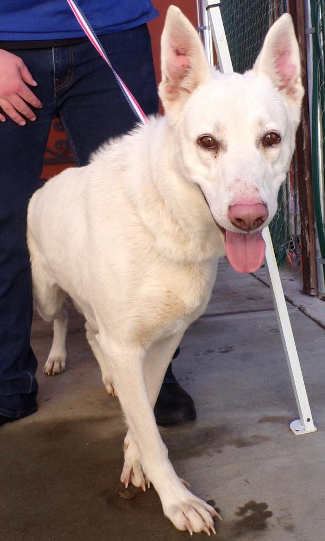
‘Luna’
“Luna” is a 3-year-old female German shepherd-Great Pyrenees mix with a white coat.
She is in kennel No. 2, ID No. LCAC-A-1906.
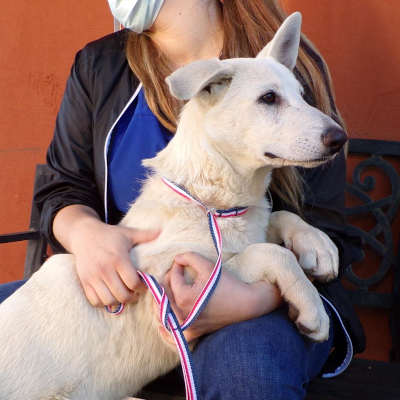
‘Lucy’
“Lucy” is a female German shepherd-Great Pyrenees mix puppy with a white coat.
She is in kennel No. 3, ID No. LCAC-A-1909.
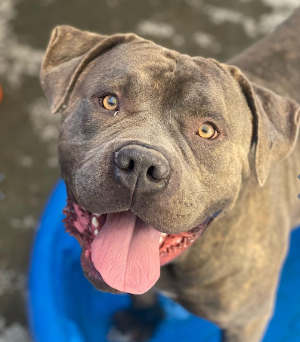
‘George’
“George” is a 1-year-old male American bulldog mix with a short gray coat.
He is in kennel No. 4, ID No. LCAC-A-1430.
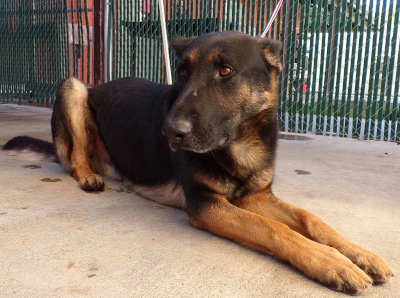
Male German shepherd
This 1-year-old male German shepherd has a black and tan coat.
He is in kennel No. 6, ID No. LCAC-A-1892.
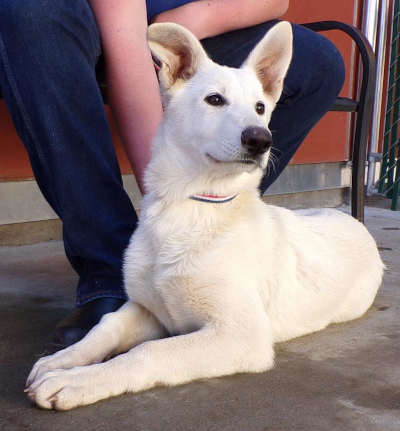
‘Emmy’
“Emmy” is a female German shepherd puppy with a white coat.
She is in kennel No. 8, ID No. LCAC-A-1908.
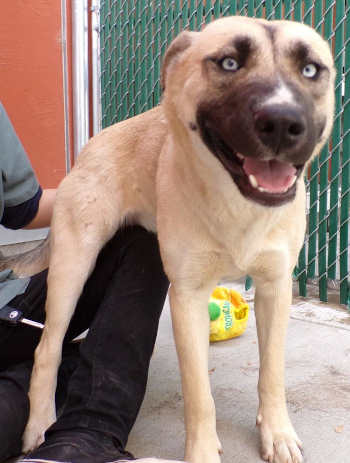
Female shepherd-husky
This female shepherd-husky has a short tan coat with black markings and blue eyes.
She is in kennel No. 9, ID No. LCAC-A-1745.
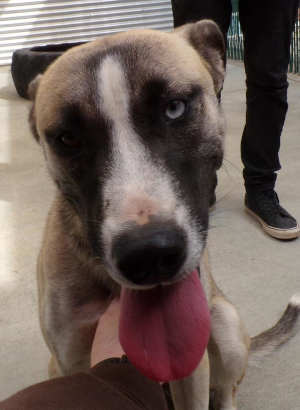
Female shepherd-husky
This 1-year-old female shepherd-husky mix has a short tricolor coat and blue eyes.
She’s in kennel No. 10, ID No. LCAC-A-1746.
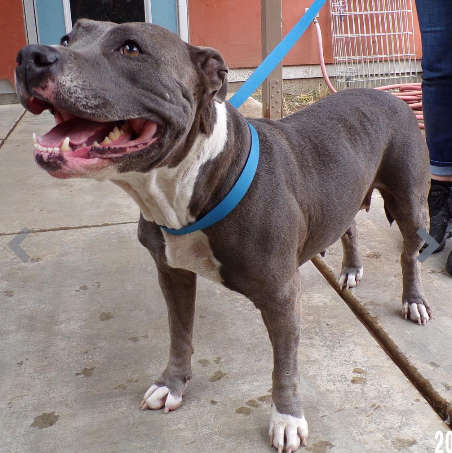
Female American Staffordshire terrier
This 7-year-old female American Staffordshire terrier has a short gray coat and white markings.
She is in kennel No. 11, ID No. LCAC-A-1890.
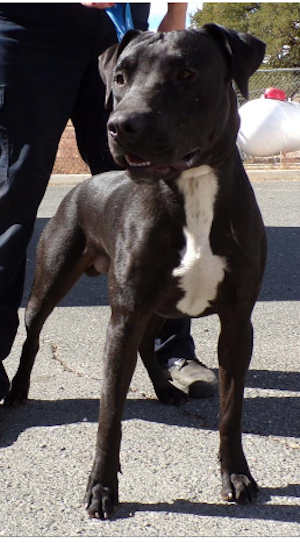
‘Einstine’
“Einstine” is a young Labrador retriever-pit bull mix with s short black coat with white markings.
He is in kennel No. 12, ID No. LCAC-A-1860.
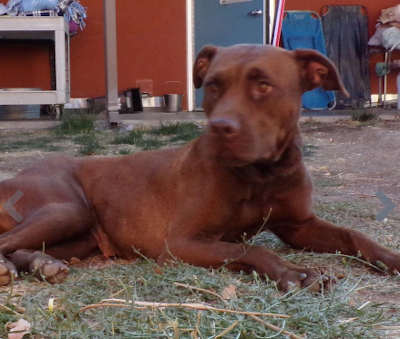
Labrador-pit bull mix
This 5-year-old female chocolate Labrador retriever-pit bull mix has a short chocolate-colored coat.
She is in kennel No. 13, ID No. LCAC-A-1769.
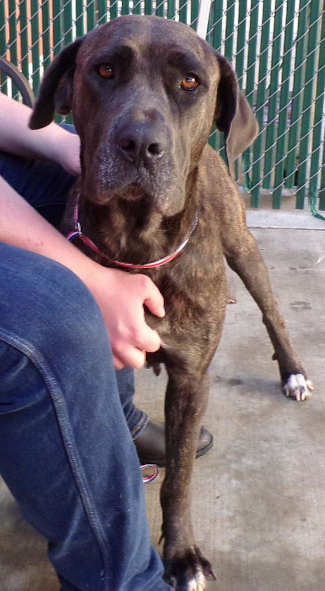
Female mastiff
This 3-year-old female mastiff has a short brindle coat.
She is in kennel No. 15, ID No. LCAC-A-1868.
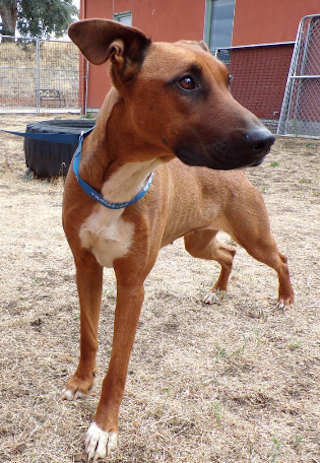
‘Cynthia’
“Cynthia” is a 1-year-old female Doberman pinscher-hound mix.
She is in kennel No. 18, ID No. LCAC-A-1891.
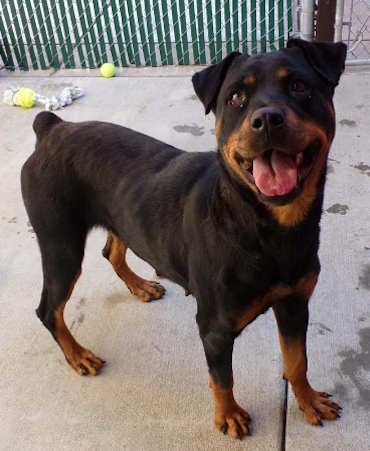
Female Rottweiler
This 5-year-old female Rottweiler has a short black and tan coat.
She is in kennel No. 20, ID No. LCAC-A-1833.
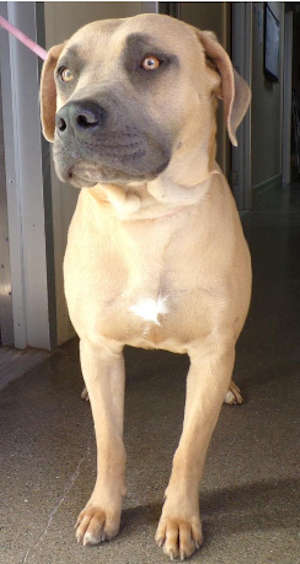
Male mastiff
This 2-year-old male mastiff has a short tan coat.
He is in kennel No. 21, ID No. LCAC-A-1869.
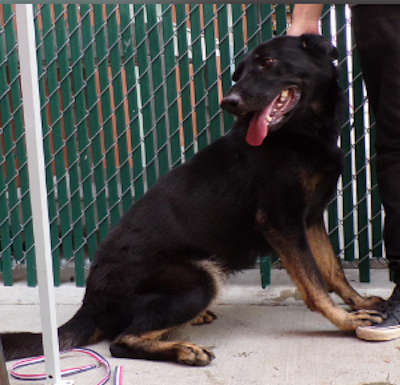
Female German shepherd
This 2-year-old female German shepherd has a short black coat with tan markings.
She is in kennel No. 22, ID No. LCAC-A-1733.
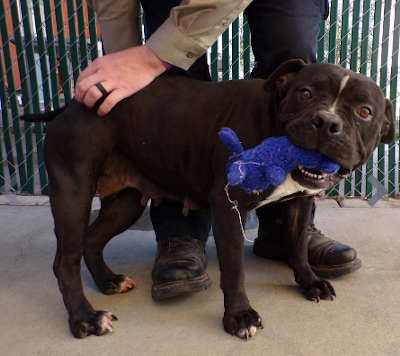
Female American Staffordshire mix
This 3-year-old female American Staffordshire mix has a short black coat with white markings.
She is in kennel No. 23, ID No. LCAC-A-1727.
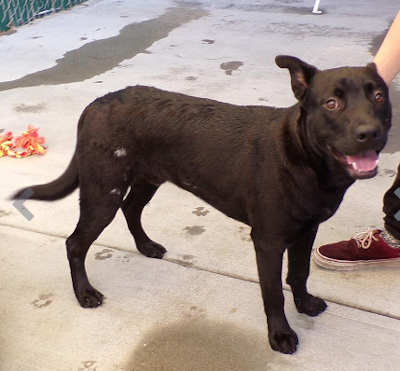
Male husky-pit bull
This 1-year-old male husky-pit bull mix has a short coat.
He is in kennel No. 25, ID No. LCAC-A-1726.
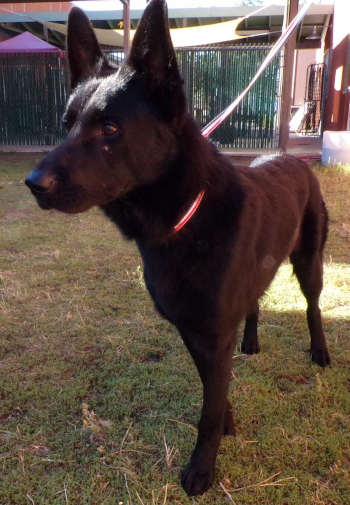
Male German shepherd
This 2-year-old male German shepherd has a black and tan coat.
He is in kennel No. 26, ID No. LCAC-A-1903.
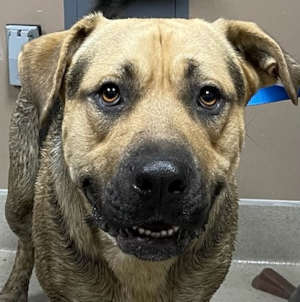
Male shepherd mix
This 2-year-old male shepherd mix has a short black and tan coat.
He is in kennel No. 28, ID No. LCAC-A-1743.
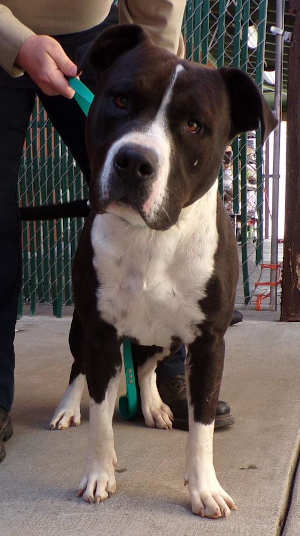
Male pit bull
This young male pit bull has a short black and white coat.
He is in kennel No. 29, ID No. LCAC-A-1699.
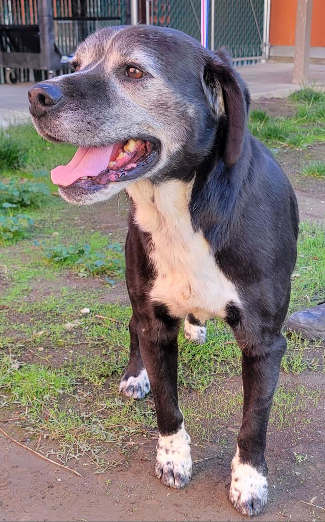
Labrador-border collie mix
This 12-year-old male Labrador retriever-border collie mix has a short black and white coat.
He is in kennel No. 30, ID No. LCAC-A-2101.
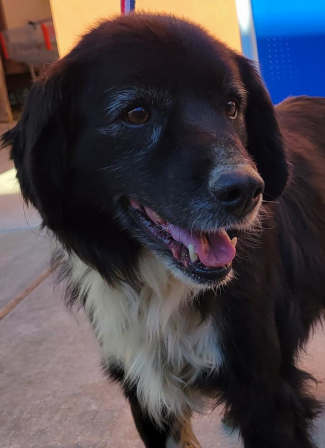
Female border collie
This 12-year-old female border collie has a long black and white coat.
She is in kennel No. 31, ID No. LCAC-A-2100.
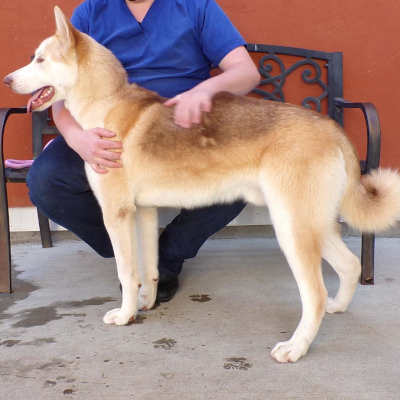
‘Canela’
“Canela” is a 1-year-old male husky mix with a tricolor coat.
He is in kennel No. 32, ID No. LCAC-A-1855.
Email Elizabeth Larson at