 How to resolve AdBlock issue?
News
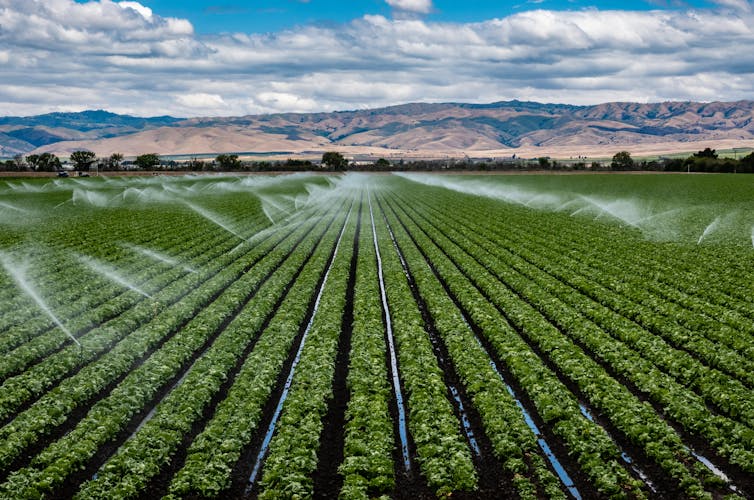
Outside of the world’s oceans, groundwater is one of the largest stores of water on Earth. While it might appear that the planet is covered in vast lakes and river systems, they make up only 0.01 per cent of the Earth’s water. In fact, we now know there is 100 times as much groundwater on this planet as there is freshwater on its surface.
Groundwater is the water contained beneath the Earth’s surface. It’s stored in the tiny cracks found within rock and the spaces between soil particles. It can extend deep into the subsurface, at least as much as 10 kilometres.
As groundwater researchers, we’re interested in how governments and industries might use these extensive groundwater reservoirs, such as for storing liquid waste and carbon dioxide. But groundwater may also have environmental functions that have not yet been revealed — this body of water remains hidden, with very few windows available for us to explore it.
One of Earth’s largest stores of water
While scientists have known for at least five decades that groundwater makes up a large fraction of the world’s water, estimated volumes of groundwater had focused on the upper two kilometres of the Earth’s crust.
A recent analysis that looked 10 kilometres beneath the surface found that the true volume is likely twice as large. These new estimates mean that groundwater is the largest continental reservoir of water — even more than all the water contained in the continental ice sheets in Antarctica and Greenland, which were long thought to be the Earth’s second-largest stores of water.
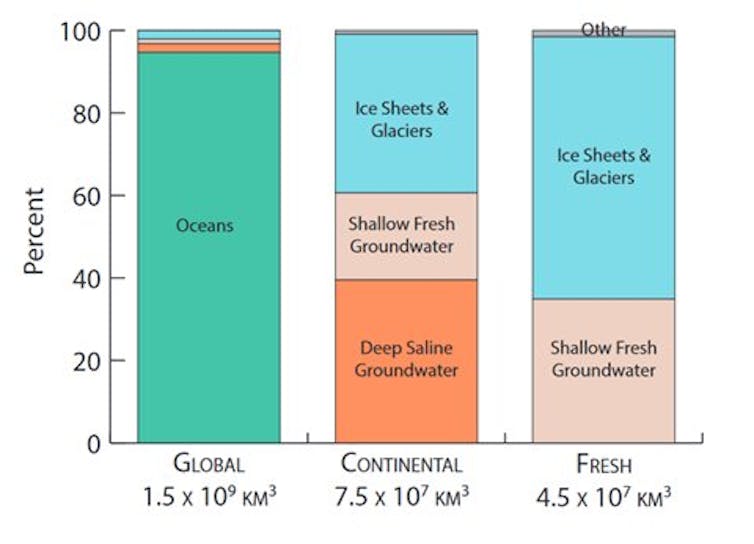
Previous groundwater estimates arrived at lower volumes because they only considered groundwaters at shallower depths. But permeable rocks are found down to at least 10 kilometres below the Earth’s surface and can hold water in cracks and pores. While these spaces only account for a small volume of the rock mass, they add up to nearly 44 million cubic kilometres of water in the upper 10 kilometres of rock, enough to fill more than 10,000 Grand Canyons.
Groundwater matters because it can provide reliable water for homes, irrigation and industry. But these wells tend to be less than 100 metres deep and they rarely approach one kilometre. Most of the groundwater contained in the rock below that is saline, sometimes several times saltier than seawater, and unusable for drinking water or irrigation.
Scientists know much less about the groundwater stored more than one kilometre deep. Yet they have determined that rain and snow falling in North America can circulate to depths of one to four kilometres. Beneath these depths there is only ancient water with other origins, last in contact with the atmosphere more than tens of thousands of years ago, but sometimes in excess of a billion years ago.
The circulation of this deep groundwater is controlled by the forces that drive flow, such as topography, and the permeability of the rock. For example, rainwater and snowmelt circulate more deeply in mountainous areas than flatter regions. Groundwater can flow at speeds of metres per year in sandstones and limestones, or nanometres per year in intact igneous and metamorphic rocks, due to extreme variations in the permeability of different rocks.
Environmental functions of deep groundwater
All of this has helped contribute to the treatment of deeper groundwater as being separate from shallow groundwater resources. For example, oil and gas producing regions often only protect groundwater to a certain depth, without consideration of the strength of the connections between shallow and deep groundwaters.
This assumed disconnect is also the basis for a number of waste isolation projects, including the geologic sequestration of carbon dioxide, also called carbon capture and storage, and of nuclear waste repositories in Canada, Finland and elsewhere.


Deep groundwaters may only be weakly connected to the rest of the hydrologic cycle but this does not mean they are unimportant to the functioning of our planet. Microbes have been found in most subsurface environments with temperatures below 80 C, typical for depths of three to four kilometres. This subsurface life likely accounts for more than 10 per cent of the Earth’s total biomass, and yet the links between deep groundwater circulation and subsurface life are largely unexplored at this time.
There’s clearly still much to learn about deep groundwater. Our windows into the deep subsurface are limited to deep mines, oil and gas wells and a handful of research sites.
New approaches are required to understand deep groundwater, its environmental functions and interactions with the rest of the hydrologic cycle over deep time, both in the past and into the future.
Grant Ferguson, Professor, Department of Civil, Geological and Environmental Engineering and School of Environment and Sustainability, University of Saskatchewan and Jennifer C. McIntosh, Professor, Department of Hydrology and Atmospheric Sciences, University of Arizona
This article is republished from The Conversation under a Creative Commons license. Read the original article.
Part of $83 million in grants to 74 tribal communities to prevent, prepare for, and respond to the COVID-19 pandemic, this is the third round of Indian Community Development Block Grant-American Rescue Plan, or ICDBG-ARP awards, underscoring the Biden-Harris Administration’s commitment to delivering equitable COVID-19 relief to Tribal communities.
In Lake County, two tribes have received awards.
The Big Valley Band of Pomo Indians will receive $1,035,000, which will be used to construct a facility that will provide medical services to families impacted by COVID-19.
The Middletown Rancheria of Pomo Indians will receive $1,034,500 to construct a facility to provide medical services for families impacted by COVID-19 and to construct a tiny home.
Elsewhere around the region, the Pinoleville Pomo will receive $1,035,000 to purchase a modular unit to house medical services, the Round Valley Indian Housing Authority will use its $1,725,000 grant to renovate homes and to develop a food bank and the Mechoopda Indian Tribe of Chico Rancheria will receive $1,017,979 which it will use to acquire an existing apartment complex to address the housing shortage and acquire a mobile kitchen and a mobile quarantine unit.
HUD said these funds to tribes will help protect the health and safety of their communities, particularly low- and moderate-income individuals and families, by expanding access to safe housing, a suitable living environment, and economic opportunities.
“It is imperative that we continue providing Tribal communities with resources needed to protect the health and safety of their communities,” said HUD Deputy Secretary Adrianne Todman. “With the funding HUD is awarding today, we remain diligent in continuing our mission to ensure that every person has the security of a healthy home and community. HUD will continue to strengthen partnerships with Tribal communities to ensure that all communities receive equitable relief.”
The announcement follows HUD’s previous awards of $74 million in ICDBG-ARP grants to 68 Tribal communities in November and $52 million in ICDBG-ARP grants to 49 tribal communities in December.
The American Rescue Plan included a total of $280 million for the Indian Community Development Block Grant program; HUD will announce additional ICDBG-ARP awards on a rolling basis.
The Department and the Biden-Harris Administration have made delivering equitable COVID-19 relief to tribal communities a priority. The American Rescue Plan Act provides a total of $750 million in HUD resources to Indian Country to support the continued fight against COVID-19.
In 2021, HUD made a historic $450 million investment in Indian Housing Block Grants to Indian tribes across the country to respond to COVID-19. The department also invested $5 million in COVID-19 relief for Native Hawaiians.
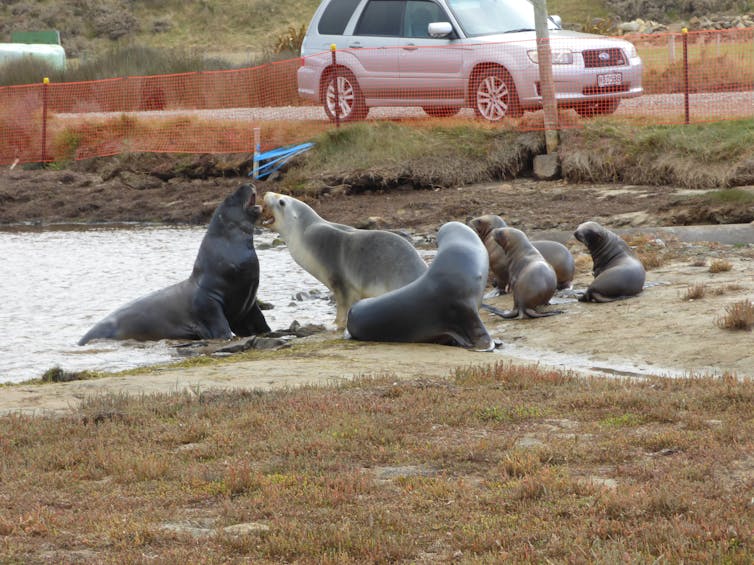
Imagine discovering a sea lion in the middle of the woods, more than a mile inland from the beach. Or coming face to face with one of these curious creatures in a local swimming pool or on your front porch.
These encounters are happening in New Zealand with the return of the endangered New Zealand sea lion, the world’s rarest sea lion species. The females normally move up to a mile (about 1.5 kilometers) inland with their pups during the breeding season to protect them from rougher conditions at the coast – but now there are a lot more humans in the way.
Encounters between wild animals and humans can be dangerous for both sides. Sea lions have been stabbed, clubbed, shot and accidentally hit by cars. Roads, fences and residential development can block their movement inland. Some females and pups have adapted to commercial pine forests on private lands that could one day be cleared or developed.
As an ecologist, I study species around the world whose populations are recovering after decades or even centuries of immense human pressures and exploitation. Nations are now preparing for a landmark U.N. conference on protecting Earth’s biodiversity that will take place in China from April 25 to May 8, 2022; one important question is how humans can strike a new balance with recovering species such as sea lions, sharks and whales, and make space for these resilient creatures to thrive.
Making way for sea lions
Like many other creatures valued for their meat or fur, New Zealand sea lions were historically hunted to near-extinction. For the past 150 years, remnant populations could only be found on New Zealand’s undeveloped subantarctic islands, more than 300 miles from the nation’s mainland. Today, their population is estimated at 12,000.
These animals typically return to and breed at the original location where they were born, but in 1993, a female sea lion gave birth on the mainland for the first time in centuries. Since then, her offspring have bred for five generations. Other females have followed, and some 20 pups are now born on the mainland each year.
When wild species recolonize areas or shift their ranges in this way, scientists can make predictive models to help determine where the animals could settle in the future and take steps to protect them. But traditional versions of these models can’t account for when and where the recovering species may interact with humans, because these encounters are new developments and may occur under conditions that differ from the past.
In a study published in November 2021, my team and I addressed this issue by creating an integrated species distribution model database, which pairs algorithmic models with expert knowledge to highlight suitable habitats and flag areas for concern. Through it, we found and mapped 395 potential breeding grounds for sea lions all over the New Zealand mainland. We also identified human-related challenges for the animals, such as roads and fences that could block their inland movement.
Our research can help wildlife managers and local officials search for sea lions, post sea lion crossing signs on roads, verify or restore breeding sites and determine where to work with landowners and spread awareness. This kind of tool can help inform similar efforts for other species that are recovering or moving into new habitats and regions in response to climate change.
Welcoming whales back
Of course, humans are happier to make space for some wild species than for others.
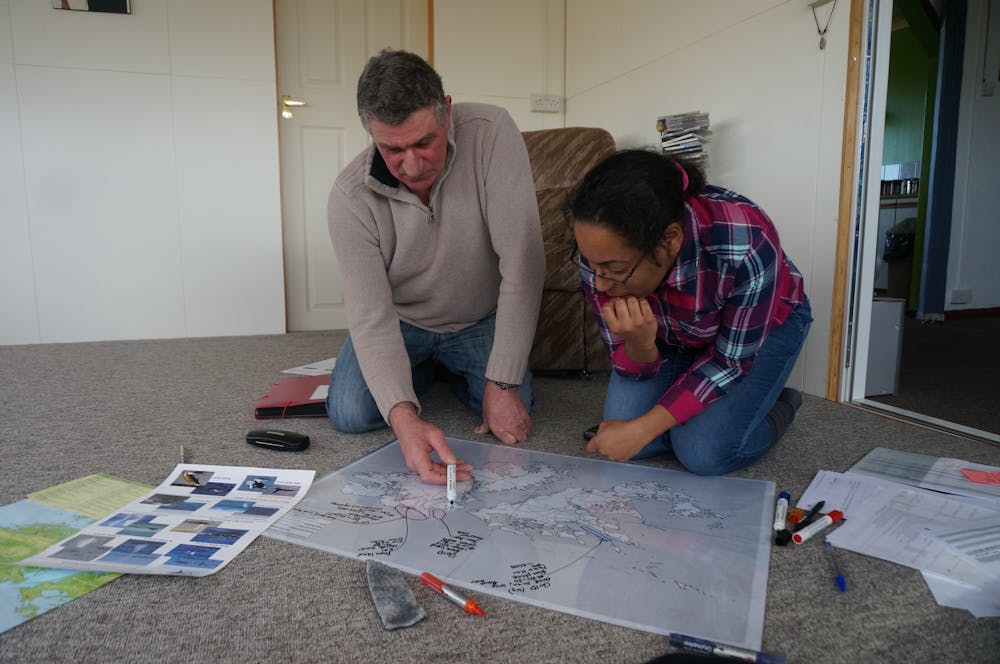
I did research in the Falkland Islands from 2015 to 2016 and found that residents welcomed the return of sei, fin, minke, southern right and blue whales to local waters. All of these species were intensively hunted beginning in the 1800s but started making noticeable comebacks after nations adopted the 1982 moratorium on commercial whaling.
For local residents, seeing whales offshore while tending sheep, taking the ferry or flying from island to island was a special experience. We used residents’ historical knowledge and thousands of whale observations from the 1940s to 2015 to inform scientific surveys around the islands. This work helped others analyze sei whale distribution around the islands and resulted in the creation of the world’s first Key Biodiversity Area for sei whales – a place that is considered globally significant for the rare, unique, or many species it contains.
Finding that Falkland residents enjoyed seeing whales offshore suggested to us that they would support processes like marine spatial planning to help protect them. Marine spatial planning is a public process for organizing human uses of the ocean, such as shipping, tourism, oil exploration and commercial fishing, in ways that balance them with environmental protection.
When predators rebound
Coexisting with some recovering species can be more controversial and delicate to manage, especially if they are perceived as threats to public safety or property.
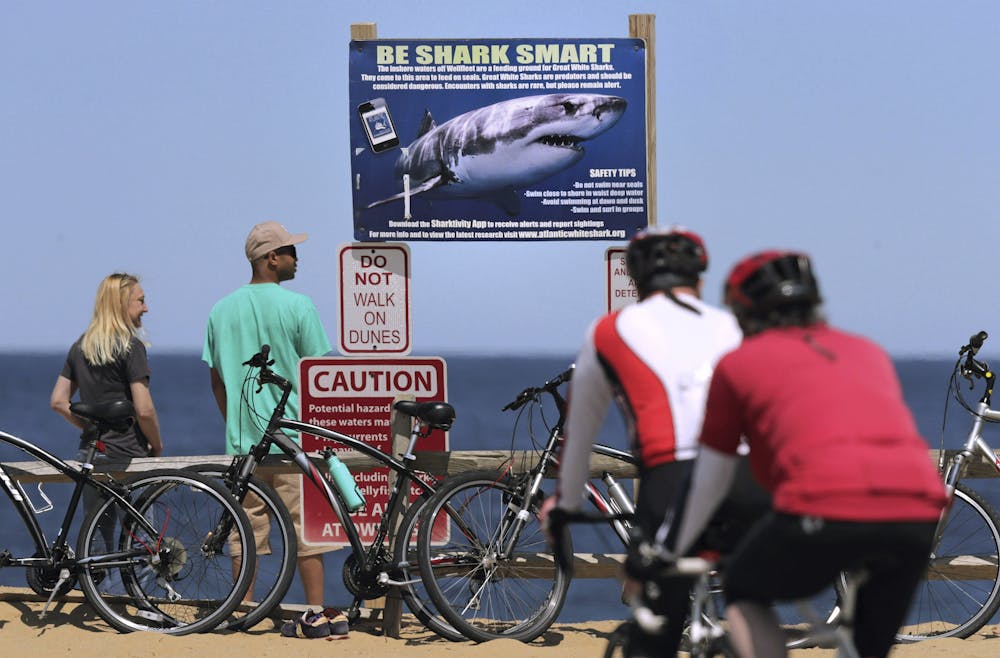
Along the northeast U.S. coast and up into Canada, white sharks once were severely overfished but are now rebounding in response to climate change, protection efforts and growing populations of seals, their preferred prey. As top predators, sharks help control other ocean species and increase ocean carbon storage. They also are one of the few shark species known to attack humans.
Over the past several years, lifeguards have repeatedly closed popular beaches along Cape Cod in Massachusetts when white sharks are present. Warnings and restrictions intensified after a shark killed a swimmer in 2018. Such measures often spark declines in tourism, but in some places the presence of sharks is slowly becoming an attraction.
Nevertheless, the growing abundance of white sharks is divisive. As shark numbers and sightings increase, scientists and local officials are working to raise awareness and educate the public about them. Monitoring shark movement with drones and other equipment can also help lifeguards warn beachgoers that sharks are present in advance.
Know who’s moving in
Scientists widely agree that the Earth is losing species at a rapid rate, potentially representing the sixth mass extinction in its history. Against that background, these ongoing stories of species recovery take on new urgency, especially when conflicts arise.
Science can help. Predictive models and maps highlight where species may appear in the future. Monitoring species on the move can reveal how numerous they are, how they behave, what habitats they prefer and where they may interact with humans.
When wild species enter new areas, they inevitably will have to adapt, and often will have new kinds of interactions with humans. These encounters won’t always be easy to manage, but I believe that when communities understand the changes and are involved in planning for them, they can prepare for the unexpected, with coexistence in mind.
[Get our best science, health and technology stories. Sign up for The Conversation’s science newsletter.]
Veronica Frans, PhD Student, Michigan State University
This article is republished from The Conversation under a Creative Commons license. Read the original article.
Dogs available for adoption this week include mixes of Akita, shepherd and pit bull.
Dogs that are adopted from Lake County Animal Care and Control are either neutered or spayed, microchipped and, if old enough, given a rabies shot and county license before being released to their new owner. License fees do not apply to residents of the cities of Lakeport or Clearlake.
The following dogs at the Lake County Animal Care and Control shelter have been cleared for adoption (additional dogs on the animal control website not listed are still “on hold”).
Call Lake County Animal Care and Control at 707-263-0278 or visit the shelter online for information on visiting or adopting.
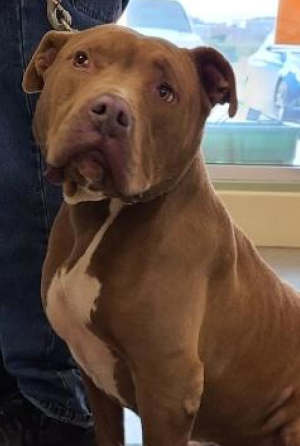
‘Chapo’
“Chapo” is a 7-year-old male pit bull with a tan coat.
He is in kennel No. 19, ID No. LCAC-A-2458.
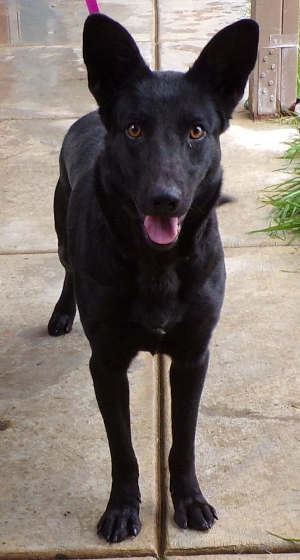
‘Nioki’
“Nioki” is a 1-year-old female shepherd with a black coat.
She is in kennel No. 21, ID No. LCAC-A-2442.

Female Akita-shepherd mix
This 1-year-old female Akita-shepherd mix has a black and tan coat.
She is in kennel No. 33, ID No. LCAC-A-2438.
Email Elizabeth Larson at
Often portrayed as destructive monsters that hold light captive, black holes take on a less villainous role in the latest research from NASA's Hubble Space Telescope.
A black hole at the heart of the dwarf galaxy Henize 2-10 is creating stars rather than gobbling them up.
The black hole is apparently contributing to the firestorm of new star formation taking place in the galaxy. The dwarf galaxy lies 30 million light-years away, in the southern constellation Pyxis.
A decade ago this small galaxy set off debate among astronomers as to whether dwarf galaxies were home to black holes proportional to the supermassive behemoths found in the hearts of larger galaxies. This new discovery has little Henize 2-10, containing only one-tenth the number of stars found in our Milky Way, poised to play a big part in solving the mystery of where supermassive black holes came from in the first place.
"Ten years ago, as a graduate student thinking I would spend my career on star formation, I looked at the data from Henize 2-10 and everything changed," said Amy Reines, who published the first evidence for a black hole in the galaxy in 2011 and is the principal investigator on the new Hubble observations, published in the January 19 issue of Nature.
"From the beginning I knew something unusual and special was happening in Henize 2-10, and now Hubble has provided a very clear picture of the connection between the black hole and a neighboring star forming region located 230 light-years from the black hole," Reines said.
That connection is an outflow of gas stretching across space like an umbilical cord to a bright stellar nursery. The region was already home to a dense cocoon of gas when the low-velocity outflow arrived.
Hubble spectroscopy shows the outflow was moving about 1 million miles per hour, slamming into the dense gas like a garden hose hitting a pile of dirt and spreading out. Newborn star clusters dot the path of the outflow's spread, their ages also calculated by Hubble.
This is the opposite effect of what's seen in larger galaxies, where material falling toward the black hole is whisked away by surrounding magnetic fields, forming blazing jets of plasma moving at close to the speed of light.
Gas clouds caught in the jets' path would be heated far beyond their ability to cool back down and form stars. But with the less-massive black hole in Henize 2-10, and its gentler outflow, gas was compressed just enough to precipitate new star formation.
"At only 30 million light-years away, Henize 2-10 is close enough that Hubble was able to capture both images and spectroscopic evidence of a black hole outflow very clearly. The additional surprise was that, rather than suppressing star formation, the outflow was triggering the birth of new stars," said Zachary Schutte, Reines' graduate student and lead author of the new study.
Ever since her first discovery of distinctive radio and X-ray emissions in Henize 2-10, Reines has thought they likely came from a massive black hole, but not as supermassive as those seen in larger galaxies.
Other astronomers, however, thought that the radiation was more likely being emitted by a supernova remnant, which would be a familiar occurrence in a galaxy that is rapidly pumping out massive stars that quickly explode.
"Hubble's amazing resolution clearly shows a corkscrew-like pattern in the velocities of the gas, which we can fit to the model of a precessing, or wobbling, outflow from a black hole. A supernova remnant would not have that pattern, and so it is effectively our smoking-gun proof that this is a black hole," Reines said.
Reines expects that even more research will be directed at dwarf galaxy black holes in the future, with the aim of using them as clues to the mystery of how supermassive black holes came to be in the early universe. It's a persistent puzzle for astronomers.
The relationship between the mass of the galaxy and its black hole can provide clues. The black hole in Henize 2-10 is around 1 million solar masses. In larger galaxies, black holes can be more than 1 billion times our Sun's mass. The more massive the host galaxy, the more massive the central black hole.
Current theories on the origin of supermassive black holes break down into three categories: 1) they formed just like smaller stellar-mass black holes, from the implosion of stars, and somehow gathered enough material to grow supermassive, 2) special conditions in the early universe allowed for the formation of supermassive stars, which collapsed to form massive black hole "seeds" right off the bat, or 3) the seeds of future supermassive black holes were born in dense star clusters, where the cluster's overall mass would have been enough to somehow create them from gravitational collapse.
So far, none of these black hole seeding theories has taken the lead. Dwarf galaxies like Henize 2-10 offer promising potential clues, because they have remained small over cosmic time, rather than undergoing the growth and mergers of large galaxies like the Milky Way. Astronomers think that dwarf galaxy black holes could serve as an analog for black holes in the early universe, when they were just beginning to form and grow.
"The era of the first black holes is not something that we have been able to see, so it really has become the big question: where did they come from? Dwarf galaxies may retain some memory of the black hole seeding scenario that has otherwise been lost to time and space," Reines said.
The Hubble Space Telescope is a project of international cooperation between NASA and the European Space Agency. NASA's Goddard Space Flight Center in Greenbelt, Maryland, manages the telescope. The Space Telescope Science Institute, or STScI, in Baltimore, Maryland, conducts Hubble science operations. STScI is operated for NASA by the Association of Universities for Research in Astronomy in Washington, D.C.
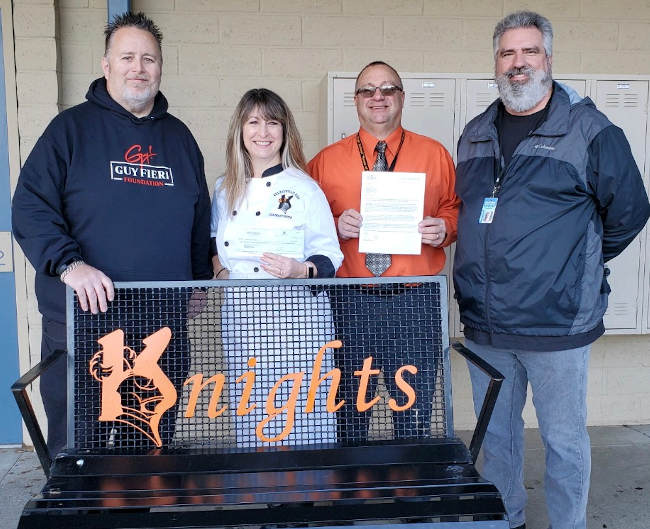
KELSEYVILLE, Calif. — A $7,270 grant from the Guy Fieri Foundation has paved the way for Kelseyville High School culinary arts students to fully participate in a newly formed local chapter of the Family, Career and Community Leaders of America, a national career and technical student organization.
The grant will be used to incorporate Family, Career and Community Leaders of America, or FCCLA, into the KHS Culinary Arts Program.
KHS Culinary Teacher Tami Cramer explained, “FCCLA is to culinary arts as FFA is to agricultural sciences.”
According to its website, FCCLA helps students develop real-world skills, explore career pathways and become college- and career-ready through participation in competitive events, becoming involved in community service opportunities, student leadership, and attending leadership conferences.”
In 2018, Kelseyville Unified used Career Technical Education funds to help in the Culinary Arts program including upgrades to facilities such as a new demonstration kitchen, new stoves, commercial refrigerator and freezer, three compartment sinks, an ice machine, a dishwasher, a bar refrigerator, new countertops, electrical and plumbing work, and the refacing of all culinary cabinets.
These upgrades also included a handicap-accessible kitchen and technology that allows all students equal access to learning.
In 2019, Cramer worked with a FCCLA program adviser to research and develop a program at KHS. Students were registered, officers were selected, and members attended a regional conference. Then COVID-19 put a halt in their efforts to expand on the work they started.
“Without being fully established, it was hard to expand and grow during online learning,” Cramer said.
When Cramer learned of the grant opportunity to support KHS’s participation in FCCLA through the Guy Fieri Foundation, she quickly received encouragement from KHS Career Tech Coordinator Donelle McCallister and KHS Principal Mike Jones to apply.
Jones said, “Membership in this leadership organization provides students the opportunity to develop both leadership and culinary skills.”
Without the grant, it would have been difficult for KHS to afford FCCLA registration fees, the red blazers required for students to attend FCCLA meetings and conventions, and travel expenses for students to attend events out-of-town competitions and leadership conferences, including the California State FCCLA Leadership Conference scheduled for April 23 to 26 in Riverside.
“The Guy Fieri grant enables our students to have opportunities they wouldn’t have otherwise,” McCallister said.
The Guy Fieri Foundation is a nonprofit charity based in Petaluma with a mission to help local culinary arts programs in the middle schools, high schools, and community colleges. The Guy Fieri Foundation is committed to helping youth through nutrition education, exploring careers in hospitality, and encouraging goals for their future.
“I am thrilled Guy has given support to our culinary students and future community leaders. I’m ready to put this grant to good use,” said Cramer.