The California Legislature’s only Native American member introduced new legislation on Wednesday to develop history teaching materials informed by tribal perspectives and knowledge.
AB 1703 by Assemblymember James C. Ramos (D-Highland) proposes to foster and encourage local schools to partner with tribes located or historically located in their region with the aim of developing accurate, high quality curriculum and classroom materials.
California is home to 110 federally recognized tribes, with more than 80 other tribes reported to be seeking that same level of recognition, the state reported.
Lake County is home to seven tribes.
“I authored AB 1703 because it’s critical that we teach all students about the diversity of California’s more than 100 tribes,” Ramos said. “They each have different languages, customs, culture and history. To teach students we need partnerships and collaboration between the tribes in a community and their schools. Without that interaction, we cannot develop the more complete and high quality curriculum we seek, and we will continue to see incidents like that involving the Riverside math teacher.”
Ramos said support for revamping the state’s Native American social science curriculum has drawn backing from the California Department of Education as well as more than 600 individuals and 28 organizations.
In addition to encouraging local engagement between tribes and schools, AB 1703 would require that local districts identify the extent of the achievement gap between Native American students and their non-Native peers and strategies to close them. The findings would be submitted to the Assembly and Senate Education committees.
“It’s past time for California to support Native American communities by building a strong foundation: teaching local California Native American history in our schools in a factual and respectful manner and ensuring that local tribes are consulted in developing that instruction,” said Joey Williams, director of organizing for the California Native Vote Project. “These are the building blocks toward increasing knowledge of California’s beginnings and the culture and history of the state’s First People.”
Ramos is the first and only California Native American serving in the California Legislature. He represents the 40th Assembly district which includes Highland, Loma Linda, Mentone, Rancho Cucamonga, Redlands and San Bernardino.
CLEARLAKE, Calif. — Clearlake Animal Control has many more new dogs needing homes this week.
The City of Clearlake Animal Association also is seeking fosters for the animals waiting to be adopted.
Call the Clearlake Animal Control shelter at 707-273-9440, or email This email address is being protected from spambots. You need JavaScript enabled to view it. to inquire about adoptions and schedule a visit to the shelter.
Visit Clearlake Animal Control on Facebook or on the city’s website.
The newest dogs are listed at the top of the following list.
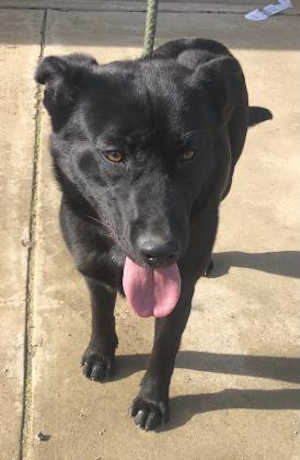
“Annie.” Photo courtesy of Clearlake Animal Control. ‘Annie’
“Annie” is a female Labrador retriever mix with a short black coat.
She is dog No. 49409961.
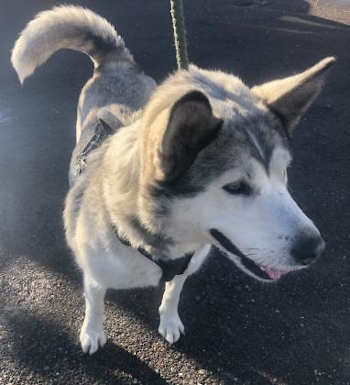
“Chai.” Photo courtesy of Clearlake Animal Control. ‘Chai’
“Chai” is a female Alaskan husky mix with a gray and white coat.
She has been spayed.
She is dog No. 49279552.
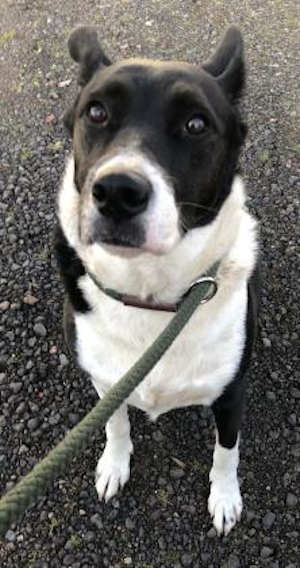
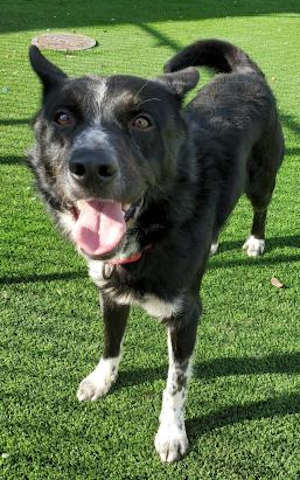
“Claire.” Photo courtesy of Clearlake Animal Control. ‘Claire’
“Claire” is a female border collie mix with a short black and white coat.
She has been spayed.
Claire is dog No. 49397880.
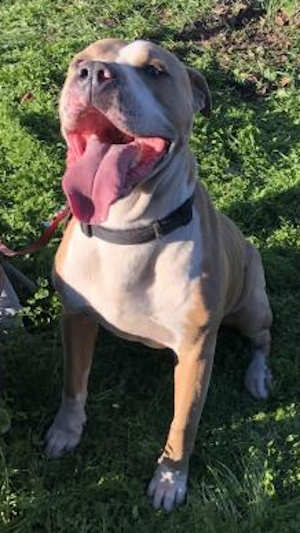
“Ebenezer.” Photo courtesy of Clearlake Animal Control. ‘Ebenezer’
“Ebenezer” is a male American pit bull terrier mix with a short tan and white coat.
He is dog No. 49191651.
“Fritz.” Photo courtesy of Clearlake Animal Control. ‘Fritz’
“Fritz” is a male Australian shepherd mix with a black and white coat.
He is dog No. 49278179.
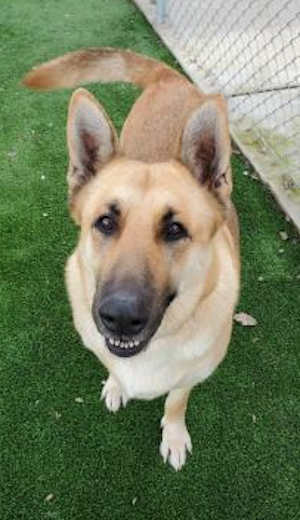
“Marge.” Photo courtesy of Clearlake Animal Control. ‘Marge’
“Marge” is a female German shepherd mix with a tan coat and black markings.
She is dog No. 49375167.
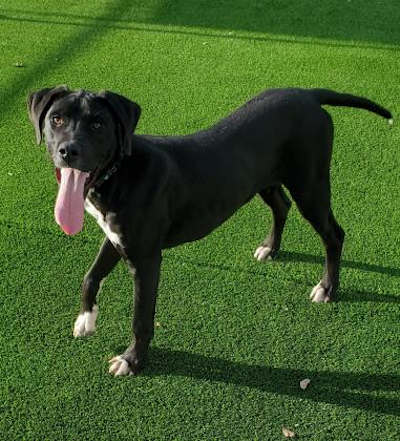
“Maui.” Photo courtesy of Clearlake Animal Control. ‘Maui’
“Maui” is a male Labrador retriever mix with a short black coat and white markings.
He is dog No. 49334317.
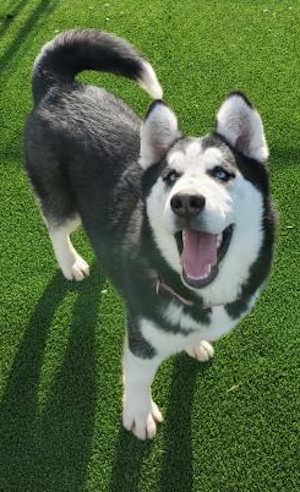
“Noodle.” Photo courtesy of Clearlake Animal Control. ‘Noodle’
“Noodle” is a male Alaskan husky mix with a black and white coat.
He is dog No. 49375787.
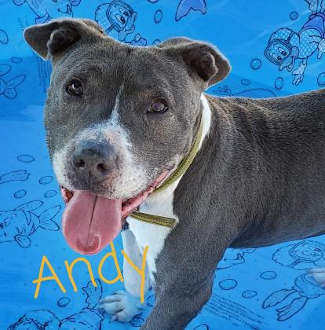
“Andy.” Photo courtesy of Clearlake Animal Control. ‘Andy’
“Andy” is a male American pit bull mix with a short gray and white coat.
He is dog No. 48995415.
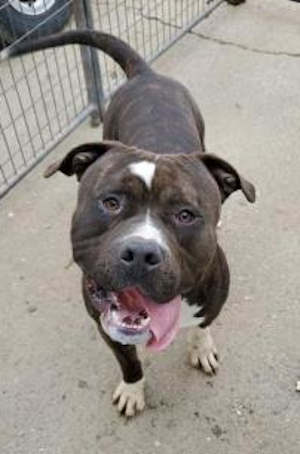
“Arnold.” Photo courtesy of Clearlake Animal Control. ‘Arnold’
“Arnold” is a male American Staffordshire terrier mix with a short brindle coat with white markings.
He is dog No. 49029348.
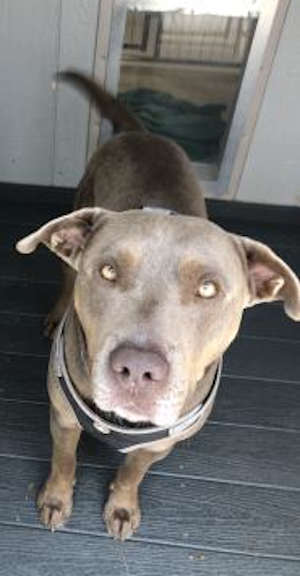
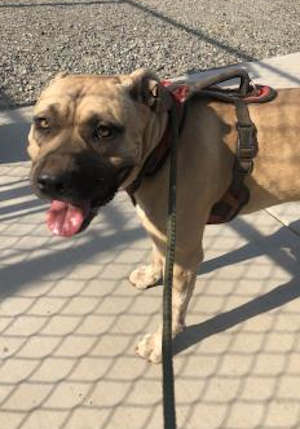
“Bear.” Photo courtesy of Clearlake Animal Control. ‘Bear’
“Bear” is a male Labrador retriever-American pit bull mix with a short charcoal and fawn coat.
“Bear No. 2” is a male American pit bull mix with a short tan coat.
He has been neutered.
He is dog No. 48731556.
“Bella.” Photo courtesy of Clearlake Animal Control. ‘Bella’
“Bella” is a female American pit bull mix with a short gray brindle coat.
She has been spayed.
She is dog No. 48448381.
“Edgar.” Photo courtesy of Clearlake Animal Control. ‘Edgar’
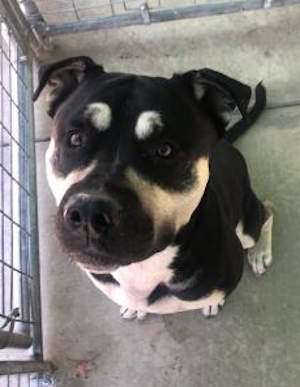
“Edgar” is a male terrier-American pit bull mix with a black and cream coat.
He has been neutered.
He is dog No. 48634546.
“Isabella.” Photo courtesy of Clearlake Animal Control. ‘Isabella’
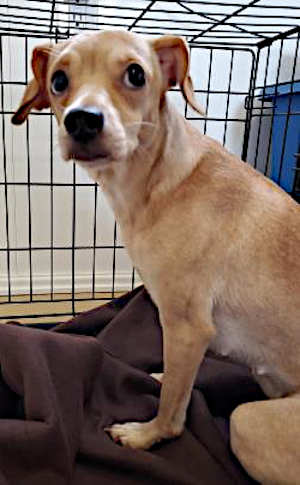
“Isabella” is a female Chihuahua mix with a short tan coat.
She is dog No. 49292130.
“Jaxx.” Photo courtesy of Clearlake Animal Control. ‘Jaxx’
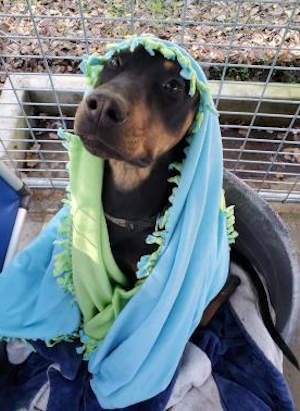
“Jaxx” is a male Doberman pinscher mix with a black and rust-colored coat.
He has been neutered.
He is dog No. 49022184.
“Levi.” Photo courtesy of Clearlake Animal Control. ‘Levi’
“Levi” is a male golden retriever-Labrador retriever mix.
He has a short golden coat.
He is dog No. 48975687.
“Maria.” Photo courtesy of Clearlake Animal Control. ‘Maria’
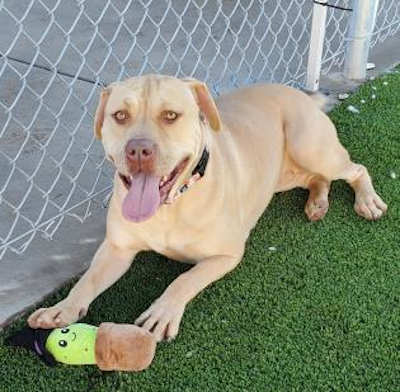
“Maria” is a female Shar-Pei mix with a short tan coat.
She is dog No. 49047315.
“Nala.” Photo courtesy of Clearlake Animal Control. ‘Nala’
“Nala” is a 1-year-old female German shepherd mix.
She has a medium-length black and tan coat.
She is dog No. 48289638.
“Priscilla.” Photo courtesy of Clearlake Animal Control. ‘Priscilla’
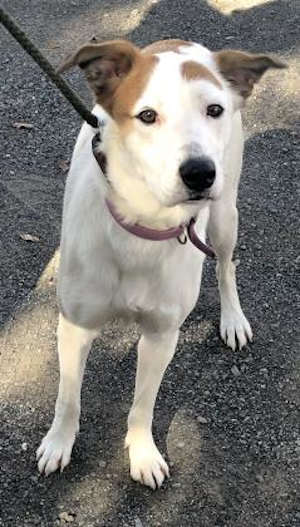
“Priscilla” is a female Brittany spaniel mix with a white and copper coat.
She is dog No. 49089138.
“Sassy.” Photo courtesy of Clearlake Animal Control. ‘Sassy’
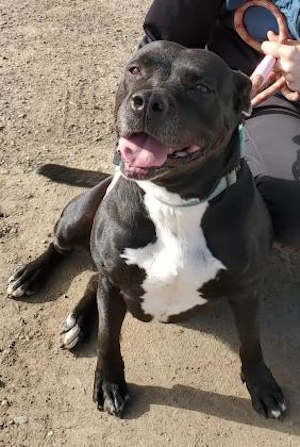
“Sassy” is a female American pit bull mix with a short black coat.
She has been spayed.
She is dog No. 48443128.
“Snowball.” Photo courtesy of Clearlake Animal Control. ‘Snowball’
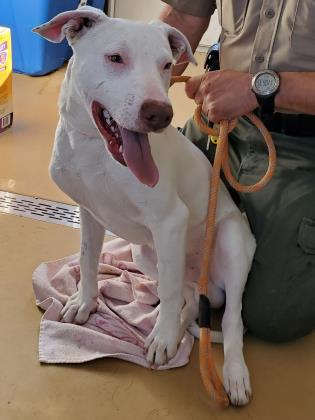
“Snowball” is a male American Staffordshire mix terrier with a white coat.
He is dog No. 49159168.
“Terry.” Photo courtesy of Clearlake Animal Control. ‘Terry’
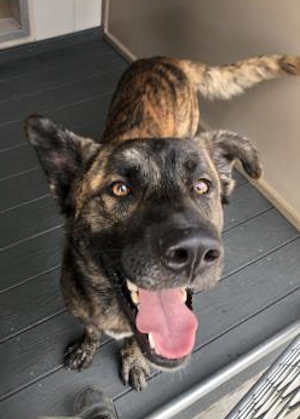
“Terry” is a male shepherd mix with a short brindle coat.
He is dog No. 48443693.
“Turk.” Photo courtesy of Clearlake Animal Control. ‘Turk’
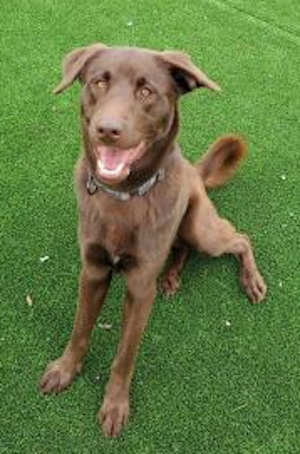
“Turk” is a male chocolate Labrador retriever mix.
He is dog No. 48911836.
Email Elizabeth Larson at This email address is being protected from spambots. You need JavaScript enabled to view it.. Follow her on Twitter, @ERLarson, or Lake County News, @LakeCoNews.
LAKE COUNTY, Calif. — While the COVID-19 Omicron variant has hit many parts of the state and the nation with a case surge, that so far hasn’t been the case in Lake County, but this week a doctor urged the community to avoid large gatherings and take particular care due to his belief a local surge could take place in the coming month.
Dr. Charlie Evans, who has helped with Public Health officer duties for Lake County, joined with new Health Services Director Jonathan Portney to give the Board of Supervisors a situation report on COVID-19 on Tuesday.
Evans told the board that the state of California, as a whole, has reached a plateau for COVID-19 cases, but rural areas like Lake are lagging behind the state and so their numbers are still rising.
He said hospitalizations are still on the rise across the state and well above the peak of Delta in September, although they haven’t reached the peak of a year ago.
Lake County is at a 27.5% positivity rate, the highest it’s had during the pandemic, with Evans noting that its previous high was 18% in September. The current case rate also is Lake’s highest, at 89.4 cases per 100,000.
The age groups with the highest case rates are those in the 18 to 34 and 35 to 49 categories, as they are in the community working, said Evans. He also noted that case rates are on the rise among school-age children.
He also reported that the highest vaccination rates are in the 50 to 64 and 65 and above age groups.
Looking at the cases by demographics, Evans said the Omicron surge has hit the Latinx community hardest, followed by Native Americans and white residents.
He said the hospitals in Lake County still have some capacity. There were eight COVID-19 patients in local hospitals on Monday.
“Omicron has had a huge impact on hospitals throughout our state,” Evans said.
Patient numbers in the state have skyrocketed in recent weeks, but the surge hasn’t yet materialized in Lake County as it has in neighboring counties.
“Our infection curve is a little behind the state,” he said.
Evans said he expects to see a surge in hospitalizations and deaths in Lake County in the next two to four weeks.
Patients hospitalized with Omicron don’t tend to have respiratory failure like with the mother COVID-19 virus and the Delta variant, but Evans said some people do get extremely ill with the Omicron variant.
Evans, an emergency room doctor who works in Sonoma County, said last weekend he treated an unvaccinated 27-year-old man who came in with respiratory failure. He said he doesn’t expect the man to survive.
He also treated a 40-year-old mother of two suffering from COVID who also appeared to have had a stroke.
Hospitals are having trouble with staffing as doctors and nurses get sick, and Evans said some hospitals are asking emergency medical technicians to help staff emergency rooms.
He said only those who need immediate medical attention — including those with COVID who have respiratory problems — should go to the emergency room now.
Schools also are getting hit as students and staff become ill, with Evans explaining that there is a tremendous amount of transmission in schools and community.
He said Public Health is dedicated to keeping schools open. Vaccinating all school age children is the best measure for preventing school closures, he said, along with wearing properly fitting masks.
Public Health asked the California Department of Public Health for supplies for the county’s schools. Evans said the state is sending 20,000 KN95 masks, 110,000 surgical masks, 12,000 gloves, 15,000 N95s and 200 pairs of goggles, all of which will be distributed as soon as they arrive.
Evans said cloth masks are no longer considered adequate and he encouraged people to make the switch to KN95 or N95 masks.
“So where are we in this pandemic?” Evans asked, answering his own question with a quote from Yogi Berra: “It ain’t over till it’s over.”
Evans said most rural areas in Northern California have not yet reached their peak for cases.
“We are likely to see that rapid rise in hospitalizations in the coming weeks and unfortunately a small percentage of these people will not survive,” Evans said.
He suggested curtailing gatherings and minimizing risk in the next two to four weeks.
Evans strongly encouraged people to stay the course in the battle against the virus. “The long-term consequences of infection aren't yet known” and some studies have suggested that a third of those who are infected will have some long-lasting effect, even if they had a mild infection, he said.
Testing, vaccination, masking, hand washing and common sense will keep people healthy, Evans said.
He said he’s optimistic that serious prevention can be prevented, adding there are more tools to treat it as time goes on.
As a practicing physician who deals with the virus day in and day out, Evans said he has a hard time understanding why more people aren’t vaccinated.
He said he treats the unvaccinated with respect, but he doesn’t always get that in return, and he believes it's because of a lack of trust.
Evans suggested kindness and open dialogue could overcome those trust issues, and he urged people to use all the tools they have to stay well
“Use your common sense and live your life,” he said.
During Tuesday’s update, Board Chair EJ Crandell emphasized that the virus is reality.
He said his mother went into the intensive care unit two day before and was intubated. “This is real.”
Crandell said his aunt also died recently. It wasn’t because of COVID-19, but because she couldn’t get a bed in a hospital because they’re filled with COVID-19 patients.
“Let’s just be real about these things,” Crandell said.
Email Elizabeth Larson at This email address is being protected from spambots. You need JavaScript enabled to view it.. Follow her on Twitter, @ERLarson, or Lake County News, @LakeCoNews.
LAKE COUNTY, Calif. — The Lake County Arts Council and Lake County Poet Laureate Georgina Marie Guardado invite the public to attend the 2022 virtual Lake County Poetry Out Loud Competition.
The virtual event will be held on Saturday, Feb. 5, at 2 p.m. via Zoom.
The meeting ID is 863 6682 4037, pass code is POL.
For 2022, competing schools are Middletown High School, Upper Lake High School and Kelseyville High School’s Poetry Club.
Local teachers Libby Stetson, Radie Krueger, Alyosha Taylor-Bourgea, and Middletown High School Poetry Out Loud Coach and county representative for California Poets in the Schools Michele Krueger, have been diligently working with their students for this program despite navigating a global pandemic and obstacles educators face day to day.
Local poets Pamela Bordisso, Brenda Yeager, Jessyca Lytle and Gary Maes will judge this year’s county competition.
Poetry Out Loud is a nationwide program made possible by the National Endowment for the Arts and Poetry Foundation, with the state of California’s program also being supported by the California Arts Council.
This program encourages the nation's youth to learn about poetry through memorization, performance and competition.
Participants master public speaking skills, build self-confidence, learn about literary history and contemporary life, and compete for more than $100,000 in awards.
Since the program’s inception in 2005, millions of students and thousands of teachers across the nation have participated, and it begins at the classroom level.
The program culminates every year with classroom and school competitions. School champions are invited to perform publicly and participate in the countywide competition where they can compete for the chance to represent Lake County at the state level.
State winners then move on to compete at the national level. Every level of the competition has opportunity for both notoriety and cash prizes. Both the 2022 state and national finals are also slated to take place virtually.
Since 2007, the Lake County Arts Council has administered the Poetry Out Loud program and hosted its countywide competition.
The executive director of the LCAC, Barbara Clark, is instrumental in offering this program for Lake County.
Guardado, Lake County’s poet laureate, became the Poetry Out Loud Coordinator in 2020, after serving as a competition judge in 2018 and 2019.
The Lake County Arts Council and participating schools hope to see many community members at the virtual event to support poetry and our youth.
This week, Reps. Mike Thompson (CA-05), Jim Costa (CA-16) and Joe Neguse (CO-02) led a letter alongside 11 House colleagues from impacted districts to President Joe Biden calling for a more robust strategy for identifying and responding to wildfires.
“California has experienced some of the most devastating wildfires that our country has seen in recent years, with countless homes, businesses, and livelihoods destroyed,” said Congressman Thompson. “As climate change continues to put communities throughout the West at an elevated risk for wildfires, increased action to identify and combat these destructive events is imperative. My colleagues and I know that our constituents are depending on federal action, and we implore the administration to leverage our resources and ensure an effective response to wildfires.”
“In California, we have seen the deadliest wildfires in the last two years consume more than 6 million acres,” said Congressman Costa. “During this period, major fires like the Creek Fire, Windy Fire, and KNP Complex Fire wreaked havoc on mountain communities near my district. We must adopt a whole federal government approach to prevent the next mega blaze and mitigate the risk of climate change. I urge the Biden Administration to take action to protect our lands and communities from further destruction.”
“In the face of catastrophic wildfire seasons that are turning increasingly more devastating, we need to establish a whole-of-government approach to keep our communities safe and reduce the threat of wildfire,” said Congressman Neguse, who represents Boulder County, Colorado home to the Marshall Fire which destroyed over 1,000 homes in less than 24 hours on Dec. 30th, 2021. “Across my district, communities are depending on the vital services provided by specialized crews and federal agencies to assist with wildfire suppression and recovery. I’m hopeful the Biden Administration will heed our request to bring the full force of federal support to equip our families and our communities.”
The letter calls on the Biden administration to revisit the National Fire Plan which has not been updated in more than a decade.
It goes on to call for the administration to better leverage our country’s resources and ensure that the federal government, state and tribal governments, non-profit organizations, and the private sector work together to provide a comprehensive response to wildfires.
The other signers of the letter are Reps. Anna G. Eshoo (CA-18), Doris Matsui (CA-06), Kurt Schrader (OR-05), John Garamendi (CA-03), Jared Huffman (CA-02), Eric Swalwell (CA-15), Mark DeSaulnier (CA-08), Tom O’Halleran (AZ-01), Jimmy Panetta (CA-20), Jason Crow (CO-08) and Josh Harder (CA-10).
The full text of the letter can be found below.
Dear President Biden:
Thank you for the increased attention your Administration has provided to address the wildfires western states have faced in recent years. As Representatives of communities impacted by wildfires, we are writing to urge you to respectfully consider additional steps to mitigate the potential for another catastrophic fire season.
The consequences these wildfires have dealt our communities over the last several years are like nothing we have ever seen. The threat of future wildfires is an ongoing national emergency with far-reaching implications.
The recently enacted Infrastructure Investment and Jobs Act and the pending Build Back Better legislation include significant down payments toward necessary investments in wildfire mitigation and suppression. As these programs are implemented, it is vital that we re-evaluate how we are approaching wildfires.
To that end, we ask that you direct your Administration to immediately review federal government policies and approaches to wildfire suppression. We applaud U.S. Forest Service Chief Randy Moore for understanding the gravity of the most recent fire season and directing federal firefighters to suppress every ignition as quickly as possible. However, this direction was temporary, indicating that we need a substantive and thorough review and update of federal wildfire suppression policy.
The National Fire Plan (NFP), which was developed in 2000 to provide a framework for responding to wildfires and assessing their impacts to communities, has not been updated in almost a decade. We ask that your Administration revisit the NFP with an eye toward improving interagency coordination and alignment around wildfire suppression, including decisions about initial attack, fire management and the use of specific firefighting strategies.
Based on feedback we have received from constituents and experts; we believe that such a review is urgently needed ahead of next fire season to ensure that federal firefighting agencies can keep pace in this new era of climate-driven mega blazes. For example, given the extreme drought conditions in many western states, we may need to tailor the use of backfiring or make investments to be able to fight fires on a round-the-clock basis to match the changing climate and increased public risk.
We recognize that during a crisis, the Federal government, State and Tribal governments, nonprofit organizations and the private sector are all critical partners. When we work together, we are better able to leverage our resources and maximize the effectiveness of our response.
We deeply appreciate your continued engagement on this issue and remain committed to working with you on this urgent priority.
On Wednesday, Gov. Gavin Newsom outlined his $10 billion zero-emission vehicle, or ZEV, package to accelerate the transition to zero-emission vehicles and fight climate change.
This package, which Newsom’s office called “historic,” is a critical part of his overall plan to cement California’s status as a world leader in forging an oil-free future.
“The future is electric, and we’re making it easier and cheaper than ever before to go electric. That means more assistance to help folks buy clean cars and more charging stations in more communities throughout the state,” said Newsom. “California is eliminating our dependence on oil and providing a blueprint for the entire world on how to aggressively fight the climate crisis while growing the state’s clean energy economy.”
This $10 billion ZEV package builds on Newsom’s first-in-the-nation action to shift the automotive industry entirely to all electric by 2035, utilizing California’s market dominance to accelerate the transition to zero-emission vehicles across the world and dramatically reduce the state’s reliance on fossil fuels.
Electric vehicles have become one of the state’s top exports, and California represents half of the United States’ ZEV market.
These actions are tackling what Newsom said is the single largest culprit of pollution in California — the tailpipe.
“To achieve California's climate goals we must focus on the needs of the most polluted and underserved neighborhoods. Governor Newsom's ZEV investment proposal recognizes this reality," said Alvaro Sanchez, vice president of policy at The Greenlining Institute. “We’re excited to work with the governor and the Legislature to prove to the rest of the country that we can not only advance our climate agenda but also advance equity.”
Building upon last year’s $3.9 billion investment in zero-emission vehicles, Newsom is proposing to inject another $6.1 billion to accelerate this transition — a total $10 billion ZEV package that will help make these vehicles more affordable and convenient for all Californians, while building out the infrastructure and charging stations needed to facilitate this transition.
Significant investments include:
• Low-income zero-emission vehicles and infrastructure: $256 million for low-income consumer purchases, and $900 million to expand affordable and convenient ZEV infrastructure access in low-income neighborhoods. These investments will focus on planning and deploying a range of charging options to support communities, including grid-friendly high-power fast chargers and at-home charging.
• Heavy-duty zero-emission vehicles and supporting infrastructure: $935 million to add 1,000 zero-emission short-haul (drayage) trucks and 1,700 zero-emission transit buses; $1.5 billion Proposition 98 to support school transportation programs, including advancing electric school buses in a coordinated effort between educational, air pollution, and energy agencies; $1.1 billion for zero-emission trucks, buses and off-road equipment and fueling infrastructure; and $400 million to enable port electrification.
• Zero-emission mobility: $419 million to support sustainable community-based transportation equity projects that increase access to zero-emission mobility in low-income communities. This includes supporting clean mobility options, sustainable transportation and equity projects, and plans that have already been developed by communities that address mobility. These locally-driven projects continue to be a direct response to critical mobility needs identified by community-based organizations and residents working on the front lines to lift up priority populations.
• Emerging opportunities: $200 million to invest in demonstration and pilot projects in high carbon-emitting sectors, such as maritime, aviation, rail and other off-road applications, as well as support for vehicle grid integration at scale. These investments will help maintain California’s role as the hub of ZEV market creation and innovation, creating economic development opportunities while accelerating zero-emission solutions in the hardest-to-reach segments of the transportation system.
California has become a working model for how to aggressively fight the climate crisis while bolstering the clean energy economy, and what we’re doing here is unprecedented in both nature and scale:
• Exceeded 2020 greenhouse gas emissions reduction target four years ahead of schedule, while growing the state’s economy by 26%; • First state in the nation to end the sale of new gas cars by 2035, and the first in the world to require heavy duty truck manufacturers to transition to zero-emission vehicles by 2045; • Moving to prevent oil drilling in our local communities, and taking steps to phase out oil drilling and fracking entirely; • 485,000 clean energy jobs, more than twice as many as any other state, and 6 times more jobs than fossil fuel jobs; • Electric vehicles are one of the state’s top exports, and California represents roughly half of the United States’ ZEV market.
 How to resolve AdBlock issue?