 How to resolve AdBlock issue?
News
With one board member, Gilbert Rangel, absent, the board deadlocked on the resolution with a 2-2 vote and it therefore died, said Board Chair Rick Winer.
In August, the California Department of Public Health issued a new public health order requiring all school staff to either show proof of full vaccination or be tested at least once per week.
In October, Gov. Gavin Newsom announced his plans to add the COVID-19 vaccine to the list of vaccinations required to attend school in-person when the vaccine receives full approval from the Food and Drug Administration for middle and high school grades, making California the first state in the nation to take such action.
Since then, only one other state — Louisiana — has announced similar plans for student vaccinations.
California’s mandate is not yet in place due to the pending FDA approval but Newsom’s office said it was expected to apply to grades seven to 12 starting on July 1, 2022.
However, with that mandate on the horizon, beginning in December, several Lake County school boards began to consider resolutions asking the state not to enforce vaccine mandates for students and staff.
The resolutions were all essentially identical, except for dates, district names and resolution numbers.
Approving resolutions so far have been Konocti Unified, Lakeport Unified and Lucerne Elementary.
On Tuesday night, Middletown Unified also approved its version of the resolution in a 3-2 vote, with board members Annette Lee and Larry Allen voting against it. The district had originally considered that resolution in December but took no action.
Upper Lake Unified has not considered the resolution, which Superintendent Giovanni Annous confirmed to Lake County News.
Winer said during Tuesday night’s meeting that the resolution language was given to the districts by Lake County Superintendent of Schools Brock Falkenberg.
Kelseyville Unified modified its version the most of any district, adding language stating that the district would “continue to partner with public health agencies to provide education material and offer vaccination opportunities for school-age children and employees; however, the governing board respectfully asks that the California Legislature not mandate the COVID-19 vaccine for students and staff of TK-12 grade Local Education Agencies.”
It also pledged that the district would petition the state that the COVID-19 vaccine not be a condition of enrollment for students or employment for staff.
The resolution came to the board in the midst of a shutdown of schools due to lack of staffing, which later in the meeting Board member Natalie Higley called ironic.
Superintendent Dave McQueen said they literally do not have enough staff at each school site due to staff needing to follow quarantine and exposure guidelines set down by the California Department of Public Health and Cal/OSHA.
McQueen said they’re hoping to be able to start fresh with school openings on Monday, Jan. 24.
Public members debate vaccine safety
Originally, the resolution was to be discussed at the end of the meeting, but Winer asked to have the agenda order changed to accommodate the community members who had come to hear the discussion.
Before the board discussed the matter, Winer welcomed public comment.
Four people spoke on the matter, with one person supporting vaccinations and three others raising questions.
Teacher Kerry Smith told the board, “Vaccines are what we need to keep our schools open,” to keep children, families and community safe, and to move from a pandemic to an endemic virus. She questioned why the district wouldn’t use data in looking for the best ways to protect its staff and students.
She said she spoke to Dr. Marlene Quilala, a local pediatrician, who gave her passionate support to vaccinating children. Quilala said she has seen zero adverse reactions among her pediatric patients.
“This should not be cafeteria science,” where you pick and choose, said Smith. “This is a public health issue and we are a public school.”
On the other side was business owner Karl Kohlruss who, based on his experience in trading biotech stocks for 30 years, said he didn’t think enough time or study had been done on the COVID-19 vaccine.
He said he has health issues, but he’s more frightened of the vaccine than the virus.
Kohlruss said the decision should be put into the hands of parents.
Board chair: Resolution will do nothing
Following a brief amount of public comment, Winer said he wanted to address the resolution itself, explaining that the district didn’t write it. The resolution came from Falkenberg, with Winer adding that he didn’t know why.
Going over the language, Winer noted, “It doesn’t say that we’re going to act as a district. We can’t do that.”
He said people think the district board has far more power than it does. “This is our public health mandate. We don’t have a choice.”
If the resolution were approved, Winer continued, “What’s going to happen tomorrow? Nothing. What’s going to happen in two months? The same thing, nothing. We don’t control this. We must follow the mandates, right or wrong.”
Board member Mary Beth Mosko asked him if he saw it as an opportunity for them to stand up. He said it was symbolic at best.
Winer said he believes the Legislature ultimately will mandate the vaccines, although not right away, and that the issue was making people very emotional.
“The bottom line is, where do you stand? I stand for the kids. I stand for safety of the staff. I stand for getting information out that’s accurate,” said Winer.
Explaining that the district, with 2,000 students, didn’t have clout to impact the state’s decision, Winer said whether a mandate will go into effect will be decided in courtrooms, not boardrooms.
In the meantime, he said the issue has become something that’s time-consuming and divisive. “I just can’t support this resolution,” he said, adding he doesn’t think it’s in the best interest of staff.
Mosko agreed in some aspects that the board didn’t have the power to dictate whether the Legislature goes through with mandating the vaccine, but she said it was important for people involved in education who believe this is not in students’ best interest to speak up against the vaccine mandates.
She said they weren’t speaking up against all vaccines, just the vaccine for COVID-19, which she claimed has no long-term safety data and that it hasn’t been used on children for that long.
“I think that argument might have worked, like, a year ago, but at this point, we’ve been using it on children for quite awhile,” said Higley.
Winer said he remembered growing up with children with limbs withered by polio. Mosko said improperly made polio vaccines had caused 20,000 children to contract the disease. Higley responded that the issues with the polio vaccine led to changes in how vaccines were handled so they are safer.
Mosko’s statement was an apparent reference to the 1955 “Cutter incident,” in which 200,000 polio vaccine doses manufactured by Berkeley-based Cutter Laboratories were given to children in five Western states. The Journal of the Royal Society of Medicine said the defective doses “caused 40,000 cases of polio, leaving 200 children with varying degrees of paralysis and killing 10.”
Higley said it’s very clear the board didn’t have control over the matter and that “some of us would like to make this into a political statement to gain points with our followers on the internet.”
“No,” replied Mosko.
Higley said it’s a political issue that has no real relevance to the running of the school district.
Mosko said it’s not political for her and she is prepared to pull her son from school if the vaccine mandate goes into effect. Higley responded that, luckily, the district has a fantastic home schooling program.
Mosko then read sections of the 2005 Declaration on Bioethics and Human Rights by the United Nations. One passage states, “The interests and welfare of the individual should have priority over the sole interest of science or society.” The other passage she read said, “No individual or group should be discriminated against or stigmatized on any grounds, in violation of human dignity, human rights and fundamental freedoms.
She suggested they could table the resolution. Winer said absolutely not. Higley also said no.
Mosko said there are letters circulating to the Legislature and the governor that are being signed by school boards.
Winer said he encouraged them to take action but just because they are taking action doesn’t mean this board would. “This is going to be decided in the courts.”
He said he’s spoken to the district’s insurance carriers. “If we do not follow the mandates, we are not covered.” And if the district has a fatality and is negligent, it’s on its own.
Board member Allison Panella said if the district doesn’t follow mandates, it loses funding. It can’t decide not to follow state law.
Mosko said it’s important to stand up as a group and say that Kelseyville is taking action like Lakeport and Upper Lake. Higley pointed out that Upper Lake hasn’t accepted such a resolution.
Winer then asked when the Lake County Board of Education — whose superintendent circulated the resolution — would have the matter on its own agenda.
Panella said she believes in science and choice. Mosko said she didn’t think the science was settled.
Winer reminded everyone that the options today that the courts said districts must offer are to be vaccinated or tested.
Higley pointed out that the district is now shut down because it doesn’t have enough staff who can work due to a good portion of them and students testing positive for COVID-19. “The irony is unreal here.”
Mosko said the irony is the vaccine hasn’t stopped it. Higley said she keeps hearing that, pointing out that there isn’t herd immunity. “The vaccinated people aren't the ones dying.”
Mosko replied that children aren’t dying. “They are now,” said Higley.
In response, Mosko said less than 900 children have died of pediatric COVID.
“So 900 children isn’t a big deal?” Higley asked.
Mosko said any death of a child is tragic but it’s 900 children out of 73.1 million children.
“Not a great way to frame that, I don’t think,” said Higley, adding that it’s not an appropriate argument and not something the board has control over.
“It is frankly ridiculous that it keeps getting brought up and to the board, specifically, it seems, just to generate an argument, which clearly I’ll give you if you want it. But it’s pointless. There’s other things we have to worry about. We have a school site safety plan on here that we should really be spending time on. And instead we’re spending it on this,” said Higley.
Winer then switched gears to laud district staff. “The people that are working in this district, in my view, are heroes — our teaching staff, our classified staff, our administration,” he said, noting they’re working under extremely difficult conditions that he, as a longtime educator, would find difficult to work under.
He then offered the resolution.
Higley and Winer voted no, Panella and Mosko voted yes. With Rangel absent, the vote deadlocked at 2-2, and Winer explained that the resolution failed due to the lack of a majority.
“We will not rehear this,” Winer said after the vote.
Email Elizabeth Larson at
LAKE COUNTY, Calif. — A longtime library staffer is retiring.
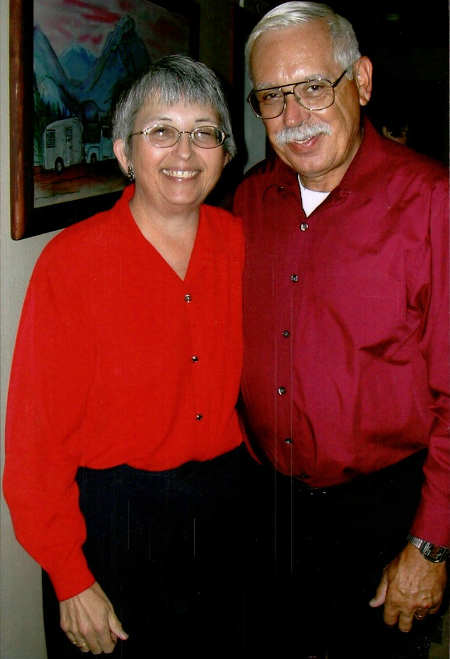
Jan Cook started at the library in 1989 as a Library Page, reshelving returned library books.
She describes getting that first interview near her birthday over 32 years ago.
“I got a wonderful birthday gift — a job interview, which led to getting my first job with Lake County Library. I think of it as a gift that keeps on giving, for more than 30 years. Working for the library has been a good thing,” she said.
Cook came to love her job over the years until her recent retirement this December. Jan was an exemplary employee, working on many different projects over her tenure.
While she started at the Lakeport Library, she worked at other libraries in the County Library system as well. For six years, starting in 1992, she was the sole employee at the Upper Lake Library.
In 1998, she began full-time at the Lakeport Library as a library technician. A few years later she worked on the changeover from manual circulation with paper cards to digital circulation when Lake County joined with Sonoma and Mendocino County to share a computerized system.
Over her many years with the library Cook was a resource to the community, with her exceptional knowledge of Lake County history. She assisted many residents with historical and genealogical research. She worked on Interlibrary Loan, finding books outside of the library system.
Cook was also instrumental in bringing the California State Library funded ZipBooks program to Lake County.
Through the ZipBooks program, library patrons request books that the library does not own. The library then orders the book and has it shipped directly to the patron’s home. When the patron returns the book to the library it is added to the collection for others to enjoy.
The library recently resumed accepting ZipBook requests through their website after obtaining funding from the State Library.
Cook also wrote many press releases promoting library services and events with the community. Her articles about the library were featured regularly in local news outlets.
“No matter what Jan was working on, her devotion to providing the best library service possible was always evident,” said library director Christopher Veach, “Jan has earned her retirement many times over and will be sorely missed.”
Cook will be at the Lakeport Library from 11 a.m. to 1 p.m. on Wednesday, Jan. 26, to say farewell to her library friends.
All are welcome to come and wish Cook well on her life in retirement. Light refreshments will be available.
Visit the Lake County Library Website at http://library.lakecountyca.gov.
California Volunteers, state higher education institutions announce historic college service program
California Volunteers announced the 45 colleges and universities selected as inaugural partners for the service-based college opportunity program.
“California is a world leader in both higher education and service,” said Gov. Newsom. “The #CaliforniansForAll College Corps advances these priorities by connecting Californians of different backgrounds with enriching service opportunities throughout the state while making college more affordable for our state’s future leaders. We hope the Corps will be replicated across the nation.”
#CaliforniansForAll College Corps will provide up to 6,500 college students over two academic years with service opportunities in critical issue areas such as climate action, K-12 education, and COVID-19 recovery.
Students who complete a year of service will receive $10,000 while gaining valuable experience serving in their communities.
This program will unite young Californians of all backgrounds in service, and, for the first time, specifically creates state-funded opportunities for AB 540 eligible Dreamers to serve their communities.
Forty-five total campuses representing University of California, California State University, community college and private university systems have been selected as program participants via a competitive grant application process. The full list of schools can be found here.
“Today is a historic day in California. The governor, alongside the leaders of the world’s top higher education systems, offered a monumental proposal to the next generation of Californians — if you step up to serve your community, we’ll help you pay for college,” said Josh Fryday, California chief service officer and the head of California Volunteers.
Nearly four million Californians owe $147 billion in student debt with Black and Latino Californians facing the highest rates of default and delinquency.
Gov. Newsom has prioritized the #CaliforniansForAll College Corps as part of an effort to lead the nation in service-centered paths, relieving the debt burden on our recent graduates while moving the state forward with service-focused careers.
“The University of California is pleased to partner with Governor Newsom on this innovative program, which will help thousands of students pay for college while they give back to their communities,” said University of California President Michael V. Drake. “Providing more pathways to a debt-free degree while empowering students to pursue service-oriented career paths is a reflection of our shared commitment to access, affordability, and public service.”
“The California State University students who participated in the pilot program over the past year took their world-class CSU education and translated that into on-the-ground tutoring and mentoring in their communities,” said California State University Chancellor Joseph I. Castro. “This program is an invaluable opportunity for our students to not only give back to their communities, but also to help prepare the next generation of CSU students for success. We look forward to even greater opportunities for the students selected through the inaugural year of the Corps.”
“The #CaliforniansForAll College Corps creates service opportunities for community college graduates that support our communities while creating career pathways for our graduates,” said California Community Colleges Chancellor Eloy Ortiz Oakley. “Community college partnerships selected in this inaugural group of grantees include deploying our students to feed those who rely on our food banks. I’m heartened to see the Governor’s initiative recognizes the value of investing in community college students, who have tremendous gifts to offer through their service and future leadership.”
“California’s private non-profit colleges and universities have prioritized student aid over the past few years as costs for students have soared nationwide. Our colleges and universities have also historically prioritized service to the communities their students live and learn in. The #CaliforniansForAll College Corps marries these goals seamlessly and helps fill in financial aid gaps faced by many of our low-income students while continuing the goal of serving our state in the areas of greatest need. We are proud to have participated in the pilot program over the past year and are honored to continue with our members as partner campuses and direct grantees in this inaugural year,” said Association of Independent Colleges and Universities President Kristen Soares.
Picture a mature, broad-branched tree like an oak, maple or fig. How does it reproduce so that its offspring don’t grow up in its shadow, fighting for light?
The answer is seed dispersal. Plants have evolved many strategies for spreading their seeds away from the parent plant. Some produce seedlings that float on the wind. Others have fruits that actually explode, ejecting their seeds.
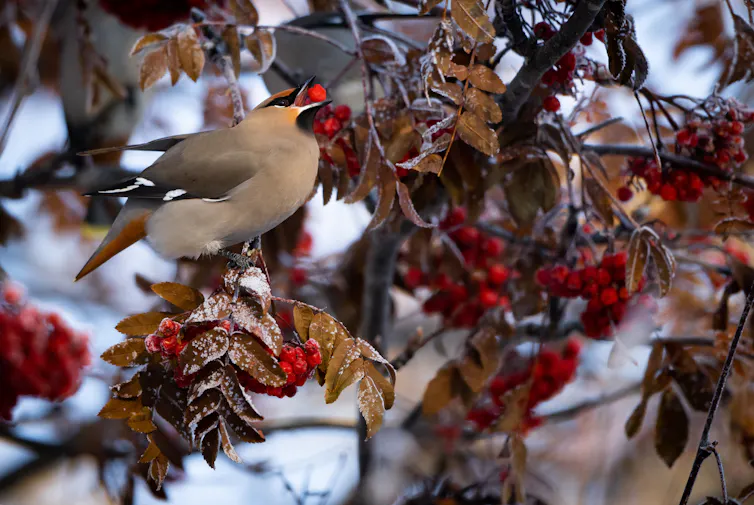
And more than half of all plants rely on wildlife to disperse their seeds. This typically happens when animals eat fruits from plants or carry away their nuts, then excrete or drop the seeds somewhere else. In tropical rainforests, animals disperse the seeds of up to 90% of tree species.
Today the Earth is losing species at a rapid rate, potentially representing the sixth mass extinction in its history. In a newly published study, we examine what this loss means for seed dispersal, focusing on birds and mammals that disperse fleshy-fruited plants.
We assessed how seed dispersers help plants shift their geographic ranges to reach habitats newly suitable for growth – a crucial mechanism for surviving climate change. If not enough seeds disperse to track the environmental conditions like temperature and precipitation that plants require, the plants could be stuck in settings where they will struggle to survive. This could lead to losses of plant species, along with the valuable products and services they provide, ranging from food to carbon storage.
A new era for plant movement
Animals have been dispersing seeds for millions of years, but the relationships between plants and their seed dispersers have changed dramatically in our modern era.
Berries in California are no longer eaten by grizzly bears, which disappeared from the state a century ago. On the island of Madagascar, seeds no longer travel in the bellies of gorilla-sized lemurs, which went extinct there about 2,300 years ago. In France, seeds don’t catch a ride on the fur of lions or between the toes of rhinos that once lived there, as shown in prehistoric cave paintings. When animals disperse seeds today, their movement is often hampered by roads, farms or built-up areas.

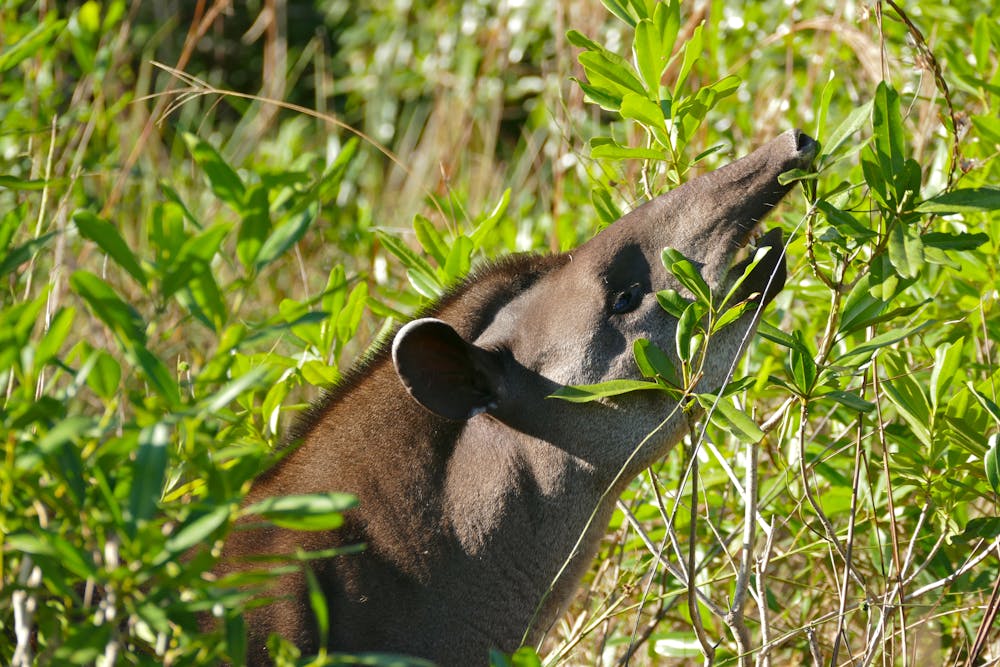
For most animal-dispersed plants – especially those with large seeds, which require large animals like tapirs, elephants and hornbills to spread them – these changes mean a big reduction in seed dispersal, and a great slowdown of plant movement.
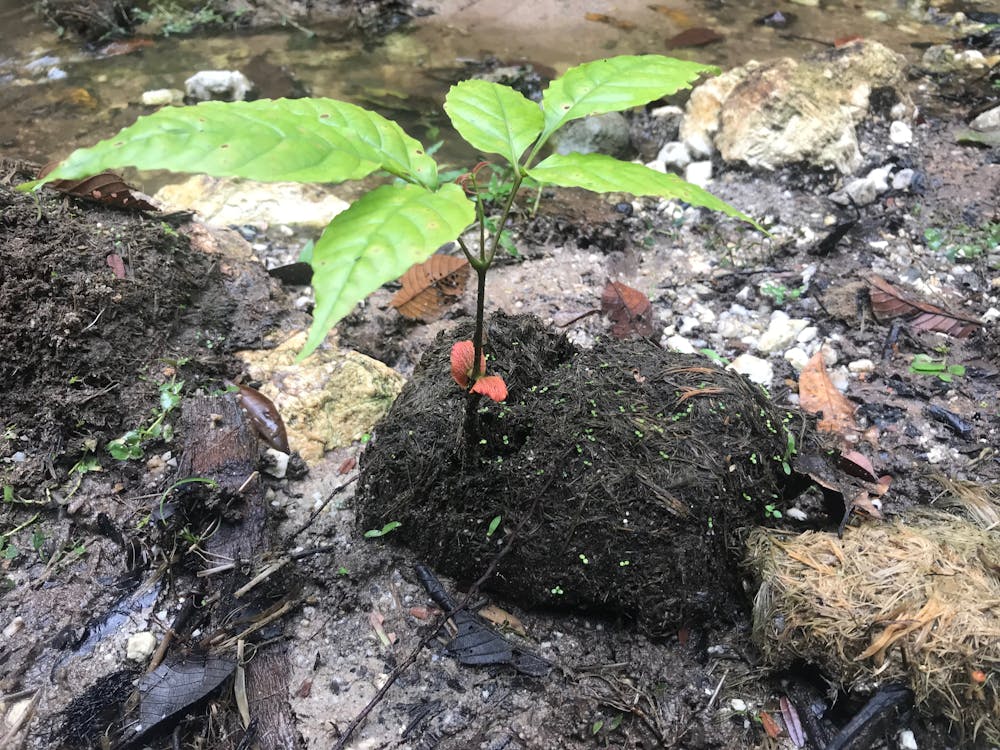
Research by our team and work by many colleagues have uncovered the negative ecological consequences that occur when seed dispersers disappear. Now researchers are assessing how seed dispersal decline is affecting plants’ responses to climate change.
Quantifying what’s been lost
Only a small fraction of the thousands of seed disperser species and tens of thousands of animal-dispersed plant species have been studied directly. Many seed disperser species are extinct or so rare that they can’t be studied at all.
To overcome this challenge, we pulled together data from published studies showing which bird and mammal seed dispersers eat which fruits, how far they spread the seeds, and how their digestive systems’ effects on the seeds help or hinder germination. These three steps together describe what’s required for successful seed dispersal: A seed must be removed from the mother plant, travel some distance away from it and survive to become a seedling.
Next, we used machine learning to generate predictions for seed dispersal, based on the traits of each species. For example, data on a medium-sized thrush in North America could help us model how a medium-sized thrush species from Asia dispersed seeds, even if the Asian species wasn’t studied directly.
_browsing_leaves_..._(27931351641).jpg)
Using our trained model, we could estimate seed dispersal by every bird and mammal species – even rare or extinct species for which there isn’t any species-specific data on the seed dispersal process.
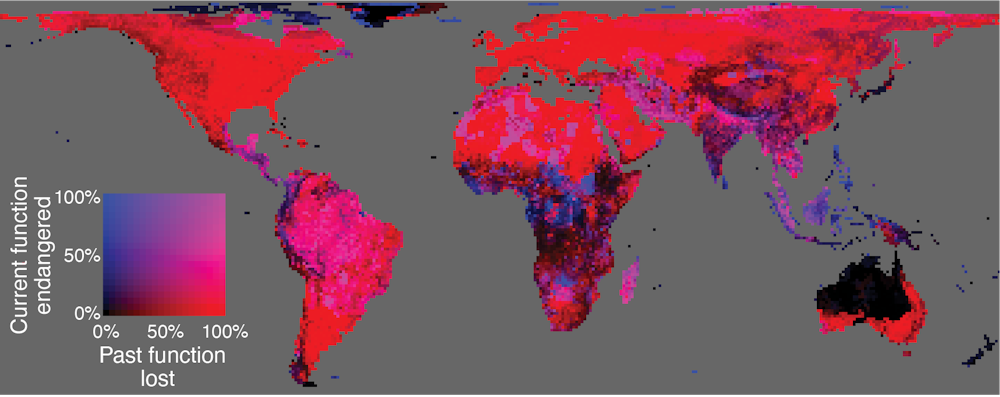
The last step was to compare current seed dispersal to what would be happening if extinctions and species range contractions hadn’t happened. For fleshy-fruited plants, we estimate that because of bird and mammal losses, 60% fewer seeds are being dispersed far enough worldwide to keep pace with climate change by shifting locations. Further, we estimate that if currently endangered seed disperser species such as bonobos, savanna elephants and helmeted hornbills became extinct, global seed dispersal would decline by an additional 15%.
The impact of past seed disperser declines has been greatest in areas including North America, Europe and the southern part of South America. Future losses of endangered species would have their most severe impacts in areas including Southeast Asia and Madagascar.
With fewer seed dispersers present, fewer seeds will be moved far enough to enable plants to adapt to climate change by shifting their ranges.
Seed dispersers help sustain forests
Seed dispersal also helps forests and other natural ecosystems recover from disturbances like wildfire and deforestation. This means that mammals and birds play a major role in sustaining natural vegetation.
Most forest recovery around the world happens through seed dispersal and natural forest regrowth rather than via people planting trees. Seed dispersal by animals is especially important for tropical forests, which can grow back relatively quickly after they are logged or burned.
[Over 140,000 readers rely on The Conversation’s newsletters to understand the world. Sign up today.]
Seed dispersers also promote biodiversity by helping to ensure that a large number of plant species can survive and thrive. Ecosystems that contain many plant species with diverse genetic makeups are better equipped to handle uncertain futures, and to sustain the ecosystem functions that humans rely on, such as storing carbon, producing food and timber, filtering water and controlling floods and erosion.
There are ways to increase seed dispersal. Making sure patches of similar habitats are connected helps species move among them. Restoring populations of important seed dispersers, ranging from toucans to bears to elephants, will also help. And global models of seed dispersal like ours can help scientists and land managers think about seed dispersers as a nature-based solution for addressing climate change.
Evan Fricke, Faculty Fellow in Ecology and Evolutionary Biology, Rice University; Alejandro Ordonez, Assistant Professor of Global Change Biology, Aarhus University; Haldre Rogers, Associate Professor of Ecology, Evolution and Organismal Biology, Iowa State University, and Jens-Christian Svenning, Professor of ecology, Aarhus University
This article is republished from The Conversation under a Creative Commons license. Read the original article.
The incidents occurred from late Saturday night through late Sunday night.
A pedestrian died after being hit by a car in Nice around 10:30 p.m. Saturday, a wrong-way driver on Highway 29 near the Lake County Jail early Sunday died after crashing and rolling his vehicle and a passenger died after the vehicle he was riding in hit a parked pickup late Sunday night in Lucerne.
The Lake County Sheriff’s office identified the pedestrian who died as Kevin Jones, 58, of Nice. The California Highway Patrol’s Clear Lake Area office also said Jones is associated with the Santa Rosa area.
The CHP said Frankie G. Sullivan, 29, of Lucerne was driving his 2015 Chrysler eastbound on Highway 20 at Hutchins Road in Nice at 10:35 p.m. Saturday. For reasons still under investigation, Jones was in the roadway.
Sullivan was unable to stop his vehicle and hit Jones, who the CHP said died at the scene.
About an hour and a half later, just after midnight Sunday, a wrong-way driver was killed in a wreck at Highway 29 and Hill Road. Authorities identified that driver as Benjamin Britton, 29, of Covelo and Lucerne.
The CHP said witnesses reported that Britton was driving his silver 1999 Honda CRV northbound in the southbound lanes of Highway 29 near 11th Street in Lakeport.
He was first reported driving the wrong way on the highway at 12:04 a.m.; at approximately 12:07 a.m., as CHP units were responding to the area, the Honda hit the metal bridge abutment located on Highway 29, at the Hill Road under-crossing.
The Honda overturned and landed on Hill Road, below Highway 29. The CHP said emergency personnel responded to the crash scene and Britton was pronounced dead.
The last of the crashes was reported late Sunday night and claimed the life of 30-year-old Justin Dale of Lucerne.
Dale was riding as the passenger in a 2012 Volkswagen driven by 31-year-old Patricia Martha Murphy of Lucerne, the CHP said.
Murphy was driving westbound on Highway 20 east of Lake Street at 23:52 p.m. The CHP said that when Murphy was driving she “unsafely turned” and allowed her vehicle to travel to the right from the main traveled portion of the roadway. As a result, the Volkswagen hit the rear of a parked Ram 5500 pickup.
Dale died of his injuries at the scene, based on CHP and radio reports.
The CHP said Murphy was suspected of being under the influence of alcohol at the time of the crash. She was transported to Sutter Lakeside Hospital for treatment of minor injuries.
The three crashes remain under investigation, the CHP said.
Email Elizabeth Larson at

CLEARLAKE OAKS, Calif. — Sign-ups for the popular fundraising event known as the “Biggest Catfish Tournament West of the Mississippi,” are open.
Sponsored by the Clearlake Oaks-Glenhaven Business Association, the annual Catfish Derby attracts catfishing enthusiasts from throughout California and beyond.
“After canceling the annual derby in 2020, surprisingly, in 2021, a scaled-back version of the Derby yielded more entries than the 2019 Derby,” said Committee Chair Dennis Locke.
“We took a year off due to the pandemic and were pleased to learn catfishing enthusiasts were ready to get back on the lake,” Locke said. “Just under a third of the entries were local, but as usual, the majority of entries, 66%, came in from throughout California and beyond. A total of 882 entries in 2021 topped 2019 by 106 entries.”
He added, “We’re counting on another good year — for catfishing, our local community and the overall Lake County economy,” Locke said. “Entries are being mailed to past participants and we’re getting positive results from our regulars.”
“This event is near and dear to our community. It brings families together for wholesome fun, boosts our local businesses, and has a positive ripple effect on our county-wide small, rural economy. This will be our 38th annual Catfish Derby. We’re very proud of what a few dedicated people do — year after year — to keep this tradition going,” said Gail Jonas, longtime Derby committee member and former Catfish Derby Committee chair.
Past President Camille Gouldberg also serves on the Derby committee.
“Last year we took a leap of faith, hoping to get enough entries to continue our important community activities — and to pay for the hard costs of the event,” Gouldberg said. “We all did a happy dance when, to our joy, the entries started coming in. We raised over $30,000 and after a challenging Pandemic year, we are again able to support programs for our youth, schools, veterans, fire prevention and more.”
Derby prizes this year will total $10,000 — in the adult and kid categories.
For adults, the prizes range from $5,000 for first place to $40 for 20th place.
For children, the derby offers two categories of prizes for 10 year-olds and under and 11 to 15 year-olds. Prizes for each category range from $100, 1st place to $10, fifth place.
Children can also compete in the adult category but must pay the higher entry fee. Entry fees this year are $50 for adults ($60 if after 11 p.m. on May 12) and $10 for kids.
An additional $2,500 in cash and merchandise will be issued through the very popular drawings held throughout the three-day derby.
The Derby Committee will follow all local and state requirements in place at the time of the Derby. Registration, weigh-in and other activities will be at Derby Headquarters located at the Fire Station on 12655 East Highway 20 in Clearlake Oaks.
“We are looking forward to returning to our usual Derby Headquarters,” Locke said. “One critical variable, of course, is the lake level. We’re feeling optimistic — but we’ll be responsive to Mother Nature on our weigh-in site and let everyone know if we have to pivot.”
Newly elected Business Association President Alvaro Valencia, said: “I’m looking forward to a good year and thrilled at the prospects of returning to more normal activities. Along with the derby I am happy to report that the hugely popular Fourth of July Maxine Sherman Fireworks will return to the Oaks this year!”
The derby is from May 13 to 15. Entries are available online at www.clearlakeoaks.org/derby.
For more information go to the website, find the Derby Facebook Page, Catfish Derby In the Oaks, or call 707-596-0248.