 How to resolve AdBlock issue?
News
High cyanotoxin levels raise concerns for individual private intakes that draw water from Clear Lake
For Lake County residents with individual water systems that draw water directly from the lake using a private intake, drinking water may become unsafe when high levels of toxins are present, Lake County Health Services reported.
Of particular concern are those with individual water systems who live around the Sulphur Bank Mine, and along the shore of Clear Lake’s Lower and Oaks Arms.
Similar to last year, potentially harmful concentrations of cyanotoxins have been identified in these areas of the lake.
Public health and water quality experts are concerned there may be impacts to the health of those using individual water systems, if they are not effectively filtering out these toxins.
There is no easy fix if you are getting your water in this way —boiling or putting chemicals in the lake or tap water does not eliminate the toxins.
Public water systems are able to effectively remove toxins, and will continue to provide tap water which has gone through a multifaceted treatment process. Even public water systems which draw water from Clear Lake as their raw water source continue to provide water that is safe for consumption, and continually monitored to maintain compliance with state water quality requirements.
Officials urge residents to contact their public water system if they would like more information.
Last year, in collaboration with local officials and the State Water Resources Control Board, Golden State Water Co. and Mt. Konocti Mutual Water Co. established filling stations to provide safe, drinkable water to affected community members.

This water continues to be available to meet very basic household needs such as drinking, cooking, brushing teeth, preparing food, mixing baby formula, making ice and giving water to pets. Those who choose to utilize these generously provided resources are asked to please limit consumption to 25 gallons per week per household.
Affected residents should bring their own clean containers that are meant for beverage storage to whichever location is most convenient:
• 10680 Lakeshore Drive, Clearlake: provided by Golden State Water Co., 1-800-999-4033;
• 4980 Hawaina Way, Kelseyville: provided by Mt. Konocti Mutual Water Co., 707-277-7466.
If you live outside of the areas specified, and you have an individual water system with a private intake that draws water directly from Clear Lake, it is important to maintain awareness of current water quality conditions and assess your risk. Recent monitoring data is available here: www.bvrancheria.com/clearlakecyanotoxins.
Big Valley EPA’s robust Cyanotoxin Monitoring Program collects samples from testing sites around Clear Lake at biweekly intervals during the summer months. They sampled 19 testing sites along Clear Lake’s shoreline on July 11 and received three samples from the lake’s interior testing sites, which were sampled by the Lake County Water Resources Department on July 6.
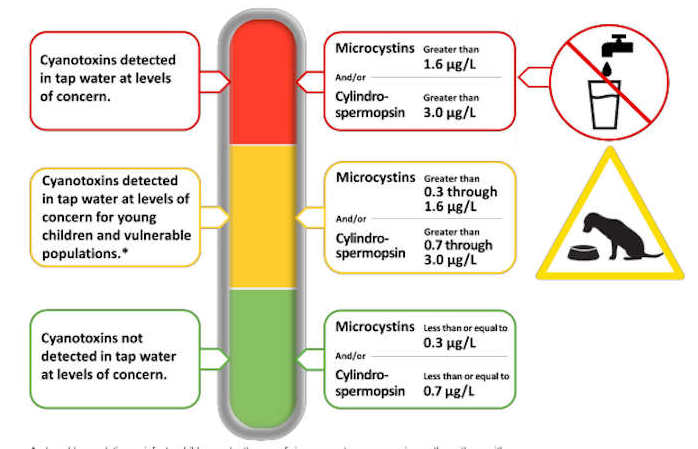
Microscopy conducted on these samples determined the dominant genus of cyanobacteria present was Microcystis sp. The chart below lists cyanotoxins and the cyanobacteria that produce them, along with potential health effects from exposure to the toxins.
At some levels of cyanotoxin concentration, it is safe to use water to wash hands and shower; at higher levels (>0.3 µg/L), these activities may be harmful to the health of vulnerable individuals.
Please be cautious when bathing infants and young children, as they may swallow water. Do not drink or use water from any appliance connected to your water supply lines. This includes the water and ice dispensers in your refrigerator, freezer and dishwasher.
For households getting their tap water from individual water systems with private intakes from Clear Lake (and who have not previously participated), testing for contaminants such as cyanotoxins, nitrates, coliform bacteria, and herbicides is available through Big Valley EPA’s Cal-WATCH program detailed here: www.cal-watch.org.
For additional information about cyanotoxins and harmful algal blooms, please visit the following websites:
Centers for Disease Control and Prevention (CDC): www.cdc.gov/habs/index.html
Environmental Protection Agency (EPA): www.epa.gov/cyanohabs
County of Lake Cyanobacteria Webpage: www.lakecountyca.gov/Government/Directory/WaterResources/ClearLake/Cyanobacteria.htm
The board will meet beginning at 9 a.m. Tuesday, July 26, in the board chambers on the first floor of the Lake County Courthouse, 255 N. Forbes St., Lakeport.
The meeting can be watched live on Channel 8, online at https://countyoflake.legistar.com/Calendar.aspx and on the county’s Facebook page. Accompanying board documents, the agenda and archived board meeting videos also are available at that link.
To participate in real-time, join the Zoom meeting by clicking this link.
The meeting ID is 940 3067 3213, pass code 307902. The meeting also can be accessed via one tap mobile at +16699006833,,94030673213#,,,,*307902#.
All interested members of the public that do not have internet access or a Mediacom cable subscription are encouraged to call 669-900-6833, and enter the Zoom meeting ID and pass code information above.
To submit a written comment on any agenda item visit https://countyoflake.legistar.com/Calendar.aspx and click on the eComment feature linked to the meeting date. If a comment is submitted after the meeting begins, it may not be read during the meeting but will become a part of the record.
At 10 a.m., the board will present a proclamation commending Supervisor Tina Scott, who is stepping down from the board effective July 31 to work as the food service and hospitality teacher at Clear Lake High School.
At 11 a.m., the board will discuss an interim urgency ordinance implementing a temporary moratorium on the issuance of early activation permits for commercial cannabis as well as a resolution of intention to initiate an amendment to the zoning ordinance relating to early activation.
On the board’s consent agenda, the supervisors will be asked to approve the extended use of the county juvenile hall facility for a temporary homeless support shelter through Sept. 30, 2022.
Behavioral Health Services Director Todd Metcalf said the current operator, Elijah House, expects to run the shelter through Sept. 30 but operations may cease before then.
The full agenda follows.
CONSENT AGENDA
5.1: Adopt a proclamation commending Supervisor Tina Scott.
5.2: Adopt a proclamation commending Sherri Vannest for her commitment to public safety and the residents she serves with over 30 years of service.
5.3: Adopt resolution amending Resolution No. 2022-69 establishing position allocations for fiscal year 2022-2023, Budget Unit No. 1012, Administrative Office.
5.4: Sitting as the Lake County Air Quality Management District Board of Directors, approve memorandum of understanding by and between the county of Mendocino and the Lake County Air Quality Management District for air pollution control officer duties, effective Aug. 1, 2022.
5.5: Approve the extended use of county juvenile hall facility for a temporary support shelter targeting Lake County's chronically homeless population through Sept. 30, 2022.
5.6: Approve Board of Supervisors minutes for July 12, 2022.
5.7: Approve amendment two to agreement between the county of Lake and Quincy Engineering Inc. for engineering services for Hill Road MP 7.75 landslide repair project, in Lake County in the amount not to exceed $125,000, for a revised total contract amount of $420,805.07 and authorize the chair to sign.
5.8: Approve amendment two to agreement between the county of Lake and Drake Haglan/ Dewberry Inc. for the Upper Wolf Creek Bridge at Wolf Creek Bridge Replacement Project in Lake County for an increase of $63,987 and an overall contract amount of $513,892 and authorize the chair to sign.
5.9: (a) Approve the master agreement between the county of Lake and Armstrong Consultants for consulting services related to Lampson Airfield, and (b) approve supplemental services agreement No. 1 and authorize the chair to sign the agreement.
5.10: a) Approve purchase of mandated client services described as after care services with Evolve Youth Services and authorize the director of Social Services or her designee to issue a purchase order in an amount not to exceed $34,000.
5.11: Second reading of ordinance adding Article XXIX To Chapter 2 of the Lake County Code establishing a military equipment use policy.
5.12: Sitting as the Board of Directors, Lake County Watershed Protection District, adopt resolution authorizing the Lake County Watershed Protection District to accept a California State Parks Division of Boating and Waterways Quagga and Zebra Mussel Infestation Prevention FY 2022/2023 grant for $399,780.00 and approve Water Resources director as signature authorization to execute agreement.
TIMED ITEMS
6.3, 9:15 a.m.: Public hearing regarding consideration/discussion of naming a certain existing unnamed road, Snow Road in Lower Lake.
6.4, 9:45 a.m.: Presentation, CDBG Grant Project and Program activities update.
6.5, 10 a.m.: Presentation of proclamation commending Supervisor Tina Scott.
6.6, 10:10 a.m.: Presentation of resolution by the Board of Trustees of the Lake County Law Library.
6.7, 10:15 a.m.: CivicSpark Fellow presentation: The Clear Lake Shoreline Inventory Project and Shoreline Stewardship Program Development for the Lake County Water Resources Department.
6.8, 11 a.m.: Discussion and consideration of: a) an interim urgency ordinance implementing a temporary moratorium on the issuance of early activation permits for commercial cannabis; and b) a resolution of intention of the Lake County Board of Supervisors to initiate an amendment to the zoning ordinance relating to early activation.
UNTIMED ITEMS
7.2: Consideration of Middle Creek Project Committee appointment.
7.3: Consideration of Letter to CPUC Re: CPUC Fast Trip Regulations.
7.4: Consideration of the following Advisory Board Appointments: Resource Conservation District.
7.5: Consideration of review of planning services contract between the county of Lake and LACO.
7.6: ADDENDUM — Consideration of support letter for the California Water Service) Advanced Metering Infrastructure Installation. Northern California Project for the WaterSmart water Energy Efficiency Grant Application FY23cycle.
CLOSED SESSION
8.1: Conference with legal counsel: Existing litigation pursuant to Gov. Code sec. 549.56.9(d)(1) — Citizens for Environmental Protection and Responsible Planning, et al. v. County of Lake, et al.
8.2: Conference with legal counsel pursuant to Gov. Code sec. 54956.9 (d)(2), (e)(3) — Claim of Hayes.
8.3: Conference with legal counsel pursuant to Gov. Code sec. 54956.9(1) — City of Clearlake v. County of Lake. Et al.
8.4: Conference with legal counsel: Significant exposure to litigation pursuant to Gov. Code sec. 54956.9 (d)(2), (e)(5): One potential case.
Email Elizabeth Larson at
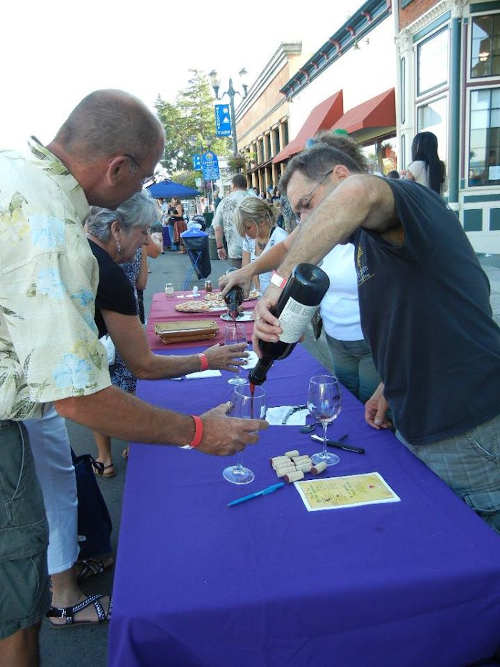
LAKE COUNTY, Calif. — The 24th annual food and wine event, Taste of Lake County, will once again pair premium Lake County wines with gourmet food from local purveyors.
Taking place in Library Park on the shores of Clear Lake in Lakeport on Saturday, Aug. 20, the food, wine and artisan event runs from 5 to 8 p.m., with dancing under the stars following until 10 p.m.
Event tickets are $50 in advance, $60 at the door, and includes tasting tickets, food tickets and a souvenir wine glass. A $25 ticket is available for food tasting only.
An expected 14 wineries will offer tastes from fine wines either produced in Lake County or made from grapes grown in the county.
Approximately 10 local restaurateurs and caterers will provide tasty bites. To keep the fun going, music will play throughout the tasting. A great selection of Lake County artisans will display their crafts as well.
After 8 p.m., the party turns into a dance under the stars with music by the Funky Dozen.
Tickets are now on sale at the Lake County Chamber of Commerce, 875 Lakeport Blvd., Lakeport, telephone 707-263-5092; and the Lakeport Main Street Association’s website, www.lakeportmainstreet.com.
Proceeds from The Taste of Lakeport benefit the Lakeport Main Street Association and its work toward the continuing support of Lakeport businesses and community.
Major event sponsors include Lake County Tribal Health, Savings Bank of Mendocino County, Guerrero Brothers Auto Body Repair and Management Connections.
For more information contact Lakeport Main Street Association at 707-263-8843,
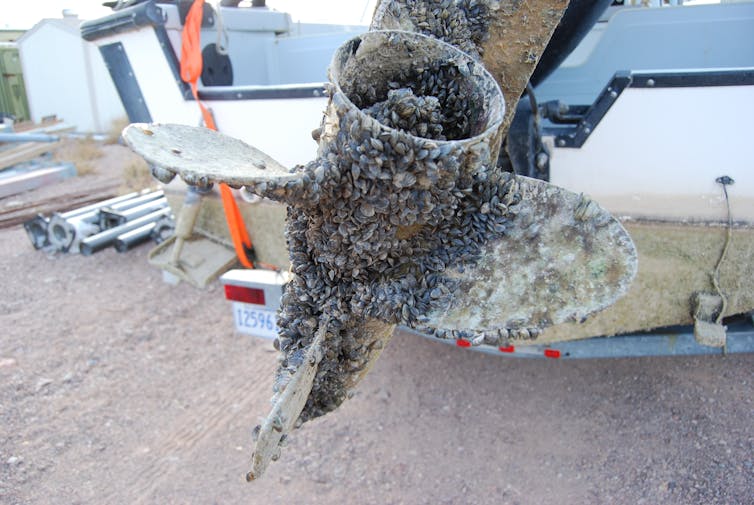
The zebra mussel has been a poster child for invasive species ever since it unleashed economic and ecological havoc on the Great Lakes in the late 1980s. Yet despite intensive efforts to control it and its relative, the quagga mussel, these fingernail-sized mollusks are spreading through U.S. rivers, lakes and bays, clogging water supply pipes and altering food webs.
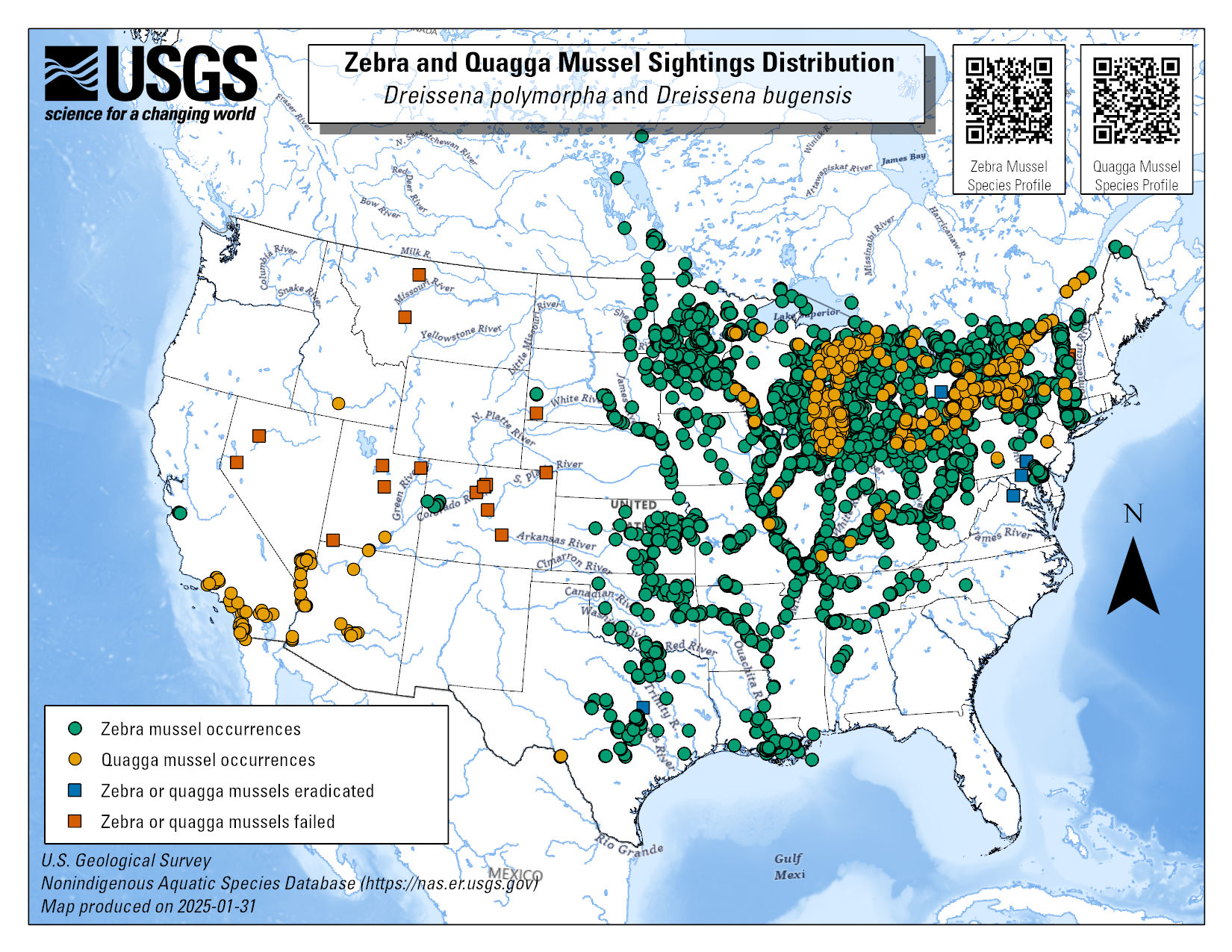
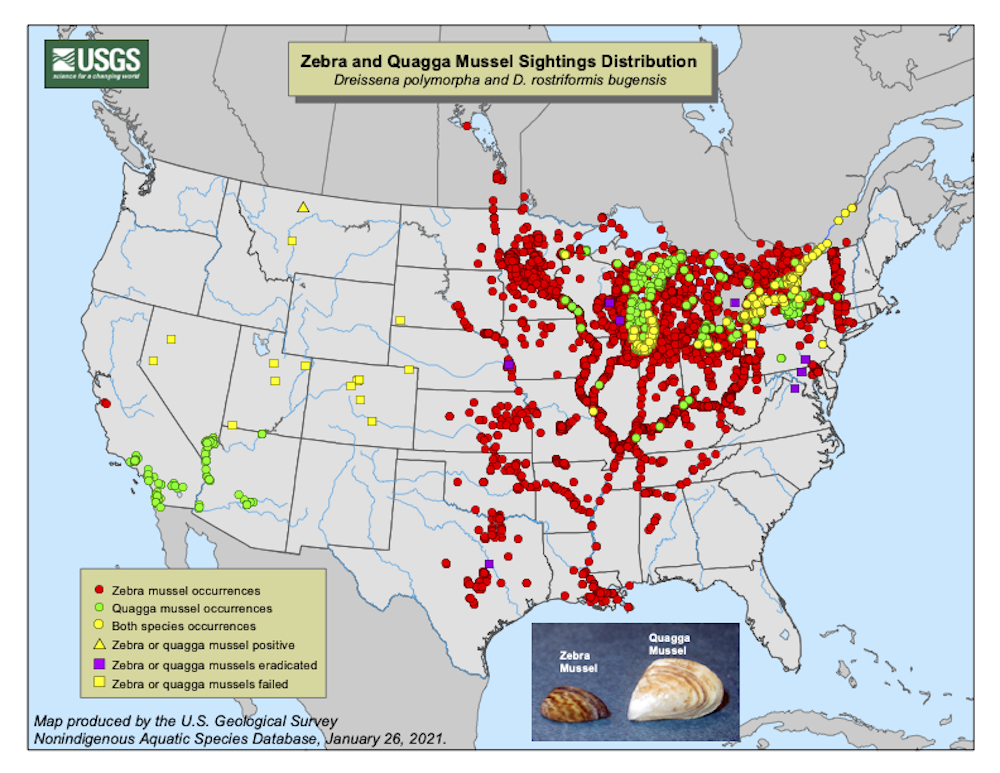
Now, the mussels threaten to reach the country’s last major uninfested freshwater zones to the west and north: the Columbia River Basin in Washington and Oregon, and the waterways of Alaska.
As an environmental historian, I study how people’s attitudes toward nonindigenous species have changed over time. Like many other aquatic aliens, zebra and quagga mussels spread to new bodies of water when people move them, either accidentally or deliberately. Human-built structures, such as canals, and debris can also help invaders bypass natural barriers.
In my view, reducing the damage from these outbreaks – and preventing them if possible – requires understanding that human activities are the root cause of costly biological invasions.
Past transoceanic invasions
European exploration of the Americas between the late 1400s and 1700s led to massive transfers of organisms, a process known as the Columbian exchange, named for Christopher Columbus. Many investors grew rich through shipping livestock and plantation crops across the oceans. Transatlantic travel also introduced microbes that caused infectious diseases, such as smallpox and measles, that killed millions of Native Americans who lacked immunity.
During the 19th century, European and North American colonizers established acclimatization societies to import desired species of foreign animals and plants to use for food, sport hunting or beautifying their environments. Many such efforts failed when the introduced species could not adapt to their new conditions and died off.
Others triggered legendary ecological disasters. For example, after the Victorian Acclimatisation Society released European rabbits in Australia in 1859, they multiplied rapidly. Feral rabbits and other introduced species like cats have destroyed millions of Australia’s native plants and animals.
Shipping has also accidentally spread alien species. Human-built canals made it easier to transport goods, but also provided new pathways for aquatic pests.
During the late 19th and early 20th centuries, for example, Canada expanded the Welland Canal between Lake Ontario and Lake Erie to allow large ships to bypass Niagara Falls. By 1921, these technological improvements enabled the sea lamprey, a parasitic fish, to move from Lake Ontario into the upper Great Lakes, where it is still a serious threat to commercial fisheries.
In 1959, the U.S. and Canada opened the St. Lawrence Seaway, a maritime network that connects the Atlantic with the Great Lakes. Ocean-going ships using the seaway brought along stowaway species in ballast water – tanks full of water, used to keep the ships stable at sea.
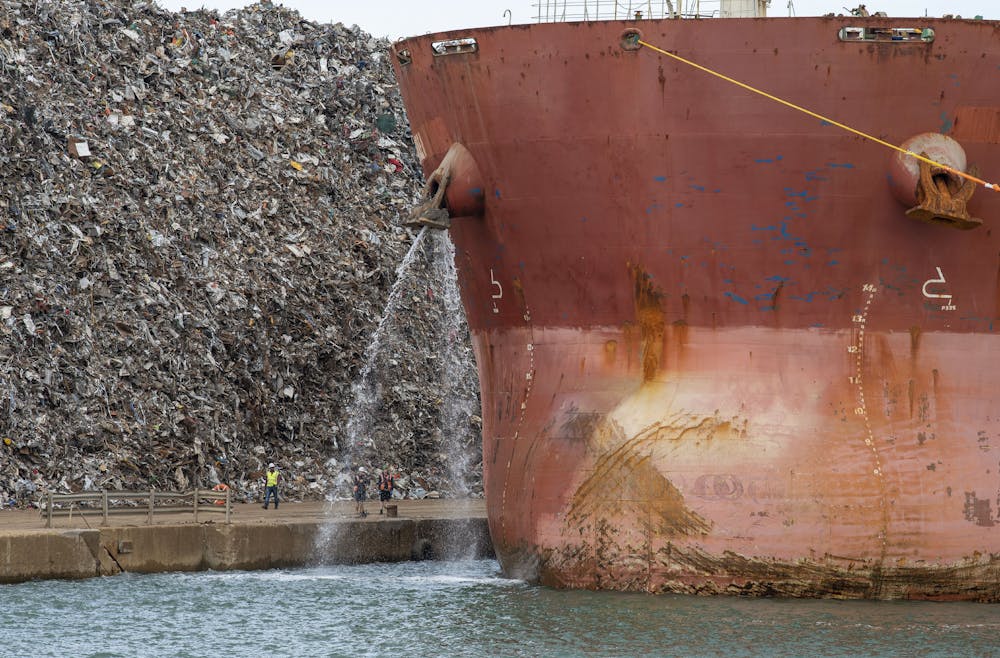
When ships reached their destinations and flushed out their ballast tanks, they released alien plants, crustaceans, worms, bacteria and other organisms into local waters. In a milestone 1985 study, Williams College biologist Jim Carlton described how ballast water discharges provided a powerful vehicle for biological invasions.
The Great Lakes mussel invasion
Zebra mussels are native to the Black and Caspian Seas. They are thought to have entered North America in the early 1980s and were formally identified in the Great Lakes in 1988, followed by quagga mussels in 1989.
Soon the striped bivalves were blanketing hard surfaces throughout the lakes and washing up on shorelines, cutting beachgoers’ feet. Zebra mussels clogged intake pipes at drinking water treatment plants, power stations, fire hydrants and nuclear reactors, dangerously reducing water pressure and requiring expensive remedies.
Mollusks are filter feeders that typically make water clearer. But zebra and quagga mussels filtered so much plankton from the water that they starved native mussels and fostered harmful algal blooms. The invaders also passed deadly type E botulism to fish-eating birds.
By the early 1990s, 139 alien species had become established in the Great Lakes, with almost one-third arriving after the St. Lawrence Seaway opened. Ship-related introductions, along with other pathways, such as aquaculture and aquarium and bait fish releases, transformed the Great Lakes into one of the world’s most invaded freshwater ecosystems.
Early policy responses
The U.S. began regulating ballast water management in 1990 but had trouble closing loopholes. For instance, vessels declaring that they had no pumpable ballast water on board did not have to empty and refill their ballast tanks in the middle of a voyage with clean ocean water. As a result, live freshwater organisms lurking in tank sediments could still be released in vulnerable ports.
Finally, after comprehensive studies, the U.S. and Canada in 2006 required ships to flush tanks containing residual sediment with seawater. A 2019 assessment found that only three new species became established in the Great Lakes from 2006-2018, none of them via ship ballast.
Now, however, other human activities are increasingly contributing to harmful freshwater introductions – and with shipping regulated, the main culprits are thousands of private boaters and anglers.
Stemming the westward spread
Zebra and quagga mussels are moving west and south from the Great Lakes, attached to private boats or carried in bilge water and bait buckets. They have been found in Nevada, Arizona, California, Utah, Colorado and Montana.
If the mussels reach the Columbia River ecosystem, they will threaten native wildlife and irrigation pipelines and dams that are vital for agriculture and hydropower. Government officials, wildlife managers and scientists are working hard to prevent that from happening.
Public outreach is critical. Travelers who transport their boats without decontaminating them can transfer zebra and quagga mussels to inland rivers and lakes. The mussels can survive out of water in hot places for weeks, so it’s important for boaters and anglers to clean, drain and dry boating equipment and fishing gear.
Aquarium keepers can help stem the tide by disinfecting tanks and accessories in order to prevent accidental releases of live organisms into public waterways, and by being vigilant about their purchases. In 2021, zebra mussels were detected in imported moss balls sold as aquarium plants across the U.S. and Canada.
The U.S. Geological Survey maintains a website where people can report sightings of nonindigenous aquatic species, potentially spotting new infestations during the critical early phase before they become established.
Maintaining public support
Some of these efforts have shown encouraging results. Since 2008, Colorado has operated a rigorous boat inspection program that has kept zebra and quagga mussels out of state waters.
But prevention isn’t always popular. Officials closed the San Justo Reservoir in central California to the public in 2008 after zebra mussels were found there; residents argue that the closure has harmed the community and are lobbying the federal government to eradicate the mussels in order to reopen it for fishing.
Mitigating the destructive effects of invasive species is a complex mission that may not have an obvious endpoint. It requires scientific, technological and historical knowledge, political will and skill to persuade the public that everyone is part of the solution.
Christine Keiner, Chair, Department of Science, Technology, and Society, Rochester Institute of Technology
This article is republished from The Conversation under a Creative Commons license. Read the original article.
The Park fire was first dispatched just before 1:15 p.m. Saturday in the area of 18th Avenue and Old Highway 53, across from Adventist Health Clear Lake.
Firefighters from Lake County Fire Protection District and Cal Fire arrived on scene quickly and within about 20 minutes evacuations started in the Clear Lake Village area.
Cal Fire dispatched air attack and tankers which began to work in the area, where power lines also were reported to be down.
Air attack began to release the tankers from the scene at 2 p.m. and minutes later forward progress was reported to have been stopped. The estimated size was about five acres.
There were no reports of damaged structures.
Evacuations remained in place until just after 4 p.m., while a road closure on Old Highway 53 between Airport Road and Lakeview Way remained in effect, according to the Clearlake Police Department.
While residents were required to stay out of their homes, officials opened the city’s senior and community center on Bowers Avenue to provide them with services and a place to wait.
Information on a cause was not immediately available.
Email Elizabeth Larson at
“As of 4:30 p.m. Saturday, the obstetric bypass period ended and Sutter Lakeside Hospital is again able to provide obstetric services,” Sutter Health spokeswoman Monique Binkley Smith told Lake County News.
The hospital closed the birth center on Tuesday afternoon and went on “diversion” due to lack of an obstetrician, as Lake County News has reported.
While on diversion, Sutter Lakeside referred patients to Adventist Health Clear Lake — the only other facility in Lake County where babies can be delivered — as well as hospitals in Mendocino, Napa and Sonoma counties.
Hospital officials originally expected to reopen on the morning of Wednesday, July 27, at the latest.
The California Nurses Association criticized Sutter Lakeside for having relied on just two obstetric providers.
The hospital has so far not responded to requests from Lake County News to elaborate on what led to the lack of providers last week.
The birth center reportedly delivers around 300 babies a year, about half of all the babies born in Lake County on an annual basis.
Email Elizabeth Larson at