 How to resolve AdBlock issue?
News
The crash, which occurred just before 1 a.m. Wednesday, claimed the life of 43-year-old Clearlake resident James Torrey Jr., according to the Clearlake Police Department.
Police identified the driver in the crash as James Nielsen, 27.
The agency said that at approximately 1 a.m. Clearlake Police officers responded to Highway 53 just north of Dam Road for a report of a traffic collision involving a vehicle and a pedestrian.
Upon arrival, officers found the collision involved a Toyota Tacoma occupied by one person, later identified as Nielsen, and Torrey, the pedestrian.
Torrey sustained major injuries and was pronounced deceased at the scene, while Nielsen sustained minor injuries, police said.
As a result of the investigation and based upon probable cause, officers arrested Nielsen on suspicion of driving under the influence of alcohol and vehicular manslaughter.
He was booked into the Lake County Jail and released later on Wednesday, according to jail records.
A portion of Highway 53 was closed until just after 6:30 a.m. Wednesday as the investigation took place.
Police ask anyone who witnessed the crash to contact Det. Trevor Franklin by email at
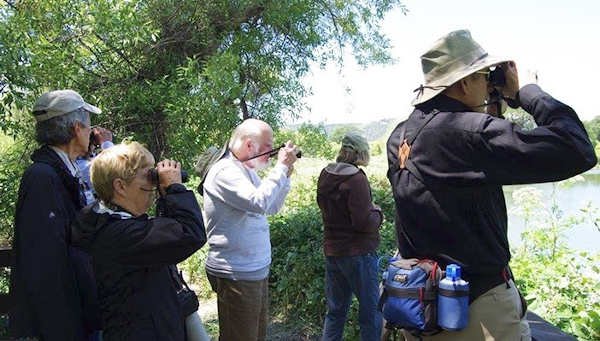
LOWER LAKE, Calif. — Anderson Marsh Interpretive Association, or AMIA, has received a $9,220 “Parks Improvement” grant from California State Parks Foundation to hold special twice-monthly "senior days" at the park over a four-month period in the spring of 2023.
Seniors who sign up for the special program will be bused at no cost from Lake County senior centers to attend a day at the park.
Each day will include two educational programs and a free picnic lunch.
“The idea of this project is to make it easy for seniors to feel welcomed at the park, to have some fun outdoors and to learn about Anderson Marsh State Historic Park,” said Henry Bornstein, AMIA grant coordinator. “The park is an important part of what Lake County has to offer its residents and may have been overlooked by seniors who may not have felt comfortable visiting the park on their own.”
“The special programs will be educational, but will also be fun,” said Roberta Lyons, AMIA president. “Seniors attending the special days at the park will learn about the long history of the Indigenous Peoples who lived on the land now known as Anderson Marsh State Historic Park and the history of the Europeans who more recently lived on this land. They also will be able to experience the rich natural history, plant habitats, and wildlife found in the park.”
“AMIA is grateful for the financial support of California State Parks Foundation that will allow this project to get started,” said Bornstein. “After this pilot project is completed, we hope to find funding to continue the program and to expand it to create an ongoing program supporting the ability of Lake County seniors to visit the park and experience the benefits of being outdoors in nature.”
AMIA is a nonprofit association cooperating with State Parks to support and promote educational and interpretive activities at Anderson Marsh State Historic Park.
For information about Anderson Marsh State Historic Park or AMIA, please visit www.andersonmarsh.org or contact AMIA at either

Hundreds of millions of people struggled to keep cool amid a sweltering summer heat wave as cities across the U.S. and mainland Europe experienced record-high temperatures. In the U.K., thermometers topped 104 Fahrenheit (40 degrees Celsius) on July 19, 2022, the highest ever recorded.
While all this broiling heat is surely punishing on a personal level, it also has significant impacts on the broader economy.
As an economist who has studied the effects of weather and climate change, I have examined a large body of work that links heat to economic outcomes. Here are four ways extreme heat hurts the economy.
1. Growth takes a hit
Research has found that extreme heat can directly hurt economic growth.
For example, a 2018 study found that the economies of U.S. states tend to grow at a slower pace during relatively hot summers. The data shows that annual economic growth falls 0.15 to 0.25 percentage points for every 1 degree Fahrenheit (0.56 C) that a state’s average summer temperature is above normal.
Laborers in weather-exposed industries such as construction work fewer hours when it’s hotter. But higher summer temperatures also reduce growth in many industries that tend to involve indoor work, including retail, services and finance. Workers are less productive when it’s hotter out.
2. Crop yields drop
Agriculture is obviously exposed to weather: After all, crops grow outdoors.
While temperatures up to around 85 F to 90 F (29-32 C) can benefit crop growth, yields fall sharply when thermostats rise further. Some of the crops that can be hit hard by extreme heat include corn, soybeans and cotton. These reductions in yields could be costly for U.S. agriculture.
For example, a recent study I conducted found that an additional 2 degrees C (3.6 F) of global warming would eliminate profits from an average acre of farmland in the eastern U.S.
A prominent example of this was the collapse of the Russian wheat harvest in response to the country’s 2010 heat wave, which raised wheat prices throughout the world.
3. Energy use soars
Of course, when it’s hot, energy use goes up as people and businesses run their air conditioners and other cooling equipment at full blast.
A 2011 study found that just one extra day with temperatures above 90 F (32 C) increases annual household energy use by 0.4%. More recent research shows that energy use increases the most in places that tend to be hotter, probably because more households have air conditioning.
This increase in electricity use on hot days stresses electric grids right when people depend on them most, as seen in California and Texas during past heat waves. Blackouts can be quite costly for the economy, as inventories of food and other goods can spoil and many businesses either have to run generators or shut down. For instance, the 2019 California blackouts cost an estimated US$10 billion.
4. Education and earnings suffer
A long-term impact of increasingly hotter weather involves how it affects children’s ability to learn – and thus their future earnings.
Research has shown that hot weather during the school year reduces test scores. Math scores decrease more and more as the temperature rises beyond 70 F (21 C). Reading scores are more resistant to high temperatures, which this research claims is consistent with how different regions of the brain respond to heat.
One study suggested that students in schools that lack air conditioning learn 1% less for every 1 degree Fahrenheit (0.56 C) increase in the school year’s average temperature. It also found that minority students are especially affected by hotter school years, as their schools are more likely to lack air conditioning.
Lost learning results in lower lifetime earnings and hurts future economic growth.
The impact of extreme heat on development, in fact, begins before we’re even born. Research has found that adults who were exposed to extreme heat as fetuses earn less during their lifetimes. Each extra day with average temperature above 90 F (32 C) reduces earnings 30 years later by 0.1%.
Air conditioning can help – to a point
Air conditioning can offset some of these effects.
For example, studies have found that having a working air conditioner means fewer people die, student learning isn’t compromised and extreme heat outside during pregnancy doesn’t hurt fetuses.
Not everyone has air conditioners, however, especially in states such as Oregon and countries such as the U.K. that have more temperate climates but have nonetheless recently experienced unusually extreme temperatures. And many people can’t afford to own or operate them. Survey data from 2017 found that around half of homes in the U.S. Pacific Northwest lacked air conditioning. And about 42% of U.S. classrooms lack an air conditioner.
While heat waves are shown to induce more households to install air conditioning, it’s hardly a panacea. By 2100, higher use of air conditioning could increase residential energy consumption by 83% globally. If that energy comes from fossil fuels, it could end up amplifying the heat waves that are causing the higher demand in the first place.
And in the U.S. South, where air conditioning is omnipresent, hotter-than-usual summers still take the greatest toll on states’ economic growth.
In other words, as temperatures rise, economies will continue to suffer.
This is an updated version of an article originally published on Aug. 2, 2021.
Derek Lemoine, Associate Professor of Economics, University of Arizona
This article is republished from The Conversation under a Creative Commons license. Read the original article.
The wreck was first reported at around 1 a.m. Wednesday.
Scanner reports indicated a vehicle had hit a pedestrian in the area of Highway 53 at 18th Avenue.
Shortly after 1:20 a.m., the Clearlake Police Department reported a road closure in the northbound lane of Highway 53 from Dam Road to 18th Avenue due to the crash.
The coroner was dispatched about an hour later, based on radio traffic.
Additional details were not immediately available early Wednesday.
Email Elizabeth Larson at
The Lake County Sheriff’s Office did not release the name of the man, who had been flown to an out-of-county trauma center for treatment on Monday evening.
At 12:10 p.m. Monday, the Lake County Sheriff’s Office was advised by a family member that the man was making suicidal and suicide by law enforcement statements.
The sheriff’s office was informed that the person was driving a vehicle in the Lakeport area and was reportedly armed with a handgun.
No reports were made to the sheriff’s office that the individual intended to harm anyone other than himself, and the sheriff’s office said it was not aware of any information that he posed an immediate or imminent threat to the community.
Sheriff’s deputies responded to the last known location of the individual to conduct a welfare check, but they were unable to locate him.
A be on the lookout request for a welfare check was broadcast to all sheriff’s personnel and allied agencies. A short time later, a Bureau of Land Management officer observed the individual and attemp bted to make contact.
The man refused to speak with the officer and proceeded to drive away; the BLM officer observed the individual point the firearm at himself while driving.
The California Highway Patrol and the BLM officer continued watching the vehicle from a distance and followed it for a short period. No actions were observed which would lead the officers or the Lake County Sheriff’s Office to believe the individual posed an immediate threat to the public.
In accordance with legislation passed in 2020, which requires de-escalation practices to be implemented, the sheriff’s office requested the additional officers to disengage in an attempt to de-escalate the situation.
In accordance with the recently enacted legislation and in accordance with training undertaken by the deputies, disengaging was determined to be the most appropriate action given the statements reported that the person wished to commit suicide by law enforcement and observation of him threatening nobody other than himself.
Law enforcement continued to monitor the incident and communicated with Lake County Behavioral Health to further de-escalate the incident and provide the individual with the needed services while continuing the sheriff’s office investigation.
Around 5 p.m., dispatch received calls of a male adult walking around the outside of Sentry Market with a firearm. Sheriff’s office dispatch was advised the person had not threatened anyone with the firearm.
The sheriff’s office responded to the scene and identified the person as the same individual from the earlier calls.
Deputies began to engage the individual in conversation, attempting to de-escalate and bring him safely into custody where he could receive help. Deputies spoke with him for approximately 13 minutes.
A crisis negotiator was requested to respond to the scene, and deputies secured the area to prevent members of the public from coming near.
During that time, the person pointed the firearm at himself several times. He did not threaten law enforcement or any member of the public with the firearm during the incident.
While deputies were talking with him, he discharged one round from the firearm resulting in a self-inflicted injury. He was provided immediate medical attention and was airlifted to an out-of-county trauma center. However, he died from his injury.
“Unfortunately, this situation ended tragically, the Lake County Sheriff’s Office offers our condolences to the family and our community as a whole. Our first priority is to protect life,” the agency said in a Tuesday statement.
The sheriff’s office said help is available to those who need it. Dial 988 to speak with a trained counselor confidentially and for free. More information can be found at https://988lifeline.org/.
The tax is only paid once, similar to building fees, and will now go from $0.10 cents per square foot to $0.20 cents per square foot, the maximum amount allowed under a measure approved by city voters in 1980.
For the amount to increase more, city officials said voters would need to approve a ballot measure with a two-thirds majority, said City Attorney David Ruderman.
The last time there was an increase was 37 years ago, staff reported.
When asked by Lake County News why so much time had passed since the tax was raised, Community Development Director Jenni Byers said there is now a different level of scrutiny from the state, which brought to light that so much time had passed since the last increase.
“It’s pretty heavy what our requirements now are,” Byers said.
Public Works Superintendent Ron Ladd presented the resolution to increase the storm drainage tax to the council.
He explained that in January 1980 the council adopted an ordinance establishing a special tax on new construction and related impermeable surfaces — such as driveways — to fund flood control and storm drainage improvements.
In measures that went on the ballot later that year and in 1984, voters gave approval to the tax, allowing the council to set it at between $0.01 and $0.20 per square foot rather than a fixed rate of $0.20 per square foot.
In May 1984 the City Council set the rate at $0.10 per square foot and it hasn’t been raised since, Ladd said.
In 2003, the cities of Clearlake and Lakeport, and the county of Lake adopted the Lake County Stormwater Management Plan as required by the Federal Clean Water Act and the National Pollution Discharge Elimination System, Ladd said.
In 2006 the city of Lakeport adopted an ordinance establishing stormwater management regulations to protect and enhance the water quality of water courses and water bodies within the city in compliance with the Federal Clean Water Act. Ladd said those regulations seek to reduce pollutants in stormwater discharges to the maximum extent practicable and by prohibiting non-stormwater discharges.
He said jurisdictions are required to maintain, implement and enforce an effective stormwater management plan which is designed to reduce the discharge of pollutants into local watersheds and to enhance water quality.
Funds generated by the collection of storm drainage tax revenues are deposited in a specific budget account used for public storm drainage system improvements and related stormwater management plan activities in the city, Ladd said.
He said the increase in the tax was needed to fund public storm drainage improvements needed to comply with current and future Clean Water mandates from the state and federal governments.
City Manager Kevin Ingram said a recently completed study on Forbes Creek shows a need for a dramatic number of storm drainage improvement projects.
The stormwater drainage tax measure is “a small measure,” he said, and certainly isn’t going to come close to covering the $40 million in capital expenditure projects in the Forbes Creek area alone.
Ingram said the city spends more out of the general fund on stormwater projects than it collects in taxes.
Councilman Michael Green, who said he would love to see a higher tax, moved to approve increasing the tax, with Councilman Kenny Parlet seconding and the council voting 4-0. Mayor Stacey Mattina was absent.
The stormwater drainage tax turned out to be the main item on Tuesday night’s agenda.
The council had been set to consider awarding a $4.3 million contract for construction services on the new Lakefront Park to Builder Solutions Inc., but Ingram asked to pull the time after receiving a protest from the other bidder. After that protest is considered, it will be brought back to the council.
The public portion of the meeting ended after about 45 minutes with the council going into closed session for labor negotiations with the Lakeport Police Officers Association. Mayor Pro Tem Mireya Turner emerged shortly before 7:30 p.m. to say no action had been taken.
Email Elizabeth Larson at