 How to resolve AdBlock issue?
News
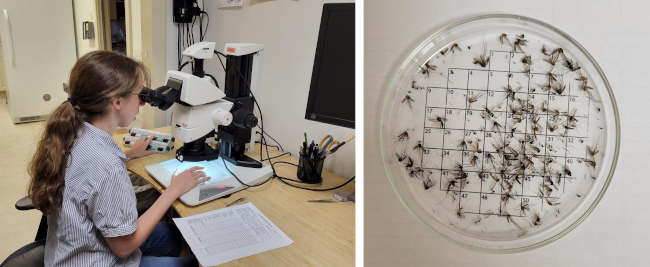
LAKEPORT, Calif. — Mosquitoes are here, despite the drought, and the high temperatures are ideal for both mosquitoes and West Nile virus to thrive.
Although no Lake County mosquitoes have tested positive yet for West Nile virus, or WNV, in 2022, the warm nights mean that the virus will be detected here soon in mosquitoes, dead birds or sentinel chickens.
In California, the number of mosquitoes testing positive for West Nile virus activity increased sharply in the last two weeks.
So far, six California residents have been diagnosed with mosquito-borne illnesses this year.
“Both mosquito and West Nile virus activity increase when the overnight temperatures are 60°F or warmer,” said Jamesina Scott, Ph.D., district manager and research director of the Lake County Vector Control District. “In a dry year like this, many people don’t think about mosquitoes or the diseases they carry, like West Nile or St. Louis encephalitis viruses. The best way to protect yourself is avoid mosquito bites.”
Scott said that if you plan to be outside when mosquitoes are active, apply an effective repellent that contains Picaridin, IR3535, oil of lemon eucalyptus, or DEET.
Mosquitoes develop in water, so you can protect yourself and your family from mosquito bites and West Nile virus by dumping out standing water.
Now is a great time to take a walk around your yard and look for places that might hold water like buckets, toys, and boats and dump out any water you find.
If you have water that can’t be drained, like a pond, livestock watering trough, water feature, or an out-of-service (green) swimming pool, then contact the district and we can provide free mosquito-eating fish to prevent mosquitoes from growing there.
Residents can report dead birds to help the district identify where West Nile virus activity is taking place.
All dead bird reports from the public are critical in helping the district direct mosquito operations. Report dead birds to the state’s toll-free hotline at 1-877-968-2473 (1-877-WNV-BIRD) or online at the California Department of Public Health's website, https://westnile.ca.gov/report.
The Lake County Vector Control District provides mosquito and vector control services to our community.
Residents with questions or who would like help with a mosquito problem, including reporting a neglected pool or spa, or who have an in-ground yellowjacket nest on their property that they want treated, should contact the Lake County Vector Control District at 707-263-4770 from 7:30 a.m. to 4 p.m. Monday through Friday, or request service online anytime at https://www.lcvcd.org/request-service-d649036.
For more information about the Lake County Vector Control District and its services, visit www.lcvcd.org.
For information about West Nile virus, visit http://westnile.ca.gov/.
Information about mosquito repellents can be found on the US Centers for Disease Control and Prevention website at http://www.cdc.gov/westnile/faq/repellent.html.
“The tremendous success of this program would not be possible without the partnership of law enforcement throughout California, broadcasters, government agencies at both the state and federal level, and members of the public,” said CHP Commissioner Amanda Ray. “When a child or at-risk individual goes missing, every second counts, and the AMBER Alert program provides a critical resource for law enforcement and the public.”
In July 2002, state law designated the CHP as the statewide coordinator for California’s AMBER Alert program.
Since the first AMBER Alert activation in August 2002, 376 children or at-risk individuals have been found safe because of the state’s emergency alert system designed to recover missing children or at-risk individuals by employing the public’s assistance.
The CHP issues an AMBER Alert at the request of a law enforcement agency investigating the abduction of a child or at-risk individual.
For an AMBER Alert to be issued, the CHP works with local law enforcement to confirm:
• a child 17 years old or younger, or at-risk individual, has been abducted or taken;
• the individual is in imminent danger of serious bodily injury or death;
• and there is information available that if shared with the public, could assist in the safe recovery of the individual.
As the AMBER Alert program has continued to evolve and through the years, the CHP has added secondary distribution methods to supplement the emergency alert system.
These include the Wireless Emergency Alerts program, which is operated by the Federal Emergency Management Agency and the Federal Communications Commission; the California Department of Transportation’s Changeable Message Signs on freeways; @CHPAlerts on Twitter; and the California Lottery displays AMBER Alerts on digital terminal signs and printed on lottery tickets.
The mission of the CHP is to provide the highest level of safety, service and security.
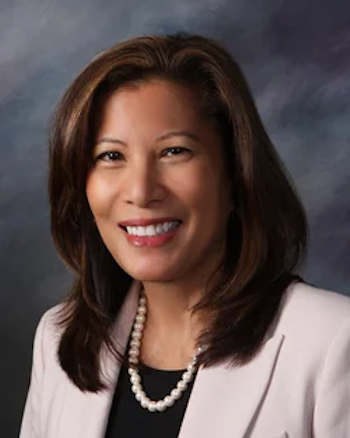
SAN FRANCISCO — Chief Justice Tani G. Cantil-Sakauye on Wednesday announced that she will not seek re-election as chief justice of California in the November 2022 general election.
She will conclude her current term of office on Jan. 1, 2023, after 32 years of service at every level of the state courts.
As the 28th Chief Justice of California, she is the first person of color and the second woman to serve as the state’s chief justice.
During her 12-year term, Chief Justice Cantil-Sakauye envisioned an accessible court system on every level for all Californians that reflects the people and communities that courts serve.
Cantil-Sakauye’s career included working as a deputy district attorney in the Sacramento County District Attorney’s Office; deputy legal affairs secretary and deputy legislative secretary to Gov. George Deukmejian; judge for the Sacramento Municipal Court and later the Superior Court of Sacramento County; associate justice for the Court of Appeal, Third Appellate District (Sacramento).
In 2011, she was appointed chief justice of the Supreme Court of California and chair of the Judicial Council of California.
She has successfully advocated for reforms of court funding models, fees, and procedures that unfairly impact the poor; adequate, sustainable funding for court operations; diversity and inclusion in the legal profession; and the role of civic education and engagement in sustaining public trust and confidence in the judicial system.
In a statement issued on Wednesday, Chief Justice Cantil-Sakauye said: “I have informed Governor Gavin Newsom that I will not seek re-election as Chief Justice of California and will conclude my judicial service when my current term of office ends. And of course, I will support the smooth transition of Judicial Branch leadership. Through his efforts, and those of recent governors, he will have a diverse pool of exceptionally well qualified jurists and legal professionals to choose from, and I believe the judiciary, the courts, and access to justice in California will be in good hands.
“My first interaction with our justice system was when my family faced eviction from our home and my mother felt helpless. As the daughter of farmworkers, I experienced in my community what it was like to stand up for your rights and demand protections. As a wife I felt the impact of unjust Japanese Internment on my in-laws. As a judge I saw the devastating effects of family violence and established the first court in Sacramento dedicated solely to domestic violence issues. As Chief Justice I continue to keep in mind the faces behind the cases and remain focused on the goal of providing all Californians with equal, fair, and accessible justice.
“A graduate of a public school, community college, and public university, I am proud to have served the people of California to the best of my ability at every level of our state court system.
“The support and encouragement of my family, my extended Filipino family, minority bar associations, and numerous role models and mentors throughout my public service career have enabled me to achieve and succeed even under sometimes difficult circumstances. I am grateful to them all.
“My career as chief justice is bookended by the Great Recession and administrative challenges at the beginning and now an historic judicial branch budget and the persisting difficulties of a Global Pandemic. Throughout my tenure, I have been privileged to serve in government with so many dedicated public servants and advocates: three governors; successive Senate Pro Tems, Assembly Speakers, and legislative members; justice partners and stakeholders involved with every part of our court system; as well as the judicial officers, court professionals, and the staff who serve on the Judicial Council of California and its advisory bodies. Their collegiality and professionalism have enabled us to move mountains—making sound statewide policy decisions and implementing an array of court programs and initiatives to benefit the public.
“For me, collegiality with my bench colleagues was also critical to my service as a justice on the court of appeal and as Chief Justice on the Supreme Court of California, along once again with a wonderful and brilliant professional staff. We discussed, debated, and sometimes disagreed, but we were always focused on the rule of law and what was right and just.
“I have taken, and administered, many oaths during my public service career, but no matter how many times I hear an oath “…that I will support and defend the Constitution of the United States and the Constitution of the State of California against all enemies, foreign and domestic,” it always resonates. Each generation must renew and refresh our constitutional democracy. I truly appreciate the opportunities previous governors, judicial branch leadership, and the People of California have given me to support, defend, and enhance the rule of law.
I have said before that I hold my office in trust until it is time for the next leaders to protect and expand access to justice—that time is now.”
In response to Cantil-Sakauye’s announcement, Gov. Gavin Newsom offered praise for her service.
“In her more than decade-long tenure leading California’s judicial branch, Chief Justice Tani Cantil-Sakauye has steered our state’s courts through times of great challenge and opportunity, championing important reforms to make our justice system fairer and more transparent, and expanding equal access to justice for all Californians,” Newsom said.
Newsom said she has served with distinction at every level of the state courts before breaking barriers as the first person of color and the second woman to serve as the state’s chief justice.
“A fierce defender of access to the courts, she fought against immigrant enforcement raids at courthouses targeting vulnerable victims and witnesses of crime. During the pandemic, her tireless efforts modernized operations and expanded access to services at California’s courts, while retaining jobs and safe in-person access for those who need it. Chief Justice Cantil-Sakauye has been a leading voice for bail reform, calling out its disproportionate impacts on low-income people, and has raised awareness about the unfair financial hardships caused by fines and fees on those unable to afford them,” he said.
Newsom added, “From the wake of the Great Recession to a global pandemic, Chief Justice Cantil-Sakauye has led with a deep dedication to the rule of law, California values and the highest ideals of public service. On behalf of a grateful state, I thank Chief Justice Tani Cantil-Sakauye for her nearly four decades of service to the people of California and wish her well in her next chapter.”
Cathal Conneely writes for the Judicial Council of California.

The U.S. Federal Reserve hiked its benchmark interest rate by a further three-quarters of a percentage point on July 27, 2022.
The jump was expected by most economists, although some had thought the central bank would go further in its attempts to put the brakes on soaring inflation and impose a full point increase.
The Conversation asked Arabinda Basistha, an economist at West Virginia University, to cast an eye over the Fed’s announcement and provide three key takeaways about what it tells us about the economy and future monetary policy.
1. More hawkish on monetary policy
On the surface, the headline decision to raise the interest rate by three-quarters of a percentage point is very much in line with what was expected. But a careful reading of the accompanying statement by the rate-setting Federal Open Market Committee (FOMC) reveals a slightly more hawkish Fed – one that’s more willing to act more aggressively in attempting to calm inflation – than in the last such meeting in June, when it likewise raised rates by three-quarters of a percentage point.
On that occasion, the vote was not unanimous – Kansas City Fed President Esther George opted to go for a half-point raise but was outvoted by colleagues who wanted the more aggressive 0.75% hike in a bid to bring down inflation.
But this time the vote was unanimously in favor of the three-quarter point rise, an indication that the Fed thinks it needs to act more decisively in the face of stubborn cost of living increases.
A notable change in the FOMC statement was the removal of any reference to supply chain disruptions due to COVID-19 in China. That line was in June’s statement, so its absence this time may indicate an easing of the supply chain issues that have contributed to inflation hitting a 40-year high.
That aside, Fed Chairman Jerome Powell stuck a downbeat note on inflation in the U.S., acknowledging in a news conference accompanying the announcement that June’s Consumer Price Index hitting 9.1% was “worse than expected.”
2. Expect a further rate hike in September
There is now a clear indication that that the FOMC will impose another rate hike when it meets in September. Powell noted in the news conference that another 0.75 percentage point rise in September “could be appropriate.”
At the same time, he acknowledged that with the latest increase, the Fed’s rate was pretty much in line with what economists call the “neutral” rate of interest – that is, a rate which neither stimulates the economy nor slows it down. The “neutral rate” is assumed to be around 2.5%; the latest FOMC hike puts the Feds’ policy rate up to a range of 2.25% to 2.5%.
So if there were to be another fairly sharp rise in the benchmark interest rate in September, it would push the Fed rate above the neutral rate – a move that would restrict economic growth. Again, this is an indication that the Fed is striking a more hawkish tone on monetary policy.
Powell did mention that a more moderate rate rise in September is possible, but that will likely depend on there being clear data showing price stabilization and an overall softening of the labor market. The job market has been strong for a while, with healthy monthly gains. The Fed will be looking for a decrease in the current high number of job vacancies, along with lower wage inflation, to signal a softening labor market before it can ease back on aggressive rate hikes.
3. Economic output is slowing, but no recession (yet)
In the statement accompanying the FOMC rate decision, the Fed noted that recent data showed “spending and production have softened.” Powell expanded on that a little, noting that business fixed investment – that is, how much companies spend on things like machines or factories – had gone down.
This acknowledgment that expenditure is softening wasn’t in June’s statement and is a clear sign that Fed officials believe the economy is slowing down, something Powell acknowledged. Yet at the same time, the Fed chair said the strength of the labor market indicated robust overall demand.
As such, it would seem Powell does not see the U.S. heading into recession, but rather, there will be some slowing down of the economy throughout the second half of this year.
Arabinda Basistha, Associate Professor of Economics, West Virginia University
This article is republished from The Conversation under a Creative Commons license. Read the original article.

LAKE COUNTY, Calif. — The Lake County Sheriff’s Office is asking for the community’s help in locating a missing Lower Lake woman.
Pamela Jo Roay, 67, left her home on Tish-A-Tang Road in Lower Lake on foot between 2:30 p.m. and 3 p.m.Tuesday, the sheriff’s office said in a Tuesday night report.
Roay is described as a white female with short gray hair and hazel eyes, approximately 5 feet 6 inches tall and 340 pounds. A description of her clothing was not available.
She is considered at risk due to medical conditions and currently does not have her prescription medication.
Anyone with information on her location should call Lake County Sheriff's Dispatch at 707-263-2690.
Clearlake resident Adam Huskey, 32, died as the result of the crash, which occurred on Monday morning, police said.
Authorities said that at 10:45 a.m. Monday Clearlake Police officers responded to Emory Avenue south of Mullen Avenue for a report of a traffic collision involving a vehicle and a pedestrian.
When they arrived, the officers found the collision involved a Chevrolet Silverado occupied by two people and a motorized skateboard ridden by one person.
The driver of the Chevrolet was identified as 24-year-old Clearlake resident Dillon Alan Mahoney and the rider of the motorized skateboard was identified as Huskey, police said.
Police said Huskey sustained major injuries and was pronounced dead at the scene.
As a result of the investigation and based upon probable cause, officers arrested Mahoney for vehicular manslaughter.
Mahoney was booked into the Lake County Jail. He remained in custody on Wednesday, with bail set at $150,000. He is scheduled to be arraigned on Wednesday.
This is the second crash in the city that has killed a pedestrian in less than a week.
At around 1 a.m. July 20, 43-year-old Clearlake resident James Torrey Jr. was hit by a drunk driver on Highway 53 just north of Dam Road, dying a short time later, as Lake County News has reported.
If you witnessed the Monday collision on Emory Avenue, please contact Officer Christopher Kelleher by email at