 How to resolve AdBlock issue?
News
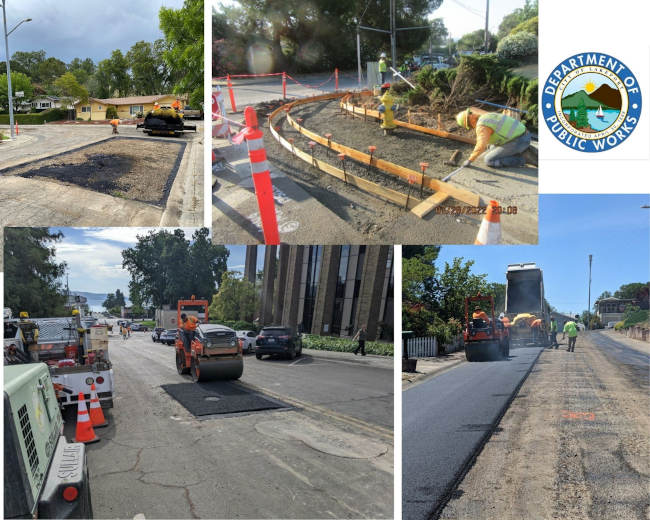
LAKEPORT, Calif. — The Lakeport Public Works Department reported that it is making progress on a wide variety of notable public improvement projects that will benefit the Lakeport community.
The following is a roundup of work that’s now underway.
Hartley Street Pedestrian Improvement Project
This project will provide Americans with Disabilities Act-compliant access on Hartley Street from 20th Street to the west-side access of the Lakeport public school complex.
There will be approximately 1,550 feet of new sidewalk, curb and gutter, new retaining walls, and flashing pedestrian warning signs near the Lakeport schools as part of this project.
Estimated completion date is September.
Lakefront Park Project
In January 2020, the city of Lakeport was awarded a grant from the California Department of Parks and Recreation.
This was a competitive grant funded by Proposition 68, the California Drought, Water, Parks, Climate, Coastal Protection and Outdoor Access for All Act of 2018.
After two years of design, the project is ready for construction.
The new park consists of approximately 6.9 acres at 800 N. Main St. in downtown Lakeport.
The project includes construction of a basketball court, splash pad, skate park, concession building with restrooms, shade structures, picnic areas, fitness equipment, a pavilion, public art, lighting, irrigation and landscaping.
Estimated completion date is spring 2023.
2022 Micro-surface Project
This project is to apply a micro-surface treatment to the pavement surface at multiple locations within the Lakeport city limits.
The locations are Forbes Street (Martin Street to Clear Lake Avenue); Third, Fourth, and Fifth streets (all from North Main Street to the waterfront); and parking lots for Westside Community Park, Silveira Community Center and the Lakeport Police Department.
Estimated completion date is Nov. 1.
Storm drain repair
A 24-inch culvert that runs from the drainage inlet between 1470 and 1480 N. Main St. and extends 372 feet to Clear Lake is nearly halfway through its life expectancy and may soon completely fail. It has caused erosion under the City sidewalk and caused a driveway to collapse.
The driveway at 1470 N. Main St. is settling in areas along the storm drain piping. Multiple structures are in proximity to the pipe, thus making it very difficult to dig up and replace it with new piping.
These factors make it a perfect candidate for a new slip line project. Slip lining is a technique for repairing leaks or restoring structural stability to an existing pipeline. It involves installing a smaller "carrier pipe" into a larger "host pipe,” grouting the annular space between the two pipes, and sealing the ends.
Estimated completion date is winter 2022.
14th, Orchid and Palm Streets Maintenance Project (chip seal + leveling course)
A chip seal application consists of cleaning and preparing the old asphalt surface and using hot asphalt as a leveling course or stabilizer in holes, ruts, or failed areas.
The process is finished by applying a hot bonding tar impregnated with small aggregate chips, raking smooth and rolling to compact.
The project is estimated to be completed later this month.
The data cover more than 384,000 positions and approximately $25.92 billion in total wages.
The newly published data were reported by 24 CSU institutions (106,203 employees), 55 superior courts (19,458 employees), and 157 state departments (258,483 employees).
Three superior courts — Alameda, Del Norte and Glenn — did not file a report.
The Lake County Superior Court’s report shows that it has 41 employees, paid $2,771,228 in total wages in 2021 and $482,524 in retirement.
The highest paid staff in the Lake County Superior Court are the judges, with their pay ranging between $210,000 and $218,653 annually. The court executive officer receives an annual salary of $201,246 and the commissioner/attorney is paid $126,321.
California law requires cities, counties, and special districts to annually report compensation data to the State Controller’s Office.
The state controller also maintains and publishes state and CSU salary data.
No such statutory requirement exists for the University of California, California community colleges, superior courts, fairs and expositions, First 5 commissions, or K-12 education providers; their reporting is voluntary.
Users of the site can view compensation levels on maps and search by region; narrow results by name of the entity or by job title; and export raw data or custom reports.
Since the website launched in 2010, it has registered more than 14 million pageviews. The site contains pay and benefit information on more than two million government jobs in California, as reported annually by each entity.
As the chief fiscal officer of California, Controller Yee is responsible for accountability and disbursement of the state’s financial resources. The controller has independent auditing authority over government agencies that spend state funds.

Launching the National Integrated Heat Health Information System (NIHHIS) and the heat.gov site on July 26, 2022, the Biden administration cited heat waves and the warming climate as serious health threats. As the new initiative promises a “science informed response” to hotter conditions, five stories from The Conversation’s archive explain what researchers know about heat and health.
1. It’s the humidity
Heat waves can be deadly in a variety of ways, wrote William Calvin, who teaches physiology and neuroscience at the University of Washington.
“Heat waves can kill via the dehydration caused by heavy sweating; the altered sodium and potassium concentrations in the blood confuse both heart and nerve cells, and so breathing or heartbeat may suddenly stop,” he wrote.
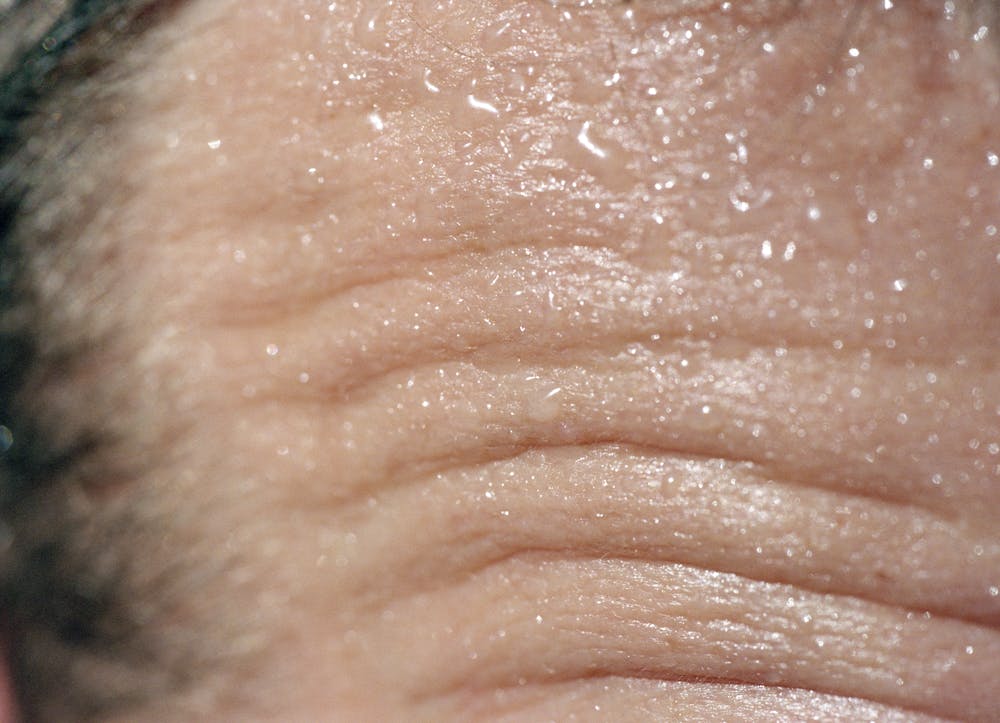
Calvin explained that human bodies have not evolved to handle extreme heat with humidity. “Normally, sweat evaporates off your skin and you cool down. But with high humidity, the air is already saturated with water vapor, and so evaporative cooling stops. However, you keep sweating anyway, threatening dehydration.”
2. Lower tolerance for higher temps
“That combination of temperature and humidity whereby the person’s core temperature starts to rise is called the ‘critical environmental limit,’” wrote a group of Penn State University scholars researching the health effects of heat: W. Larry Kenney, Daniel Vecellio, Rachel Cottle and S. Tony Wolf.
In a rare lab test of the human body’s heat tolerance, the researchers found that the limit is lower than previously thought. When the air temperature is around 100 degrees Fahrenheit (38 Celsius), people can begin to feel ill effects at just 60% humidity – a higher temperature and lower humidity than researchers determined in 2010.
“Above those limits, core temperature rises continuously and risk of heat-related illnesses with prolonged exposures is increased,” they wrote. “The results of these tests show an even greater cause for concern.”
3. Age matters
Extremely hot whether is particularly dangerous for those over 70, according to family physician Dr. Gabriel Neal, who teaches at the Texas A&M Health Science Center College of Medicine.
In his article on avoiding heat stroke, Neal described factors making older adults vulnerable to heat-related illnesses.
“As people age, our bodies’ ability to cool declines, and the elderly often take medication that further impairs this ability,” Neal wrote. “In addition, the elderly may not be aware of the dangerous heat wave and may not have working air conditioning in their home, nor have anyone to check on them.”

4. Wet or dry, hot is hot
It’s the heat and the humidity, wrote Mississippi State University exercise physiologist JohnEric Smith.
“Hot desert climates are stressful due to extreme temperatures, while humid subtropical climates are stressful because the body has trouble removing heat when sweat doesn’t evaporate readily,” he wrote.
Smith added that how heat and humidity affect people depends on factors like the weather that’s typical where they are, and the cooling systems in local homes and buildings.
5. Warming up food
Tufts University epidemiologist Elena Naumova warns that keeping food safe to eat is becoming more challenging in a warming climate. “That’s because warm, wet weather conditions stimulate bacterial growth,” she wrote.
Naumova named several climate-related factors in spreading foodborne illnesses. “One growing problem is that heat waves, wildfires and severe storms are increasingly triggering power outages, which in turn affect food storage and food handling practices in stores, production and distribution sites and homes,” she wrote.
Editor’s note: This story is a roundup of articles from The Conversation’s archives.
Leah Samuel, Health + Equity Editor, The Conversation
This article is republished from The Conversation under a Creative Commons license. Read the original article.
Scott, whose last meeting was last Tuesday, announced her resignation in April to take a job as a culinary arts teacher at Clear Lake High School in Lakeport. Her resignation was effective on July 31.
First elected in 2016, she served one full term and half of a second.
She’s the first county supervisor in four decades to resign before completing a term.
The board held a discussion July 12 — after it had been put off or rescheduled since her resignation announcement — to discuss whether to go to a special election or seek a gubernatorial appointment.
The supervisors ultimately decided to take no action at that time; Scott said they should wait until after she was gone to make a decision.
By Scott not stepping down earlier or allowing the county to begin a process to pursue an election, it left the board with no other option than to seek a gubernatorial appointment, county officials said Tuesday.
The Governor’s Office previously told Lake County News that it would make the appointment.
Only three members of the board were present for the Tuesday discussion. In addition to Scott’s vacant seat, Supervisor Jessica Pyska was absent.
In her brief report to the board during Tuesday’s meeting, County Administrative Officer Susan Parker said that on July 12, the board directed staff to draft a letter to the governor to ask him to fill Scott’s vacancy.
“We have prepared a draft for your review and consideration,” said Parker, who thanked County Counsel Anita Grant for her help in drafting the letter.
Supervisor Bruno Sabatier said that he wanted to clarify that, because of the date of Scott’s resignation, it was not possible to do an election in November.
“There does not appear to be a clear statutory path to allow that,” said Grant.
Board Chair EJ Crandell said Registrar of Voter Maria Valadez had reported in July that it would be difficult to conduct the special election.
The only public comment on the matter was submitted through eComment on the county’s website.
That comment came from Michael Green, a Lakeport City Council member who has shown particular interest in the seat and how it is filled.
“The appropriate board action at the appropriate time,” wrote Green, who had insisted in a July letter to the board that the seat needed to be appointed by the governor and not filled through a special election.
Supervisor Moke Simon moved to approve the letter, with Sabatier seconding and the board voting 3-0.
Email Elizabeth Larson at
Vacancy BOS Letter 1 by LakeCoNews on Scribd
Lake County Public Health said no cases of monkeypox have been confirmed in Lake County, and the risk to the general public is currently very low.
Public Health officials noted, however, the situation in California is, “rapidly evolving,” and so it is essential that at-risk individuals take this outbreak seriously.
Newsom’s proclamation enables emergency medical services personnel to administer monkeypox vaccines that are approved by the Food and Drug Administration, similar to the statutory authorization recently enacted for pharmacists to administer vaccines.
The state’s response to monkeypox builds on the infrastructure developed during the COVID-19 pandemic to deploy vaccine clinics and ensure inclusive and targeted outreach in partnership with local and community-based organizations.
“California is working urgently across all levels of government to slow the spread of monkeypox, leveraging our robust testing, contact tracing and community partnerships strengthened during the pandemic to ensure that those most at risk are our focus for vaccines, treatment and outreach,” said Gov. Newsom. “We’ll continue to work with the federal government to secure more vaccines, raise awareness about reducing risk, and stand with the LGBTQ community fighting stigmatization.”
To date, the state has received more than 61,000 vaccine doses and distributed more than 25,000 doses.
The state is also supporting overall vaccination efforts in collaboration with locals, including helping provide staffing and mobile clinics. The state allocates doses to local health departments based on a number of factors, including the number of reported monkeypox cases in an area and estimate of at-risk populations.
As of July 28, the state had expanded its testing capacity to process more than 1,000 tests a week. The state's public health laboratory leaders have been working with local public health, academic, and commercial laboratories to ensure testing capacity is increasingly available and coordinated with the public health response.
CDPH is also expanding treatment options. Access to the antiviral prescription drug tecovirimat, or TPOXX, used to treat monkeypox is limited, but the treatment can now be administered at more than 30 facilities and providers across the state.
The Centers for Disease Control and Prevention, or CDC, has found, “Monkeypox does not spread easily between people; however, anyone in close contact with a person with monkeypox can get it and should take steps to protect themselves.”
Further, the California Department of Public Health, or CDPH, notes, “While monkeypox can infect anyone, many of the recent cases in 2022 have occurred among persons self-identifying as men who have sex with men,” or MSM.
Limiting the spread of monkeypox demands a coordinated effort. Lake County Health Services staff is working with local health care providers and other California local health jurisdictions. This work includes preparing to investigate, conduct contact tracing and offer postexposure prevention for close contacts of those who test positive.
As the situation continues to develop, Lake County-focused resources will be accessible at http://health.lakecountyca.gov/Diseases/Monkeypox.htm.
Monkeypox: A fact sheet for Lake County Residents
Monkeypox is a viral infection which often begins within two to three weeks after exposure, with flu-like symptoms followed by a rash that goes through different stages and often resolves in two to four weeks without intervention.
Symptoms of monkeypox typically include:
• Fever;
• Headache;
• Muscle aches and backache;
• Swollen lymph nodes;
• Chills;
• Exhaustion.
• A rash that can look like pimples or blisters that appears on the face, inside the mouth and on other parts of the body, like the hands, feet, chest, genitals or anus.
People with monkeypox are infectious, and should isolate until the rash resolves. People who have symptoms should call their health care provider or local hospital, who will determine the need for testing.
People who have symptoms of monkeypox or have had contact with a confirmed or suspected monkeypox case, should take the following steps:
• Visit a medical provider for an evaluation;
• Cover the area of the rash with clothing;
• Wear a properly fitting mask;
• Avoid skin-to-skin, or close contact with others.
There are steps people can take to protect themselves from monkeypox, including asking intimate and other sexual partners about symptoms, avoiding skin-to-skin or prolonged face-to-face contact with anyone who has symptoms, practicing safer sex (such as reducing the number of sexual partners), keeping hands clean and maintaining respiratory etiquette.
Monkeypox can spread through contact with body fluids, monkeypox sores, or shared items (such as clothing and bedding) that have been contaminated with fluids from sores of a person with monkeypox.
Monkeypox virus can also spread between people through saliva or respiratory droplets, typically between people in a close setting.
Although monkeypox is not generally considered a sexually transmitted infection, the current outbreak is being transmitted during sex through skin-to-skin and other intimate contact, regardless of gender or sexual orientation.
Most people with monkeypox have a mild illness that improves over two to four weeks. Monkeypox is contagious and can spread to others until scabs have fallen off and a new layer of skin has formed.
Comparisons of this outbreak to HIV are disingenuous and stigmatize vulnerable populations as there are no similarities other than MSM. Monkeypox is similar to smallpox not HIV and is survivable.
Unlike the early days of the ongoing and tiring COVID-19 pandemic, safe and effective vaccines, antiviral drugs and tests for monkeypox have already been developed and proven safe. The equitable distribution of these resources is now underway.
TPOXX is an antiviral medication that is approved by the United States Food and Drug Administration for the treatment of smallpox in adults and children. Clinical trials in people showed the drug was safe and had only minor side effects.
The CDC holds an expanded access (sometimes called “compassionate use”) protocol that allows for the use of stockpiled tecovirimat to treat monkeypox during an outbreak. Tecovirimat is available as a pill or an injection. For more information and the facts about TPOXX (Tecovirimat) please visit www.cdc.gov/poxvirus/monkeypox/clinicians/Tecovirimat.html.
If you are an immunocompromised individual or are pursuing monkeypox treatment or postexposure prevention options for someone who is, please contact your health care provider or local hospital to speak about accessibility of the Jynneos monkeypox vaccine. Please be aware that supplies of Jynneos are experiencing immense scarcity and this vaccine will be allocated on a case-by-case basis.
To learn more about monkeypox and the 2022 Monkeypox Outbreak, please visit the following websites:
Centers for Disease Control and Prevention (CDC) Monkeypox Homepage:
www.cdc.gov/poxvirus/monkeypox/index.html
Centers for Disease Control and Prevention (CDC) U.S. Outbreak 2022 Situation
www.cdc.gov/poxvirus/monkeypox/response/2022/index.html
Centers for Disease Control and Prevention (CDC) Monkeypox Prevention:
www.cdc.gov/poxvirus/monkeypox/prevention.html
County of Lake Health Services Monkeypox Webpage:
http://health.lakecountyca.gov/Diseases/Monkeypox.htm
The council will meet at 6 p.m. Thursday, Aug. 4, in the council chambers at Clearlake City Hall, 14050 Olympic Drive.
The meeting will be broadcast live on the city's YouTube channel or the Lake County PEGTV YouTube Channel. Community members also can participate via Zoom or can attend in person.
The agenda can be found here.
Comments and questions can be submitted in writing for City Council consideration by sending them to City Clerk Melissa Swanson at
To give the council adequate time to review your questions and comments, please submit your written comments before 4 p.m. Thursday, Aug. 4.
Each public comment emailed to the city clerk will be read aloud by the mayor or a member of
staff for up to three minutes or will be displayed on a screen. Public comment emails and town hall public comment submissions that are received after the beginning of the meeting will not be included in the record.
There are no action items on the council’s agenda.
On the meeting's consent agenda — items that are considered routine in nature and usually adopted on a single vote — are warrants; minutes of the June and July council meetings; approval of the purchase of an equipment trailer from Felling Trailers in the amount of
$49,778.16; authorization for payment of expansion fees for a water tie-in related to the Austin Park Splash Pad Project in the amount of $31,675; hold a second reading of Ordinance No. 265-2022, an ordinance amending the section of the Clearlake Municipal Code related to appeal of abatement orders to the City Council, read it by title only, waive further reading, and adopt ordinance; continuation of a declaration of local emergency issued on Aug. 23, 2021, and ratified by council action on Sept. 16, 2021, and set next review in 60 days; continuation of declaration of local emergency issued on Aug. 18, 2021, and ratified by council action on Aug. 19, 2021, and set next review in 60 days; continuation of authorization to implement and utilize teleconference accessibility to conduct public meetings pursuant to Assembly Bill 361.
The council will meet in closed session after the public portion of the meeting to discuss an ongoing lawsuit against the county of Lake and Treasurer-Tax Collector Barbara Ringen and an anticipated case of litigation.
Email Elizabeth Larson at