 How to resolve AdBlock issue?
News
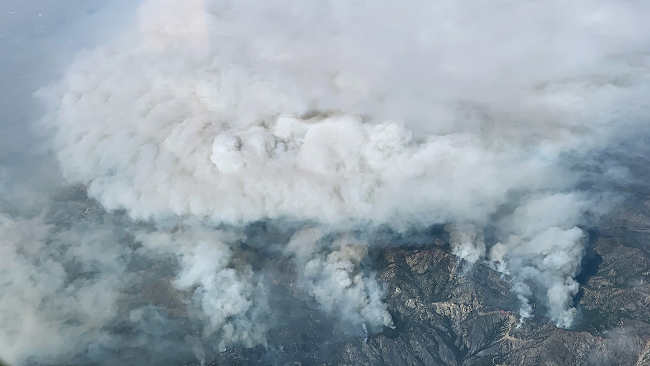
A new study uses data from the ECOSTRESS instrument aboard the space station to better understand why some parts of a wildfire burn more intensely than others.
Even in drought-stricken California, not all areas face the same degree of wildfire risk. A recent study featuring data from NASA’s ECOSTRESS mission found relationships between the intensity of a wildfire and the water stress in plants measured in the months before the blaze.
The correlations weren’t just a matter of dry plants burning more than hydrated ones; some areas where vegetation had sufficient water burned more severely, possibly because fires had more fuel to consume.
The research, led by scientists at NASA’s Jet Propulsion Laboratory in Southern California, draws on plant water-use data collected by ECOSTRESS, short for the ECOsystem and Spaceborne Thermal Radiometer Experiment on Space Station.
The instrument measures the temperature of plants as they heat up when they run out of water. For this study, researchers focused on data collected during portions of 2019 and early 2020 over six areas — three in Southern California mountains and three in the Sierra Nevada — that were subsequently scorched by wildfires.
Other research has shown that wildfire season across the Western U.S. is starting earlier in the year and increasing in length and severity. In California — a state with 33 million acres (13 million hectares) of forests, much of it managed by federal, state, and local agencies — detailed insights on the relationship between wildfire and the availability of water to vegetation could help fire-management officials identify not just whether an area will likely catch fire, but how serious the damage will be if it does.
“We are in an intense megadrought — the worst in 1,200 years — and it’s creating conditions for more catastrophic fires,” said Christine Lee, a study co-author at JPL. “Data sets like those from ECOSTRESS will be critical for advancing science and can provide information to support those who are responding to climate-change crises.”
Comparing the ECOSTRESS data with separate postfire satellite imagery, researchers found that the rate at which plants release water by “sweating” — a process known as evapotranspiration — as well as how efficiently they use water for photosynthesis, can help predict whether subsequent wildfires are more or less intense. Both measures indicate whether a plant community is getting enough water or is under stress from lack of it.
“We were trying to understand what drives differences in why some areas have severe burns and other areas don’t,” said Madeleine Pascolini-Campbell, a water and ecosystems scientist at JPL and lead author of the paper. “The results show how crucial water stress is for predicting which areas burn the most and why it’s important to monitor vegetation in these regions.”
Tracking plant stress
Like humans, plants struggle to function when they’re too hot. And in much the same way that sweating helps humans stay cool, plants rely on evapotranspiration to regulate their temperature.
Evapotranspiration combines the rate at which plants lose water as it evaporates from the soil and by transpiration, in which they release water through openings in their leaves, called stomates. To avoid losing too much water, plants start closing their stomates if they get too dry.
“As a result, they start to heat up because they don’t have the benefit of ‘sweating’ anymore,” Lee said. “With ECOSTRESS, we can observe these really fine changes in temperature, which are used to understand changes in evapotranspiration and water-use efficiency.”
In general, slower evapotranspiration and lower efficiency signal that plants are water-stressed. Higher values indicate that plants are getting enough water.
ECOSTRESS tracks evapotranspiration via a high-resolution thermal radiometer that can measure the temperature of patches of Earth’s surface as small as 130 by 230 feet (40 by 70 meters).
High versus low stress
In the paper, published in Global Ecology and Biogeography, researchers found that water-stress-related variables, along with elevation, were dominant predictors of burn severity in areas struck by three Southern California wildfires in 2020: the Bobcat Fire in the Angeles National Forest, along with the Apple and El Dorado fires in the San Bernardino National Forest.
Whether higher or lower stress predicted more severe burning depended on the primary type of vegetation in an area, Pascolini-Campbell said.
For example, stressed pine forests tended to burn more severely, suggesting that drier conditions made trees more flammable. Meanwhile, in grasslands, lower stress tended to correlate with more burn damage, a possible indication that robust vegetation growth produced more fuel, resulting in more intense blazes.
And in the Sierra Nevada regions burned by the Creek Fire, the Sequoia Complex Fire, and the North Complex Fire, results showed weaker relationships between pre-fire stress and burn severity. The study authors hypothesize that variables not captured in the analysis — wind or other weather conditions — were more influential in those burn areas.
Supporting decision-makers
The study comes as NASA is ramping up efforts to mobilize its technology, expertise, and resources to study wildfires. The agency in May announced the formation of NASA Wildland FireSense, an initiative aimed at bringing together experts from different disciplines, along with advanced technology and analytical tools, to develop approaches that can inform and guide fire management decision-makers.
The importance of tools such as ECOSTRESS, which is scheduled to operate until September 2023, will grow as climate change drives greater wildfire risk across the Western U.S., Pascolini-Campbell said. “It’s a high-priority region for using these types of studies to see which areas are the most vulnerable,” she added.
More about the mission
JPL, a division of Caltech in Pasadena, built and manages the ECOSTRESS mission for the Earth Science Division in the Science Mission Directorate at NASA Headquarters in Washington. ECOSTRESS is an Earth Venture Instrument mission; the program is managed by NASA’s Earth System Science Pathfinder program at the agency’s Langley Research Center in Hampton, Virginia.
More information about ECOSTRESS is available here: https://ecostress.jpl.nasa.gov/.
Lake County has already experienced the effects of fire season, with multiple fires in June and July.
As the summer progresses, now is the time to make all necessary preparations.
Here are five steps you can take to prevent and prepare for wildfire.
Get alerts/stay up-to-date:
• Update your LakeCoAlerts email, phone number, and address to stay up-to-date with all messages from the Lake County Sheriff’s Office. Add LakeCoAlerts to your phone contacts or caller I.D., so you know we are trying to reach you. The phone number you will see is 707-289-8964. When you receive a text message, you will see the number 89361.
• Know your local radio stations to tune into for timely reports and situation updates.
• Follow the LCSO and Office of Emergency services on social media for the latest updates and important information: https://www.facebook.com/lakesheriff and https://www.facebook.com/LakeCountyOES/.
Know your zone and evacuation options:
• Zonehaven is a tool that the public can use to look up their zone number ahead of an emergency. During an emergency, information can be viewed at https://community.zonehaven.com/. Zonehaven does not require an account and is not a service to sign-up for. There is an option to subscribe to alerts when viewing zone information. This will take you to LakeCoAlerts. LCSO will use zone numbers when sending evacuation orders, shelter-in-place warnings, and other emergency information via LakeCoAlerts.
Make a plan:
• Have a go-bag ready for you and your household. Visit ready.gov/kit for examples of what to include.
Prepare your home:
• Fire-safe starts with defensible space. Take time now to ensure that your property is clear of dead or overgrown brush, trees, and grass. Contact your HOA, landlord, or local fire department for more information.
Help your community:
• Individual efforts contribute to the success of all. Talk with your neighbors about being fire ready. Start making plans now — ensuring your neighborhood stays safe and has the help they need. Be sure to tell them to sign up for LakeCoAlerts.
Remain vigilant:
• Each incident may behave unpredictably and rapidly, and no one should wait for an electronic alert before evacuating if the threat is imminent. If a situation appears threatening, evacuate immediately.

SACRAMENTO, Calif. — Hundreds of family members, friends and California Highway Patrol personnel gathered at the CHP Academy in West Sacramento Friday to honor the newest graduating class.
The 93 officers who received their badge Friday brings the tally that much closer to the CHP’s goal of hiring 1,000 officers in the next two years.
The “Join the CHP 1,000” campaign launched in June to appeal to a wide array of prospective applicants who may not be aware of the life-changing opportunities that awaits with a CHP career.
“It’s my honor to welcome the newest class of women and men to join the California Highway Patrol and thank them for stepping up to serve our state,” said Gov. Gavin Newsom. “With a goal of hiring 1,000 new CHP officers in the coming years, we’re investing in outreach to a diverse pool of candidates committed to protecting their fellow Californians and making a positive impact in our communities.”
Upon graduation, this class of officers will be reporting for duty to one of 103 CHP Area offices throughout the state.
“After 24 weeks of dedicated training, these officers are ready to assist in the CHP’s mission of protecting and serving the State of California,” said CHP Commissioner Amanda Ray. “The badge pinning ceremony is a special moment, as it symbolizes not only the officers’ major accomplishment in completing the Academy, but also the exciting future of a career with the California Highway Patrol.”
At the CHP Academy, cadet training starts with nobility in policing, leadership, professionalism and ethics, and cultural diversity. Cadets also receive instruction on mental illness response and crisis intervention techniques.
The training also covers vehicle patrol, crash investigation, first aid, and the apprehension of suspected violators, including those who drive under the influence of alcohol or drugs.
The cadets also receive training in traffic control, report writing, recovery of stolen vehicles, assisting the motoring public, issuing citations, emergency scene management, and knowledge of various codes, including the California Vehicle Code, Penal Code and Health and Safety Code.
“The women and men of the CHP take great pride in the level of service we provide to the community,” said Commissioner Ray. “As generations of officers retire, it is imperative we bring on the next generation of exemplary officers to fill those positions.”
For more information about the “Join the CHP 1,000” campaign, or to apply, visit www.chpcareers.com or call the statewide Recruitment Unit at 916-843-4300.

This year’s event will take place from 5 to 10 p.m. Saturday, Sept. 17, at The Mercantile, 4350 Thomas Drive in Kelseyville.
The elegant night under the stars will be held on the lawn, so shoes will be optional.
The Wine Auction is Lake County’s premier fundraising event for community, education, health and art organizations, and has raised millions of dollars.
In 2021, the Wine Alliance distributed $250,000 that it had raised in the midst of the pandemic.
The Lake County Wine Alliance is a cooperative composed of Lake County wineries, winegrape growers, vineyard owners, related businesses and community supporters.
Formed in 2000, the Lake County Wine Alliance is a nonprofit organization operated under the guidance of a six-member volunteer board of directors with the purpose of supporting charitable and other local programs. The alliance is the charitable arm of the Lake County wine industry.
Tickets are $150 per person. Valet parking also is available for $20.
To purchase tickets, visit the Wine Alliance website.
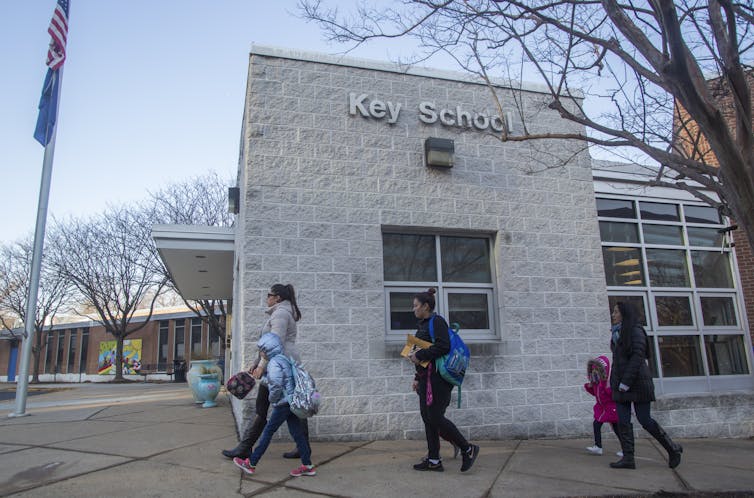
While many American students and their parents worry that the next mass shooting could happen at their school, schools are also facing a number of other threats that do not involve guns. Many of these threats are related to the mental health of educators and students.
From 2018 to 2021, both before and during the pandemic, I spent time studying a public middle school in the San Francisco Bay Area that serves a high-poverty community of color. The research involved spending more than 100 hours of observing classes and teacher and staff meetings. It also involved a series of interviews with 10 teachers and the principal.
Here are five of the biggest threats that I identified through my observations.
1. Trauma among students
Students often spoke and wrote about traumatic experiences. This included losing parents to murder, imprisonment or deportation.
Teachers and staff told me they were not prepared to handle students’ emotional reactions to these traumatic experiences and how the experiences affected student learning.
Extensive research shows that trauma can result in poor academic performance and more anxiety or aggression that can interfere with learning.
Racial minority and low-income students tend to experience significantly more trauma than white students and students from higher-income families.
The COVID-19 pandemic created more trauma for more students, especially for low-income students of color, as disruption to the normal way of life and to the economy created high stress on families. Perversely, school closures during the pandemic also made it more difficult for students experiencing trauma to receive mental health care and treatment often provided by schools.
2. Worse well-being for teachers and students
Staff in the school I studied described their middle schoolers as increasingly “shut down,” “fragile,” “beaten down” and “hopeless” with every passing year.
Teachers also talked about their own struggles with “the stress of this place” and “negative emotions” from their daily challenges to support their students. During the pandemic, teachers described increasing “exhaustion” from the level of effort needed to keep students in school and engaged in learning.
Since the onset of the pandemic, lower overall well-being of students and teachers has become a nationwide concern. In the 2020-2021 school year, 80% of teachers nationwide reported feelings of burnout. In the 2021-2022 school year, nearly half of students across the U.S. in grades 9 through 12 reported persistent feelings of sadness or hopelessness. Across the nation, district leaders in the 2021-2022 school year reported a general decline in mental health and well-being of all students and educators as their most pressing concern.
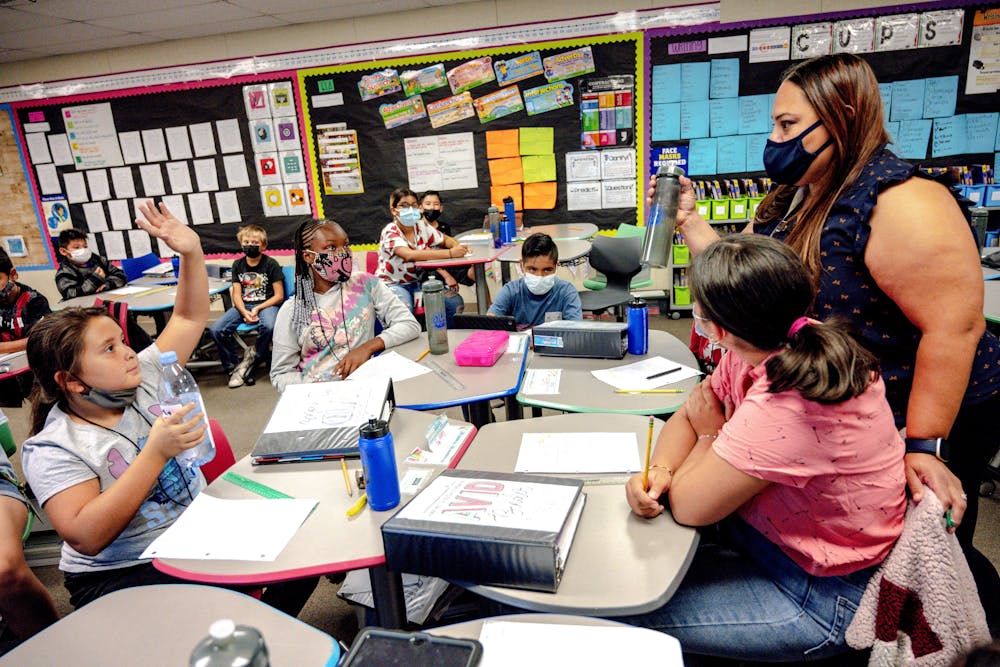
3. Staff shortages and turnover
Like other schools around the nation, the school I studied was persistently short of teachers because of staff who quit due to stress or who were fired for unprofessional behavior. It was often difficult to find qualified teachers to fill open positions.
During the pandemic, one-quarter of teachers reported that they were likely to leave the profession. In early 2022, the share of teachers who reported being “very satisfied” with their jobs dropped to an all-time low at 12%.
Amid the staffing shortages, news reports from around the country tell of teachers having to teach two classes at once, sacrifice preparation time and bring in parents or highly paid district administrators to cover classrooms.
Increasingly, mounting stress means teachers quit midyear or even in the middle of a school day.
4. Threat of closure
At the school I studied, the principal described extensive time and effort that she and others spent to encourage students to enroll there. “It is disheartening,” the principal said, that sometimes parents chose other schools due to a negative reputation that became associated with a school serving the area’s poorest Black and Latino communities. Any declines in enrollment threatened the loss of teaching positions. Persistent declines meant the threat of being closed altogether.
Nationwide, threats of school closure have risen in response to widespread drops in annual enrollment in noncharter public schools, especially in districts serving low-income communities of color.
School boards in Baltimore and the California cities of Oakland and Hayward have recently decided to close multiple schools in the 2022-2023 school year due to declining enrollment. This has prompted public protest from communities who see the closures as targeted at poor Black and Latino neighborhoods.
Other districts around the country, including in Minneapolis and Denver, have warned residents about likely enrollment-related closures in the 2022-2023 school year.
5. Threats from the community
There are also violent threats at schools unrelated to mass shootings. During my study, teachers and principals reported distressing incidents of threats from members of the community, including verbal threats from parents and neighbors and an incident of the principal being held at knifepoint.
From March 2020 to June 2021, one-third of teachers reported at least one incident of verbal or threatening violence from students, and over 40% of school administrators have reported verbal or threatening violence from parents.
Reports of violent conflicts over masking at school board meetings, parents ripping masks off teachers’ faces and physical fights between parents and teachers have emerged alongside reports of intensified hostility from resurgent culture wars, including death threats against school board members and their families.
In a February 2022 investigation, Reuters documented 220 incidents of violent intimidation of school officials across 15 states.
K-12 educators and students are facing many simultaneous threats in addition to school shootings. This raises important questions about whether schools have the resources and support they need to ensure that students and educators can thrive.
Elizabeth Zumpe, Visiting Assistant Professor in Educational Leadership, UMass Lowell
This article is republished from The Conversation under a Creative Commons license. Read the original article.

Revealing the potentially habitable climate of ancient Mars is a key part of NASA’s mission to explore and understand the unknown, to inspire and benefit humanity – and for 10 years, the Curiosity rover has been on the case at the Red Planet.
To mark the occasion, here are five of the most significant discoveries that scientists have made using Curiosity’s Sample Analysis at Mars (SAM) instrument suite. SAM is one of NASA’s most powerful astrobiology instruments on Mars.
Designed and built at NASA’s Goddard Space Flight Center in Greenbelt, Maryland, SAM searches for and measures organic molecules and light elements, which are important to life as we know it. To complete this task, SAM carries components that scientists use remotely to test Martian samples.
1. Detection of Organic Compounds on Mars
Charles Malespin and Amy McAdam, SAM’s principal and deputy principal investigators at Goddard, very much agree on SAM’s most significant finding: SAM detected organic molecules in rock samples collected from Mars’ Gale crater. Organic molecules (those containing carbon) could be used as building blocks and “food” for life. Their presence on Mars suggests the planet once could have supported life, if it ever was present.
While the isotopes in carbon dioxide and methane measured during some SAM sample analyses could be consistent with ancient biological activity producing the organics observed, importantly there are also non-life-based explanations — for example, this isotopic signal could be a result of an interaction between ultraviolet light from the Sun and carbon dioxide in Mars’ atmosphere producing organics that fall to the surface, no life required.
Overall, these results motivate ongoing and future studies with SAM and the entire Curiosity suite of instruments, as well as other planetary missions searching for evidence of habitable environments and life beyond Earth.
2. Methane Variability
Using SAM’s Tunable Laser Spectrometer, developed at NASA’s Jet Propulsion Laboratory in Southern California, scientists have detected fluctuations in the abundance of methane in the near-surface atmosphere where Curiosity gathers samples.
On Earth, most of the methane present in the atmosphere gets there thanks to processes from life and varies as a result of changes in biological processes, but we do not know whether this is the case on Mars.
Curiosity isn’t equipped to determine whether or not the methane it has detected originates from biological processes, but the host of Red Planet missions continue to piece together the tantalizing puzzle.
3. Rock Formation and Exposure Age in Gale Crater
Curiosity had only been on Mars for a bit more than a year when, thanks to SAM, scientists determined both the formation age and the exposure age of a rock on the surface of another planet for the first time.
The rocks around the rim of Gale crater were formed about 4 billion years ago, then transported as sediments to Yellowknife Bay. “Here they were buried and became sedimentary rocks,” McAdam said.
From there, weathering and erosion slowly broke down and exposed the rocks to surface radiation about 70 million years ago. Apart from providing insight into Mars’ erosion rates, knowing how long a sample was exposed enables scientists to consider possible radiation-induced changes to organic compounds which could affect the ability to identify potential biosignatures.
“The age dating experiment was not planned before launch,” McAdam said. “But flexibility in the design and operation of SAM, and dedication of a team of scientists and engineers, enabled it to be successfully carried out.”
4. Honing in on the History of Water on Mars
SAM has also shed light on Mars’ wetter past and how the planet has dried out. Water is vitally important to life as we know it, and “multiple lines of evidence indicate that the rocks of Gale crater record a rich history of water,” Malespin said.
Part of that evidence is the presence of jarosite, a ruddy-yellow mineral only formed in watery environments, McAdam said. An age-dating experiment with SAM and another Curiosity instrument (APXS) found jarosite hundreds of millions of years younger than expected.
This finding suggests that even as much of the surface of Mars was becoming dry, some liquid water remained below the surface in the Gale crater environment, extending the period of habitability for any Martian microbes that might have existed.
In addition, analyses by SAM provided insight into the loss of Mars’ atmosphere that led its long-term evolution from the early warm and wet state to the current cold and arid state. Water, H2O, contains two hydrogen atoms and one oxygen atom.
The hydrogen can be swapped for a heavier form of itself, called deuterium. Through measuring the deuterium-to-hydrogen ratio in its samples, Curiosity uncovered evidence of a history of hydrogen escape and water loss on Mars.
5. Biologically Useful Nitrogen
On Earth, nitrogen is an essential ingredient in the recipe for life — but not just any nitrogen will do. For most biological processes to make use of it, the nitrogen atoms must first be “fixed”: freed from its strong tendency to interact only with itself. “Fixed nitrogen is required for the synthesis of DNA, RNA, and proteins,” Malespin said. “These are the building blocks of life as we know it.”
SAM detected fixed nitrogen in the form of nitrate in rock samples it analyzed in 2015. The finding indicated that biologically and chemically usable nitrogen was present on Mars 3.5 billion years ago.
“While this nitrate could have been produced early in Martian history by thermal shocks from meteor impacts,” McAdam said, “it is possible that some could be forming in the Martian atmosphere today.”
No finding from SAM or Curiosity’s other instruments can offer proof-positive for past life on Mars — but importantly, these discoveries don’t rule it out. Earlier this year, NASA extended Curiosity’s mission at least into 2025, allowing the rover and its mobile SAM chemistry lab to stay focused on the tantalizing matter of Mars’ habitability.
Nick Oakes works for the NASA Goddard Space Flight Center in Greenbelt, Maryland.