 How to resolve AdBlock issue?
News
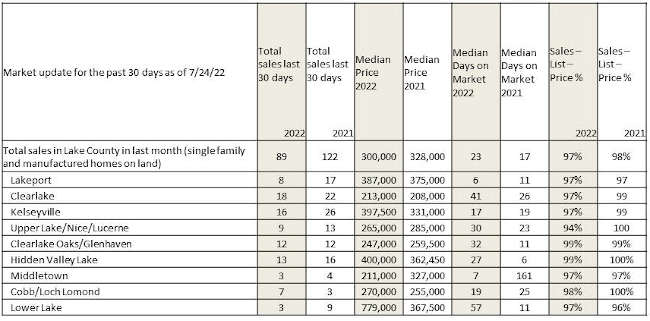
The association, or LCAOR, said that for the 30-day period ending July 24, total homes sold through the multiple listing service totaled 89, compared to 122 during the same time last year.
Those sales include traditionally built “stick-built” houses as well as manufactured homes on land.
There were nine sales of mobile homes in parks compared to 12 for the same time last year, and 25 bare land (lots and acreage) sales, compared with 50 for the same time last year.
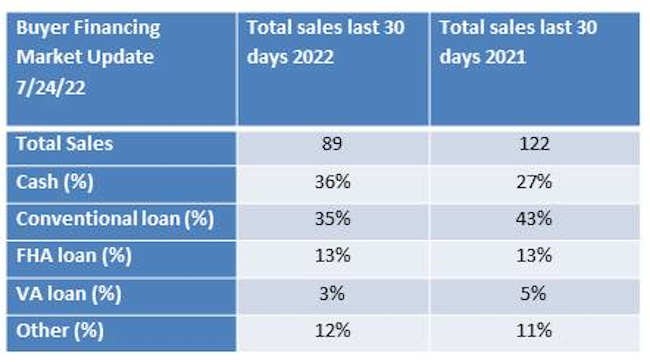
During that time period, 32% of homes were bought for all cash, compared to 33% for the same time last year.
Of those, 35% were financed by Fannie Mae or Freddie Mac (“conventional loans”) compared to 43% for the same time last year; 13% were financed by FHA (same as last year this time); and 3% were financed by the VA or CalVet compared to 5% for this time last year).
Another 11% had other financing such as private loans or seller financed notes, which was the same as last year.
There are 421 homes on the market right now. If the rate of sales stays the same at 89 homes sold per month, there are currently 4.7 months of inventory on the market at the moment. That means that if no new homes are brought to the market for sale, in 4.7 months all of these homes would be sold and there would be none available.
Less than six months of inventory is generally considered to be a “sellers’ market” while more than six months of inventory is often called a “buyers’ market.”
The inventory has been growing steadily over the past several months and again is a record of most homes available at any time in the last two years, LCAOR said.
Most homes were selling very close to the asking price, at an average of 97% of the asking price. This is in contrast to other areas, where homes sell for more than the asking price.
The median time on the market last month was 23 days, compared to 17 days for this time last year.
The median sale price of a single family home in Lake County over the last 30 days was $300,000 compared to $328,000 during this time period last year.
In the past 30 days, 26% of homes sold had seller concessions for an average of $9,462; a year ago 26% of homes sold had an average seller concession of $8,959.
A more detailed breakdown by the different areas is below.
Call Lake County Animal Care and Control at 707-263-0278 or visit the shelter online at http://www.co.lake.ca.us/Government/Directory/Animal_Care_And_Control.htm for information on visiting or adopting.
The following cats at the shelter have been cleared for adoption.

Female domestic shorthair kitten
This female domestic shorthair kitten has a gray and white coat.
She is in cat room kennel No. A21, LCAC-A-3636.

‘Olive’
“Olive” is a female domestic medium hair kitten with a black coat.
She is in cat room kennel No. A117, ID No. LCAC-A-3742.

‘Willow’
“Willow” is a female domestic shorthair cat with a gray and white coat.
She is in cat room kennel No. 47, ID No. LCAC-A-3762.

Male domestic shorthair kitten
This male domestic shorthair kitten has an orange tabby coat with white markings.
He is in cat room kennel No. A1a, ID No. LCAC-A-3662.

Male domestic shorthair kitten
This male domestic shorthair kitten has a gray tabby coat with white markings.
He is in cat room kennel No. A1b, ID No. LCAC-A-3663.

Female gray tabby
This 2-year-old female gray tabby has a short coat with white markings.
She is in cat room kennel No. 28, ID No. LCAC-A-3661.

Domestic shorthair kitten
This female domestic shorthair kitten has an all-black coat.
She is in cat room kennel No. 84b, ID No. LCAC-A-3615.

Domestic shorthair kitten
This male domestic shorthair kitten has an all-black coat.
He is in cat room kennel No. 84c, ID No. LCAC-A-3616.
Email Elizabeth Larson at

After news broke that the U.S. declared monkeypox to be a public health emergency, friends and family started asking me, an infectious disease epidemiologist, if monkeypox is about to begin causing widespread death and chaos. I assured them that the Aug. 4, 2022, public health emergency declaration is about government resource allocation. Similar to the World Health Organization’s declaration of monkeypox as a public health emergency of international concern, the U.S. declaration isn’t calling for individuals who are not in a high-risk group to change anything about their lives.
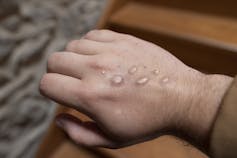
There have not yet been any monkeypox deaths in the U.S., but more than 7,000 cases have been diagnosed thus far, and the spread of the virus to nearly every state is concerning. While most cases are still occurring among men who have sex with men, the virus is also transmitted through nonsexual skin-to-skin contact, so there is a risk of people in other population groups contracting the infection. The federal declaration is intended to help slow the spread of the virus among men who have sex with men and stop it from spreading to new communities.
What is a public health emergency?
Presidents and state governors have the authority to declare states of emergency when there is a potentially life-threatening situation and the resources routinely allocated to the responding agencies are insufficient for dealing with the situation.
In late July, 2022, for example, the governor of Kentucky declared a state of emergency following devastating flooding in the eastern part of the state. The governor requested and received federal assistance to help respond to the floods. The declaration didn’t mean that more flooding was expected. It just made extra resources available for rescuing stranded individuals and providing essential services, like shelter and drinking water, to displaced people.
Similarly, the monkeypox emergency declaration doesn’t mean that the government expects millions more cases in the next month. It is about helping health agencies get the vaccines and other tools they need to slow the spread of the virus.
Does the public health emergency call for public action?
No. The main thing the emergency declaration does is enable the U.S. Department of Health and Human Services to get more of the funding and other resources that it needs to protect the public from a more widespread monkeypox outbreak. At this point, monkeypox is an emergency for the U.S. government’s public health agencies to deal with. It is not an emergency for the public right now. The goal of the emergency declaration is to prevent monkeypox from becoming a more widespread threat to public health.
First, the government will intensify its efforts to protect at-risk communities by trying to get new vaccine doses faster and increasing access to testing and treatment. Officials are also working with LGBTQI+ communities to educate men who have sex with men about reducing their risk of contracting the monkeypox virus.
Second, the emergency declaration calls for all states and other jurisdictions to share data with the Centers for Disease Control and Prevention. It also authorizes the Centers for Medicare and Medicaid Services to collect data about monkeypox testing and hospitalizations. These actions will give the Department of Health and Human Services better data about where monkeypox is occurring so the agency can distribute vaccines and the antiviral medication tecovirimat (Tpoxx) to the states and cities that have the greatest need for them.
Will the declaration boost the supply of vaccines?
The Jynneos vaccine is the only monkeypox-specific vaccine currently approved by the U.S. Food and Drug Administration. Increased demand for monkeypox vaccines has used up most of the world’s existing supply of Jynneos. It will take several months for additional doses to be manufactured. These new doses are expected to be delivered between the end of 2022 and the middle of 2023.
However, the emergency declaration explains that the government may use a “new dose-sparing approach that could increase the number of doses available, up to five-fold” – an approach called fractional dosing – to make the vaccine available to more people.
The package insert for the Jynneos vaccine specifies that it should be given in two 0.5-milliliter doses four weeks apart. The emergency declaration outlines a strategy in which people are instead given two 0.1-milliliter doses. If the lower dose is as effective as the full dose, up to five times more people could be vaccinated with the same amount of vaccine.
Fractional dosing is not a new strategy. During a 2016 yellow fever epidemic in sub-Saharan Africa, clinical trials showed that a small portion of the approved vaccine dose was just as effective as a full dose at conferring immunity.
For the current monkeypox outbreak in the U.S., the National Institutes of Health will evaluate whether a smaller dose of monkeypox vaccine might be effective, as well as whether one shot provides about as much protection as two doses.
The emergency declaration does not call for schools, businesses, nursing homes or individuals to change their behaviors in any way or to prepare for any sorts of future restrictions. Declaring monkeypox a public health emergency just makes more resources available to help the government protect the public from this infectious disease.
Kathryn H. Jacobsen, William E. Cooper Distinguished University Chair, Professor of Health Studies, University of Richmond
This article is republished from The Conversation under a Creative Commons license. Read the original article.
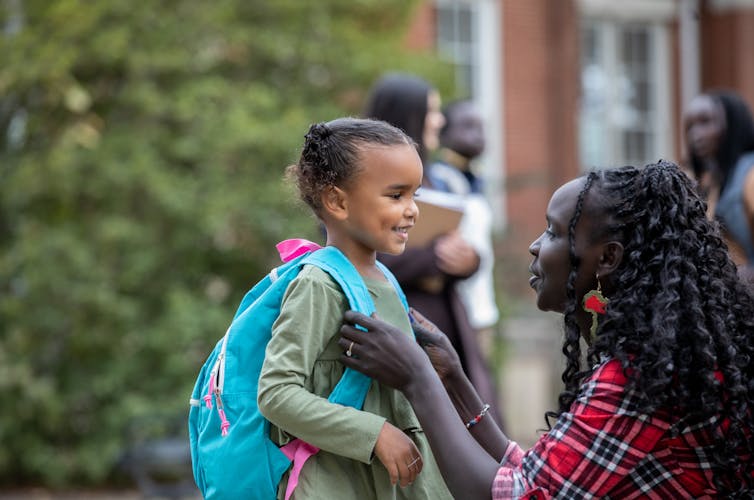
As a former school principal and district superintendent, I’ve witnessed firsthand how some students struggle to settle into routines when a new school year begins.
Some students would show up late, if they came at all. Some told their parents they were sick and wanted to stay home.
A lot of this was due to the anxiety over going to a new school or having to adapt to new friends, new teachers and a new schedule. But sometimes it was the simple result of kids having gotten used to staying up late and sleeping in over the summer. The sudden change of having to wake up early to go to school can make kids very cranky.
Even though it can be challenging for some kids to start a new school year, there are a few simple steps that parents can take to make the process easier and less stressful. Here are four of my top recommendations:
1. Reestablish a bedtime
Don’t wait until the night before the first day of school to bring back bedtime. Do it a week or two before school starts. Then, stick to the schedule throughout the school year.
Sleep deprivation is one of the biggest detriments to students of any age doing well in school. Children of all ages need adequate sleep to improve their mood and their behavior.
Proper amounts of sleep range from nine to 12 hours for elementary and middle schoolers and from eight to 10 hours for high schoolers.
And, to ensure your child’s sleep is uninterrupted, keep technological devices out of the bedroom.
2. Practice the morning routine
A week before school begins, start practicing the morning routine. Are clothes and shoes chosen and ready to go? Are lunches and snacks packed? Are backpacks packed and easy to find?
Part of healthy child development is giving children a sense of control. To further this goal, let children pick out and lay out their clothes for the next day. Provide some basic guidance on what’s appropriate to wear to school. Allow children to pack the lunch or snack, again providing guidelines of what’s appropriate and what’s not.
3. Visit the school ahead of time
If possible, especially for children going to a new school, visit the school and practice walking to their classrooms.
Many schools offer orientations for students and their caretakers.
If there is no orientation, call the school and ask when it might be possible to come to walk around with your children to help familiarize them with their new classrooms. This will provide a level of comfort to your child on the first day of school.
4. Sign up for after-school activities
Encourage your child to participate in one or two after-school activities, whether school- or community-based. If the after-school activities are off-site from the school, ask school employees or after-school program providers about transportation.
Participation in extracurricular activities that interest your child can increase their motivation and ability to pay attention, both in the activity as well as school in general. However, be careful not to overschedule your child. The benefits of extracurricular activities – which include a stronger sense of belonging to the school community, higher grades and improved academic engagement – are maximized when after-school activities are limited to two.
Following these tips will hopefully help families make sure the school year gets off to a good start.
Suzanne McLeod, Assistant Professor of Educational Leadership, Binghamton University, State University of New York
This article is republished from The Conversation under a Creative Commons license. Read the original article.
The Emergency Relief Program, or ERP, offers critical assistance to agricultural producers, including grapegrowers, whose crops were impacted by smoke taint.
“Communities in our district and across the country have been devastated by natural disasters, including wildfires and drought,” said Thompson. “That’s why I am proud to work with a bipartisan group of my colleagues to introduce legislation to reauthorize the Emergency Relief Program. This program is an essential support system for our growers to recover from wildfires, smoke damage, and other natural disasters. As we continue to deal with the impact of climate change, I am committed to ensuring that all producers and growers have the resources they need to offset their losses.
“The Emergency Relief Program is a necessary resource for Central Washington farmers as they continue to recover from this year’s late spring, which significantly impacted tree fruit production. I am pleased to introduce this legislation and encourage my colleagues to support this important program that will provide much-needed assistance to Central Washington’s growers so they can continue producing the high-quality Washington crops Americans enjoy for many years to come,” said Newhouse.
“The Emergency Relief Program is critical to farmers in my district, providing them the assistance they need to recover from the ongoing impacts of the drought and wildfires,” said Costa. “I am proud to introduce this bipartisan bill to provide much-needed relief to California farmers and ranchers. Supporting and advocating for California agriculture has always been one of my highest priorities, representing California as the number one agricultural state in the nation.”
“Iowa farmers know all too well how common and devastating natural disasters have been,” said Axne. “The Emergency Relief Program, which I fought hard for, has provided assistance to thousands of Iowan farmers who suffered from the 2020 derecho. By reauthorizing the Emergency Relief Program for 2022, this bill provides certainty to farmers that should disaster strike, assistance will be ready.”
“California winegrape growers appreciate the leadership and commitment of Congressman Thompson and other members of the California delegation to provide disaster assistance for those who suffered crop losses due to wildfires and other natural disasters. Through this tremendous leadership, growers have received much-needed aid for past disasters, and we applaud Rep. Thompson's efforts to enact assistance for the 2022 crop year,” said Natalie Collins, California Association of Winegrape Growers Interim President.
“For several years now, California farmers and ranchers have experienced significant losses due to ongoing droughts, wildfires, and other natural disasters. In order to maintain the well-being of our nation’s food supply, it is critical to ensure that our agricultural producers receive the support and resources necessary to recover from the impacts of such events. We applaud Congress for moving forward on reauthorization for the Emergency Relief Program so that these crucial safety nets in place,” said Jamie Johansson, California Farm Bureau President.
ERP is a vital program that provides desperately needed payments to agricultural producers to offset losses from wildfires, drought, hurricanes, derechos, freeze, polar vortex, excessive heat and other qualifying natural disasters.
This relief is critical as prolonged drought, severe weather events and natural disasters continue to wreak havoc on crops and livestock.
This bill is endorsed by the National Farmers Union.
Thompson represents California’s Fifth Congressional District, which includes all or part of Contra Costa, Lake, Napa, Solano and Sonoma counties.
Dogs available for adoption this week include mixes of catahoula leopard dog, German shepherd, Great Pyrenees, hound husky, Labrador retriever, pit bull, poodle, shepherd, terrier and treeing walker coonhound.
Dogs that are adopted from Lake County Animal Care and Control are either neutered or spayed, microchipped and, if old enough, given a rabies shot and county license before being released to their new owner. License fees do not apply to residents of the cities of Lakeport or Clearlake.
The following dogs at the Lake County Animal Care and Control shelter have been cleared for adoption.
Call Lake County Animal Care and Control at 707-263-0278 or visit the shelter online for information on visiting or adopting.

‘Autumn’
“Autumn” is a 6-year-old female treeing walker coonhound with a short tricolor coat.
She is in kennel No. 1, ID No. LCAC-A-1776.

Male terrier-poodle mix
This 1-year-old male terrier-poodle mix has a curly cream and orange coat.
He is in kennel No. 2, ID No. LCAC-A-3743.

Male Labrador retriever mix
This 5-year-old male Labrador retriever mix has a short gold coat.
He is in kennel No. 8, ID No. LCAC-A-3737.

Female catahoula leopard dog mix
This 2-year-old female catahoula leopard dog mix has a short brindle coat.
She is in kennel No. 18, ID No. LCAC-A-3768.

Female hound mix
This 1-year-old female hound mix has a short brown and white coat.
He is in kennel No. 19, ID No. LCAC-A-3766.

Male hound mix
This 1-year-old male hound mix has a short black and white coat.
He is in kennel No. 20, ID No. LCAC-A-3767.

Female treeing walker coonhound
This young female treeing walker coonhound has a short black brindle coat.
She is in kennel No. 22, ID No. LCAC-A-3776.

Male German shepherd mix
This 1-year-old male German shepherd mix has a long black and tan coat.
He is in kennel No. 23, ID No. LCAC-A-3775.

Female German shepherd
This 1-year-old female German shepherd has a short black and tan coat.
She is in kennel No. 24, ID No. LCAC-A-3780.

Male husky
This 4-year-old male husky has a white and cream coat and blue eyes.
He is in kennel No. 25, ID No. LCAC-A-3797.

‘Rebel’
“Rebel” is a 7-year-old female yellow Labrador retriever with a short coat.
She is in kennel No. 27, ID No. LCAC-A-3783.

Male shepherd mix
This 1-year-old male shepherd mix has a black and tan coat.
He is in kennel No. 28, ID No. LCAC-A-3796.

Female Great Pyrenees
This young female Great Pyrenees has a gray and white coat.
She is in kennel No. 30, ID No. LCAC-A-3790.

Male Great Pyrenees
This young male Great Pyrenees has a short white coat.
He is in kennel No. 31, ID No. LCAC-A-3791.

‘Maya’
“Maya” is a 2-year-old female German shepherd with a short black and tan coat.
She is in kennel No. 32, ID No. LCAC-A-2598.

Female Great Pyrenees
This young female Great Pyrenees has a short white coat.
She is in kennel No. 34, ID No. LCAC-A-3789.
Email Elizabeth Larson at