 How to resolve AdBlock issue?
News
The board will meet beginning at 9 a.m. Tuesday, Aug. 16, in the board chambers on the first floor of the Lake County Courthouse, 255 N. Forbes St., Lakeport.
The meeting can be watched live on Channel 8, online at https://countyoflake.legistar.com/Calendar.aspx and on the county’s Facebook page. Accompanying board documents, the agenda and archived board meeting videos also are available at that link.
To participate in real-time, join the Zoom meeting by clicking this link.
The meeting ID is 916 4540 5320, pass code 931427. The meeting also can be accessed via one tap mobile at +16694449171,,91645405320#,,,,*931427#.
All interested members of the public that do not have internet access or a Mediacom cable subscription are encouraged to call 669-900-6833, and enter the Zoom meeting ID and pass code information above.
To submit a written comment on any agenda item visit https://countyoflake.legistar.com/Calendar.aspx and click on the eComment feature linked to the meeting date. If a comment is submitted after the meeting begins, it may not be read during the meeting but will become a part of the record.
In timed items, at 9:15 a.m. the board will hear the annual report from the Lake County Resource Conservation District.
At 9:30 a.m., the board will consider a notice of nuisance and order to abate for 5145 W. State Highway 20 in Upper Lake.
The full agenda follows.
CONSENT AGENDA
5.1: Approve amendment to the participation agreement between county of Lake and the California Mental Health Services Authority for the Superior Regional Partnership - HCAI WET Grant for FYs 2021-22, 2022-23, 2023-24, and 2024-25 in the Amount of $54,479.27 and authorize the Behavioral Health Services director and board chair to sign.
5.2: Adopt resolution authorizing the standard agreement between the county of Lake and the Department of Health Care Services for the period of July 1, 2022, through June 30, 2027, and authorizing the Behavioral Health director to sign the standard agreement and the contractor certification clause for the County Mental Health Plan.
5.4: Approve lease agreement for office space at 14092 Lakeshore Drive in Clearlake in the amount of $3,170.20 per month and authorize the board chair to sign.
5.5: Approve purchase of 2023 Ford Explorer from Downtown Ford Sales for the Building & Safety Division in the amount of $33,298.15 and authorize the Community Development director or their designee to sign the purchase order.
5.6: Approve Board of Supervisors minutes for Aug. 2, 2022.
5.7: Approve and authorize the chair to sign the following agreements: a) between the county of Lake and Leonard’s Hauling and Tractor, for nuisance abatement and nuisance abatement within the Road Map Task Force area, in an amount not to exceed $150,000; and b) between the county of Lake and Cook Construction and Engineering Partners for nuisance abatement and nuisance abatement within the Road Map Task Force area, in an amount not to exceed $150,000; and c) between the county of Lake and 360 Junk Removal and Hauling, for nuisance abatement and nuisance abatement within the Road Map Task Force area, in an amount not to exceed $150,000.
5.8: Sitting as the Lake County Watershed Protection District, (a) Waive the formal bidding process, pursuant to Lake County’s Code Section 38.2, as it is not in the public interest due to the unique nature of goods or services and (b) authorize the Lake County Watershed Protection District to sign and enter into Amendment No. 1 of Agreement with CivicWell for independent contractor services through the AmeriCorps CivicSpark Fellowship in the amount of $29,000 for one (1) CivicSpark Fellow to develop an Aquatic Invasive Species Outreach Assessment and Improvement Plan.
5.9: Adopt resolution of intent to conduct a public hearing for the consideration of the vacation of a portion of a roadway known as Forest Lake Drive (CR#128) in the Cobb area.
5.10: (a) Approve agreement between the Lake County Sheriff's Department and U.S. Forest Service for FY 22/23 annual operating and financial plan, in the amount of $20,000 for Pillsbury Patrol; and (b) approve agreement between the Lake County Sheriff’s Department and U.S. Forest Service for FY22/23 annual operating and financial plan, in the amount of $10,000 for controlled substance operations, and (c) authorize the sheriff and the chairman to sign.
TIMED ITEMS
6.3, 9:15 a.m.: Presentation of an annual report on the activities of Lake County Resource Conservation District.
6.4, 9:30 a.m.: Continued from July 12, hearing on notice of nuisance and order to abate for 5145 W. State Highway 20, Upper Lake (APN 003-023-12).
UNTIMED ITEMS
7.2: Consideration of the following Advisory Board Appointments: Emergency Medical Care Committee and Lakeport Fire Protection District.
7.3: Consideration of proposed agreement for the Spring Valley CSA #2 Quail Trail Project, Bid No. SD 22-24.
Email Elizabeth Larson at
Call Lake County Animal Care and Control at 707-263-0278 or visit the shelter online at http://www.co.lake.ca.us/Government/Directory/Animal_Care_And_Control.htm for information on visiting or adopting.
The following cats at the shelter have been cleared for adoption.

‘Simon’
“Simon” is a big 2-year-old gray tabby with white markings.
He is in cat room kennel No. A10, ID No. LCAC-A-3814.

‘Olive’
“Olive” is a female domestic medium hair kitten with a black coat.
She is in cat room kennel No. A117, ID No. LCAC-A-3742.

‘Willow’
“Willow” is a female domestic shorthair cat with a gray and white coat.
She is in cat room kennel No. 47, ID No. LCAC-A-3762.

Male domestic shorthair kitten
This male domestic shorthair kitten has a gray tabby coat with white markings.
He is in cat room kennel No. A1b, ID No. LCAC-A-3663.

Female gray tabby
This 2-year-old female gray tabby has a short coat with white markings.
She is in cat room kennel No. 28, ID No. LCAC-A-3661.

Domestic shorthair kitten
This male domestic shorthair kitten has an all-black coat.
He is in cat room kennel No. 84c, ID No. LCAC-A-3616.
Email Elizabeth Larson at
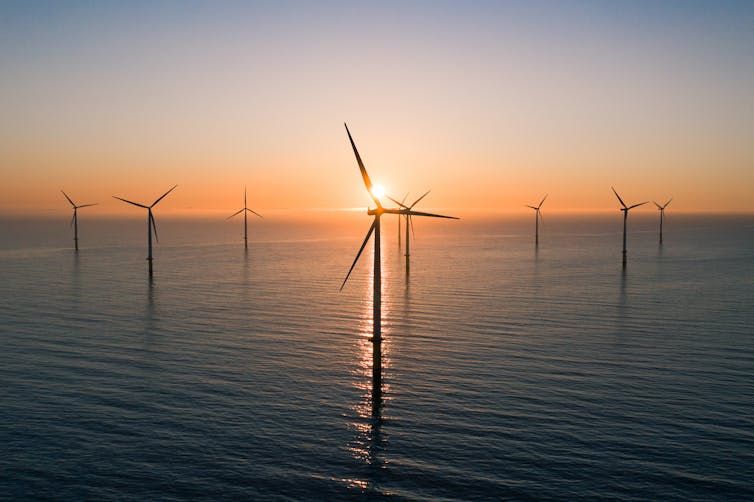
With many nations making efforts to transition away from fossil fuels to renewable energy, SciLine interviewed Erin Baker, a professor of industrial engineering and operations at UMass Amherst. Baker discussed the technological, political and regulatory efforts needed for this transition, as well as ways that our fossil fuel-dependent system disproportionately harms poor communities and communities of color.
The Conversation has collaborated with SciLine to bring you highlights from the discussion, which have been edited for brevity and clarity.
How is our country doing at making the transition to renewable energy?
Erin Baker: There has been amazing technological change over the past 15 years. Offshore wind costs 50% less than it did six years ago. Solar has had a sixfold decrease in costs since 2010. And I think there’s a lot of evidence that technology will adapt and improve if we set the goals and incentives for it.
In terms of policy and regulations, we are moving forward, but we need to be more aggressive. Something that we’re missing and that would be really helpful would be a coherent, federal-level climate policy – whether that is regulatory policy, such as we have for pollution, or a carbon tax or some kind of a cap. The Inflation Reduction Act would be a fantastic starting point if it becomes law.
A good example of something that has been done is President Biden’s move to coordinate and streamline the federal approval process for offshore wind. There are seven federal agencies involved, and having them all separate and moving at their own pace was really difficult for offshore wind energy developers. So Biden has coordinated that, and that’s fantastic. But there are tens of local and state-level agencies and processes that developers still have to go through. It would be really great if we could figure out ways to coordinate and streamline those.
How does our current energy system disproportionately harm poor communities and communities of color?
Erin Baker: Unfortunately, in a lot of different ways. Polluting facilities tend to be located disproportionally in areas that are low income and home to people of color, which can lead to negative health outcomes. Also, in the Texas blackout last winter that killed around 250 people, some research done by my colleague Jay Teneja showed that the long blackouts were four times as likely in communities of color as in predominantly white communities. And, unfortunately, the energy transition won’t necessarily be any more equitable.
For example, it’s common for states to subsidize rooftop solar. And this is good, but the people who get the subsidies are people who own roofs with sun shining on them. People who live in apartments and in cities don’t have access to this, and yet they’re paying for the subsidies. We take the money for the subsidies from everyone, including low-income people, and send them mostly to white, wealthy suburbs.
How can injustices in our energy system be rectified?
Erin Baker: There’s obviously no one solution, but there are a couple of categories of things we can do. One thing that would be really helpful would be to collect data. We have very little data about energy equity issues.
We also need to involve and listen to the traditionally marginalized communities that are most affected by the inequities.
What do you think of the federal and state targets set for offshore wind?
Erin Baker: The Biden administration set a target for 30 gigawatts by 2030. That’s an ambitious goal, since in 2019 the entire world had only 30 GW. But it’s growing rapidly, with global capacity at an astounding 56 GW.
Having this goal of 30 gigawatts helps to organize the supply chain – all the pieces that need to get done for this to happen. We need people who know how to install offshore wind farms. We need special ships. We need planning for transmission. Having these goals really helps to organize all that and make sure all these pieces are in place.
What are the environmental costs and benefits of offshore wind?
Erin Baker: Offshore wind is a really promising technology. The ocean has really good wind resources. And it’s near population centers – we have lots of cities up and down the coasts. Because wind energy is carbon-free, it will provide benefits by reducing emissions and reducing costs.
Some of the work I’ve done has shown that there are billions, and maybe even trillions, of dollars of climate value in offshore wind. We lose between US$10 million and $150 million per year per wind farm by delaying them. We really want to keep these large global environmental benefits in mind as we plan. These can be balanced against local environmental costs and benefits, as well as other factors, like jobs.
In terms of local environmental benefits, when you build an offshore wind farm, the stuff underneath the water ends up creating an artificial reef and actually increasing sea life in that area, which is a benefit.
Negatively, they interfere with bird migrations. Birds don’t actually fly into the wind turbines that much. They fly around them. But if there are a lot of wind farms, that’s a lot of flying around, and that can be hard on the birds. And some animals, like right whales, can get caught in mooring lines if we have floating wind turbines. So, there are local environmental costs. What we need to do is balance these with the global benefits from addressing climate change.
Are you hopeful about our ability to address climate change?
Erin Baker: I am optimistic that we can solve climate change, because humans are very inventive. My work on technological change has shown that once we have a goal or incentive, we tend to improve technologies much faster than we ever predicted. So I think we can be ambitious. We can aim for net-zero by 2030 instead of 2050. And we can solve climate change while at the same time stimulating innovation, fueling growth and increasing quality of life. But we have to set these goals. To access the benefits of the energy transition, we really need to act boldly and decisively.
Watch the full interview to hear more about what’s required for a just, renewable energy transition.
SciLine is a free service based at the nonprofit American Association for the Advancement of Science that helps journalists include scientific evidence and experts in their news stories.
Erin Baker, Professor of Industrial Engineering Applied to Energy Policy, UMass Amherst
This article is republished from The Conversation under a Creative Commons license. Read the original article.
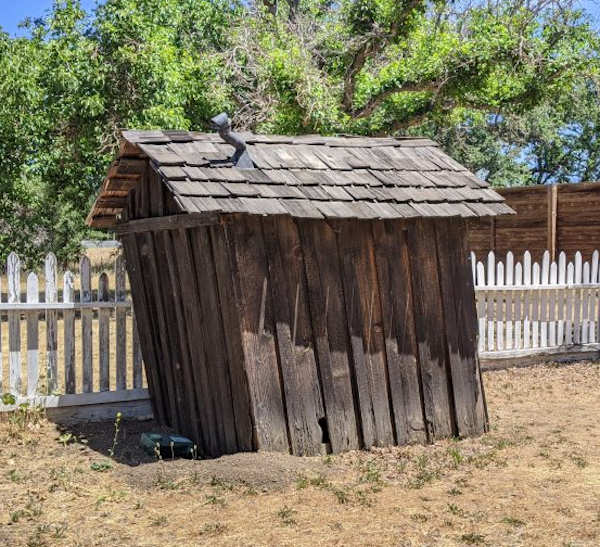
LOWER LAKE, Calif. — HistoriCorps has announced that a group of its volunteers will be working at Anderson Marsh State Historic Park to help restore the two historic outhouses and the smokehouse located at the park, as well as doing some repair on the ranch house itself.
The work will occur from Oct. 16 to 21 and Oct. 23 to 28.
While working at the state historic park located in Lower Lake, HistoriCorps volunteers will be camping at Clear Lake State Park, located nearby in Kelseyville.
The Anderson Ranch House is one of the oldest remaining buildings in Lake County, with construction beginning in the mid-19th century.
It has been furnished by State Parks to provide an opportunity for the public to experience what life was like on a working cattle ranch in Lake County between 1850 and 1920.
The preservation work at Anderson Marsh State Historic Park will include stabilizing, reinforcing and painting the three outbuildings located to the north of the Ranch House, as well as painting part of the Ranch House and doing needed repairs on the windows.
HistoriCorps is a nonprofit organization that provides volunteers with a hands-on experience preserving historic structures on public lands across America.
Volunteers work with HistoriCorps field staff to learn preservation skills and put those skills to work saving historic places that may otherwise fall into disrepair.
Information about how to volunteer to help with the restoration project at Anderson Marsh State Historic Park is available online at https://historicorps.org/anderson-ranch-house-ca-2022/.
According to HistoriCorps, there is no cost to volunteer, and HistoriCorps provides all meals, tools, training, equipment and a campsite.
Volunteers are responsible for their own transportation to the campsite, sleeping equipment, work gloves, clothes and boots.
For information about Anderson Marsh State Historic Park, visit www.andersonmarsh.org or contact Anderson Marsh Interpretive Association at either
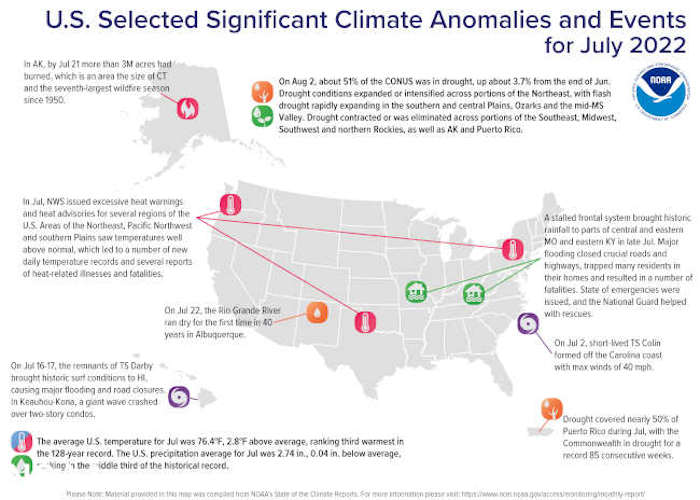
July 2022 will go down in the history books as the third-hottest July on record for the U.S., according to scientists from NOAA’s National Centers for Environmental Information.
From drought to deluge, the nation saw remarkable extremes last month. Drought conditions intensified or expanded across parts of the U.S., while others were hit by historic rainfall that led to catastrophic flooding.
Below are more takeaways from NOAA’s latest monthly U.S. climate report.
Climate by the numbers:
July 2022
The average temperature across the contiguous U.S. last month was 76.4 degrees F (2.8 degrees above average), making July 2022 the third-hottest July in the 128-year climate record. Only July 1936 (first) and July 2012 (second) were hotter.
Texas felt the brunt of the heat, reporting its hottest July, May-July and April-July on record. Near-record warmth also covered locations from the Pacific Northwest to the south-central U.S., and across parts of the Northeast. Oregon had its fourth-hottest July on record, with Colorado, Florida, Louisiana, New Mexico, Oklahoma and Rhode Island sweltering through their top-five warmest Julys on record.
The average July precipitation was 2.74 inches (0.04 of an inch below average), ranking in the middle third of the historical record. Kentucky saw its fourth-wettest July due to record rainfall during the last week of the month. Elsewhere, Rhode Island saw its second-driest July while Texas had its fifth driest.
Year to date (January through July 2022)
The year-to-date (YTD) average temperature for the contiguous U.S. was 52.7 degrees F (1.4 degrees above the average), ranking in the warmest-third YTD on record. Temperatures were above average from Oregon to the Gulf Coast and northward to New England. California and Florida each ranked sixth warmest on record for the YTD.
The first seven months of 2022 saw an average precipitation of 16.58 inches (1.51 inches below average), which ranked in the driest third of the record. Precipitation was below average across much of the West, central Plains and Deep South for this YTD period. California had its driest January-July on record, while Nevada and Texas saw their second driest and Utah saw its fourth driest.
Other notable climate events
Catastrophic flooding ravaged communities: On July 26, several locations in and around St. Louis, Missouri, received more rainfall than any other day on record. A stalled weather system combined with tropical moisture resulted in precipitation totals that rivaled daily records set by the remnants of the Galveston Hurricane of 1915. St. Louis’ Lambert International Airport reported 8.64 inches and St. Peters, Missouri, measured 12.34 inches of rain from this event. The extreme rainfall caused flash flooding, resulting in at least one fatality as well as extensive damage to homes and businesses.
Flash flooding from the same system impacted portions of eastern Kentucky on the early morning of July 28. Heavy rain, enhanced by the hilly terrain, accumulated rapidly — trapping many residents in their homes. Four-to-eight inches of rain were widespread across eastern Kentucky and the Kentucky River crested to an all-time high in both Whitesburg and Jackson, Kentucky. The flooding resulted in at least 37 fatalities.
Drought increased in coverage and intensity: According to the August 2 U.S. Drought Monitoroffsite link report, 51.4% of the contiguous U.S. was in drought, up about 3.7% from the end of June. Drought conditions expanded or intensified across portions of the Northeast, with flash drought rapidly expanding in the southern and central Plains, Ozarks and the mid-Mississippi Valley. Drought decreased or was eliminated across portions of the Southeast, Midwest, Southwest, northern Rockies as well as Alaska and Puerto Rico.
Dogs available for adoption this week include mixes of catahoula leopard dog, dachshund, German shepherd, Great Pyrenees, hound, husky, Labrador retriever, pit bull, Rottweiler, shepherd, terrier and treeing walker coonhound.
Dogs that are adopted from Lake County Animal Care and Control are either neutered or spayed, microchipped and, if old enough, given a rabies shot and county license before being released to their new owner. License fees do not apply to residents of the cities of Lakeport or Clearlake.
The following dogs at the Lake County Animal Care and Control shelter have been cleared for adoption.
Call Lake County Animal Care and Control at 707-263-0278 or visit the shelter online for information on visiting or adopting.

Male Labrador retriever mix
This 5-year-old male Labrador retriever mix has a short gold coat.
He is in kennel No. 8, ID No. LCAC-A-3737.

Female pit bull terrier
This 2-year-old female pit bull terrier has a black and white coat.
She is in kennel No. 9, ID No. LCAC-A-3856.
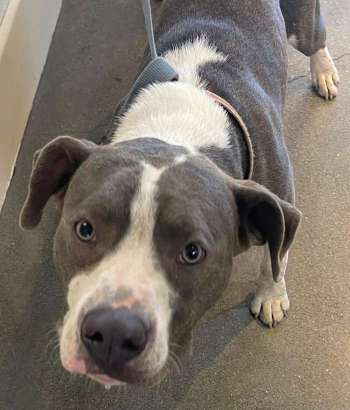
Male pit bull terrier
This 1-year-old male pit bull terrier has a gray and white coat.
He is in kennel No. 10, ID No. LCAC-A-3855.

Male Rottweiler-shepherd mix
This male Rottweiler-shepherd mix puppy has a short black and tan coat.
He is in kennel No. 13, ID No. LCAC-A-3851.

Female husky
This 2-year-old female husky has a gray and white coat.
She is in kennel No. 14, ID No. LCAC-A-3852.

Female catahoula leopard dog mix
This 2-year-old female catahoula leopard dog mix has a short brindle coat.
She is in kennel No. 18, ID No. LCAC-A-3768.

Female hound mix
This 1-year-old female hound mix has a short brown and white coat.
He is in kennel No. 19, ID No. LCAC-A-3766.

Male hound mix
This 1-year-old male hound mix has a short black and white coat.
He is in kennel No. 20, ID No. LCAC-A-3767.

Female treeing walker coonhound
This young female treeing walker coonhound has a short black brindle coat.
She is in kennel No. 22, ID No. LCAC-A-3776.

Female German shepherd
This 1-year-old female German shepherd has a short black and tan coat.
She is in kennel No. 24, ID No. LCAC-A-3780.

Female Labrador retriever
This 7-year-old female Labrador retriever mix has a short gold coat.
She is in kennel No. 26, ID No. LCAC-A-3821.

Male shepherd mix
This 1-year-old male shepherd mix has a black and tan coat.
He is in kennel No. 28, ID No. LCAC-A-3796.

Labrador retriever-hound mix
This 2-year-old male Labrador retriever-black and tan coonhound mix has a short black and tan coat.
He is in kennel No. 29, ID No. LCAC-A-3849.

Female Great Pyrenees
This young female Great Pyrenees has a gray and white coat.
She is in kennel No. 30, ID No. LCAC-A-3790.

Male Great Pyrenees
This young male Great Pyrenees has a short white coat.
He is in kennel No. 31, ID No. LCAC-A-3791.
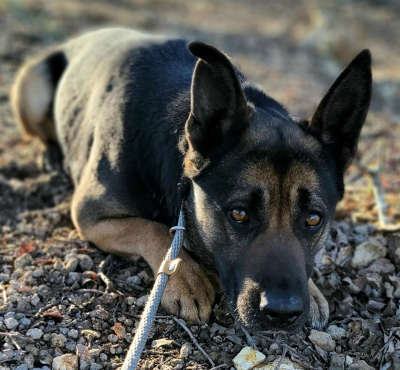
‘Maya’
“Maya” is a 2-year-old female German shepherd with a short black and tan coat.
She is in kennel No. 32, ID No. LCAC-A-2598.

Female dachshund
This 3-year-old female dachshund has a short black and tan coat.
She is in kennel No. 33, ID No. LCAC-A-3863.

Female Great Pyrenees
This young female Great Pyrenees has a short white coat.
She is in kennel No. 34, ID No. LCAC-A-3789.
Email Elizabeth Larson at