 How to resolve AdBlock issue?
News
The board will meet beginning at 9 a.m. Tuesday, Aug. 2, in the board chambers on the first floor of the Lake County Courthouse, 255 N. Forbes St., Lakeport.
The meeting can be watched live on Channel 8, online at https://countyoflake.legistar.com/Calendar.aspx and on the county’s Facebook page. Accompanying board documents, the agenda and archived board meeting videos also are available at that link.
To participate in real-time, join the Zoom meeting by clicking this link.
The meeting ID is 991 0651 9632, pass code 109541. The meeting also can be accessed via one tap mobile at +16694449171,,99106519632#,,,,*109541#.
All interested members of the public that do not have internet access or a Mediacom cable subscription are encouraged to call 669-900-6833, and enter the Zoom meeting ID and pass code information above.
To submit a written comment on any agenda item visit https://countyoflake.legistar.com/Calendar.aspx and click on the eComment feature linked to the meeting date. If a comment is submitted after the meeting begins, it may not be read during the meeting but will become a part of the record.
In an untimed item, the board will consider a letter to Gov. Gavin Newsom asking him to fill the vacancy resulting from Tina Scott’s resignation.
Scott’s last meeting was July 26 and her departure became official on July 31.
The board previously had considered also holding a special election in November but the letter does not reference that option, instead asking Newsom’s “timely action to fill this vacancy by appointment for the period of Supervisor Scott’s remaining term, which will expire in January 2025.”
Also on Tuesday, Supervisor Bruno Sabatier will ask the board to consider appealing a July 28 decision by the Lake County Planning Commission to approve the Bottle Rock Farm FJA Trust Cannabis Project. That item also is untimed.
Sabatier’s report to the board explained that he is suggesting the action because the commission approved the project despite the fact that there are several violations on the project property, which contradicts the county’s zoning ordinance.
He said there were cannabis plants in the ground prior to obtaining an appropriate county permit, along with unresolved issues about grading and unpermitted buildings.
The full agenda follows.
CONSENT AGENDA
5.1: Adopt proclamation recognizing Lake County AmeriCorps CivicSpark Fellows.
5.2: Approve use of geothermal funds for the purpose of loan repayment for the Anderson Springs Community Service District and authorize the county administrative officer to sign a purchase order in the amount of $218,399.45.
5.3: Approve Amendment No. 1 to Physician consultation services contract to provide public health services between the county of Lake and Dr. Gary Pace and authorize chairs to sign.
5.4: Adopt resolution approving Agreement No.22-0116-000-SA with the state of California, Department of Food and Agriculture and Authorize the execution of the Fuels, Lubricants, and Automotive Products Program agreement in the amount of $2,475 for period July 1, 2022, through June 30, 2023.
5.5: Adopt resolution approving Agreement # 21-0517-029-SF with California Department of Food Agriculture for Glassy-Winged Sharpshooter Program in the amount of $56,515.76 for July 1, 2022, through June 30, 2024.
5.6: Adopt resolution approving Agreement No. 21-0595-011-SF with California Department of Food and Agriculture for compliance with the European Grapevine Moth Detection Program in the amount of $15,405 for period Jan. 1, 2022, through Dec. 31, 2022.
5.7: Sitting as Lake County Air Quality Management District Board of Directors: Authorize the air pollution control officer to sign and submit the grant agreement between the district and ARB for AB617 Implementation Funds for the Community Air Protection Program, and sign all other program documents.
5.8: Adopt resolution authorizing Lake County Behavioral Health Services to increase the rates for Driving-Under-the-Influence Program services effective fiscal year 2022-23.
5.9: Approve agreement between county of Lake and Ever Well Health Systems for adult residential support services and specialty mental health services for fiscal years 2022-23, 2023-24 and 2024-25 in the amount of $360,000.00 and authorize the board chair to sign.
5.10: Approve Board of Supervisors minutes for July 19, 2022.
5.11: Approve Task Order No.3 for on-call construction management services for various HBP-Funded Bridge Projects in Lake County.
5.12: a) Approve first amendment to the commercial lease agreement between county of Lake and OMarshall Inc., formerly Penna Realty Property Management, for the property located at 16170 Main St. Units C, D, & G, Lower Lake, CA 95457, and authorize the chair to sign; b) approve first amendment to the commercial lease agreement between county of Lake and OMarshall, Inc., formerly Penna Realty Property Management, for the property located at 16170 Main St. Units E & F, Lower Lake, CA 95457, and authorize the chair to sign.
5.13: Adopt resolution authorizing entering into a funding agreement with the State Department of Water Resources and authorizing and designating Lake County Special Districts administrator to sign on the behalf of CSA-21, North Lakeport Water, all grant related documents for the North Lakeport CSA #21 Water Supply Improvement Project.
TIMED ITEMS
6.3, 9:10 a.m.: Presentation of proclamation recognizing Lake County AmeriCorps CivicSpark Fellows.
6.4, 9:20 a.m.: Presentation by RCRC and GSFA on “Assist-to-Own” program available to county employees.
UNTIMED ITEMS
7.2: Consideration of a letter requesting action by Gov. Gavin Newsom to fill Lake County’s District 4 supervisorial vacancy and authorize chair to sign.
7.3: Consideration of public review and approval of the county of Lake Homeless Housing, Assistance, and Prevention (HHAP) Round 3 application for $569,940, including a local homelessness action plan. not available not available
7.4: Consideration of the following advisory board appointments: Resource Conservation District.
7.5: ADDENDUM, consideration of appealing Planning Commission decision Re: Bottle Rock Farm FJA Trust Cannabis Project.
CLOSED SESSION
8.1: Conference with legal counsel: Significant exposure to litigation pursuant to Gov. Code sec. 54956.9 (d)(2), (e)(5): One potential case.
Email Elizabeth Larson at
The council will meet at 6 p.m. Tuesday, Aug. 2, in the council chambers at Lakeport City Hall, 225 Park St.
The agenda can be found here.
The council chambers will be open to the public for the meeting. Masks are highly encouraged where 6-foot distancing cannot be maintained.
If you cannot attend in person, and would like to speak on an agenda item, you can access the Zoom meeting remotely at this link or join by phone by calling toll-free 669-900-9128 or 346-248-7799.
The webinar ID is 973 6820 1787, access code is 477973; the audio pin will be shown after joining the webinar. Those phoning in without using the web link will be in “listen mode” only and will not be able to participate or comment.
Comments can be submitted by email to
On the Tuesday agenda is a public hearing to adopt the resolution to confirm and approve the utility billing delinquency list and the associated resolution and direct staff to submit the list to the county auditor-controller for inclusion on the property tax roll.
Under council business, Police Chief Brad Rasmussen will ask for the council’s approval to execute an agreement with the city of Clearlake for supplemental law enforcement services.
At its meeting two weeks ago, the Clearlake City Council approved the agreement, which will allow the two agencies to assist each other. In the near term, Clearlake Police officers can volunteer to help Lakeport Police, which is down several officer positions.
Also on Tuesday, the council will consider approving the designated temporary disabled parking on C and D streets, between South Forbes Street and the respective fairgrounds entrance gates from 4 p.m. on Thursday, Sept. 1, to midnight on Sunday, Sept. 4; discuss a resolution authorizing the city manager to execute an agreement for apportionment of Retirement Obligations of California Intergovernmental Risk Authority; and approve and authorize the city manager to execute a professional services agreement with Quincy Engineering Inc. for the Lakeport Blvd Project Study Report Equivalent.
On the consent agenda — items usually accepted as a slate on one vote — are ordinances; minutes of the regular council meeting on July 19; confirm the continuing existence of a local emergency for the COVID-19 Public Health Emergency; receive and file the Community Development Department FY 2021-22 fourth quarter update; receive and file the minutes of the July 20, 2022 Measure Z Advisory Committee meeting.
Email Elizabeth Larson at
Especially hard-hit were workers in food preparation and serving related occupations and in transportation. As recent studies have shown, lockdowns and other safety measures led to declines in full-time, year-round employment and increased unemployment.
While the impact of COVID-19 on jobs has yet to be fully explored, a recently released Census Bureau report can serve as a pre-pandemic benchmark for changes in job characteristics across occupation groups.
Here, 2018 Survey of Income and Program Participation (SIPP) data was used to highlight job characteristics for the two groups whose jobs and income would be among the most disrupted by the pandemic: food preparation and serving related occupations, and transportation occupations.
Food preparation and serving related occupations
In 2017, 5.4% of U.S. workers (about 8.3 million) were employed in food preparation and serving related occupations.
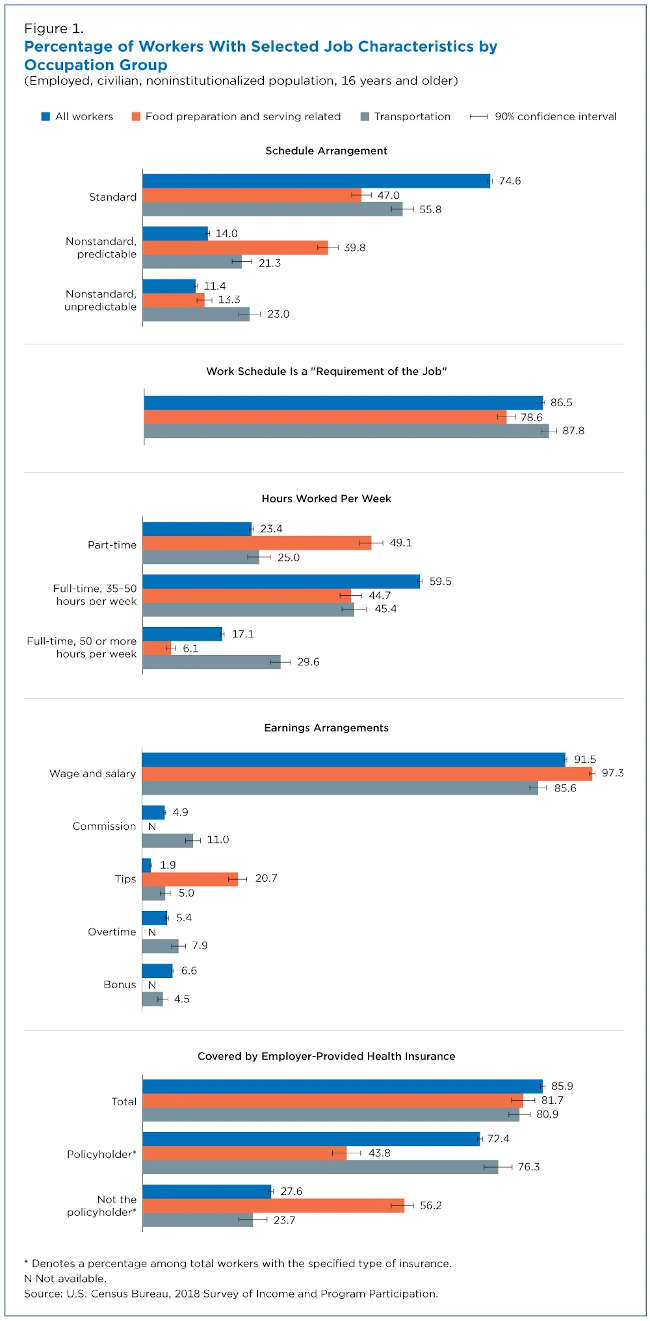
About 75% of workers across all occupations had standard, daytime schedules, compared with 47% of food preparation and serving related workers.
Those in the food prep and serving jobs were more likely to have nonstandard schedule arrangements. For instance, 39.8% had nonstandard but predictable work schedules such as regular evening or night shifts, rotating shifts or split shifts. But 13.3% had nonstandard, unpredictable work schedules.
The SIPP asks workers to select the main reason for their reported schedule arrangement from a list of involuntary or voluntary reasons like job requirement or childcare needs.
Workers in food preparation and serving related jobs were among the least likely of all occupation groups to report their schedule was a requirement of the job.
Even before the pandemic, those employed in food preparation and serving related occupations worked fewer hours on average than workers in other jobs. About half (49.1%) worked part-time or fewer than 35 hours per week.
While 59.5% of all workers worked between 35 and 50 hours a week in 2017, only 44.7% of food preparation and serving related workers did. And only 6.1% worked 50 hours or more — among the lowest of all other occupation groups.
High rates of part-time work likely contributed to lower median monthly income. For example, in 2017 median monthly earnings across all occupations was $3,236. Yet food preparation and serving related workers’ median monthly earnings of $1,590 were about half that amount.
The 2018 American Community Survey (ACS) also shows several jobs within the broader occupation group were among the lowest-paid. Among them: hosts and hostesses, restaurant, lounge, and coffee shop; fast-food and counter workers; dishwashers; and dining room and cafeteria attendants and bartender helpers.
In the SIPP, workers can report multiple earnings types, sometimes in combination: 97.3% of food preparation and serving related workers earned a wage or salary, and 20.7% reported earnings from tips, an unpredictable source of income.
Earnings paid to employees are only one component of a worker’s total compensation. In addition, employers may offer nonwage benefits like paid leave, retirement plans, and health insurance.
Because the SIPP collects detailed information on individuals’ health insurance, it can be used to identify those who receive employer-provided health insurance.
Among workers with private health insurance coverage, 81.7% of those in food preparation and serving related occupations were covered by their own or another person’s employer-provided health insurance plan. The remaining 18.3% were covered by other sources of private health insurance such as a former employer, school, union or association or direct purchase.
However, most food preparation and serving related workers covered by employer-provided health insurance received coverage through the employer of another household member or relative. Only 43.8% were policyholders. In contrast, 72.4% of all workers in all occupations who were covered by employer-provided health insurance were policyholders.
Transportation occupations
Transportation occupations comprise a diverse group of jobs including bus drivers, truck drivers, aircraft pilots, flight attendants, and many others. In 2017, there were about 5.7 million transportation workers in the United States, accounting for 3.7% of the employed population.
Like food preparation and serving related workers, significantly fewer workers in transportation occupations had standard schedules compared with the broader workforce (55.8% v. 74.6%).
Other schedule arrangements were also common among transportation workers: 21.3% had a nonstandard, predictable schedule and 23.0% had a nonstandard, unpredictable work schedule. The share of transportation workers with nonstandard, predictable work schedules was not significantly different from the share with nonstandard, unpredictable schedules.
Most transportation workers (87.8%) indicated their schedule arrangement was a requirement of their job.
About 75% of workers in transportation occupations were employed full-time or 35 hours or more a week, which was not statistically different from the share of all full-time workers across all occupations.
And long hours were not uncommon among transportation workers: 29.6% reported working 50 hours or more a week compared to 17.1% of all workers.
Transportation workers’ median monthly earnings ($2,999) were lower than those for all workers. The majority (85.6%) of transportation workers also received their earnings from a wage or salary, and significantly fewer had earnings from commission (11%), tips (5%), overtime (7.9%) or bonuses (4.5%).
Among workers with private health insurance, a smaller share (80.9%) of transportation workers were covered by employer-sponsored plans than all workers (85.9%). About 19% were covered by other sources of private health insurance.
Yet a larger share were policyholders: 76.3% of transportation workers covered by employer-sponsored health insurance were policyholders, compared to 72.4% of all workers and 43.8% of food preparation and serving related workers.
What is the SIPP?
The Survey of Income and Program Participation is a nationally representative longitudinal survey administered by the U.S. Census Bureau that provides comprehensive information on the dynamics of income, employment, household composition and government program participation.
For more information about SIPP data quality, please visit the SIPP Technical Documentation page.
Clayton Gumber is a survey statistician in the Census Bureau’s Social, Economic and Housing Statistics Division. Briana Sullivan is an economist in the Social, Economic and Housing Statistics Division.
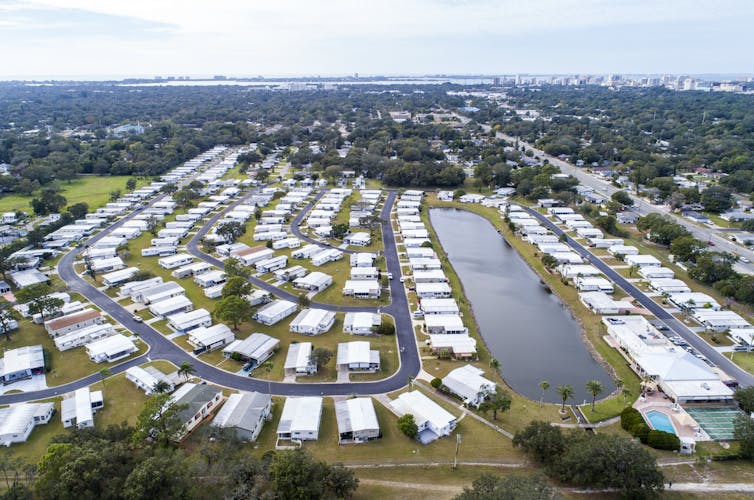
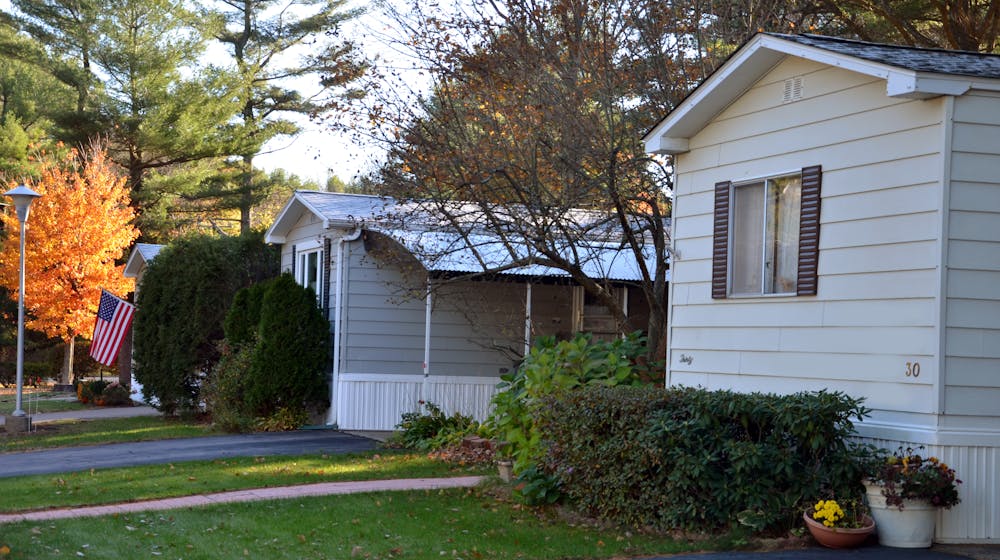
When you hear the words “trailer park” or “mobile home park,” what comes to mind? Crime? Poverty? Vulnerability to natural disasters? These negative images reflect the stigma, reinforced by popular culture, that many U.S. residents assign to manufactured home parks – the official name for these dwellings under federal standards adopted in 1976.
Over 20 million Americans live in manufactured housing – more than in public housing and federally subsidized rental housing combined. Yet many people, including urban planners and affordable housing researchers, see manufactured housing parks as problems. In contrast, we see them as part of the solution to housing crises.
We are urban planning scholars who study climate vulnerability, community economic development and equity in urban land use. Our research suggests that misguided stereotypes blind scholars and policymakers to the possibility that mobile homes can help address the affordable housing crisis and climate change. Here are some misperceptions about this widespread form of housing.
Stereotype 1: Manufactured housing is shoddy
Many people think manufactured homes are poorly built, even though these structures, unlike site-built houses, have had to meet federal safety standards since 1976. These safety standards have been periodically updated, often in response to disasters. Today, new well-installed factory-built homes are comparable to site-built homes when it comes to standing up to wind, fire and other disaster threats.
Compared to homes built on-site, manufactured housing costs half as much per square foot – partly because it’s easier, more predictable and cheaper to build homes in factories. Many quality problems associated with manufactured housing arise from home installation, park maintenance and infrastructure issues. No matter how well-built homes are, residents can suffer if they are installed on unstable foundations, or if park owners allow water, sewer or power utility infrastructure to crumble.
Stereotype 2: Manufactured housing parks are always exploitative
While many manufactured housing residents own their homes, they may not own the land the homes sit on. This can leave them at the mercy of predatory park owners and investors. Moving manufactured homes is difficult and expensive, despite the “mobile” label, so residents of manufactured home parks can’t easily relocate when park owners allow conditions to deteriorate, raise rents or evict residents.
But there are alternatives. Residents at over 1,000 manufactured housing parks in the U.S. have jointly bought their land, creating Resident Owned Communities.
This cooperative model gives residents control over their homes and neighborhoods. Resident-owned parks preserve affordability and help residents address their own problems, including vulnerability to climate-driven disasters.
Stereotype 3: Manufactured housing parks aren’t urban or dense
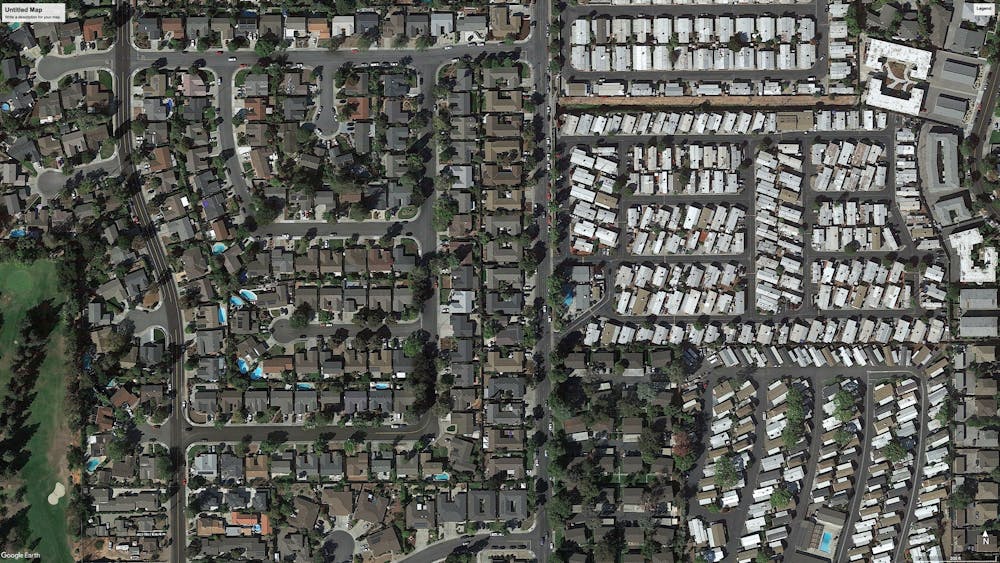
Manufactured home parks are often dismissed as rural and low-density, and therefore irrelevant to urban housing needs. However, 61% of all manufactured housing is located in a metro area, and 8% is in urban centers.
The density of these communities, typically eight to 15 homes per acre, is often greater than nearby neighborhoods. In Houston, for example, many manufactured housing parks are located in suburban areas close to the central business district. If anything, local zoning in many cities limits the density of manufactured housing parks.
Stereotype 4: Manufactured housing parks are uniquely disconnected
Critics often assert that manufactured housing parks are disconnected from surrounding neighborhoods. In reality, this pattern applies to most U.S. residential neighborhoods built since World War II, including gated communities and cul-de-sacs. Residents of these communities value the privacy, safety and neighborhood cohesion their street patterns provide.
Biased local zoning regulations also frequently reinforce manufactured housing parks’ isolation by requiring them to be separated and hidden behind tall privacy fencing. Where fragmented street networks create problems for residents, like reduced walkability, they can be retrofitted by reconnecting streets.
The real challenges
While these stereotypes often don’t reflect reality, manufactured housing communities face real challenges.
Local governments and park owners often are eager to convert parks to what they describe as “higher and better uses,” which frequently means evicting residents for commercial development or more expensive housing. Private equity investors, pension funds and sovereign wealth funds are buying up manufactured housing parks, which they view as reliably profitable investments. When owners redevelop parks, they can evict residents with little recourse.
Residents of manufactured home parks are also increasingly vulnerable to climate change impacts. Biased zoning rules have forced many of these communities to locate on less desirable land, including flood-prone sites, industrial areas and highway fringes. In a 2021 review, we found that 22% of manufactured housing parks across nine states were located within current 100-year floodplains – zones with a 1% chance of flooding every year.
Manufactured housing is especially common in hurricane-prone regions like Florida, Louisiana and Texas. While updated building standards have substantially improved safety, increasingly ferocious storms still pose a real threat.
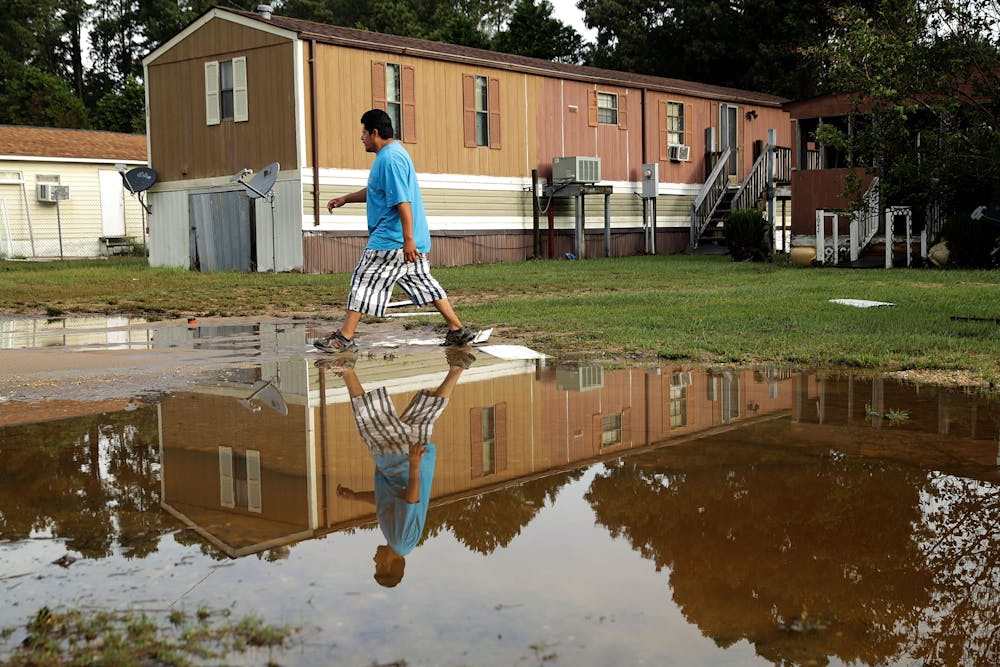
Aging manufactured home park infrastructure, including sewer, water and electricity systems, is highly vulnerable to extreme heat, wind, drought, flooding and wildfires. And since residents typically have lower incomes, they have fewer resources to respond when extreme events strike.
Manufactured housing, resilience and justice
With economic, political and technical support, evidence shows that manufactured housing can overcome these challenges.
To date, 20 states have adopted laws that help residents purchase the manufactured home parks where they live. These policies have helped ROC USA, a nonprofit social venture, create a network of over 280 cooperatively owned, limited-equity resident-owned communities that are home to over 18,000 households.
ROC USA provides low-cost loans to resident cooperatives to buy land and make needed capital improvements such as upgrading water, sewer and electric systems. Their network of regional housing experts then works with communities for at least a decade to develop and sustain their ability to manage their parks.
Over three decades, no ROC USA community has ever defaulted on a loan or sold their park. A growing number have adopted climate-responsive measures, such as building storm shelters and community centers, upgrading drainage infrastructure and providing emergency post-storm tree clearance and other forms of mutual aid. Other resident-owned communities are investing in renewable energy and energy efficiency, reducing greenhouse gas emissions and energy costs for their residents.
Policymakers are paying attention. The Biden administration’s 2022 housing plan includes extensive support for manufactured housing parks.
California Gov. Gavin Newsom has called for increasing state funding to preserve manufactured housing parks as affordable housing. The U.S. Department of Energy recently adopted more ambitious efficiency standards to reduce energy costs for residents of manufactured housing.
In our view, these efforts should be coupled with legislation that protects manufactured housing park tenants and expands the limited-equity ROC model. Governments could enact laws that offer tenants opportunities to purchase their rental units and provide subsidized loans and grants to resident cooperatives. Decades of experience shows that resident ownership can transform manufactured home parks from sites of stigma and vulnerability into stable and resilient communities.
Zachary Lamb, Assistant Professor of City & Regional Planning, University of California, Berkeley; Jason Spicer, Assistant Professor of Geography and Planning, University of Toronto, and Linda Shi, Assistant Professor of City and Regional Planning, Cornell University
This article is republished from The Conversation under a Creative Commons license. Read the original article.
LAKE COUNTY, Calif. — With Lake County and the rest of California in the midst of a worsening drought, representatives of two water companies operating in the city of Clearlake have offered some insight into their operations and how they are continuing to ensure there is adequate water supply for their customers.
The Clearlake city administration invited the three companies that serve the city — Golden State Water Co., Konocti County Water District and Highlands Mutual Water Co. — to speak about the situation at the Clearlake City Council’s July 7 meeting.
Golden State and Konocti County Water each sent a representative to give the council an update.
The update begins at the 35 minute mark in the meeting video above.
“We are still in the midst of a drought,” City Manager Alan Flora told the council, explaining that Gov. Gavin Newsom had handed down state executive orders to address the drought conditions.
Those executive orders have a variety of impacts on water systems throughout the state, Flora said.
Unlike the city of Lakeport, which operates its own water and sewer system, Flora said Clearlake doesn’t control any utilities.
He said the water companies were invited to come and discuss their drought mitigation measures at the request of Mayor Dirk Slooten.
In response, Keith Ahart, superintendent for Golden State Water, and Frank Costner, Konocti County Water’s general manager, came to the meeting to give the council an update.
Golden State sees big conservation effort
Ahart said Golden State hit stage two of its contingency plan when the state’s executive order came out for mandatory stage two rationing. That applies to all customers in all service areas, not just Clearlake. In all, Golden State serves more than one million people in 80 communities across the state, according to its website.
That plan calls for a conservation target of 20%. Ahart said they’ve been monitoring production on a weekly basis to compare it to 2020. They’ve found that it’s down 37% to 43%, and he thanked customers for making that effort to conserve.
“Thank you for doing what you’re doing. Keep doing it,” he said.
Golden State is considered an urban water supplier, which is any service or territory with more than 3,000 connections, he said. While it doesn’t have that many in Clearlake, it has more than that across its larger service territory.
Ahart said the overarching goal of hitting stage two is to make customers think about how they’re using water and reduce use where possible. “Be smart about it and think about it.”
During the update, in answer to a question from Councilman David Claffey about supply, Ahart said the Lake would have to go to -10 feet Rumsey — the special measure used specifically for Clear Lake — for Golden State’s deepest wells to go dry.
“As far as supply goes, we’re safe,” said Ahart.
He said the state already has curtailed prospective water rights, so the company has to buy 100% of its water through its contract from Yolo County Flood Control and Water Conservation District, which owns the water rights to Clear Lake. If the state starts to curtail senior water rights, it may have an impact and require more conservation.
“Our customers conserve at a level that far exceeds what they're looking for at the state level,” Ahart said.
Claffey asked about the impacts of the low water level on treatment. Ahart explained that water quality suffers as the lake gets lower because it needs more treatment.
Councilman Russ Perdock asked if the increase in treatment costs, coupled with a reduction in water use, could trigger an additional rate hike.
Ahart said it’s possible. He said a water rate adjustment mechanism, or RAM, is a temporary surcharge given to companies to make up for the additional cost of an event — in this case, the drought.
Councilman Russ Cremer asked if the RAM is driven by the California Public Utilities Commission. Ahart said yes — everything in water is.
Konocti County Water District makes system improvements
Costner said Konocti County Water District serves Clearlake’s Avenues area, east of Highway 53.
In 2014, during the last drought, the district adopted a water conservation plan that it didn’t activate then.
However, in the summer of 2021, the district’s board of directors assessed the situation — including how low the lake level was then — and decided to activate the water conservation plan, Costner said.
He said they went to their plan’s level three, which requires a 35% mandatory reduction with no surcharges, limits or tiered rates.
“We were just wanting people to conserve water so the treatment plant could keep up with the treatment capacity,” Costner said, explaining that as the drought worsens, the treatment plant is impacted.
Last year, Konocti County Water’s customers conserved 14% compared to 2020 usage numbers, he said.
“This year the lake is even lower” — a foot lower — than it was in 2021. Costner said it’s the lowest it’s been in the 34 years he’s worked for the company.
There is one upside — the cooler weather this year has helped a lot with raw water quality. Costner said the lake quality also is a lot better.
In 2021, Costner said the district spent $85,000 above its budget on labor and chemical costs for treatment.
To avoid putting surcharges on customers, Costner said the district deferred maintenance on some equipment.
They also applied for a grant and received $657,000 to put new media in a filter and to install a booster pump at the raw water pump station to increase flow on a smaller line that goes further out into the lake.
That booster pump should be installed in the next month, and Costner said that will hopefully mean better water quality.
“We don’t know if this drought is going to end this winter,” said Costner, questioning what if it lasts another 10 years.
Usually after a drought the area gets major rainfall and flooding. “Until that time, we’re in pretty bad shape in Clear Lake as far as the raw water quality,” Costner said.
He said there is a lot of water in Clear Lake and everyone can lower their intakes. However, “Treating the water is very expensive.”
Along with that, Costner said equipment and supplies — chemicals, PVC pipe, gasoline and everything in general — has increased in cost a quarter to half to double the previous cost, “If you can even find it.”
Costner said Konocti County Water District is working on $15 million in infrastructure projects, 100% of which is covered by grants.
Those projects include the new intake line and new filter, a new tank at the treatment plant and a new raw water pump station. Costner said the district has been proactive and working on upgrades since 2014. The major projects are expected to be done by 2023.
Costner said the district also is working on interties with Highlands Water and is consolidating with the Cache Creek Mobile Home Park’s treatment plant, which was burned down in last year’s Cache fire.
That project includes putting an 8-inch water main down Dam Road with water hydrants. Costner said when it’s done all of Dam Road will have a new water line.
Costner said the company’s website features its water conservation plan which is “very robust.” Many water agencies around the lake have adopted their plan, he added.
Cremer asked if district water users are penalized for not reducing use enough. Costner said no, they’re not penalizing them for not making the 35% conservation number.
He said they are concerned about the high users, and while they could implement conservation pricing, which would increase the cost of water across the board.
However, at the same time, that drops the district’s income, which in turn impacts its projects. “We can only defer maintenance for so long.”
Costner said the 35% target set last year may have been a little aggressive, but they didn’t know how bad it was going to be.
Email Elizabeth Larson at
The National Weather Service reported on top temperatures around the region recorded on Friday, which included Middletown at 103 degrees; Lower Lake at 104 degrees; Clearlake, Kelseyville and Hidden Valley Lake at 105 degrees; and Indian Valley Reservoir at 108 degrees.
However, some relief is in sight.
Forecasters said daytime temperatures this week will top out in the low 90s throughout Lake County, rising to the mid-90s by the weekend.
Nighttime temperatures will range from the low to mid 60s.
As temperatures cool in the new week, the forecast calls for relative humidity to rise.
While there have been concerns about thunderstorms across the region, the forecast did not include chances of storms for Lake County this week.
Calm winds, particularly in the afternoons and evenings, also are in this week’s forecast.
Email Elizabeth Larson at