 How to resolve AdBlock issue?
News
The council’s action at its meeting on Thursday, July 21, approved Clearlake Police Chief Andrew White entering into an agreement with Lakeport for supplemental law enforcement services.
White’s written report to the council noted that the Lakeport Police Department requested assistance from the Clearlake Police Department to cover patrol shifts due to temporary staffing challenges.
“The Clearlake Police Department has sufficient staffing to provide this coverage on an overtime basis without negatively impacting coverage in Clearlake,” White wrote.
He also noted, “While agencies routinely provide day-to-day mutual aid without compensation, in the proposed situation, it is appropriate for the receiving entity to compensate the entity providing the services.”
White said that rather than suggesting a one-way agreement, the agreement presented to the council permits either police to provide supplemental law enforcement services to the other. “This alleviates re-negotiating and approving in agreement should circumstances necessitate Lakeport providing law enforcement services to Clearlake.”
Chief White and Lakeport Police Chief Brad Rasmussen presented the proposed contract to the council at its Thursday meeting.
Rasmussen said law enforcement hiring is very difficult, with a drastic decrease in people who want to go into the profession. He said that’s the case not just in Lake County but elsewhere.
“I’m currently in a situation where we're down numerous positions,” said Rasmussen.
Lakeport Police has 13 sworn positions, compared to Clearlake Police’s 25.
He said the week before the meeting he had hired three new people, but they won’t be ready for some time due to needing to go through recertification or police academies.
The Lakeport Police Department doesn’t intend to have Clearlake Police officers be the primary leads on investigations, especially major ones, in an effort to limit time they would have to be in court on those cases, Rasmussen said.
Rasmussen asked for help beginning in August.
He said the two agencies have a long relationship of cooperation and joint training and they’re comfortable working together.
Det. Trevor Franklin, president of the Clearlake Police Officers Association, said the overwhelming response from his members was that they wanted to help Lakeport.
In response to concerns about burnout and overworking officers, Franklin emphasized that taking shifts in Lakeport will be voluntary for Clearlake’s officers.
City Attorney Ryan Jones said Clearlake’s officers will be covered by the city of Clearlake if they sustain any injuries.
Councilman David Claffey asked if Clearlake’s officers would use their own equipment.
White said they can use their own equipment or Lakeport’s. He said there is a reimbursement if Clearlake uses its cars.
However, he added that Lakeport has different police cars and Clearlake’s officers are interested in driving them.
City Manager Alan Flora said that if Clearlake starts purchasing Dodge Chargers and Chevy Tahoes — the types of vehicles the Lakeport Police Department has — they’ll know what happened.
Councilman Russe Cremer moved to approve the agreement. Vice Mayor Russ Perdock — who praised the two chiefs for their innovation during the discussion — seconded. The council approved the contract unanimously.
After the vote, Claffey asked if they could break out costs and expenses for the work of Clearlake’s officers. White said yes.
Email Elizabeth Larson at
The agreement would provide up to $4.25 billion to participating states and local governments to address the opioid crisis.
While Bonta’s office said critical details of the settlement remain the subject of ongoing negotiations, Teva disclosed the agreement Tuesday ahead of its earnings announcement Wednesday.
“This agreement is another major step toward addressing the opioid crisis and healing our communities,” said Attorney General Bonta. “Nothing can undo the harm opioids makers like Teva have inflicted on families across the country or the lives lost to the opioid epidemic. But this agreement will provide much-needed relief for its victims and importantly, critical funds for overdose prevention and opioid addiction disorder treatment.”
Teva, an Israel-based drug manufacturer, makes Actiq and Fentora, which are branded fentanyl products for cancer pain, and a number of generic opioids including oxycodone. States alleged that Teva:
• Promoted potent, rapid-onset fentanyl products for use by non-cancer patients;
• Deceptively marketed opioids by downplaying the risk of addiction and overstating their benefits, including encouraging the myth that signs of addiction are actually “pseudoaddiction” treated by prescribing more opioids; and
• Failed to comply with suspicious order monitoring requirements along with its distributor, Anda.
The parties have agreed on the following financial terms:
• Teva will pay a maximum of $4.25 billion in monetary payments over 13 years. This figure includes amounts Teva has already agreed to pay under settlements with individual states, funds for participating states and local governments, and the $240 million of monetary payments in lieu of product described below.
• As part of the financial term, Teva will provide up to $1.2 billion in generic naloxone (valued at Wholesale Acquisition Cost or WAC) over a 10-year period or $240 million of cash in lieu of product, at each state’s election. Naloxone is used to counteract overdoses.
• The settlement will build on the existing framework that states and subdivisions have created through other recent opioid settlements.
A final settlement remains contingent on agreement on critical business practice changes and transparency requirements.
The negotiations are being led by the following states: California, Illinois, Iowa, Massachusetts, New York, North Carolina, Pennsylvania, Tennessee, Texas, Vermont, Virginia and Wisconsin.
While New York is among the 12 states that negotiated this proposed settlement framework, Teva and New York are still engaged in further negotiations.
In a July 22 letter, Bryan Newland, assistant secretary for the Bureau of Indian Affairs, cited state overreach and continuing problems with the compact language that hadn’t been corrected since issues were first raised last year in a previous compact.
Class III gaming is defined as casino-style gambling. It does not include bingo and non-banked card games.
The Governor’s Office reported that not only had the Department of Interior refused to approve Middletown’s class III gaming compact, but that it had taken the same action — also for a second time — against a class III gaming compact sought by the Santa Rosa Indian Community of the Santa Rosa Rancheria.
Newsom’s office said the compacts were disapproved “arbitrarily.”
“These compacts were carefully negotiated by the state and the tribes in compliance with the Indian Gaming Regulatory Act, providing the tribes the economic benefits of gaming while mitigating impacts to local communities,” Newsom’s office said.
Middletown Rancheria Chairman Moke Simon, who also sits on the Lake County Board of Supervisors, called the Department of Interior’s disapproval of the compact “shocking” because he said the tribe had worked with Secretary Deb Haaland’s department to find “an agreeable middle ground” between the state and federal governments.
“When Gov. Newsom apologized recently to California Indian tribes for its historical mistreatment of tribes, I told him that actions will speak louder than words,” Simon said in a written statement. “Indeed, this new compact is Gov. Newsom’s actions to honor and respect the tribe and its sovereignty. While California has taken great steps forward, sadly, the betrayal we feel from Secretary Haaland is something we have come to expect from the federal government. The path forward is now paved with stones that will make it difficult to navigate our tribe’s future.”
Leo Sisco, chairman of the Santa Rosa Rancheria Tachi Yokut Tribe, said with the disapproval of his tribe’s compact, it will not have the resources to expand the Tachi Palace Casino, which he said would have created new living wage jobs and benefited an ailing local economy.
“The chilling effect this decision will have in Indian Country is immeasurable and the financial cost to our tribe will be irreparable,” Sisco said.
Middletown Rancheria has been operating under a compact negotiated in 1999.
In September, Newsom signed AB 957, a bill authored by Assemblymember Rudy Salas (D-Bakersfield), which ratified a previous version of the tribal compact between the state and Middletown Rancheria.
Newland sent a letter dated Nov. 23 that disapproved that compact, citing numerous problems including provisions that he said Indian Affairs found to be “blatantly in violation” of the Indian Gaming Regulatory Act, or IGRA, and some that he said “seek to impose state control where it does not belong.”
The letter also said that Indian Affairs had repeatedly warned the state that definitions used for "gaming facility" and "project" cause the agency “significant concern because the Compact could be misconstrued to allow the State and its political subdivisions to regulate matters that are not directly related to gaming activities. These definitions are utilized throughout the Compact and result in the direct regulation of the Tribe and the Tribe's businesses and amenities that are ancillary to gaming activities.”
In March, Newsom’s office announced that he had signed new compacts with Middletown Rancheria and the Santa Rosa Rancheria Tachi Yokut Tribe.
A March statement from Newsom’s office explained that the new compacts’ terms “respect the parties’ interest in improving the quality of life of tribal members through a framework that generates revenue for governmental programs, fairly regulates gaming activities, affords meaningful patron and employee protections, and provides thorough environmental review for potential off-reservation impacts.”
Newsom’s office said the compacts were the result of a lengthy negotiation process, considered IGRA and federal court precedent, and included technical guidance, prior compact approvals, and secretarial procedures issued by the United States Department of the Interior.
“The compacts are intended to support tribal government investment in expanded tribal government services, local jurisdictions, and non-profit and civic organizations for improved fire and emergency medical services, law enforcement, public transit, education, housing, environmental protection, tourism and other service and infrastructure improvements. The compacts reflect a commitment by the Tribes to support the Revenue Sharing Trust Fund and the Tribal Nation Grant Fund so that the economic benefits of gaming extend to all tribal governments in California,” the statement said.
That version of Middletown’s compact said the tribe is entitled up to 1,200 gaming devices and can operate not more than two gaming facilities.
The original 1999 compact allowed the tribe to have 350 gaming devices and to apply for more.
The tribe currently operates Twin Pine Casino, which has a reported 500 gaming machines, plus a 60-room hotel.
Newland’s July 22 disapproval letter said the Department of Interior had issued “at least” four guidance letters to the state of California in the past decade “highlighting concern over the State's practice of asserting greater control over tribal land use decisions through class III gaming compacts.”
Despite the “consistent guidance and warning, the State has continued to insist that class III gaming compacts include more stringent and detailed land use regulations that are attenuated from the actual conduct of class III gaming on the casino floor,” Newland wrote.
The new 196-page compact states that Class III gaming can only take place on eligible Indian lands held in trust for the tribe that are located within the boundaries of the tribe’s reservation and certain trust lands.
“In the 2021 Disapproval we explained that tribes often develop businesses which are located near or adjacent to the gaming facility, co-branded and marketed with the gaming facility, and often comanaged by the tribe's business arm. We further explained that ‘[m]utually beneficial proximity, or even co-management alone is insufficient to establish a "direct connection" between the businesses and the class III gaming activity,’” Newland explained in the 12-page July 22 letter.
“As applied to the Tribe's casino-resort Twin Pine Casino & Hotel, the State's definition of Gaming Facility reaches from the very edge of the parking lots to all areas within the buildings including all hotel rooms. Further, this definition — standing alone — likely includes the tribally- owned and operated gas station. The Tribe's gas station, Uncle Buddies Pumps shares a parking lot with the casino and the fuel prices are listed on the casino's sign. In addition, the ambiguity in these definitions increases the potential that the State and municipal governments could impose certain land use requirements on the Tribe in the future,” the letter said.
Newland noted in his letter, “Tribal gaming has proven to be the most successful form of economic development in Indian country in the past century. Many Tribes have used gaming to lift entire communities out of crushing poverty and to develop sophisticated and dynamic governments that rival their state and local counterparts.”
He continued, “In creating the class III gaming compact, Congress effectively provided States with the keys to the gates of Indian gaming. Congress recognized this fact, which is why it also put numerous guardrails in place: the mandate to negotiate in good faith; remedial provisions that apply when a State refuses to negotiate a gaming compact in good faith; a prohibition on State taxation of tribal gaming; and strict limitations on the issues that can be addressed in a gaming compact. Congress also delegated responsibility to the Secretary of the Interior to ensure that each compact stays within these guardrails and complies with the law.”
Newland said he recognized “that the disapproval of a class III compact is a harsh remedy in circumstances like this, and that it is ultimately the Tribe that suffers the greatest consequences of a disapproval. Secretarial disapproval is a blunt instrument, but it is the only tool the Department has at its disposal to protect the balance Congress developed in IGRA. Secretarial disapproval helps to fulfill Congress' goal that Tribes should not have to sacrifice their inherent sovereignty in exchange for the proven benefits of Indian gaming.”
The new compact confers “expansive powers on the State and local governments to regulate the Tribe's activities and lands that are not directly related to the actual conduct of gaming,” Newland wrote. “There is nothing preventing the Tribe, the State, and local governments from negotiating different types of cooperative agreements that promote good governance amongst neighbors. But those agreements must be negotiated on a level playing field outside IGRA's class III compacting process.”
For those reasons, he said he was disapproving the compact.
“Despite the tribes’ efforts to meet with Interior and changes negotiated with the State of California to address concerns expressed by Interior, the Department chose to disregard the interests of the tribes and arbitrarily disapprove the compacts,” Newsom’s office said. “The disapprovals threaten the ability of these and other tribes to invest and maintain jobs in many of California’s economically disadvantaged communities. The State of California will continue working with Santa Rosa Rancheria and Middletown Rancheria to rectify this decision and avoid its negative impacts.”
The development comes as Simon has become the spokesman for Proposition 27, which would allow sports and other gambling through certified gaming tribes and corporate online betting companies, among them, FanDuel and DraftKings, who are helping to fund the measure. Proponents said it would provide funding for housing and services for the state’s homeless population.
A competing measure, Proposition 26, would legalize sports betting in-person at tribal casinos and some horse tracks. The money it raises would be spent based on the state government’s discretion.
Email Elizabeth Larson at
508 Compliant 2022.07.22 Middletown Rancheria Disapproval Letter Tribe by LakeCoNews on Scribd

LAKE COUNTY, Calif. — For residents who have a hard time getting to the library, checking out books and other materials is about to get a lot easier.
Starting this July, the Lake County Library is launching a "Books by Mail" service. This new service is for homebound residents in Lake County to get library books, CDs, DVDs, and audiobooks through the mail for free.
Lake County residents who have limited mobility can sign up over the phone by calling their local library branch, listed below, or sign up at the library website: http://library.lakecountyca.gov.
Lakeport Library: 707-263-8817
Clearlake Library: 707-994-5115
Middletown Library: 707-987-3674
Upper Lake Library 707-275-2049
Once signed up, any book, DVD, CD or audiobook that a patron requests will be sent to their home in a library canvas mailbag through the US Postal Service. Patrons are only limited by what can fit in this mailbag.
Once the items are mailed, patrons have 28 days to enjoy them. When they are ready to return them they send the items in the same mailbag back through the postal service. The library provides a return mailing label for free.
Patrons of the library can request items by calling their local library and requesting items over the phone. Residents can also visit the library's online catalog and request items for free.
Books by Mail was made possible in part by the Institute of Museum and Library Services, IMLS Grant Number CAGML-248370-OMLS-21.
The Institute of Museum and Library Services is the primary source of federal support for the nation's libraries and museums.
They advance, support, and empower America’s museums, libraries, and related organizations through grantmaking, research, and policy development.
Their vision is a nation where museums and libraries work together to transform the lives of individuals and communities.
To learn more, visit www.imls.gov.
The restrictions went into effect on Monday, July 25.
The prohibitions outlined in Forest Order No. 08-22-06 are designed to minimize the chances of human-caused wildland fires and are in effect through the end of the 2022 fire season.
“The decision to move into fire restrictions is based on fuel moisture levels and predicted weather conditions,” said Fire Management Officer Curtis Coots. “We want to help protect undeveloped areas of the forest and our surrounding communities.”
“At this stage, the public can still enjoy a campfire or stove fire in designated fire-safe campgrounds or in Wilderness Areas so long as they have a valid California Campfire Permit,” Coots said.
Fire restrictions prohibit the following activities:
• Building, maintaining, attending or using a fire, campfire, or stove fire.
• Smoking, except within an enclosed vehicle or building, or within the designated recreation sites shown in Exhibit A of the forest order.
• Operating an internal combustion engine, except on National Forest System roads or trails.
• Welding, or operating an acetylene or other torch with an open flame.
• Using an explosive.
• Possessing, discharging or using any kind of firework or other pyrotechnic device.
Exemptions include:
• Persons with a permit from the Forest Service specifically exempting them from this order.
• Persons with a valid California Campfire Permit are not exempt from the prohibitions listed in this order. However, persons with a valid California Campfire Permit may use portable stoves or lanterns using gas, jellied petroleum, or pressurized liquid fuel and may also build, maintain, attend or use a fire, campfire, or stove fire in the designated fire-safe recreation sites listed in Exhibit A, as well as in federally designated Wilderness Areas as shown on Exhibit B.
• Any federal, state or local officer, or member of an organized rescue or firefighting force in the performance of an official duty.
• Persons with a Special Use Permit from the Forest Service for a recreation residence on the Mendocino National Forest are exempt from prohibition numbers 1, 2, 3, and 4 while they are at their recreation residence.
Similar restrictions are also in effect on neighboring public lands. Because restrictions can vary by jurisdiction, visitors should contact the area they plan to visit for specific fire restrictions and conditions.
The Mendocino National Forest consists of 913,306 acres along northern California’s coastal range. The forest is headquartered in Willows and maintains district offices in the communities of Covelo and Upper Lake. More information is available at www.fs.usda.gov/mendocino.
I’ve studied finance and financial markets since the 1970s, and I have never seen the Federal Reserve’s monetary policy get such prominent news coverage as it has this past year.
And with good reason. What the Fed does has profound implications for companies, consumers and the U.S. economy, especially now as the U.S. central bank tries to tame the fastest jump in consumer prices in decades. In short, the Fed is jacking up interest rates in hopes that doing so slows the economy enough to bring down inflation.
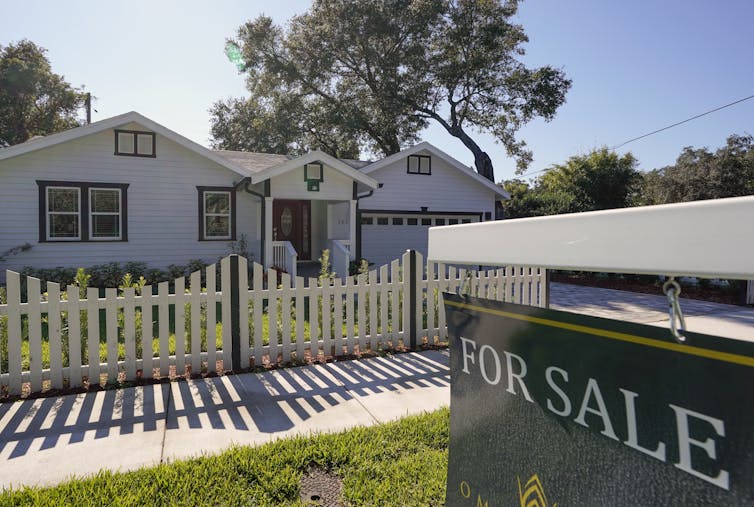
The housing market is the sector most substantially influenced by interest rate changes, and as such, it’s a key indicator of whether the Fed’s plans are succeeding. To see why, I need only consider the experience of my son – or the many other Americans hunting for a new home at a time of rising interest rates.
What the Fed is doing
First, a little background.
The Federal Reserve is raising interest rates at the fastest pace in its 108-year history as part of its inflation battle. Today’s big policy steps are needed in part because the Fed and many others took awhile to understand what was causing the rise in inflation.
In fall 2021, while the pace of inflation was accelerating past 4% – double the Fed’s targeted rate – the prevailing view at the central bank and elsewhere was that it reflected temporary disruptions following two years of COVID-19-related slowdowns. The assumption was that inflation would abate automatically as supply chains worked themselves out.
Unfortunately, that assumption proved wrong because it did not recognize how much government COVID-19 relief spending had stimulated what economists call “aggregate demand” – in other words, the total demand for goods and services produced in an economy. Put another way, consumer spending spurred by government aid created strong demand across the economy.
And so consumer prices continued to accelerate. Russia’s war in Ukraine made the problem worse, especially by driving up global food and energy prices. As of June 2022, inflation was surging at 9.1%, the fastest pace since 1981.
While the Fed can’t do much about the war or other supply-chain issues, it can address domestic aggregate demand. That’s where higher interest rates come in.
Higher borrowing costs choke off consumer demand for homes, cars and other goods and services that typically require a loan, while companies pare back their investments in factories and hiring, which should ease overall inflation.
The Fed began its most recent tightening policy in March 2022 with a 0.25 percentage point increase in its target interest rate, which acts as a benchmark for other borrowing costs in the U.S. and around the world. Since then, the central bank has raised its target rate twice more – by 0.5 percentage point in May and 0.75 percentage point in June.
On July 27, the Fed is expected to raise the rate by another 0.75 percentage point, though some observers have predicted an unprecedented 1 point increase after the June consumer prices report showed inflation was still accelerating.
Why the housing market matters
The trick to reducing inflation is to choke off enough aggregate demand to tame inflation without driving the economy into recession. One of the main ways to see whether this is happening is to look at housing, which has always been particularly sensitive to rate changes and constitutes more than one-quarter of total U.S. wealth.
Because buying a house or apartment is such a large expenditure, nearly all purchasers must borrow a pretty big share of the purchase price. And just as record-low mortgages borrowing costs in 2021 helped fuel a housing market boom by lowering the cost of servicing that debt, higher rates increase the cost, discouraging housing purchases.
The average rate on a 30-year mortgage hit 5.81% in June, the highest level since 2008 and up from less than 3% throughout most of 2021. The rate currently stands at 5.54%. On a $200,000 mortgage, a 5.54% rate translates into over $400 in extra interest costs every month compared with 3%.
Confronted with such an increase, some house hunters – like my son – have stepped back and reconsidered whether now is the right time to buy.
Housing starting to stall
In other words, higher mortgage rates lead individuals to invest less in housing. And the effect of falling demand doesn’t stop with the house. When people buy a new house, they also tend to purchase new furniture, lawn equipment, televisions and so on. And buying a used home often requires hiring contractors and others to remodel the kitchen or build a new closet in the kids’ room.
So if people are buying fewer homes, they also are purchasing less furniture, electronics and lawnmowers and have less need for electricians and plumbers.
The drop in demand for all these goods and services should take a meaningful bite out of inflation. While it’s still too early to say if this part of the Fed plan is working, we can already see the effects of rising mortgage rates in recent housing data.
In recent months, fewer new houses are being built, fewer existing homes are being sold and homebuyers are walking away from signed deals at the highest rate since the start of the COVID-19 pandemic.
At the same time, consumers and investors are beginning to anticipate less inflationary pressure in the next year or so.
What it means for homebuyers
So as the Fed prepares to hike benchmark rates again, what does all this mean for U.S. consumers, and especially my son and other people looking for a new home?
For one thing, don’t expect long-term interest rates, including for mortgages, to rise much, and certainly not by the same amount of the Fed’s interest rate hike.
Investors tend to factor expected Fed policy changes into its market rates. So unless there is a surprise from the Fed, like a full 1-point hike, long-term rates are unlikely to change much. And they may even begin to fall soon, either because inflation is subdued or the U.S. slips into recession.
And while it would be nice to know how tighter monetary policy – that is, higher interest rates – will affect today’s stratospheric house prices, this is hard to predict. The withdrawal of some buyers from the market should depress house prices by reducing demand, but sellers may also simply decide to delay selling rather than accept a lower price.
The challenge for would-be homebuyers like my son and his family is to find a seller who cannot hold their house off the market and to offer a lower price than the house would have attracted a few months ago to offset its higher financing cost. The more that happens, the more the Fed will know its rate hikes are working.
Mark Flannery, Professor of Finance, University of Florida
This article is republished from The Conversation under a Creative Commons license. Read the original article.