 How to resolve AdBlock issue?
News
Diet-related chronic diseases have reached a critical juncture in the U.S.
Nearly half the population has prediabetes or diabetes. Over 40% are overweight or obese. One in nine people over the age of 65 has Alzheimer’s disease, the development of which researchers are exploring the potential role of diet. Poor diet is also linked to poor mental health, cardiovascular disease and cancer. It was responsible for nearly 1 in 5 deaths in the U.S. and accounted for over US$140 billion in U.S. health care spending in 2016.
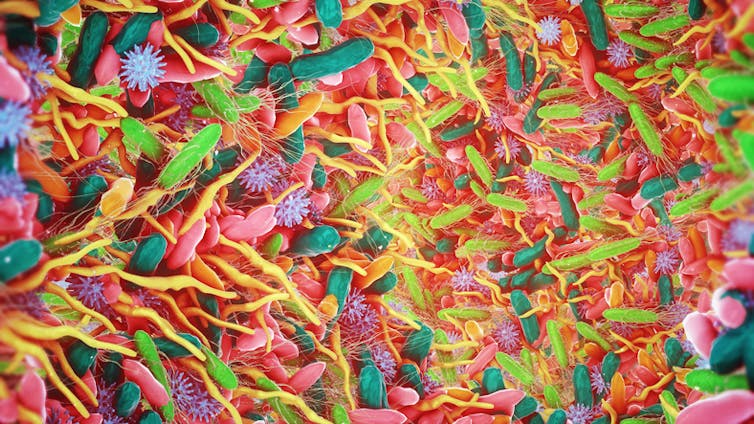
Though American waists are getting bigger, research is showing that the gut microbiome – the bacteria living in our digestive tracts – and the energy-producing compartments of cells, the mitochondria, remain hungry for nutrients missing in the American diet.
I am a physician scientist and gastroenterologist who has spent over 20 years studying how food can affect the gut microbiome and whole body health. The ultraprocessed food that makes up an increasing part the American diet has removed vital nutrients from food. Adding those nutrients back may be important for health in part by feeding the microbiome and mitochondria that turn food into fuel.
Your health is what you eat
Research has consistently shown that the Mediterranean diet and other whole food diets are associated with better health and longer lives, and ultraprocessed foods and drinks like soda, chips and fast food, among others, are linked with poor health outcomes such as diabetes, cardiovascular disease, cancer and other diseases.
But improving the diet of an individual, let alone a population, is challenging. Whole foods are sometimes less convenient and less tasty for modern lifestyles and preferences. Furthermore, food processing can be beneficial by preventing spoilage and extending shelf life. Whole grain processing in particular extends shelf life by removing the germ and bran that otherwise rapidly spoil. Long-term storage of affordable calories has helped address food insecurity, a primary challenge in public health.
Much of the public health conversation around diet has focused on what to avoid: added sugars and refined carbs, some fats, salt and additives. But modern food processing, while increasing the concentration of some nutrients, has removed other key nutrients, producing potential long-term health costs. Equally important is what to add back into diets: fibers, phytonutrients, micronutrients, missing fats and fermented foods.
Only 5% of the U.S. population gets sufficient fiber, a prebiotic nutrient linked to metabolic, immune and neurologic health. Americans are likely also deficient in phytonutrients, potassium and certain healthy fats linked to lower rates of cardiovascular disease and cancer.
Fermentation is nature’s version of processing, creating foods with natural preservatives, flavors and vitamins. Recent research suggests fermented foods can improve gut microbiome diversity and dampen systemic inflammation.
Figuring out which bioactive nutrients contribute to disease can help both individuals and institutions develop diets and foods that are personalized to different health conditions, economic constraints and taste preferences. It can also help maximize nutrients in a way that is convenient, affordable and familiar to the modern palate.
Of microbiomes and mitochondria
Understanding how nutrients affect the gut microbiome and mitochondria could help determine which ingredients to add to the diet and which to temper.
In your lower gut, bacteria transform undigested bioactive nutrients into biochemical signals that stimulate gut hormones to slow down digestion. These signals also regulate the immune system, controlling how much of the body’s energy goes toward inflammation and fighting infection, and cognition, influencing appetite and even mood.
The microbiome’s biochemical signals also regulate the growth and function of energy-producing mitochondria across many cell types, including those in fat, muscles, heart and the brain. When these cues are missing in ultraprocessed diets, mitochondria function less well, and their dysregulation has been linked to obesity, diabetes, Alzheimer’s disease, mood disorders and cancer. A better understanding of how diet could improve the function of the microbiome-mitochondria axis could help provide a way to reduce the burden of chronic disease.
The Greek physician Hippocrates, regarded as the father of medicine, supposedly once said “Let food be thy medicine,” and a growing body research suggests that, yes, food can be medicine. I believe that shining a light on the connection between diet, health and the microbiome and mitochondria could help societies reach a bright future in which unhealthy aging isn’t an inevitability of growing older.
Christopher Damman, Associate Professor of Gastroenterology, University of Washington
This article is republished from The Conversation under a Creative Commons license. Read the original article.
Dear Lady of the Lake,
I hear the Clear Lake hitch had hard time during the drought years. How are they doing now since we had so much rain? Where are they spawning and how can we help them? I wrote to you before, thanks for your column.
- Hans, again asking how are the Hitch -
Hi Hans,
Thanks for writing this in! It’s a great time to talk about the Clear Lake Hitch.
If any reader needs to get caught up, you can read the “How about the Hitch” part 1 column from January 2022.
For those of you interesting in some of the science and management planning for this species, I suggest you watch out Water Quality Wednesday, hosted by the County of Lake Water Resources, from January 2022 available below.
The scientific name of the Clear Lake hitch is Lavinia exilicauda chi, and the native indigenous peoples of Clear Lake (the Hinthil, Gowk Xabatin, or the Pomo) refer to the fish as “chi” (pronounced CH-eye). The chi is a very culturally important fish to the Pomo and other indigenous native peoples of the Clear Lake area. The chi serves as a main food staple, providing a vital source of protein and nutrients, and easy to catch as the fish prefer shallow, warm, and slow-moving water, ideal to the shores and sloughs along the edges of Clear Lake.
Chi love to inhabit shallow waters full of submergent and emergent aquatic plants, in areas with sandy or gravel bottoms. Here is where they feed on algaes, aquatic insects and terrestrial insects that rest on the surface of the water, as well as crustaceans.
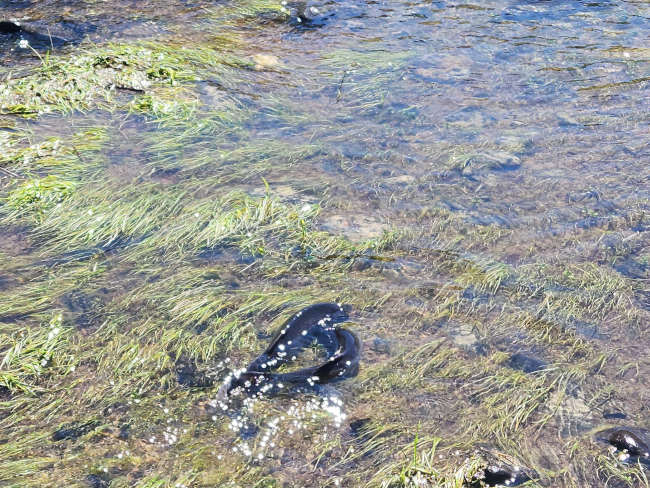
Right now, the chi are spawning in the shallow, flowing tributaries that connect to Clear Lake. The earliest spawning chi were observed in Cole Creek, then Adobe and Kelsey Creek, then Manning and Forbes, and now Middle, Clover, Ally and Lyons Creek.
We even observed chi in creeks around Bachelor Valley, meaning they are swimming up Scotts Creek into Tule Lake, or possibly live in Tule Lake year-round. Chi have historically spawned in all creeks and tributaries around Clear Lake. Even some hydromodified or altered drainages that were more pronounced creeks historically, attract the chi, as the fish use temp and olfactory cues to guide them up their home steam when the creeks flow into the lake in spring.
Chi will swim against currents and flows, and jump small barriers to get up stream to preferred spawning grounds. However, chi are no salmon, they are small-bodied and have limits to the heights and velocities they can overcome when swimming in a high-flowing stream.
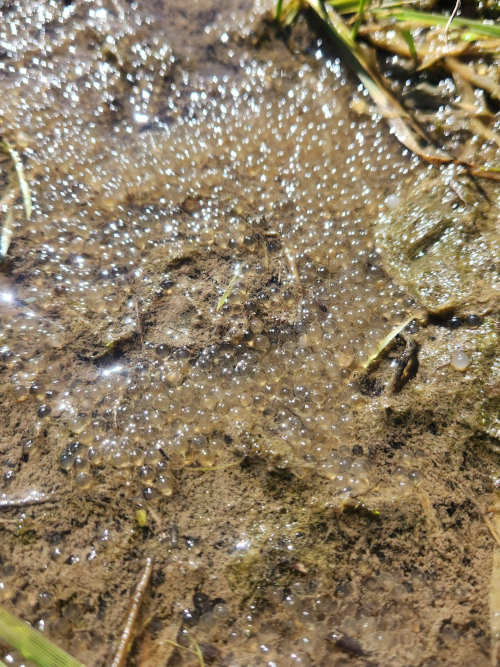
Preferred spawning areas are usually gravel beds in shallow water and high flow, and eggs will release within a few days of being laid, and fry will feed in the stream and then make their way down to the lake within days, or a couple weeks, after being born.
As one can imagine, being a very small baby fish getting pushed and bounced around in a shallow, flowing stream must be exhausting! Baby hitch are extremely vulnerable to being preyed upon by other fish and wildlife, fluctuating water levels and low oxygen levels when the temperatures start to warm.
Scientifically, the point where chi are born to when they are 1 year old in the lake is the time period we know the least about. Fish biologists, from federal, state, and local tribal agencies, have indicated a large knowledge gap during this time period when it comes to the chi.
Chi populations and abundances have steadily declined the last few decades, with declines being noted by local residents, tribes, and the California Department of Fish and Wildlife (CDFW). Recent population estimates and catch counts, conducted by several state and federal agencies, have fluctuated, but in the last five years, sharp declines and little to no recruitment of juvenile Chi has raised some high concerns for this endemic, special minnow fish.
Some of these declines might be attributed to low water levels during drought years, but there might be some other factors that as of now are unknown. These unknown factors are most likely a combination of factors such as habitat fragmentation, degradation, increased stream and lake water temperatures, shorter spring flow years, predation at stream mouths, illegal in-stream water uses and diversions, and water quality impacts in the lake and streams.
Luckily, with high water levels and consistent springtime flows, the Chi looks like they might be having a normal spawning year - but again, if those babies make it to the lake and survive to reproduce themselves is literally, the multi-million dollar question.
In fact the CDFW has pledged significant funds to address hitch barriers in Clear Lake tributaries, but it’s still unknown if that is even enough to recover this species.
Another question, that is definitely more affordable right now, is how can we help the Chi?
How can you help?
There are several easy, free, and simple ways you can help.
First, educate yourself about the Hitch and about lake and stream ecology and biology. When the ecology and biology of this important species is more well-known and understood, then the community as a whole will appreciate and value this species, and be aware of the kinds of activities that have negative impacts on the fish and their habitat.
Feel free to take a walk to a nearby creek or stream and you can probably spot some Chi, but don’t disturb them.
Please do not throw rocks or trash as the Chi, don’t walk, bike, or drive in the creeks until at least after the end of May. Chi lay their eggs in the creek bed, around the edges and among the rocks, so any disturbance may jeopardize eggs and unintentionally kill Chi babies.
Chi do not spawn in all the creeks at the same time, some creeks (Like Cole and Adobe) are early season spawning locations and others (like Scotts, Seigler Canyon, and Copsey) are late season spawning locations.
Do not try to catch the chi. It is actually very illegal to handle the chi without a CDFW permit. If you are a tribal member, there are certain chi cultural allocations for tribes in their designated territories, but if you are not a tribal member utilizing the chi for cultural practice, you are not allowed to touch, catch, pet or relocate the chi, their eggs or their babies.
Some agencies do have CDFW scientific collection permits, which list specific staff from some tribal environmental departments, federal agencies, and Lake County Water Resources, to catch chi when performing rescues and conducting scientific surveys and monitoring efforts.
Sometimes you might see some of these staff in streams, ditches, ponds, wetlands, or the lake, conducting fish monitoring, handling (tagging and releasing) fish. They will have identifying clothing, and specific gear for conducting this work. This gear might include electrofishing backpacks, coolers, buckets, or chest-high waders, or larger nets specific to safely moving fish.
If you are concerned and curious, you can always ask folks where they are from and what task they are doing. Any of the federal, state, local agencies and tribes will be ready and able to provide outreach and education about what they are doing.
If you see unauthorized activity in the creek, stream, or somewhere else, and you suspect some people are harming or catching Chi, and they don’t have a permit, you can call CDFW Cal-Tip line 1 888 334-CALTIP (888 334-2258). The Clear Lake chi is state threatened, so it’s a priority for the CDFW wardens and biologists to ensure the fish is able to live and reproduce safely.
Thanks for your questions Hans, and thanks for caring about the chi. The recovery of this unique species will be slow, but together, with dedicated and caring community-members like you, the Clear Lake Hitch has a bright future.
If you have more questions or need to report stranded or stuck chi/Clear Lake hitch, you can direct them to the Lake County Water Resources Department at 707-263-2344 or through email at
According to the new Water Boards Chi website, recent storms have flooded parts of Clear Lake creeks, causing some hitch to be stranded in ditches and on private property. If you see stranded hitch, please note the location and email
You can also contact CDFW at 916-591-1152 or through the 24-hour Cal tip line, 888-334-CALTIP (888-334-2258).
The quickest way to get a response on hitch situations is contacting a local tribe. Although all tribes are working together, with CDFW, to monitor chi spawning activity and coordinate rescues when and where they are needed, the general areas are covered by the tribes below.
Lakeport to Kelseyville to Riviera area, contact Big Valley Rancheria Environmental Department: 707-263-3924.
Scotts Creek to Middle Creek Contact Habematolel Pomo of Upper Lake: 707-275-0737.
Areas between Middle Creek down to City of Clearlake contact Robinson Rancheria: 707-530-5320.
Sincerely,
Lady of the Lake
Angela De Palma-Dow is a limnologist (limnology = study of fresh inland waters) who lives and works in Lake County. Born in Northern California, she has a Master of Science from Michigan State University. She is a Certified Lake Manager from the North American Lake Management Society, or NALMS, and she is the current president/chair of the California chapter of the Society for Freshwater Science. She can be reached at
Don't forget about the Lady of the Lake Photo Contest! Now accepting lake landscape and wildlife photos. More information and rules are provided in the announcement column https://www.lakeconews.com/news/75101-lady-of-the-lake-announces-photo-contest.
One of 62 nonprofit organizations nationwide chosen to receive an NEA Big Read grant for the 2022-2023 program year, this was the first time the Lake County Library returned to NEA Big Read programming since pre-COVID in 2018.
A $9,500 grant was awarded to the Library to host the NEA Big Read countywide with dynamic community reading programs.
The NEA Big Read is a program of the National Endowment for the Arts in partnership with Arts Midwest, which seeks to broaden our understanding of our world, our neighbors, and ourselves through the power of a shared reading experience.
Showcasing a diverse range of themes, voices, and perspectives, the NEA Big Read aims to inspire meaningful conversations, artistic responses, and new discoveries and connections in each community.
Organizations chosen to receive an NEA Big Read grant are selected by a panel of outside experts who review the proposed projects for artistic excellence and merit. Competitive applications demonstrate strong literary programming, experience in building effective local partnerships, reaching and engaging new and diverse audiences, working with educators, involving local and state public officials, and working with media.
For this year’s NEA Big Read, the book selection was chosen by Library staff from the Big Read book list, and the first time poetry was chosen for the countywide program. The NEA Big Read was coordinated by Literacy Program Coordinator and Lake County Poet Laureate Georgina Marie Guardado, Library Technician and Programming Coordinator Amy Patton, and County Librarian Christopher Veach.
The Big Read was supported by all library staff at each branch, and the Little Read designed for children was supported by Supervising Library Technician and Children’s Programming Coordinator Barbara Green.
Postcolonial Love Poem was chosen due to its popularity and how the poems push against the forces of racism, environmental destruction, addiction, and mental illness from a place of desire, love, and language. Library staff felt it was important to embrace representation, marginalized identities, and new perspectives that otherwise might not be explored in our county in a public way. While the book is complex and might have required more than one reading to aid in understanding, it offered the opportunity to read and think in a new way.
During Big Read programming, 433 free copies of the book were distributed to the public and a variety of 26 free public events related to the book were held. Despite continued COVID precautions and record-breaking storms, events drew a combined total of more than 450 adults and children combined.
Events included book discussions, writing workshops, museum presentations, farmers’ market booths, poetry readings, and an author event. A Little Read Storytime series was provided and offered comparative, age-appropriate titles to the adult Big Read book.
To spread the word for the Big Read program and invite as many community members as possible, the library utilized social media outreach, press releases, radio advertising, word of mouth, professional networking and partner collaborations.
The library thanks the many partners that helped bring about the success of the program including Bicoastal Media, Brenda Yeager, Denise Low-Weso, Friends of the Lake County Library, Redwood Community Services - Harbor Youth Resource Center, Jabez W. Churchill, Jennifer Mills Kerr, Kimi Sugioka, Lake County Community Radio KPFZ 88.1 F.M., Lake County Arts Council including Jordan O'Halloran and Richard Schmidt, County of Lake Board of Supervisors including Bruno Sabatier, Lake County Campus of Woodland Community College including Mary Wilson and Michael Thurin, Lake County Farmers' Finest and Cornelia Sieber, Lake County Friends of Mendocino College including Wilda Shock, Lake County Genealogical Society, Lake County Literacy Coalition, Museums of Lake County including Clark McAbee and Carolynn Birilli, Lake County News, Lake County Office of Education including Dana Adams, California Poet Laureate Lee Herrick, Mendo Lake Family Life Magazine, Mendocino College Lake Center including Monica Flores and Steve Hellman, Mia Ruiz, Natalie Diaz, O'Meara Bros. Brewing Company, Lake County Record-Bee, Retired Teachers Association of Lake County, The Bloom, Visit Lower Lake and Watershed Books.
Visit arts.gov/neabigread for more information about the NEA Big Read. Organizations interested in applying for an NEA Big Read grant in the future should visit Arts Midwest’s at https://artsmidwest.org/ for more information.
Georgina Marie Guardado is the Lake County Library’s Literacy Program coordinator.
Dogs available for adoption this week include mixes of Akita, Anatolian shepherd, Australian cattle dog, blue heeler, border collie, boxer, Chihuahua, German shepherd, French bulldog, Great Pyrenees, husky, Labrador retriever, pit bull and terrier.
Dogs that are adopted from Lake County Animal Care and Control are either neutered or spayed, microchipped and, if old enough, given a rabies shot and county license before being released to their new owner. License fees do not apply to residents of the cities of Lakeport or Clearlake.
The following dogs at the Lake County Animal Care and Control shelter have been cleared for adoption.
Call Lake County Animal Care and Control at 707-263-0278 or visit the shelter online for information on visiting or adopting.
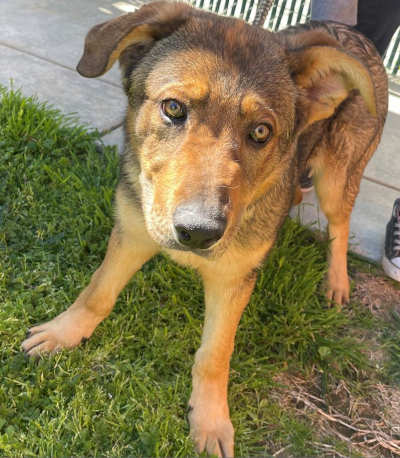
Male German shepherd pup
This 5-month-old male German shepherd puppy has a red coat with black markings.
He is in foster care, ID No. LCAC-A-4995.
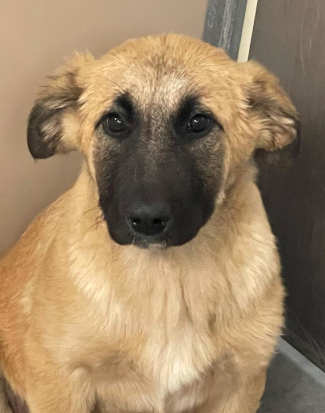
Female Great Pyrenees puppy
This 3-month-old female Great Pyrenees puppy has a tan coat with black markings.
She is in foster care, ID No. LCAC-A-5026.

‘Ivy’
“Ivy” is a 2-month-old Akita-Anatolian shepherd mix with a short brown and black coat.
She is in foster, ID No. LCAC-A-5031.
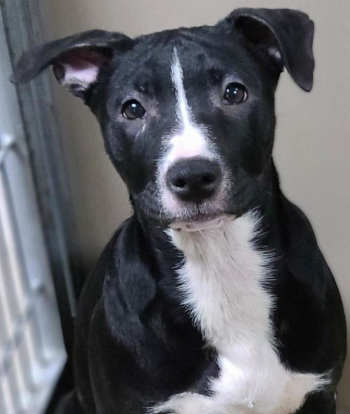
Female pit bull terrier puppy
This 3-month-old female American pit bull terrier puppy has a short black and white coat.
She is in kennel No. 4, ID No. LCAC-A-4788.

‘Shasta’
“Shasta” is a 1-year-old female pit bull terrier with a short black and white coat.
She is in kennel No. 5, ID No. LCAC-A-4873.

Female German shepherd-border collie
This 1-year-old female German shepherd-border collie mix has a long red and white coat.
She is in kennel No. 7, ID No. LCAC-A-5048.

Male border collie-shepherd mix
This 2-year-old male border collie-shepherd mix has a long black coat.
He is in kennel No. 9, ID No. LCAC-A-5012.

Male Chihuahua-terrier mix
This 3-year-old male Chihuahua-terrier mix has a short buff coat.
He is in kennel No. 10, ID No. LCAC-A-5008.

Female border collie
This 1-year-old female border collie has a black and white coat, and one brown eye and one blue eye.
She is in kennel No. 11, ID No. LCAC-A-4903.
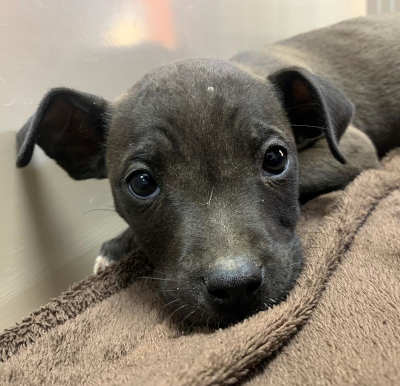
‘Max’
“Max” is a 7-month-old male terrier mix with a short black coat.
He is in kennel No. 12, ID No. LCAC-A-4248.
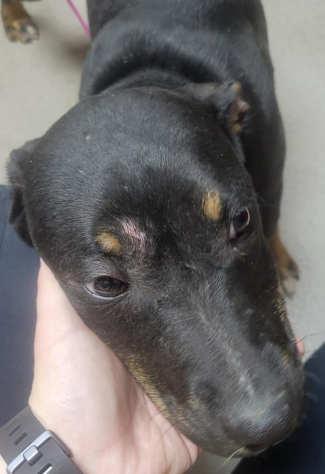
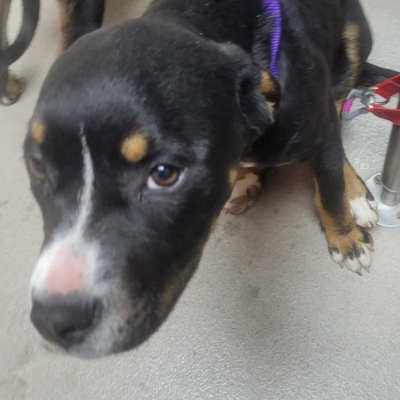
Female pit bull-shepherd puppy
This 5-month-old female pit bull-shepherd puppy has a short black and tan coat.
She is in kennel No. 13a, ID No. LCAC-A-5071.
Female pit bull-shepherd puppy
This 5-month-old female pit bull-shepherd puppy has a short tricolor coat.
She is in kennel No. 13b, ID No. LCAC-A-5072.
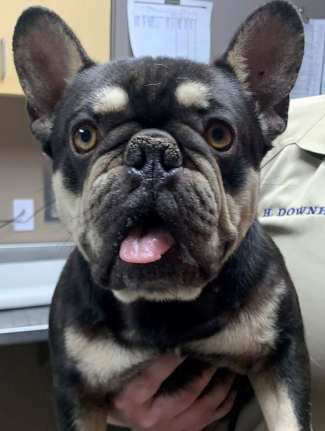
Male French bulldog
This 3-year-old male French bulldog has a short black and tan coat.
He is in kennel No. 14, ID No. LCAC-A-5055.

Female French bulldog
This 2-year-old female French bulldog has a short fawn coat.
She is in kennel No. 15, ID No. LCAC-A-5056.
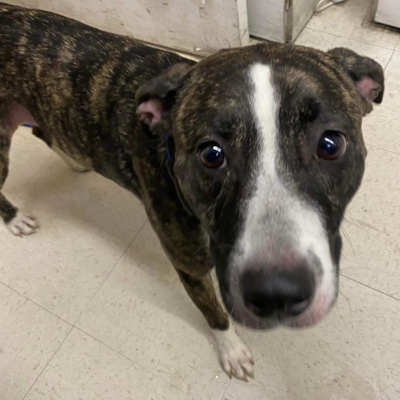
Female pit bull terrier
This 1-year-old female pit bull terrier has a brindle and white coat.
She is in kennel No. 16, ID No. LCAC-A-5000.

Male pit bull terrier
This one and a half year old male pit bull terrier has a black coat with white markings.
He is in kennel No. 19, ID No. LCAC-A-4843.
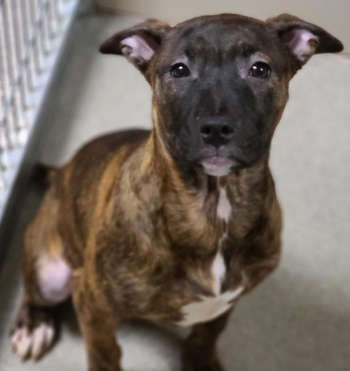
Female pit bull terrier puppy
This 3-month-old female American pit bull terrier puppy has a short brindle coat.
She is in kennel No. 22, ID No. LCAC-A-4787.
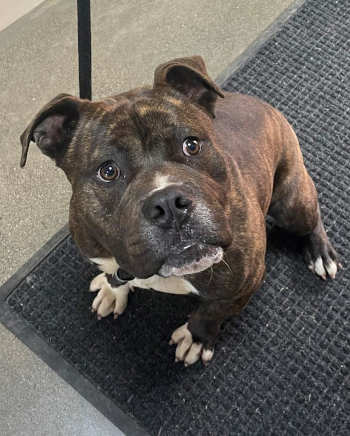
Male pit bull
This 2-year-old male pit bull has a short brindle coat with white markings.
He is in kennel No. 23, ID No. LCAC-A-5029.
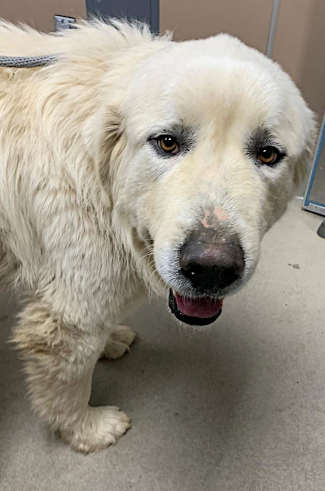
Male Great Pyrenees
This 2-year-old male Great Pyrenees has a long white coat.
He is in kennel No. 28, ID No. LCAC-A-4821.

‘Gotham’
“Gotham” is a 1.5-year-old male husky with a black and white coat and blue eyes.
He is in kennel No. 29, ID No. LCAC-A-5041.

Male shepherd
This 2-year-old male shepherd has a black and tan coat.
He is in kennel No. 30, ID No. LCAC-A-5023.

Female Belgian Malinois
This 1-year-old female Belgian Malinois has a short black and tan coat.
She is in kennel No. 31, ID No. LCAC-A-4963.

‘Joker’
“Joker” is a male pit bull terrier mix with a black and white coat.
He is in kennel No. 32, ID No. LCAC-A-4673.
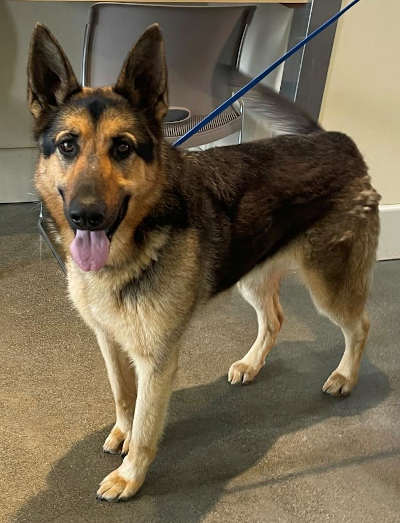
Female German shepherd
This 1-year-old female German shepherd has a black and tan coat.
She is in kennel No. 34, ID No. LCAC-A-5015.
Email Elizabeth Larson at

Curious Kids is a series for children of all ages. If you have a question you’d like an expert to answer, send it to
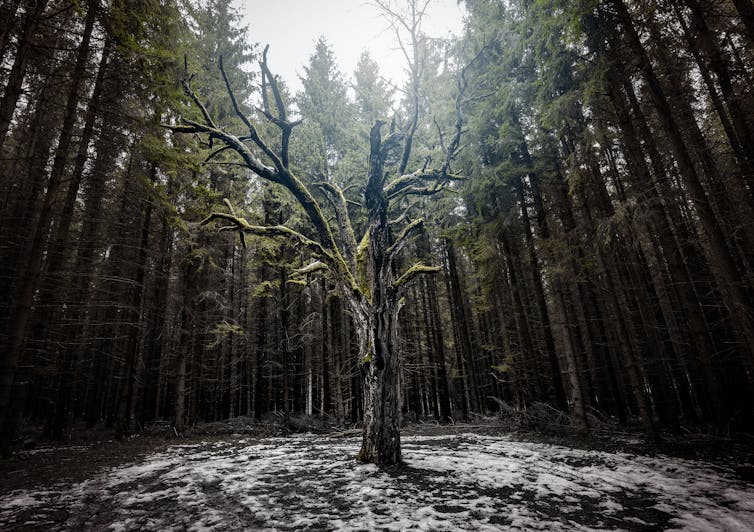
How and why do trees die? – Anish K., age 11, Boston, Massachusetts
Trees can die suddenly or quite slowly.
Fire, flood or wind can cause a quick death by severely damaging a tree’s ability to transport water and nutrients up and down its trunk.
Sometimes a serious insect attack or disease can kill a tree. This kind of death usually takes from a few months to a couple of years. Again, a tree loses its ability to move water and nutrients, but does so in stages, more slowly.
A tree can also die of what you might call old age.
I am a scientist who studies trees and the web of living things that surround them. The death of a tree is not exactly what it seems, because it directly leads to new life.
Different trees, different life spans
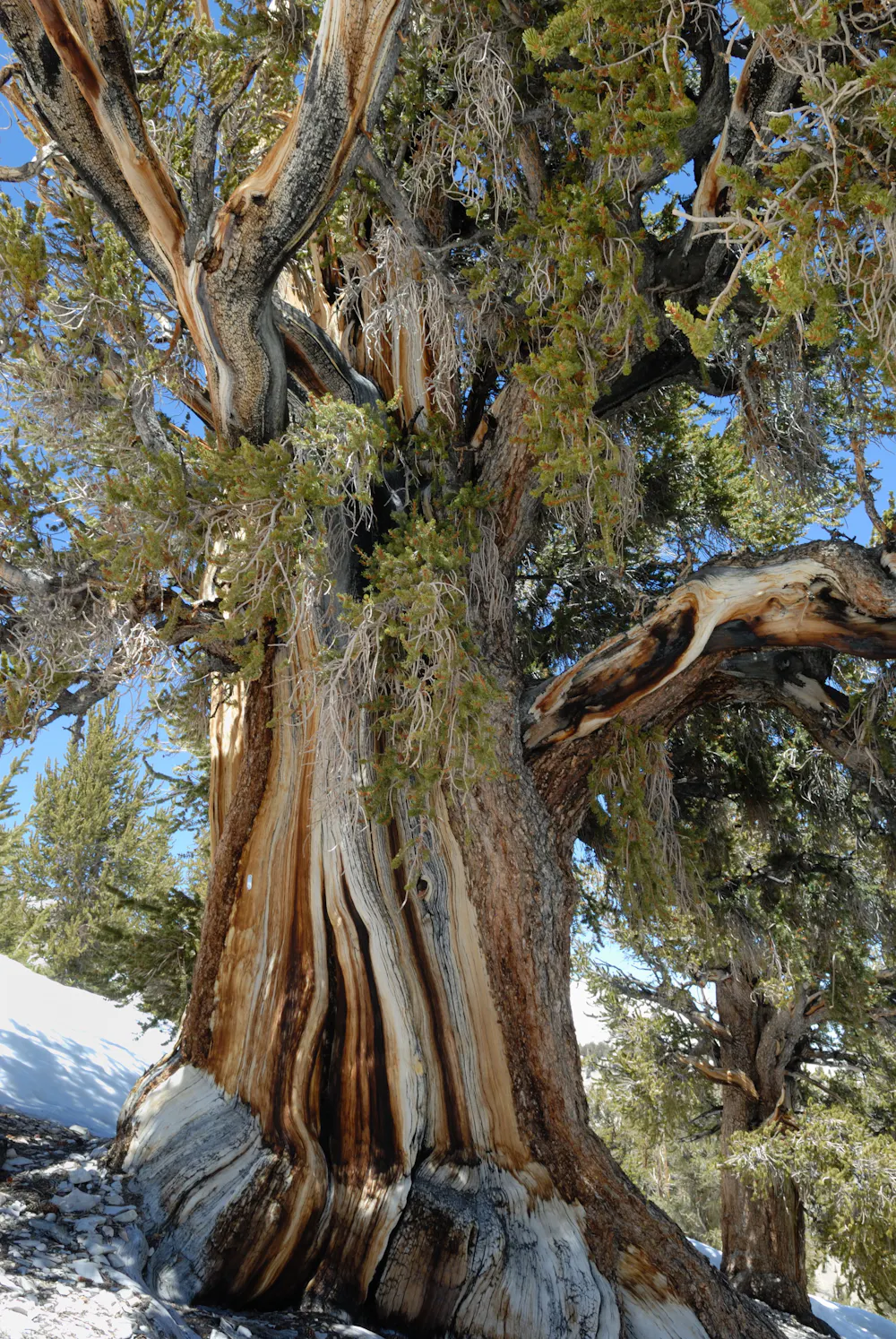
Trees can live an incredibly long time, depending on what kind they are. Some bristlecone pines, for instance, are among the oldest known trees and are more than 4,000 years old. Others, like lodgepoles or poplars, will have much shorter life spans, from 20 to 200 years. The biggest trees in your neighborhood or town are probably somewhere in that range.
You’ve probably noticed that different living things have different life spans – a hamster is generally not going to live as long as a cat, which isn’t going to live as long as a person. Trees are no different. Their life spans are determined by their DNA, which you can think of as the operating system embedded in their genes. Trees that are programmed to grow very quickly will be less strong – and shorter lived – than ones that grow very slowly.
But even a tough old tree will eventually die. The years and years of damage done by insects and microscopic critters, combined with abuse from the weather, will slowly end its life. The death process may start with a single branch but will eventually spread to the entire tree. It may take a while for an observer to realize a tree has finally died.
You might think of death as a passive process. But, in the case of trees, it’s surprisingly active.
The underground network
Roots do more than anchor a tree to the ground. They are the place where microscopic fungi attach and act like a second root system for a tree.
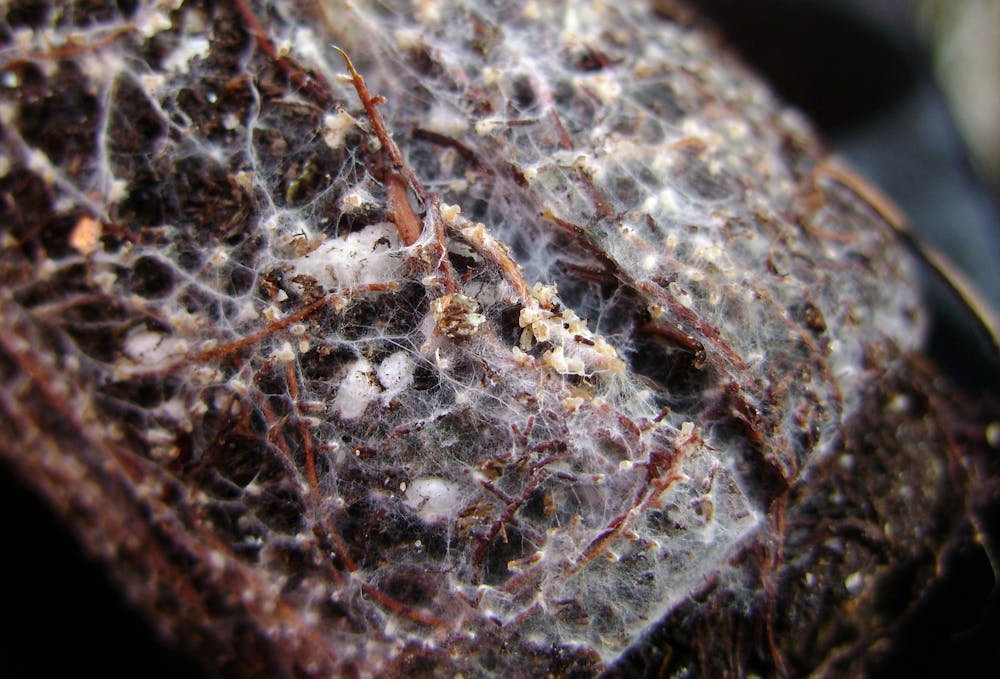

Fungi form long, superfine threads called hyphae. Fungal hyphae can reach much farther than a tree’s roots can. They gather nutrients from the soil that a tree needs. In exchange, the tree repays fungi with sugars it makes out of sunlight in a process known as photosynthesis.
You might have heard that fungi can also pass nutrients from one tree to another. Almost every tree you see is connected to other trees by a complex underground network of fungi, which allows trees to communicate and help one another out. Many scientists call this underground network the “wood wide web.”
As an old tree starts to die, it begins giving away its nutrients to nearby trees, including baby trees, through its fungal network.
Afterlife of a tree
Before it topples over, a dead tree can stand for many years, providing a safe home for bees, squirrels, owls and many more animals. Once it falls and becomes a log, it can host other living things, like badgers, moles and reptiles.

Logs also host a different kind of fungi and bacteria, called decomposers. These tiny organisms help break down big dead trees to the point where you would never know they had existed. Depending on the conditions, this process can take from a few years to a century or more. As wood breaks down, its nutrients return to the soil and become available for other living things, including nearby trees and fungal networks.
A tree leaves a legacy. While alive, it provides shade, home for many animals and a lifeline to fungi and other trees. When it dies, it continues to play an important role. It gives a boost to new trees ready to take its place, shelter to a different set of animals and, eventually, nourishment for the next generation of living things.
It’s almost as if a tree never truly dies but just passes its life on to others.
Hello, curious kids! Do you have a question you’d like an expert to answer? Ask an adult to send your question to
And since curiosity has no age limit – adults, let us know what you’re wondering, too. We won’t be able to answer every question, but we will do our best.
Camille Stevens-Rumann, Assistant Professor of Forest & Rangeland Stewardship, Colorado State University
This article is republished from The Conversation under a Creative Commons license. Read the original article.

NASA’s Ingenuity Mars Helicopter has completed its 50th flight on Mars. The first aircraft on another world reached the half-century mark on April 13, traveling over 1,057.09 feet in 145.7 seconds.
The helicopter also achieved a new altitude record of 59 feet (18 meters) before alighting near the half-mile-wide “Belva Crater.”
With Flight 50 in the mission logbook, the helicopter team plans to perform another repositioning flight before exploring the “Fall River Pass” region of Jezero Crater.
“Just as the Wright brothers continued their experiments well after that momentous day at Kitty Hawk in 1903, the Ingenuity team continues to pursue and learn from the flight operations of the first aircraft on another world,” said Lori Glaze, director of the Planetary Science Division at NASA Headquarters in Washington.
Ingenuity landed on the Red Planet in February 2021 attached to the belly of NASA’s Mars Perseverance rover and will soon mark the two-year anniversary of its first flight, which took place on April 19, 2021.
Designed as a technology demonstration that would fly no more than five times, the helicopter was intended to prove powered, controlled flight on another planet was possible. But Ingenuity exceeded expectations and transitioned into being an operations demonstration.
Every time Ingenuity goes airborne, it covers new ground and offers a perspective no previous planetary mission could achieve. Imagery from the helicopter has not only demonstrated how aircraft could serve as forward scouts for future planetary expeditions, but it has even come in handy for the Perseverance team.
By testing the helicopter’s limits, engineers are gathering flight data that can be used by engineers working on designs for possible future Mars helicopters. That includes the people designing the Mars Sample Return campaign’s proposed Sample Recovery Helicopters.
Riskier terrain
Since leaving the relatively flat confines of Jezero Crater’s floor on Jan. 19, Ingenuity has flown 11 times, setting new speed and altitude records of 14.5 miles per hour and 59 feet along the way.
Although the deep chill of winter and regional dust events (which can block the Sun’s rays from reaching the helicopter’s solar panel) have abated, Ingenuity continues to brown out at night. As a result, the Helicopter Base Station on the rover needs to search for the rotorcraft’s signal each morning at the time Ingenuity is predicted to wake up. And when the helicopter does fly, it now must navigate rugged and relatively uncharted terrain, landing in spots that can be surrounded by hazards.
“We are not in Martian Kansas anymore,” said Josh Anderson, Ingenuity operations lead at NASA’s Jet Propulsion Laboratory in Southern California. “We’re flying over the dried-up remnants of an ancient river that is filled with sand dunes, boulders, and rocks, and surrounded by hills that could have us for lunch. And while we recently upgraded the navigation software onboard to help determine safe airfields, every flight is still a white-knuckler.”
Frequent flyer
Beyond facing more challenging terrain, Ingenuity will also fly at a greater frequency in the coming days because the helicopter needs to remain within electronic earshot of the rover. With its AutoNav capability, Perseverance can travel hundreds of meters each day.
“Ingenuity relies on Perseverance to act as a communications relay between it and mission controllers here at JPL,” said Anderson. “If the rover gets too far ahead or disappears behind a hill, we could lose communications. The rover team has a job to do and a schedule to keep. So it’s imperative Ingenuity keeps up and is in the lead whenever possible.”
Perseverance recently completed exploring “Foel Drygarn,” a scientific target that may contain hydrated silica (which is of strong astrobiological interest). It is currently headed to “Mount Julian,” which will provide a panoramic view into nearby Belva Crater.
Feats of ingenuity
Built with many off-the-shelf components, such as smartphone processors and cameras, Ingenuity is now 23 Earth months and 45 flights beyond its expected lifetime. The rotorcraft has flown for over 89 minutes and more than 7.1 miles.
“When we first flew, we thought we would be incredibly lucky to eke out five flights,” said Teddy Tzanetos, Ingenuity team lead at JPL. “We have exceeded our expected cumulative flight time since our technology demonstration wrapped by 1,250% and expected distance flown by 2,214%.”
Surpassing expectations like this comes at a cost, however. With some helicopter components showing signs of wear and the terrain becoming more challenging, the Ingenuity team recognizes that every great mission must eventually come to an end. “We have come so far, and we want to go farther,” said Tzanetos. “But we have known since the very beginning our time at Mars was limited, and every operational day is a blessing. Whether Ingenuity’s mission ends tomorrow, next week, or months from now is something no one can predict at present. What I can predict is that when it does, we’ll have one heck of a party.”
More about ingenuity
The Ingenuity Mars Helicopter was built by JPL, which also manages the project for NASA Headquarters. It is supported by NASA’s Science Mission Directorate. NASA’s Ames Research Center in California’s Silicon Valley and NASA’s Langley Research Center in Hampton, Virginia, provided significant flight performance analysis and technical assistance during Ingenuity’s development.
AeroVironment Inc., Qualcomm, and SolAero also provided design assistance and major vehicle components. Lockheed Space designed and manufactured the Mars Helicopter Delivery System.