 How to resolve AdBlock issue?
News
The board will meet in closed session at 3 p.m. Thursday, April 13, with the regular session to begin at 5 p.m. at Yuba College, 2088 N. Beale Road, Building 300-Flavors, Marysville.
Members of the public can attend the meeting virtually through this Zoom link.
The Zoom Meeting ID is 852 1986 0695; the call-in number is 1-669-900-6833.
The district — which includes Woodland Community College and its Lake County campus in Clearlake — has been without a permanent chancellor since 2021, when Dr. Douglas Houston left.
Since July, 2021, Dr. James L.J. Houpis has served as interim chancellor.
Earlier this month, the district held public forums in Marysville and Woodland to introduce the four chancellor finalists: Dr. Beatriz Espinoza, Dr. Eugene Giovannini, Dr. Shouan Pan and Dr. Wei Zhou.
During the closed session on Thursday, the board is due to discuss the chancellor’s appointment.
On the agenda for the public portion of the meeting is the consideration of an employment agreement with a new chancellor.
The report for that employment agreement explains that before taking a final action on such an appointment, Government Code requires that an oral report must be given in open session regarding the compensation to be paid to the superintendent candidate.
The agenda packet doesn’t include a proposed employment contract, which appears to hinge on the outcome of the closed session.
“If negotiations of a Chancellor employment agreement are unsuccessful, this agenda item will be considered at a subsequent Board Meeting,” the report said.
Email Elizabeth Larson at
While the recreation area has since reopened, there is a considerable amount of brush that still needs to be cleared to allow fuller use of the park and trails.
On Saturday, April 15, Lake County Water Resources will host a Highland Springs Vegetation Cleanup Day from 9 a.m. to 2 p.m.
Participants will meet at the Highland Springs disc golf course.
Residents are encouraged to bring hand tools (no use of power tools will be permitted), gloves, sunscreen water and lunch, and join this event.
Volunteers will work together to drag brush into piles, cut brush into smaller pieces and clear pathways.
The Highland Springs Recreation area is located at 3600 E. Highland Springs Road in Lakeport. Continue on Highland Springs Road through the open gate, and the disc golf course will be on the right-hand side of the road. Some parking is available near the course.
Highland Springs Recreation Area is owned by the Lake County Watershed Protection District and managed by the Lake County Water Resources Department.
For more information, contact Water Resources at 707-263-2344 or
Among those who had ever lost a parent, 50.7% had lost their mother and 69.2% their father by age 50, according to an analysis of recent estimates from the 2021 Survey of Income and Program Participation (SIPP).
New data shows at what age we lose our mothers and fathers and how that pattern varies by race and ethnicity.
It shows that approximately 30.8% of people in the United States have lost their biological mother, 39.8% have lost their biological father, and 44.2% have lost at least one parent.
Parent mortality has become even more salient amid the Coronavirus (COVID-19) pandemic. As of February 8, 2023, the Centers for Disease Control and Prevention (CDC) reported over 1.1 million deaths from COVID-19 in the United States.
The lives lost to COVID-19 often mean the loss of a spouse, parent, child or caregiver. As of February 3, 2023, the Imperial College London estimates that over 222,500 children have lost one or both parents due to COVID-19 associated deaths in the United States alone.
Disparities in a wide variety of health outcomes, including mortality, have long been associated with race and ethnicity differences. Mortality rates from the COVID-19 pandemic also vary by race and ethnicity, with age-adjusted mortality rates higher for American Indian or Alaska Native, Black, Hispanic, and Native Hawaiian or other Pacific Islander individuals relative to Asian or White individuals.
This data provides recent estimates of parent mortality and changes between 2019 and 2021. Importantly, these years reflect data prior to (2019) and during (2021) the COVID-19 pandemic, allowing for comparisons. It uses data from the public-use files of the SIPP, which asks respondents whether their parents are alive and, for those who have lost a parent, their age when their parent(s) passed away.
Key highlights
Age:
• As people age, they are more likely to have lost a parent. For example, data from 2021 show that 4.3% of children ages 0-17 have lost at least one parent, compared to 11.5% of 18- to 29-year-olds and 23.4% of 30- to 39-year-olds.
• Overall, the percentage of people with a deceased father is greater than the percentage of people with a deceased mother. This difference is statistically significant at every age group tested (0-17, 18-29, 30-39, 40-49, 50-59, 60-69, 70+).
Race and Ethnicity:
• Based on data from 2021, about 19.6% of Black 18- to 29-year-olds have lost at least one parent. This is significantly higher than White alone (10.1%); White alone, non-Hispanic (9.5%); Asian alone (9.5%); Hispanic (11.5%); and all other non-Hispanic (11.9%) 18- to 29-year-olds. The same pattern holds true for 30- to 39-year-olds.
Comparisons between 2019 and 2021:
• For the population as a whole, there was no statistically significant difference in the percentage of people who had at least one parent deceased in 2019 compared to 2021. However, there was a significant increase in the percentage of people who had both parents deceased (25.7% to 26.4%), their father deceased (39.3% to 39.8%), and their mother deceased (30.3% to 30.8%).
• For the total population of Black alone and Hispanic individuals, the percentage with at least one parent deceased increased from 43.4% to 46.4% and 32.3% to 33.9%, respectively.
• The percentage of people with a deceased father increased for the Black alone and Hispanic populations. The percentage of people with a deceased mother increased for the Black alone population.
At what age did people lose their parents?
For those individuals who lost a parent, the SIPP asks how old they were when their parent passed away.
This information can be used to estimate the percentage of people who lost their parent in a given age range (e.g., 0-4, 5-9) and the percentage of people who lost their parent up to, and including, a given age. Some key findings from these data in 2021 include:
• The most common age ranges in which people lost their mother were 50-54 (13.6%), 55-59 (13.0%), and 60-64 (11.7%). Additionally, 5.7% lost their mother by age 15, 17.2% lost them by age 30, and 50.7% lost them by age 50.
• The most common age ranges in which people lost their father were 50-54 (11.5%), 45-49 (11.2%), and 40-44 (10.8%). Additionally, 10.3% lost their father by age 15, 29.0% lost them by age 30, and 69.2% lost them by age 50.
About the SIPP
SIPP is a nationally representative, longitudinal survey administered by the Census Bureau that provides comprehensive information on the dynamics of income, employment, household composition, and government program participation.
SIPP is also a leading source of data on economic well-being, family dynamics, education, wealth, health insurance, child care, and food security. SIPP interviews individuals for several years and provides monthly data about changes in household and family composition and economic circumstances over time. More information is available on the SIPP webpage.
George M. Hayward is a survey statistician in the Census Bureau’s Fertility and Family Statistics Branch.
The board will meet beginning at 9 a.m. Tuesday, April 11, in the board chambers on the first floor of the Lake County Courthouse, 255 N. Forbes St., Lakeport.
The meeting can be watched live on Channel 8, online at https://countyoflake.legistar.com/Calendar.aspx and on the county’s Facebook page. Accompanying board documents, the agenda and archived board meeting videos also are available at that link.
To participate in real-time, join the Zoom meeting by clicking this link.
The meeting ID is 962 0634 5867, pass code 866990. The meeting also can be accessed via one tap mobile at +16699006833,,96206345867#,,,,*866990#.
All interested members of the public that do not have internet access or a Mediacom cable subscription are encouraged to call 669-900-6833, and enter the Zoom meeting ID and pass code information above.
At 11:15 a.m., the board is scheduled to consider a resolution rescinding the 2017 formation of the Middle Region Town Hall and the 2018 amendment to change it to the Lucerne Area Town Hall in order to fulfill Supervisor EJ Crandell’s plan of establishing the Central Region Town Hall.
The board discussed the matter late last month. Crandell has not taken it to the community of Lucerne for a discussion.
The proposed resolution would include all of the 95458 zip code — not just the Lucerne community growth boundaries.
It also would allow nonresident property owners to be seated on the new board, a proposal which the Lucerne Area Town Hall’s members had specifically rejected in bylaws accepted last year both by that group and by the Board of Supervisors.
What’s changed since then is Crandell’s claims that he’s been contacted by community members who want to be included but haven’t been because of the limits.
In that time the Lucerne Area Town Hall also passed a resolution condemning a plan to put a homeless youth housing facility in the Lucerne Hotel, a plan for which Crandell’s wife has publicly advocated.
The full agenda follows.
CONSENT AGENDA
5.1: Adopt proclamation designating the month of April 2023 as Sexual Assault Awareness Month in Lake County.
5.2: Adopt proclamation designating the month of April 2023 and every April thereafter as Arts, Culture and Creativity Month in Lake County.
5.3: Approve late mileage claim in the amount of $20.67 for administration staff person.
5.4: Adopt resolution amending Resolution No. 2022-119 establishing position allocations for FY 2022-2023, Budget Unit 2702 (Planning), deleting one deputy Community Development director, and adding one deputy Community Development administrator position.
TIMED ITEMS
6.2, 9:07 a.m.: Pet of the Week.
6.3, 9:08 a.m.: National Poetry Month — Poem of the Week.
6.4, 9:09 a.m.: Presentation of proclamation designating the month of april 2023 as Sexual Assault Awareness Month in Lake County.
6.5, 9:10 a.m.: Presentation of proclamation designating the month of April 2023 and every April thereafter as Arts, Culture and Creativity Month in Lake County.
6.6, 9:15 a.m.: a) Consideration of resolution amending Resolutions 2022-15 and 2022-45 for the purpose of extending the end date for changes made to cannabis cultivation taxes in regards to suspension of CPI increases, using canopy area only, and a decrease of the tax by 50%; and b) discussion on permanent changes to cannabis cultivation taxes.
6.7, 9:45 a.m.: Public hearing for the consideration of the vacation of a portion of a roadway known as Robert's Road in the town of Middletown (A) resolution of Vacation; and (B) irrevocable offer of dedication.
6.8, 10:30 a.m.: Discussion and possible direction to extend the temporary emergency warming shelter in north Lakeport and to develop an interim shelter crisis plan.
6.9, 11:15 a.m.: Consideration of resolution rescinding Resolutions No. 2017-05 formation of the Middle Region Town Hall (MRTH) and 2018 – 334 amendment from MRTH to the Lucerne Area Town Hall (LATH) and Establishing the Central Region Town Hall (CeRTH) as the Municipal Advisory Committee for the Central Region in District 3.
UNTIMED ITEMS
7.2: Sitting as the Lake County Air Quality Management District Board of Directors, consideration of resolution establishing an operating reserve and transferring funds into Fund #299 Budget #8799 Reserves.
7.3: Consideration of the following Advisory Board Appointment: Mental Health Board.
7.4: Consideration of increase in county match amount for Area Agency on Aging due to population change and recommendation by governing board to increase staffing.
CLOSED SESSION
8.1: Public employee evaluation: Public Works Director Scott De Leon.
8.2: Public employee evaluation: Special Districts Administrator Scott Harter.
Email Elizabeth Larson at
The commission will meet beginning at 6 p.m. Tuesday, April 11, in the council chambers at Clearlake City Hall, 14050 Olympic Drive.
The agenda can be found here.
Submit comments and questions in writing for commission consideration by sending them to Administrative Services Director/City Clerk Melissa Swanson at
Community members also can participate via Zoom.
The meeting also can be watched on the city’s YouTube account.
To give the planning commission adequate time to review your questions and comments, please submit written comments before 4 p.m. Tuesday, April 11.
On the agenda is the swearing-in of new commissioners Christopher Inglis and Jack Smalley.
The Clearlake City Council selected Inglis and Smalley on March 2 to succeed Lisa Wilson and Erin McCarrick.
Inglis and Smalley join a five-member commission that includes Robert Coker, Terry Stewart and Fawn Williams.
During Tuesday’s meeting, the commission will appoint its chair and vice chair for the year, and will hold a review of Planning Commission norms and procedures.
Email Elizabeth Larson at

Many Americans breathed a sigh of relief when the Supreme Court left the Affordable Care Act in place following the law’s third major legal challenge in June 2021. This decision left widely supported policies in place, like ensuring coverage regardless of preexisting conditions, granting coverage for dependents up to age 26 on their parents’ plan and removing annual and lifetime benefit limits.
But now, millions of people in the U.S. are holding their breath again following a March 30, 2023 ruling in Braidwood v. Becerra that would eliminate free coverage for many basic preventive care services and medications.
Litigating preventive care
Section 2713 of the ACA requires insurers to offer full coverage of preventive services endorsed by one of three federal groups: the U.S. Preventive Services Task Force, the Advisory Committee on Immunization Practices or the Health Resources and Services Administration. If one of those groups recommends a preventive care service as essential to good health outcomes, then you shouldn’t have to pay anything out of pocket. For example, the CARES Act, which allocated emergency funding in response to the COVID-19 pandemic, used this provision to ensure COVID-19 vaccines would be free for many Americans.
Immunizations, including COVID-19 vaccines, require a recommendation from the Advisory Committee on Immunization Practices of the Centers for Disease Control and Prevention, while women’s health services require approval from the Health Resources and Services Administration. Most other preventive services require an A or B rating from the U.S. Preventive Services Task Force, an independent body of experts trained in research methods, statistics and medicine, and supported by the Agency for Healthcare Research and Quality.
The lead plaintiff in the ACA case, Braidwood Management, is a Christian for-profit corporation owned by Steven Hotze, a physician and conservative activist who has previously filed multiple lawsuits against the Affordable Care Act. Braidwood and its co-plaintiffs, a group of conservative Christian employers, objected to being forced to provide their 70 employees free access to pre-exposure prophylaxis, or PrEP, a medicine that is nearly 100% effective in preventing HIV infection. Hotze claimed that PrEP “facilitates and encourages homosexual behavior, intravenous drug use and sexual activity outside of marriage between one man and one woman,” despite a lack of evidence to support this. He also claimed that his religious beliefs prevent him from providing insurance that covers PrEP.
PrEP received an A rating from the U.S. Preventive Services Task Force in June 2019, paving the way for it to be covered at no cost for millions of people.
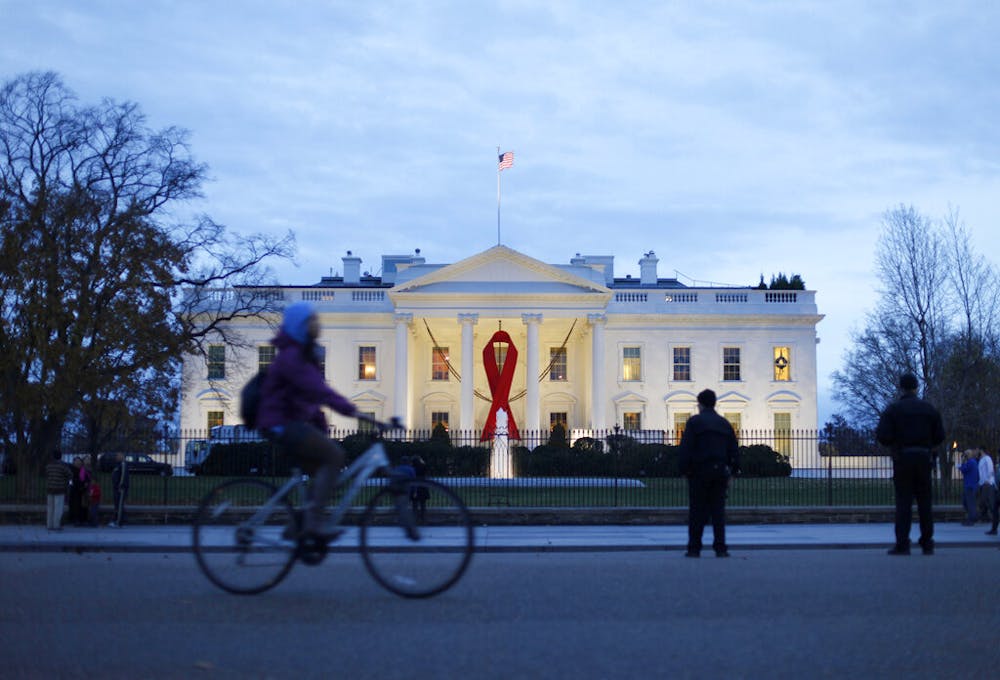
Though Section 2713 of the ACA doesn’t work perfectly, sometimes leaving patients frustrated by unexpected bills, it has made a huge difference in reducing costs for services like well-child visits and mammograms, just to name a few.
Over 150 million Americans are enrolled in private health insurance, allowing them to benefit from free preventive care, with about 60% using at least one free preventive service each year. Raising the cost barrier again for PrEP, for example, would disproportionately harm younger patients, people of color and those with lower incomes.
As public health researchers at Boston University and Tulane University who study health insurance and sexual health, we believe that prevention and health equity in the U.S. stand to take a big step backward with this policy in jeopardy.
What preventive services are affected?
The ruling in Braidwood rests in large part on the appointments clause of the U.S. Constitution, which specifies that certain governmental positions require presidential appointment and Senate confirmation, while other positions have a lower bar.
Texas federal District Judge Reed O'Connor ruled that because the U.S. Preventive Services Task Force is an independent volunteer panel and not made up of officers of the U.S. government, they do not have the appropriate authority to make decisions about which preventive care should be free, unlike the Advisory Committee on Immunization Practices or Health Resources and Services Administration. O'Connor also ruled that being forced to cover PrEP violated the religious freedom of the plaintiffs.
Following his initial ruling in September, both sides submitted briefs that tried to inform the “remedy,” or solution, the judge would ultimately recommend. He could have chosen, as the federal government advocated, to grant only the plaintiffs an exemption from covering PrEP under the Religious Freedom Restoration Act. But O'Connor instead chose to make his “remedy” apply nationally and cover more services.
He invalidated all of the task force’s recommendations since the Affordable Care Act was passed in March 2010, returning the power to insurers and employers to decide which, if any, preventive care would remain free to patients in their plans. A few of the recommendations covered by his ruling include PrEP; blood pressure, diabetes, lung and skin cancer screenings; and medications to lower cholesterol and reduce breast cancer risk. As of 2022, 15 states have laws with ACA-like requirements for plans in the insurance marketplace, but not for large employer plans generally exempt from state oversight.
Insurance contracts are typically defined by calendar year, so most people will see these changes starting only in 2024. Importantly, these services will likely still need to be covered by health insurance plans as essential health benefits through a separate provision of the ACA – they just won’t be free anymore.
Other U.S. Preventive Services Task Force recommendations and those made by the Advisory Committee on Immunization Practices or Health Resources and Services Administration – namely, immunizations and contraception, respectively – will remain free to patients for now.
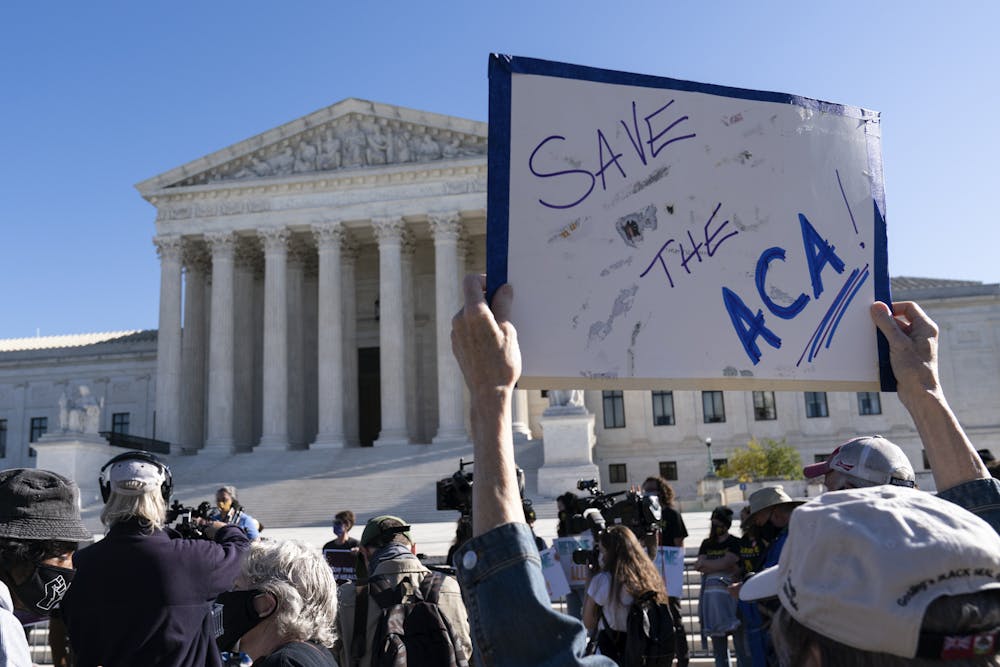
What’s next?
The federal government appealed the ruling to the 5th U.S. Circuit Court of Appeals on March 31, 2023, buoyed by a coordinated response from 23 patient advocacy groups. They have asked for a stay while the case continues, which pauses the effects of the ruling. If either O'Connor or a higher court grants their request, it will leave the status quo of free preventive care in place.
But there are also concerns that either the 5th Circuit orthe Supreme Court could take the ruling even further, endangering the free coverage of contraception and other preventive care that remains in place.
The ending to this case may still be several years off, with even more frustration ahead as the courts undermine national goals in fighting cancer, diabetes and ending the HIV epidemic.
Portions of this article originally appeared in previous articles published on Sept. 7, 2021, Dec. 1, 2021, and Sept. 13, 2022.
Paul Shafer, Assistant Professor of Health Law, Policy and Management, Boston University and Kristefer Stojanovski, Research Assistant Professor of Social, Behavioral and Population Sciences, Tulane University
This article is republished from The Conversation under a Creative Commons license. Read the original article.