 How to resolve AdBlock issue?
News
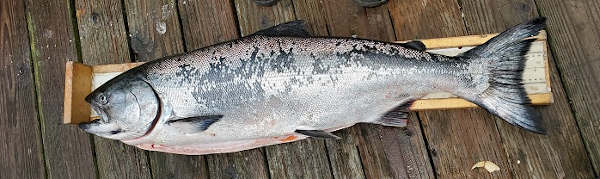
On Thursday, Gov. Gavin Newsom and Lt. Gov. Eleni Kounalakis announced a request for a federal fishery disaster declaration to support the salmon fishing industry as it faces a closure for the 2023 salmon season.
The Pacific Fishery Management Council, or PFMC, on Thursday acted unanimously to recommend a full closure of California’s commercial and recreational ocean salmon season.
Options put forward by the PFMC last month for public review, which were developed by industry representatives, all proposed closure of both commercial and sport ocean salmon fisheries off California.
This action follows recent projections showing Chinook salmon abundance off California is at historic lows.
Recognizing the importance of salmon to California’s commercial fisheries, acting Gov. Kounalakis, on behalf of Gov. Newsom, submitted the request to U.S. Secretary of Commerce Gina Raimondo immediately after the Pacific Fishery Management Council made its recommendation.
If approved, the federal fishery disaster declaration would begin the process of providing needed relief to fishing communities financially impacted by a closure.
“Countless families, coastal communities and tribal nations depend on salmon fishing – it’s more than an industry, it’s a way of life. That’s why we’re requesting expedited relief from the federal government,” said Newsom. “We’re committed to working with the Biden Administration and Congress to ensure California’s fisheries aren’t left behind.
“To California’s salmon fishing communities, we’re working to get you expedited relief,” said Lieutenant Governor Kounalakis. “The Federal Fishery Disaster Declaration we’re requesting today is vital to supporting our coastal regions, and we look forward to getting families the help they need.”
After reviewing the council’s recommendation, it is expected that the National Marine Fisheries Service will take regulatory action to enact the closure, effective in mid-May.
In addition, the California Fish and Game Commission will consider whether to adopt a closure of inland salmon fisheries at its teleconference on May 17.
“This decision, while difficult, is intended to allow salmon to recover in order to provide future fishing opportunities,” said California Department of Fish and Wildlife Director Charlton H. Bonham. “Salmon are an iconic species in California. We treasure them for their intrinsic, cultural, recreational and commercial values. The state is committed to ensuring long-term survival of our salmon runs and supporting our struggling fishing communities. We are looking into all possible options to bring relief as soon as possible to fishing businesses to addresses costs incurred to maintain their commercial licenses and lost revenue when the season is entirely closed.”
Prolonged and historic drought, severe wildfires and associated impacts to spawning and rearing habitat, harmful algal blooms, and ocean forage shifts have combined to result in some of the lowest stock abundance forecasts on record for Sacramento River Fall Chinook and Klamath River Fall Chinook.
The low ocean abundance forecasts, coupled with low 2022 returns, led the PFMC to recommend full closure of California’s commercial and recreational ocean salmon fisheries.
In part, the low returns and abundance forecasts are due to difficult environmental factors faced by these salmon on their initial journey out to the ocean three years ago.
Following a drought sequence, the 2016-2017 Sacramento and San Joaquin numbers were less than 135,000 returning fall-run Chinook.
Three years later, after rains, it was over 200,000. Similar rebounds happened after 2010 had above average rainfall.
Salmon returns three years later more than doubled from around 163,000 to around 448,000. These patterns indicate that salmon returning three years from now will benefit from the ample precipitation California has experienced this year.
“This closure is painful,” said Director Bonham. “We deeply appreciate the fishing community in California voicing support for this serious step to help these stocks recover. We have worked with our commercial and recreational partners over the years to rebuild other fisheries following closures and now some of those, like some groundfish populations, are providing opportunities for fishing for the first time in years.”
More information regarding the PFMC actions can be found on the PFMC website at www.pcouncil.org.
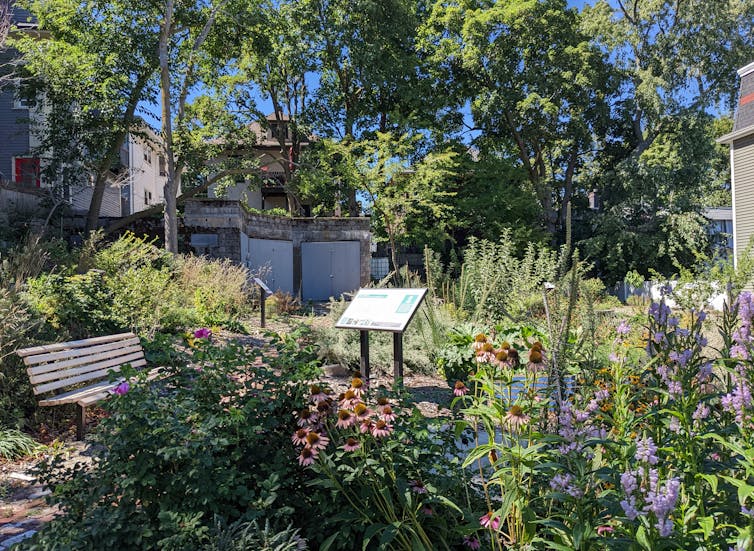
More than half of all people on Earth live in cities, and that share could reach 70% by 2050. But except for public parks, there aren’t many models for nature conservation that focus on caring for nature in urban areas.
One new idea that’s gaining attention is the concept of food forests – essentially, edible parks. These projects, often sited on vacant lots, grow large and small trees, vines, shrubs and plants that produce fruits, nuts and other edible products.
Unlike community gardens or urban farms, food forests are designed to mimic ecosystems found in nature, with many vertical layers. They shade and cool the land, protecting soil from erosion and providing habitat for insects, animals, birds and bees. Many community gardens and urban farms have limited membership, but most food forests are open to the community from sunup to sundown.
As scholars who focus on conservation, social justice and sustainable food systems, we see food forests as an exciting new way to protect nature without displacing people. Food forests don’t just conserve biodiversity – they also promote community well-being and offer deep insights about fostering urban nature in the Anthropocene, as environmentally destructive forms of economic development and consumption alter Earth’s climate and ecosystems.
Protecting nature without pushing people away
Many scientists and world leaders agree that to slow climate change and reduce losses of wild species, it’s critical to protect a large share of Earth’s lands and waters for nature. Under the U.N. Convention on Biological Diversity, 188 nations have agreed on a target of conserving at least 30% of land and sea areas globally by 2030 – an agenda known popularly as 30x30.
But there’s fierce debate over how to achieve that goal. In many cases, creating protected areas has displaced Indigenous peoples from their homelands. What’s more, protected areas are disproportionately located in countries with high levels of economic inequality and poorly functioning political institutions that don’t effectively protect the rights of poor and marginalized citizens in most cases.
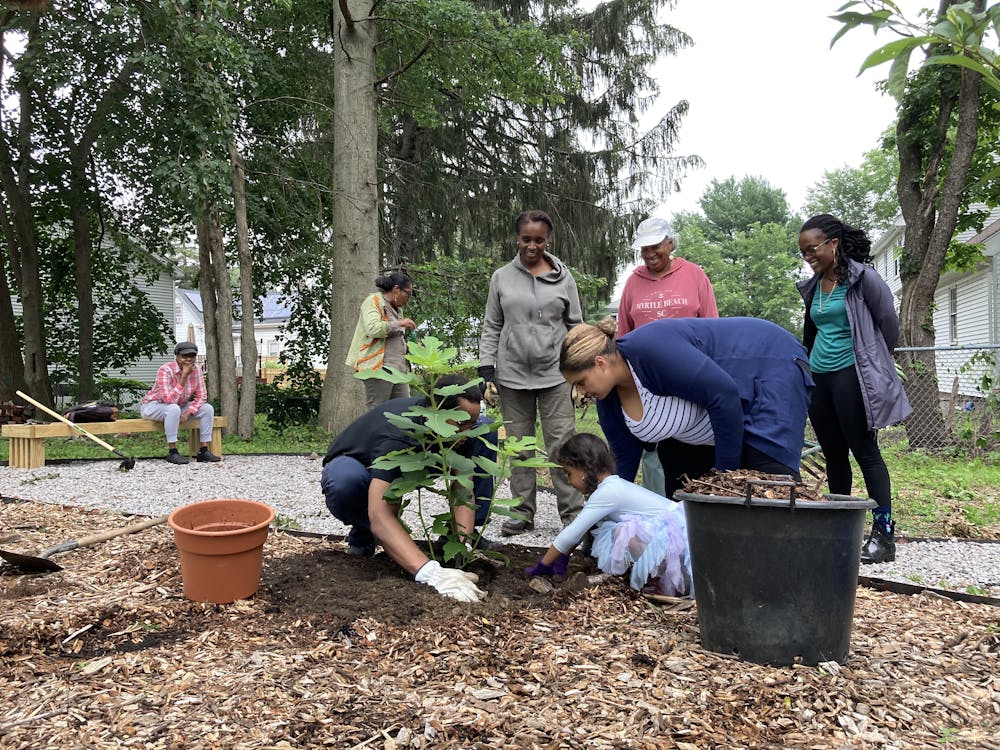
In contrast, food forests promote civic engagement. At Beacon Food Forest in Seattle, volunteers worked with professional landscape architects and organized public meetings to seek community input on the project’s design and development. The city of Atlanta’s Urban Agriculture Team partners with neighborhood residents, volunteers, community groups and nonprofit partners to manage the Urban Food Forest at Browns Mill.
Block by block in Boston
Boston is famous for its parks and green spaces, including some designed by renowned landscape architect Frederick Law Olmsted. But it also has a history of systemic racism and segregation that created drastic inequities in access to green spaces.
And those gaps still exist. In 2021, the city reported that communities of color that had been subjected to redlining in the past had 16% less parkland and 7% less tree cover than the citywide median. These neighborhoods were 3.3 degrees Fahrenheit (1.8 degrees Celsius) hotter during the day and 1.9 F (1 C) hotter at night, making residents more vulnerable to urban heat waves that are becoming increasingly common with climate change.
Encouragingly, Boston has been at the forefront of the national expansion of food forests. The unique approach here places ownership of these parcels in a community trust. Neighborhood stewards manage the sites’ routine care and maintenance.
The nonprofit Boston Food Forest Coalition, which launched in 2015, is working to develop 30 community-driven food forests by 2030. The existing nine projects are helping to conserve over 60,000 square feet (5,600 square meters) of formerly vacant urban land – an area slightly larger than a football field.
Neighborhood volunteers choose what to grow, plan events and share harvested crops with food banks, nonprofit and faith-based meal programs and neighbors. Local collective action is central to repurposing open spaces, including lawns, yards and vacant lots, into food forests that are linked together into a citywide network. The coalition, a community land trust that partners with the city government, holds Boston food forests as permanently protected lands.
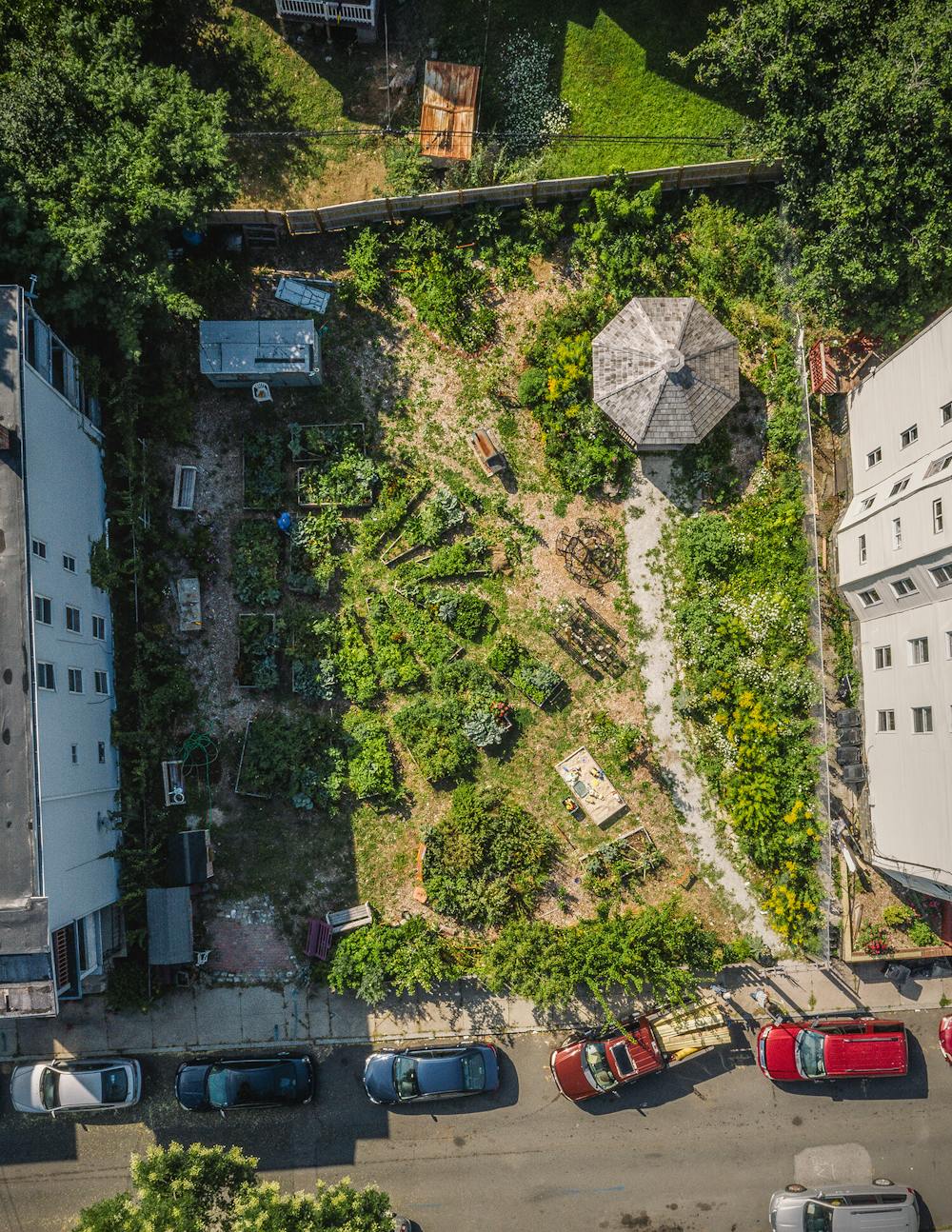
Boston’s food forests are small in size: They average 7,000 square feet (650 square meters) of reclaimed land, about 50% larger than an NBA basketball court. But they produce a wide range of vegetables, fruit and herbs, including Roxbury Russet apples, native blueberries and pawpaws, a nutritious fruit native to North America. The forests also serve as gathering spaces, contribute to rainwater harvesting and help beautify neighborhoods.
The Boston Food Forest Coalition provides technical assistance and fundraising support. It also hires experts for tasks such as soil remediation, removing invasive plants and installing accessible pathways, benches and fences.
Hundreds of volunteers take part in community work days and educational workshops on topics such as pruning fruit trees in winter. Gardening classes and cultural events connect neighbors across urban divides of class, race, language and culture.
A growing movement
According to a crowd-sourced repository, the U.S. has more than 85 community food forests in public spaces from the Pacific Northwest to the Deep South. Currently, most of these sites are in larger cities. In a 2021 survey, mayors from 176 small cities (with populations under 25,000) reported that long-term maintenance was the biggest challenge of sustaining food forests in their communities.
From our experience observing Boston’s approach close up, we believe its model of community-driven food forests is promising. The city sold land to the Boston Food Forest Coalition’s community land trust for $100 per parcel in 2015 and also funded initial construction and planting operations. Since then, the city has made food forests an important part of the city’s open spaces program as it continues to sell parcels to the community land trust at the same price.
Smaller cities with much lower tax bases may not be able to make the same sort of investments. But Boston’s community-driven model offers a viable approach for maintaining these projects without burdening city governments. The city has adopted innovative zoning and permitting ordinances to support small-scale urban agriculture.
Building a food forest brings together neighbors, neighborhood associations, community-based organizations and city agencies. It represents a grassroots response to the interconnected crises of climate change, environmental degradation and social and racial inequity. We believe food forests show how to build a just and sustainable future, one person, seedling and neighborhood at a time.
Orion Kriegman, the founding executive director of the Boston Food Forest Coalition, contributed to this article.
Karen A. Spiller, Thomas W. Haas Professor in Sustainable Food Systems, University of New Hampshire and Prakash Kashwan, Associate Professor of Environmental Studies, Brandeis University
This article is republished from The Conversation under a Creative Commons license. Read the original article.
The forecast shows chances of rain from Thursday through Saturday, with rainfall totals of less than half an inch.
On Thursday night, winds with gusts of more than 20 miles per hour are expected.
On Sunday, Easter day, conditions are forecast to be partly sunny during the day and cloudy at night.
There will be slight chances of rain again on Monday, followed by clear conditions Tuesday and Wednesday.
Daytime temperatures this week will range from the mid 50s on Thursday and Friday to the high 60s on Easter day.
Temperatures at night are expected to be in the high 30s late this week to the mid 40s over the weekend.
Email Elizabeth Larson at
Mayor Stacey Mattina presented a proclamation stating that volunteers are the keystone of the Lakeport community and that the city of Lakeport recognizes and thanks those who give their time and talent to benefit the community.
Those honored included Mark Mitchell, Nathan Maxman, Kurt Combs, Scott Barnett, Kipp Knorr, Jeff Warrenburg, Michael Froio and Michael Green, members of the Lakeport Planning Commission in recent years.
The Measure Z Advisory Committee members — Meg Harper, Susan King, Zach Jordan, Dennis Rollins, Laura Somes, Verna Schaffer, Annette Hopkins and Nathan Speed — were recognized for their work.
Other honorees included the Lake County Vector Control District Board representing Lakeport, George Spurr; and Lakeport Fire Protection District directors Alan Flora, Andy Lucas and Jeff Warrenburg.
The Lakeport Economic Development Advisory Committee members Wilda Shock, Denise Combs, Bonnie Darling, Jeff Davis, William Eaton, Pamela Harpster, JoAnn Saccato, Laura McAndrews Sammel, Monica Flores, Candy De Los Santos, Tim Stephens, Alicia Russell, Marie Schrader and Bob Santana also were honored.
President George H.W. Bush launched the 1000 Points of Light in 1991, establishing April as National Volunteer Month.
The month honors volunteers in communities and celebrates the impact of people who engage in civic action.
Citizens interested in serving on commissions and committees in the city of Lakeport are invited to contact Deputy City Clerk Hilary Britton at
Defensible space helps keep the area around a home free of excess or dead vegetation like grasses, shrubs, trees, leaves and fallen pine needles.
When defensible space is maintained, there is less flammable material near homes to ignite and provides firefighters space to defend personal property during a fire.
Home hardening updates homes with more fire-resistant materials, like replacing a wood shake or shingle roof with a Class A roof (e.g., asphalt-fiberglass composition shingles, clay or cementitious tiles), screening all vents and gaps around eaves with flame- and ember-resistant materials, using noncombustible siding (e.g., stucco, steel or fiber cement) and installing multi-pane windows with tempered glass.
Although the current wildfire risk is low, dry periods and drought in the wildland interface will present a serious ongoing threat.
From 2016 to 2022, more than 30 Lake County wildfires destroyed homes and public infrastructure, disrupted essential services, and created dangerous burn scars susceptible to flash flooding and debris flows following moderate to heavy rainfall.
North Coast Opportunities will operate the Lake County Home Hardening Program, bringing nearly 10 years of experience in disaster recovery, mitigation, and education. The program will target one area within Lake County, the Kelseyville Riviera Community Association.
“Our team has been working diligently to meet all the requirements to bring these funds to Lake County. With FEMA funding, we’re excited to officially launch our program and start making homes safer, within our target community,” said Deanna Fernweh, NCO’s Home Hardening Program manager.
The $22.2 million project includes a $19.9 million grant from FEMA’s Hazard Mitigation Grant Program, or HMGP, with the remaining $2.2 million from nonfederal sources.
Patty Bruder, NCO’s executive director added, “Like all NCO projects, we are focused on building a strong, local collaboration with Lake County, the Lake County Fire Protection District, and various partners around the county, to ensure this project’s success.”
“We are excited to continue this collaboration with NCO,” said Jessica Pyska, Lake County’s District 5 supervisor and current board chair. “Bringing this pilot project to Lake County will allow us to demonstrate community-level investments can make a huge difference. Replicable models like these can have tremendous value as we collectively face global climate change.”
NCO is currently seeking letters of interest from qualified vendors skilled in construction and defensible space to join the Home Hardening Program.
To read the full scope of work and find more information, visit www.ncohomehardening.org or call 707-461-0760.
FEMA’s HMGP helps states, territories, federally-recognized tribes, local communities and certain private, nonprofit organizations become more resilient to potential infrastructure damage and reduce future disaster costs. In the past 32 years, FEMA has invested more than $1.4 billion to reduce disaster risk in California.
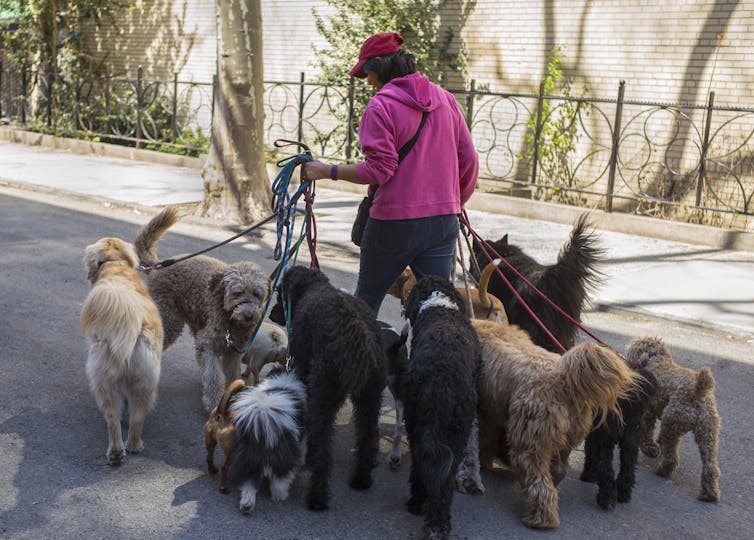
Do you rent out your home a few weekends a year through Airbnb? Sell stuff on Etsy? Get paid for pet-sitting? If you, like many Americans, make at least US$600 a year with a side hustle of any kind, the way you pay taxes may soon change.
New rules are going to make sure the Internal Revenue Service gets more information about payments made to Venmo and other apps often used for informal work. And this new system will enhance the agency’ ability to detect any underreported taxable income.
I am a tax researcher studying the IRS’ use of technology and how that affects taxpayers. I think it’s important that everyone understand why this may matter to them now or in the near future.
Why you should care
For people who earn most of their income through steady jobs, these changes probably don’t make much of a difference. The IRS has received the same information from employers about the income that goes on W-2 and 1099 forms since the 1940s.
However, that’s not true of income from other sources. If you make money cleaning houses, catering out of your own kitchen or through another informal side hustle in exchange for cash, chances are this work has been “under the table.”
It’s been up to you, not your customers, to report any income earned this way to the IRS for tax purposes. And there is a good chance that you didn’t, given that the underground economy makes up at least one-tenth of the overall economy.
That’s changing, in part because of how informal transactions happen. It’s far more common these days for customers to make these payments through apps like Venmo, Stripe and Square or online platforms such as Etsy, Poshmark, Rover and Upwork than to use cash or checks.
This can even include illicit activities, like drug dealing. And believe it or not, even when you make money through illegal transactions, the IRS still requires these payments to be reported for tax purposes.
The IRS has long identified informal payments as a significant source of the “tax gap” – the difference between what taxpayers owe and what they pay.
Modern technology makes it easier to get paid for side hustles and odd jobs without having to keep track of stacks of bills and piles of coins. It also better equips the agency to collect taxes on those underreported sources of income.

What’s changing
The amount of information that the IRS will receive about traditionally “under the table” work is growing.
That’s because the $1.9 trillion COVID-19 relief package President Joe Biden signed in March 2021 lowered the threshold for what third-party payment companies like Venmo will report to taxpayers and the IRS.
Individuals, businesses and nonprofits that earn more than $600 through various online merchants will receive a summary of that income data on a Form 1099-K – as of the 2023 tax year – and importantly, the IRS will too.
That means companies like Venmo, Etsy and Airbnb will be required to issue these tax documents to anyone earning more than $600 on their sites.
Through 2022, the threshold for these companies to report income to the IRS was $22,000. The much lower cutoff, starting in 2023, means that many Americans who don’t make much money on these sites – and possibly didn’t feel the need to report it on their tax returns – will be forced to change their ways. Taxpayers were, in fact, always required to report this income, and now the IRS will also receive a summary of these earnings that should show up as well on tax returns.
The change to a $600 threshold was supposed to occur for taxes owed on 2022 income but was delayed at the federal level by a year because of taxpayer confusion and a lack of clear guidance.
Companies like Venmo are getting ready to make the change by withholding taxes from business payments as soon as June 2023.
What taxpayers need to do
If you use an app like Venmo for both personal and business use, creating a separate business account may ease record-keeping. That way, you can separate the non-taxable money you received from relatives who were chipping in for that group gift you bought your grandma for her birthday from the taxable payments you got for mowing your neighbor’s lawn.
Anyone earning more than $600 from a side hustle through an online platform in 2023 should be on the lookout for a 1099-K in early 2024. That form may make record-keeping easier, just like getting a W-2 from an employer does.
If you are a taxpayer with earnings not currently reported to you on a tax form like a W-2 or a 1099, one of the most helpful things that you can do to ensure compliance with tax law is to keep good records of all your income. The IRS and other sources publish excellent resources to help you understand what income is and is not taxable.
From now on, as before, you should record all of your earnings from every source – and keep in mind that the IRS is getting more access to data regarding transactions than it used to have.
Erica Neuman, Assistant Professor of Accounting, University of Dayton
This article is republished from The Conversation under a Creative Commons license. Read the original article.