 How to resolve AdBlock issue?
News
The commemoration of National Day of Awareness for Missing and Murdered Indigenous People will take place from 2 to 7 p.m. at 1950 Parallel Drive in Lakeport.
Everyone is welcome.
Guest speakers will include Daniel Vigil-Masten, Lisa Diaz, Elizabeth Quiroz and Bernadette Smith, with keynote speaker Mark Pooley.
May 5 was chosen as the date to honor and bring awareness of Missing and Murdered Indigenous People, or MMIP, because that is the birthday of Hanna Harris, a tribal citizen of the Northern Cheyenne Tribe, who would have turned 31 this year.
Harris was only 21 on July 4, 2013, when she left the Northern Cheyenne Indian Reservation to go into nearby Lame Deer, Montana, to watch the Independence Day fireworks. She never returned home. Her immediate family reported her missing. Four days later she was discovered deceased!
Harris’ horrific murder, observed through the 2018 Hanna’s Act, authorizes Montana Department of Justice to assist local law enforcement in missing persons cases.
Harris and countless other Missing and Murdered Indigenous Persons are honored by Native Americans across the United States by wearing red, attending rallies, marathons, and other community events.
On May 4, 2021, President Joe Biden signed a proclamation to declare and designate May 5 as National Missing and Murdered Indigenous People Awareness Day and he repeated the process again on May 4, 2022.
At the May 5 event in Lakeport, there will be food, refreshments, MMIP T-shirts, bandannas, water bottles and tote bags while supplies last.
For more information, contact Darnell Aparicio at 707-533-3044.
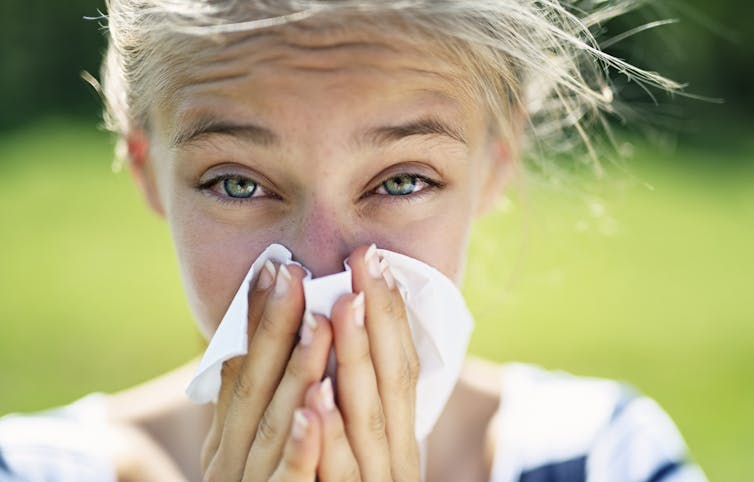
If you’re feeling the misery of allergy season in your sinuses and throat, you’re probably wondering what nature has in store for you this time – and in the future.
Pollen allergies affect over 30% of the global population, making them a significant public health and economic issue as people feel ill and miss work. Our research shows that, as greenhouse gases warm the planet, their effects are driving longer and more intense pollen seasons.
To help allergy sufferers manage their symptoms in our changing climate, we’re building better pollen forecasts for the future.
As atmospheric scientists, we study how the atmosphere and climate affect trees and plants. In a 2022 study, we found that the U.S. will face up to a 200% increase in total pollen this century if the world continues producing carbon dioxide emissions at a high rate. Pollen season in general will start up to 40 days earlier in the spring and last up to 19 days longer than today under that scenario.
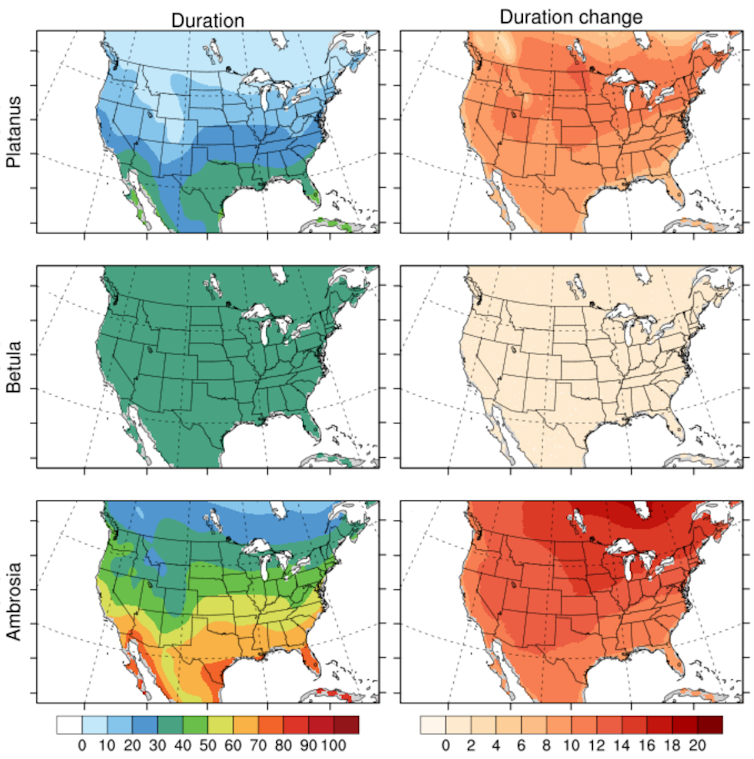
While most studies focus on pollen overall, we zoomed in on more than a dozen different types of grasses and trees and how their pollen will affect regions across the U.S. in different ways. For example, species like oak and cypress will give the Northeast the biggest increase, but allergens will be on the rise just about everywhere, with consequences for human health and the economy.
Why pollen is increasing
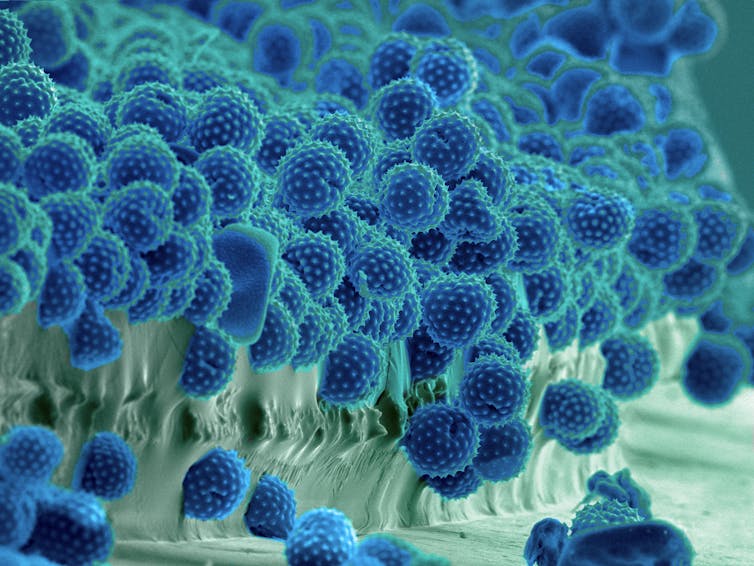
Let’s start with the basics. Pollen – the dustlike grains produced by grasses and plants – contains the male genetic material for a plant’s reproduction.
How much pollen is produced depends on how the plant grows. Rising global temperatures will boost plant growth in many areas, and that, in turn, will affect pollen production.
Warmer temperatures will extend the growing season, allowing plants to grow and emit pollen for longer periods. But temperature is only part of the equation. We found that a potentially greater driver of the future pollen increase will be rising carbon dioxide emissions from sources such as vehicles and power plants. Carbon dioxide fuels photosynthesis, leading to increased growth and the potential for more pollen production.


Pollen changes will vary by region
We looked at 15 different pollen types, rather than treating all pollen the same as many past studies have. Our study found that the amount of pollen increase in a specific region depends on the types of vegetation.
Typically, pollination starts with leafy deciduous trees in late winter and spring. Alder, birch and oak are the three top deciduous trees for causing allergies, though there are others, like mulberry. Grass pollen becomes more prevalent in the summer, followed by ragweed in late summer. In the Southeast, evergreen trees like mountain cedar and juniper (in the cypress family) start in January. In Texas, “cedar fever” is the equivalent of hay fever.
We found that in the Northeast, pollen seasons for a lot of allergenic trees will increasingly overlap as temperatures and carbon dioxide emissions rise. For example, it used to be that maple trees would release pollen first, and then birch would pollinate. Now we see more overlap of their pollen seasons.
In general, pollen season changes are greater in the northern United States than in the South, because of larger temperature increases in northern areas in future climate projections.
Southeastern regions, including Florida, Georgia and South Carolina, can expect large grass and weed pollen increases in the future. The Pacific Northwest is likely to see peak pollen season a month earlier because of the early pollen season of alder.
Allergy problems are already on the rise. A study in 2021 found that the overall pollen season was already about 20 days longer in North America than it was in 1990 and pollen concentrations were up about 21%.
Silver lining: We can improve pollen forecasting
Most pollen forecasts right now provide a very broad estimate of where and when pollen counts will be high. Part of the problem is that there aren’t many observing stations for pollen counts. Most are run by allergy clinics, and there are fewer than 200 of these stations distributed across the country. Michigan, where we live, doesn’t have any that are currently operating.
It’s a very labor-intensive process to measure different types of pollen. As a result, current forecasts have a lot of uncertainties. These likely are based in part on what a station has observed in the past and the weather forecast.
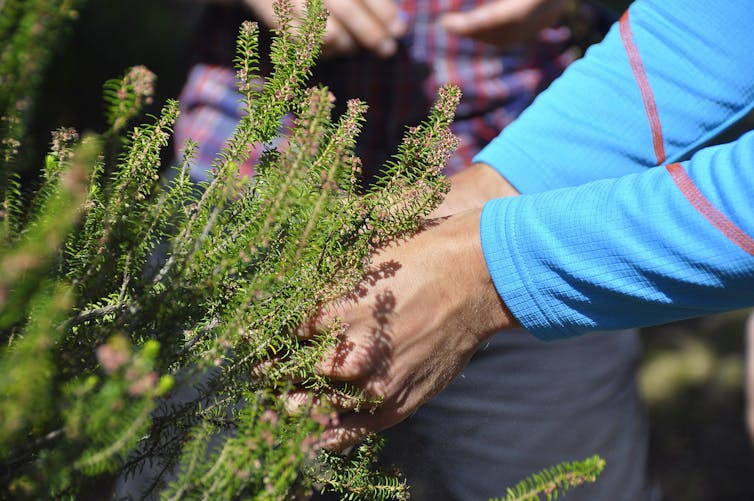

Our model, if integrated into a forecasting framework, could provide more targeted pollen forecasts across the country.
We can estimate where the trees are from satellite data and on-the-ground surveys. We also know how temperature influences when pollen comes out – what scientists call the phenology of the pollen. With that information, we can use meteorological factors like wind, relative humidity and precipitation to figure out how much pollen gets into the air, and atmospheric models can show how it moves and blows around, to create a real-time forecast.
We’re currently working with a National Oceanic and Atmospheric Administration lab about ways to integrate that information into a tool for air quality forecasting. Our next step is to evaluate these forecast tools and make information available to the public.
There are still some unknowns when it comes to long-term pollen projections. For example, scientists don’t fully understand why plants produce more pollen in some years than others, and currently we cannot include these changes in our models. It’s also not fully clear how plants will respond if carbon dioxide levels go through the roof. Ragweed and residential trees are also hard to capture. There are very few ragweed surveys showing where these plants are growing in the U.S., but that can be improved.
This is an update to an article originally published March 15, 2022.
Yingxiao Zhang, Ph.D. Student in Atmospheric Science, University of Michigan and Allison L. Steiner, Professor of Atmospheric Science, University of Michigan
This article is republished from The Conversation under a Creative Commons license. Read the original article.
Dogs available for adoption this week include mixes of Akita, Anatolian shepherd, Australian cattle dog, Belgian Malinois, border collie, Chihuahua, German shepherd, Great Pyrenees, husky, Labrador retriever, pit bull and terrier.
Dogs that are adopted from Lake County Animal Care and Control are either neutered or spayed, microchipped and, if old enough, given a rabies shot and county license before being released to their new owner. License fees do not apply to residents of the cities of Lakeport or Clearlake.
The following dogs at the Lake County Animal Care and Control shelter have been cleared for adoption.
Call Lake County Animal Care and Control at 707-263-0278 or visit the shelter online for information on visiting or adopting.

Female pit bull terrier puppy
This 3-month-old female American pit bull terrier puppy has a short black and white coat.
She is in kennel No. 4, ID No. LCAC-A-4788.

Female German shepherd-border collie
This 1-year-old female German shepherd-border collie mix has a long red and white coat.
She is in kennel No. 7, ID No. LCAC-A-5048.

Male border collie-shepherd mix
This 2-year-old male border collie-shepherd mix has a long black coat.
He is in kennel No. 9, ID No. LCAC-A-5012.

Male Chihuahua-terrier mix
This 3-year-old male Chihuahua-terrier mix has a short buff coat.
He is in kennel No. 10, ID No. LCAC-A-5008.

‘Lola’
“Lola” is a 1-year-old female border collie who has a black and white coat, and one brown eye and one blue eye.
She is in kennel No. 11, ID No. LCAC-A-4903.

‘Max’
“Max” is a 7-month-old male terrier mix with a short black coat.
He is in kennel No. 12, ID No. LCAC-A-4248.

Female pit bull-shepherd puppy
This 5-month-old female pit bull-shepherd puppy has a short black and tan coat.
She is in kennel No. 13a, ID No. LCAC-A-5071.

Female pit bull-shepherd puppy
This 5-month-old female pit bull-shepherd puppy has a short tricolor coat.
She is in kennel No. 13b, ID No. LCAC-A-5072.

Female pit bull terrier
This 1-year-old female pit bull terrier has a brindle and white coat.
She is in kennel No. 16, ID No. LCAC-A-5000.

Male German shepherd
This 9-month-old male German shepherd has a short black and tan coat.
He is in kennel No. 17, ID No. LCAC-A-5054.

Male pit bull terrier
This one and a half year old male pit bull terrier has a black coat with white markings.
He is in kennel No. 19, ID No. LCAC-A-4843.

Pit bull-hound mix
This 2-year-old male pit bull terrier-hound mix has a short brown coat.
He is in kennel No. 20, ID No. LCAC-A-5052.

Male pit bull terrier
This 3-year-old male pit bull terrier has a short black and white coat.
He is in kennel No. 21, ID No. LCAC-A-5076.

Female pit bull terrier puppy
This 3-month-old female American pit bull terrier puppy has a short brindle coat.
She is in kennel No. 22, ID No. LCAC-A-4787.

Male terrier
This 1-year-old male terrier has a short brown coat.
He is in kennel No. 24A, ID No. LCAC-A-5110.

Male terrier
This 1-year-old male terrier has a short brown coat.
He is in kennel No. 24B, ID No. LCAC-A-5111.

Male pit bull terrier
This 4-year-old male pit bull terrier has a short brown and white coat.
He is in kennel No. 27, ID No. LCAC-A-5063.

‘Gotham’
“Gotham” is a 1.5-year-old male husky with a black and white coat and blue eyes.
He is in kennel No. 29, ID No. LCAC-A-5041.

Male shepherd
This 2-year-old male shepherd has a black and tan coat.
He is in kennel No. 30, ID No. LCAC-A-5023.

Female Belgian Malinois
This 1-year-old female Belgian Malinois has a short black and tan coat.
She is in kennel No. 31, ID No. LCAC-A-4963.

Male pit bull
This 1-year-old male pit bull has a short tan coat.
He is in kennel No. 33, ID No. LCAC-A-5107.

Female German shepherd
This 1-year-old female German shepherd has a black and tan coat.
She is in kennel No. 34, ID No. LCAC-A-5015.

Male German shepherd pup
This 5-month-old male German shepherd puppy has a red coat with black markings.
He is in foster care, ID No. LCAC-A-4995.

Female Great Pyrenees puppy
This 3-month-old female Great Pyrenees puppy has a tan coat with black markings.
She is in foster care, ID No. LCAC-A-5026.

‘Ivy’
“Ivy” is a 2-month-old Akita-Anatolian shepherd mix with a short brown and black coat.
She is in foster, ID No. LCAC-A-5031.

‘Shasta’
“Shasta” is a 1-year-old female pit bull terrier with a short black and white coat.
She is in foster, ID No. LCAC-A-4873.
Email Elizabeth Larson at
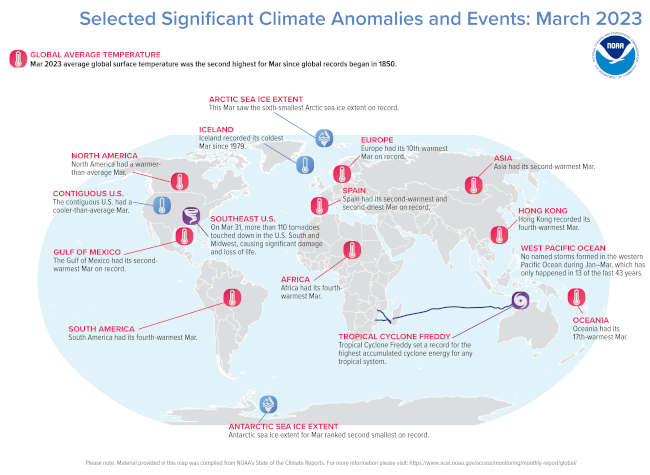
The planet continued its exceptionally warm start to the year with its second-warmest March on record.
Global sea ice coverage also felt the heat, with sea ice running at its second-smallest extent since records began in 1979, according to scientists from NOAA’s National Centers for Environmental Information.
Below are more highlights from NOAA’s latest monthly global climate report:
Climate by the numbers
March 2023
The average global land and ocean-surface temperature for March was 2.23 degrees F (1.24 degrees C) above the 20th-century average of 54.9 degrees (12.7 degrees C), ranking as the second-warmest March in the 174-year global climate record, behind March 2016.
March 2023 also was the 47th-consecutive March and the 529th-consecutive month with temperatures above the 20th-century average.
Looking at the continents, Asia had its second-warmest March on record, and South America and Africa each had their fourth-warmest. Europe saw its 10th-warmest March on record, while North America had a warmer-than-average March, but it did not rank among the top-20 warmest on record.
Year to date | January through March
The 2023 year-to-date (YTD) global surface temperature was the fourth warmest on record at 1.87 degrees F (1.04 degrees C) above the 20th-century average. Only the YTD for 2016 (warmest), 2020 (second) and 2017 (third) were warmer.
According to NCEI’s Global Annual Temperature Outlook, it’s near certain (>99.0% chance) that 2023 will rank among the 10 warmest years on record, with a 96% chance this year will rank among the top-five warmest.
Other notable climate events in the March report
• Sea ice hit near-record lows: Globally, polar sea ice coverage ranked as the second-smallest coverage (extent) on record since records began in 1979. Only 2017 had a smaller global extent. Arctic sea ice logged in at about 230,000 square miles below the 1991–2020 average — the sixth-smallest March extent in the 45-year record. Antarctic sea ice coverage came in at about 490,000 square miles below average, the second-smallest coverage on record.
• The tropics saw a lower-than-average number of named tropical storms, but one of those was record large: Four named tropical storms occurred across the globe in March, which was less than average. All four reached tropical cyclone strength (winds of 74 mph or higher), with three of those reaching major tropical cyclone strength (winds of 111 mph or higher). The exceptionally long-lived Tropical Cyclone Freddy in the South Indian Ocean set a record for the largest amount of accumulated cyclone energy — or ACE, a metric that indicates the amount of energy released by a tropical cyclone during its lifetime — for any storm on record.
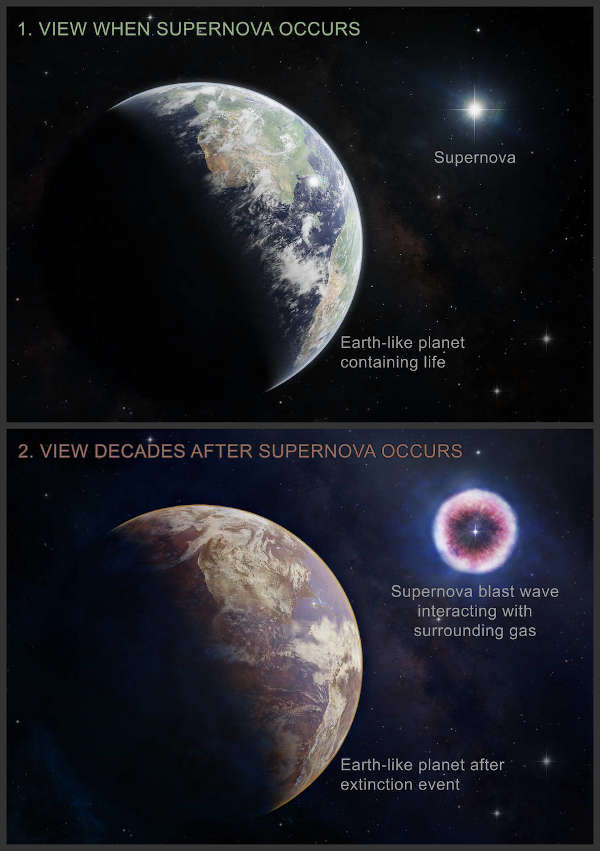
Astronomers using data from NASA’s Chandra X-ray Observatory and other telescopes have identified a new threat to life on planets like Earth: a phase during which intense X-rays from exploded stars can affect planets over 100 light-years away. This result, as outlined in our latest press release, has implications for the study of exoplanets and their habitability.
This newly found threat comes from a supernova’s blast wave striking dense gas surrounding the exploded star, as depicted in the upper right of our artist’s impression.
When this impact occurs it can produce a large dose of X-rays that reaches an Earth-like planet (shown in the lower left, illuminated by its host star out of view to the right) months to years after the explosion and may last for decades. Such intense exposure may trigger an extinction event on the planet.
A new study reporting this threat is based on X-ray observations of 31 supernovae and their aftermath — mostly from NASA’s Chandra X-ray Observatory, Swift and NuSTAR missions, and ESA’s XMM-Newton — show that planets can be subjected to lethal doses of radiation located as much as about 160 light-years away. Four of the supernovae in the study (SN 1979C, SN 1987A, SN 2010jl, and SN 1994I) are shown in composite images containing Chandra data in the supplemental image.
Prior to this, most research on the effects of supernova explosions had focused on the danger from two periods: the intense radiation produced by a supernova in the days and months after the explosion, and the energetic particles that arrive hundreds to thousands of years afterward.
If a torrent of X-rays sweeps over a nearby planet, the radiation could severely alter the planet's atmospheric chemistry. For an Earth-like planet, this process could wipe out a significant portion of ozone, which ultimately protects life from the dangerous ultraviolet radiation of its host star. It could also lead to the demise of a wide range of organisms, especially marine ones at the foundation of the food chain, leading to an extinction event.
After years of lethal X-ray exposure from the supernova’s interaction, and the impact of ultraviolet radiation from an Earth-like planet’s host star, a large amount of nitrogen dioxide may be produced, causing a brown haze in the atmosphere, as shown in the illustration. A “de-greening” of land masses could also occur because of damage to plants.
A separate artist’s impression (panel #1) depicts the same Earth-like planet as having been abundant with life at the time of the nearby supernova, years before most of the X-ray’s impacts are felt (panel #2).
Among the four supernovae in the set of images, SN 2010jl has produced the most X-rays. The authors estimate it to have delivered a lethal dose of X-rays for Earth-like planets less than about 100 light-years away.
There is strong evidence — including the detection in different locations around the globe of a radioactive type of iron — that supernovae occurred close to Earth between about 2 million and 8 million years ago. Researchers estimate these supernovae were between about 65 and 500 light-years away from Earth.
Although the Earth and the Solar System are currently in a safe space in terms of potential supernova explosions, many other planets in the Milky Way are not. These high-energy events would effectively shrink the areas within the Milky Way galaxy, known as the Galactic Habitable Zone, where conditions would be conducive for life as we know it.
Because the X-ray observations of supernovae are sparse, particularly of the variety that strongly interact with their surroundings, the authors urge follow-up observations of interacting supernovae for months and years after the explosion.
The paper describing this result appears in the April 20, 2023 issue of The Astrophysical Journal, and is available here. The other authors of the paper are Ian Brunton, Connor O’Mahoney, and Brian Fields (University of Illinois at Urbana-Champaign), Adrian Melott (University of Kansas), and Brian Thomas (Washburn University in Kansas).
NASA's Marshall Space Flight Center manages the Chandra program. The Smithsonian Astrophysical Observatory's Chandra X-ray Center controls science operations from Cambridge, Massachusetts, and flight operations from Burlington, Massachusetts.
The gala promises to be a memorable day of festivities, community engagement and fundraising for student scholarships.
The celebration will be held on the Stadium Field at the Ukiah Campus on Hensley Creek Road from 1 to 5 p.m., starting with appetizer and wine tastes from more than two dozen restaurants and wineries.
From 1 to 3 p.m. guests can enjoy Tsar Nicoulai caviar paired with Roederer Estate sparkling, then try some Big Earl’s BBQ and Ukiah Brewing Company beer, along with samples from Oco Time, Patrona, Little River Inn, Ramen Cubed, Wholly Bowl and more.
In addition to the wide selection of wine, including Coro blends, Navarro Vineyards, Husch, Barra and Philo Ridge, Black Oak Coffee will present a coffee station and Kemmy’s Pies will bring delicious dessert.
At 3 p.m. Sen. Mike McGuire and Assemblymember Jim Wood will present a California Legislature Resolution which resolves that “they direct special public attention to Mendocino College on the celebration of its 50th anniversary, point with great pride Mendocino College Foundation to the outstanding opportunities it has provided to students over the years, and extend sincere best wishes for its continued success in the future.”
Following this presentation guests will be treated to a meal prepared by Mendocino College Culinary Arts students under the direction of Chef and CAM Instructor Nicholas Petti.
"We are thrilled to bring back the Mendocino College Foundation Gala to celebrate the 50th anniversary of Mendocino College," said Dr. Tim Karas, president of Mendocino College. "This event is not only a time to honor our past and present achievements, but also an opportunity to raise funds that will directly impact our students' lives by providing scholarships and resources that support their educational and career journeys."
Sen. Mike McGuire will be the event emcee, with local auctioneer Rachel Britten presenting an exciting array of live auction items. These include a private party for 30 people via the Skunk Train from Fort Bragg to Glen Blair junction, which has been gorgeously outfitted with a pavilion, bar and fire pit to enjoy food, drinks and games among the towering redwoods.
Gala guests can also bid on a two-night stay for eight people at the Beehive House at Leonard Lake, with brunch catered by Schats and a custom tasting of distilled spirits by Tamar Distillery. There is a three-night getaway to the exclusive Palisades Tahoe resort; an Anderson Valley Pinot Noir Festival package with stay on the Coast; and a one-of-a-kind pass good for two tickets to all Mendocino College Theater, Dance, Ukiah Symphony and Ukiah Community Concert Association performances during the 2023-24 season.
Presented by State Farm agent Jay Epstein, the Mendocino College Foundation Gala is a signature event that has been a beloved tradition in the community for many years.
“I have heard from so many people who are excited that the Gala is returning for the first time in five years,” says Foundation Executive Director Julie McGovern. “It brings together supporters, alumni, faculty, staff, and friends of Mendocino College for celebration and philanthropy, all in support of student success.”
She continued, “This year's Gala holds special significance as it commemorates the 50th anniversary of Mendocino College, a milestone that highlights the college's rich history and commitment to serving the community.”
Saturday, May 13, also marks the opening of the 50th Anniversary exhibit at the College Art Gallery which will look back through the five decades of Mendocino College’s transformation from trailers at the Fairgrounds in 1973 to the vibrant, 127-acre campus of today with its state-of-the art facilities including a new Library Learning Center, Center for Visual and Performing Arts, Science Complex, Physical Education Complex, Child Development Lab, Vocational/Technical Building, Agricultural Headhouse and Gardens, as well as classrooms, a cafe and grounds.
In addition to celebrating the college's milestone anniversary, the gala will serve as a fundraiser for the Mendocino College Foundation, which provides vital support to students through scholarships, grants, and other programs such as campus food pantries and the popular Adopt A Fifth Grader program.
Proceeds from the gala will directly benefit students pursuing higher education and career and technical training at Mendocino College, helping to make education more accessible and affordable for the local community.
"The Mendocino College Foundation is honored to host this special 50th anniversary gala," said Linda Chapman, president of the Mendocino College Foundation. “And we are excited to launch our Fund the Future Campaign, which builds on the more than $3 million that the Foundation has dispersed in scholarships since 1984. We are looking ahead to the next 50 years and the many ways we can support our community college students, who are the lifeblood of our local workforce and the future of our communities.”
This support would not be possible without outside funding. McGovern added, "We are grateful for the continued support of our generous donors, sponsors, and community partners who make it possible for us to provide scholarships and resources that transform the lives of our students. The recipients are our future nurses, auto mechanics, small business owners and child care workers who want to live and learn and work right here at home. They need our support now so that they may contribute to the health and vibrancy of our community for years to come."
Tickets are $100 with tables of ten discounted at $900 and are available for purchase through the Mendocino College Foundation website. For more information about the Mendocino College Foundation contact the office at 707-467-1018 or email
Gala sponsors include Jay Epstein, Adventist Health, NC Financial Group, Savings Bank of Mendocino County, NCRM, Keenan & Associates, Main Street Research, LACO Associates, MCHC Health Centers, JK Architecture & Engineering, Mendo Mill, Khoury Dentistry, Vocality Credit Union, Harvest Market, CWDL, Law Offices of Caren Callahan, Mendocino Forest Products, Solid Waste of Willits, Granite Construction, Thurston Auto Group, Volz Co., TLCD Architecture, Dunn Right Painting, Blue Zones Project, Selzer Realty, Friedman’s Home Improvement and LCW Leibert Cassidy Whitmore.