 How to resolve AdBlock issue?
News
The text of the proclamation follows.
California’s public libraries provide tens of thousands of public programs each year, including early learning for infants and toddlers, meals for children, literacy tutoring, services for jobseekers, and more. They house technology labs, makerspaces, Wi-Fi hotspots, career centers, and community gardens.
Librarians and library staff play a critical role in connecting community members to these services and resources, including teens and seniors, veterans, people new to the United States, and unhoused individuals.
Libraries build community resilience, supporting Californians every day and in times of need. During the pandemic, California libraries continued to provide vital services – online, on the phone, and in person – including curbside pick-up and home deliveries. They provide comfort and shelter during emergencies like earthquakes and fires.
Across the nation, libraries – and librarians – are facing censorship and attacks for championing diversity, inclusion, and equity. The American Library Association reports that school and library book challenges are at record highs, with most targeting works by LGBTQ+ writers and writers of color. It is more important than ever that we expand equitable access to California’s public libraries and defend their essential role in protecting intellectual freedom.
The value of a library is inestimable – it goes beyond the building, beyond the books. Their value lies in the possibilities they offer: in the doors to knowledge and to imagination they offer our kids; in the comfort they provide; and in the support they share freely.
Libraries are the heart of our communities. They provide Californians of all ages and all backgrounds with the resources they need to succeed and thrive. During National Library Week, we celebrate the countless ways that libraries enrich our communities. Let us reaffirm our commitment to protecting our libraries and support efforts to provide inclusive spaces for learning and empowerment for all.
NOW THEREFORE I, GAVIN NEWSOM, Governor of the State of California, do hereby proclaim April 23-29, 2023, as "California Library Week."
GAVIN NEWSOM
Governor of California
ATTEST:
SHIRLEY N. WEBER, Ph.D.
Secretary of State
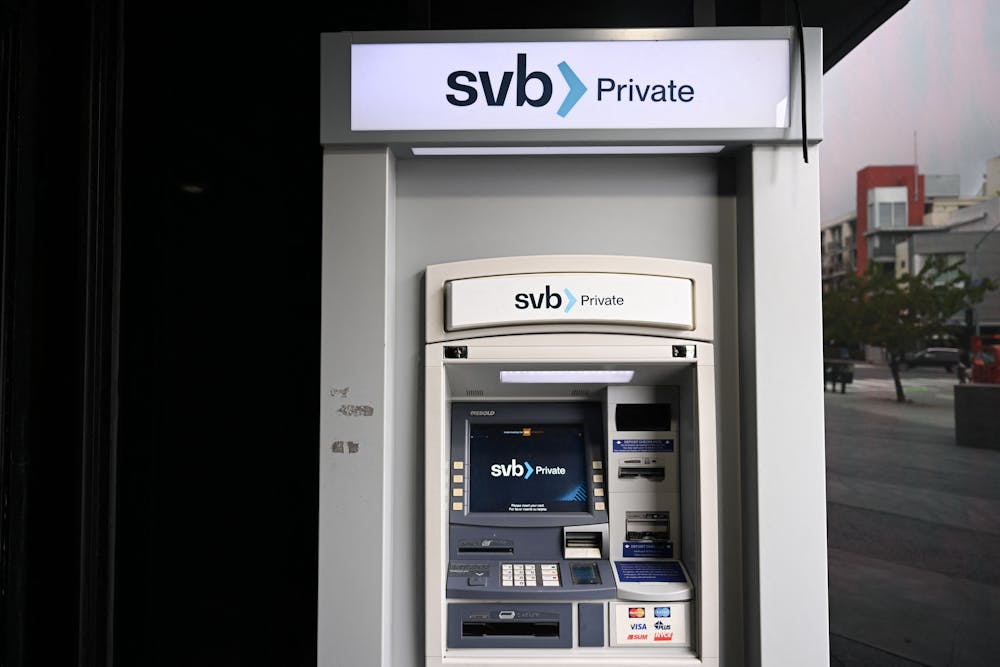
The abrupt failures of Silicon Valley Bank and Signature Bank and subsequent concerns about the stability of other banks have reignited a fierce debate among lawmakers, the financial industry, the Biden administration and former government officials about an array of banking reforms and regulatory changes.
The ideas floated within a month of Silicon Valley Bank’s collapse on March 10, 2023, range from calls to tweak banking regulations to a major overhaul of the government’s oversight of the banking system.
I’m a finance professor who previously worked for two major banks and was an economist at the Federal Reserve. Based on what I’ve learned from the banking crises that have occurred in the past 40 years, I’d put all the banking reform proposals under consideration into five categories.
1. Stronger supervision
Silicon Valley Bank reportedly ignored six separate warnings from the Federal Reserve Bank of San Francisco that it had too little cash on hand and was engaging in risky practices. So calls for stronger bank supervision and regulation should come as no surprise.
Any such reforms would at least, in part, reverse changes from a law Congress passed in 2018 that loosened some banking regulations.
Previously, the government had to pay especially close attention to banks with at least US$50 billion in assets. Among other things, it needed to subject them to stress tests – in which the authorities assess whether banks have the ability to respond to hypothetical economic shocks – by having enough cash on hand to meet relatively strict capital requirements.
The 2018 law raised the cutoff for what counts as a “systemically important” bank to $250 billion in assets, thus allowing many banks, including SVB, to avoid these more stringent regulations.
The White House has already called for new rules similar to what’s listed above for mid-sized banks — those with $100 billion to $250 billion in assets. SVB, which had about $210 billion in assets, fell in this category before its demise.
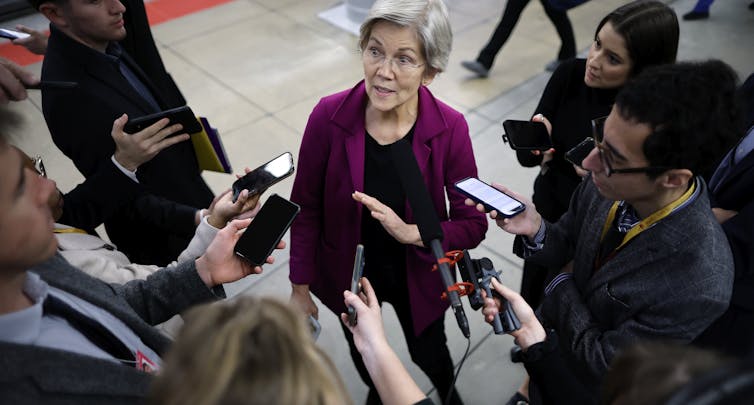
Sen. Elizabeth Warren of Massachusetts and Rep. Katie Porter of California have introduced legislation in the Senate and the House of Representatives that would simply repeal the 2018 law, returning the threshold to $50 billion.
Major banking trade groups, such as the Bank Policy Institute, which advocates on behalf of its large-bank members, have argued that the 2018 law was not a major factor in the failures of SVB and Signature Bank.
2. Higher deposit insurance threshold
The role that deposit insurance plays in staving off and alleviating banking crises could also change.
The Federal Deposit Insurance Corp. was only supposed to insure accounts of up to $100,000 during the 2008 financial crisis. But instead, it covered nearly all depositors, uninsured as well as insured, in most bank failures that occurred at that time.
The government subsequently raised that limit to $250,000 in October 2008. But the FDIC once again broke with its official mandate when it protected depositors from losses in excess of that ceiling during the March 2023 bank failures.
Some lawmakers have suggested raising the $250,000 cap on deposit insurance.
Rep. Maxine Waters, the highest-ranking Democrat on the House Financial Services Committee, says she supports that step. And Warren has suggested that she might support new limits that are in the millions of dollars rather than the hundreds of thousands.
“Is it $2 million? Is it $5 million? Is it 10 million?” she said in a television interview.
But those lawmakers have so far stopped short of calling for the FDIC to commit to always fully covering all losses among customers who experience losses when bank failures cause their deposits to vanish – rather than doing so on a case by case basis.
FDIC Chair Martin J. Gruenberg told the Senate Banking Committee during a recent hearing that the insurer plans to release its own proposals on May 1.
3. ‘Modified deposit payoff’
Other proposals go further.
For example, William Isaac, who chaired the FDIC from 1978 to 1986, is calling for the government to insure all non-interest-bearing checking accounts, regardless of size. But he also has a recommendation that might potentially discipline banks that run into trouble.
Isaac distinguishes between deposits that are essentially investments, such as certificates of deposit that people use for long-term savings purposes, and, say, a checking account a customer maintains primarily for basic transactions.
Investors with large sums of money held in CDs are generally wealthy individuals who can either assess financial risks on their own or with input from a paid adviser. People with CDs also have an incentive to leave them with the bank, because withdrawing the money tied up in them before maturity can mean paying a penalty or forfeiting the high interest rates that make them attractive investments.
Isaac also advocates returning to the way uninsured deposits – currently, those above the $250,000 mark – were treated in the 1980s. He calls this the “modified deposit payoff” model.
In resolving a bank failure, the FDIC would cover the full cost of compensating customers with uninsured deposits that don’t pay any interest, yet give uninsured depositors certificates worth 80% of their uninsured funds.
If the government were to recover at least 80% of its cost of covering the uninsured deposits, often by selling failed banks to financial institutions, investors with large deposits at a failed bank would get paid more, Isaac explained in a Wall Street Journal op-ed.
“This reform would protect business accounts that are essential to keeping the economy moving and would reduce substantially the risk of panics,” he wrote.
4. ‘Ring-fencing’
The most comprehensive proposals that call for restructuring the banking system would use what’s known as a “ring fence” model.
Ring-fencing segregates a portion of bank assets and liabilities from the rest. The United Kingdom already follows this approach.
Since 2019, British banks have had to segregate their retail banking activities from their presumably riskier investment banking and international lending.
The most radical of these proposals would lodge all insured deposits in “narrow banks” which would be allowed to hold only cash and U.S. Treasury securities.
All bank lending activity would occur outside of narrow banks, perhaps in finance companylike firms funded with uninsured borrowing and capital instruments such as stocks and bonds.
Economist Robert Litan wrote a book about narrow-banking in the 1980s, but the idea can be traced back to Milton Friedman – the late University of Chicago economist and Nobel Prize winner.
Banks are typically required to set aside a portion of their deposits as reserves held either as cash or deposits at their local Federal Reserve bank. However, the Fed reduced that share to zero in March 2020 – effectively eliminating the requirement altogether.
Some experts question whether ring-fencing, by preventing the transfer of capital among bank subdivisions, might make banks less flexible in responding to financial shocks – and therefore riskier.
Critics of the narrow-bank model point out that this approach would drastically reduce the amount of money banks could lend. As a result, systemic risks would shift from real banks into “shadow banks” – securities firms, hedge funds and other credit intermediaries that face less regulation and supervision. Shadow banks contributed to the 2007-2009 global financial crisis, according to the International Monetary Fund.
5. Compensation clawbacks
At the heart of the debate about banking reform is “moral hazard.” That’s a concept regarding how insurance can create an incentive to take bigger risks when people, institutions and even countries realize they won’t bear the full cost of that risk.
One way to reduce risks in this context is to make bank executives bear some of the costs when the banks they run fail.
A bipartisan group of senators have introduced a bill to do just that. It would require regulators to claw back compensation, including the bonuses and stock awards paid to bank executives in the five years preceding a failure.
In my view, it’s too early to tell whether policymakers will make minor adjustments or opt for more significant reforms.
One thing that I hope all policymakers will keep in mind is that there are trade-offs between the financial stability of banks and market discipline. Offering too much government support – such as insuring all liabilities in the event of a bank failure – creates incentives for banks and their customers to ignore risks or to engage in risky behavior.
This article was updated to clarify Robert Litan’s contributions to the debate over banking reform.
Brian Gendreau, Director, Latin American Business Environment program, University of Florida
This article is republished from The Conversation under a Creative Commons license. Read the original article.
The commission will meet beginning at 6 p.m. Tuesday, April 25, in the council chambers at Clearlake City Hall, 14050 Olympic Drive.
The agenda can be found here.
Submit comments and questions in writing for commission consideration by sending them to Administrative Services Director/City Clerk Melissa Swanson at
Community members also can participate via Zoom.
The meeting also can be watched on the city’s YouTube account.
To give the planning commission adequate time to review your questions and comments, please submit written comments before 4 p.m. Tuesday, April 25.
The commission’s main item of business will be to hold a public hearing on a proposed mitigated negative declaration and conditional use permit for the city’s proposed Burns Valley Sports Complex, to be located at 14885 Burns Valley Road.
The site is a portion of a 31-acre property the city purchased behind the Safeway shopping center. In August, the city received $3 million from State Parks’ Rural Recreation and Tourism Program to create the new complex.
Also on Tuesday, the commission will make a determination of general plan consistency for the city’s proposed sale of a property at 14647 Palmer Ave.
Email Elizabeth Larson at
The board will meet beginning at 9 a.m. Tuesday, April 25, in the board chambers on the first floor of the Lake County Courthouse, 255 N. Forbes St., Lakeport.
The meeting can be watched live on Channel 8, online at https://countyoflake.legistar.com/Calendar.aspx and on the county’s Facebook page. Accompanying board documents, the agenda and archived board meeting videos also are available at that link.
To participate in real-time, join the Zoom meeting by clicking this link.
The meeting ID is 951 7316 4186, pass code 332059. The meeting also can be accessed via one tap mobile at +16694449171,,95173164186#,,,,*332059#.
All interested members of the public that do not have internet access or a Mediacom cable subscription are encouraged to call 669-900-6833, and enter the Zoom meeting ID and pass code information above.
In an untimed item, the board will consider a resolution approving agreements for the purchase of right-of-way for the South Main Street–Soda Bay Road Improvement Project.
Public Works Director Scott De Leon’s report to the board explains that the project is slated for undergrounding of the utilities in the spring of 2024.
By approving the purchase of fee title acquisition at the appraised fair market value of $66,123 for a portion of a parcel owned by Lisa Weiler at 32 Soda Bay Road, and by authorizing De Leon and County Administrative Officer Susan Parker to execute the necessary documents, “the process will be expedited and enable the County to secure the necessary right of ways in time to proceed with utility undergrounding,” De Leon wrote.
He said funding for the project comes from a variety of sources to include the State Transportation Improvement Program, Federal Demonstration Program, Lake Area Planning Council Local Transportation Funds, county of Lake road funds, and utility company tariffs and contributions.
In timed items, at 9:30 a.m., the board will hold a public hearing, continued from April 18, to consider a draft ordinance amending Chapter 5 of the Lake County Code relating to permitting temporary hoop structures for cannabis cultivation.
At 11 a.m., the board will discuss holding a special joint meeting with the Lakeport City Council at the request of District 4 Supervisor Michael Green.
At 11:30 a.m., the board will will consider Amendment No. 1 to the agreement with Sunrise Special Services for an additional 90 days and a new total not to exceed $307,200 for the continued operation of the North Lakeport Emergency Warming Shelter.
The full agenda follows.
CONSENT AGENDA
5.1: Sitting as the Lake County Air Quality Management District Board of Directors, authorize the air pollution control officer to establish temporary counter hours for the Lake County Air Quality Management District.
5.2: a) Approve reissuance of property tax refund check from FY 19/20 in the amount of $320.42 issued to Aaron Robert Paddock; and b) approve reissuance of property tax refund check from FY 19/20 in the amount of $45.46 issued to Brennan A. Conagha.
5.3: Adopt proclamation designating the month of April 2023 as Alcohol Awareness Month In Lake County.
5.4: Approve Board of Supervisors minutes for April 11, 2023.
5.5: Adopt resolution authorizing the destruction of paper records that have been digitally-imaged for the Lake County Community Development Department to rely on the electronic record as the official record.
5.6: Approve Amendment No. 5 to the agreement between county of Lake and Management Connections for temporary staffing in the Lake County Health Services Department and authorize the chair to sign.
5.7: Approve Budget Transfer in Budget Unit 4011-Public Health for $9,000 from salaries account 740.01-11 to Capital Asset account 740.62-74; and amend the list of capital assets of the 2022-2023 Final Budget to include a dual modem and authorize the chairperson to the Board of Supervisors to sign.
5.8: Approve request to apply for the California Department Public Health/California Home Visitation Program grant funding for Public Health’s Home Visitation Program in the amount of $470,000 annually for the FY 23-24 thru 27-28 and authorize the department head to sign the affiliation application.
5.9: a) Waive the formal bidding requirement; and b) authorize the IT director to issue a purchase order in the amount of $53,687.50 to ECS Imaging Inc. for Laserfiche Cloud renewal.
5.10: Adopt resolution delegating to the Lake County Public Works director authority to negotiate and acquire certain real estate up to $7,000; the purchase of a portion of certain parcel (APN 027-221-110), is part of the bridge replacement project on First Street over Clover Creek.
5.11: a) Approve agreement for Federal Apportionment Exchange Program and State Match Program for California Department of Transportation - Non MPO County, Agreement No. X23-5914(128); and b) adopt resolution authorizing and directing the chair of the Board of Supervisors to execute the agreements for Federal Apportionment Exchange Program and State Match Program for California Department of Transportation – Non MPO County, Agreement No. X23-5914(128), and authorize the chair to sign the resolution and agreement.
5.12: (a) Waive the formal bidding process, pursuant to Lake County Code Section 2-38.4, Cooperative Purchases; and (b) approve the purchase of four 2023 Chevy Traverse vehicles; and (c) authorize the sheriff/coroner or his designee to issue a purchase order not to exceed $160,000 to California Automotive Retailing Group Inc. dba Dublin Chevrolet.
5.13: Approve long distance travel for Sherri DeLaTorre and Mary Pagan to attend the Association of Administrators of the Interstate Compact on the Placement of Children Conference in New Orleans, Louisiana, from May 14 to 19, 2023.
5.14: a) Approve a purchase order for the purchase of two electronic key storage boxes from Real Time Networks Inc. in the total amount of $46,912.40 and b) authorize the Social Services director to sign and issue the purchase order.
5.15: Sitting as the Board of Directors of the Lake County Watershed Protection District, (a) waive the formal bidding process, pursuant to Lake County Code Section 2-38 (2) & (3); (b) approve the agreement between the county of Lake and EOA Inc. Environmental Consulting firm to provide assistance to meet National Pollutant Discharge Elimination System (NPDES) Storm Water Permit and Low Impact Development (LID) compliance and to authorize the Chair of the Board of Directors to sign the agreement; (c) approve the reimbursement agreements between the district, the city of Lakeport and the city of Clearlake to provide reimbursement for EOA Inc. to complete LID and Storm Water Program services and to authorize the chair of the board of directors to sign the agreements.
5.16: Approve memorandum of understanding between Big Valley Rancheria and the Lake County Watershed Protection District for the installation, maintenance and removal of flow monitoring equipment on Highland Springs and Adobe Creek reservoirs.
TIMED ITEMS
6.2, 9:07 a.m.: Pet of the Week.
6.3, 9:08 a.m.: National Poetry Month — Poem of the Week.
6.4, 9:09 a.m.: Presentation of proclamation designating the month of April 2023 as Alcohol Awareness Month In Lake County.
6.5, 9:30 a.m.: Public hearing, continued from April 18, consideration of draft ordinance amending Chapter 5 of the Lake County Code relating to permitting temporary hoop structures for cannabis cultivation.
6.6, 11 a.m.: Consideration and discussion of a special joint meeting with Lakeport City Council.
6.7, 11:30 a.m.: Consideration of Amendment No. 1 to the Agreement with Sunrise Special Services for an additional 90 days and a new total not to exceed $307,200 for the continued operation of the North Lakeport Emergency Warming Shelter.
UNTIMED ITEMS
7.2: Consideration of travel to the California Wildfire & Forest Resilience Task Force meeting.
7.4: Consideration of the following Advisory Board Appointment: Fish and Wildlife Advisory Committee.
7.5: Consideration of reappointment to the North Coast Emergency Medical Service Committee to include delegation of primary and alternate membership.
7.6: Consideration of resolution approving agreements for the purchase of right-of-way for the South Main Street – Soda Bay Road Improvement Project and authorizing the director of Public Works to execute the purchase agreements on behalf of the county of Lake.
CLOSED SESSION
8.1: Conference with legal counsel: Existing litigation pursuant to Gov. Code section 54956.9 (d)(1) - Citizens for Environmental Protection and Responsible Planning, et al. v. County of Lake, et al.
8.2: Addendum — conference with legal counsel: Significant Exposure to Litigation pursuant to Gov. Code section 54956.9(d)(2), (e)(1) – One potential case.
Email Elizabeth Larson at
Over the month of March, a total of 80 single family homes were sold through the multiple listing service, compared to 51 in February and 130 sold during the same time last year.
These include traditionally built “stick-built” houses as well as manufactured homes on land.
There were 17 sales of mobile homes in parks, compared to five in February and 10 sold during the same time period last year, and 27 sales of bare land (lots and acreage) sales, compared to 18 in February and with or 68 during the same time last year.
There are 292 stick-built and manufactured homes on the market currently, compared to 269 in February.
If the rate of sales stays the same at 51 homes sold per month, there are currently 3.6 months of inventory on the market at the moment compared to 5.2 months of inventory a month ago in January.
That means that if no new homes are brought to the market for sale, in 3.6 months all of these homes would be sold and there would be none available.
Less than six months of inventory is generally considered to be a “sellers’ market” while more than six months of inventory is often called a “buyers’ market.
There was a surge of buyer activity in January that is driving these higher home sales numbers, but the market seems to be slowing again based on interviews with a number of agents.
Total percentage of homes bought for all cash in February was 31%, compared to 47% for February, and 28% for this same time last year.
Of those, 44% were financed by Fannie Mae or Freddie Mac (“conventional loans”) compared to 24% for February and 37% for the same time last year and.
The report said 11% were financed by FHA, compared to 15% for February and 15% for this time last year; 6% were financed by the VA or CalVet, compared to 4% for February and 3% for this time last year; 7% had other financing such as private loans, USDA, or seller financed notes, up from 6% in February 1% in a year-over comparison.
The homes in March were selling at an average of 97% of the asking price at the time the property went under contract, but an average of 90% when compared to the original asking price when the property first came on the market.
This is roughly the same as the prior month, but less than a year ago at this time, when homes were selling at 100% of the asking price.
The median time on the market for March was 50 days, compared to 99 days for last month and 36 days for this time last year.
The median sale price of a single family home in Lake County in March was $330,500, which is higher than the $235,000 for the previous month and higher than the median sale price of $321,000 during this time period last year.
This would indicate that last month the higher priced homes were selling in greater numbers to bring the median sale price higher.
In March, 39% of homes sold had seller concessions for an average concession of $8,126; in February, 30% of homes had seller concessions for an average concession of 10,085 and a year ago 31% of homes sold had an average seller concession of $6,847.
According to the study published April 18 in PLOS Medicine, purchases of sugar-sweetened beverages, or SSBs, dropped 26.8% — compared to similar cities not subject to a tax — between July 2017, when the one-cent-per-ounce tax went into effect, and Dec. 31, 2019.
The research comes a little over a year after the National Clinical Care Commission, or NCCC — formed by Congress to advise on diabetes policy — recommended that legislators pass a national tax on sugar-sweetened beverages.
California cities were among the first to adopt such taxes, but beverage industry lobbying led state legislators to prohibit cities and counties from imposing new taxes on SSBs in 2017, though existing taxes in Oakland, San Francisco, Berkeley and Albany were grandfathered in.
Past research has found consuming sugar-sweetened beverages is associated with a higher risk of obesity, type 2 diabetes and cardiovascular disease.
Just last month, a UCSF study found that SSB taxes in five cities, including Oakland, significantly lowered the risk of diabetes and unhealthy weight gain in pregnant mothers. It also lowered the risk of having an overly small fetus.
“These latest results suggest SSB taxes can meaningfully improve diet and health and generate substantial cost savings over a sustained period of time, all of which support the case for a national tax on SSBs,” said Dean Schillinger, MD, UCSF professor of medicine, senior author of the study, and a co-chair of the NCCC. “The American Beverage Association cornered the California legislature into passing the law barring further SSB taxes in our state. Voters now have evidence that allowing such taxes can yield significant benefits to society, and we hope that legislators at the state and national level act on these findings.”
As of 2021, seven U.S. cities and more than 35 countries had SSB taxes in place in an effort to reduce the risk of diet-sensitive chronic disease and increase government revenue for health promotion.
More cost-effective than smokefree workplaces
The researchers compared sugary drink purchases in Oakland to purchases in nearby Richmond, California and Los Angeles, which have no beverage tax. They looked at consumer behavior in these cities in the 30 months before, then after, the tax went into effect on July 1, 2017.
They then used computer modeling to estimate how reduced SSB purchases affected community health, as measured by quality-adjusted life-years (QALYs) – a QALY being a year of perfect health. They also calculated the health care cost savings of preventing or controlling SSB-associated diseases, such as diabetes, heart disease, stroke and gum disease.
Consuming 26.8% fewer SSBs over 10 years added 94 QALYs per 10,000 residents and saved the city more than $100,000 per 10,000 residents in health care costs, the researchers found, with gains expected to increase over a lifetime. They found no evidence that consumers crossed borders to buy sugary drinks in neighboring untaxed locations, or that they substituted sweet snacks for taxed SSBs.
“Our estimates suggest this tax is at least as cost-effective as other widely recognized public health interventions such as smoke-free workplace policies and air pollution control measures,” noted first author Justin White, PhD, associate professor of health economics at UCSF’s Philip R. Lee Institute for Health Policy Studies.
Purchases declined in Oakland for all types of SSBs, including sweetened soda by 23.1%, fruit drinks by 30.4%, sports drinks by 42.4% and sweetened teas by 24.4%. Declines in purchases were similar for individual- and family-sized products, and similar in lower-income and higher-income areas.
“Studies of other U.S. cities have found similar reductions in SSB purchases as this one,” said Schillinger. “The sustained impact of Oakland’s tax is particularly important. It suggests that, were an SSB tax to be scaled nationally, our country would enjoy better health and lower health care costs.”
The current study may be an underestimate of the health benefits of the SSB tax, as the investigators did not account for the positive impacts of the local nutrition and public health programs funded by the tax revenue in Oakland, Schillinger added.
While previous studies found SSB taxes lead to fewer purchases and less intake of SSBs in the short term, this is among the first to examine sustained declines alongside other purchasing behavior, such as “substitute” purchases of sweet snacks, and the first to evaluate cost-effectiveness.
Authors: In addition to Schillinger and White, authors include Sanjay Basu of Waymark Health, Scott Kaplan of the U.S. Naval Academy Department of Economics, Kristine Madsen of University of California, Berkeley School of Public Health, and Sofia Villas-Boas of UC Berkeley Department of Agriculture and Resource Economics.
Funding: This work was supported by grants from the National Institute on Diabetes and Digestive and Kidney Diseases (R01 DK116852 and 2P30 DK092924), The California Endowment, the UCSF Diabetes Family Fund, and the Centers for Disease Control and Prevention’s National Center for Chronic Disease Prevention and Health Promotion (U18DP006526).