 How to resolve AdBlock issue?
News

CLEARLAKE, Calif. — The Clearlake Police Department is attempting to locate a woman who has been reported missing.
Police are seeking Vanessa Rowe, 33.
Rowe is described as a white female adult, 5 feet 7 inches tall and 200 pounds, with red hair and blue eyes.
She was last seen on June 4 in Lakeport, when she was wearing a white dress and pants.
If you have any information regarding Rowe's whereabouts please contact the Clearlake Police Department at 707-994-8251, Extension 1.
Dogs available for adoption this week include mixes of Anatolian shepherd, Belgian malinois, Catahoula leopard dog, Chihuahua, German shepherd, hound, mastiff, pit bull, plott hound, pointer and terrier.
Dogs that are adopted from Lake County Animal Care and Control are either neutered or spayed, microchipped and, if old enough, given a rabies shot and county license before being released to their new owner. License fees do not apply to residents of the cities of Lakeport or Clearlake.
The following dogs at the Lake County Animal Care and Control shelter have been cleared for adoption.
Call Lake County Animal Care and Control at 707-263-0278 or visit the shelter online for information on visiting or adopting.

‘Roasie’
“Roasie”is a 2-year-old female pit bull terrier with a short black and white coat.
She is in kennel No. 7, ID No. LCAC-A-5434.

Female terrier
This 6-year-old female terrier has a gray coat
She is in kennel No. 68, ID No. LCAC-A-5393.
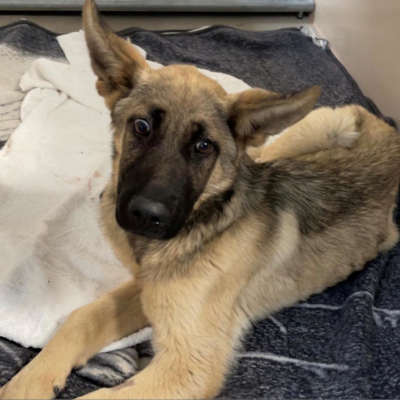
Male German shepherd puppy
This 6-month-old male German shepherd puppy has a black and tan coat.
He is in kennel No. 2, ID No. LCAC-A-5315.
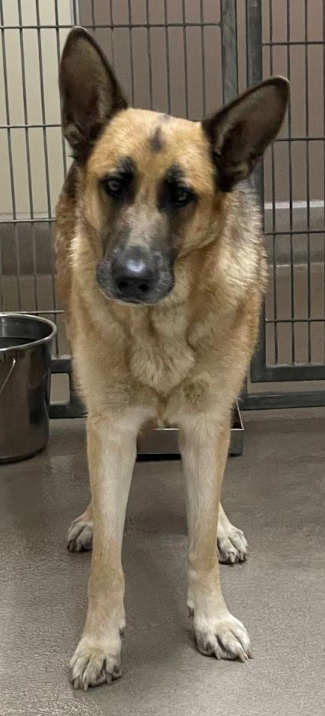
Female German shepherd
This 3-year-old female German shepherd has a black and tan coat.
She is in kennel No. 4, ID No. LCAC-A-5396.
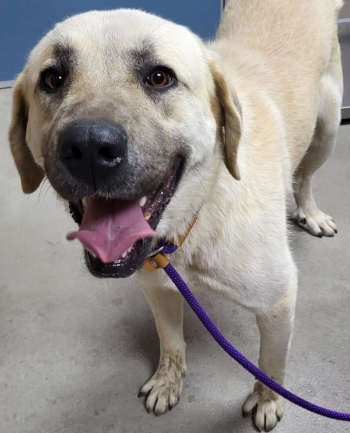
Anatolian shepherd-mastiff mix
This 3-year-old male Anatolian shepherd-mastiff mix has a short fawn coat.
He is in kennel No. 5, ID No. LCAC-A-5276.
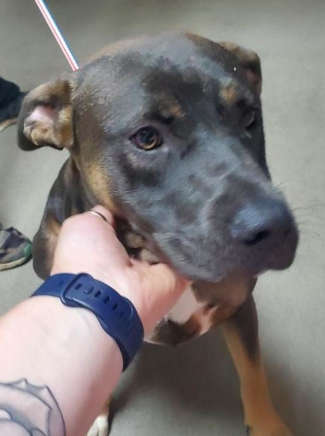
‘Zeta’
“Zeta” is a 1-year-old female pit bull terrier with a black and tan coat.
She is in kennel No. 6, ID No. LCAC-A-5427.
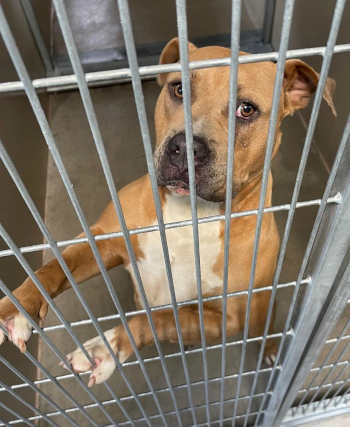
Female pit bull terrier
This 3-year-old female pit bull terrier has a brown and white coat.
She is in kennel No. 10, ID No. LCAC-A-5400.

Female hound-shepherd mix puppy
This 3-month-old female hound-shepherd mix puppy has a black and tan coat.
She is in kennel No. 11, ID No. LCAC-A-5370.
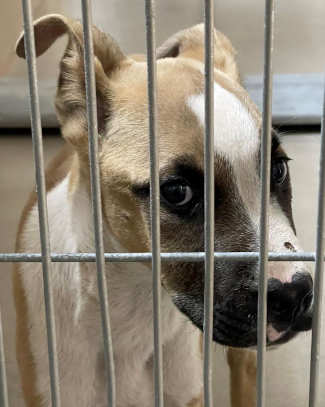
Male Catahoula leopard dog puppy
This 3-month-old male Catahoula leopard dog puppy has a short tan and white coat.
He is in kennel No. 13, ID No. LCAC-A-5354.
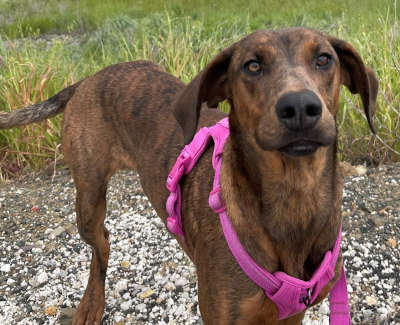
Male plott hound
This 2-year-old male plott hound has a short brown coat.
He is in kennel No. 18, ID No. LCAC-A-5143.

Female pit bull terrier
This 5-year-old female pit bull terrier has a short gray and white coat.
She is in kennel No. 19, ID No. LCAC-A-5321.

Male Chihuahua-terrier mix
This 2-year-old male Chihuahua-terrier mix has a short white coat.
She is in kennel No. 20, ID No. LCAC-A-5381.

Female Chihuahua
This 2-year-old female Chihuahua has a short brown and white coat.
She is in kennel No. 21, ID No. LCAC-A-5379.
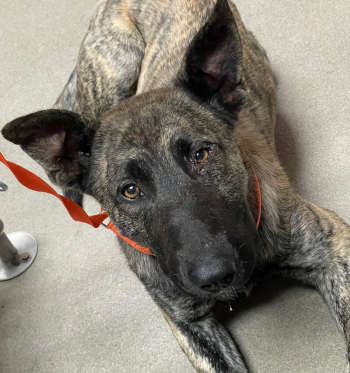
Male shepherd
This 2-year-old male shepherd has a black and tan coat.
He is in kennel No. 22, ID No. LCAC-A-5423.

Male pit bull terrier
This 5-year-old male pit bull terrier has a short white coat with red markings.
He is in kennel No. 23, ID No. LCAC-A-5322.

Female pit bull terrier
This 6-year-old female pit bull terrier has a short tan coat.
She is in kennel No. 24, ID No. LCAC-A-5410.
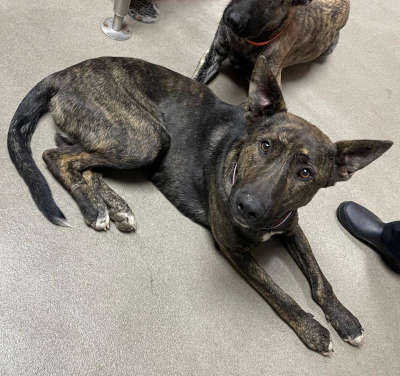
Male shepherd
This 1 and a half year old male shepherd has a short tricolor coat.
He is in kennel No. 26, ID No. LCAC-A-5424.
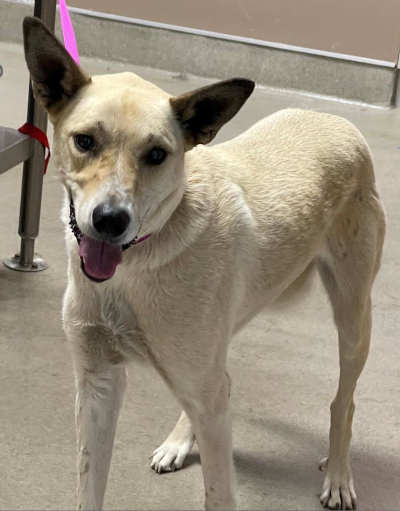
Female shepherd
This 2-year-old female shepherd has a short yellow and white coat.
She is in kennel No. 27, ID No. LCAC-A-5369.

Male pit bull puppy
This 5-month-old male pit bull puppy has a white coat.
He is in kennel No. 29, ID No. LCAC-A-5325.
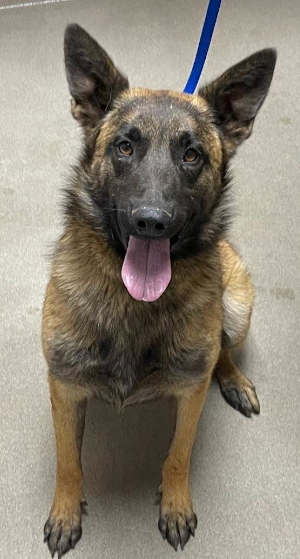
Male Belgian malinois
This 1 and a half year old male Belgian malinois has a tan and black coat.
He is in kennel No. 30, ID No. LCAC-A-5409.
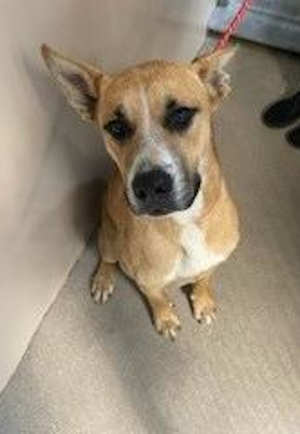
Male shepherd
This 2-year-old male shepherd has a short tan coat with white markings.
He is in kennel No. 31, ID No. LCAC-A-5344.
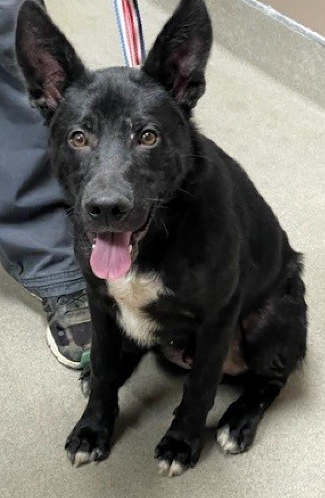
Male shepherd mix puppy
This 6-month-old male shepherd mix puppy has a black coat with white markings.
He is in kennel No. 32, ID No. LCAC-A-5408.
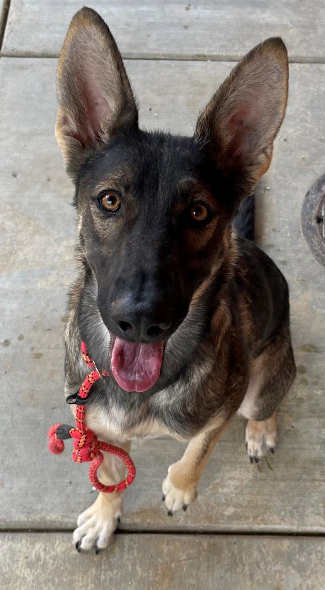
Female shepherd
This 10-month-old female shepherd has a tricolor coat.
She is in kennel No. 34, ID No. LCAC-A-5323.

‘Jojo’
“Jojo” is a one and a half year old female pit bull terrier with a short tricolor coat.
She is in kennel foster care, ID No. LCAC-A-5312.
Email Elizabeth Larson at
For anyone who enjoys nature, summer is a fascinating time to be outside. Animals are on the move: Turtles are nesting, baby birds are testing their wings, snakes are foraging and young mammals are emerging.
In central Pennsylvania, where I live, last year’s hatchling painted turtles have overwintered in their nests and emerged looking like tiny helpless snacks for raccoons and ravens. I’ve already rescued a baby killdeer – a shorebird that nests in parking lots – that ran off the road and got stuck in a grate. And I’ve watched an eastern chipmunk prey on a nest of towhee chicks.
I moved the killdeer to safety because it had fallen into what we call an “ecological trap.” Humans create these traps when we degrade habitat that looks suitable to animals. For killdeer, parking pads and roofs give off all the vibes of a great nesting site – except for the drains – and they have less natural habitat available these days.
But I didn’t intervene with the towhees. Their exposed nest site may have been a bad parental decision, or perhaps the chicks’ begging called too much attention. Either way, natural selection helped ensure that these birds and their genes were unlikely to survive. Ultimately, that may be better for the population and species than if I had intervened.
As a wildlife biologist, I know that relocating animals can be bad from a scientific perspective. It also can easily harm the creature you want to help.
Based on my experience as a scientist and university teacher, I’ve developed guidelines for when to get involved in the lives of animals I encounter outside. When I do intervene, it is after carefully considering the potential reasons for the animal’s situation, the species’ population status and the potential harm my actions might inflict upon the whole population – not just on one adorable creature.
Reasons for caution
Wild animals have genetic associations with specific habitats that have evolved over many generations. Relocating them can disrupt those connections.
Moving animals means they can’t contribute their offspring and genes to the local population through breeding. That could be catastrophic for species with slow population growth, like many reptiles, who may take years to mature and might only manage a few successful broods in their lifetime.
For species like these, mature females are critical to keeping population sizes high. When populations are small, they lose genetic diversity that helps them resist environmental change.
Moving wildlife also may introduce new genes elsewhere, leading to genetic shifts over time that didn’t evolve through natural selection. Animals that are successful in a region tend to leave more offspring, and the heritable genetic variation tied to that success becomes more common and associated with the local environment. These are important relationships to safeguard.
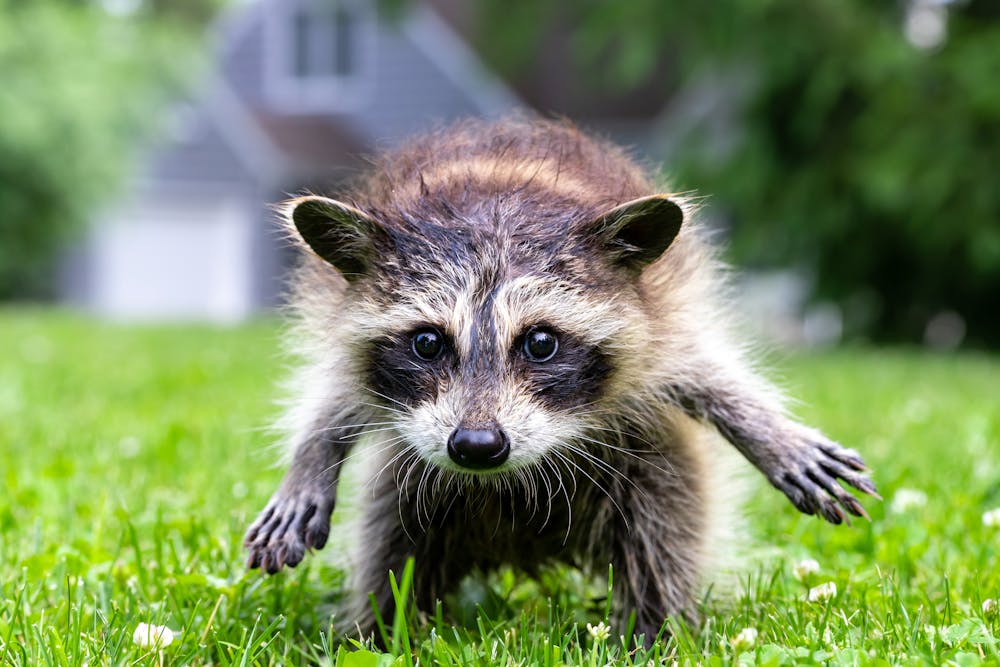
Moving animals also can cause immediate harm. Transported animals often can’t survive in a territory other animals have already claimed, or the new arrivals may do damage – for example, by preying on vulnerable local species. Wildlife managers may have to move them into captivity or even euthanize them.
Some species can spread pathogens to other wildlife or humans. At a minimum, moving animals can disorient them and make it hard for them to settle, find food and water or avoid predators.
It’s usually best to keep your distance
In general, your default choice should be not to interfere or interact with wildlife. Knowing that humans are nearby stresses animals. It makes them move away or forage and behave differently, and it can harm their body condition by triggering stress responses that ultimately reduce their fertility.
It’s especially common for people to see baby animals or birds, seemingly alone, and feel compelled to help. In fact, the parents may have secured their young and be actively caring for them, or the young animals may already be independent.
The amount of parental care that different species provide ranges from zero to a lot. For example, once a female turtle chooses a nest site with warm temperatures and the right amount of soil moisture, she lays her eggs and moves on. Hatchling turtles don’t need help unless they’re near pets or roads.
Rattlesnakes will bask in the sun to help their embryos be born live and healthy. Many mammals hide their young during the day and care for them for months.
Bluebirds and tree swallows work tirelessly to feed their young, even after fledging. In contrast, other birds kick their young out at an early stage so they can start the next clutch.
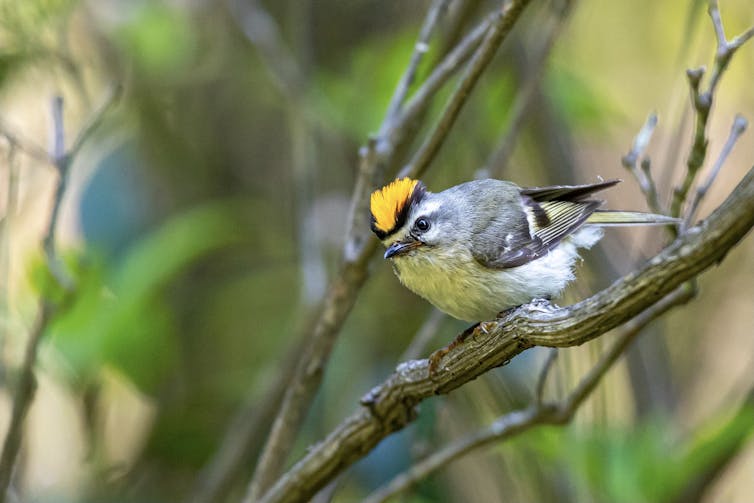
Whatever the species, young and inexperienced animals without parents nearby may either be learning how to navigate or have been left hidden by their parents on purpose.
Parents do occasionally abandon their young. They may do it on purpose because their offspring are unfit, or because the parents aren’t fit enough to raise them. Or perhaps the parents have gotten lost. Whatever the reason, natural selection likely means these individuals and their gene complexes will not continue forward – and that benefits the species overall.
Put the animal’s needs before your own
It’s well established that getting close to nature is good for people’s mental health. I believe it’s very important to foster human connections to nature and facilitate these connections for people who have little exposure to the outdoors.
I advocate a mindful and hands-on approach to being outside. For example, I don’t touch animals that are rare unless it’s part of my research or covered by permits. If I handle an aquatic animal, I make sure my hands are wet and free of chemicals.
However, animals’ needs should come first. Whenever humans are active in an animal’s habitat, they can degrade it and lead the animals to seek other space.
Some wild animals may be abandoned or alone acting strangely because they are sick or generally unfit. People who handle these animals risk contracting zoonotic diseases, such as rabies, plague and avian influenza. Sometimes an unhealthy animal needs to be left alone to avoid spreading infection.
There also are animals that pretend to be injured or dead as a defense strategy. A casual observer may think a rescue is necessary, but don’t make assumptions. For example, Virginia opossums play dead in an involuntary fixed response to fear called defensive thanatosis. They can’t control it, but within minutes to hours, they’re up and back to normal.
When and how to help
Here are some guidelines for when and how to intervene in ways that minimize harm to wildlife.
First, don’t relocate animals over significant distances. An animal that accidentally hitches a ride over long distances, such as a treefrog under your bumper, shouldn’t be released in a new host area.
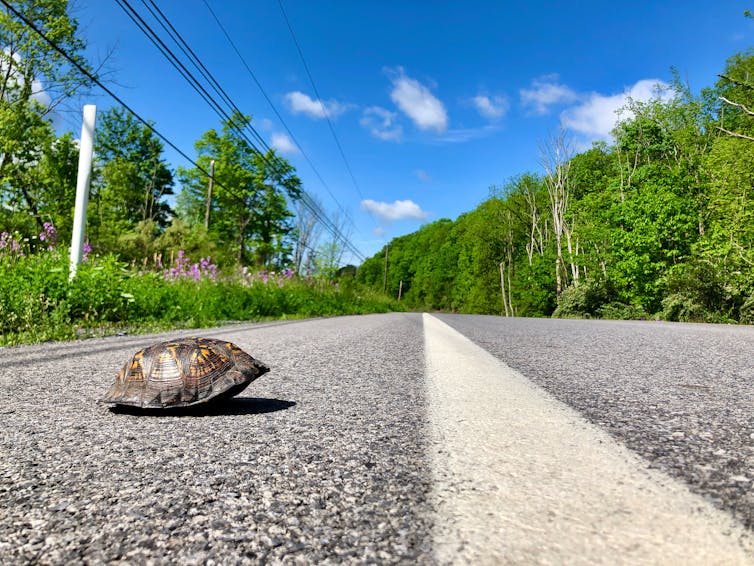
Helping an animal cross a busy road is OK if you move it in the direction in which it is already headed. This is particularly true for animals that live a long time and reproduce slowly, like box turtles, which are declining across North America. Ensuring the survival of a single adult female box turtle can be very important to the success of a local population.
Second, respect the rules at national, state and local parks. Parks often protect at-risk species that can’t safely interact with humans. For example, desert tortoises may urinate as a defense when picked up, which reduces their internal water supply.
Learn to identify common species that can handle human curiosity and make good ambassadors for biodiversity. Many state agencies have a website or atlas for major wildlife groups that will help you learn which species are widespread or more rare. Most ponds have a common frog that’s sure to catch your eye.
Third, if you think an animal is truly in danger, call a local game warden, wildlife officer, rehab professional or park ranger for advice. If the animal is immediately at risk from a pet or approaching car, and you can reach it safely, put on some gloves and help it – but leave it traveling in the same direction it was moving, or near its local area, so that it doesn’t become disoriented and try to disperse into dangerous habitat.
Fourth, get out and explore. But remember that you’re a guest in the animals’ habitat – tread softly and respectfully. A fallen log can shelter all kinds of creatures. Look underneath, and then place it back as it was so that it continues to be a home for them.
Julian Avery, Associate Research Professor of Wildlife Conservation, Penn State
This article is republished from The Conversation under a Creative Commons license. Read the original article.
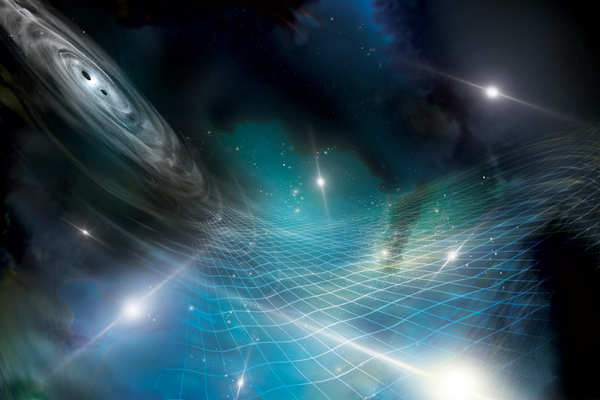
BERKELEY, Calif. — The universe is humming with gravitational radiation — a very low-frequency rumble that rhythmically stretches and compresses spacetime and the matter embedded in it.
That is the conclusion of several groups of researchers from around the world who are simultaneously publishing a slew of journal articles on June 28 describing more than 15 years of observations of millisecond pulsars within our corner of the Milky Way galaxy.
At least one group — the North American Nanohertz Observatory for Gravitational Waves (NANOGrav) collaboration — has found compelling evidence that the precise rhythms of these pulsars are affected by the stretching and squeezing of spacetime by these long-wavelength gravitational waves.
"This is key evidence for gravitational waves at very low frequencies,” says Vanderbilt University’s Stephen Taylor, who co-led the search and is the current chair of the collaboration. “After years of work, NANOGrav is opening an entirely new window on the gravitational-wave universe."
Gravitational waves were first detected by the Laser Interferometer Gravitational-Wave Observatory, or LIGO, in 2015.
The short-wavelength fluctuations in spacetime were caused by the merger of smaller black holes, or occasionally neutron stars, all of them weighing in at less than a few hundred solar masses.
The question now is: Are the long-wavelength gravitational waves — with periods from years to decades — also produced by black holes?
In a paper accepted for publication in The Astrophysical Journal Letters (ApJ Letters), University of California, Berkeley, physicist Luke Zoltan Kelley and the NANOGrav team argue that the hum is likely produced by hundreds of thousands of pairs of supermassive black holes — each weighing billions of times the mass of our sun — that over the history of the universe have gotten close enough to one another to merge.
The team produced simulations of supermassive black hole binary populations containing billions of sources and compared the predicted gravitational wave signatures with NANOGrav’s most recent observations.
The black holes' orbital dance prior to merging vibrates spacetime analogous to the way waltzing dancers rhythmically vibrate a dance floor. Such mergers over the 13.8-billion-year age of the universe produced gravitational waves that today overlap, like the ripples from a handful of pebbles tossed into a pond, to produce the background hum.
Because the wavelengths of these gravitational waves are measured in light years, detecting them required a galaxy-sized array of antennas — a collection of millisecond pulsars.
“I guess the elephant in the room is we're still not 100% sure that it's produced by supermassive black hole binaries. That is definitely our best guess, and it's fully consistent with the data, but we're not positive,” said Kelley, UC Berkeley assistant adjunct professor of astronomy. “If it is binaries, then that's the first time that we've actually confirmed that supermassive black hole binaries exist, which has been a huge puzzle for more than 50 years now.”
Kelley joined Taylor and three other members of the collaboration in a public event that was streamed live on YouTube on June 29 from the National Science Foundation, which funds NANOGrav.
"The signal we're seeing is from a cosmological population over space and over time, in 3D. A collection of many, many of these binaries collectively give us this background," said astrophysicist Chung-Pei Ma, the Judy Chandler Webb Professor in the Physical Sciences in the departments of astronomy and physics at UC Berkeley and a member of the NANOGrav collaboration.
Ma noted that while astronomers have identified a number of possible supermassive black hole binaries using radio, optical and X-ray observations, they can use gravitational waves as a new siren to guide them where in the sky to search for electromagnetic waves and conduct detailed studies of black hole binaries.
Ma directs a project to study 100 of the closest supermassive black holes to Earth and is eager to find evidence of activity around one of them that suggests a binary pair so that NANOGrav can tune the pulsar timing array to probe that patch of the sky for gravitational waves. Supermassive black hole binaries likely emit gravitational waves for a couple of million years before they merge.
Other possible causes of the background gravitational waves include dark matter axions, black holes left over from the beginning of the universe — so-called primordial black holes — and cosmic strings. One NANOGrav paper appearing in ApJ Letters today lays out constraints on these theories.
"Other groups have suggested that this comes from cosmic inflation or cosmic strings or other kinds of new physical processes which themselves are very exciting, but we think binaries are much more likely. To really be able to definitively say that this is coming from binaries, however, what we have to do is measure how much the gravitational wave signal varies across the sky. Binaries should produce far larger variations than alternative sources," Kelley said. "Now is really when the serious work and the excitement get started as we continue to build sensitivity. As we continue to make better measurements, our constraints on the supermassive black hole binary populations are just rapidly going to get better and better."
Galaxy mergers lead to black hole mergers
Most large galaxies are thought to have massive black holes at their centers, though they're hard to detect because the light they emit — ranging from X-rays to radio waves produced when stars and gas fall into the black hole — is typically blocked by surrounding gas and dust.
Ma recently analyzed the motion of stars around the center of one large galaxy, M87, and refined estimates of its mass — 5.37 billion times the mass of the sun — even though the black hole itself is totally obscured.
Tantalizingly, the supermassive black hole at the center of M87 could be a binary black hole. But no one knows for sure.
“My question for M87, or even our galactic center, Sagittarius A*, is: Can you hide a second black hole near the main black hole we've been studying? And I think currently no one can rule that out,” Ma said. “The smoking gun for this detection of gravitational waves being from binary supermassive black holes would have to come from future studies, where we hope to be able to see continuous wave detections from single binary sources.”
Simulations of galaxy mergers suggest that binary supermassive black holes are common, since the central black holes of two merging galaxies should sink together toward the center of the larger merged galaxy.
These black holes would begin to orbit one another, though the waves that NANOGrav can detect are only emitted when they get very close, Kelley said — something like 10 to 100 times the diameter of our solar system, or 1,000 to 10,000 times the Earth-sun distance, which is 93 million miles.
But can interactions with gas and dust in the merged galaxy make the black holes spiral inward to get that close, making a merger inevitable?
“This has kind of been the biggest uncertainty in supermassive black hole binaries: How do you get them from just after galaxy merger down to where they're actually coalescing,” Kelley said. "Galaxy mergers bring the two supermassive black holes together to about a kiloparsec or so — a distance of 3,200 light years, roughly the size of the nucleus of a galaxy. But they need to get down to five or six orders of magnitude smaller separations before they can actually produce gravitational waves."
“It could be that the two could just be stalled,” Ma noted. “We call that the last parsec problem. If you had no other channel to shrink them, then we would not expect to see gravitational waves.”
But the NANOGrav data suggest that most supermassive black hole binaries don't stall.
“The amplitude of the gravitational waves that we're seeing suggests that mergers are pretty effective, which means that a large fraction of supermassive black hole binaries are able to go from these large galaxy merger scales down to the very, very small subparsec scales,” Kelley said.
NANOGrav was able to measure the background gravitational waves, thanks to the presence of millisecond pulsars — rapidly rotating neutron stars that sweep a bright beam of radio waves past Earth several hundred times per second.
For unknown reasons, their pulsation rate is precise to within tenths of milliseconds. When the first such millisecond pulsar was found in 1982 by the late UC Berkeley astronomer Donald Backer, he quickly realized that these precision flashers could be used to detect the spacetime fluctuations produced by gravitational waves.
He coined the term "pulsar timing array" to describe a set of pulsars scattered around us in the galaxy that could be used as a detector. Several of the new papers are dedicated to Backer.
In 2007, Backer was one of the founders of NANOGrav, a collaboration that now involves more than 190 scientists from the U.S. and Canada.
The plan was to monitor at least once each month a group of millisecond pulsars in our portion of the Milky Way galaxy and, after accounting for the effects of motion, look for correlated changes in the pulse rates that could be ascribed to long-wavelength gravitational waves traveling through the galaxy.
The change in arrival time of a particular pulsar signal would be on the order of a millionth of a second, Kelley said.
"It's only the statistically coherent variations that really are the hallmark of gravitational waves," he said. "You see variations on millisecond, tens of millisecond scales all the time. That's just due to noise processes. But you need to dig deep down through that and look at these correlations to pick up signals that have amplitudes of about 100 nanoseconds or so."
The NANOGrav collaboration monitored 68 pulsars in all, some for 15 years, and employed 67 in the current analysis. The group publicly released their analysis programs, which are being used by groups in Europe (European Pulsar Timing Array), Australia (Parkes Pulsar Timing Array) and China (Chinese Pulsar Timing Array) to correlate signals from different, though sometimes overlapping, sets of pulsars than used by NANOGrav.
The NANOGrav data allow several other inferences about the population of supermassive black hole binary mergers over the history of the universe, Kelley said. For one, the amplitude of the signal implies that the population skews toward higher masses. While known supermassive black holes max out at about 20 billion solar masses, many of those that created the background may have been bigger, perhaps even 40 or 60 billion solar masses. Alternatively, there may just be many more supermassive black hole binaries than we think.
“While the observed amplitude of the gravitational wave signal is broadly consistent with our expectations, it's definitely a bit on the high side,” he said. “So we need to have some combination of relatively massive supermassive black holes, a very high occurrence rate of those black holes, and they probably need to be able to coalesce quite effectively to be able to produce these amplitudes that we see. Or maybe it's more like the masses are 20% larger than we thought, but also they merge twice as effectively, or some combination of parameters.”
As more data comes in from more years of observations, the NANOGrav team expects to get more convincing evidence for a cosmic gravitational wave background and what's producing it, which could be a combination of sources. For now, astronomers are excited about the prospects for gravitational wave astronomy.
“This is very exciting as a new tool,” Ma said. “This opens up a completely new window for supermassive black hole studies.”
NANOGrav's data came from 15 years of observations by the Arecibo Observatory in Puerto Rico, a facility that collapsed and became unusable in 2020; the Green Bank Telescope in West Virginia; and the Very Large Array in New Mexico. Future NANOGrav results will incorporate data from the Canadian Hydrogen Intensity Mapping Experiment (CHIME) radio telescope, which was added to the project in 2019.
The NANOGrav collaboration receives support from the National Science Foundation Physics Frontiers Center (1430284, 2020265), Gordon and Betty Moore Foundation, NSF AccelNet (2114721), Natural Sciences and Engineering Research Council of Canada (NSERC) Discovery Grant, and Canadian Institute for Advanced Research (CIFAR).
Robert Sanders writes for the UC Berkeley News Center.
LAKE COUNTY, Calif. — Are you doing the right thing the wrong way?
That’s the question being posted by Cal Fire’s Sonoma-Lake-Napa Unit in the wake of recent reports of fires caused by mowing in the heat of the day.
Cal Fire is reminding everyone that dry grasses and dry vegetation is extremely flammable.
Lawn mowers, weed-eaters, chain saws, grinders, welders, tractors and trimmers can all spark a wildland fire.
Firefighters urge residents to do their part, the right way, to keep the community fire safe.
Here’s how to do it the right way.
Mowing
Mow before 10 a.m., but never when it’s windy or excessively hot and dry. Lawn mowers are designed to mow lawns, not weeds or dry grass. Metal blades striking rocks can create sparks and start fires. Use caution.
Spark arresters
In wildland areas, spark arresters are required on all portable gasoline-powered equipment. This includes tractors, harvesters, chainsaws, weed-eaters and mowers.
• Keep the exhaust system, spark arresters and mower in proper working order and free of carbon buildup.
• Use the recommended grade of fuel and don’t top it off.
Individuals who cause fires by mowing can be held personally liable for damage to neighboring properties, and also can face citations and fines, and even jail time in some instances.
For more information about being prepared for wildfire, visit www.ReadyForWildfire.org.
The Clearlake Animal Control website continues to list 35 dogs for adoption.
This week’s dogs include “Ivy,” a female Labrador retriever mix with a short fawn coat.
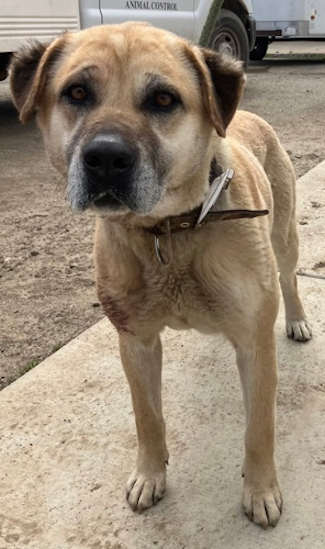
“Doc” is a male pit bull terrier-Rottweiler mix with a short black coat.
“Kubota” is a 4 and a half year old male German shepherd mix with a short tan and white coat.

The shelter is located at 6820 Old Highway 53. It’s open from 9 a.m. to 6 p.m. Tuesday through Saturday.
For more information, call the shelter at 707-762-6227, email

This week’s adoptable dogs are featured below.
Email Elizabeth Larson at