 How to resolve AdBlock issue?
News
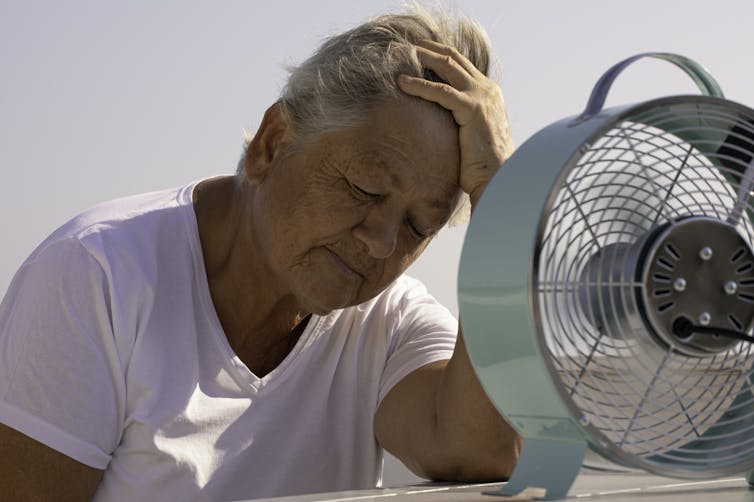
Millions of Americans have already been sweltering through heat waves this summer, and forecasters warn of hot months ahead. July 3 and 4, 2023, were two of the hottest days, and possibly the hottest, on satellite record globally.
For people who struggle to afford air conditioning, the rising need for cooling is a growing crisis.
An alarming number of Americans risk losing access to utility service altogether because they can’t pay their bills. Energy utility providers shut off electricity to at least 3 million customers in 2022 who had missed a bill payment. Over 30% of these disconnections happened in the three summer months, during a year that was the fifth hottest on record.
In some cases, the loss of service lasted for just a few hours. But in others, people went without electricity for days or weeks while scrambling to find enough money to restore service, often only to face disconnection again.
As researchers who study energy justice and energy insecurity, we believe the United States is in the midst of a disconnection crisis. We started tracking these disconnections utility by utility around the country, and we believe that the crisis will only get worse as the impacts of climate change become more widespread and more severe. In our view, it is time government agencies and utilities start treating household energy security as a national priority.
1 in 4 households face energy insecurity
Americans tend to think about the loss of electricity as something infrequent and temporary. For most, it is a rare inconvenience stemming from a heat wave or storm.
But for millions of U.S. households, the risk of losing power is a constant concern. According to the most recent data from the U.S. Energy Information Administration, 1 in 4 American households experience some form of energy insecurity each year, with no appreciable improvement over the past decade.
For many low-income households, the risk of a power shut-off reoccurs month after month. In a recent study, we found that over the course of a single year, half of all households whose power was disconnected dealt with disconnections multiple times as they struggled to pay their bills.
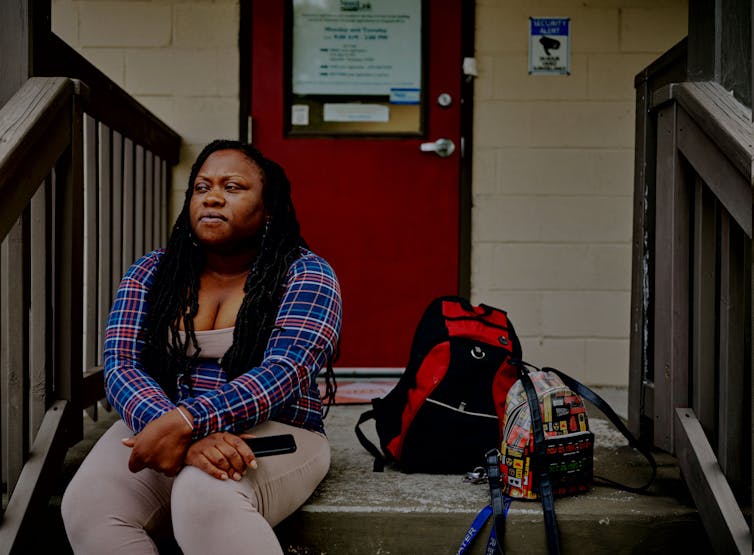
Energy insecurity like this is especially common among low-income Americans, people of color, families with young children, individuals who rely on electronic medical devices or those living in poor housing conditions. During the first year of the COVID-19 pandemic, we found that Black and Hispanic households were three and four times, respectively, more likely to lose service than white households.
Along with existing financial constraints, people are facing rising electricity rates in many areas, rising inflation and higher temperatures that require cooling. Some also face a history of redlining and poor city planning that has concentrated certain populations in less efficient homes. Taken together, the crisis is apparent.
Coping strategies can put health at risk
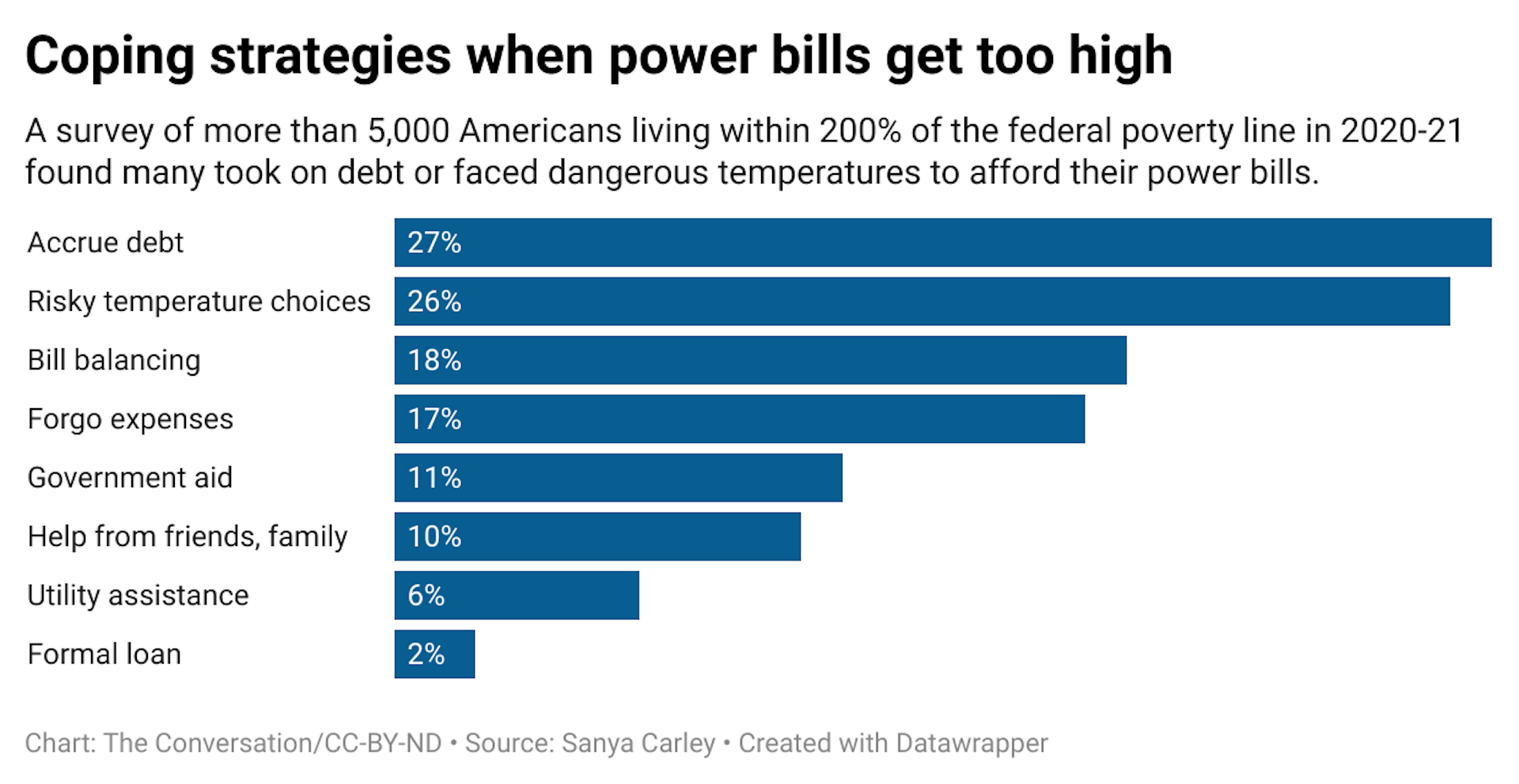
We have found that over half of all low-income households engage in some coping strategies, and most of them find they need multiple strategies at once.
They might leave the air conditioner off in summer, allowing the heat to reach uncomfortable and potentially unsafe temperatures to reduce costs. Or they might forgo food or medicine to pay their energy bills, or strategically pay down one bill rather than another, known as “bill balancing.” Others turn to payday loans that might help temporarily but ultimately put them in deeper debt. In our research, we have found that the most common coping strategies are also the most risky.
Once people fall behind on their bills, they are at risk of being disconnected by their utility providers.
The loss of critical energy services may mean that affected people cannot keep their homes cool – or warm during the winter months – or food refrigerated during any season. Shut-offs may mean that people with illnesses or disabilities cannot keep medicines refrigerated or medical devices charged. And during times of extreme cold or heat, the loss of energy utility services can have deadly consequences.
Where disconnection rates are highest
Our research team recently launched the Utility Disconnections Dashboard in which we track utility disconnections in all places where data is available.
In recent years, more states have required regulated utilities across the country to disclose the number of customers they disconnect. However, state regulations only apply to the utilities that they regulate. Public utilities and cooperatives, which serve over 20% of U.S. electricity customers, often aren’t covered. That leaves massive gaps in understanding of the full magnitude of the problem.
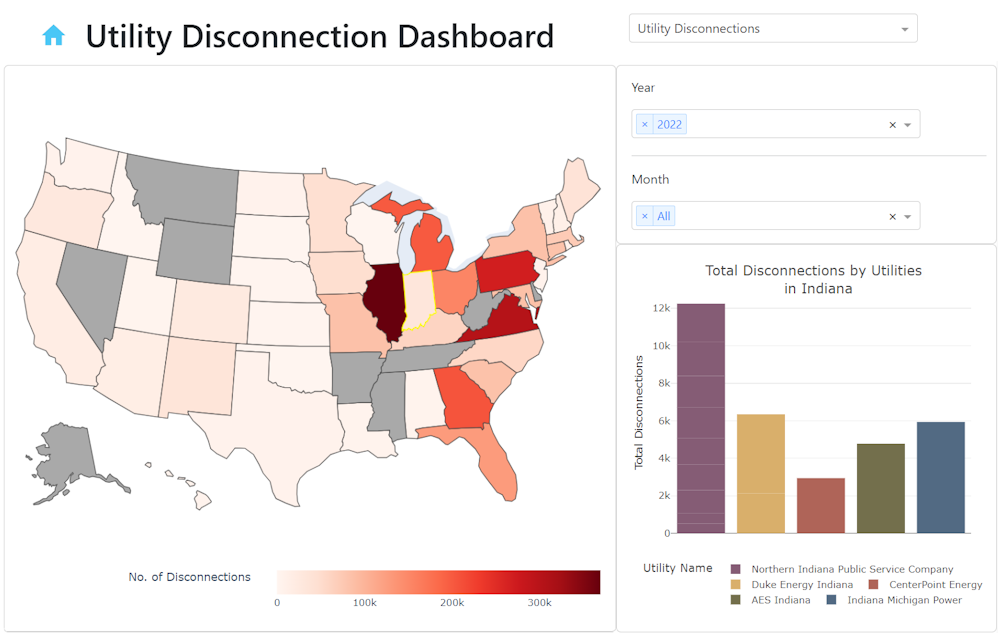
The data we do have reveals that disconnection rates soar during the summer months and are typically highest in the Southeast – the same states that were baking under a heat dome in June and July 2023.
Places with particularly high disconnection rates include Alabama, where the city of Dothan’s municipal utility has disconnected an average of 5% of its customers, and Florida, where the city of Tallahassee has a disconnection rate of over 4%.
Large investor-owned utilities in Florida, Georgia, South Carolina and Indiana also top the charts in disconnections, with average rates near 1%.
Only 19 states restrict summer shut-offs
State public utility commissions place certain restrictions on the circumstances when utilities can disconnect customers, but summer heat is often overlooked.
All but a handful of states limit utilities from shutting off customers during winter months or on extremely cold days. Most have at least some medical exemptions.
Yet, the majority of states do not place any limits on utility disconnections during summer months or on very hot days. Only 19 states have such summer protections, which typically take the form of designating time periods or temperatures when customers cannot be disconnected from their service. We believe this is untenable in an era of climate change, as more parts of the country will increasingly experience excessive-heat days.
These state-level policies provide a baseline of protection. We learned during the COVID-19 pandemic that moratoriums that prohibit utility disconnections can alleviate energy insecurity by establishing a strong mandate against disconnections.
But these policies are highly variable across the country and particularly insufficient during hot summer months. Moreover, customer protections can be difficult for people to find and understand, since the language can be overly convoluted and confusing, placing additional an burden on already vulnerable Americans to discover for themselves how they can avoid losing service.
Better rules and a new mindset on right to energy
As we see it, the U.S. needs more robust customer protections, with states, if not the federal government, mandating better disclosure of when and where disconnections occur to identify any systemic biases.
Most of all, we believe Americans need a collective change in mindset about energy access. That should start with a principle that all people should have access to critical energy services and that utilities should only shut off service to customers as a last resort, especially during health-compromising weather events. The country cannot wait for deadly heat waves to prove how important it is to protect American households.
Sanya Carley, Presidential Distinguished Professor of Energy Policy and City Planning, University of Pennsylvania and David Konisky, Lynton K. Caldwell Professor, Indiana University
This article is republished from The Conversation under a Creative Commons license. Read the original article.
The California Department of Fish and Wildlife’s Snake Fungal Disease project is conducting a three-year study of SFD in California.
In the first year of statewide surveillance, scientists discovered new cases of the fungal pathogen.
“Early results of our study are in, and they paint a different picture than what we understood before. Prior to this project, we had only two instances of the pathogen in California,” said CDFW Scientific Aid Raquel Elander.
CDFW’s Snake Fungal Disease project is funded by a State Wildlife Grant from the U.S. Fish and Wildlife Service and undertaken in collaboration with the Wildlife Epidemiology Lab at the University of Illinois College of Veterinary Medicine and partners in the wildlife rehabilitation and herpetological communities.
The study was initiated after CDFW confirmed the first two detections of SFD in California in 2019.
Those detections were found in a California kingsnake (Lampropeltis californiae) and an invasive Florida banded watersnake (Nerodia fasciata pictiventris).
To date, the fungal pathogen that causes SFD, Ophidiomyces ophidiicola, has been detected in seven additional species from two families, Viperidae and Colubridae.
The detections were found in common, threatened, endangered and non-native species.
Positive cases were detected from skin swab samples collected between July 2021 and October 2022 from 10 counties throughout the Sacramento Valley, San Francisco Bay Area and the San Diego area.
Skin swabs collected from the following species tested positive for presence of the pathogen: Northern Pacific rattlesnake (Crotalus oreganus oreganus), Western yellow-bellied racer (Coluber constrictor mormon), Pacific gophersnake (Pituophis catenifer catenifer), Valley gartersnake (Thamnophis sirtalis fitchi), giant gartersnake (T. gigas), San Francisco gartersnake (T. sirtalis tetrataenia) and a non-native milksnake (L. triangulatum). Ophidiomyces ophidiicola was also detected on additional California kingsnakes.
Detections and prevention
Since 2008, SFD has been detected in free-ranging and captive snakes from more than 30 species worldwide.
Signs of SFD infections may appear as scabs, crusty or flaking scales, open wounds or severe facial swelling and may result in death.
Snakes may carry the fungus without showing signs of infection. In California, not all individuals infected with the fungus had visible signs of SFD, suggesting some snakes may have been asymptomatic carriers or were detected with mild or early-stage infections due to the comprehensive surveillance plan as part of this project.
Ophidiomyces ophidiicola can be transmitted via snake-to-snake contact or from a contaminated environment to a snake.
There is no evidence that SFD can be transmitted to humans. However, it is possible for humans to transmit the fungus to snakes while handling them or from moving fungal contaminated soil and organic debris with footwear.
To reduce the risk of transmission:
• Do not handle free-ranging snakes.
• Individuals possessing a fishing license for the capture of snakes are encouraged to disinfect their hands using an alcohol-based hand sanitizer or wear disposable nitrile gloves which should be changed between animals.
• Footwear and any object that contacts the snake or its environment should also be disinfected between snakes or sites using a 10 percent bleach solution with a minimum exposure time of five minutes to effectively kill the fungus.
• Ophidiomyces ophidiicola has also been detected on captive snakes. If a pet snake escapes or is intentionally released into the wild, the fungus and SFD can be introduced and can cause harm to native snakes.
For more information visit CDFW’s Don’t Let It Loose campaign web page.
CDFW encourages the public to report sick or dead snakes through its Mortality Reporting web page.
For further information and resources on Snake Fungal Disease visit CDFW’s Snake Fungal Disease web page.
Sixty-eight people were killed in crashes throughout the state during the Independence Day Maximum Enforcement Period, or MEP, which began at 6:01 p.m. on Friday, June 30, and concluded at 11:59 p.m. on Tuesday, July 4.
Nearly half of the total number of vehicle occupants who died within CHP jurisdiction were not wearing a seat belt, the CHP said.
With unsafe speed being the number one contributor to crashes in California, the CHP placed a special emphasis on its enforcement during the recent MEP.
CHP officers issued more than 9,700 speed citations throughout the long Independence Day weekend.
Additionally, the CHP said impaired drivers were removed from California’s roadways at an alarming rate during the holiday enforcement effort.
CHP officers made 1,224 arrests for driving under the influence, which is an average of one DUI arrest every five minutes.
“The results of this MEP are concerning and reinforce the need for responsible behavior behind the wheel,” said CHP Commissioner Sean Duryee. “All of these deaths were preventable, and the loved ones they leave behind will be forever impacted. Traffic safety is everyone’s responsibility, and these statistics show us how much work there is still to be done. The CHP is committed to making California’s roadways safer for all who use them.”
To help protect those who are traveling on California’s roadways during the holidays, the CHP implements six MEPs per year.
The next MEP is scheduled for Labor Day weekend.
Throughout the holiday weekend, all available uniformed members of the CHP will be on patrol to enhance public safety, deter unsafe driving behavior, and, when necessary, take appropriate enforcement action.
“Keep yourself and others who are on the road safe by buckling up, driving at a speed safe for conditions, avoid distractions behind the wheel, and always designating a sober driver,” the CHP said in its report on the MEP.
During the COVID-19 public health emergency, the federal government temporarily waived Medicaid and Children’s Health Insurance Program requirements for annual eligibility redeterminations.
As a result, Medi-Cal members kept their health coverage continuously during the public health emergency.
However, now those eligibility requirements are back in effect, according to Lake County Social Services.
Starting with redeterminations due in June 2023, counties are required to start processing redeterminations and taking appropriate actions following regulation.
Lake County Social Services reported that all active Medi-Cal customers will undergo a redetermination over the next 12 months and while they will try to auto renew as many customers as they can, it is not always possible.
Lake County has 37,542 active individuals receiving Medi-Cal benefits and the majority of them will have to complete a redetermination. It averages to around 3,128 per month.
County officials need the help of those covered by Medi-Cal to ensure they and their families remain covered.
If you have not already, please ensure that your contact information is correct with the Social Services Department and check your mail often. You will receive a redetermination packet in the mail 60 days prior to the due date and it must be returned in time to avoid any lapse in coverage.
The redetermination packet may look overwhelming as it is quite large, but most of the paperwork you receive will be educational materials. The only forms you must return to the county are the ones that ask you about your contact information, household, income and property.
To make it even easier, it will come with a prepaid return envelope that is already addressed; just complete the forms, sign and date, stuff the envelope and make sure the Lake County Social Services mailing address is visible through the window.
To aid the community in this effort and to make sure the county is available to help Medi-Cal recipients, the county has staffed a new counter service unit at its office at 15975 Anderson Ranch Parkway in Lower Lake. The office is open Monday through Friday, 8 a.m. to 5 p.m.
There will be both English and Spanish speakers available in person. If you have a different primary language, translators are available by phone.
For those who may not be able to make it into the office, there also will be numerous outreach events staffed with Social Services employees ready to help.
Here is the scheduled listing of outreach events for July 2023:
• Thursday, July 6, 11 a.m. to 1:30 p.m.: Lakeport Senior Center, 527 Konocti Ave.
• Thursday, July 6, 5 to 7 p.m.: The Warming Center, 1111 Whalen Way, Lakeport.
• Friday, July 7, 10 a.m. to 1 p.m.: Lucerne Senior Center, 3985 Country Club Drive.
• Friday, July 7, 10:30 a.m. to 1 p.m.: Middletown Senior Center, 21256 Washington St.
• Friday, July 7, 5 to 7 p.m.: Middletown Farmers Market, 21249 Washington St.
• Thursday, July 13, 11 a.m. to 1:30 p.m.: Lakeport Senior Center, 527 Konocti Ave.
• Thursday, July 13, 5 to 7 p.m.: The Warming Center, 1111 Whalen Way, Lakeport.
• Friday, July 14, 10 a.m. to 1 p.m.: Lucerne Senior Center, 3985 Country Club Drive.
• Friday, July 14, 10:30 a.m. to 1 p.m.: Middletown Senior Center, 21256 Washington St.
• Tuesday, July 18, 10:30 a.m. to 1 p.m.: Clearlake Senior Center, 3245 Bowers Ave.
• Tuesday, July 18, 5 to 7 p.m.: The Warming Center, 1111 Whalen Way, Lakeport.
• Thursday, July 20, 11 a.m. to 1:30 p.m.: Lakeport Senior Center, 527 Konocti Ave.
• Thursday, July 20, 5 to 7 p.m.: The Warming Center, 1111 Whalen Way, Lakeport.
• Friday, July 21, 10 a.m. to 1 p.m.: Lucerne Senior Center, 3985 Country Club Drive.
• Friday, July 21, 10:30 a.m. to 1 p.m.: Middletown Senior Center, 21256 Washington St.
• Thursday, July 27, 11 a.m. to 1:30 p.m.: Lakeport Senior Center, 527 Konocti Ave.
• Thursday, July 27, 11 a.m. to 12:30 p.m.: Kelseyville Senior Center, 5245 Third St.
• Friday, July 28, 10 a.m. to 1 p.m.: Lucerne Senior Center, 3985 Country Club Drive.
• Friday, July 28, 10:30 a.m. to 1 p.m.: Middletown Senior Center, 21256 Washington St.
Ways to complete your redetermination on your own:
• Mail it in: P.O. Box 9000, Lower Lake, CA 95457.
• Drop it off: 15975 Anderson Ranch Parkway, Lower Lake.
• Online: https://benefitscal.com or https://www.coveredca.com.
• By phone: 707-995-4200 or 800-628-5288.
For more information on the resumption of Medi-Cal Redeterminations please visit https://www.dhcs.ca.gov/pages/keep-your-medi-cal.aspx.
Sen. Bill Dodd, D-Napa, authored SB 329, which he said is a measure to boost participation and diversity on California city councils by allowing the first council pay cap increases since 1984, bringing salaries more in line with the cost of living.
The newest law addresses an issue that Dodd said has discouraged public participation on city councils.
Now, in general law cities, city councils may vote to receive a limited salary, not to exceed caps based on population size provided in state law.
However, the maximum amounts set by state law have not been increased since 1984, despite inflation of more than 300% during that time.
Because of the disparity, people from diverse communities are discouraged from running for office, Dodd’s office said. Others with full-time jobs have been forced to resign their posts before their terms expire because they can’t devote time to council service and supporting their families.
In the city of Clearlake, council salaries for 2022 ranged between $6,000 and $10,861, with two council members receiving between $10,230 and $10,290 in retirement and health contributions, according to the Government Compensation in California website, which uses data submitted by the city.
The Government Compensation in California website does not specify which council members receive what pay amounts.
In the city of Lakeport, in 2022 two council members receive wages, one $1,050 and another $3,000, and two others receive retirement and health contributions, totaling $15,233 and $21,059. Three others are reported as receiving no pay.
There are seven Lakeport Council Council positions listed for last year, rather than five, due to resignations followed by new appointments.
Senate Bill 329 allows councils to adjust their maximum pay to reflect inflation as measured by the California Consumer Price Index. Any increases would require a majority vote of the city councils.
SB 329 was supported by the NAACP California Hawaii State Conference and the League of California Cities, among other groups.
“In my time in the Legislature, people have called for action on a range of issues – from wildfire safety to consumer protection — and I’ve responded with commonsense laws addressing these pressing issues,” Sen. Dodd said. “My priority is always the same — to make life better for Californians. That’s the goal of my latest bill, which will remove barriers to achieving more equitable representation in local government by making it easier for public servants to balance careers and personal obligations.”
On June 29, Gov. Gavin Newsom signed the bill. It’s the 100th bill written by Sen. Dodd since he joined the Legislature in 2014, first as an Assembly member — representing a district that included Lake County — and later as the Third District senator.
It is reported to be the single highest number from any legislator over the same period.
Dodd has taken on an array of issues including helping small businesses, improving wildfire safety and bolstering consumer privacy and protection.
“So much of politics today is about being a political show horse. Yet, Sen. Dodd demonstrates time and again that he’s a workhorse — trying to solve problems — and not merely about political grandstanding,” said David McCuan, political science professor at Sonoma State University. “With 100 bills signed by California governors, this approach is about moving the lines forward on controversial political debates and issues. SB 329 is yet another example of doing what’s right to improve our work in politics over that of merely being about the show in the game of politics.”
The funding, which began in June, will enable the college to continue providing vital resources, support and services specifically tailored to Native American students.
Mendocino College is one of only 20 institutions selected to receive funding for the establishment of a Native American Student Success & Support Program.
With this grant, Mendocino College will be able to hire dedicated staff members who will work closely with Native American students, ensuring they receive personalized support and guidance throughout their educational journey.
Additionally, the funding will facilitate stronger engagement with tribal nations in the region, fostering collaboration and partnership.
College officials said this funding comes at a crucial time, allowing Mendocino College to build upon its recent efforts to enhance the support provided to Native American students.
The college remains committed to fostering an inclusive environment where every student has the opportunity to succeed and thrive.
In recent years, Mendocino College has been steadfastly committed to closing equity gaps for Native American students and fostering deeper connections with the community.
The college's 2022-2025 Student Equity Plan reveals that these efforts have indeed paid off, with Native American students achieving on par with or surpassing their peers in numerous categories.
During the 2021-2022 academic year, Mendocino College proudly enrolled the highest number of Native American students among all institutions within the California Community College system, which comprises 116 community colleges.
Despite being one of the smallest colleges in terms of overall student population, Mendocino College stands out for its remarkable success in attracting and supporting Native American students.
“Enhancing educational opportunities and pathways for Native American communities are core priorities of our district. We feel privileged to serve numerous tribal nations and are eager to collaborate in addressing the educational needs of Native American students,” said Mendocino College President Dr. Tim Karas.
Mendocino College stands out among California community colleges by offering a dedicated on-campus space specifically for Native American students.
In the past year, the college has relocated the Native American Student Resource Center to a more prominent location near Pomo Plaza along with various support services. This move has significantly enhanced the center's visibility and facilitated greater access to resources for students.
Mendocino College has demonstrated its commitment to engaging Native American students through initiatives such as the establishment of Pomo Pathway in 2018.
Initially launched in collaboration with the Coyote Valley Tribe of Pomo Indians, Pomo Pathway is a student learning community that integrates culturally relevant content into course curricula while offering supplemental support beyond the classroom.
Although the pandemic necessitated a temporary shift to online learning, Pomo Pathway has now resumed providing in-person assistance to students. Furthermore, the program has expanded its range of support by incorporating the Native American Student Resource Center into its framework, ensuring a holistic approach to nurturing the success of Native American students.
The college's commitment to supporting Native American students extends beyond providing physical spaces. Mendocino College has also adopted an official land acknowledgment, renamed the main quad as Pomo Plaza, and increased the number of cultural events on campus.
These initiatives represent just a fraction of the comprehensive efforts being made by the institution to create an inclusive and nurturing environment for Native American students.
“We are proud of the work we are doing at Mendocino College and these funds will allow us to continue our efforts to promote student success among our Native American community and to reinvigorate a college-going culture in our region,” says Ulises Velasco, vice president of student services. “Our hope is that through our consistent efforts, we are able to ensure that Native Americans feel welcomed and supported at Mendocino College and consider starting their college career with us.”
Mendocino-Lake Community College District was formed in 1973 to serve students in Mendocino and Lake counties. Mendocino College offers over 100 degree and certificate programs, and has campuses in Ukiah, Willits, Fort Bragg and Lakeport. Learn more at www.mendocino.edu.