 How to resolve AdBlock issue?
News

Fiber might just be the key to healthy weight management – and nature packages it in perfectly balanced ratios with carbs when you eat them as whole foods. Think unprocessed fruits, vegetables, whole grains, beans, nuts and seeds. Research suggests that carbohydrates are meant to come packaged in nature-balanced ratios of total carbohydrates to fiber. In fact, certain types of fiber affect how completely your body absorbs carbohydrates and tells your cells how to process them once they are absorbed.
Fiber slows the absorption of sugar in your gut. It also orchestrates the fundamental biology that recent blockbuster weight loss drugs like Wegovy and Ozempic tap into, but in a natural way. Your microbiome transforms fiber into signals that stimulate the gut hormones that are the natural forms of these drugs. These in turn regulate how rapidly your stomach empties, how tightly your blood sugar levels are controlled and even how hungry you feel.
It’s as if unprocessed carbohydrates naturally come wrapped and packaged with their own instruction manual for your body on how to digest them.
I am a physician scientist and gastroenterologist who has spent over 20 years studying how food affects the gut microbiome and metabolism. The research is clear – fiber is important not just for happy bowel movements, but also for your blood sugar, weight and overall health.
Carbohydrates without their wrappers
Unfortunately, most Americans get the majority of their carbohydrates stripped of their natural fibers. Modern processed grains like white rice and white flour as well as many ultraprocessed foods like some sugary breakfast cereals, packaged snacks and juices have removed these fibers. They essentially come unwrapped and without instructions for the body on how much it should absorb and how it should process them. In fact, only 5% of Americans eat the recommended amount of carbohydrates with enough of their natural packaging intact. Guidelines recommend at least 25 to 30 grams of fiber a day from food.
It may not be surprising that lack of fiber contributes to diabetes and obesity. What is surprising is that the fiber gap also likely contributes to heart disease, certain types of cancer and maybe even Alzheimer’s disease.
One popular approach to mitigating some of the ill health effects of low fiber and high refined carbohydrates has been to limit carbohydrate intake. Such approaches include the low-carb, keto, paleo and Atkins diets. Each diet is a variation on a similar theme of limiting carbohydrates to varying amounts in different ways.
There is scientific backing to the benefits of some of these diets. Research shows that limiting carbohydrates induces ketosis, a biological process that frees energy from fat reserves during starvation and prolonged exercise. Low-carbohydrate diets can also help people lose weight and lead to improvements in blood pressure and inflammation.
That said, some keto diets may have negative effects on gut health. It is also unknown how they may affect heart health, some forms of cancer and other conditions in the long term.
Even more confusing, research shows that people with diets high in plant-sourced carbohydrates, like the Mediterranean diet, tend to lead the longest and healthiest lives. How can this be reconciled with studies that suggest that low-carbohydrate diets can benefit metabolic health?
Is a carb a carb?
The answer may have to do with the types of carbohydrates that studies are evaluating. Limiting simple sugars and refined carbohydrates may improve certain aspects of metabolic health, as these are some of the most easily digested and absorbed calories. But a more sustainable and comprehensive way of improving health may be increasing the percentage of unprocessed, more complex and slowly absorbed carbohydrates that come with their natural packages and instructions intact – those that have fiber.
These natural carbohydrates can be found in whole grains, beans, nuts, seeds, fruits and vegetables. They come in ratios of total carbohydrate to fiber that rarely exceed 10-to-1 and are often 5-to-1 or lower. Eating mostly whole foods is a simple way to ensure you’re consuming quality carbohydrates with the right ratios.

But who doesn’t like to have a big bowl of pasta or cake with ice cream on occasion? Focusing on packaged processed foods that maintain carb-to-fiber ratios of at least as low as 10-to-1 or ideally 5-to-1 can help you make the best choices when picking more processed foods at the store. Take a look at the nutrition facts label and simply divide total carbohydrates by dietary fiber.
On occasions when you’re eating out or celebrating someone’s birthday, consider taking a fiber supplement with your meal. One pilot study found that a supplement containing a blend of fibers decreased the blood sugar spike – an increase in glucose levels in the blood that if too high can damage the body over time – after a meal in healthy individuals by roughly 30%.
Listen to your body
While almost all fiber is generally good for health in most people, not all fiber affects the body in the same way. Consuming a range of different types of fiber generally helps ensure a diverse microbiome, which is linked to gut and overall health.
But certain medical conditions might preclude consuming certain types of fiber. For example, some people can be particularly sensitive to one class of fiber called FODMAPS – fermentable oligosaccharides, disaccharides, monosaccharides and polyols – that are more readily fermented in the upper part of the gut and can contribute to symptoms of irritable bowel syndrome like bloating and diarrhea. High-FODMAP foods include many processed foods that contain inulin, garlic powder and onion powder, as well as whole foods including those in the onion family, dairy products, some fruits and vegetables.
Listen to how your body responds to different high-fiber foods. Start low and go slow as you reintroduce foods like beans, seeds, nuts, fruits and vegetables to your diet. If you have trouble increasing your fiber intake, talk with your health care provider.
Tools like this online calculator I’ve created can also help you find the highest-quality foods with healthy fiber and other nutrient ratios. It can also show you what proportions of fiber to add back to sugary foods to help achieve healthy ratios.
I wouldn’t endorse eating sweets all the time, but as my three daughters like to remind me, it’s important to enjoy yourself every once in a while. And when you do, consider putting the carbs back in their fiber wrappers. It’s hard to improve upon nature’s design.
Christopher Damman, Associate Professor of Gastroenterology, School of Medicine, University of Washington
This article is republished from The Conversation under a Creative Commons license. Read the original article.

People can be unaware and lax about updating their estate planning, both when major life events occur and also after time, as life incrementally creeps up over the years; the second shortcoming leaves people with misplaced confidence in old estate planning documents that are outdated as the law and/or the estate planning goals materially changed.
Let us discuss some possible life scenarios within different generational contexts where they often occur.
Naturally, this discussion involves generalizations and assumptions; individual situations may vary.
When a minor becomes an adult they are often unaware that their parents no longer have the legal authority to control their health, property and legal affairs.
As adults they now need a power of attorney and an advanced health care directive to protect them in the event of an incapacity; otherwise a court supervised conservatorship may become necessary.
Since Jan. 1, 2023, California also recognizes supported decision-making which may enhance the capacity of a disabled person with borderline understanding to enable them to sign estate planning documents, including a supported decision-making agreement itself.
Furthermore, when young people get married and when they have children their estate planning goals expand to protect not only themselves but also their dependents.
Specifically, this includes transferring their real property into a living trust to both avoid probate and to control assets for the benefit of their dependents.
It also means updating death beneficiary designations on retirement accounts and life insurance policies accordingly.
Next, a middle aged person needs to consider updates if and when they get divorced or remarried, adopt children or raise stepchildren.
Specifically, a middle aged person in a second marriage is often concerned about preserving the separate property character of assets they earned or inherited before marriage.
They may also be concerned about balancing how their estate plan provides for their new spouse and their own children from before the second marriage, often a careful balancing act.
In second marriages, a married person may want a trust just for their own separate property assets to avoid commingling separate assets with community property assets acquired in the second marriage.
The separate property trust may provide some support for the surviving spouse, including, for example, lifetime use of a residence and also protect their children’s inheritances.
A second trust may be used to hold community property assets if the couple acquires a residence together that will benefit the surviving spouse.
Also, a middle aged person with a disabled dependent child (e.g., developmentally disabled) will consider how best to protect their children if and when they are no longer able to do so themselves.
They may consider placing assets into a special needs trust that will supplement and preserve any needs based government benefits received by the child.
An elderly person needs updates to their estate plan if and when their spouse dies and/or if a child unfortunately were to predecease them.
Also, they will need updates when they sell their real property and move into an assisted living, skilled nursing or other dependent care situation.
A person who has sold their real property may also no longer need a living trust and may, depending on the situation, prefer to avoid any post-death administration of their estate, including a trust administration.
They can do so using pay on death bank accounts and transfer on death beneficiary forms to brokerage investment and retirement accounts.
The elderly person may still need a will (usually), a power of attorney, advanced health care directive, and (nowadays) possibly a supported decision-making agreement.
Too often people neglect to administer and/or to update their estate planning (such as after the death of a spouse).
Anyone whose life situation has substantially changed, or more than 5 years has elapsed since when they last did estate planning, may want to revisit their estate planning arrangements.
The foregoing raises a variety of concerns. It is neither exhaustive nor legal advice. Consult an estate planning attorney for guidance.
Dennis A. Fordham, attorney, is a State Bar-Certified Specialist in estate planning, probate and trust law. His office is at 870 S. Main St., Lakeport, Calif. He can be reached at
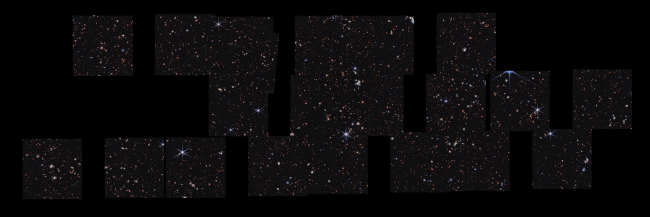
Researchers have discovered the most distant active supermassive black hole to date with the James Webb Space Telescope.
The galaxy, CEERS 1019, existed just over 570 million years after the big bang, and its black hole is less massive than any other yet identified in the early universe.
Not only that, they’ve easily “shaken out” two more black holes that are also on the smaller side, and existed 1 and 1.1 billion years after the big bang. Webb also identified eleven galaxies that existed when the universe was 470 to 675 million years old.
The evidence was provided by Webb’s Cosmic Evolution Early Release Science, or CEERS, Survey, led by Steven Finkelstein of the University of Texas at Austin.
The program combines Webb’s highly detailed near- and mid-infrared images and data known as spectra, all of which were used to make these discoveries.
CEERS 1019 is not only notable for how long ago it existed, but also how relatively little its black hole weighs. This black hole clocks in at about 9 million solar masses, far less than other black holes that also existed in the early universe and were detected by other telescopes.
Those behemoths typically contain more than 1 billion times the mass of the Sun — and they are easier to detect because they are much brighter. (They are actively “eating” matter, which lights up as it swirls toward the black hole.)
The black hole within CEERS 1019 is more similar to the black hole at the center of our Milky Way galaxy, which is 4.6 million times the mass of the Sun. This black hole is also not as bright as the more massive behemoths previously detected.
Though smaller, this black hole existed so much earlier that it is still difficult to explain how it formed so soon after the universe began.
Researchers have long known that smaller black holes must have existed earlier in the universe, but it wasn’t until Webb began observing that they were able to make definitive detections.
CEERS 1019 may only hold this record for a few weeks — claims about other, more distant black holes identified by Webb are currently being carefully reviewed by the astronomical community.
Webb’s data is practically overflowing with precise information that makes these confirmations so easy to pull out of the data.
“Looking at this distant object with this telescope is a lot like looking at data from black holes that exist in galaxies near our own,” said Rebecca Larson of the University of Texas at Austin, who led this discovery. “There are so many spectral lines to analyze!”
Not only could the team untangle which emissions in the spectrum are from the black hole and which are from its host galaxy, they could also pinpoint how much gas the black hole is ingesting and determine its galaxy’s star-formation rate.
The team found this galaxy is ingesting as much gas as it can while also churning out new stars. They turned to the images to explore why that might be. Visually, CEERS 1019 appears as three bright clumps, not a single circular disk.
“We’re not used to seeing so much structure in images at these distances,” said CEERS team member Jeyhan Kartaltepe of the Rochester Institute of Technology in New York. “A galaxy merger could be partly responsible for fueling the activity in this galaxy’s black hole, and that could also lead to increased star formation.”
The CEERS Survey is expansive, and there is a lot more to explore.
Team member Dale Kocevski of Colby College in Waterville, Maine, and the team quickly spotted another pair of small black holes in the data. The first, within galaxy CEERS 2782, was easiest to pick out. There isn’t any dust obscuring Webb’s view of it, so researchers could immediately determine when its black hole existed in the history of the universe — only 1.1 billion years after the big bang.
The second black hole, in galaxy CEERS 746, existed slightly earlier, 1 billion years after the big bang. Its bright accretion disk, a ring made up of gas and dust that encircles its supermassive black hole, is still partially clouded by dust.
“The central black hole is visible, but the presence of dust suggests it might lie within a galaxy that is also furiously pumping out stars,” Kocevski explained.
Like the one in CEERS 1019, these two black holes are also “light weights” — at least when compared to previously known supermassive black holes at these distances. They are only about 10 million times the mass of the Sun.
“Researchers have long known that there must be lower mass black holes in the early universe. Webb is the first observatory that can capture them so clearly,” Kocevski added. “Now we think that lower mass black holes might be all over the place, waiting to be discovered.”
Before Webb, all three black holes were too faint to be detected. “With other telescopes, these targets look like ordinary star-forming galaxies, not active supermassive black holes,” Finkelstein added.
Webb’s sensitive spectra also allowed these researchers to measure precise distances to, and therefore the ages of, galaxies in the early universe. Team members Pablo Arrabal Haro of NSF's NOIRLab and Seiji Fujimoto of the University of Texas at Austin identified 11 galaxies that existed 470 to 675 million years after the big bang. Not only are they extremely distant, the fact that so many bright galaxies were detected is notable. Researchers theorized that Webb would detect fewer galaxies than are being found at these distances. “I am overwhelmed by the amount of highly detailed spectra of remote galaxies Webb returned,” Arrabal Haro said. “These data are absolutely incredible.”
These galaxies are rapidly forming stars, but are not yet as chemically enriched as galaxies that are much closer to home. “Webb was the first to detect some of these galaxies,” explained Fujimoto. “This set, along with other distant galaxies we may identify in the future, might change our understanding of star formation and galaxy evolution throughout cosmic history,” he added.
These are only the first groundbreaking findings from the CEERS survey. “Until now, research about objects in the early universe was largely theoretical,” Finkelstein said. “With Webb, not only can we see black holes and galaxies at extreme distances, we can now start to accurately measure them. That’s the tremendous power of this telescope.”
In the future, it’s possible Webb’s data may also be used to explain how early black holes formed, revising researchers’ models of how black holes grew and evolved in the first several hundred million years of the universe’s history.
Several initial papers about CEERS Survey data have been accepted by The Astrophysical Journal Letters: “A CEERS Discovery of an Accreting Supermassive Black Hole 570 Myr after the Big Bang: Identifying a Progenitor of Massive z > 6 Quasars,” led by Larson, “Hidden Little Monsters: Spectroscopic Identification of Low-Mass, Broad-Line AGN at z > 5 with CEERS,” led by Kocevski, “Spectroscopic confirmation of CEERS NIRCam-selected galaxies at z≃8−10,” led by Arrabal Haro, and “CEERS Spectroscopic Confirmation of NIRCam-Selected z ≳ 8 Galaxy Candidates with JWST/NIRSpec: Initial Characterization of their Properties,” led by Fujimoto.
The James Webb Space Telescope is the world’s premier space science observatory. Webb will solve mysteries in our solar system, look beyond to distant worlds around other stars, and probe the mysterious structures and origins of our universe and our place in it. Webb is an international program led by NASA with its partners, ESA (European Space Agency) and the Canadian Space Agency.
The law, AB 1314, which took effect in January was authored by Assemblymember James C. Ramos (D-San Bernardino).
Assemblymembers Ramos and Jim Wood (D-Healdsburg) and representatives from the California Highway Patrol, the Department of Justice and local and tribal law enforcement participated in a roundtable discussion about when and how the alert is activated.
In April, the Round Valley Indian Tribes who participated in Thursday’s event, declared a state of emergency after two of their members were found murdered. The Yurok Tribe issued a similar declaration last year.
Between 1999 and 2019, homicide was the third-leading cause of death among American Indian and Alaska Native women and girls. On reservations, the homicide rate for Native American women is 10 times the national average.
“It gets too easy to cite these staggering statistics,” Ramos said. “I am gratified that the governor approved this bill to help stop the violence afflicting California’s Native American communities. The Feather Alert will aid law enforcement and families in getting the word out quickly when a Native individual is missing or endangered by alerting the public in a broad and effective manner. Creating an alert or advisory system was a top recommendation from tribal leaders last year for dealing with the disproportionate number of missing Native Americans, particularly women and girls.” Ramos also noted that California, the state with the greatest population of Native Americans in the nation, is also among the states with the highest rates of reported cases of Missing and Murdered Indigenous People, or MMIWP,
Wood observed, “I am here today to celebrate the implementation of the Feather Alert notification system. One life of a missing and murdered indigenous person is too many, and my hope is that immediate distribution of their missing status will help us solve these tragic occurrences and return people to their communities. Their lives are meaningful to me and they deserve our support.”
Diana Billy-Elliott, ASW, Vice Chairwoman of the Hopland Band of Pomo Indians stated, “This is an important first step to addressing the MMIWP emergency response. The faster the notifications go out the quicker the response to save lives occurs. Without this alert there is valuable time lost, and we can't afford any lost time when it comes to the lives of our Indigenous People.”
Mendocino County Sheriff Matt Kendall said, “Mendocino County has long faced issues of communication for numerous reasons including the rural and geographically challenging areas our communities are in. Effective communications and strong partnerships with our communities will help us move forward with positive outcomes in our investigations. Providing information to the public in a timely manner strengthens partnerships with our communities and allows all of us to work together with a goal of public safety. The Feather Alert System will begin a process which helps bridge these gaps we have seen in the past.”
Feather Alert criteria
To activate the Feather Alert, the following criteria that must be met:
• Missing person is an indigenous woman or an indigenous person.
• Investigating law enforcement agency has utilized available local and tribal resources.
• Local law enforcement agency determines that the person has gone missing under unexplained or suspicious circumstance.
• Local law enforcement agency believes that the person is in danger because of age, health, mental or physical disability, or environment or weather conditions, that the person is in the company of a potentially dangerous person, or that there are other factors indicating that the person may be in peril.
• Information is available that, if disseminated to the public, could assist in the safe recovery of the missing person.
A report by the Sovereign Bodies Institute indicated only 9% of murders of indigenous women in California have ever been solved.
At a May 4 hearing of the Select Committee on Native American Affairs, which Ramos chaired, tribal leaders urged legislators to take more urgent action to stem the tide of unsolved cases and provide more immediate support when suspected abductions or other acts of violence occur against California Indian people who suffer a disproportionate number of those crimes.
Among other recommendations, witnesses at the hearing called for more immediate notification to the public and enlisting the aid of news outlets to help locate possible victims.
This year, California joined Washington State and Colorado in enacting similar notification systems.
Other California public alert systems
In California, the Feather Alert joins these other special notifications overseen by the CHP:
• The AMBER Alert, which stands for America’s Missing Broadcast Emergency Response is used when children age 17 or younger have been abducted. It has been in use since 2002.
• The Blue Alert, approved in 2011, notifies the public when a suspect in the assault or killing of a police officer remains at large and the search is active.
• The Silver Alert, used when elderly, developmentally or cognitively-impaired persons are missing and are determined to be at-risk. Adopted as the top priority of the California Senior Legislature in October 2011, it was enacted through SB 1047, legislation introduced by state Sen. Elaine Alquist (D-Santa Clara) and Sen. Lou Correa (D-Santa Ana). The bill was approved in 2012 and went into effect in 2013.
The general endangered missing advisory is used when an individual is missing under unexplained or suspicious, and is believed to be in danger due to issues with age, physical and mental health issues, weather, being with a potentially dangerous person or other circumstances.
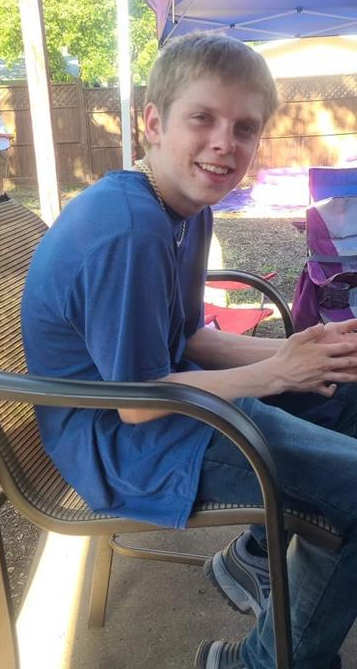
UPDATE: The Clearlake Police Department reported on Friday afternoon that Anthony Hopper has been located.
CLEARLAKE, Calif. — The Clearlake Police Department is working to locate a missing boy.
Anthony Hopper, 16, was last seen leaving his home on 30th Avenue in Clearlake at around 4:50 p.m. Thursday, the Clearlake Police Department said.
Hopper is described as a white male, 5 feet 4 inches tall, between 120 and 140 pounds, with blond hair and blue eyes. He was last seen wearing a gray shirt and blue jeans.
If you have any information about Hopper’s whereabouts please contact the Clearlake Police Department at 707-994-8251. Extension 1.
Under the CalRx Naloxone Access Initiative — unveiled by Gov. Gavin Newsom earlier this year — the state will allocate $30 million to support a partner, or partners, in developing, manufacturing, procuring and/or distributing a naloxone nasal product under the CalRx label.
“One more fatal overdose is one too many. California is tackling the opioid epidemic from all sides," said Gov. Newsom. "Naloxone is, quite literally, a lifesaver — so we are making it more accessible and affordable for anyone who needs it."
Naloxone is an essential medication used to reverse opioid overdoses and save lives. Access to this medication is expected to improve with the recent approval by the U.S. Food & Drug Administration of Narcan, 4 milligram naloxone hydrochloride nasal spray product for over-the-counter use.
However, California recognizes that this development may not sufficiently address the needs of those who are most vulnerable, such as low-income, uninsured, or underinsured individuals and their families.
A more affordable version of this medication is critical to making naloxone more accessible in communities across California.
“California is committed to leveraging its purchasing power by fostering partnerships that can address the affordability and availability of naloxone nasal products,” said California Health and Human Services Agency Secretary Dr. Mark Ghaly. “By reducing barriers and increasing accessibility, this initiative will play a significant role in combating the devastating impact of the opioid epidemic in California. To put it simply, this will help save lives.”
The Department of Health Care Services created the Naloxone Distribution Project, or NDP, in 2018 to combat opioid overdose-related deaths in California through the provision of free naloxone.
As of June 25, 2023, the NDP has distributed more than 2.6 million naloxone kits, resulting in more than 181,665 reported overdose reversals.
CalRx represents a groundbreaking solution for addressing drug affordability. Originally announced in January 2019 in Gov. Newsom’s first Executive Order and later signed into law in the California Affordable Drug Manufacturing Act of 2020 (Pan, Senate Bill 852, Chapter 207, Statutes of 2020),
CalRx empowers California to contract for the development, production, and distribution of generic drugs at low cost and to make them available across the country. The state will target prescription drugs where the pharmaceutical market has failed to lower drug costs, even when a generic or biosimilar medication is available.
Compared to traditional procurement of prescription drugs, CalRx seeks deep, mutually beneficial partnerships with companies and non-profit organizations that share the state’s goals.
Earlier this year, Gov. Newsom announced CalRx was in the process of bringing to market affordable and accessible insulin generics under the CalRx label that will be available to Californians and people across the country.
The funds provided by the state can support research and development, including clinical studies, manufacturing process development, regulatory submissions, FDA approval, and distribution of naloxone nasal products.
For further information and to participate in the RFI, interested parties can visit this site or contact CalRx at