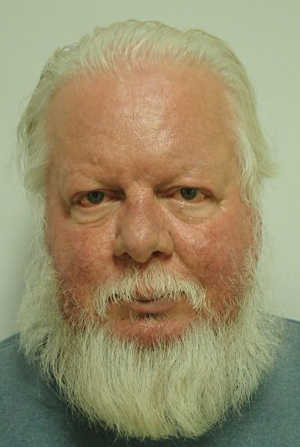
William “Bill” Morton Henry, 64, of Upper Lake, Calif., has pleaded to manslaughter in the June 2018 killing of his wife. Lake County Jail photo. LAKEPORT, Calif. – An Upper Lake man has accepted a plea agreement in the June death of his wife, which the prosecution and defense agreed was the result of a sudden quarrel.
Last Friday, William “Bill” Morton Henry, 64, pleaded to manslaughter in the death of his wife, 51-year-old Cindi Henry, according to defense attorney Andrea Sullivan and Deputy District Attorney Rachel Abelson.
“We came to a negotiated disposition with the District Attorney’s Office,” which was overseen by District Attorney-elect Susan Krones, Sullivan said.
The Lake County Sheriff’s Office said relatives found Cindi Henry dead in her Elliot Street home in Upper Lake on June 11.
Bill Henry was not at home at the time his wife’s body was discovered, but he was arrested on June 14 after he returned to the home, authorities said.
An autopsy found that Cindi Henry died of mechanical asphyxiation, the sheriff’s office said.
The District Attorney’s Office originally charged Bill Henry with first-degree murder, Abelson said.
During an August preliminary hearing in the case, the evidence showed that the couple had been drinking alcohol when an argument occurred in which Cindi Henry made some fairly insulting comments, according to Abelson.
“There was a history of her being verbally and emotionally abusive to Mr. Henry. It appears that he had enough and wanted her to stop,” with Bill Henry choking his wife to death, Abelson said.
While it may have been possible to get a first-degree degree murder conviction, Abelson said the District Attorney’s Office took into consideration issues with intoxication, heat of passions, Bill Henry’s lack of criminal history and his age in negotiating the disposition.
“He also took responsibility at a fairly early stage for a homicide case,” Abelson said.
The couple had been married for about 12 years, and it was a second marriage for both of them, Sullivan said. Bill Henry had worked for about 30 years in maintenance for the Upper Lake Elementary School.
Sullivan said Bill Henry never denied killing his wife. While he did leave after killing her, he wrote a note found in the room next to where her body was located that said he was sorry but that she wouldn’t stop.
“He did leave the area but he immediately came back within 48 hours,” Sullivan said.
Sullivan said that after his arrest and before he had an attorney, Bill Henry gave a two-hour-long statement to law enforcement in which he never denied that he was the cause of his wife’s death.
“He is very, very remorseful,” she said.
On Dec. 21, Bill Henry pleaded to the manslaughter charge as part of the agreement with the District Attorney’s Office, Abelson said.
Abelson said that the agreement calls for Henry not to get probation, and it will be up to the judge – after a recommendation from the Probation Department – how long his prison sentence will be.
If the judge accepts the agreement, Henry will receive a sentence of three, six or 11 years in prison, Abelson said.
Sullivan said the Probation Department will do a presentencing investigation and report that is supposed to weigh factors in the crime, get statements from the families and from Henry himself.
Abelson said Judge David Markham – who took the plea in the case – will sentence Henry on Jan. 22 in Department 3.
Henry will serve his sentence not in the county jail but in state prison, Sullivan said.
Email Elizabeth Larson at This email address is being protected from spambots. You need JavaScript enabled to view it. . Follow her on Twitter, @ERLarson, or Lake County News, @LakeCoNews.
LAKEPORT, Calif. – The new Lakeport Unified School District Board held a special meeting Thursday afternoon during which it voted to hire its own legal counsel to advise it in matters including its relationship with the district superintendent.
The meeting is only the second the new board has had since Carly Alvord, Dan Buffalo and Jen Hanson – elected as part of a unified campaign in November – took their oaths earlier this month.
They were joined by Board member Phil Kirby at the district office for the 3 p.m. meeting. The fifth board member, Lori Holmes, was on vacation but participated via conference call.
Absent for the meeting was district Superintendent April Leiferman. Buffalo, the board chair, said she is on vacation and also had another appointment on Thursday afternoon, so he excused her from attending.
The special meeting had two main topics, the first, handled in open session, regarding a proposed contract for legal services with the law firm Liebert Cassidy Whitmore.
Buffalo said that the board asked him at its previous meeting to secure legal counsel to represent board members in special matters, including advising them in the relationship with the superintendent.
The November election was a heated one, with Leiferman a frequent target of the supporters of the new board members, who held her responsible for matters including the previous board’s action in October to remove Rachel Paarsch from the principal’s job at Terrace Middle School. Paarsch is Kirby’s daughter and also a close friend of Alvord.
Buffalo – the city of Lakeport's former finance director who now works in that same capacity for the city of Ukiah – said he contacted Liebert Cassidy Whitmore because of his familiarity with their work and their reputation. In addition to working for municipalities, they also have a practice in education law.
Holmes questioned hiring another firm, explaining that the district already has two law firms on retainer at a discounted rate, and both specialize in education.
“I understand that you wanted your own separate lawyer,” said Holmes, adding that they already have legal services, and she felt it was a more prudent route to use the services the district has paid for already.
Holmes added that she wanted every single dollar to go to students' education.
Hanson said she was glad they are going outside of the typical legal services the district has had. “I think that some of the advice may be questionable, from the outside looking in,” she said, adding, “It's nice to get a fresh set of eyes on it.”
Buffalo agreed. He said the firm would represent and offer advice to the board and not be available to the superintendent like other firms are for district business. In addition to matters dealing with the superintendent, Buffalo said the new firm would be available to advise on potential litigation.
Holmes said the board could have its own lawyer through the firms that already service it. “Education law is complicated,” she said, adding she didn't know how much Liebert Cassidy Whitmore did in the way of education.
Kristin Lindgren, an associate attorney at Liebert Cassidy Whitmore, traveled from Sacramento to answer the board's questions.
“Our firm has a robust public education practice group,” she said, explaining it doesn't do just municipal work.
Lindgren said she represents most community college districts in California, which are similar to K-12 districts.
Most of her 14 years of legal practice has been in K-12 education, and she said she's versed in that field's complexity. “This is what I do,” Lindgren said, noting that she can advise on a wide range of education topics, from student discipline to the Brown Act, free speech and much more, besides being able to offer training and workshops.
“I think it's a good idea for this board to have a fresh set of eyes on some of these issues,” said Buffalo.
Holmes asked about the knowledge of the district that the other firms offer. Buffalo said that would still be available to the board, which he pointed out is brand new.
During public comment, the board was questioned about the cost.
Lindgren would bill at $210 an hour, while a firm partner will bill at $325 per hour. Lindgren said the agreement doesn't require a retainer.
Buffalo had no estimate of how many hours the board would require of the firm. He said that in his experience, “The cost is what he cost is until the matter is resolved.”
He added, “We want to keep it as low as possible.”
During the public comment portion, Lake County News asked if the board had considered seeking an “ethical wall” in the existing firms in order to have an attorney that represented it alone, rather than the district as a whole, in an effort to keep them separate. He said he did not.
In response to further questions from Lake County News, Buffalo said that the money to pay for the contract would come from the district’s general fund, and he said he didn’t know if hiring an attorney for a board alone is a common thing to do.
Kirby then asked Lindgren if it was common for boards to have their own attorneys. She said she had offered similar services in other circumstances.
Hanson, an economics professor for Woodland Community College’s Lake County Campus, said that, from an economist’s point of view, the legal counsel could potentially save the district money. “It's hard to tell where we would end up.”
“I understand where you guys are coming from,” said Holmes, but she remained concerned about adding extra financial burden, which she said didn’t seem smart and could make staff angry.
She added that she knows the new board members “have a whole different vision.”
Hanson moved to approve the contract – which is dated Dec. 21 – with Alvord seconding. The board voted 4-1, with Holmes the lone dissenter.
The board then went into closed session to discuss, as stated on the agenda, “public employee discipline/dismissal/release” and one potential case of anticipated litigation. Lindgren went into the closed session with the board.
The closed session began shortly before 3:30 p.m. and continued until just before 5:15 p.m.
When the board reemerged, Buffalo said there was no action taken in the closed session.
He said the board directed Lindgren to prepare an item on the same personnel matter topic for a special closed session on Jan. 9, to precede the board’s regular meeting.
Email Elizabeth Larson at This email address is being protected from spambots. You need JavaScript enabled to view it.. Follow her on Twitter, @ERLarson, or Lake County News, @LakeCoNews.
LAKE COUNTY, Calif. – The Board of Supervisors is seeking applicants for another group of upcoming vacancies that need to be filled on several county advisory boards and commission.
All vacancies are countywide unless stated otherwise, and membership on all of them is voluntary.
The following seats are available.
– Cobb Municipal Advisory Council: Three vacancies, two members-at-large and one alternate.
– Lake County/City Areawide Planning Council, or APC: One vacancy, member-at-large.
– Area Agency on Aging of Lake and Mendocino Counties PSA26: One vacancy, member-at-large.
Applications are available at the Lake County Courthouse, Clerk of the Board Office, Room 109, 255 N. Forbes St., Lakeport, or online at www.lakecountyca.gov on the Board of Supervisors page.
If you have questions regarding a vacancy on one of these advisory boards, please contact the clerk of the board at 707-263-2368.
At a public hearing at the California State Capitol on Thursday afternoon, the Cannabis Banking Working Group, or CBWG, chaired by California State Treasurer John Chiang, was presented with the results of an independent study that found that establishment of a public cannabis bank would pose too great of a legal and financial risk to the State of California.
“While today’s announcement may not lay out the path some of us had hoped, it did reinforce the inconvenient reality that a definitive solution will remain elusive until the federal government takes action – they must either remove cannabis from its official list of banned narcotics or approve safe harbor legislation that protects banks serving cannabis businesses from prosecution,” Treasurer Chiang said at Thursday’s hearing.
“Red, blue and purple states – 33 so far – have legalized the adult use of recreational or medicinal cannabis,” Chiang said. “So it’s finally time that the slow, clunky machinery of the federal government work, in a bipartisan fashion, to change federal law to reflect the values and growing consensus of the people it serves.”
Following the passage of Proposition 64 in 2016 and the subsequent legalization of the sale and distribution of recreational cannabis that began on Jan. 1, 2018, many of California’s cannabis businesses were left in a legal limbo, where they were classified as legal by the state of California, but still illegal by the federal government, since federal law categorizes cannabis as a Schedule 1 drug.
Chiang’s office said this stalemate created numerous banking issues for these businesses: by putting banks that might accept deposits from cannabis businesses at risk of losing the federal authority to operate, as well as forcing cannabis businesses to deal in large amounts of cash – making them targets for violent crimes and putting the general public in danger.
Security and procedural concerns about dealing with a cash-only industry also created a nightmare for state and local government revenue-collecting agencies.
Treasurer Chiang added, “It is not only unfair, but a public safety risk to require a legal industry to haul duffle bags of cash to pay taxes, employees, and utility bills. The reliance on cash has painted a target on the backs of cannabis operators, and has made them and the general public vulnerable to violence and organized crime.”
Chiang subsequently created the CBWG – made up of 18 representatives that included law enforcement, regulators, banks, taxing authorities, local governments, and the cannabis industry – to find practical and timely ways to address the state-federal conflict.
Based on one of the recommendations from a 2017 CBWG report, the State Treasurer’s Office commissioned San Diego-based Level 4 Ventures and the State Attorney General’s Office this past August to settle the lingering critical questions about whether a public cannabis bank would be possible.
The 151-page feasibility report – prepared by Level 4 and released Thursday – detailed virtually insurmountable “legal, schedule, mission and financial” risks the state of California would face if it were to move forward to create a public cannabis bank.
Instead, Level 4 recommended the state establish a state project office to work towards improving access to banking by the cannabis industry through greater facilitation, communication, and coordination.
The cannabis bank feasibility study also examined alternative approaches to creating a state-backed bank to handle the billions in annual revenues California’s year-old recreational cannabis industry is expected to generate.
The alternatives included versions of a public bank that would provide services:
– Exclusively to the industry; – Primarily to the industry, but also to other individuals and businesses; and – To other commercial banks through a state-run “correspondent bank.”
The feasibility report noted that there is “a high probability” federal regulators will not issue the necessary master account for a public bank to operate, and if that happens after the state begins spending an anticipated $35 million on start-up costs for any of the three alternatives examined, all taxpayer funds expended to that date “would be wasted.”
Similarly, the report finds that a public cannabis bank would require approximately $1 billion in initial capital investment, and that the bank could lose money for 12 years before it is able to begin repaying that capital.
Furthermore, the state of California may not be able to begin receiving net dividends for 25 to 30 years after the bank opens, meaning the initial investment may go decades without producing any kind of return on investment.
The report also found that the ambiguous path the cannabis industry faces only adds to the numerous issues at hand, noting “If federal regulations change during this time and cannabis banking becomes legal, the bank would most likely be closed at that point due to a decreased business demand for the bank and thereby incur a significant loss. If federal regulators begin to aggressively enforce federal laws the bank would be closed and deposits subject to confiscation … Even if federal regulators maintain the current ambiguous situation, commercial banks will offer competing services to the industry by the time a public bank could open.”
Furthermore, the report found that a public bank would be hard pressed to work in California because of the hurdles public banks have faced across the country.
During a 100-year period, between 1917 and 2017, approximately 29 public banks were chartered and operated in the United States, but “all public banks have ceased to exist either by regulatory order, financial failure, or the state or municipality closing the public bank, with the sole exceptions of the Bank of North Dakota and the recently approved Territorial Bank of American Samoa.”
Neither the Bank of North Dakota nor the Territorial Bank of American Samoa, however, were created with the intention to serve the cannabis industry.
Other solutions examined and determined to be unfeasible, because they would still run afoul of current federal law, included a public credit union, the state purchase of a private bank and various so-called FinTech solutions that would attempt to solve the problem by relying on such transactional tools as cryptocurrency.
The feasibility study’s findings were echoed by a separate analysis produced for Treasurer Chiang by California Attorney General Xavier Becerra and the California Department of Justice, which looked into the legal hurdles such an institution would face.
The Attorney General’s Office concluded that a state-run financial institution “designed to provide financial services to cannabis-related businesses…would violate several federal criminal statutes … [that] carry severe potential penalties. The state is not immune under federal law.”
While there may be ways to reduce risks to a public cannabis bank, there is no way to eliminate them, the report concludes.
“In sum, a public cannabis financial institution would unavoidably incur a high risk of criminal penalties and face other legal impediments that cannot be eliminated,” added a letter from the Attorney General’s Office summarizing the obstacles to a public cannabis bank in California.
Treasurer Chiang concluded, “In the two years since the passage of Prop 64, I have been proud to lead this fight and will continue to look for alternate ways to support our legal businesses, the will of our citizens, and stakeholders across this state. But today’s news makes it clearer than ever that the path forward must include action by the federal government.”
For a full version of today’s report by Level 4 Ventures, see below or click here.
For a summary of today’s report by Level 4 Ventures, click here.
LAKE COUNTY, Calif. – Lake County’s unemployment rate rose slightly in November but, overall, the county is winding down the year with some of the lowest unemployment numbers in decades.
The California Employment Development Department’s latest report on joblessness across the state said that Lake County’s November rate was 4.8 percent, up from a revised 4.7 percent in October. The year-ago unemployment rate was 5.3 percent.
California’s November unemployment rate held at 4.1 percent for the third straight month. That rate is the lowest California has experienced since 1976, the Employment Development Department reported. In November 2017, the state’s unemployment rate was 4.5 percent.
The report said California added 30,700 nonfarm payroll jobs in November, and a total of 3,078,100 jobs since the economic expansion began in February 2010.
The U.S. Bureau of Labor Statistics reported that nationwide unemployment was 3.9 percent, also since September, with the nation’s employers adding 155,000 nonfarm payroll jobs. The nation’s November 2017 unemployment rate was 4.1 percent.
The Employment Development Department said the unemployment rate is derived from a federal survey of 5,100 California households, while a survey of 71,000 California businesses measures jobs in the economy.
That larger business survey showed that nonfarm payroll jobs in California totaled 17,267,700 in November. The year-over change, November 2017 to November 2018, shows an increase of 299,800 jobs, up 1.8 percent
At the same time, the federal household survey showed an increase in the number of the employed over the month and the year, estimating the number of Californians holding jobs in November was 18,710,500, an increase of 73,200 from October, and up 184,700 from the employment total in November of last year.
The number of unemployed Californians was 806,600 in November – an increase of 2,300 over the month, and down by 58,200 compared with November of last year, the report said.
The Employment Development Department’s payroll employment report – wage and salary jobs – in the nonfarm industries of California totaled 17,267,700 in November, a net gain of 30,700 jobs from October. This followed a revised gain of 36,800 jobs in October.
In November, there were 1,450 unemployed Lake County residents, compared to 1,410 in October and 1,330 in September, based on the report.
The county’s civilian work force totaled 28,390 people in November, with 28,670 reported in October and 29,040 in September, the Employment Development Department reported.
With the agricultural harvests done, in November total farm jobs dropped by 37.3 percent, but were still up 6.1 percent in a year-over comparison, while the total nonfarm jobs category dropped by only 0.2 percent and was up from 1.3 percent a year ago, the state said.
Subcategories that showed job growth included trade, transportation and utilities, 1.4 percent; retail trade, 1.4 percent; and state and local government, 0.2 percent.
Job losses were reported in goods producing, -1.7 percent; total private, -0.3 percent; service producing, -0.1 percent; and private service providing, -0.1 percent.
Lake County’s 4.8-percent jobless rate once again earned it the No. 37 spot out of the state’s 58 counties.
Neighboring county jobless rates and rankings in November are as follows: Colusa, 12.1 percent, No. 57; Glenn, 5.5 percent, No. 42; Mendocino, 3.7 percent, No. 21; Napa, 2.7 percent, No. 6; Sonoma, 2.5 percent, No. 5; and Yolo, 3.9 percent, No. 26, the report said.
A look at state numbers
The report said that nine of California’s 11 industry sectors added a total of 35,400 jobs in November.
The largest increase was reported in the leisure and hospitality category, which gained 12,400 jobs, followed by professional and business services, up 7,600 jobs; construction, up 3,300 jobs; and educational and health services, up 3,300 jobs. Other sectors adding jobs over the month were government, other services, manufacturing, financial activities, and trade, transportation, and utilities.
The state said two of California’s industries reported job losses over the month: Information reported the largest decrease with a loss of 4,500 jobs, followed by mining and logging, which lost 200 jobs.
In a year-over-year comparison – November 2017 to November 2018 – the state said nonfarm payroll employment in California increased by 299,800 jobs, or an increase of 1.8 percent.
Over the course of the first 11 months of 2018, nine of California’s 11 industry sectors added a total of 301,500 jobs, with the largest job gains reported in professional and business services, up 91,100, or 3.5 percent; educational and health services, up 63,300 jobs or 2.4 percent; and leisure and hospitality, up 50,600 or 2.6 percent increase, according to the report.
Other sectors adding jobs over the year were government, construction, trade, transportation and utilities, information, manufacturing and financial activities, the report said.
The Employment Development Department said industries that posted job declines over the year included other services with a job loss of 1,300 and mining and logging, with a 400 job loss.
In November, San Mateo County’s jobless rate was at 2 percent, which kept the county in first place for the lowest unemployment rate in California. The highest rate was found in Imperial County, which had 18.1 percent unemployment.
The Employment Development Department’s report also included Unemployment Insurance claims.
There were 261,022 people receiving regular Unemployment Insurance benefits during the November survey week, compared with 272,542 in October and 256,961 in November of last year.
In November, new claims for Unemployment Insurance were 34,207, compared with 40,032 in October and 36,177 in November of last year.
Email Elizabeth Larson at This email address is being protected from spambots. You need JavaScript enabled to view it.. Follow her on Twitter, @ERLarson, or Lake County News, @LakeCoNews.
LAKE COUNTY, Calif. – Lake County Animal Care and Control has a new group of cats waiting for new homes this holiday week.
The following cats at the Lake County Animal Care and Control shelter have been cleared for adoption.
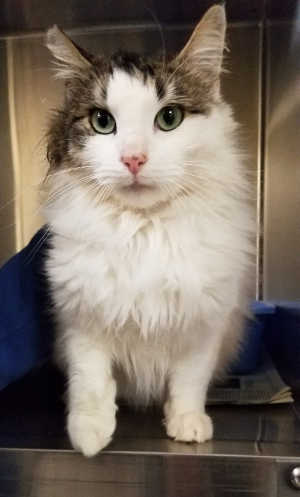
This female domestic long hair cat is in kennel No. 11, ID No. 11549. Photo courtesy of Lake County Animal Care and Control. Female domestic long hair
This female domestic long hair cat has a white and gray coat, and green eyes.
She’s in kennel No. 11, ID No. 11549.
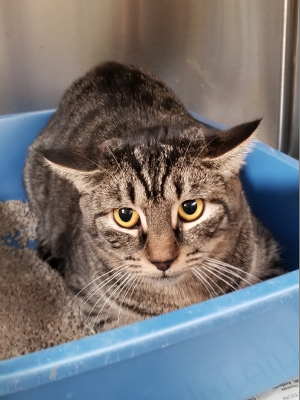
This female domestic short hair is in cat room kennel No. 47, ID No. 11452. Photo courtesy of Lake County Animal Care and Control. Female domestic short hair
This female domestic short hair has a brown tabby coat.
She’s in cat room kennel No. 47, ID No. 11452.
“Scrounge” is a young white female domestic short hair cat in cat room kennel No. 74, ID No. 11558. Photo courtesy of Lake County Animal Care and Control. ‘Scrounge’
“Scrounge” is a young white female domestic short hair cat with yellow eyes.
She is in cat room kennel No. 74, ID No. 11558.
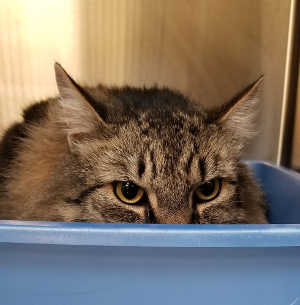
“Steve Purrwin” is a male domestic short hair cat in cat room kennel No. 74, ID No. 11559. Photo courtesy of Lake County Animal Care and Control. ‘Steve Purrwin’
“Steve Purrwin” is a male domestic short hair cat with a brown tabby coat and gold eyes.
He’s in cat room kennel No. 74, ID No. 11559.
This male domestic long hair cat is in kennel No. 103, ID No. 11550. Photo courtesy of Lake County Animal Care and Control. Male domestic long hair
This male domestic long hair cat has a brown and gray tabby coat and green eyes.
He already has been neutered.
He’s in kennel No. 103, ID No. 11550.
This male domestic long hair cat is in kennel No. 105, ID No. 11496. Photo courtesy of Lake County Animal Care and Control. Male domestic long hair
This male domestic long hair cat has a gray tabby and white coat and gold eyes.
He already has been neutered.
He’s in kennel No. 105, ID No. 11496.
This young male domestic long hair cat is in kennel No. 111, ID No. 11556. Photo courtesy of Lake County Animal Care and Control. Male domestic long hair
This young male domestic long hair cat has a black and white tuxedo coat and green eyes.
He’s in kennel No. 111, ID No. 11556.
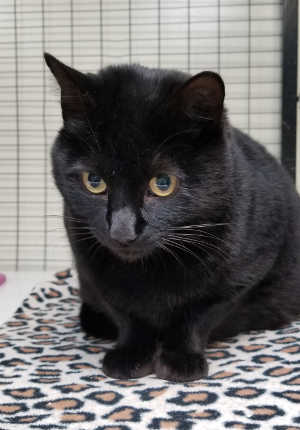
This female domestic short hair cat is in kennel No. 129, ID No. 11528. Photo courtesy of Lake County Animal Care and Control. Female domestic short hair
This female domestic short hair has a black coat and gold eyes.
She’s already been spayed.
She’s in kennel No. 129, ID No. 11528.
Lake County Animal Care and Control is located at 4949 Helbush in Lakeport, next to the Hill Road Correctional Facility.
Office hours are Monday through Friday, 11 a.m. to 5 p.m., and 11 a.m. to 3 p.m., Saturday. The shelter is open from 11 a.m. to 4 p.m. Monday through Friday and on Saturday from 11 a.m. to 3 p.m.
For more information call Lake County Animal Care and Control at 707-263-0278.
Email Elizabeth Larson at This email address is being protected from spambots. You need JavaScript enabled to view it.. Follow her on Twitter, @ERLarson, or Lake County News, @LakeCoNews.
 How to resolve AdBlock issue?