 How to resolve AdBlock issue?
News
Gov. Gavin Newsom on Tuesday was joined by Oakland Mayor Libby Schaaf and Berkeley Mayor Jesse Arreguín, as well as state and local fire officials and first responders, to discuss how the state and local communities are working together to address the threat of catastrophic wildfires.
Climate change has created a new wildfire reality in California, and areas where wildland and urban development meet are increasingly at risk of catastrophic wildfires.
“Every Californian has skin in the game when it comes to reducing wildfire risk,” said Gov. Newsom. “This isn’t ‘just’ a rural or suburban problem. Dense urban areas pose some of the highest risks for destruction and loss of life from wildfires, and climate change is putting urban communities at even greater risk.”
Tuesday’s event took place near the ignition point of one the deadliest wildfires in state history, the 1991 Oakland Hills Fire, which resulted in 25 fatalities and destroyed 3,469 homes and apartment units.
More than 25 million acres of California wildlands are now classified as under very high or extreme fire threat. And due to climate change, this high-risk area will likely only grow over time.
Today, more than 11 million people – more than a quarter of the state’s population – lives in high fire-risk areas, including the wildland-urban interface, or WUI. One in three homes is in the WUI, and more than 30 East Bay communities – the most populous sub-region of the Bay Area – are high-risk communities within the WUI.
Last month, Gov. Newsom issued a state of emergency to provide urgent and necessary waivers of administrative and regulatory requirements for 35 fuels management projects, to allow for action to be taken in the next 12 months and to protect more than 200 of California's most wildfire-vulnerable communities through the rapid deployment of forest management resources.
These 35 priority projects were identified by Cal Fire to protect vulnerable populations that are particularly at risk during natural disasters. Paired with traditional natural risk factors, this data paints a more accurate assessment of the real human risk and can help guide preventative action to help prevent loss of life – especially for vulnerable groups.
The event took place less than a mile from the North Orinda Fuel Break – one of the priority fuel reduction projects the governor approved on an expedited basis to help reduce the public safety risk from wildfire.
Gov. Newsom issued an executive order on his first full day in office directing Cal Fire, in consultation with other state agencies and departments, to recommend immediate, medium- and long-term actions to help prevent destructive wildfires.
The governor has proposed additional investments in emergency readiness, response and recovery, including $200 million general fund to augment Cal Fire’s firefighting capabilities, adding 13 additional year-round engines, replacing Vietnam War-era helicopters, deploying new large air tankers and investing in technology and data analytics that will support Cal Fire’s incident command in developing more effective initial fire suppression strategies.
The budget continues $25 million general fund ongoing for pre-positioning local government fire engines to support the state’s critical mutual aid system. It also includes $60 million general fund one-time to jump-start upgrades to the 911 system and provides a $214 million investment in forest management to increase fire prevention and complete additional fuel reduction projects.
Gov. Newsom has also redeployed California National Guard personnel to support Cal Fire in fire prevention and suppression efforts and published guidelines for emergency evacuations over three months ahead of schedule.
California has launched a $50 million California for All Emergency Preparedness Campaign to build resiliency among vulnerable populations at the highest risk for natural disasters. The campaign – a joint initiative between Cal Volunteers and the Governor’s Office of Emergency Services – provides funding to local communities to help build resiliency among the most vulnerable Californians through culturally and linguistically competent support for disaster preparedness. Information on how to apply for funds can be found here.
The governor earlier this month released the findings of his strike force charged with examining California’s catastrophic wildfires, climate change and our energy future. The strike force’s report sets out significant wildfire mitigation and resiliency efforts the state must take; renews our commitment to clean energy; and outlines actions to hold the state’s utilities accountable, as well as recommended changes to stabilize California’s utilities to meet the energy needs of customers and the economy.
In the last four years, California has experienced ten of the most destructive wildfires and four of the deadliest wildfires in the state’s history. In 2018, more than 1,846,000 acres burned, over 22,000 structures were destroyed and sadly, 100 lives were lost. The citizens of California must all do their part to help protect our natural resources.
Climate change has created a new wildfire reality in California, and areas where wildland and urban development meet are increasingly at risk of catastrophic wildfires.
“Every Californian has skin in the game when it comes to reducing wildfire risk,” said Gov. Newsom. “This isn’t ‘just’ a rural or suburban problem. Dense urban areas pose some of the highest risks for destruction and loss of life from wildfires, and climate change is putting urban communities at even greater risk.”
Tuesday’s event took place near the ignition point of one the deadliest wildfires in state history, the 1991 Oakland Hills Fire, which resulted in 25 fatalities and destroyed 3,469 homes and apartment units.
More than 25 million acres of California wildlands are now classified as under very high or extreme fire threat. And due to climate change, this high-risk area will likely only grow over time.
Today, more than 11 million people – more than a quarter of the state’s population – lives in high fire-risk areas, including the wildland-urban interface, or WUI. One in three homes is in the WUI, and more than 30 East Bay communities – the most populous sub-region of the Bay Area – are high-risk communities within the WUI.
Last month, Gov. Newsom issued a state of emergency to provide urgent and necessary waivers of administrative and regulatory requirements for 35 fuels management projects, to allow for action to be taken in the next 12 months and to protect more than 200 of California's most wildfire-vulnerable communities through the rapid deployment of forest management resources.
These 35 priority projects were identified by Cal Fire to protect vulnerable populations that are particularly at risk during natural disasters. Paired with traditional natural risk factors, this data paints a more accurate assessment of the real human risk and can help guide preventative action to help prevent loss of life – especially for vulnerable groups.
The event took place less than a mile from the North Orinda Fuel Break – one of the priority fuel reduction projects the governor approved on an expedited basis to help reduce the public safety risk from wildfire.
Gov. Newsom issued an executive order on his first full day in office directing Cal Fire, in consultation with other state agencies and departments, to recommend immediate, medium- and long-term actions to help prevent destructive wildfires.
The governor has proposed additional investments in emergency readiness, response and recovery, including $200 million general fund to augment Cal Fire’s firefighting capabilities, adding 13 additional year-round engines, replacing Vietnam War-era helicopters, deploying new large air tankers and investing in technology and data analytics that will support Cal Fire’s incident command in developing more effective initial fire suppression strategies.
The budget continues $25 million general fund ongoing for pre-positioning local government fire engines to support the state’s critical mutual aid system. It also includes $60 million general fund one-time to jump-start upgrades to the 911 system and provides a $214 million investment in forest management to increase fire prevention and complete additional fuel reduction projects.
Gov. Newsom has also redeployed California National Guard personnel to support Cal Fire in fire prevention and suppression efforts and published guidelines for emergency evacuations over three months ahead of schedule.
California has launched a $50 million California for All Emergency Preparedness Campaign to build resiliency among vulnerable populations at the highest risk for natural disasters. The campaign – a joint initiative between Cal Volunteers and the Governor’s Office of Emergency Services – provides funding to local communities to help build resiliency among the most vulnerable Californians through culturally and linguistically competent support for disaster preparedness. Information on how to apply for funds can be found here.
The governor earlier this month released the findings of his strike force charged with examining California’s catastrophic wildfires, climate change and our energy future. The strike force’s report sets out significant wildfire mitigation and resiliency efforts the state must take; renews our commitment to clean energy; and outlines actions to hold the state’s utilities accountable, as well as recommended changes to stabilize California’s utilities to meet the energy needs of customers and the economy.
In the last four years, California has experienced ten of the most destructive wildfires and four of the deadliest wildfires in the state’s history. In 2018, more than 1,846,000 acres burned, over 22,000 structures were destroyed and sadly, 100 lives were lost. The citizens of California must all do their part to help protect our natural resources.
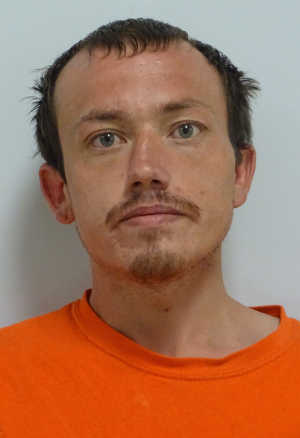
CLEARLAKE OAKS, Calif. – Lake County Sheriff’s deputies arrested a Lakeport man on Monday who led them on a high-speed chase in a stolen car.
Austin Anthony Schweitzer, 26, was arrested following the Monday afternoon pursuit in Clearlake Oaks, according to Lt. Corey Paulich of the Lake County Sheriff’s Office.
At 1:30 p.m. Monday a Lake County Sheriff’s deputy was patrolling in the Clearlake Oaks area and observed a black BMW sedan travelling east on Highway 20, Paulich said.
The BMW passed a tractor trailer over double-yellow lines in the area of the Orchard Shores Mobile Home Park. Paulich said the deputy estimated the BMW was travelling at approximately 100 miles per hour.
Paulich said the deputy attempted to stop the BMW, but the driver continued driving at approximately 100 miles per hour. Several vehicles had to swerve to avoid colliding with the BMW.
As the deputy was pursuing the BMW it was reported that the BMW had just been reported stolen from the Power Mart in Lucerne, Paulich said.
Paulich said the deputy briefly lost sight of the BMW as they continued travelling east on Highway 20.
The deputy then located the BMW off of the side of the road in the area of Highway 20 and Y Road. Paulich said it appeared the driver had lost control of the vehicle.
The deputy then saw Schweitzer fleeing behind a residence on Y Road, Paulich said.
Additional deputies arrived and they were able to take Schweitzer into custody. Paulich said it was later determined that Schweitzer was a parolee on Post Release Community Supervision.
Schweitzer was transported to the Lake County Jail where he was booked on charges of felony evading and possession of a stolen vehicle, Paulich said.
Paulich said Schweitzer remained in custody on Tuesday with a no bail hold.
Schweitzer is scheduled to appear in Lake County Superior Court on Wednesday for arraignment, according to booking records.
LAKEPORT, Calif. – The county of Lake has agreed to alter letters it planned to send to the Bureau of Indian Affairs in response to fee to trust land applications by Big Valley Rancheria after further discussions with the tribe.
Big Valley Rancheria is proposing to take 21 parcels – totaling about 51 acres – into trust.
Seven parcels totaling two acres are along Mission Way, and the remaining 14 parcels totaling a little more than 49 acres are on Mission Rancheria Road, Soda Bay Road and Meadow Drive behind the tribe’s RV Park, as Lake County News has reported.
The BIA invited the county to submit input on the trust applications for the parcels, all of which were part of the original rancheria before it was terminated in the 1950s, according to tribal officials. The deadline for input was April 16.
However, the county’s original draft letters raised issue with cannabis, a new commercial center and casino. Tribal Administrator Ben Ray III told the board at its April 9 meeting that a commercial center was slated for other parts of tribal lands already in trust that aren’t connected to those specific 21 parcels.
County Administrative Officer Carol Huchingson, whose staff had drawn up the original letters, maintained that she had not received hundreds of pages of information as part of the application, which Ray said was supposed to have been delivered to the county by the BIA.
At the board’s discussion on April 16 about the updated letters, Supervisor Moke Simon once again recused himself from the discussion, as he had done on April 9.
During last week’s meeting, both Board Chair Tina Scott and Huchingson maintained that the county hadn’t received the documents and that there were questions about the tribe’s plans.
Huchingson said that she had met with Ray on two occasions in 2017, had a conceptual discussion and reviewed a one-page summary of the tribe’s plans.
She said she had gotten no further word about the plan until the county received the letters from the BIA in February and March.
However, Sarah Ryan, Big Valley’s deputy tribal administrator and environmental director, presented proof that a detailed packet of information had been delivered on a flash drive to Huchingson’s office on June 14, 2017. As evidence, Ryan offered the FedEx receipt signed by Marcy Harrison, one of Huchingson’s staffers.
At last week’s meeting, Ryan said the tribe was concerned that the slightly updated letters the county had offered didn’t include Ray’s comments from the previous week. The inaccurate information they were most concerned about – such as the county raising issues with potential commercial development on the parcels – hadn’t been removed, she added.
“Because the letters are not accurately portraying the facts, we’d like to reiterate the facts regarding our fee to trust packages,” Ryan said.
She emphasized what Ray already had reported, that the tribe had no planned changes for the use or zoning of the 21 parcels, and no plans for development on them at all. The parcels either are open space or have small residences located on them.
Ryan reiterated that the land the tribe is requesting to move into trust originally as part of the rancheria.
She said the property tax loss will be minimal – county documents show the annual loss would be about $11,000.
Explaining that the documents had been delivered nearly two years ago, Ryan said the tribe didn’t have to provide the information to the county but it went above and beyond to be transparent.
“To claim that there’s not been enough time to review and communicate with the tribe is not accurate,” said Ryan. “Tribal administration and legal counsel have met with county administration two years ago on these applications and no further info was requested from the tribe.”
She said she hoped the information the tribe had provided would put the county’s concerns at ease, “and that you handle these next steps in a fair and measured way.”
Scott said the county wasn’t trying to hinder the tribe and she agreed that the land needs to go back into trust. The county had concerns and this was their only chance to make comment, and Scott added that she hadn’t received the flash drive.
Ryan said the county had no questions for the tribe regarding the project and yet crafted a letter that, had it been submitted to the BIA, could have had negative impacts.
Scott brought up the tribe’s plans for a new casino. Ryan reiterated that there is no plan for a new casino. They have plans for economic development on a 43-acre parcel the tribe bought in the 1990s and placed into trust soon after, which also includes tribal housing.
County Administrative Office staffer Patrick Sullivan, the tax administrator, told the board that when staff reviewed the parcels in trust, they didn’t find the commercial center. The original request to put the 43-acre parcel into trust in 2001 spoke to affordable housing and open space.
Ryan said that parcel always was to be split, with a mix of economic development and housing.
Huchingson said the county’s proposed letters on the tribe’s fee to trust applications were not intended to create an adversarial position, but were intended only to raise the issues that came up, get together the departments that had concerns with it, “and to promote further partnership with the tribe.”
She said that was the intent in 2017 “and it stands now.”
Supervisor Bruno Sabatier said the information he saw in the packet showed the tribe’s intent to leave the parcels as they are currently. He said there was nothing to suggest the county had been deceived about the tribe’s plans.
“The tone is a little against the potential growth of a partner in our community,” he said of the county’s letters. He wanted it changed and not put in the “what if” scenarios.
He said the tribe is not intending to make changes to the property’s use, “But our response is that, almost, that they’re deceiving us in their intent, and I don’t think that’s a very appropriate stance.”
Ryan agreed, saying that there is no intent to change the land use and that the tone of the letters makes is sound like the tribe is misleading the county and BIA. “That’s really unfortunate that the county’s letter states that, and we’d like to see that completely changed.”
Supervisor Rob Brown asked what that change looked like. Ryan suggested removing all the paragraphs about economic development on those parcels or don’t send the letters at all. Brown said he thought they could resolve the matter.
Supervisor EJ Crandell, who is tribal chair for Robinson Rancheria, agreed with Sabatier and Ryan. He said Big Valley has more than 1,000 members, so they also have a need for housing.
Brown said he doesn’t see a big issue for the neighboring properties, as there had been plenty of time for the neighbors to weigh in and he’s only heard from one. Scott said they hadn’t been notified as they normally would with a county project.
During the discussion, Sabatier asked why the county’s letter referred to October 2018 raids on 14 locations involving large-scale marijuana grows that didn’t involve residents of Big Valley Rancheria.
Scott said it may not have been their people but she believed the parcels in the applications were involved. For the most part, they were not involved, Ryan said.
Ryan said those parcels were tribal member-owned, not tribal owned, and the cartels may have been growing on one portion of a property in trust.
Crandell explained that tribal members in some instances may own land from the allotment times, before rancheria termination; in those instances, individuals may hold trust land that isn’t owned by the tribe at large. The same is true at Robinson, he added.
Ryan said in those cases they’re within the boundaries of the rancheria and they do have to comply with tribal law.
The board ultimately offered to have Sullivan sit down with Ryan and work on updating the letters, which are shown below.
The letters respond to questions about property tax, government services and intended use, reflecting the tribe’s updated input.
“The way I’m reading it is exactly the way that I was hoping that it would come back,” Sabatier said upon reviewing the updated letters.
Crandell thanked Ryan for being available to help with the letter to ensure that they had a document that could be submitted, that shows that the county and tribe are working together.
Scott said she wished they could I have sat down earlier. She said hopefully the county and tribe will continue to work together. “I think that’s what we all really want, ultimately.”
“Yes, that’s definitely our intent,” said Ryan.
“Ours, too,” said Scott.
Crandell moved to approve the response and the revised copy of letters, which the board approved 4-0. That allowed the county to submit the letters by the deadline later that day.
Ryan told Lake County News later that the tribe was satisfied with the updated letters.
Correction: Paragraphs in the above article has been corrected to show that a 43-acre parcel the tribe purchased in the 1990s is to house economic development, with no new casino planned.
Email Elizabeth Larson atThis email address is being protected from spambots. You need JavaScript enabled to view it. . Follow her on Twitter, @ERLarson, or Lake County News, @LakeCoNews.
Big Valley Rancheria is proposing to take 21 parcels – totaling about 51 acres – into trust.
Seven parcels totaling two acres are along Mission Way, and the remaining 14 parcels totaling a little more than 49 acres are on Mission Rancheria Road, Soda Bay Road and Meadow Drive behind the tribe’s RV Park, as Lake County News has reported.
The BIA invited the county to submit input on the trust applications for the parcels, all of which were part of the original rancheria before it was terminated in the 1950s, according to tribal officials. The deadline for input was April 16.
However, the county’s original draft letters raised issue with cannabis, a new commercial center and casino. Tribal Administrator Ben Ray III told the board at its April 9 meeting that a commercial center was slated for other parts of tribal lands already in trust that aren’t connected to those specific 21 parcels.
County Administrative Officer Carol Huchingson, whose staff had drawn up the original letters, maintained that she had not received hundreds of pages of information as part of the application, which Ray said was supposed to have been delivered to the county by the BIA.
At the board’s discussion on April 16 about the updated letters, Supervisor Moke Simon once again recused himself from the discussion, as he had done on April 9.
During last week’s meeting, both Board Chair Tina Scott and Huchingson maintained that the county hadn’t received the documents and that there were questions about the tribe’s plans.
Huchingson said that she had met with Ray on two occasions in 2017, had a conceptual discussion and reviewed a one-page summary of the tribe’s plans.
She said she had gotten no further word about the plan until the county received the letters from the BIA in February and March.
However, Sarah Ryan, Big Valley’s deputy tribal administrator and environmental director, presented proof that a detailed packet of information had been delivered on a flash drive to Huchingson’s office on June 14, 2017. As evidence, Ryan offered the FedEx receipt signed by Marcy Harrison, one of Huchingson’s staffers.
At last week’s meeting, Ryan said the tribe was concerned that the slightly updated letters the county had offered didn’t include Ray’s comments from the previous week. The inaccurate information they were most concerned about – such as the county raising issues with potential commercial development on the parcels – hadn’t been removed, she added.
“Because the letters are not accurately portraying the facts, we’d like to reiterate the facts regarding our fee to trust packages,” Ryan said.
She emphasized what Ray already had reported, that the tribe had no planned changes for the use or zoning of the 21 parcels, and no plans for development on them at all. The parcels either are open space or have small residences located on them.
Ryan reiterated that the land the tribe is requesting to move into trust originally as part of the rancheria.
She said the property tax loss will be minimal – county documents show the annual loss would be about $11,000.
Explaining that the documents had been delivered nearly two years ago, Ryan said the tribe didn’t have to provide the information to the county but it went above and beyond to be transparent.
“To claim that there’s not been enough time to review and communicate with the tribe is not accurate,” said Ryan. “Tribal administration and legal counsel have met with county administration two years ago on these applications and no further info was requested from the tribe.”
She said she hoped the information the tribe had provided would put the county’s concerns at ease, “and that you handle these next steps in a fair and measured way.”
Scott said the county wasn’t trying to hinder the tribe and she agreed that the land needs to go back into trust. The county had concerns and this was their only chance to make comment, and Scott added that she hadn’t received the flash drive.
Ryan said the county had no questions for the tribe regarding the project and yet crafted a letter that, had it been submitted to the BIA, could have had negative impacts.
Scott brought up the tribe’s plans for a new casino. Ryan reiterated that there is no plan for a new casino. They have plans for economic development on a 43-acre parcel the tribe bought in the 1990s and placed into trust soon after, which also includes tribal housing.
County Administrative Office staffer Patrick Sullivan, the tax administrator, told the board that when staff reviewed the parcels in trust, they didn’t find the commercial center. The original request to put the 43-acre parcel into trust in 2001 spoke to affordable housing and open space.
Ryan said that parcel always was to be split, with a mix of economic development and housing.
Huchingson said the county’s proposed letters on the tribe’s fee to trust applications were not intended to create an adversarial position, but were intended only to raise the issues that came up, get together the departments that had concerns with it, “and to promote further partnership with the tribe.”
She said that was the intent in 2017 “and it stands now.”
Supervisor Bruno Sabatier said the information he saw in the packet showed the tribe’s intent to leave the parcels as they are currently. He said there was nothing to suggest the county had been deceived about the tribe’s plans.
“The tone is a little against the potential growth of a partner in our community,” he said of the county’s letters. He wanted it changed and not put in the “what if” scenarios.
He said the tribe is not intending to make changes to the property’s use, “But our response is that, almost, that they’re deceiving us in their intent, and I don’t think that’s a very appropriate stance.”
Ryan agreed, saying that there is no intent to change the land use and that the tone of the letters makes is sound like the tribe is misleading the county and BIA. “That’s really unfortunate that the county’s letter states that, and we’d like to see that completely changed.”
Supervisor Rob Brown asked what that change looked like. Ryan suggested removing all the paragraphs about economic development on those parcels or don’t send the letters at all. Brown said he thought they could resolve the matter.
Supervisor EJ Crandell, who is tribal chair for Robinson Rancheria, agreed with Sabatier and Ryan. He said Big Valley has more than 1,000 members, so they also have a need for housing.
Brown said he doesn’t see a big issue for the neighboring properties, as there had been plenty of time for the neighbors to weigh in and he’s only heard from one. Scott said they hadn’t been notified as they normally would with a county project.
During the discussion, Sabatier asked why the county’s letter referred to October 2018 raids on 14 locations involving large-scale marijuana grows that didn’t involve residents of Big Valley Rancheria.
Scott said it may not have been their people but she believed the parcels in the applications were involved. For the most part, they were not involved, Ryan said.
Ryan said those parcels were tribal member-owned, not tribal owned, and the cartels may have been growing on one portion of a property in trust.
Crandell explained that tribal members in some instances may own land from the allotment times, before rancheria termination; in those instances, individuals may hold trust land that isn’t owned by the tribe at large. The same is true at Robinson, he added.
Ryan said in those cases they’re within the boundaries of the rancheria and they do have to comply with tribal law.
The board ultimately offered to have Sullivan sit down with Ryan and work on updating the letters, which are shown below.
The letters respond to questions about property tax, government services and intended use, reflecting the tribe’s updated input.
“The way I’m reading it is exactly the way that I was hoping that it would come back,” Sabatier said upon reviewing the updated letters.
Crandell thanked Ryan for being available to help with the letter to ensure that they had a document that could be submitted, that shows that the county and tribe are working together.
Scott said she wished they could I have sat down earlier. She said hopefully the county and tribe will continue to work together. “I think that’s what we all really want, ultimately.”
“Yes, that’s definitely our intent,” said Ryan.
“Ours, too,” said Scott.
Crandell moved to approve the response and the revised copy of letters, which the board approved 4-0. That allowed the county to submit the letters by the deadline later that day.
Ryan told Lake County News later that the tribe was satisfied with the updated letters.
Correction: Paragraphs in the above article has been corrected to show that a 43-acre parcel the tribe purchased in the 1990s is to house economic development, with no new casino planned.
Email Elizabeth Larson at
041619 County of Lake Lette... by on Scribd
041619 County of Lake Lette... by on Scribd
LAKEPORT, Calif. – The Lakeport Planning Commission will hold a special meeting this week to discuss several projects, including two solar installations proposed by the city.
The commission will meet at 5:30 p.m. Wednesday, April 24, in the council chambers at Clearlake City Hall, 225 Park St.
On the agenda is John M. Hagan’s application for an architectural and design review and categorical exemption for a remodel of the former Fireside Lounge, located at 650 S. Main St.
The staff report said Hagan is seeking to demolish and rebuild the roof, remove and replace the existing siding, repaint it and maintain the existing decks. Hagan intends to rent the 1,400-square-foot structure for retail or office space once the remodel is complete.
The commission also will consider two photovoltaic solar projects proposed by the city of Lakeport.
The first is for the city’s wastewater treatment facility at 695 Linda Lane, the second is to be located at the city’s Green Ranch water wells at 1387 Scotts Valley Road.
The commission is being asked to consider adopting mitigated negative declarations for the projects and find that they conform to the Lakeport General Plan.
Email Elizabeth Larson atThis email address is being protected from spambots. You need JavaScript enabled to view it. . Follow her on Twitter, @ERLarson, or Lake County News, @LakeCoNews.
The commission will meet at 5:30 p.m. Wednesday, April 24, in the council chambers at Clearlake City Hall, 225 Park St.
On the agenda is John M. Hagan’s application for an architectural and design review and categorical exemption for a remodel of the former Fireside Lounge, located at 650 S. Main St.
The staff report said Hagan is seeking to demolish and rebuild the roof, remove and replace the existing siding, repaint it and maintain the existing decks. Hagan intends to rent the 1,400-square-foot structure for retail or office space once the remodel is complete.
The commission also will consider two photovoltaic solar projects proposed by the city of Lakeport.
The first is for the city’s wastewater treatment facility at 695 Linda Lane, the second is to be located at the city’s Green Ranch water wells at 1387 Scotts Valley Road.
The commission is being asked to consider adopting mitigated negative declarations for the projects and find that they conform to the Lakeport General Plan.
Email Elizabeth Larson at
042419 Lakeport Planning Co... by on Scribd
CLEARLAKE, Calif. – City officials said two long-awaited road projects are about to get under way in Clearlake.
The first to start is the Highlands Harbor/Harbor Lane project, set to begin on May 1 and continue through approximately June 20, the city reported.
Community members are advised to expect traffic delays in the area under flagged control.
There will be hard traffic closures on June 5 and 6 from 8 a.m. to 5 p.m. These closures are necessary for the micro-surface to dry adequately and avoid transfer to vehicles. notification of closures will be sent directly to area residents.
The second project is the Moss/Davis rehabilitation starting on May 7, the city reported.
Moss Avenue and Davis Avenue provide the primary access to Eastlake Landfill. The project is funded through a shared maintenance agreement between the city and the county, which operates the landfill.
Expect delays as work will continue through June 30. There will be a pilot car assisting traffic through the area during construction.
“With spring upon us we are kicking off another busy season of roadwork,” said City Manager Alan Flora. “The Moss/Davis and Highlands Harbor area projects are just the first two of this construction season, with gravel road grading and maintenance and pothole patching and crack sealing of many streets starting as well.
He added, “While there are many areas of the city with roads needing attention, the community’s support of Measure V is generating needed funds to dramatically improve our public streets.”
The first to start is the Highlands Harbor/Harbor Lane project, set to begin on May 1 and continue through approximately June 20, the city reported.
Community members are advised to expect traffic delays in the area under flagged control.
There will be hard traffic closures on June 5 and 6 from 8 a.m. to 5 p.m. These closures are necessary for the micro-surface to dry adequately and avoid transfer to vehicles. notification of closures will be sent directly to area residents.
The second project is the Moss/Davis rehabilitation starting on May 7, the city reported.
Moss Avenue and Davis Avenue provide the primary access to Eastlake Landfill. The project is funded through a shared maintenance agreement between the city and the county, which operates the landfill.
Expect delays as work will continue through June 30. There will be a pilot car assisting traffic through the area during construction.
“With spring upon us we are kicking off another busy season of roadwork,” said City Manager Alan Flora. “The Moss/Davis and Highlands Harbor area projects are just the first two of this construction season, with gravel road grading and maintenance and pothole patching and crack sealing of many streets starting as well.
He added, “While there are many areas of the city with roads needing attention, the community’s support of Measure V is generating needed funds to dramatically improve our public streets.”
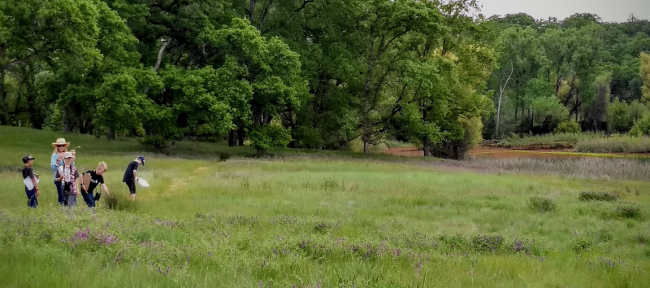
UPPER LAKE, Calif. – The Lake County Land Trust will host its third annual “Art & Nature Day” on Saturday, May 4, from 10 a.m. to 2 p.m.
This free, family-friendly event takes place at the Rodman Preserve & Nature Center, 6350 Westlake Road in Upper Lake.
It will kick off with a guided photography walk along the Rodman Preserve nature trail, open to serious photographers of any age at 10 a.m.
For those interested in guided hikes, there will be a scavenger hunt nature hike for kids at 11 a.m., and nature hike for the older crowd at noon.
Other activities will include hand-painted temporary tattoos, live music, a music-making station, nature journaling and nature education booths.
Visitors are encouraged to bring a reusable water bottle and a picnic lunch, and enjoy the festivities.
In addition, photos entered into the Lake County Rural Arts Initiative photography contest will be on display at the Rodman Nature Center. Winners of cash prizes for first through third place in three different age categories from grades K-12 will be announced at 1 p.m.
There is still time to enter the contest. Simply pick your best nature photo, taken within Lake County, and upload to www.LCRAI.org/contest by April 26.
While there is no charge for admission or any of the activities, temporary tattoos and snacks will be offered on a donation-basis.
Rodman Preserve is the Land Trust’s keystone property, located on 131 acres of oak woodlands surrounded by wetland. It protects the natural habit of many nesting, breeding, and feeding areas for many species of native Lake County wildlife, whose wetland habitats are also vital for the health of Clear Lake. Because of its role as a wildlife refuge, no dogs are allowed.
The Land Trust instituted Art & Nature Day as a way to participate in and support “Take It Outside California,” a statewide initiative by the California Council of Land Trusts designed to connect Californians with outdoor spaces and the powerful health benefits of spending time in nature.
Learn more or sign the pledge to get outdoors on May 4 at www.TakeItOutsideCA.com .
Visit www.lakecountylandtrust.org for more information about the Lake County Land Trust or Art & Nature Day.
For more details, please contact Melissa Kinsel at