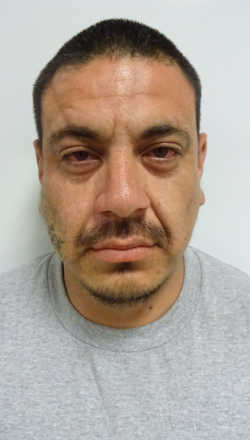
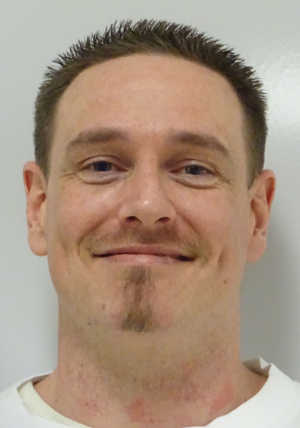
Jose Villela, 35, of Kelseyville, Calif., was arrested on Thursday, April 25, 2019, on drug charges following a traffic stop in Nice, Calif. Lake County Jail photo. NICE, Calif. – Authorities took a Kelseyville man into custody early Thursday after he was found to be in possession of suspected methamphetamine, heroin and cocaine.
Jose Villela, 35, was arrested following a traffic stop on the Northshore, according to Lt Corey Paulich of the Lake County Sheriff’s Office.
At 12:30 a.m. Thursday a Lake County Sheriff’s deputy was driving on Highway 20 in Nice when he observed a vehicle travelling toward him with its high beam headlights on, Paulich said.
Paulich said the driver of the vehicle failed to dim the headlights and the deputy stopped the driver for the violation.
The deputy contacted Villela, the driver and only occupant of the vehicle, who told him that he was on post release community supervision for sales of a controlled substance, Paulich said.
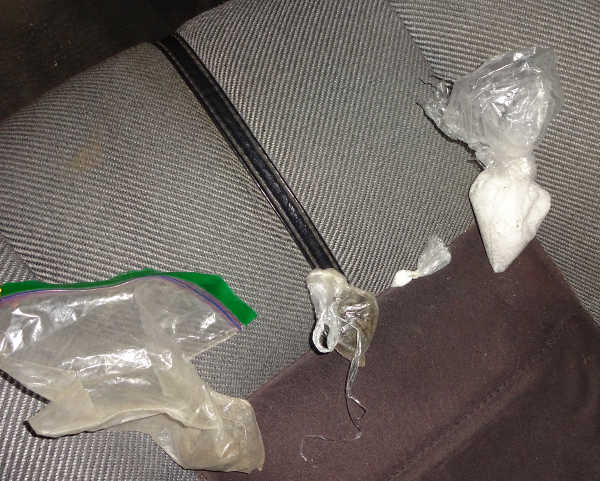
Deputies conducted a search of Villela’s vehicle, locating approximately 2 ounces of suspected methamphetamine and one and a half ounces of suspected heroin, as well as a small amount of suspected cocaine hidden behind an air vent in the vehicle, according to Paulich.
Paulich said Villela was placed under arrest and transported to the Lake County Jail where he was booked on charges of possession of controlled substance and narcotics for sale, transportation of controlled substance and narcotics, and violation of post release community supervision.
Villela remains in custody on a no bail hold, according to jail records. He’s scheduled to be arraigned on Friday.
Suspected methamphetamine, heroin and cocaine found in a vehicle driven by Jose Villela, 35, of Kelseyville, Calif., on Thursday, April 25, 2019. Photo courtesy of the Lake County Sheriff’s Office.
CLEARLAKE, Calif. – Clearlake Animal Control is offering several dogs for adoption this week.
The following dogs have been cleared to go to new homes.
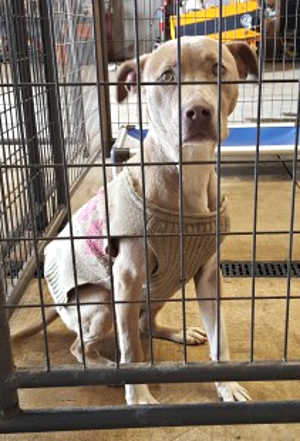
“Cadbury.” Photo courtesy of Clearlake Animal Control. ‘Cadbury’
“Cadbury” is a female Staffordshire Bull Terrier mix with a smooth medium-length beige coat.
She is No. 1215.
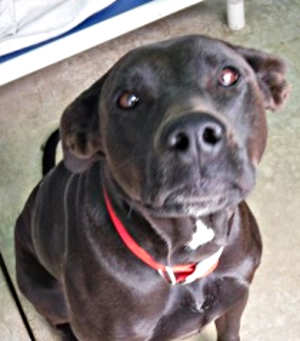
“Macy.” Photo courtesy of Clearlake Animal Control. ‘Macy’
“Macy” is a female Labrador Retriever mix with a smooth short black coat.
She already has been spayed.
She is No. 11.
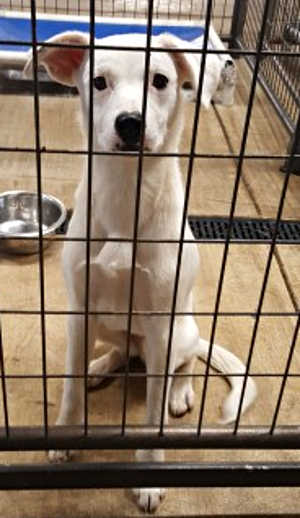
“Neve.” Photo courtesy of Clearlake Animal Control. ‘Neve’
“Neve” is a female terrier puppy with a smooth medium-length white coat.
She is No. 1216.
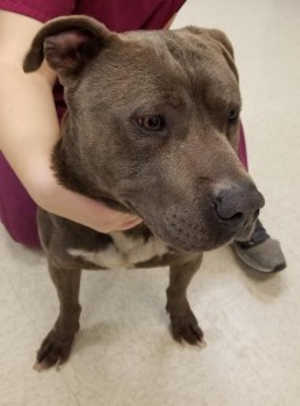
“Wynn.” Photo courtesy of Clearlake Animal Control. ‘Wynn’
“Wynn” is a male American Staffordshire Terrier with a short brindle coat.
He is No. 969.
Clearlake Animal Control’s shelter is located at 6820 Old Highway 53, off Airport Road.
Hours of operation area noon to 3 p.m. Tuesday through Saturday. The shelter is closed Sundays, Mondays and major holidays.
Call Clearlake Animal Control at 707-994-8251, Extension 1, or email This email address is being protected from spambots. You need JavaScript enabled to view it. to inquire about adoptions.
Visit Clearlake Animal Control on Facebook or at the city’s Web site.
Email Elizabeth Larson at This email address is being protected from spambots. You need JavaScript enabled to view it.. Follow her on Twitter, @ERLarson, or Lake County News, @LakeCoNews.
The California Department of Public Health announced that consumers who have prescription drugs that are no longer needed or are expired can safely dispose of them on National Prescription Drug Take-Back Day, Saturday, April 27.
Unused medications in homes create a public health and safety concern because they are highly susceptible to accidental ingestion, theft or misuse. The proper disposal of unused drugs protects the environment and helps save lives.
“We know that the majority of abused prescription drugs are from the home medicine cabinets of family and friends,” said State Public Health Officer and CDPH Director Dr. Karen Smith. “The Take-Back event is a valuable opportunity for everyone to help keep their loved ones safe.”
The Lakeport Police Department, located at 2025 S. Main St., will participate with its own event from 10 a.m. to 2 p.m., as Lake County News has reported.
Visit the Drug Enforcement Administration Web site for other locations throughout California, or by calling 800-882-9539. Events throughout the state run from 10 a.m. to 2 p.m. There is no charge.
Consumers can anonymously drop off pills and other solids, such as patches and well-sealed liquids. However, there will be no collection of sharps waste, such as needles and syringes at these sites.
According to the 2015 National Survey on Drug Use and Health, 6.4 million Americans abused controlled prescription drugs. The study shows that a majority of abused prescription drugs were obtained from family and friends, often from the home medicine cabinet.
During the National Prescription Drug Take-Back event in October 2018, federal, state and local law enforcement partners across the country collected 457 tons of unwanted prescription drugs: Californians disposed of more than 34.5 tons of unwanted drugs, more than any other state.
Gary Joseph Williams, 34, of Clearlake, Calif., has reached a plea agreement with the California Attorney General’s Office for the 2014 killing of Guillermo Figueroa. Lake County Jail photo. LAKEPORT, Calif. – The California Attorney General’s Office has reached a settlement in the 2014 murder of a man who investigators believe was killed in relation to illegal marijuana growing in Clearlake.
Gary Joseph Williams, 34, of Clearlake pleaded last month to voluntary manslaughter with a gun in the death of Guillermo Figueroa, with a number of other counts dismissed, according to his attorney, Patrick Pekin of Fort Bragg.
The Lake County Superior Court Clerk’s Office confirmed that Williams is set to be sentenced at 1:30 p.m. May 6 in Department 3 before Judge David Markham.
The California Attorney General’s Office began handling the case’s prosecution early on because of a conflict of interest for then-District Attorney Don Anderson.
Specifically, his daughter, Robyn Anderson, her husband Michael Campbell and her daughter, Courtney Crusse, were all named as potential witnesses in court documents. Robyn Anderson was expected to testify at one point and Crusse, who was given immunity, also was to have testified but refused, according to Pekin.
“I had to recuse myself because my granddaughter was a witness,” and a “pretty crucial witness” at that, Anderson – who left office at the end of 2018 – told Lake County News.
Jury selection and motion hearings had been under way in mid-March, when Williams’ trial was set to start. But just days before the trial was to have begun on March 20, Williams and the Attorney General’s Office reached the settlement.
Lake County News made a total of five requests – three by phone, two by email – to the Attorney General’s Office seeking comment on the case settlement, but the agency did not respond.
Pekin said it’s a really good outcome for Williams in a case that originally was considered for the death penalty because it was prosecuted as a murder during the course of a robbery, which is one of the special circumstances that qualifies as a capital offense.
The death penalty was taken off the table by the Attorney General’s Office not long after Pekin came on as Williams’ counsel. At that point, had Williams been tried and convicted, he could have faced life without the possibility of parole.
Pekin said the ultimate offer was voluntary manslaughter with a gun, with a 16-year sentence. Williams has been in custody since Nov. 26, 2014 – he already had been in jail for the theft of a trailer when he was arrested in the Figueroa case in May 2015 – so that four years will count toward his time served.
“The bottom line is, he would be released in about nine years or so,” said Pekin.
That was a much better outcome, said Pekin, than the possibility of losing at trial and having his client face a life sentence.
A missing man and discovered remains
In late October 2014, local law enforcement began investigating Figueroa’s disappearance.
The 36-year-old husband and father of three was reported missing to the Clearlake Police Department by his wife on Oct. 27 after he failed to return home to Hidden Valley Lake from visiting a friend in Clearlake. He had last texted his wife the night before.
The Clearlake Police Department pinged Figueroa’s phone to an area in Clearlake and later found a vehicle registered to him on Burns Valley Road.
Then, on Nov. 28, 2014, Clearlake Police responded to a report from a man who lived in the 2700 block of Oleander Street. The man discovered a human skull in his yard that he believed his dog may have found and brought there.
Teams of detectives, sheriff's deputies, K-Corps members and out-of-county law enforcement personnel combed the isolated, heavily wooded part of the city where the skull was found and, the day after the skull’s discovery, a canine from the Contra Costa County-based California Rescue Dog Association found partial human remains about 100 yards north of the residence where the skull had been located.
An autopsy and DNA results matched the skull and remains as belonging to Figueroa in December 2014.
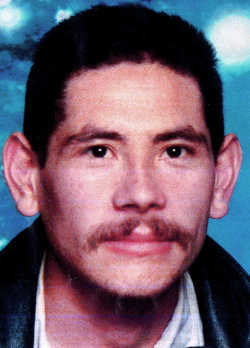
Guillermo Figueroa. Lake County News file photo. A complicated case
Pekin said a dispute over marijuana cultivation and collection of funds appeared to be a potential cause in the murder.
Don Anderson said his daughter and son-in-law “knew Williams and there was some marijuana issues going on between them,” adding he didn’t know the extent of it.
When Figueroa’s wife went to the Clearlake Police Department in October 2014 to report his disappearance, she was accompanied by a man who had been with Figueroa at a party the day before. The two men then left and went to the Clearlake Safeway and the man watched Figueroa get into a vehicle with a woman. At the time, Figueroa was reported to have $5,000 in cash on him, but he wouldn’t tell his wife what it was for, according to court documents.
The investigation revealed that Figueroa owned a grow house in Clearlake and was involved in the illegal marijuana growing trade.
Pekin said Figueroa also had been growing marijuana for Campbell.
The investigative trail led to Campbell, who is recounted in court documents as admitting to authorities that Figueroa had been growing marijuana on his property in Clearlake Park. Campbell and his wife and Crusse said people had been looking for Figueroa in connection to the marijuana and money he was said to have owned them.
Other witnesses said they saw Crusse drive Figueroa away from the Clearlake Safeway in her green Mercedes, and that Crusse, who spoke Spanish, often interpreted for Figueroa. There also were details about armed confrontations between two groups over marijuana Figueroa was growing.
At one point in the investigation, Robyn Anderson admitted not being truthful with people – as her daughter also had done – and said her husband had taken Figueroa’s marijuana and had someone transplant it elsewhere.
“Robyn Anderson told Detective Riley that her father, District Attorney Don Anderson, had called her about the case and asked Robyn to go on a drive with him. During the drive, Don questioned Robyn extensively about the case,” the documents said.
As far as his discussion with his daughter, Don Anderson said, “I was not giving her legal advice because she had an attorney.”
He said he also was present at the meetings between his granddaughter and her Fifth Amendment attorney, Andrea Sullivan, adding he gave Crusse “grandfatherly advice.”
Police received information that Williams and his girlfriend, Crystal Pearls, had stolen Figueroa’s marijuana. They then searched Williams’ mother’s home, and found her boyfriend – a convicted felon – in possession of ammunition. Wanting to avoid jail, he offered authorities information – that Williams had admitted to him that he shot “the Mexican” in the face with a .22 revolver and that the “interpreting girl” – Crusse – saw it.
Court documents also state that Williams’ brother told authorities – after he was granted immunity – that Williams admitted to “killing a Mexican.”
Williams was arrested on Nov. 26, 2014, during a sweep of his mother’s home, on charges relating to a trailer theft.
Meanwhile, the investigation continued. Figueroa’s remains were sent to Dr. Allison Galloway at the University of California, Santa Cruz, in January 2015.
Galloway completed her examination of the remains in three weeks, concluding that Figueroa had been shot once or twice in the head. One of the wounds, in the forehead, was determined to be either a .22 or .32 caliber hole.
A second injury on the right maxillary bone – found in the upper jaw – could have been from a bullet strike, blunt force trauma or animal scavenging. No weapon or slug was recovered.
“He was certainly killed by gunshot,” said Pekin, but added that Galloway couldn’t tell with any degree of certainty how long Figueroa had been dead.
In March 2015, a search warrant was executed on Crusse’s Mercedes, which case documents said was the first time it was inventoried or subjected to any forensic treatment. Investigators found the carpet had been replaced and washed, and the tires rotated.
In May 2015, once more evidence had been gathered and corroborated, Williams was arrested for the murder.
The following month, Crusse, driving a tan Dodge Colt with two male passengers, was stopped by a Clearlake Police officer. A functional Mossberg .22 rifle with a cut short barrel and pistol grip was discovered. “Crusse was evasive as to how long the gun had been in her car and claimed it belonged to her great grandfather,” according to trial briefs.
“We hadn’t gotten far enough to litigating that,” Pekin said of the rifle, which could have potentially been brought up at trial.
Extensive trial preparation
Pekin said he was “pretty eager” to take the case to trial.
He said Judge Markham scrutinized every piece of evidence, the amount of which was enormous. He said there were estimated to be 50 witnesses, plus DNA and GPS evidence.
The case, Pekin said, had “all the bells and whistles.”
He added, “It had so many forensic aspects to it that are really interesting to work with.”
Pekin said Robyn Anderson and Courtney Crusse were going to be called to the stand.
Crusse was a material witness. “She was close to the case, close enough to be granted immunity,” said Pekin, adding that Crusse had refused to testify.
Don Anderson confirmed that the Attorney General’s Office offered his granddaughter immunity, that she was subpoenaed and was going to show up to the trial. However, he said he couldn’t say if she would have testified.
Andrea Sullivan, the administrator of Lake Indigent Defense, the county’s indigent defense contractor, said she was appointed as Fifth Amendment counsel for Crusse after other available attorneys were disqualified for conflicts.
Sullivan said she couldn’t comment on the course of action Crusse chose to take regarding testifying, but added that Crusse was “one of many” people offered immunity in the case.
Pekin said it was “certainly a possibility” that Don Anderson himself could have been called as a witness, but Anderson told Lake County News that he had not gotten any subpoena or notice to testify.
Jury selection was extensive. Hundreds of potential jurors were interviewed in a two-phase process. Pekin said the trial had been expected to last for about two months, and those individuals who said they could serve for the duration had to fill out a 23-page questionnaire.
Pekin said the case was “really triable,” which he believes is reflected in the offer the Attorney General’s Office made. He said you’re never going to see a 16-year offer in a case that started out as a homicide with a gun.
“I think the court did a really good job,” Pekin said, offering praise for Judge Markham and Deputy Attorney General Peter Flores Jr.
Lake County Probation will do a sentencing report, as is standard. Pekin said it should be fairly straightforward and noncontroversial.
“I’m really grateful that I had the opportunity to work on it at all,” Pekin said of the case.
Email Elizabeth Larson at This email address is being protected from spambots. You need JavaScript enabled to view it.. Follow her on Twitter, @ERLarson, or Lake County News, @LakeCoNews.
LAKE COUNTY, Calif. – The American Lung Association has released its State of the Air 2019 Report, with Lake County once again getting good ratings for its air quality despite the wildland fires of the last several years.
State and local area air quality are graded on an A through F scale by comparing local ozone and small-particulate concentrations with the federal air quality standards.
Although many areas, especially within California, were given failing grades, Lake County passed with flying colors.
Lake County received an “A” grade for ozone, a “C” grade for short-term particulate pollution and is ranked the 15th Cleanest County in the Nation for annual particulate average concentrations.
Lake County did not change significantly from its previous annual averages even though the period of time covered by this report includes the Valley fire, Rocky fire, Jerusalem fire, Clayton fire, Sulphur fire, Tubbs Fire and other major fires in the region.
Out of California’s 58 counties, Lake County is one of only eight counties in California that did not have any days of ozone exceeds from 2015 through 2017.
The report presents data showing what the residents of Lake County actually are breathing on a daily basis. This report does not exclude wildfire impacts or other natural events that are excluded when determining our attainment status.
The “C” grade for short-term particulate pollution is the result of impacts from the 2015, 2016 and 2017 wildfires. This report does not include the 2018 Ranch, River or the Camp fires.
This report shows that despite the Valley, Rocky, Jerusalem, Clayton and other fires, and the short-term smoke impacts from these fires, the residents of Lake County still enjoy some of the cleanest air in the nation.
The American Lung Association grades are the latest recognition of a long history of air quality accomplishments in Lake County. Strong local support for clean air measures has enabled the county to comply in full with not only the Federal Clean Air Standards, but also with the more rigorous California Standards for ozone and other air pollutants for the past 29 consecutive years. No other air district in California can match that record.
Air Pollution Control Officer Douglas Gearhart of the Lake County Air Quality Management District attributes the success of the program to strong community support for maintaining clean, healthful air and cooperation of local government, including the county of Lake, cities of Lakeport and Clearlake, the local fire protection districts, Cal Fire, the agricultural community, industry, the district board of directors, and to the dedication and hard work of Air Quality Management District staff.
“The 15th cleanest county in the nation for particulate matter is a significant indicator of the hard work and dedication this community has to maintaining a healthful environment,” Gearhart said.
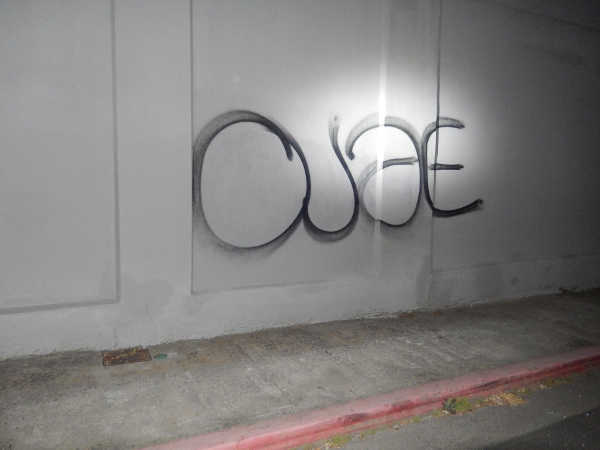
Graffiti tagging in downtown Lakeport, Calif., on Wednesday, April 24, 2019. Photo courtesy of the Lakeport Police Department.
LAKEPORT, Calif. – The Lakeport Police Department is asking for the public’s help in identifying who is responsible for ongoing graffiti tagging in the city’s downtown.
Police said that between 3 and 4 a.m. Wednesday, the latest round of graffiti tagging occurred.
It’s been an ongoing issue, and the responsible subjects have repeatedly vandalized the same buildings after the business owners fix or remove the graffiti, police said.
“This is a public nuisance that can deteriorate our beautiful city. So help us keep our city safe and clean,” the agency said in a statement.
Anyone with information about the graffiti is asked to contact investigating Officer Joe Medici at 707-263-5491, Extension 120, or by email at This email address is being protected from spambots. You need JavaScript enabled to view it. . You can also send us a private message via Facebook or send us a tip by texting the words “TIP LAKEPORT” followed by your message to the number “888777.”
 How to resolve AdBlock issue?