How to resolve AdBlock issue?
News
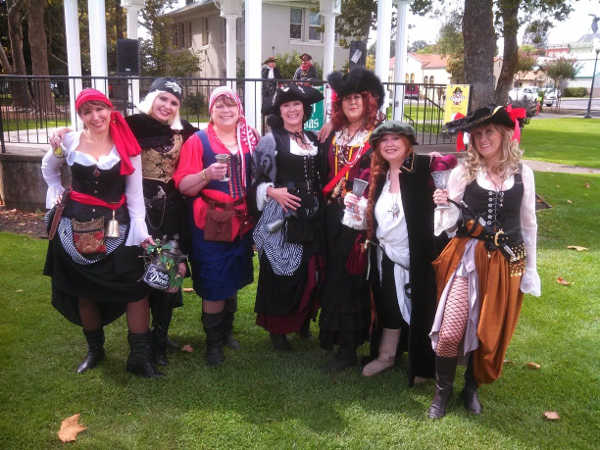
LAKEPORT, Calif. – After a year off, “Shipwreck Day” is weighing anchor for its return to downtown Lakeport next month.
The free pirate celebration for all ages will be sailing back into town from 10 a.m. to 4 p.m. on Saturday, May 4, in Library Park.
The event – founded several years ago as the brainchild of Suzanne Lyons, a former city council member – originally was run by the Lakeport Main Street Association.
This year, however, the Lake County Theatre Co. is producing it at Lyons’ request, according to theater company member Dennis Fay, who is the event producer.
Fay said this is the first time Shipwreck Day is taking place in the spring. Originally it was in the fall.
“The weather rained us out a couple of times so we switched it to May,” he said.
Smoke from wildland fires also had previously impacted the event, and Fay said it wasn’t held last year.
For its spring debut, Fay said Shipwreck Day will include several new offerings.
“We have made this very, very family friendly, kid friendly,” Fay explained.
To go along with its existing costume contest for adults, the event will include a costume contest for children as well as a "dress your dog like a pirate" contest. Pets must be on a leash, Fay said.

In addition, Fay said there will be a skit for children on the gazebo. An Arts Council member will have children and adults paint quilt block squares which she will then convert into a quilt for next year.
The new master of ceremonies for this year is Captain Angus, Fay said.
There will be a bunch of roaming pirate crewmates, a mermaid, all manner of artisans and specialty food vendors, he said.
Entertaining at the event will be the local group My Divas, with which his wife, Jo Fay, performs. Visitors will be able to sing along with the pirate shanties.
Fay said Shipwreck Day is a fundraiser this year for the Lake County Theatre Co.
The organization’s mission to bring live theater productions to the entire community, with a special emphasis on young people, Fay said.
They’re working to reinvigorate Lake County’s theater community, Fay said. That includes plans for a new theater at Westside Community Park.
This year, Fay said the event is being sponsored by Lake County Tribal Health, Lakeport Main Street Association, High Street Village and Amanda Lyons of Lyons Graphic & Webpage Design.
For more information, check out the Shipwreck Day Web site or contact Suzanne Lyons at 707-262-1967.
Shipwreck Day schedule
10 to 11 a.m.: Opening ceremonies, Captain Angus and My Divas
11 to 11;30 a.m.: Kids’ skit
11:30 a.m. to noon: My Divas and Captain Angus
Noon: Kids’ costume contest
12:30 to 1 p.m.: Adult costume contest
1 p.m.: Parade downtown
1:30 to 2 p.m.: Pirate doggie costume contest
2 p.m.: Captain Angus
2:30 p.m.: My Divas
3 to 4 p.m.: Blanket prize, Captain Angus, My Divas, Scuttle the ship
Email Elizabeth Larson at
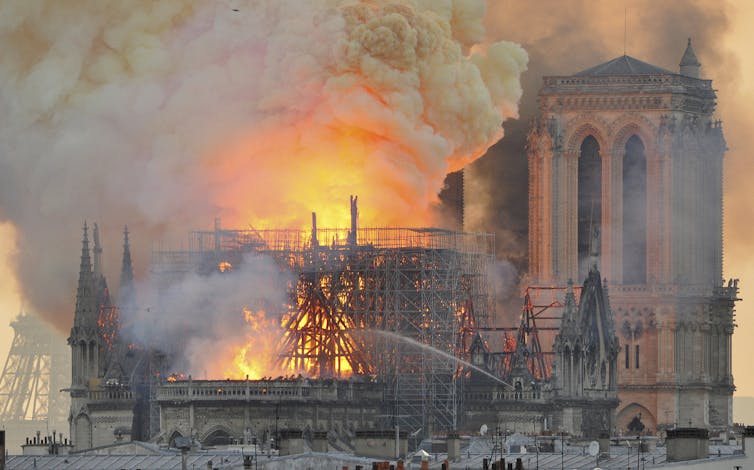
The Notre-Dame de Paris had been damaged and changed many times since it was begun in the mid-12th century. But the fire on April 15 might have been its most catastrophic event.
Located on the eastern end of the Ile-de-la-Cité, an island on the Seine River, the site was a Christian church since the fourth century. And for a long time, it remained a powerful symbol of church authority. Even today, it is the seat of the archbishop of Paris.
As a scholar of Gothic architecture I have studied how this and other buildings were continuously adapted to reflect changing architectural fashion and to enhance the spiritual experience of the visitor.
Key part of religious district
The current cathedral, dedicated to Our Lady, or the Virgin Mary, replaced an earlier cathedral that was built during the Merovingian period which lasted from the fifth to eighth century. The earlier building was dedicated to Saint Stephen, the first Christian martyr.
Maurice de Sully is believed to have initiated the rebuilding of the cathedral around the same time that he became bishop of Paris in 1160. Maurice had previously served as archdeacon of the cathedral where he also taught theology.
Other church officials likely also had a role in this rebuilding as the cathedral canons, or clerics, and not the bishop held authority over the structure.
Reconstruction of the cathedral was part of a larger redesign of the eastern part of the Ile-de-la-Cité. This neighborhood housed the church officials, masters, clerics, servants and others who worked to run the diocese of Paris and the cathedral school.
Maurice’s other projects at the time included construction of a new street, the rue Neuve Notre-Dame, which ran from the cathedral to the west – now replaced by the square in front of the cathedral. He also built a new palace for the bishop and a new charitable hospital.
How structures were added
Construction proceeded under a series of master builders.
The first part of the cathedral to be built was the eastern part, or choir. This was to serve as the religious heart of the structure where the main altar would be located. Construction then generally proceeded westward, though multiple parts of the building were sometimes worked on simultaneously.
The design, however, was continuously revised during the course of construction. For example, in the 1220s the upper wall of the cathedral, which had already been constructed, was demolished and rebuilt to allow for larger windows. This transformed the building from a four-story to a three-story structure.
The new cathedral was largely completed by around 1245, although, construction continued in various parts until the mid-14th century. During these 200 years chapels were added along the exterior of the cathedral, some structural supports modified and the transept arms were extended, giving the cathedral a cross-like shape.
In my assessment, these many remodels during the Middle Ages demonstrated the vitality of the cathedral in medieval life and the creativity of the builders, as they adapted the building to changing architectural fashions and social practices. The change to a three-story structure, that had become the standard by the early 13th century, is one such example.
My forthcoming book shows how cathedrals, including Notre Dame of Paris, were connected to the daily life in the city. There were markets around cathedrals and also spaces where disputes could be resolved. In other words, the cathedral was an important part of medieval city life.
Meaning for France
Notre Dame was the most colossal church of its generation – wider and taller than other European churches of the mid-12th century.
There were several technological breakthroughs made in its construction. For example, it was a site of early experimentation with flying buttresses, the externalized buttressing arches that transfer the weight of the heavy stone vault away from the walls, which can then be pierced by large window openings filled with stained glass.
It was the first French Gothic cathedral to receive a line of chapels along its exterior. These were added to the building between the projecting buttress piers after 1228. Many other cathedrals would later adopt this pattern.
The chapels appended to the choir on the eastern end of the cathedral were the only ones from 1300-1350 to survive the French Revolution.
Later restorations
Paris Cathedral played an important role in religious and secular life.
As the seat of the bishop, Notre Dame was the most significant religious building in the city. Its size and luxury symbolized the power of the church and the authority of the bishop. It was also the site of ceremonies connected to the King of France, including royal funerary processions and the royal entry, a ceremony in which the city received a new king.
Consequently, it was one of the many churches that were attacked during the French Revolution in the 1790s. This violence resulted in significant losses of medieval sculpture and stained glass and damage to the building itself.
By the 19th century, the cathedral was in a state of disrepair.
A major restoration effort began in 1843 under the supervision of architects Jean-Baptiste-Antoine Lassus and Eugène-Emmanuel Viollet-le-Duc, which was spurred by a larger renewal of interest in Gothic architecture. Viollet-le-Duc completed the restoration work in 1864.
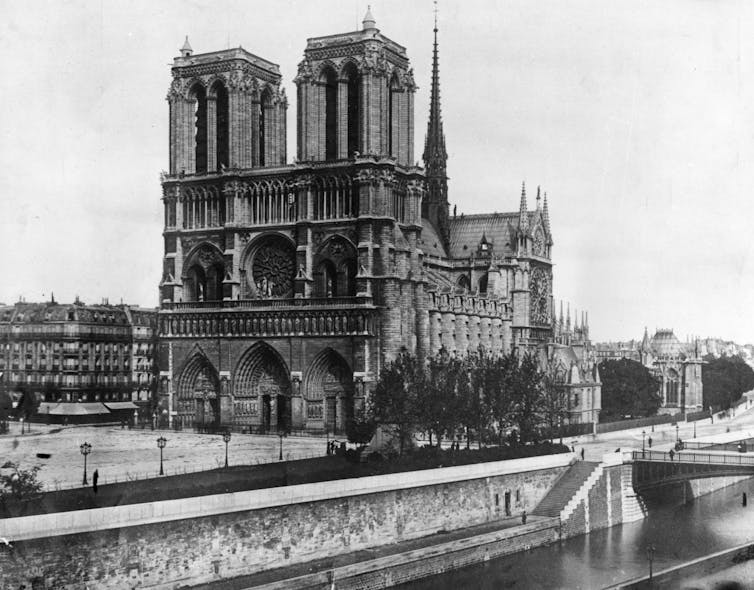
Many of the building’s iconic features date to the 19th-century restorations. These include the crossing spire that collapsed in the recent fire. It also includes the many gargoyles and chimeras that peer out from the upper parts of the cathedral, many of which are modern replacements of medieval sculptures.
The 19th century also saw the construction of the parvis, or square in front of the cathedral, which significantly altered how one encounters the structure. Visitors to the cathedral now have a much larger area from which to view the front of the building which facilitates spectacular views of the cathedral’s twin towers.
Why it will survive
The roof of the cathedral was largely destroyed in the recent fire. While much of the building is constructed from stone, the roof was supported by enormous wooden beams that sat above the vault or curved stone ceiling of the church.
Details are still emerging about its priceless 13th-century stained glass windows. And it is too early to say how much of the art work housed in it survived.
The cathedral has stood for 800 years and withstood damage on many previous occasions. I am confident that it will survive this fire as well.
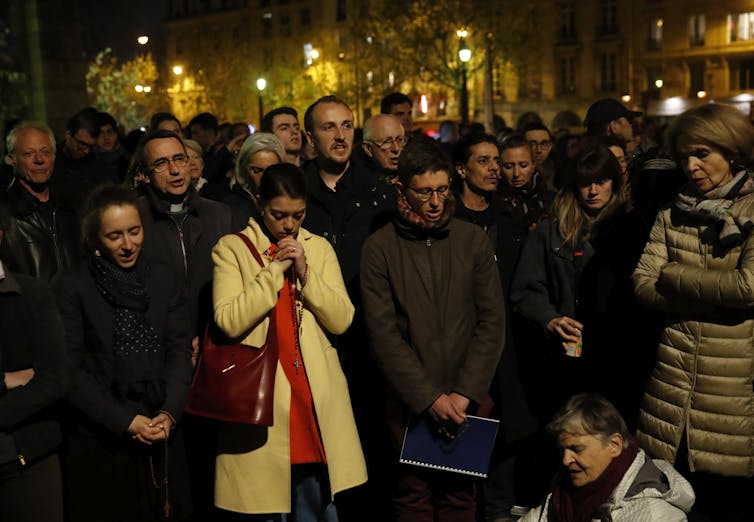
Although the 2019 fire may appear to many as a cataclysmic destruction, the cathedral is exceptionally well documented. Andrew Tallon, a scholar at Vassar College, who died last year, had digitally scanned the building, resulting in measurements of the structure that are more precise than any data previously gathered.
While some parts of the cathedral might be irreplaceable, I believe many future generations continue to admire and learn from this magnificent building, as well as its rich history.
Maile Hutterer, Assistant Professor of the History of Art and Architecture, University of Oregon
This article is republished from The Conversation under a Creative Commons license. Read the original article.
Dogs available for adoption this week include mixes of bluetick coonhound, Chihuahua, dachshund, Great Pyrenees, heeler, Jack Russell Terrier, Labrador Retriever, pit bull, redbone coonhound, shepherd and Shih Tzu.
Dogs that are adopted from Lake County Animal Care and Control are either neutered or spayed, microchipped and, if old enough, given a rabies shot and county license before being released to their new owner. License fees do not apply to residents of the cities of Lakeport or Clearlake.
If you're looking for a new companion, visit the shelter. There are many great pets hoping you'll choose them.
The following dogs at the Lake County Animal Care and Control shelter have been cleared for adoption (additional dogs on the animal control Web site not listed are still “on hold”).
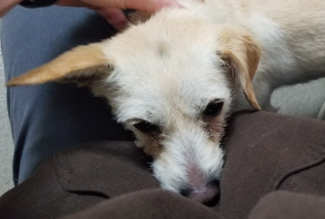
Male Jack Russell Terrier
This male Jack Russell Terrier has a shaved white and buff coat.
He’s in kennel No. 3, ID No. 12033.

‘Moe’
“Moe” is a male Shih Tzu mix with a short black coat.
He already has been neutered.
He’s in kennel No. 4, ID No. 11939.
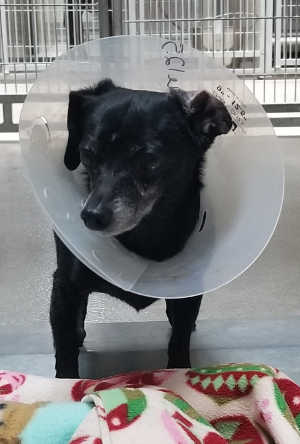
‘Bubbles’
“Bubbles” is a male Chihuahua-dachshund mix with a medium-length black coat.
He already has been neutered.
He’s in kennel No. 8a, ID No. 11990.
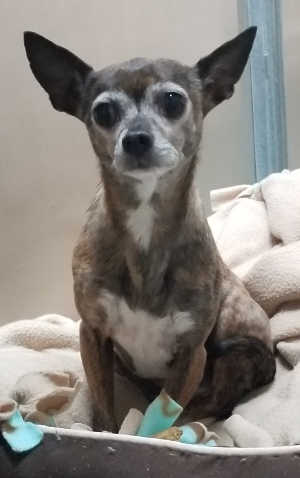
‘Gucci’
“Gucci” is a female Chihuahua with a short brown and brindle coat.
She already has been spayed.
She’s in kennel No. 8b, ID No. 11911.
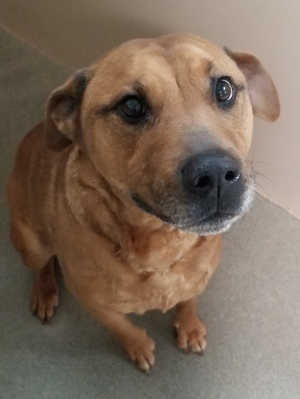
Pit bull terrier
This male pit bull terrier has a short red coat.
He already has been neutered.
He’s in kennel No. 9, ID No. 12031.
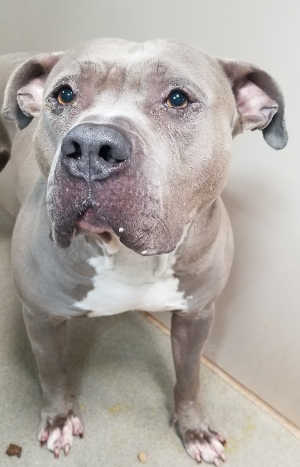
Male pit bull terrier
This male pit bull terrier has a short blue and white coat.
He already has been neutered.
He’s in kennel No. 10, ID No. 12038.
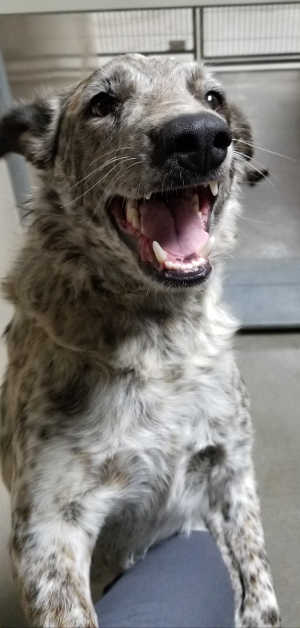
‘Rio’
“Rio” is a male bluetick coonhound-shepherd mix with a short tricolor coat.
He already has been neutered.
He’s in kennel No. 11, ID No. 11947.
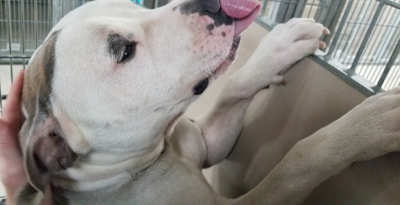
Male pit bull terrier
This male pit bull terrier has a short brown and white coat.
He’s in kennel No. 13, ID No. 12043.
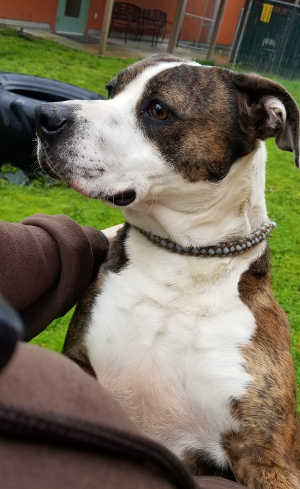
‘Baylee’
“Baylee” is a female pit bull terrier has a short brindle and white coat.
Shelter staff said she is good with other dogs, has lived with cats and chickens, and was raised with children.
She already has been spayed.
She’s in kennel No. 14, ID No. 11892.
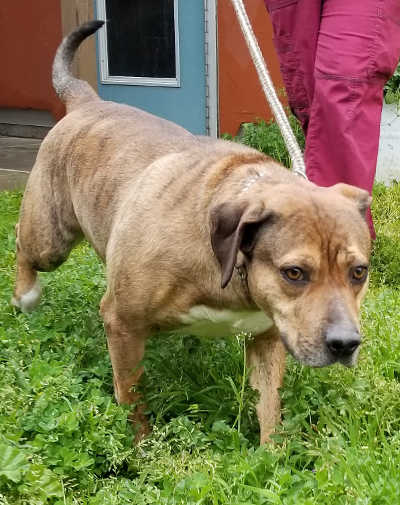
‘Maebelle’
“Maebelle” is a female pit bull terrier with a short brindle and white coat.
Shelter staff said she is good with other dogs, has lived with cats and chickens, and was raised with a small child.
She’s in kennel No. 15, ID No. 11893.
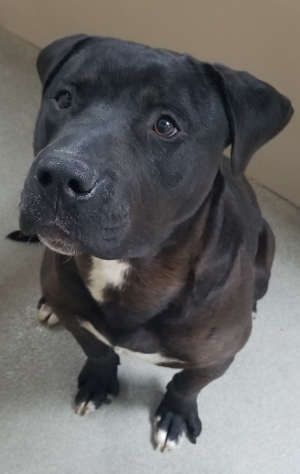
Male pit bull terrier
This male pit bull terrier has a short black coat.
He’s in kennel No. 20, ID No. 11958.
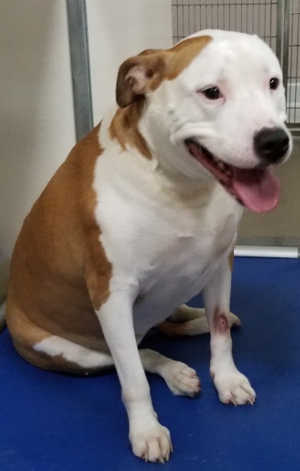
‘Bing’
“Bing” is a female pit bull terrier with a short brown and white coat.
She already has been spayed.
She’s in kennel No. 23, ID No. 12012.
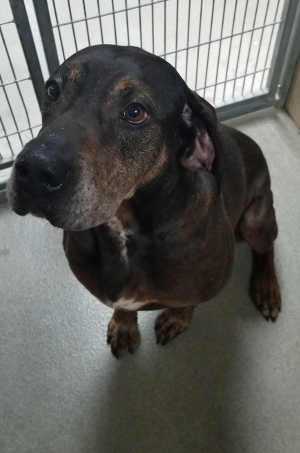
‘Copper’
“Copper” is a male redbone coonhound with a short red coat.
Shelter staff said he is 7 years old. He’s good with other dogs and children, but not cats. He walks well on a leash, is mellow and doesn’t bark that much. He also loves treats.
Coppers is in kennel No. 25, ID No. 11960.
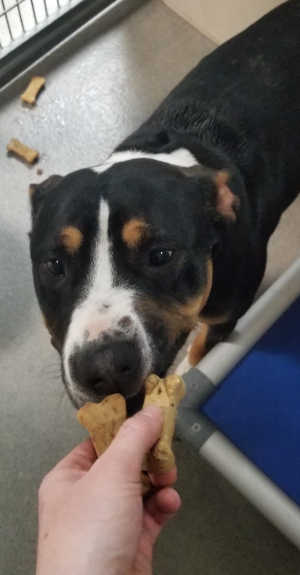
‘Taya’
“Taya” is a female pit bull terrier who a short tricolor coat.
He’s in kennel No. 26, ID No. 12005.
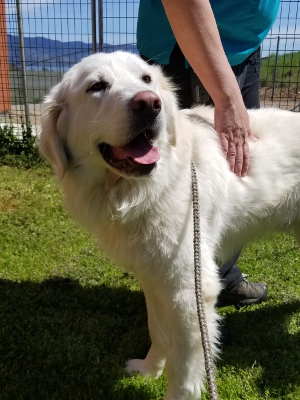
‘Little Foot’
“Little Foot” is a white male Great Pyrenees with a long white coat and gold eyes.
Shelter staff said the right home for him will not have cats, small dogs or livestock.
He has been neutered.
Little Foot is in kennel No. 27, ID No. 11854.
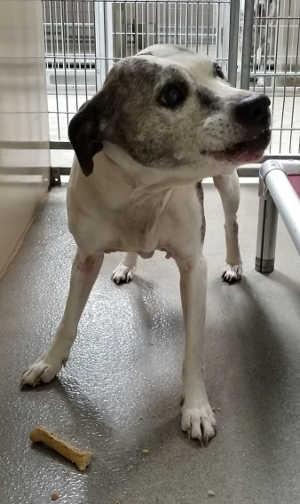
‘Shi’
“Shi” is a female terrier with a short brindle and white coat.
She’s in kennel No. 28, ID No. 12020.
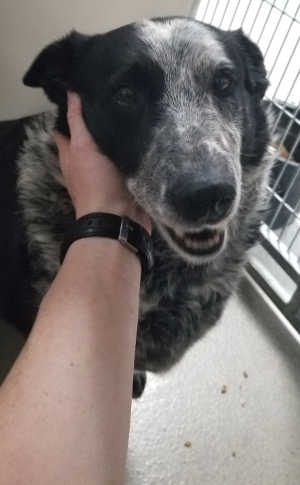
Female heeler
This female heeler has a medium-length black and white coat.
She’s in kennel No. 31, ID No. 11962.
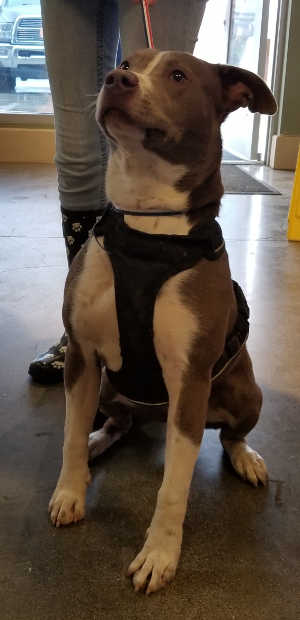
Female pit bull terrier
This female pit bull terrier has a short brown and white coat.
She’s in kennel No. 33, ID No. 11950.
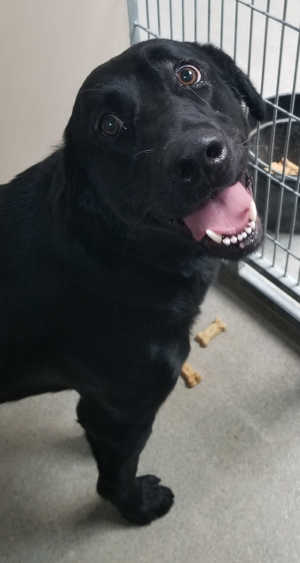
‘Bear’
“Bear” is a male Labrador Retriever with an all-black coat.
He already has been neutered.
He’s in kennel No. 34, ID No. 11986.
Lake County Animal Care and Control is located at 4949 Helbush in Lakeport, next to the Hill Road Correctional Facility.
Office hours are Monday through Friday, 11 a.m. to 5 p.m., and 11 a.m. to 3 p.m., Saturday. The shelter is open from 11 a.m. to 4 p.m. Monday through Friday and on Saturday from 11 a.m. to 3 p.m.
Visit the shelter online at http://www.co.lake.ca.us/Government/Directory/Animal_Care_And_Control.htm.
For more information call Lake County Animal Care and Control at 707-263-0278.
Email Elizabeth Larson at
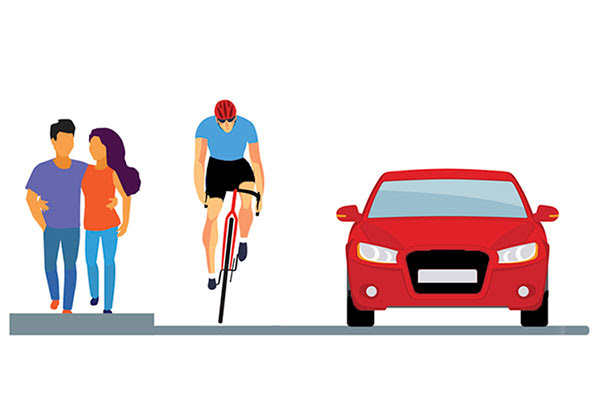
BERKELEY, Calif. – As programs manager for Bike Bakersfield, a nonprofit bicycle advocacy coalition in Southern California, Asha Chandy hears scary stories all the time about bike collisions and near misses.
“One guy told me that he was almost sideswiped by a huge semitruck on a street, even though he was in the bicycle lane,” Chandy said. “The truck was just so close to him that he actually felt the side of the truck touch his skin.”
A new interactive Web site called Street Story is helping Chandy collect these stories in one place, making it easier for her to use these accounts to advocate for safer streets in Kern County on behalf of bicyclists and pedestrians.
Created by researchers at UC Berkeley’s Safe Transportation Research and Education Center, or SafeTREC, Street Story allows anyone in California to make note of dangerous conditions, accidents or near misses they encounter on their streets, be they between cars, bicyclists, pedestrians or people riding transit.
The researchers hope the site will be a valuable resource for any road user in California to provide input on road safety issues, as well as a way for local governments to get feedback on street safety. They believe it will empower residents to become more involved in the state of their roadways.
“Community engagement is now a requirement in a lot of transportation grant applications,” said Kate Beck, program lead at SafeTREC. “Currently, agencies rely on community meetings that can be quite time-intensive, or simply inaccessible for people to attend. While we think it’s important for communities to gather to provide input to their municipalities, we see Street Story as another way for agencies and community groups to hear from the public.”
Street Story users choose the location of an incident on a map and then answer a series of questions designed to specify not only the nature of the incident, but also what factors might have contributed to it, such as poor lighting or cracked pavement. The interface is designed to be accessible on a computer or through a mobile browser.
“It is not just about accidents, but it's about tree roots that are damaging the sidewalks or a dirty gutter that a cyclist can't get around without going into traffic,” Chandy said. “It is those kinds of anecdotal stories that Street Story collects that really help give a bigger, better picture of walking, biking and even driving in this community.”
Local governments and advocacy groups can already access police accident reports in California through a publicly-available database, the Statewide Integrated Traffic Records System, or SWITRS.
Prior to founding Street Story, SafeTREC developed an easy-to-use interface called the Transportation Injury Mapping System, or TIMS, to chart the location of these accident reports throughout the state.
Street Story gives residents an anonymous platform to document crashes, near misses or simply areas where they feel safe or unsafe, giving transportation agencies the opportunity to prevent accidents before they happen.
“There is a lot of work that looks at how we can proactively address transportation safety issues, rather than waiting for a collision to actually happen,” Beck said. “This tool can be a really useful way of collecting qualitative information on places where near misses have happened and places where people feel unsafe.”
“You can find collision data through SWITRS, but that only takes into account what has been reported through law enforcement,” Chandy said. “We are also using Street Story to look at how people are feeling on the streets and where areas of concern are, and by comparing that with crash data, we can actually make the community safer from all aspects.”
The Street Story team is working with local transportation agencies and community groups across the state to spread the word about the platform, which began in October 2018.
It has already partnered with a number of organizations in Kern County, including the Kern County Department of Public Works, Bike Bakersfield and the Greenfield Walking Group, and has plans to expand its outreach into Solano County and San Francisco.
“Right now, a lot of our work is focused on rural communities or lower-resourced communities, which I think is a strong piece of Street Story,” Beck said. “Smaller towns often have fewer resources to do community outreach, and a free tool with some of our technical support can be really useful for them.”
Lloyd Nadal, program services division manager at the Solano Transportation Authority, is looking forward to partnering with the team to host interactive community workshops that use Street Story to engage residents in local street safety.
Nadal hopes the information they gather will help Solano County cities secure more funding for public works projects that address bicycle and pedestrian safety, including installing bicycle lanes, creating lighted crosswalks and improving sidewalks.
He also plans to incorporate the data into an upcoming active transportation plan, which will document bicycle- and pedestrian-friendly routes throughout the county.
“Right now, the only way to report this type of information is to call your city or send an email on your city's website, so to have a tool that is right at your fingertips, where you can actually report in real time, I think that’s helpful,” Nadal said. “This is a useful tool that is open to the public, and everyone has access to it. I think that is the beauty of it.”
To make a road safety report, visit http://streetstory.berkeley.edu.
Funding for Street Story and TIMS was provided by a grant from the California Office of Traffic Safety, through the National Highway Traffic Safety Administration.
Kara Manke writes for the UC Berkeley News Center.
Constantly shielding us from the Sun’s high energy particles is the Earth’s magnetic field.
Many imagine this field as a circle, slightly larger than our planet. But, it’s actually shaped like this.
And near our north and south poles, there is a cusp – a point where two branches of a curve meet.
It’s here that the magnetic bubble that surrounds us dips inward, creating a funnel of magnetic lines that touch down to Earth.
This funnel allows the Sun’s high energy particles to race toward our planet and deposit themselves in our ionosphere, 80 to 800 kilometers above Earth.
We can even see the result – they create beautiful aurora, similar to the spectacular displays at night but on the dayside of Earth, and only visible to the naked eye during the long polar night.
Now, scientists who want to learn more about the effects of these particles are embarking on a special initiative that is taking place from December 2018 to January 2020.
In a coordinated effort between multiple countries to understand the physics of the polar cusp, scientists from NASA and the US, as well as from Japan, Norway, Canada and Great Britain have launched The Grand Challenge Initiative – Cusp, a series of sounding rocket missions that will provide the data needed to conduct nine unprecedented studies of near-Earth space at the polar regions.
This series will help scientists glean answers to a number of questions about the cusp. Why is our atmosphere leaking out into space from the cusp? How and why do the turbulent hot patches of dense plasma that exist inside the aurora region disrupt global communications? What sustains strong updrafts of atmospheric gas in this region that can cause enhanced drag on our satellites as they orbit?
Doug Rowland, a space scientist at NASA’s Goddard Space Flight Center, explained: “The cusp is a great natural laboratory to understand how Earth’s atmosphere responds to direct energy input from the solar wind. This kind of science can be done nowhere else on Earth.”
Twelve sounding rockets conducting the nine missions will launch from two sites in Norway — Andøya Space Center and Svalbard Rocket Range. In some cases, launches will be conducted at nearly the same time from Andøya and Svalbard, providing simultaneous observations at different altitudes and latitudes.
Why use rockets instead of satellites or weather balloons? Rowland explained, “Rockets are ideal for taking the measurements we need. These rockets will be packed with monitoring instruments to capture information as they move upward in an arc, and on the way down too. They can gather up to fifteen consecutive minutes of direct measurements from a specific region of space, and you can launch them precisely. You want your rockets to fly right through the auroras just as they’re going off. Satellites cover a lot of area, but at high speeds they don’t spend as much time making observations of any one location. Balloons can’t be launched high enough and their location can’t be controlled as precisely as rockets.”
The new data gleaned from the Grand Challenge Initiative – Cusp will help scientists make better space weather forecasts, and give us a better understanding of the particles responsible for one of the most breathtaking sights on our planet.
Take the initiative to learn more by visiting http://science.nasa.gov.
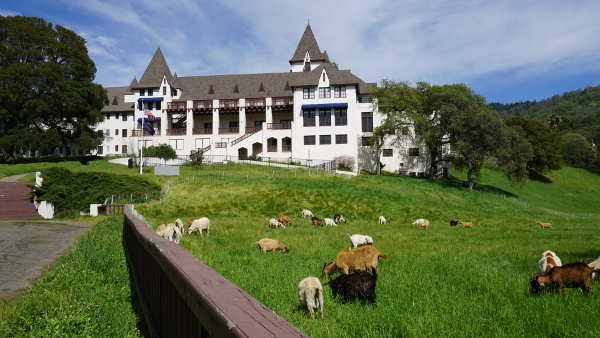
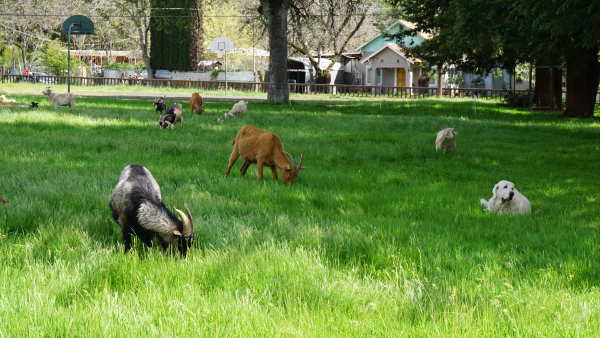
LUCERNE, Calif. – A herd of Kiko goats, accompanied by their guardian watch dogs, arrived at the Lucerne Hotel on Friday to being eating down the grass on the seven-acre property.
The county of Lake sold the historic building to the Earthways Foundation. The sale was finalized in February, as Lake County News has reported.
Denise Rushing, a former county supervisor involved with forming New Paradigm College, which is to be housed in the building, said the goats – belonging to Gonzalez Brushbusters – are an ecologically friendly way to manage the landscape.
At the hotel, like elsewhere around the town, spring vegetation has grown green and tall, thanks to ongoing rains.
However, with the official start of fire season set to arrive on May 15, it’s key to now get grass and weeds under control.
The goats are being contained in an electrified fence and are guarded by Great Pyrenees protector dogs, Rushing said.
She said it’s the dogs’ job to bark at anyone approaching the goats.
That’s just what the dogs did on Friday afternoon, as curious community members and students heading home from school stopped by the grounds to check out the goats.
Rushing said the goats will be at work on the grounds for about a week.
Email Elizabeth Larson at