 How to resolve AdBlock issue?
News
The California Highway Patrol’s Clear Lake Area office said the crash occurred at 12:40 a.m. Monday on Highway 20 near Upper Lake.
Gabriela Garcia, 28, of Ukiah was driving her black 2011 Nissan Altima westbound on Highway 20, east of Scotts Valley Road, as Pedro Mendoza, 30, of Lakeport was driving his white 2006 Dodge Dakota eastbound in the same area, the CHP said.
The CHP report said that due to Garcia’s level of intoxication, she allowed her Nissan to cross over the solid double yellow lines, directly into Mendoza’s path of travel, and the two vehicles collided head-on.
As a result of the collision, Garcia was rendered unresponsive, with major injuries. She was extricated by emergency personnel from her vehicle, while Mendoza exited his vehicle on his own and related his entire body was in pain, the CHP said.
The CHP said firefighters transported both Garcia and Mendoza by ambulance to Sutter Lakeside Hospital in Lakeport. Mendoza was reported to have moderate injuries.
Garcia was transported from Sutter Lakeside to Kaiser Vacaville by air ambulance, according to the CHP.
At the hospital, Garcia was contacted by CHP from the Solano Area office at 4:45 a.m. and determined to be under the influence of alcohol. The CHP said she was then notified she was under arrest for felony DUI.
Both drivers were wearing their seat belts, the CHP said.
Email Elizabeth Larson at
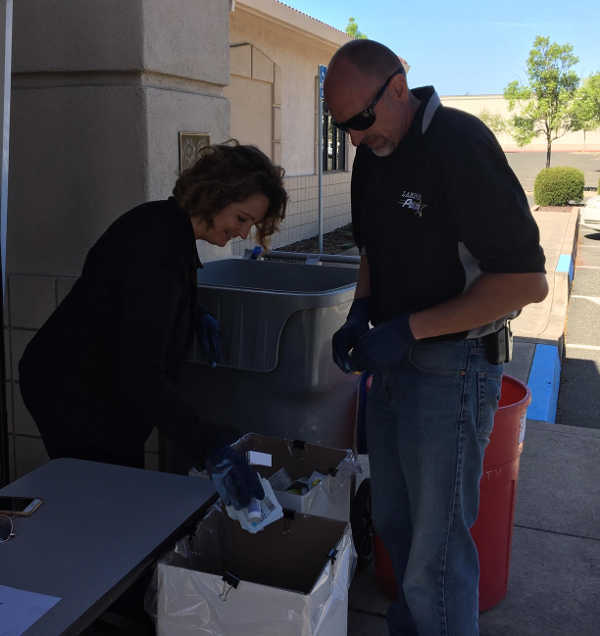
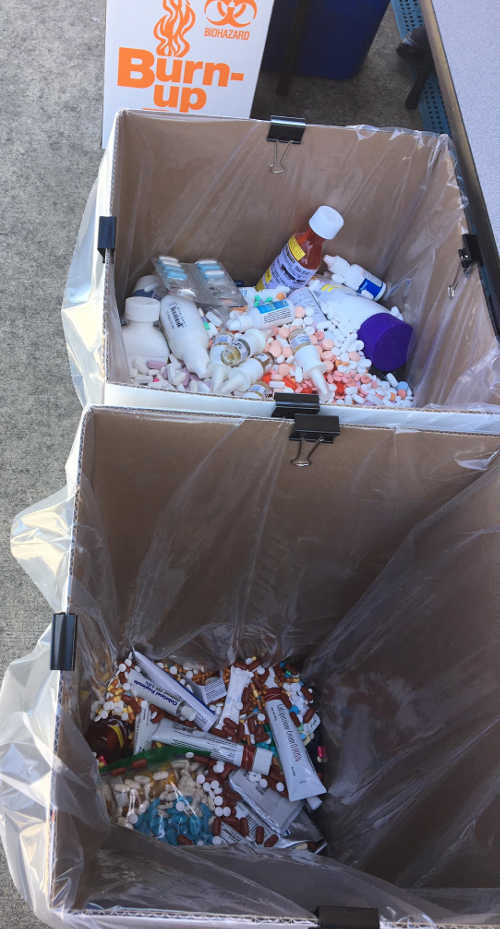
LAKEPORT, Calif. – The Lakeport Police Department on Saturday took part in the National Prescription Drug Take Back Day, part of an ongoing effort to remove harmful drugs from the community.
The agency reported that the event was very successful.
“We had a steady stream of community members coming throughout the event and we collected over 97 pounds of prescription and over-the-counter drugs. Many of these drugs were dangerous controlled substances including opioids,” reported Chief Brad Rasmussen.
When not properly disposed of, unused and expired prescription drugs have a high potential to be diverted for abuse, are dangerous to children and harmful to the environment.
Rasmussen said Saturday’s event wrapped up four months of collection by the department of more than 248 pounds of prescription drugs from the community.
At the start of January, the department began offering a safe medication disposal collection site that was donated by the Rite Aid Foundation KidCents Project, as Lake County News has reported.
Lakeport Police Staff will transport the drugs it has collected out of county to the Drug Enforcement Administration, which will properly destroy them along with those collected by other police agencies across the United States, Rasmussen said.
Rasmussen thanked Evidence Technician Tammy Prather and Det. Dale Stoebe for running the event and managing the department’s Take Back program.
He also thanked the many local organizations including news, radio and community groups that advertised Saturday’s event over the past several weeks.
“Lastly, we thank the community members who took advantage of the event. Everyone working together leads to a safer community,” Rasmussen said.
The event is being held in May this year in hopes of avoiding the July heat and viewing the weeds while they are still green and in flower.
As always, it is free and the public is welcome and encouraged to attend.
Participants will gather in front of the Ranch House at Anderson Marsh State Historic Park, 8400 State Highway 53 between Clearlake and Lower Lake, at 9 a.m.
They will take a leisurely guided walk of about a mile to see the amazingly diverse array of invasive plants that flourish in the park and the effects of control mechanisms such as control burns, and return to the house for lunch and discussion of aquatic invasive weeds under the trees.
Although the event is completely free and all members of the public are invited, reservations are required. Please RSVP with the Lake County Agriculture Department at 707-263-0217 by May 6.
The tour is sponsored by the Lake County Department of Agriculture and the Lake County Resource Conservation District.
The end-of-tour lunch is free but donations to help offset the cost of refreshments will be greatly appreciated and cheerfully accepted.
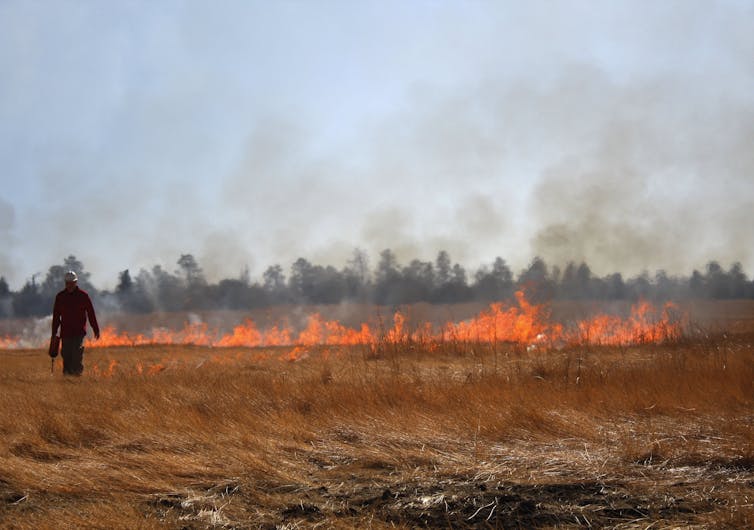
As spring settles in across the United States, western states are already preparing for summer and wildfire season. And although it may seem counter-intuitive, some of the most urgent conversations are about getting more fire onto the landscape.
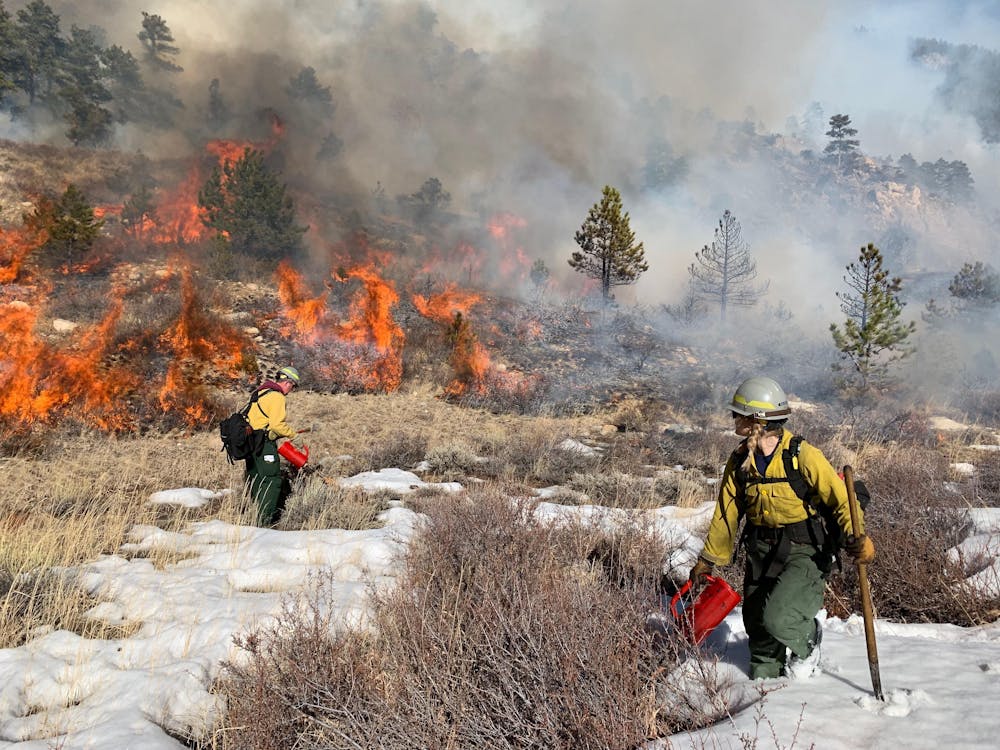
Winter and spring, before conditions become too hot and dry, are common times for conducting planned and controlled burns designed to reduce wildfire hazard. Fire managers intentionally ignite fires within a predetermined area to burn brush, smaller trees and other plant matter.
Prescribed burns can decrease the potential for some of the large, severe fires that have affected western states in recent years. As scholars of U.S. forest policy, collaborative environmental management and social-ecological systems, we see them as a management tool that deserves much wider attention.
Forests need ‘good fire’
Forests across much of North America need fire to maintain healthy structures and watershed conditions and support biodiversity. For centuries, Native Americans deliberately set fires to facilitate hunting, protect communities and foster plants needed for food and fiber.
But starting around the turn of the 20th century, European Americans began trying to suppress most fires and stopped prescribed burning. The exception was the Southeast, where forest managers and private landowners have consistently used prescribed burns to clear underbrush and improve wildlife habitat.
Suppressing wildfires allows dead and living plant matter to accumulate. This harms forests by reducing nutrient recycling and overall plant diversity. It also creates more uniform landscapes with higher fuel loads, making forests prone to larger and more severe fires.
Today many forested landscapes in western states have a “fire debt.” Humans have prevented normal levels of fire from occurring, and the bill has come due. Increasingly severe weather conditions and longer fire seasons due to climate change are making fire management problems more pressing today than they were just a few decades ago. And the problem will only get worse.
Fire science researchers have made a clear case for more burning, particularly in lower elevations and drier forests where fuels have built up. Studies show that reintroducing fire to the landscape, sometimes after thinning (removing some trees), often reduces fire risks more effectively than thinning alone. It also can be the most cost-effective way to maintain desired conditions over time.
This winter in Colorado, for example, the Arapaho-Roosevelt National Forest conducted a prescribed burn while snow still covered much of the ground. This was part of a broader strategy to increase prescribed fire use and create areas of burned ground that will make future wildland fires less extreme and more feasible to manage.

State and local action heats up
From Oregon’s municipal watersheds to the Ponderosa pine forests of the Southwest, community-based partners and state and local agencies have been working with the federal government to remove accumulated fuel and reintroduce fire on interconnected public and private forest lands.
California’s legislature has approved using money raised through the California carbon market to fund prescribed fire efforts. New Mexico is using the Rio Grande Water Fund – a public/private initiative that supports forest restoration to protect water supplies – to pay for thinning and prescribed burning, and is analyzing ways to expand use of prescribed fire for forest management.
Oregon is in its first spring burning season with a newly revised smoke management plan designed to provide more flexibility for prescribed burning. In Washington, the legislature passed a bill in 2016 creating a Forest Resiliency Burning Pilot Project, which just published a report identifying ways to expand or continue use of prescribed fire.
At the community level, prescribed fire councils are becoming common across the country, and a network of fire-adapted communities is growing. Nongovernmental organizations are building burn teams to address fire backlogs on public and private lands, and training people to conduct planned burns. This work is all in an effort to build a bigger and more diverse prescribed fire workforce.

Barriers to conducting prescribed fire
In our research on forest restoration efforts, we have found that some national policies are supporting larger-scale restoration planning and project work, such as tree thinning. But even where federal land managers and community partners are getting thinning accomplished and agree that burning is a priority, it has been hard to get more “good fire” on the ground.
To be sure, prescribed fire has limitations and risks. It will not stop wildfires under the most extreme conditions and is not appropriate in all locations. And on rare occasions, planned burns can escape controls, threatening lives and property. But there is broad agreement that they are an important tool for supporting forest restoration and fuel mitigation.
The conventional wisdom is that air quality regulations, other environmental policies and public resistance are the main barriers to prescribed fire. But when we interviewed some 60 experts, including land managers, air regulators, state agency partners and representatives from non-government organizations, we found that other factors were more significant obstacles.
In particular, fire managers said they needed adequate funding, strong government leadership and more people with expertise to conduct these operations. A major challenge is that qualified personnel are increasingly in demand for longer and more severe fire seasons, making them unavailable to help with planned burns when opportunities arise. Going forward, it will be particularly important to provide support for locations where partners and land managers have built agreement about the need for prescribed fire.
Humans have inextricably altered U.S. forests over the last century through fire exclusion, land use change, and now climate change. We cannot undo what has been done or suppress all fires - they are part of the landscape. The question now is where to invest in restoring forest conditions and promoting more resilient landscapes, while reducing risks to communities, ecosystems, wildlife, water and other precious resources. As part of a broader community of scientists and practitioners working on forest and fire management, we see prescribed fire as a valuable tool in that effort.
Courtney Schultz, Associate Professor of Forest and Natural Resource Policy, Colorado State University; Cassandra Moseley, Sr. Associate Vice President for Research and Research Professor, University of Oregon, and Heidi Huber-Stearns, Assistant Research Professor and Director, Institute for a Sustainable Environment, University of Oregon
This article is republished from The Conversation under a Creative Commons license. Read the original article.
The study, which will be published Monday by the National Bureau of Economic Research, shows that a 10-percent increase in the minimum wage and the Earned Income Tax Credit has a dramatic impact on the number of non-drug-related suicides among men and women without college degrees.
“A lot of the time the discussion of higher minimum wages is framed in narrow economic terms,” said Anna Godøy, a research economist with UC Berkeley’s Institute for Research on Labor and Employment and a co-author of the paper. “What this study shows is that the debate is not only about jobs and wages, it is also about mental health.”
“In short,” Godøy added, “our study shows that higher minimum wages are likely to save lives.”
While other studies have suggested connections between higher minimum wages and a decline in suicides, the working paper, titled “Can Economic Policies Reduce Deaths of Despair?,” is the first to prove a direct relationship.
Using 16 years of mortality data from the Centers for Disease Control, census figures and analyses of government wage and tax policies, the research team, which included economists and public health experts, was able to show how the new policies caused a decline in suicides.
“Our models show that when states implement these policies, the suicide rate drops,” Godøy said. “This further supports our conclusion that this is a cause-and-effect relationship.”
Specifically, a 10 percent increase in the minimum wage dropped suicides among men and women without college degrees aged 18 to 64 by 3.6 percent. A 10 percent increase in the Earned Income Tax Credit dropped suicides among the same group by 5.5 percent.
"Our results show that even modest increases to the incomes of low-wage workers can make a difference,” said William Dow, interim dean of UC Berkeley’s School of Public Health and a co-author of the paper. “The largest effects were on women, who are more likely to work minimum wage jobs and be eligible for the Earned Income Tax Credit.”
The paper found that increases to the minimum wage and tax credits had no significant effects on drug-related deaths.
The researchers also controlled for factors like expansion of Medicaid and did not see similar declines in suicides among a college-educated placebo sample.
Godøy said that while the Berkeley paper did not examine why an increase in minimum wage or tax credits lead to a drop in the number of suicides, previous research has shown that greater financial security is connected to improved mental health.
The strong link between changes to tax and wage policies should encourage policy makers to understand the “full consequences of changes to economic policies,” when debating increasing the federal minimum wage, Godøy said.
In addition to Godøy and Dow, the research team included Christopher Lowenstein, a graduate student researcher at the School of Public Health, and Michael Reich, a professor of economics at the Institute for Research on Labor and Employment.
Will Kane writes for the UC Berkeley News Center.
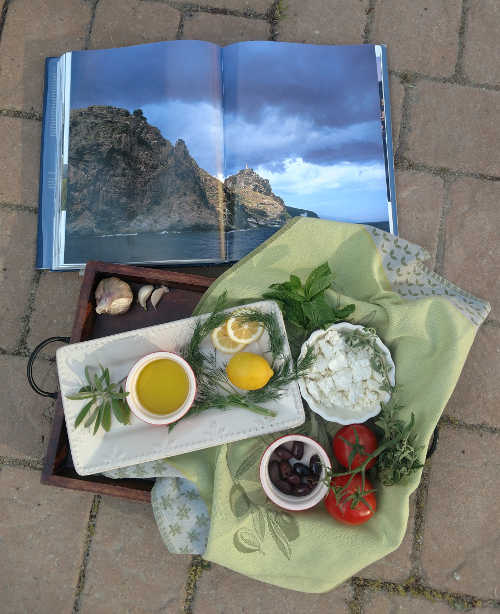
We dine at a common table, beneficiaries of the nourishment that our planet provides. May the whole of our human family become closer to us as we explore the world together through food, the tie that deliciously binds, whether it’s grown nearby or enjoyed many miles from our door.
It’s sunny in Lake County as I write this. The skies are vacant of clouds, wildflowers explosively bloom, and a chorus of birdsong fills the air.
Our beautiful spring has arrived.
However, not so long ago, wet, gray days were strung together like pearls on a necklace, and my soul longed for a place where the sun was impossibly bright.
With its whitewashed houses perched cliffside and the sun-sparkled seas that embrace it, Greece seemed like such a spot. It called to me when overcast skies threatened to overwhelm my mood.
Thoughts of Greece fill my heart even now, and not just because of its warm beauty.
The food also calls, as Greece entices me with one of my most beloved world cuisines.
Greek culinary tradition is more than 4,000 years old and is key to the culture and history of the country. Names of foods, ingredients, and cooking methods haven’t changed much with the passing of millennia.
Greece is thrust like a hand into water at the end of the Balkan Peninsula. Thusly perched at the edge of the Mediterranean Sea, its climate is characterized by wet winters and hot, dry summers, not dissimilar to ours.
These are perfect conditions for the “Mediterranean triad” of wheat, olive oil, and wine on which Greek cookery is based.
The cuisine epitomizes what has come to be known as the Mediterranean diet.
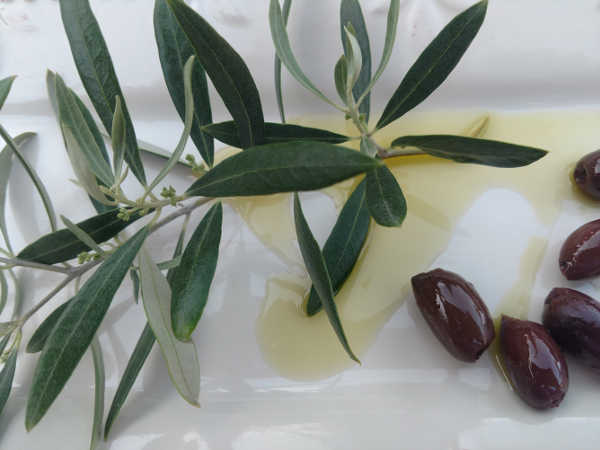
Olive oil, which gives Greek cuisine one of its most characteristic flavors, is produced from the plethora of olive trees in the area, some more than 2,000 years old, and is partly responsible for the health benefits said to come from adopting a diet common to the Mediterranean region.
Citrus trees also thrive in Greece’s toasty temperatures, and lively lemon juice adds a beautiful tang to many dishes. This bright, tongue-rousing flavor is one of my favorite reasons to enjoy Greek food.
With the longest coastline in Europe (and the 11th longest in the world), Greece is surrounded on three sides by four different seas (the Mediterranean and Cretan Seas to the south, the Aegean Sea to the east, and the Ionian Sea to the west). No more than 90 miles separates any part of the Greek mainland from the sea.
In addition, there are an astounding 6,000 plus Greek islands (of which only 227 are inhabited), so it’s no surprise that fish and seafood are an important staple of Greek cookery.
Eighty percent of Greece is mountainous, making it a land of small farms, by and large organic, and of mostly diminutive livestock.
Lamb and kid goats are popular holiday food, and using sweet spices such as cinnamon, allspice, and cloves with meat dishes is a trait of Greek cooking.
Greeks have crafted sumptuous cheeses since ancient times and they’re consumed with gusto. There are far more varieties produced in Greece than the feta prevalent in supermarkets here.
Honey is widely used in desserts, including in baklava, thin layers of phyllo dough stuffed with crushed walnuts and smothered with the honey which gives it its characteristic sweetness.
The generous use of oregano, mint, garlic, dill, bay laurel, fennel, basil, and thyme are lively on the palate, and the bright, fresh flavors that these add to the food make me feel energized when I partake of it.
Dining out is common in Greece, and small dishes known as meze include a variety of foods, among them dolmades (rice, currants, pine kernels wrapped in grape leaves), grilled octopus, lentils, olives, small fish, and feta cheese. This is popular fare in local restaurants.
Some Greek foods, such as gyros, hummus and pita bread, originated in other Mediterranean areas and spread throughout the region, including to Greece.
Gyros (pronounced YEE-ros) is meat in a cone-like shape cooked slowly on a spit, shaved while still skewered for sandwiches. It’s similar to shawarma, which is served throughout the Middle East, with both versions having roots in the Turkish doner kebab.
Interestingly, gyros is the Greek word for “turn” and shawarma means “turning” in Arabic, references to the way they’re cooked.
Based on historical information from the 13th century, hummus likely originated in ancient Egypt. Chickpeas were then, and still are, abundant in the Middle East; in fact, the word hummus means chickpea in Arabic.
Flat, pocketed pita bread may have originated with the Bedouins (the Amorites are the other contenders) and its popularity spread through Bedouin trade and travel routes.
Other dishes currently eaten in Greece can be traced back thousands of years. Skordalia (a potato and garlic spread), pastili (a dessert made with honey), and lentil soup are among those that hail from ancient times.
Retsina, a white or rose wine sealed with pine resin, is also from this era.
With good reason, Greece is considered the cradle of Western civilization. It’s the birthplace of democracy, Western philosophy, trial by jury, and equality under the law.
We also owe the ancient Greeks gratitude for important literary, scientific, and mathematical contributions, and we can thank them for another first – fusion cuisine going back to 350 BCE.
Their geographical position as a crossroads between Europe, Africa, and Asia contributes to much of this, but so does their history. Alexander the Greek extended the Greek Empire from Europe to India, bringing in eastern and northern culinary influences.
When Greece fell to the Romans in 146 BCE and when the Ottoman Empire fell to the Turks in 1453 CE, those cultures influenced its cuisine. (Many Greek dishes, such as tzatziki and dolmades, are still known by their Turkish names.)
Greece can boast another culinary first. Greek gourmet Archestrados wrote the first known cookbook in 330 BCE, suggesting that food has been an important part of Greek culture for quite some time.
Being welcoming to strangers is deeply rooted in Greek culture, and the country is consistently rated as being among the most hospitable to visit.
The Greek principle of hospitality, extant since ancient times, is known as philoxenia. A sacred relationship exists between host and guest, elevating the guest (even if a stranger) to a position equal to the host. The goal is to make them feel protected and taken care of.
It is said that even today if one knocks on a stranger’s door in Crete, they will be received as an honored guest.
Below are two dishes well-loved in Greece, tzatziki, a cooling cucumber-yogurt salad (also used as a dip), and hummus, the chickpea spread mentioned previously. Both are perfect fare for hot days when we just don’t want to cook.
And finally, here’s a standard Greek toast and a wish for good health: Yia Mas!
Tzatziki salad
This cool, refreshing salad is best when made with traditional Greek yogurt. I created this version for a culinary class I taught on Greek cuisine. For a variation in flavor, add chopped fresh mint or thyme rather than dill.
Tzatziki is often used as a condiment, and to create a smoother sauce for this purpose, use a food processor to make a rough cucumber puree. If this method is used, the peeled, sliced cucumber should be salted and placed in a colander to drain for 30 minutes before pureeing. Otherwise, the dip will be watery.
Ingredients:
2 medium cucumbers, peeled, seeded and thinly sliced
2 cups plain Greek yogurt
2 cloves garlic, smashed, peeled, then finely diced
Juice of half a lemon
Fresh dill (or mint or thyme) to taste
Freshly ground black pepper & salt to taste
Combine the yogurt, garlic and lemon juice in a bowl. Add cucumber to yogurt mixture. Add the fresh herb of choice to taste. (If using dill, kitchen scissors may be used to cut small pieces of the leaves into the bowl; alternatively, finely chop the dill ahead of time.) Mix and enjoy!
Hummus spread
This is my go-to hummus recipe. It’s made often in our home because it reminds me of my first taste of hummus in a San Francisco deli in the 1980s. The recipe is from The Silver Palate Cookbook, which continues to be a favorite of mine, despite the fact that it’s decades old.
Ingredients
4 cups (about 2-1/2 cans) chickpeas (garbanzo beans)
½ cup tahini (sesame spread)
1/3 cup warm water
1/3 cup best-quality olive oil
Juice of 2 or 3 lemons, to taste
4 or more garlic cloves, to taste
1-1/2 teaspoons salt, or to taste
2 teaspoons ground cumin
Freshly ground black pepper, to taste
Combine the chickpeas, tahini, warm water, olive oil, and juice of 1 lemon in the bowl of a food processor. Process until smooth and creamy, pausing once or twice to scrape down the sides of the bowl with a spatula. Add the garlic, salt, cumin, and pepper, and process to blend. Taste and correct the seasoning if necessary. Add more lemon juice to taste. Scrape into a storage container, cover, and refrigerate until ready to use. Makes 1 quart.
Esther Oertel is a writer and passionate home cook from a family of chefs. She grew up in a restaurant, where she began creating recipes from a young age. She’s taught culinary classes in a variety of venues in Lake County and previously wrote “The Veggie Girl” column for Lake County News. Most recently she’s taught culinary classes at Sur La Table in Santa Rosa, Calif. She lives in Middletown, Calif.