 How to resolve AdBlock issue?
News
The International Space Station is sporting a new “light fixture.”
The Global Ecosystem Dynamics Investigation, or GEDI, will beam down laser light on Earth from the orbiting laboratory to reveal more about our environment and how it is changing.
NASA’s GEDI sends laser pulses into tree canopies and precisely measures the light reflected back.
The timing and intensity of light that bounces back to GEDI’s telescope will reveal the height and density of trees and vegetation, and the vertical arrangement of the leaves and branches within the overall canopy.
Dr. Ralph Dubayah, GEDI principal investigator at the University of Maryland said, “This instrument will map forests in high resolution and three dimensions, revolutionizing the way researchers monitor them.”
Forested areas are an important part of our planet. Not only do forests provide a habitat for many species and a source of raw materials for human use, such as paper and lumber, they also play a key role in the Earth’s carbon cycle.
Deforestation and forest degradation, in addition to other types of forest disturbances such as fires and insect outbreaks lead to increases in atmospheric carbon dioxide. Forest regrowth sucks that carbon back down into trees and soils.
Knowing how forests grow and change over time can allow us to better understand the contribution that forests make to Earth’s carbon cycle and help people better manage this important resource.
GEDI is the first spaceborne instrument designed specifically to perform sustained mapping of the spatial distribution of the carbon content of forests.
Dubayah noted, "One of the most poorly quantified components of the carbon cycle is the net balance between forest disturbance and regrowth. GEDI will help scientists fill in this missing piece by revealing the vertical structure of the forest – information we really can’t get with sufficient accuracy any other way.”
GEDI will provide scientists with insights into the amount of carbon stored in forests. When combined with current and historical records of changes captured by Earth-orbiting satellites such as Landsat, this information will enhance the ability of researchers to identify changes happening across our planet.
Researchers also will incorporate GEDI’s observations, along with those of the ECOSTRESS instrument on the station, with data from other current and future Earth-observing sensors. These data will address important questions about relationships between forest structure, function, composition, and changes in carbon content.
Combining all of these data will allow researchers to gain an unprecedented understanding of ecosystem dynamics and the role plants and trees play in Earth's global carbon cycle. These new insights could be used, in turn, to improve models for forecasting future ecosystem changes, atmospheric carbon dioxide concentrations, and climate.
GEDI was launched to the station aboard SpaceX CRS-16 on December 5, 2018.
For more about how NASA uses the power of light to understand our world – and beyond – visit http://science.nasa.gov.
MIDDLETOWN, Calif. – The National Endowment for the Arts has awarded a Challenge America grant of $10,000 for workshops to support outdoor sculpture projects in the Middletown area.
The funds were awarded to EcoArts of Lake County, doing business as the Middletown Art Center.
“We are thrilled to receive recognition from a prestigious federal organization and be included in the Arts Endowment’s first major funding announcement for fiscal year 2019,” said Middletown Art Center Director Lisa Kaplan.
Challenge America grants support projects that extend the reach of the arts to underserved populations – those whose opportunities to experience the arts are limited by geography, ethnicity, economics or disability.
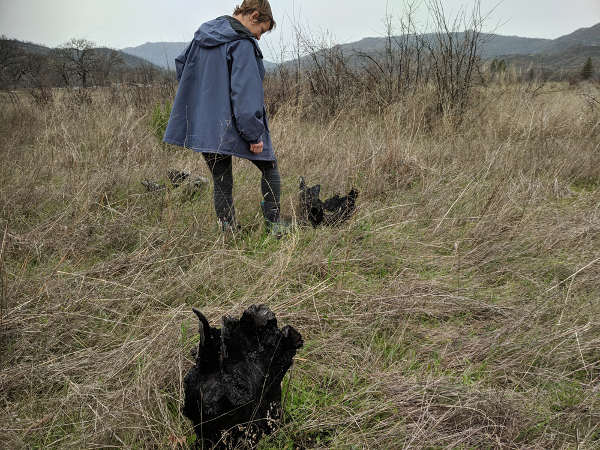
“Our project, ‘Locus,’ focuses on sculptural expressions to revitalize and promote community use of Middletown Trailside Park and Rabbit Hill, both burned in the Valley Fire,” Kaplan said.
As Mary Anne Carter, acting chairman of the National Endowment for the Arts, said, “The arts enhance our communities and our lives, and we look forward to seeing these projects take place throughout the country, giving Americans opportunities to learn, to create, to heal, and to celebrate.”
“We are really pleased that the NEA recognizes the quality and importance of our continuing fire recovery efforts,” said Kaplan. “‘Locus’ extends our work from the Resilience and Restore projects to further engage community with artists and collaborative art making.”
In Locus, Kaplan said artists will lead creation and installation of artwork for the June 1 reopening of the EcoArts Sculpture Walk at Trailside Park and for Phase II of the Rabbit Hill Art Trail.
The Rabbit Hill project Phase II is scheduled to open in November, marking the end of fire season and commemorating the 2018 Camp fire in Paradise, Kaplan said.
The community is invited and encouraged to join one or many Locus activities in the coming months as makers and collaborators.
“Together, we can further renew our sense of place, and create a legacy of high quality artwork and local pride,” added Kaplan. “Especially during this coming month of May, as we prepare to reopen the Sculpture Walk at the park, we encourage folks who like to work outdoors, who have an interest in revitalizing our shared outdoor spaces and/or have landscaping skills, to assist in site preparation, installation, or maintenance of exhibits at Trailside Park or Rabbit Hill. Please contact the MAC if you would like to help in any way.”
Upcoming workshops in May include Marcus Maria Jung’s collaborative sculpture created from felled trees found at the park on Saturday, May 4, from 11 a.m. to 4 p.m.; “Eclipsopy” led by Layna Joy – a collaboratively made canopy shade structure to assist regrowth on Sunday, May 12, from 1 to 5 p.m.; and “New Growth” with Sherry Harris – a sculpture from woven Mulberry branches date and time to be announced.
To learn more or to participate in the Locus project visit www.MiddletownArtCenter.org/Locus.
The NEA is an independent federal agency that funds, promotes and strengthens the creative capacity of our communities by providing all Americans with diverse opportunities for arts participation.
For more information on this National Endowment for the Arts grant announcement, visit www.arts.gov/news.
Middletown Art Center is located at 21456 State Highway 175 at the junction of Highway 29 in the heart of Middletown.
LAKEPORT, Calif. – In the aftermath of October 2017’s Sulphur fire, the Lake County Board of Supervisors acted quickly to protect survivors by instituting $20,000 fines to deter rental housing price gouging.
Instituted via Ordinance No. 3067, county officials said the action was effective, in that the District Attorney’s Office had no prosecutions for price gouging, nor were any significant state efforts required to respond to reported issues.
On Tuesday, April 23, the board acted to rescind the ordinance, a decision that is expected to allow property owners to make modest price increases necessary to cover increasing costs.
Rental housing price gouging is common following major disaster events, due to the influx of insurance funds in affected communities, and the often widespread need for people to relocate.
In the wake of the Rocky, Jerusalem and Valley fires of 2015 and the Clayton fires of 2016, the county had received reports of rent gouging, property owners significantly raising rents or even evicting tenants in order to take advantage of reduced housing supply and lucrative insurance reimbursements.
Ordinance No. 3067 was an important preventive measure, the county reported.
District 5 Supervisor Rob Brown asked to have the item rescinding the ordinance placed on the board’s agenda. “The folks we were trying to protect have places to live,” he said.
Brown suggested that rescinding the ordinance would enable property owners to make necessary increases in rents to fund deferred maintenance and other costs.
“The ordinance, as initially planned, is no longer needed,” Brown said.
District 2 Supervisor Bruno Sabatier reminded the public that landlords are still bound by regulations protecting tenant rights, and that property owners will not be “free and clear to double or triple rents,” as a result of the board rescinding the ordinance.
The board’s 5-0 vote to rescind is a statement that the emergency conditions that required its enhanced consumer protections no longer exist.
“The ordinance was well intended,” said Brown, “but rescinding this is a part of us getting over the disaster.”
Instituted via Ordinance No. 3067, county officials said the action was effective, in that the District Attorney’s Office had no prosecutions for price gouging, nor were any significant state efforts required to respond to reported issues.
On Tuesday, April 23, the board acted to rescind the ordinance, a decision that is expected to allow property owners to make modest price increases necessary to cover increasing costs.
Rental housing price gouging is common following major disaster events, due to the influx of insurance funds in affected communities, and the often widespread need for people to relocate.
In the wake of the Rocky, Jerusalem and Valley fires of 2015 and the Clayton fires of 2016, the county had received reports of rent gouging, property owners significantly raising rents or even evicting tenants in order to take advantage of reduced housing supply and lucrative insurance reimbursements.
Ordinance No. 3067 was an important preventive measure, the county reported.
District 5 Supervisor Rob Brown asked to have the item rescinding the ordinance placed on the board’s agenda. “The folks we were trying to protect have places to live,” he said.
Brown suggested that rescinding the ordinance would enable property owners to make necessary increases in rents to fund deferred maintenance and other costs.
“The ordinance, as initially planned, is no longer needed,” Brown said.
District 2 Supervisor Bruno Sabatier reminded the public that landlords are still bound by regulations protecting tenant rights, and that property owners will not be “free and clear to double or triple rents,” as a result of the board rescinding the ordinance.
The board’s 5-0 vote to rescind is a statement that the emergency conditions that required its enhanced consumer protections no longer exist.
“The ordinance was well intended,” said Brown, “but rescinding this is a part of us getting over the disaster.”
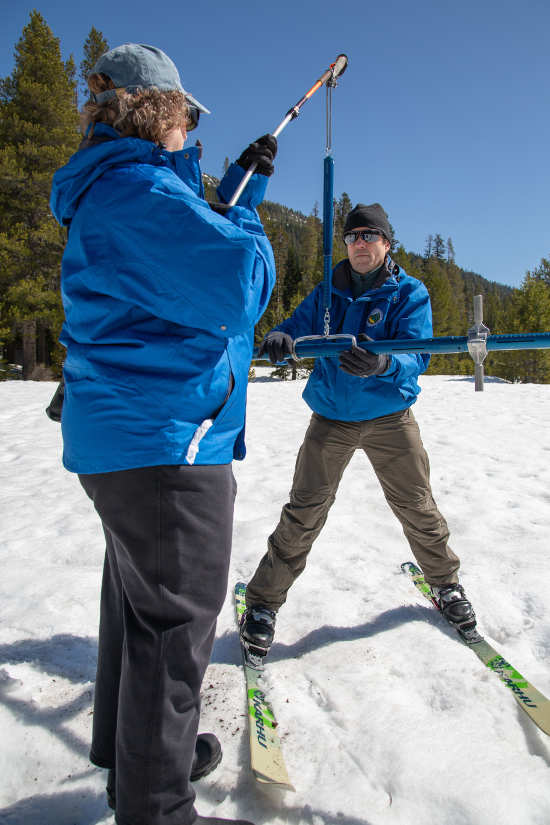
NORTHERN CALIFORNIA – The Department of Water Resources on Thursday conducted the fifth and final Phillips Station snow survey of 2019.
The manual survey recorded 47 inches of snow depth and a snow water equivalent, or SWE, of 27.5 inches, which is 188 percent of average for this location.
Statewide, California’s snowpack sits at 31 inches of SWE, which is 144 percent of average for this time of year. Snow water equivalent is the depth of water that theoretically would result if the entire snowpack melted instantaneously.
Thursday’s readings will help hydrologists forecast spring and summer snowmelt runoff into rivers and reservoirs. The melting snow supplies approximately one-third of the water used by Californians.
"California’s cities and farms can expect ample water supplies this summer,” said DWR Director Karla Nemeth. “But it’s critical that it’s put to use replenishing groundwater basins and storage reservoirs for the next inevitable drought. Every resident and business can also help California by using water as efficiently as possible.”
The snowpack’s water content is the most important factor for water managers and hydrologists to measure because it is tied directly to water supply. Water content, however, varies from year to year depending on the air temperature and intensity and amount of precipitation.
After a storm, the snow settles, compacts, and gets increasingly dense. As more snow falls, the snow beneath it will further compact.
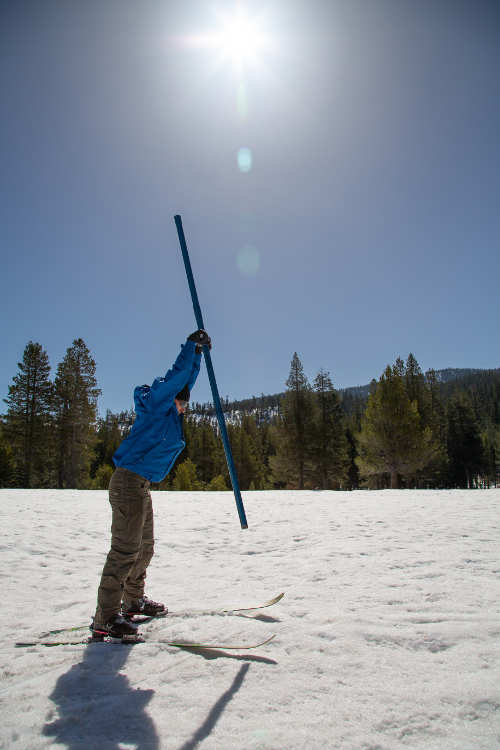
April 1 is typically the height of the year’s snow water content. However, it is not until late spring and early summer when the intense sunshine becomes the key factor in snow melt and run-off.
This year has been an extremely good one in terms of snowpack, according to Jon Ericson, DWR chief of the Division of Flood Management. “Based on our surveys, we are seeing a very dense, cold snowpack that will continue to produce run-off into late summer.”
The 2019 snowpack reached its peak on March 31 and is the fifth largest on record, based on more than 250 manual snow surveys conducted each month by the California Cooperative Snow Survey Program.
Both rain and snowpack runoff feed California’s reservoirs. The state’s largest six reservoirs currently hold between 96 percent (San Luis) and 128 percent (Melones) of their historical averages for this date. Lake Shasta, California’s largest surface reservoir, is 108 percent of its historical average and sits at 93 percent of capacity.
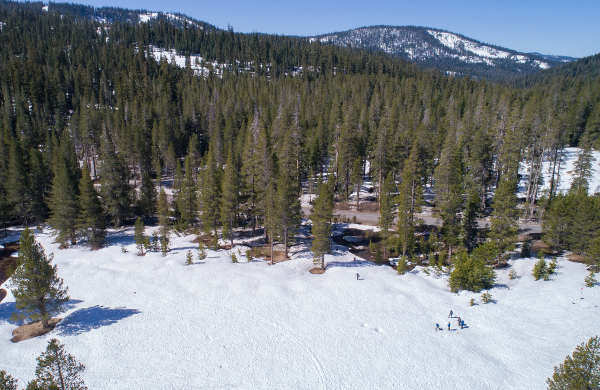
DWR conducts up to five snow surveys each winter – near the first of January, February, March, April and, if necessary, May – at Phillips Station in the Sierra Nevada just off Highway 50 near Sierra-at-Tahoe.
The Phillips snow course is one of hundreds that is surveyed manually throughout the winter. Manual measurements augment the electronic readings from about 100 snow pillows in the Sierra Nevada that provide a current snapshot of the water content in the snowpack.
The California Department of Water Resources is taking formal steps to withdraw proposed permits for the WaterFix project and begin a renewed environmental review and planning process for a smaller, single tunnel project that will protect a critical source of water supplies for California.
Thursday’s actions implement Gov. Gavin Newsom’s direction earlier this year to modernize the state’s water delivery infrastructure by pursuing a smaller, single tunnel project through the Sacramento-San Joaquin Delta.
The project is needed to protect water supplies from sea-level rise and saltwater intrusion into the Delta, as well as earthquake risk. It will be designed to protect water supply reliability while limiting impacts on local Delta communities and fish.
This action follows the governor’s recent executive order directing state agencies to develop a comprehensive statewide strategy to build a climate-resilient water system.
“A smaller project, coordinated with a wide variety of actions to strengthen existing levee protections, protect Delta water quality, recharge depleted groundwater reserves, and strengthen local water supplies across the state, will build California’s water supply resilience,” said Natural Resources Secretary Wade Crowfoot.
DWR Director Karla Nemeth took action on Thursday to rescind various permitting applications for the WaterFix project, including those in front of the State Water Resources Control Board, California Department of Fish and Wildlife, and federal agencies responsible for compliance with the Endangered Species Act.
Documents related to these actions are available here.
DWR will work with local public water agencies that are partners in the conveyance project to incorporate the latest science and innovation to design the new conveyance project, and work with Delta communities and other stakeholders to limit local impacts of the project.
State Sen. Bill Dodd, D-Napa, who formerly represented Lake County in the State Assembly, lauded the action. He serves as co-chair of the Legislative Delta Caucus.
“I applaud Gov. Newsom and the Department of Water Resources for formally withdrawing the permit applications for the twin tunnel project, which was fatally flawed,” said Dodd. “By closing this chapter on the euphemistically named WaterFix, I believe we can move to a thoughtful, collaborative approach that meets our water needs while safeguarding the environmental and economic vitality of the Delta. I look forward to partnering with the governor on measures that will benefit the Delta and the entire state, such as strengthening levees, restoring ecosystem habitat, improving water quality and efficiency, and increasing recharge and storage.”
Thursday’s actions implement Gov. Gavin Newsom’s direction earlier this year to modernize the state’s water delivery infrastructure by pursuing a smaller, single tunnel project through the Sacramento-San Joaquin Delta.
The project is needed to protect water supplies from sea-level rise and saltwater intrusion into the Delta, as well as earthquake risk. It will be designed to protect water supply reliability while limiting impacts on local Delta communities and fish.
This action follows the governor’s recent executive order directing state agencies to develop a comprehensive statewide strategy to build a climate-resilient water system.
“A smaller project, coordinated with a wide variety of actions to strengthen existing levee protections, protect Delta water quality, recharge depleted groundwater reserves, and strengthen local water supplies across the state, will build California’s water supply resilience,” said Natural Resources Secretary Wade Crowfoot.
DWR Director Karla Nemeth took action on Thursday to rescind various permitting applications for the WaterFix project, including those in front of the State Water Resources Control Board, California Department of Fish and Wildlife, and federal agencies responsible for compliance with the Endangered Species Act.
Documents related to these actions are available here.
DWR will work with local public water agencies that are partners in the conveyance project to incorporate the latest science and innovation to design the new conveyance project, and work with Delta communities and other stakeholders to limit local impacts of the project.
State Sen. Bill Dodd, D-Napa, who formerly represented Lake County in the State Assembly, lauded the action. He serves as co-chair of the Legislative Delta Caucus.
“I applaud Gov. Newsom and the Department of Water Resources for formally withdrawing the permit applications for the twin tunnel project, which was fatally flawed,” said Dodd. “By closing this chapter on the euphemistically named WaterFix, I believe we can move to a thoughtful, collaborative approach that meets our water needs while safeguarding the environmental and economic vitality of the Delta. I look forward to partnering with the governor on measures that will benefit the Delta and the entire state, such as strengthening levees, restoring ecosystem habitat, improving water quality and efficiency, and increasing recharge and storage.”
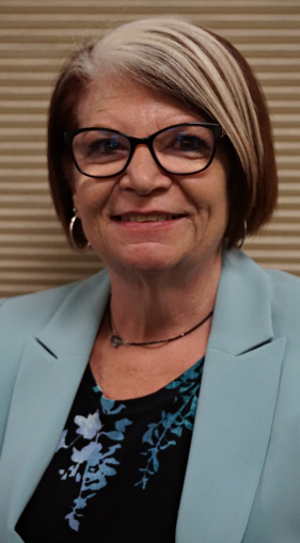
LOWER LAKE, Calif. – On Wednesday evening, the Konocti Unified School District Board of Trustees voted unanimously to finalize the hire of the new district superintendent.
In two separate votes, the board confirmed the job offer to Dr. Rebecca Salato and then approved her three-year contract.
Salato was on hand for the meeting, with the board asking her to lead the flag salute. She had spent the day in the district, meeting with administrators and beginning a tour of schools.
Her newly approved contract runs from July 1, 2019, to June 30, 2022.
Under its terms, Salato’s base salary in year one is $155,000, rising to $158,875 in year two and $162,846 in year three. She will annually receive $15,600 in health insurance.
The contract entitles her to travel expenses for district-related business before July 1 up to $1,500, with moving expenses reimbursement up to $2,000.
Regarding performance, the board is to complete a written evaluation of the superintendent no later than the first regular meeting of each June.
If the district terminates the superintendent with cause – for failing to perform her duties – there is no requirement to pay salary beyond the termination date. However, should the board terminate “for convenience” – or without cause – it must give 90 days’ notice and pay the superintendent for every month still left on the contract.
The district board had announced Salato’s hire at a special April 17 meeting, as Lake County News has reported.
Salato begins work officially on July 1, the day after current Superintendent Donna Becnel’s retirement goes into effect.
Before then, Salato told Lake County News there will be a transition process as she visits the district and works with Becnel to prepare to take the reins. She plans to relocate to the county in June.
Salato currently is the chief operating officer of Action Learning Systems. She holds a Bachelor of Arts degree in history, a master’s degree in special education and a doctorate from Pepperdine University in educational leadership, and has 22 years of experience in K-12 education ranging from teaching to administration.
Earlier this year, Konocti Unified hired Education Leadership Solutions LLC to lead the superintendent search after Becnel announced her plans to retire.
Salato said she was looking for a specific type of district, one where the community is involved, there already is strong leadership and forward progress.
“This checked all of the boxes for me,” she said of Konocti Unified.
For the superintendent’s job, the district drew a field of 14 applicants from around California and Montana. Six of those candidates were interviewed separately by the board and a 16-member community committee who narrowed the field down to two finalists who were interviewed on April 7, with Salato emerging as the board’s choice.
On Wednesday, Salato said she was at the district all day, meeting with principals and the management team, and starting to visit some schools.
She said she will spend Thursday visiting other schools in the district.
Email Elizabeth Larson at