 How to resolve AdBlock issue?
Recreation
- Details
- Written by: Bureau of Land Management
NORTHERN CALIFORNIA – The Bureau of Land Management is working to maintain services to the American people and our stakeholders, consistent with evolving guidance provided by the Center for Disease Control and state and local health authorities.
The health and safety of visitors and staff remain the top priority of the BLM.
In accordance with the state of California’s recent regional stay at home order, the BLM will continue to monitor and evaluate the need to close some developed campgrounds in coordination with local, state and federal agency partners, to help limit the spread of COVID-19.
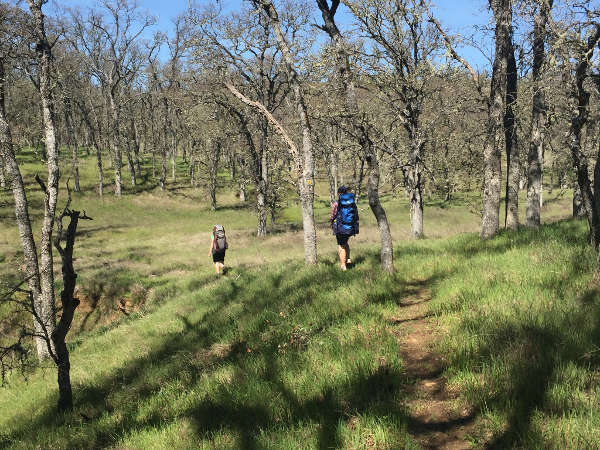
Visitors may continue to enjoy their BLM managed trails and open spaces in California while following recommendations from the Centers for Disease Control and Prevention and local and state public health authorities.
Social distancing recommendations are extremely important to reducing the transmission of COVID-19 and may require that visitors avoid public lands during high-use times, such as weekends.
Please limit any group activities to members of your household. At all times, maintain a distance of 6 feet or more from people outside of your household and wear a mask when social distancing is not possible.
The BLM urges visitors to do their part when visiting your public lands as some visitor services may be limited due to closures and staff safety.
The following actions are recommended:
– Plan ahead by checking this website for the latest information on temporary closures or reduced amenities;
– Bring your own supplies such as disinfecting wipes, hand sanitizer and toilet paper;
– Pack out your trash;
– Reduce the handling of cash by paying recreation fees through www.recreation.gov or with a check, where available.
Providing for recreation opportunities and access to public lands during this time are just some of the many activities BLM California staff continues to perform each and every day.
“We recognize that opportunities to enjoy public lands, especially during these times, is vitally important to the nation and our neighbors,” the agency said.
If you’d like to contact or do business with the BLM, please do so by email or phone whenever possible. Contact information is available at www.blm.gov/California.
For more information on the status of recreation and visitor services across BLM-managed public lands in California, please visit https://www.blm.gov/site-page/blm-california-covid-19-updates or contact local offices at https://on.doi.gov/38ZT5OI.
- Details
- Written by: California Department of Fish and Wildlife
Question: I understand that the California Department of Fish and Wildlife (CDFW) plays a regulatory role in commercial cannabis operations, because poor grow practices harm the environment and California’s fish and wildlife. But are farmers of other legal crops – say, almonds, or wine grapes – held to the same standards? (Don)
Answer: Any farming activity that has the potential to impact California’s native fish, wildlife and plant resources must comply with the laws and regulations in place to protect them. This is true for farm-to-fork operations and commercial cannabis growers. Anyone requiring a Lake and Streambed Alteration Agreement from CDFW are subject to the same requirements and fees.
However, there are regulatory differences between cannabis farming and other agricultural industries. For example, commercial size cannabis cultivation requires a state license from the California Department of Food and Agriculture and farming without it could result in a felony charge. And, each county has adopted their own land use ordinances that address where, how and if cannabis cultivation can take place.
Along with this, the Legislature’s findings in Fish and Game Code section 12029 concluded the environmental impacts associated with illegal cannabis cultivation can have a detrimental effect on fish and wildlife and their habitats, which are held in trust by the state. This means CDFW is obligated by statute to protect the environment and regulate commercial cannabis cultivation activity.
Another important difference between commercial cannabis cultivation and other agriculture crops is the typical farming location. Grapes and almonds can usually be found in zoned agricultural areas as opposed to cannabis cultivation, which still occurs deep in the hills.
Many threatened or endangered fish and wildlife live in these remote areas, which can be greatly impacted by cannabis farming practices such as water diversions, pesticide use and land clearing.
Between urban encroachment, wildfires and drought years, California’s native fish and wildlife have faced a lot of pressure and when you add unregulated cannabis farming activities on top of it, it exacerbates the problem.
State regulations help protect the environment and provide consumer safety in this newly regulated market. Other highly regulated activities such as hunting and fishing, driving, or alcohol and spirits production also requires licensing and is subject to regulatory compliance monitoring too.
Status of roadkill bill
Question: I was wondering what the status of the law/regulations are that was passed about a year ago making it legal for folks who have hit and killed wildlife with their car to harvest the meat. I have found that some news stories say it's legal, and others are saying the implementing regulations are still being promulgated. (Aaron)
Answer: At this time, it is still illegal to pick up roadkill for any purpose in the state of California. The bill you’re referring to is SB 395 (Archuleta, Chapter 869, Statutes of 2019), which authorized the California Fish and Game Commission (Commission), upon funding by the Legislature, to establish a pilot program to issue wildlife salvage permits to pick up wild game meat that was accidentally killed as the result of a vehicle collision.
The program established by the bill has not yet been funded by the Legislature through the California budget process. The Commission cannot develop the regulations, and CDFW cannot implement the program, until the bill is funded. Once funding is provided, both the Commission and CDFW are prepared to start the regulation process.
CDFW did not have an official position on SB 395. If you support or oppose funding the bill, you can reach out to your state representative to provide feedback.
Target shooting outdoors
Question: Is it illegal to shoot targets recreationally along the San Joaquin River as long as you do it responsibly? (Tom)
Answer: CDFW does not regulate target shooting nor keep track of all the potential target shooting areas available to the public. There are numerous resources available to find recreational shooting areas, including CDFW’s R3 webpage.
This issue basically comes down to county shooting ordinances and landowner permission. You will find most cities do not allow discharge of firearms within their city limits, so contact the local Sheriff’s Office to see what county areas may be open.
Keeping surf perch in an aquarium?
Question: Is it legal to take live finfish caught in the surf such as barred surf perch and place them in a fish tank in a private setting at a private residence? (Patrick)
Answer: No, under a sport fishing license this is not legal in California. You can find the provisions of the marine aquaria pet trade in the California Fish and Game Code, sections 8596-8597. Transporting live finfish is also prohibited as per California Code of Regulations Title 14, section 1.63.
If you have a question for the California Department of Fish and Wildlife, email
- Details
- Written by: Elizabeth Larson
Held in partnership with the Mathews Rice farming operation, this area – called District 10 – boasts the largest number of overwintering tundra swans in the Central Valley as well as abundant geese, ducks, shorebirds and raptors.
These popular, naturalist-led tours last approximately two hours and have been reconfigured to meet current COVID-19-related health and safety protocols. These safety measures include all participants and guides driving their own vehicles instead of carpooling together.
Walkie talkies will be distributed to each participant vehicle to hear and communicate with the guide during the tour. Participants are required to follow all health protocols, which will be distributed upon registration.
The tour dates are:
– Nov. 28.
– Dec. 5, 12 and 19.
– Jan. 2, 9 and 16.
Tours are offered at 9:30 a.m. and at 1 p.m. on each date.
Pre-registration is required by contacting Genelle Treaster, CDFW North Central Region, at
- Details
- Written by: Elizabeth Larson
The area was initially closed as a public safety measure on Aug. 19 while suppression activity was ongoing for the LNU Lightning Complex fire.
The fire consumed 363,220 acres and is contained as of Oct. 2.
Approximately 95 percent of the Knoxville Management Area is now open to the public for off-highway vehicle, or OHV, recreation, hunting, hiking, mountain bicycling and camping.
Primary access to these lands is from the Berryessa Knoxville Road. Both the northern and southern entrances are now open, as well as popular recreation sites like the North Staging Area and Hunting Creek Camp.
Wednesday's reopening also allows public access to the extensive network of OHV trails, including Hunting Creek Trail, Dunnigan Hill and Round Mountain Road.
Due to continued safety concerns in the vicinity of Cedar Creek, a segment commonly known as Cement Creek Road remains closed until further notice.
“The Knoxville Management Area is a popular destination among OHV enthusiasts and a great area to enjoy by all for its diverse landscape of steep and rolling hills, chaparral brush, grey pines and cypress, and uncommon serpentine geology,” said Ukiah Field Office Manager Nick Lavrov. “We are very pleased to reopen in advance of the holiday, providing opportunities for the public to go out and enjoy their public lands.”
The Ukiah Field Office eased fire restrictions earlier this week, a result of cooler temperatures and measurable precipitation, allowing for the use of campfires outside of developed campgrounds.
However, the public is reminded to remain cautious and practice good fire safety to help prevent wildland fires when recreating on public lands.
Good fire-prevention safety tips include keeping vehicles off dry grass or brush; carrying a fire extinguisher, shovel and water; and getting a permit for any campfire or use of portable gas stoves.
California campfire permits are available free online or at BLM, U.S. Forest Service and Cal Fire offices. Be advised, some BLM lobbies and public rooms are closed to in-person visits.
For more information on preventing wildfires and additional tips for keeping campfires and target shooting safe, visit www.ReadyForWildfire.org.
For specific questions on the Knoxville Management Area, please call 707-468-4000 during normal business hours.