 How to resolve AdBlock issue?
Recreation
- Details
- Written by: California Department of Fish and Wildlife
Q: I read about a person in Riverside County who tried to capture a wild donkey but was stopped by the sheriff’s office and game wardens. What is the legal status of wild donkeys? Why can’t I go out and capture one and re-domesticate it? How do you tell the difference between a wild donkey and a domesticated one?
A: You may be surprised how much effort has been put into establishing the legal status of donkeys!
The California State Legislature enacted Fish and Game Code section 4600 to make it unlawful to kill, wound, capture or have in possession any wild donkey, known legally as an “undomesticated burro,” with a few exceptions noted below.
An undomesticated burro means a wild burro or a burro which has not been tamed or domesticated for a period of three years after its capture. The fact that a burro was killed, wounded or captured on publicly owned land, or on land owned by a person other than the person who killed, wounded or captured the burro is prima facie evidence that the burro was an undomesticated burro at the time it was killed, wounded or captured.
The Legislature went further and included in Fish and Game Code section 4600 a provision that states that the California Fish and Game Commission, or any other department or agency, does not have the authority to modify the section.
Government Code section 53074.5 offers three primary exemptions. The first exemption is at the request of a landowner, officer or employee of a local animal control agency who may remove an undomesticated burro that strays onto private land. The second is when an officer or employee of a local animal control agency needs to remove an undomesticated burro that strays onto a public roadway to ensure public safety. The third occurs if an officer or employee of a local animal control agency may provide medical care or treatment, including, but not limited to, euthanasia if medically appropriate, to an undomesticated burro that is seriously ill or injured.
Two-way radio
Q: Is it legal to use a two-way radio while hunting in California? Some states do not allow this, do you know the reason why? (Tosh)
A: California law does not prohibit use of two-way radios during hunting. Those who oppose using two-way radios may feel that they provide an unfair advantage when stalking and hunting wildlife. Currently, California has no such law, so radios and cell phones are legal.
Finding lead-free ammo
Q: Because of the pandemic, there has been a lot of issues finding lead-free ammo. Will there be any exceptions this year to California requiring lead-free ammo for hunting? (Tyler)
A: Nonlead ammunition is required when taking any wildlife with a firearm anywhere in California. That requirement originated with state legislation signed into law in 2013 and, therefore, cannot be suspended, changed or altered by either the California Department of Fish and Wildlife or the California Fish and Game Commission.
The ammunition shortage you reference is actually a nationwide situation impacting the availability of lead and lead-free ammunition of all kinds. The shortage is the result of several factors – high demand brought about by millions of new gun owners, fear prompted by the global pandemic (resulting in panic-buying and hoarding), supply chain and workforce issues impacting the manufacturing process also brought about by the global pandemic, among other issues.
The best advice we can offer California sportsmen and women is to plan ahead – far in advance of any hunting seasons or trips in order to acquire the ammunition you want and need. The days of quickly grabbing a couple of boxes of hunting loads at the neighborhood sporting goods store on your way to a hunting trip are largely over.
The upside is that there are more and better-performing lead-free ammunition offerings being developed and introduced every year.
You’ll likely need to call or check with a variety of retail outlets to find the ammunition you need. You can also shop and order ammunition online – you’ll just need to have it shipped and processed by an individual or a business with a Federal Firearms License or a California Ammunition Vendor License before you can pick it up. These businesses typically charge a small handling fee for this service.
As the bulk of California’s big game and bird hunting seasons are still some months away, we expect the amount and availability of lead-free hunting ammunition to improve as these seasons approach.
For more information, please consult CDFW’s Nonlead Ammunition in California webpage.
- Details
- Written by: California Department of Fish and Wildlife
All other areas of the California coast will remain closed until further notice.
The remaining 2021 season dates and associated regulations will be finalized next month.
Although the San Francisco and the Fort Bragg management areas were originally scheduled to open in April, on the advice of salmon fishery representatives, the Pacific Fishery Management Council, or PFMC, made the decision to delay the openers in these areas to limit ocean fishery impacts due to poor stock forecasts.
Both Klamath River fall Chinook and Sacramento River fall Chinook have reduced ocean abundance forecasts for the 2021 season compared to long term averages, and the PFMC is taking steps to ensure that enough salmon will return to rivers this fall to meet spawner abundance goals.
Traditionally, fishing in the Monterey management area is better early in the season, prompting recreational fishing representatives to prioritize its opening ahead of areas to the north.
Although seasons for the San Francisco, Fort Bragg and Klamath management areas are not yet known, the season alternatives that are currently under consideration prioritize opportunity later in the summer, when catch rates are typically better.
Final season dates will be decided during the virtual PFMC meeting to be held April 6 to 9 and 12 to 15.
The public is invited to comment on the PFMC’s season proposals at that meeting or at a virtual public hearing scheduled for 7 p.m. on Tuesday, March 23.
Details on how to attend the PFMC meeting, public hearing, and ways to provide public comment can be found on the PFMC website at www.pcouncil.org.
Anglers are advised to check for updated information when planning a salmon fishing trip. Season dates, bag/possession limit information and gear restrictions can be found on CDFW’s ocean salmon web page at www.wildlife.ca.gov/oceansalmon or by calling the Ocean Salmon Regulations Hotline at 707-576-3429.
Public notification of any in-season change to conform state regulations to federal regulations is made through the National Marine Fisheries Service ocean salmon hotline at 800-662-9825.
- Details
- Written by: Elizabeth Larson
The guidance has been updated to authorize any youth or adult recreational sports team, including indoor sports, to begin practice with contact and competition at any time if they adhere to the specific requirements applicable to college sports under the COVID-19 Industry Guidance for Institutions of Higher Education.
“Our top priority is supporting youth sports to safely return to play, guided by science,” said Dr. Tomás J. Aragón, CDPH director and State Public Health officer. “Our previous guidance accomplished this by allowing competition in sports with lower risk of transmission to begin sooner if conducted outdoors, which is lower risk than indoors.”
Thursday’s update specifies that teams can return to competition earlier than otherwise authorized under the previous guidance, which was issued on Feb. 19, 2021, but only if they adhere to the stricter requirements in place for college teams.
The previous guidance, which incorporated mitigation steps that can reasonably be implemented by youth and amateur teams that do not have the same resources available to them as professional and college teams, has no additional substantive changes.
As the updated guidance reflects, college teams are subject to rigorous testing requirements around each competition for contact sports, teams in all sports must have contact tracing protocols in place and coordinate with local health authorities, and all teams must develop site-specific plans for each facility the team uses, among other requirements not applicable to youth and recreational teams.
This update resolves uncertainty created by a court order issued in a lawsuit recently filed in San Diego, which created significant confusion for youth and their families and led to rushed returns to competition that put young people’s health at risk. This update also helps to ensure no one is unnecessarily distracted from the important work of supporting youth sports to safely return to play.
This update does not generally authorize indoor youth sports to resume. Rather, teams can return to competition only if they implement and adhere to the rigorous requirements in place for college teams.
- Details
- Written by: California Department of Fish and Wildlife
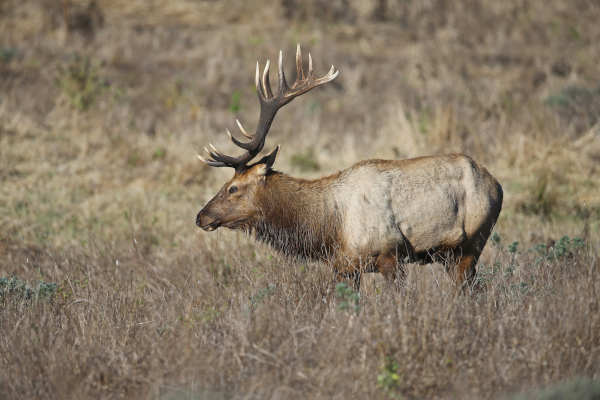
Antlers vs. horns
Q: How are antlers different from horns and pronghorns in ungulate species like deer, elk and bighorn sheep?
A: California is home to ungulate species that have antlers, horns and pronghorns. Deer and elk have antlers, which are made of bone and grow from pedicels, bony supporting structures that develop in the lateral region of an ungulate’s frontal bones (on the top bones of the skull).
Antlers are deciduous which means they shed every year. For most ungulate species, only males grow antlers and typically not until after their first year of life.
However, female caribou and caribou calves do grow antlers. Horns are made of bony core covered in keratin, a structural protein that can be likened to fingernails. Horns occur in bighorn sheep and grow continuously through an animal’s life.
Scientists can generally count growth rings on horns of males to determine an animal’s age, but aging females from horn rings is far less reliable. There are also several herds of pronghorn antelope in California, including on the Carrizo Plain in San Luis Obispo County and throughout northeastern California.
Pronghorns are comprised of a sheath that grows over a bony core. Pronghorn sheaths are deciduous and shed yearly like antlers.
Regulation booklets
Q: Can I still get a paper copy of this year’s hunting and fishing regulations booklets?
A: As part of a broader effort to go paperless, the California Department of Fish and Wildlife is transitioning to a digital format for its 2021 hunting and fishing regulations booklets and Big Game Hunting Digest.
Booklets will no longer be printed and shipped to license agents or customers, but electronic versions of the booklets will continue to be available online.
The cost to print and ship booklets is significant, and the money saved by going paperless will be redirected to fish and wildlife conservation.
The transition to paperless regulations booklets follows a two-year effort to reduce the number of hard copy booklets printed and shipped to license agents and is consistent with the governor’s directive to reduce paper usage, which is also good for the environment. As in previous years, digital booklets are available at www.wildlife.ca.gov/Regulations and can be downloaded (and printed from home) as PDFs to your computer, cellular phone or other electronic device.
Hunters and anglers are encouraged to download the digital booklets to their mobile devices and familiarize themselves with the digital format prior to hunting and/or fishing trips.
Iron Gate Fish Hatchery
Q: Is Iron Gate Dam on the Klamath River being torn down? If so, what will happen to the Iron Gate Fish Hatchery and stocking of steelhead trout?
A: Iron Gate Dam is one of four dams on the Klamath River planned to be removed within the next few years. Iron Gate Fish Hatchery, which is operated by CDFW, will remain mostly in place but will not be operational following dam removal.
Only the fish ladder and trap area, which is in the general area of the dam infrastructure, will be removed. A hatchery will be reconstructed and operated on Fall Creek following dam removal. The goal is to help support Coho and Chinook salmon stocks.
Iron Gate Fish Hatchery has not produced steelhead since 2012 and CDFW does not plan on producing them at either hatchery in the future. Klamath River steelhead are very resilient and will re-colonize the new river habitat created by dam removal.
Late season goose hunt
Q: I noticed there’s a late season for goose hunting scheduled from Feb. 20-24. Is that open to public land hunters, or just private landowners?
A: You’re referring to the late goose season for white-fronted and white geese from Feb. 20-24 (five days), except in the Sacramento Valley Special Management Area where the white-fronted goose season is closed, see CDFW’s 2020-2021 Waterfowl Regulations.
During this late goose season, hunting is not permitted on wildlife areas listed in California Code of Regulations, Title 14, sections 550-552, except for Type C Wildlife Areas in the North Central and Central regions.
- New rockfish conservation area and waypoint maps coming soon for upcoming recreational groundfish openers
- Veterans and active military waterfowl hunting days offered excellent opportunities
- Hazard fuels reduction underway at Red Bluff Recreation Area; goats being used for sustainable hazard fuels removal