 How to resolve AdBlock issue?
Recreation
- Details
- Written by: Nadine Strauss
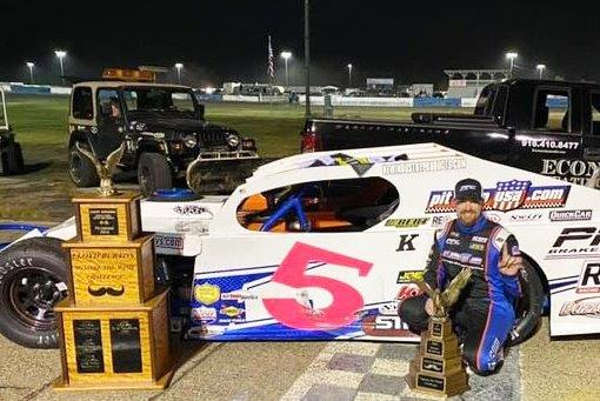
ANDERSON, Calif. – With only 10 laps to go, Kyle Tellstrom of Ukiah passed leader Charlie Collins of Upper Lake in lapped traffic and drove the final rounds to pick up his second victory of the season in the North State Modified Series presented by Protect the Harvest, at Shasta Speedway Saturday night.
Defending North State Modified Series, or NSMS, champion Scott Winters of Tracy, who was dogging Tellstrom all the way to the checkers, finished second with Collins third and three-time NSMS champion Darrin Knight of Kelseyville fourth.
This was the second consecutive Shasta Speedway Lloyd Burton Against the Wind Modified Challenge for Tellstrom.
A 10-lap qualifying heat, sponsored by Economy Heating and Air was run with the fastest 10 cars inverted to determine the starting grid for the 60 lap feature.
Randy Houston led every lap to win the qualifier with Collins second, guaranteeing them both a front-row starting spot.
Knight finished second in the qualifier followed by Ian Elliott, Tellstrom, fast qualifier (16.250) Winters, Simi Tour, Mike Sullivan, Cameron Austin and Darrin Sullivan.
At the drop of the green flag in the feature Houston powered into the lead with Collins 2nd, Knight third and Elliot fourth. Both Tellstrom and Winters drove under Elliott on lap five just before Keith Bloom stalled on the front stretch with a flat tire. The yellow flag was displayed, Bloom pitted, changed the tire and returned at the back of the field.
The double-file restart saw Houston and Collins side-by-side for two laps before Houston reclaimed the number one spot. Five rounds later the race was slowed again when chunks of asphalt peeled out of the cracks in the race track. One of them hit the front of Elliott’s car, puncturing his radiator. Elliot pitted for repairs but the damage was too great and he had to retire from action.
This time Collins forged ahead on the restart and pulled away from the pack. Houston, Tellstrom and Knight rode nose-to-tail as Darrin Sullivan made an outside challenge on Winters. Winters finally prevailed, and both Winters and Austin inched by Sullivan by lap 20.
Collins started lapping slower traffic on lap 24, and at the halfway mark it was Collins, Houston, Tellstrom, Knight, Winters, Austin, Darrin Sullivan, Dustin DeRosier, Rich Cobb, Nick Lyons, Bloom, Simi Tour, Chis Salmina, Jeremy Nowlin and Mike Sullivan.
Cody Braund dropped out on lap 33 as the three leaders were playing bumper cars trying to upset their fellow competitors. Lap 36 saw Winters dive under Knight for fourth and the following round Tellstrom swapped places with Houston.
Winters began pressuring Houston until Houston’s car finally pushed up the track enough for Winters to poke his nose in the opening and take over third on lap 41.
Collins kept flawlessly driving around lapped traffic until the leaders caught two back-runners racing side-by-side. Collins chose one lane and Tellstrom took the other, and when traffic cleared Tellstrom was out in front. Winters followed Tellstrom’s line and moved into second, dropping Collins to third.
The final yellow came out on lap 54 when Houston was attempting an inside pass on Collins, drove off the track into the infield, and when he returned, dropped grass and dirt on the track the entire length of the back-stretch.
The final six laps were single file with Tellstrom taking the win followed closely by Winters, Collins, Knight and Austin. Rounding out the top ten were Darrin Sullivan, DeRosier, Lyons, Bloom and Cobb. Houston rebounded to finish 11th ahead of Tour, Nowlin, Salmina, Roy Ingalls, Robert Schmidt and Mike Sullivan.
Economy Heating and Air donated $100 to every driver who ran the Qualifying race. Mort Houston and Simi Tour’s Great American Seed Co. donated to the main event purse making this the richest event in the history of the North State Modified Series with $2,000 going to Tellstrom for his win and a minimum of $400 to take the green flag.
Nowlin collected $100 for his win in the Lucas Oil Dash for Cash and Keith Bloom received $50 for finishing second. The $100 Jason Belveal Random Act of Kindness Awards were presented to Austin and Elliott. DeRosier earned the Naake Suspension Hard Charger award for passing the most cars. The $2,500 Lucas Oil Tow Money was shared by the top 15 points contenders.
The final race of 2020 for the series will be the Bob Lehman Classic at Stockton 99 Speedway on Oct. 24. Economy Heating and Air has added a $2,000 bonus to the winner of this event, bringing the front money to $3,000. Another $1,000 from the Great American Seed Co. will be distributed to the other competitors.
The North State Modified Series is presented by Protect the Harvest, Lucas Oil, Hoosier Tire West, Sunoco Race Fuels, Naake Suspension, Five Star Bodies, Racer Bling, Mark & Sharon Baldwin, Scribner Plastics, O’Reilly Auto Parts, Economy Heating and Air, GASCO and Mort Houston.
HOOSIER TIRE TIME TRIALS: Scott Winters, 16.250; Kyle Tellstrom, 16.268, Darrin Sullivan, 16.281, Ian Elliott, 16.299; Cameron Austin, 16.304; Darrin Knight, 16.327; Mike Sullivan, 16.401, Charlie Collins, 16.422, Simi Tour, 16.424, Randy Houston, 16.453; Nick Lyons, 16.520; Dustin DeRosier, 16.530; Cody Braund, 16.562; Rich Cobb, 16.566; Keith Bloom, 16.567; Chris Salmina, 16.610; Jeremy Nowlin, 16.632; Robert Schmidt, 16.909; Roy Ingalls, 17.500; Sal Lopez, N/T
LUCAS OIL DASH FOR CASH: Nowlin, Bloom, Salmina, Braund, Schmidt, Cobb
ECONOMY HEATING & AIR QUALIFYING HEAT: Houston, Collins, Knight, Elliott; Tellstrom, Winters; Tour, Mike Sullivan, Austin, Darrin Sullivan
LLOYD BURTON AGAINST THE WIND CHALLENGE: Tellstrom, Winters, Collins, Knight, Austin, Darrin Sullivan, DeRosier, Lyons; Bloom, Cobb, Houston, Tour, Nowlin, Salmina, Ingalls, Schmidt, Mike Sullivan, Braund, Elliott, Sal Lopez (dns)
- Details
- Written by: California Department of Fish and Wildlife
“It’s been a busy summer in Lake Tahoe with regard to bear activity and conflicts,” said Jordan Traverso, CDFW’s deputy director of communications. “One of the things we’ve learned from this is that there is a tremendous hunger among residents for reliable, truthful and practical information about bear activity and CDFW’s policies, management and response to that activity. We expect this new blog to help address that information void.”
Tahoe Basin residents can find the Bear Naked Truth blog here.
There is an option to subscribe and receive blog updates by e-mail. The blog features CDFW contact information for residents dealing with bear issues, links to CDFW’s bear policies and best practices for living and recreating safely in bear country.
“Our responsibilities regarding bears in the Tahoe Basin, and all of California for that matter, are ensuring a healthy black bear population, public safety and education,” Traverso said. “This blog will help advance those goals. Bears can become public safety threats if they become comfortable around people and dependent on human food and garbage. Keeping these bears wild for their own well-being and the well-being of those who live and vacation in Lake Tahoe is in everybody’s best interest.”
- Details
- Written by: Lake County News Reports
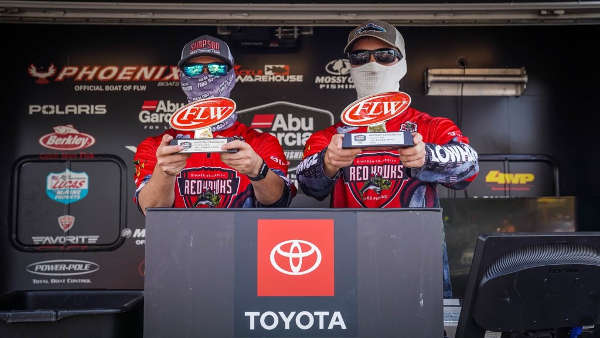
CLEARLAKE, Calif. – University team of Luke Blanchard of Vancouver, Washington, and Nathan Phillips of Kelseyville, California, won the Abu Garcia College Fishing presented by YETI at Clear Lake event Saturday with a five-bass limit weighing 16 pounds, 13 ounces.
The victory advanced the Simpson bass club to the 2021 College Fishing National Championship.
The Red Hawks duo won by a 4-pound margin over the second-place team of Ryan Beaty and Taj White, also from Simpson University, who weighed in five bass totaling 12 pounds, 13 ounces. The tournament launched from Redbud Park in Clearlake, California.
The top eight teams Saturday at Clear Lake finished:
First: Simpson University – Luke Blanchard, Vancouver, Wash., and Nathan Phillips, Kelseyville, Calif., five bass, 16-13
Second: Simpson University – Ryan Beaty, Martinez, Calif., and Taj White, Glendale, Ariz., five bass, 12-13
Third: University of California-Merced – Kalib Caples, Sebastopol, Calif., and Herbie LeBlanc, Gilroy, Calif., five bass, 12-9
Fourth: New Mexico State University – Marquez Perez and Wyatt Sandoval, both of Las Cruces, N.M., five bass, 12-0
Fifth: New Mexico State University – Daylon Smith, Frazier Park, Calif., and Bradley Jones of Las Cruces, N.M., five bass, 8-13
Sixth: New Mexico State University – Logan Cooper and Clay Stearns, both of Las Cruces, N.M., five bass, 8-3
Seventh: Simpson University – Austin Rojas, Lake Havasu City, Ariz., and Sheldon Reese, Witter Springs, Calif., two bass, 7-3
Eighth: Sonoma State University – Brook Spencer, Salinas, Calif., and Dawson Stroud, Modesto, Calif., zero bass
Complete results for the entire field can be found at www.FLWFishing.com.
The Abu Garcia College Fishing presented by YETI event on Clear Lake was the third and final regular-season qualifying tournament for Western Conference anglers. The next event for College Fishing anglers will be this week, Oct. 2 – the Abu Garcia College Fishing presented by YETI Ouachita River Open in Monroe, Louisiana.
Abu Garcia College Fishing presented by YETI teams compete in regular-season qualifying tournaments in one of five conferences – Central, Northern, Southern, Southeastern and Western. The top ten teams from each division’s three regular-season tournaments and the top 20 teams from the annual Abu Garcia College Fishing Open advance to the following year’s Abu Garcia College Fishing presented by YETI National Championship.
For complete details and updated information visit www.FLWFishing.com. For regular updates, photos, tournament news and more, follow the Abu Garcia College Fishing presented by YETI on FLW’s social media outlets at Facebook, Twitter, Instagram, and YouTube.
- Details
- Written by: California Department of Fish and Wildlife
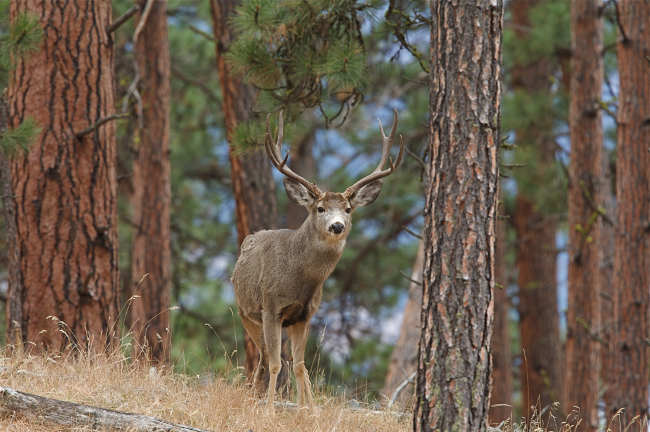
What's the latest on chronic wasting disease in cervids?
Question: What is California doing to protect our deer and elk from Chronic Wasting Disease (CWD) this season? What do I need to know if I am hunting out of state? (Bud)
Answer: As many hunters are aware, CWD is a fatal neurological disease affecting deer and elk. It has not been found in California's deer or elk populations to date. However, it has been detected in captive and free-ranging deer in 26 states and abroad.
Increased testing is critical to ensure early detection and quick implementation of management options in response to a detection in California. This year, the California Department of Fish and Wildlife is focused on expanding the scope of its monitoring and testing efforts. CDFW's Wildlife Investigations Lab set a goal of testing 600 cervids statewide during this year's hunting seasons as a step toward increasing surveillance to around 2,000 animals per year in the future. CDFW has been testing for CWD since 1999, averaging about 300 tests annually.
Hunter cooperation will be key to achieving CWD testing goals. CDFW is setting up sampling stations during the various deer seasons allowing hunters to voluntarily bring in their harvest for a quick removal of lymph nodes for CWD testing. Information on sampling locations is available on CDFW's website. CDFW is also partnering with professional meat processors and butchers throughout the state to take samples from deer and elk at the request of hunters. Hunters who are unable to visit a station for sampling are encouraged to ask their butcher ahead of time if sampling is available at the time of processing.
If you harvest a deer or elk out of state, you will be responsible for abiding by regulations related to CWD for that state. To prevent the accidental importation of CWD-infected tissues into the state, California Code of Regulations (CCR) Title 14, section 712prohibits hunters from importing or possessing any hunter harvested deer or elk (cervid) carcass or parts of any cervid carcass imported into the state, except for the following body parts:
(a) portions of meat with no part of the spinal column, brain or head attached (other bones, such as legs and shoulders, may be attached).
(b) hides and capes (no spinal column, brain tissue or head may be attached).
(c) clean skull plates (no brain tissue may be present) with antlers attached.
(d) antlers with no meat or tissue attached, except legally harvested and possessed antlers in the velvet stage are allowed, if no meat, brain or other tissue is attached.
(e) finished taxidermy mounts with no meat or tissue attached (antlers in the velvet stage are allowed if no meat, brain or other tissue is attached).
(f) upper canine teeth (buglers, whistlers, ivories).
If hunting in a state where CWD is present, make sure to check with that state's wildlife agency for information about hunter check stations and how to get your animal tested in the state where it is harvested. An animal that is taken in a CWD endemic zone should be processed in that area or state. The best and safest approach is to bring back only packaged meat or prepared taxidermy specimens. If a harvested animal tests positive for CWD, CDFW supports the recommendation of the Centers for Disease Control and the World Health Organization to not consume the meat. Additionally, we request that the hunter contact a CDFW office or the Wildlife Investigations Laboratory to have all remaining tissues incinerated.
How to properly measure a fish
Question: I am under the impression that striped bass are to be measured using the "total length" measurement, and not the fork length. Is this correct? (Stu)
Answer: Yes. Most freshwater fish with a size limit, including stripers, are measured to total length. This is the longest straight-line distance from the tip of the head to the end of the longest lobe of the tail (CCR, Title 14, section 1.62). The first rule when measuring fish is to lay the fish flat on its side and always pinch the mouth closed. The most accurate method is to place the fish's snout against a perpendicular surface and then measure along the intersecting horizontal surface to the end of the tail. Don't measure using a flexible "tape" over the fish itself or you will be given a longer (false) reading.
On the ocean side, most saltwater fish with size limits are measured to total length, but there are some that are measured to fork length instead (e.g. bonito, albacore, barracuda and yellowtail). Fork length is the straight-line distance from the tip of the head to the center of the tail fin (CCR, Title 14, section 1.62). So again, lay the fish flat on its side, pinch the mouth closed and take your measurement from the tip of the head to the center of the fork of the tail. These are the only two measurements that you will need to know for the purposes of the regulations when measuring whole fish.
Two rifles while hunting?
Question: Can I carry two rifles when hunting – one for deer and one for squirrel? For example, a rimfire and a center fire? (TC)
Answer: Yes, for your example, you can carry a centerfire rifle to take deer (and squirrel) and a rimfire rifle to take squirrel.
If you have a question for the California Department of Fish and Wildlife, please feel free to ask us via email at