How to resolve AdBlock issue?
Refresh this page
How to resolve AdBlock issue?

Refresh this page
Lake County News,California
  • Home
    • Registration Form
  • News
    • Education
    • Veterans
    • Community
      • Obituaries
      • Letters
      • Commentary
    • Police Logs
    • Business
    • Recreation
    • Health
    • Religion
    • Legals
    • Arts & Life
    • Regional
  • Calendar
  • Contact us
    • FAQs
    • Phones, E-Mail
    • Subscribe
  • Advertise Here
  • Login

News

Helping Paws: Shepherds, pit bulls and terriers

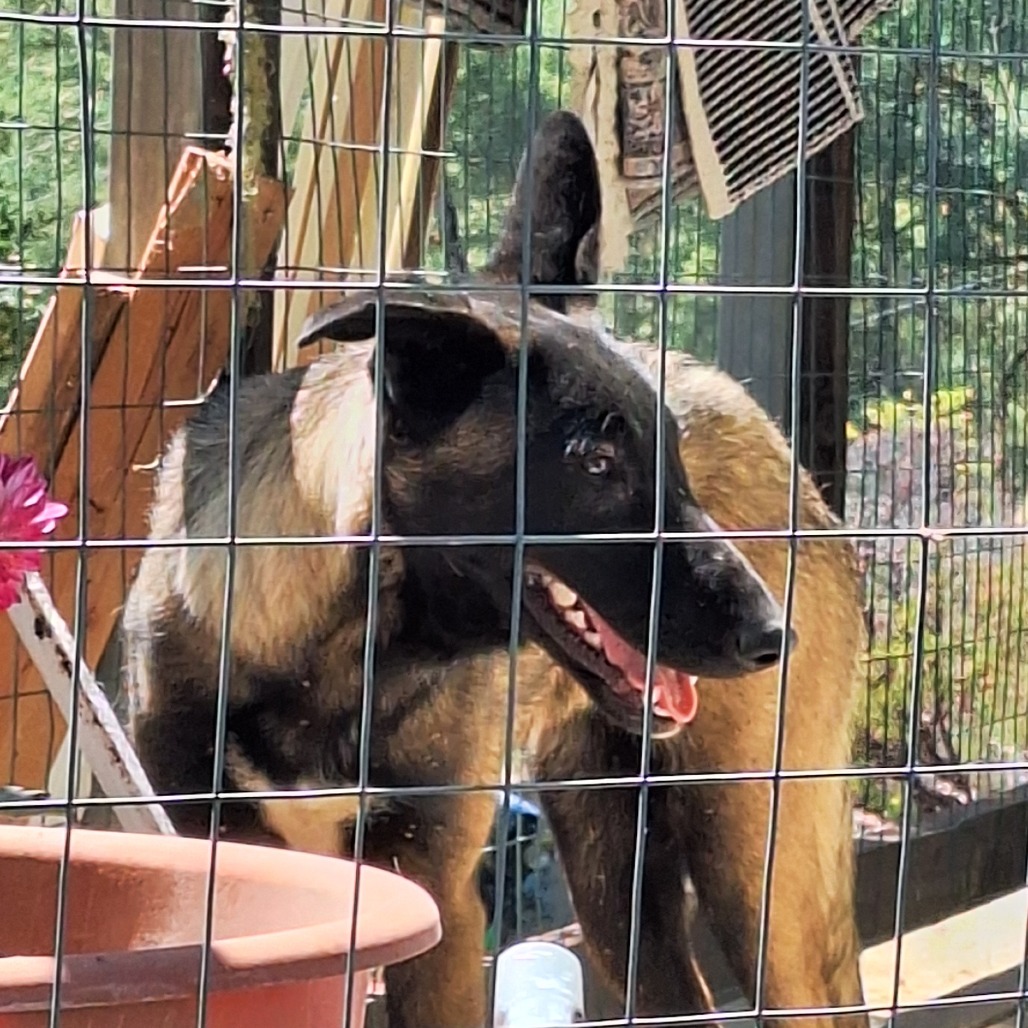
LAKE COUNTY, Calif. — Lake County Animal Care and Control has a varied group of dogs ready for adoption this week.

The dogs available for adoption this week include mixes of border collie, German shepherd, husky, Labrador Retriever, pit bull terrier, terrier and shepherd.

Dogs that are adopted from Lake County Animal Care and Control are either neutered or spayed, microchipped and, if old enough, given a rabies shot and county license before being released to their new owner. License fees do not apply to residents of the cities of Lakeport or Clearlake.

Those animals shown on this page at the Lake County Animal Care and Control shelter have been cleared for adoption.

Call Lake County Animal Care and Control at 707-263-0278 or visit the shelter online for information on visiting or adopting.

The shelter is located at 4949 Helbush in Lakeport.

Email Elizabeth Larson at This email address is being protected from spambots. You need JavaScript enabled to view it.. Follow her on Twitter, @ERLarson, and on Bluesky, @erlarson.bsky.social. Find Lake County News on the following platforms: Facebook, @LakeCoNews; X, @LakeCoNews; Threads, @lakeconews, and on Bluesky, @lakeconews.bsky.social. 

Desiree's preview photo
Desiree

Tiger's preview photo
Tiger

Cub's preview photo
Cub

Diamond's preview photo
Diamond

Sky 's preview photo
Sky

Carmen's preview photo
Carmen

Saphire's preview photo
Saphire

Scrappy's preview photo
Scrappy
Jax's preview photo
Jax

Bear's preview photo
Bear

 
Tilly's preview photo
Tilly

Kennel #11a's preview photo
Kennel #11a

Kennel #11b's preview photo
Kennel #11b

Enty's preview photo
Enty

Romeo's preview photo
Romeo
 
Hunter's preview photo
Hunter

Kristoph's preview photo
Kristoph

Lucky's preview photo
Lucky

 
Tanner's preview photo
Tanner

Kennel#31's preview photo
Kennel#31

Kennel#13's preview photo
Kennel#13

Helen's preview photo
Helen

Foster#10871's preview photo
Foster#10871

Kennel #24's preview photo
Kennel #24

Kennel#27's preview photo
Kennel#27

Nala's preview photo
Nala

Kennel #15a(Pitbull)'s preview photo
Kennel #15a(Pitbull)

Kennel #15b(Hercules)'s preview photo
Kennel #15b(Hercules)

Space News: For the first time, astronomers witness the dawn of a new solar system

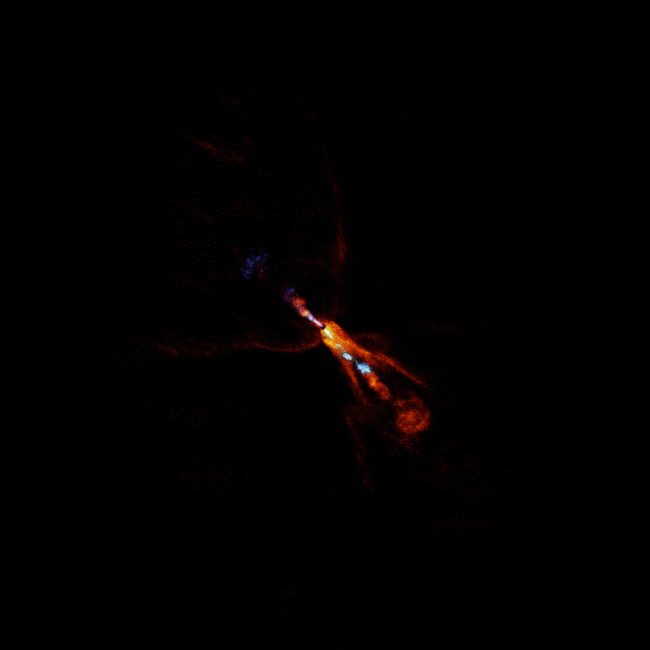
This is HOPS-315, a baby star where astronomers have observed evidence for the earliest stages of planet formation. The image was taken with the Atacama Large Millimeter/submillimeter Array (ALMA), in which ESO is a partner. Together with data from the James Webb Space Telescope (JWST), these observations show that hot minerals are beginning to solidify. In orange we see the distribution of carbon monoxide, blowing away from the star in a butterfly-shaped wind. In blue we see a narrow jet of silicon monoxide, also beaming away from the star. These gaseous winds and jets are common around baby stars like HOPS-315. Together the ALMA and JWST observations indicate that, in addition to these features, there is also a disc of gaseous silicon monoxide around the star that is condensing into solid silicates –– the first stages of planetary formation. Credit: ALMA(ESO/NAOJ/NRAO)/M. McClure et al.


International researchers have, for the first time, pinpointed the moment when planets began to form around a star beyond the Sun. 

Using the ALMA telescope, in which the European Southern Observatory, or ESO, is a partner, and the James Webb Space Telescope, they have observed the creation of the first specks of planet-forming material — hot minerals just beginning to solidify. 

This finding marks the first time a planetary system has been identified at such an early stage in its formation and opens a window to the past of our own Solar System.

"For the first time, we have identified the earliest moment when planet formation is initiated around a star other than our Sun,” said Melissa McClure, a professor at Leiden University in the Netherlands and lead author of the new study, published today in Nature.

Co-author Merel van ‘t Hoff, a professor at Purdue University, USA, compares their findings to "a picture of the baby Solar System,” saying that “we're seeing a system that looks like what our Solar System looked like when it was just beginning to form.”

This newborn planetary system is emerging around HOPS-315, a ‘proto’ or baby star that sits some 1300 light-years away from us and is an analogue of the nascent Sun. Around such baby stars, astronomers often see discs of gas and dust known as ‘protoplanetary discs’, which are the birthplaces of new planets. 

While astronomers have previously seen young discs that contain newborn, massive, Jupiter-like planets, McClure says, “we've always known that the first solid parts of planets, or ‘planetesimals’, must form further back in time, at earlier stages.”

In our Solar System, the very first solid material to condense near Earth’s present location around the Sun is found trapped within ancient meteorites. 

Astronomers age-date these primordial rocks to determine when the clock started on our Solar System’s formation. Such meteorites are packed full of crystalline minerals that contain silicon monoxide, or SiO, and can condense at the extremely high temperatures present in young planetary discs. 

Over time, these newly condensed solids bind together, sowing the seeds for planet formation as they gain both size and mass. The first kilometre-sized planetesimals in the Solar System, which grew to become planets such as Earth or Jupiter’s core, formed just after the condensation of these crystalline minerals.

With their new discovery, astronomers have found evidence of these hot minerals beginning to condense in the disc around HOPS-315. Their results show that SiO is present around the baby star in its gaseous state, as well as within these crystalline minerals, suggesting it is only just beginning to solidify.

"This process has never been seen before in a protoplanetary disc — or anywhere outside our Solar System," said co-author Edwin Bergin, a professor at the University of Michigan, USA.

These minerals were first identified using the James Webb Space Telescope, a joint project of the US, European and Canadian space agencies. 

To find out where exactly the signals were coming from, the team observed the system with ALMA, the Atacama Large Millimeter/submillimeter Array, which is operated by ESO together with international partners in Chile’s Atacama Desert.

With these data, the team determined that the chemical signals were coming from a small region of the disc around the star equivalent to the orbit of the asteroid belt around the Sun. “We're really seeing these minerals at the same location in this extrasolar system as where we see them in asteroids in the Solar System,“ says co-author Logan Francis, a postdoctoral researcher at Leiden University.

Because of this, the disc of HOPS-315 provides a wonderful analogue for studying our own cosmic history. As van ‘t Hoff says, “this system is one of the best that we know to actually probe some of the processes that happened in our Solar System." It also provides astronomers with a new opportunity to study early planet formation, by standing in as a substitute for newborn solar systems across the galaxy.

ESO astronomer and European ALMA Programme Manager Elizabeth Humphreys, who did not take part in the study, says: “I was really impressed by this study, which reveals a very early stage of planet formation. It suggests that HOPS-315 can be used to understand how our own Solar System formed. This result highlights the combined strength of JWST and ALMA for exploring protoplanetary discs.”

This research was presented in the paper “Refractory solid condensation detected in an embedded protoplanetary disk” (doi:10.1038/s41586-025-09163-z) to appear in Nature.

The team is composed of M. K. McClure (Leiden Observatory, Leiden University, The Netherlands [Leiden]), M. van ’t Hoff (Department of Astronomy, The University of Michigan, Michigan, USA [Michigan] and Purdue University, Department of Physics and Astronomy, Indiana, USA), L. Francis (Leiden), Edwin Bergin (Michigan), W.R. M. Rocha (Leiden), J. A. Sturm (Leiden), D. Harsono (Institute of Astronomy, Department of Physics, National Tsing Hua University, Taiwan), E. F. van Dishoeck (Leiden), J. H. Black (Chalmers University of Technology, Department of Space, Earth and Environment, Onsala Space Observatory, Sweden), J. A. Noble (Physique des Interactions Ioniques et Moléculaires, CNRS, Aix Marseille Université, France), D. Qasim (Southwest Research Institute, Texas, USA), E. Dartois (Institut des Sciences Moléculaires d’Orsay, CNRS, Université Paris-Saclay, France.)

The Atacama Large Millimeter/submillimeter Array, or ALMA, an international astronomy facility, is a partnership of ESO, the U.S. National Science Foundation and the National Institutes of Natural Sciences of Japan in cooperation with the Republic of Chile. ALMA is funded by ESO on behalf of its Member States, by NSF in cooperation with the National Research Council of Canada and the National Science and Technology Council in Taiwan and by NINS in cooperation with the Academia Sinica in Taiwan and the Korea Astronomy and Space Science Institute. 

The European Southern Observatory (ESO) enables scientists worldwide to discover the secrets of the Universe for the benefit of all. 

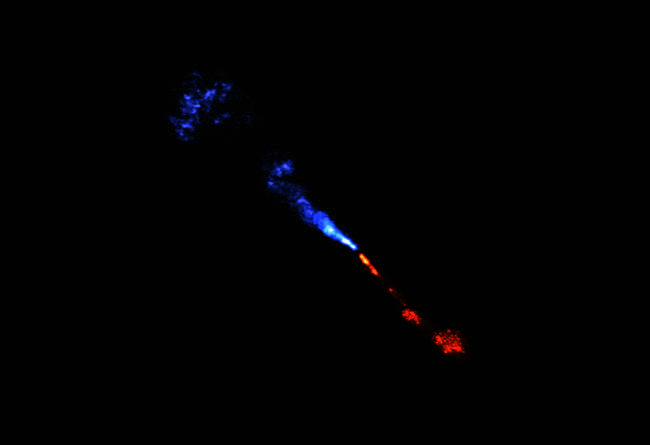
This image shows jets of silicon monoxide (SiO) blowing away from the baby star HOPS-315. The image was obtained with the Atacama Large Millimeter/submillimeter Array (ALMA), in which ESO is a partner. Credit: ALMA(ESO/NAOJ/NRAO)/M. McClure et al.

Major injury crash sends three to hospitals

LAKE COUNTY, Calif. — A major injury vehicle crash on Friday evening sent three people to hospitals in Lake County and elsewhere around the region.

The crash occurred shortly before 8:30 p.m. at Highway 53 and 29 in Lower Lake, according to radio reports and the California Highway Patrol’s online reports.

The vehicles involved were reported to be a Honda and a Ford Mustang.

The CHP and officials at the scene reported that three people were injured, with at least two of them suffering from head injuries.

One was transported by ground ambulance to Adventist Health Clear Lake Hospital in Clearlake, while the other two were taken by air ambulance to Kaiser Permanente Vacaville Medical Center and Queen of the Valley Medical Center in Napa County, the CHP reported.

Information on the condition of the patients and the cause of the crash were not immediately available on Friday night.

Email Elizabeth Larson at This email address is being protected from spambots. You need JavaScript enabled to view it.. Follow her on Twitter, @ERLarson, and on Bluesky, @erlarson.bsky.social. Find Lake County News on the following platforms: Facebook, @LakeCoNews; X, @LakeCoNews; Threads, @lakeconews, and on Bluesky, @lakeconews.bsky.social. 

Lake County Library to offer Career Online High School

LAKE COUNTY, Calif. — The Lake County Library and its Literacy Program has been approved to offer Career Online High School, an educational program offered by Smart Horizons Career Online Education, which gives adults 19 years of age or older the opportunity to earn a high school diploma and credentialed career certificate at the same time. 

The library can award scholarships to successful students on an as-needed basis. 

The fully online high school program provides a 24/7 online classroom, personal academic coaches, and real-world career training.

“Libraries offer a safe, supportive environment to foster learning and community. Our online education program for adults is a natural extension of library services that empower adults to learn and grow,” said Smart Horizons District Superintendent Dr. Howard Liebman. “COHS students receive support from Lake County Library staff as well as from our academic coaches. Together, they help students achieve their goals.”

In addition to an accredited diploma, COHS students graduate with a certificate in their chosen career path, plus a resume, cover letter, and other tools to start or advance their careers.

The latest available data estimates that about 12% or 4,500,000 of California’s population over 18 years of age has not attained a high school diploma. 

Among the 50 states, California has the lowest graduation rate with only about 83% of adults 25 years or older graduating with a high school diploma or high school equivalency.

A fully online program accredited by Cognia/SACS/NCA/NWAC, COHS has partnered with more than 1,800 library locations across the country.

To learn more about the program and take a short online survey to see if Career Online High School is right for you, go to https://ca.careeronlinehs.org/. 

Contact the Lake County Library Literacy Program with questions at 707-263-7633 or This email address is being protected from spambots. You need JavaScript enabled to view it.. 

Access to Career Online High School is provided by the California State Library.

Regional search and rescue teams take part in helicopter training at Lake Mendocino

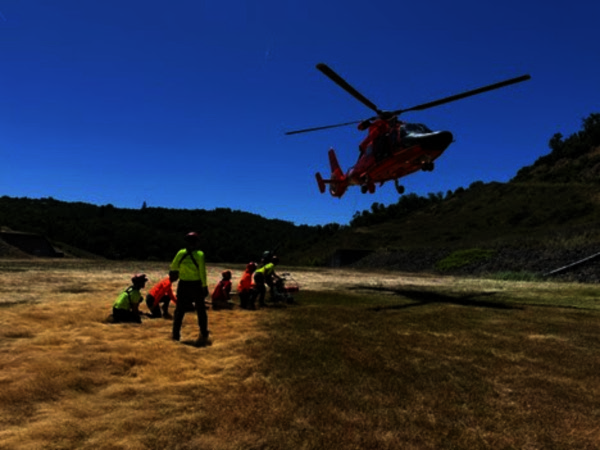
Participants at the helicopter training at Lake Mendocino. Courtesy photo.


NORTH COAST, Calif. — Search and rescue teams from around Northern California participated in a multi-day helicopter training earlier this summer at Lake Mendocino.

The Mendocino County Sheriff’s Office Search and Rescue Team reported that it led the advanced helicopter awareness training May 30 to June 1.

Officials said Mendocino’s team completed the specialized helicopter awareness training exercise with the assistance of search and rescue teams in Napa and Marin, and California Search and Rescue.

The exercise was designed to enhance emergency response capabilities in challenging terrain.

The joint training operation, conducted in collaboration with regional aviation partners, focused on loading / unloading operations, hoist procedures, and rapid deployment of SAR personnel into remote and rugged areas. 

The exercise took place at the Lake Mendocino Emergency Spillway, allowing for multiple training areas, simulating real-world scenarios that often require helicopter support during critical rescue missions.

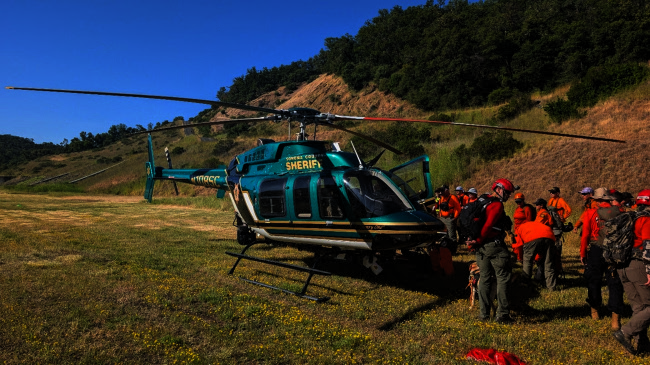
A helicopter used for the training at Lake Mendocino. Courtesy photo.


The training included both seasoned volunteers and new recruits, all of whom trained under the guidance of certified flight crews and search and rescue coordinators. Emphasis was placed on communication, safety protocols, and coordination between ground and air units.

The Mendocino County Sheriff’s Office Search and Rescue Team thanked the search and rescue teams from Alameda, Contra Costa, Glenn, Humboldt, Lake, Marin, Napa, Nevada, Placer, San Mateo, Santa Clara, Solano and Sonoma counties, and Bay Area Mountain Rescue Unit, California Rescue Dog Association and California Search and Rescue Team for their participation and assistance in making the training possible.

Mendocino County’s team extended its sincere gratitude to the U.S. Army Corps of Engineers for providing access to the training location, and to Silva Septic, The Party Pros, Taqueria Michoacan, My California Food Truck, Ocean Fresh LLC, Slam Dunk Pizza, Starbucks Coffee and the Ukiah Natural Foods Co-Op for their generous logistical support. 

“These community partnerships were instrumental in the success of the training weekend,” the team said.

The team also thanked CalFire, REACH Air Medical Services, Sonoma County Sheriff’s Office Henry-1 and the United States Coast Guard for providing their helicopters and helicopter crews for this training event.

Cal Fire brought its helicopter to the training. Courtesy photo.

Space News: A strange bright burst in space baffled astronomers for more than a year. Now, they’ve solved the mystery

CSIRO’s ASKAP radio telescope on Wajarri Country. © Alex Cherney/CSIRO

Around midday on June 13 last year, my colleagues and I were scanning the skies when we thought we had discovered a strange and exciting new object in space. Using a huge radio telescope, we spotted a blindingly fast flash of radio waves that appeared to be coming from somewhere inside our galaxy.

After a year of research and analysis, we have finally pinned down the source of the signal – and it was even closer to home than we had ever expected.

A surprise in the desert

Our instrument was located at Inyarrimanha Ilgari Bundara, the CSIRO Murchison Radio-astronomy Observatory in remote Western Australia, where the sky above the red desert plains is vast and sublime.

We were using a new detector at the radio telescope known as the Australian Square Kilometre Array Pathfinder – or ASKAP – to search for rare flickering signals from distant galaxies called fast radio bursts.

We detected a burst. Surprisingly, it showed no evidence of a time delay between high and low frequencies – a phenomenon known as “dispersion”.

This meant it must have originated within a few hundred light years of Earth. In other words, it must have come from inside our galaxy – unlike other fast radio bursts which have come from billions of light years away.

A problem emerges

Fast radio bursts are the brightest radio flashes in the Universe, emitting 30 years’ worth of the Sun’s energy in less than a millisecond – and we only have hints of how they are produced.

Some theories suggest they are produced by “magnetars” – the highly magnetised cores of massive, dead stars – or arise from cosmic collisions between these dead stellar remnants. Regardless of how they occur, fast radio bursts are also a precise instrument for mapping out the so-called “missing matter” in our Universe.

When we went back over our recordings to take a closer a look at the radio burst, we had a surprise: the signal seemed to have disappeared. Two months of trial and error went by, until the problem was found.

ASKAP is composed of 36 antennas, which can be combined to act like one gigantic zoom lens six kilometres across. Just like a zoom lens on a camera, if you try to take a picture of something too close, it comes out blurry. Only by removing some of the antennas from the analysis – artificially reducing the size of our “lens” – did we finally make an image of the burst.

We weren’t excited by this – in fact, we were disappointed. No astronomical signal could be close enough to cause this blurring.

This meant it was probably just radio-frequency “interference” – an astronomer’s term for human-made signals that corrupt our data.

It’s the kind of junk data we’d normally throw away.

Yet the burst had us intrigued. For one thing, this burst was fast. The fastest known fast radio burst lasted about 10 millionths of a second. This burst consisted of an extremely bright pulse lasting a few billionths of a second, and two dimmer after-pulses, for a total duration of 30 nanoseconds.

So where did this amazingly short, bright burst come from?

A white graph with a blue line that spikes suddenly.
The radio burst we detected, lasting merely 30 nanoseconds. Clancy W. James

A zombie in space?

We already knew the direction it came from, and we were able to use the blurriness in the image to estimate a distance of 4,500 km. And there was only one thing in that direction, at that distance, at that time – a derelict 60-year-old satellite called Relay 2.

Relay 2 was one of the first ever telecommunications satellites. Launched by the United States in 1964, it was operated until 1965, and its onboard systems had failed by 1967.

But how could Relay 2 have produced this burst?

Some satellites, presumed dead, have been observed to reawaken. They are known as “zombie satellites”.

But this was no zombie. No system on board Relay 2 had ever been able to produce a nanosecond burst of radio waves, even when it was alive.

We think the most likely cause was an “electrostatic discharge”. As satellites are exposed to electrically charged gases in space known as plasmas, they can become charged – just like when your feet rub on carpet. And that accumulated charge can suddenly discharge, with the resulting spark causing a flash of radio waves.

Electrostatic discharges are common, and are known to cause damage to spacecraft. Yet all known electrostatic discharges last thousands of times longer than our signal, and occur most commonly when the Earth’s magnetosphere is highly active. And our magnetosphere was unusually quiet at the time of the signal.

Another possibility is a strike by a micrometeoroid – a tiny piece of space debris – similar to that experienced by the James Webb Space Telescope in June 2022.

According to our calculations, a 22 micro-gram micrometeoroid travelling at 20km per second or more and hitting Relay 2 would have been able to produce such a strong flash of radio waves. But we estimate the chance the nanosecond burst we detected was caused by such an event to be about 1%.

Plenty more sparks in the sky

Ultimately, we can’t be certain why we saw this signal from Relay 2. What we do know, however, is how to see more of them. When looking at 13.8 millisecond timescales – the equivalent of keeping the camera shutter open for longer – this signal was washed out, and barely detectable even to a powerful radio telescope such as ASKAP.

But if we had searched at 13.8 nanoseconds, any old radio antenna would have easily seen it. It shows us that monitoring satellites for electrostatic discharges with ground-based radio antennas is possible. And with the number of satellites in orbit growing rapidly, finding new ways to monitor them is more important than ever.

But did our team eventually find new astronomical signals? You bet we did. And there are no doubt plenty more to be found.The Conversation

Clancy William James, Senior Lecturer (astronomy and astroparticle physics), Curtin University

This article is republished from The Conversation under a Creative Commons license. Read the original article.

  • 146
  • 147
  • 148
  • 149
  • 150
  • 151
  • 152
  • 153
  • 154
  • 155

Community

  • Lake County Wine Alliance offers sponsor update; beneficiary applications open 

  • Mendocino National Forest announces seasonal hiring for upcoming field season

Public Safety

  • Lakeport Police logs: Thursday, Jan. 15

  • Lakeport Police logs: Wednesday, Jan. 14

Education

  • Woodland Community College receives maximum eight-year reaffirmation of accreditation from ACCJC

  • SNHU announces Fall 2025 President's List

Health

  • California ranks 24th in America’s Health Rankings Annual Report from United Health Foundation

  • Healthy blood donors especially vital during active flu season

Business

  • Two Lake County Mediacom employees earn company’s top service awards

  • Redwood Credit Union launches holiday gift and porch-to-pantry food drives

Obituaries

  • Rufino ‘Ray’ Pato

  • Patty Lee Smith

Opinion & Letters

  • The benefits of music for students

  • How to ease the burden of high electric bills

Veterans

  • CalVet and CSU Long Beach team up to improve data collection related to veteran suicides

  • A ‘Big Step Forward’ for Gulf War Veterans

Recreation

  • Wet weather trail closure in effect on Upper Lake Ranger District

  • Mendocino National Forest seeking public input on OHV grant applications

  • State Parks announces 2026 Anderson Marsh nature walk schedule 

  • BLM lifts seasonal fire restrictions in central California

Religion

  • Kelseyville Presbyterian to host Ash Wednesday service and Lenten dinner Feb. 18

  • Kelseyville Presbyterian Church to hold ‘Longest Night’ service Dec. 21

Arts & Life

  • Auditions announced for original musical ‘Even In Shadow’ set for March 21 and 28

  • ‘The Rip’ action heist; ‘Steal’ grounded in a crime thriller

Government & Politics

  • Lake County Democrats issue endorsements in local races for the June California Primary

  • County negotiates money-saving power purchase agreement

Legals

  • March 3 hearing on ordinance amending code for commercial cannabis uses

  • Feb. 12 public hearing on resolution to establish standards for agricultural roads

How to resolve AdBlock issue?

Refresh this page