How to resolve AdBlock issue?
Refresh this page
How to resolve AdBlock issue?

Refresh this page
Lake County News,California
  • Home
    • Registration Form
  • News
    • Education
    • Veterans
    • Community
      • Obituaries
      • Letters
      • Commentary
    • Police Logs
    • Business
    • Recreation
    • Health
    • Religion
    • Legals
    • Arts & Life
    • Regional
  • Calendar
  • Contact us
    • FAQs
    • Phones, E-Mail
    • Subscribe
  • Advertise Here
  • Login

News

Helping Paws: French bulldogs, terriers and shepherds

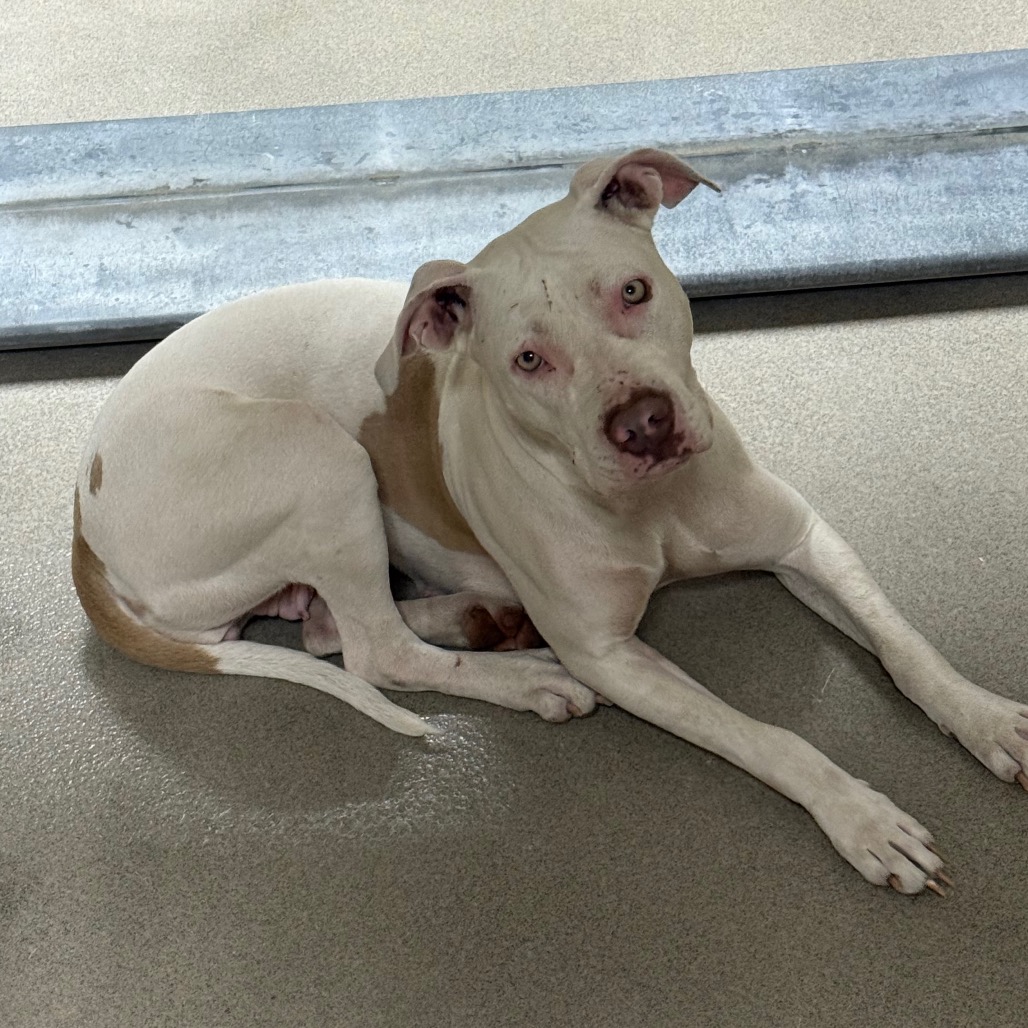
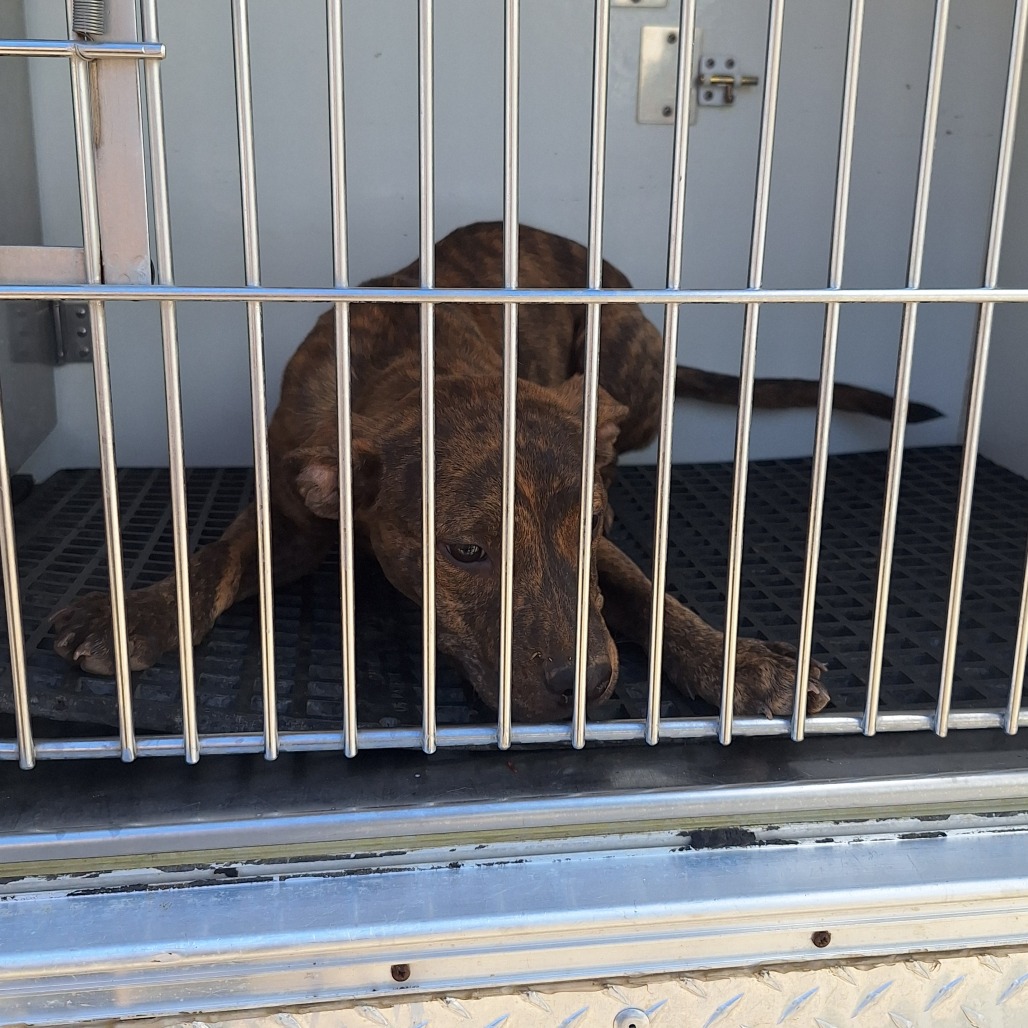
LAKE COUNTY, Calif. — Lake County Animal Care and Control has many beautiful dogs of all ages waiting to be adopted this week.

The dogs available for adoption this week include mixes of border collie, French bulldog, German shepherd, husky, Labrador Retriever, pit bull terrier, terrier and shepherd.

Dogs that are adopted from Lake County Animal Care and Control are either neutered or spayed, microchipped and, if old enough, given a rabies shot and county license before being released to their new owner. License fees do not apply to residents of the cities of Lakeport or Clearlake.

Those animals shown on this page at the Lake County Animal Care and Control shelter have been cleared for adoption.

Call Lake County Animal Care and Control at 707-263-0278 or visit the shelter online for information on visiting or adopting.

The shelter is located at 4949 Helbush in Lakeport.

Email Elizabeth Larson at This email address is being protected from spambots. You need JavaScript enabled to view it.. Follow her on Twitter, @ERLarson, and on Bluesky, @erlarson.bsky.social. Find Lake County News on the following platforms: Facebook, @LakeCoNews; X, @LakeCoNews; Threads, @lakeconews, and on Bluesky, @lakeconews.bsky.social. 

Desiree's preview photo
Desiree

Tiger's preview photo
Tiger

Cub's preview photo
Cub

Diamond's preview photo
Diamond

Sky 's preview photo
Sky

Carmen's preview photo
Carmen

Saphire's preview photo
Saphire

Scrappy's preview photo
Scrappy

Jax's preview photo
Jax

Bear's preview photo
Bear


Kennel #11a's preview photo
Kennel #11a

Kennel #11b's preview photo
Kennel #11b
 
Hunter's preview photo
Hunter

Lucky's preview photo
Lucky
 
Tanner's preview photo
Tanner

Daisy's preview photo
Daisy

Flamingo's preview photo
Flamingo

Helen's preview photo
Helen

Bruce's preview photo
Bruce

Kennel#16b's preview photo
Kennel#16b

Kennel#16c (red collar)'s preview photo
Kennel#16c (red collar)

Kennel#16d (green)'s preview photo
Kennel#16d (green)

Duke's preview photo
Duke
 
Carra's preview photo
Carra

Max's preview photo
Max

Remmy's preview photo
Remmy

Mara's preview photo
Mara

Tia's preview photo
Tia

Hamster's preview photo
Hamster

Kennel#15A's preview photo
Kennel#15A

Kennel#7's preview photo
Kennel#7

Kennel#22B's preview photo
Kennel#22B

Kennel#20's preview photo
Kennel#20

Kennel#22A's preview photo
Kennel#22A

Kennel#15B's preview photo
Kennel#15B

Kennel#4's preview photo
Kennel#4

 
Zora's preview photo
Zora

Kennel#19 's preview photo
Kennel#19

Billy's preview photo
Billy
 
Kennel#34's preview photo
Kennel#34

Space News: Binary star systems are complex astronomical objects − a new AI approach could pin down their properties quickly

In a binary star system, two stars orbit around each other. ESO/L. Calçada, CC BY

Stars are the fundamental building blocks of our universe. Most stars host planets, like our Sun hosts our solar system, and if you look more broadly, groups of stars make up huge structures such as clusters and galaxies. So before astrophysicists can attempt to understand these large-scale structures, we first need to understand basic properties of stars, such as their mass, radius and temperature.

But measuring these basic properties has proved exceedingly difficult. This is because stars are quite literally at astronomical distances. If our Sun were a basketball on the East Coast of the U.S., then the closest star, Proxima, would be an orange in Hawaii. Even the world’s largest telescopes cannot resolve an orange in Hawaii. Measuring radii and masses of stars appears to be out of scientists’ reach.

Enter binary stars. Binaries are systems of two stars revolving around a mutual center of mass. Their motion is governed by Kepler’s harmonic law, which connects three important quantities: the sizes of each orbit, the time it takes for them to orbit, called the orbital period, and the total mass of the system.

I’m an astronomer, and my research team has been working on advancing our theoretical understanding and modeling approaches to binary stars and multiple stellar systems. For the past two decades we’ve also been pioneering the use of artificial intelligence in interpreting observations of these cornerstone celestial objects.

Measuring stellar masses

Astronomers can measure orbital size and period of a binary system easily enough from observations, so with those two pieces they can calculate the total mass of the system. Kepler’s harmonic law acts as a scale to weigh celestial bodies.

An animation of a large star, which appears stationary, with a smaller, brighter star orbiting around it and eclipsing it when it passes in front.
Binary stars orbit around each other, and in eclipsing binary stars, one passes in front of the other, relative to the telescope lens. Merikanto/Wikimedia Commons, CC BY-SA

Think of a playground seesaw. If the two kids weigh about the same, they’ll have to sit at about the same distance from the midpoint. If, however, one child is bigger, he or she will have to sit closer, and the smaller kid farther from the midpoint.

It’s the same with stars: The more massive the star in a binary pair, the closer to the center it is and the slower it revolves about the center. When astronomers measure the speeds at which the stars move, they can also tell how large the stars’ orbits are, and as a result, what they must weigh.

Measuring stellar radii

Kepler’s harmonic law, unfortunately, tells astronomers nothing about the radii of stars. For those, astronomers rely on another serendipitous feature of Mother Nature.

Binary star orbits are oriented randomly. Sometimes, it happens that a telescope’s line of sight aligns with the plane a binary star system orbits on. This fortuitous alignment means the stars eclipse one another as they revolve about the center. The shapes of these eclipses allow astronomers to find out the stars’ radii using straightforward geometry. These systems are called eclipsing binary stars.

By taking measurements from an eclipsing binary star system, astronomers can measure the radii of the stars.

More than half of all Sun-like stars are found in binaries, and eclipsing binaries account for about 1% to 2% of all stars. That may sound low, but the universe is vast, so there are lots and lots of eclipsing systems out there – hundreds of millions in our galaxy alone.

By observing eclipsing binaries, astronomers can measure not only the masses and radii of stars but also how hot and how bright they are.

Complex problems require complex computing

Even with eclipsing binaries, measuring the properties of stars is no easy task. Stars are deformed as they rotate and pull on each other in a binary system. They interact, they irradiate one another, they can have spots and magnetic fields, and they can be tilted this way or that.

To study them, astronomers use complex models that have many knobs and switches. As an input, the models take parameters – for example, a star’s shape and size, its orbital properties, or how much light it emits – to predict how an observer would see such an eclipsing binary system.

Computer models take time. Computing model predictions typically takes a few minutes. To be sure that we can trust them, we need to try lots of parameter combinations – typically tens of millions.

This many combinations requires hundreds of millions of minutes of compute time, just to determine basic properties of stars. That amounts to over 200 years of computer time.

Computers linked in a cluster can compute faster, but even using a computer cluster, it takes three or more weeks to “solve,” or determine all the parameters for, a single binary. This challenge explains why there are only about 300 stars for which astronomers have accurate measurements of their fundamental parameters.

The models used to solve these systems have already been heavily optimized and can’t go much faster than they already do. So, researchers need an entirely new approach to reducing computing time.

Using deep learning

One solution my research team has explored involves deep-learning neural networks. The basic idea is simple: We wanted to replace a computationally expensive physical model with a much faster AI-based model.

First, we computed a huge database of predictions about a hypothetical binary star – using the features that astronomers can readily observe – where we varied the hypothetical binary star’s properties. We are talking hundreds of millions of parameter combinations. Then, we compared these results to the actual observations to see which ones best match up. AI and neural networks are ideally suited for this task.

In a nutshell, neural networks are mappings. They map a certain known input to a given output. In our case, they map the properties of eclipsing binaries to the expected predictions. Neural networks emulate the model of a binary but without having to account for all the complexity of the physical model.

Neural networks detect patterns and use their training to predict an output, based on an input.

We train the neural network by showing it each prediction from our database, along with the set of properties used to generate it. Once fully trained, the neural network will be able to accurately predict what astronomers should observe from the given properties of a binary system.

Compared to a few minutes of runtime for the physical model, a neural network uses artificial intelligence to get the same result within a tiny fraction of a second.

Reaping the benefits

A tiny fraction of a second works out to about a millionfold runtime reduction. This brings the time down from weeks on a supercomputer to mere minutes on a single laptop. It also means that we can analyze hundreds of thousands of binary systems in a couple of weeks on a computer cluster.

This reduction means we can obtain fundamental properties – stellar masses, radii, temperatures and luminosities – for every eclipsing binary star ever observed within a month or two. The big challenge remaining is to show that AI results really give the same results as the physical model.

This task is the crux of my team’s new paper. In it we’ve shown that, indeed, the AI-driven model yields the same results as the physical model across over 99% of parameter combinations. This result means the AI’s performance is robust. Our next step? Deploy the AI on all observed eclipsing binaries.

Best of all? While we applied this methodology to binaries, the basic principle applies to any complex physical model out there. Similar AI models are already speeding up many real-world applications, from weather forecasting to stock market analysis.The Conversation

Andrej Prša, Professor of Astrophysics and Planetary Science, Villanova University

This article is republished from The Conversation under a Creative Commons license. Read the original article.

California State Parks surveys community on Clear Lake State Park General Plan 

Clear Lake State Park. Courtesy image.


LAKE COUNTY, Calif. — As the process to complete the new Clear Lake State Park General Plan continues, California State Parks is asking the community to participate in a survey to consider new options.

The park hosted its second workshop on the plan on July 16.

At that time, park staff and contractors shared multiple planning concepts — or planning alternatives — and gathered the park community's initial feedback and other ideas.  

These concepts will guide future park improvements and management.  

For those who couldn’t attend the workshop, State Parks is asking them to take part in the online survey, which is available until Aug. 15 on the park website.

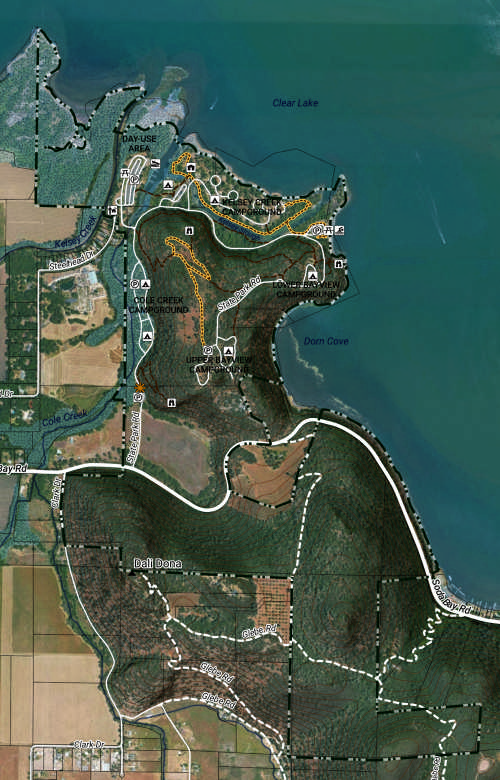
The survey lets you review three possible planning options to guide future improvements and management of Clear Lake State Park. 

Explore maps showing different directions and ideas for the park and tell us what matters most to you — from home and at your own pace.

The community engagement section of this website provides more information about the community engagement efforts and a link to download the draft planning alternatives.

“These alternatives are discussion starters, and we need your feedback to identify what resonates, what's missing, and what new ideas should be considered for Clear Lake State Park's future,” Park staff said.

View detailed maps of each alternative with proposed trails, facilities and management actions here.

For more information, email This email address is being protected from spambots. You need JavaScript enabled to view it. or visit www.parks.ca.gov/CLSP_GP. 

Padilla announces bill to reopen lawful pathway to legalization, countering cruel mass deportation agenda

On Friday, U.S. Sen. Alex Padilla (D-Calif.), Ranking Member of the Senate Judiciary Immigration Subcommittee, hosted a press conference in Los Angeles alongside immigration advocates, impacted families, and community leaders to announce legislation to expand a pathway to lawful permanent residency for millions of long-term U.S. residents. 

Amid what Padilla called the Trump Administration’s indiscriminate immigration enforcement in California and across the country, the bill would offer a forward-looking, strategic update to the United States’ outdated immigration system to counter President Trump and Stephen Miller’s demonization of undocumented immigrant communities.

Padilla’s Renewing Immigration Provisions of the Immigration Act of 1929 would update the existing Registry statute of the Immigration and Nationality Act, or INA, by adjusting the Registry date to meet current circumstances so that an immigrant may qualify to apply for lawful permanent resident status if they have lived in the U.S. continuously for at least seven years before filing an application, do not have a criminal record, and meet all other current eligibility requirements to receive a green card. 

This update, which Padilla called overdue, would provide a much-needed pathway to a green card for more than eight million people, including Dreamers, forcibly displaced citizens (TPS holders), children of long-term visa holders, essential workers, and highly skilled members of our workforce, such as H-1B visa holders, who have been waiting years for a green card to become available. 

According to 2023 FWD.us estimates, if the undocumented individuals covered in this bill eventually became citizens, they would contribute approximately $121 billion to the U.S. economy annually and about $35 billion in taxes.

Sen. Dick Durbin (D-Ill.), Ranking Member of the Senate Judiciary Committee, is co-leading the legislation in the Senate, and Representative Zoe Lofgren (D-Calif.-18) is leading companion legislation in the House of Representatives.

“Americans know there’s a better path forward than the Trump Administration’s cruel scapegoating of hardworking immigrants and fearmongering of California communities,” said Sen. Padilla. “We believe that if you’ve lived here for over seven years, paid taxes for years, contributed to your community for years, and you don’t have a criminal record, then you deserve a pathway to legalization. My bill is a commonsense fix to our outdated immigration system and the same kind of reform that Republican President Ronald Reagan embraced four decades ago, calling it a ‘matter of basic fairness.’ This legislation creates no new bureaucracies or agencies — it’s simply an update to a longstanding pathway to reflect today’s reality and provide a fair shot at the American Dream for millions of Dreamers, TPS holders, and highly skilled workers who have faced delays and uncertainty for decades.”

“Recently, we have seen devastating arrests of immigrants who have spent their lives in this country, building communities and families in the United States, without any due process. Most have never committed any crime,” said Sen. Durbin. “Protections for these hard-working individuals are long overdue. It’s common sense that immigrants who pose no safety threat and contribute to our country should be able to call America home with certainty; additionally, it’s also common sense that the small percentage of undocumented immigrants who do commit violent crimes should be removed. Expanding the registry pathway to citizenship is a practical solution to provide stability to immigrants who have worked and contributed to our country for years. It’s part of the solution, and I look forward to working to pass this bill into law.”

“When Donald Trump ran for president, he pledged to deport violent criminals. Instead, masked, heavily-armed agents, often refusing to identify themselves, are aggressively, sometimes violently, targeting day laborers, busboys, farmworkers, and some of the hardest-working people in this country. It’s outrageous and deserves the condemnation of every Member of Congress. We need to control our borders, but we also need a straightforward reform solution for those who have resided peacefully for a long time in America,” said Representative Lofgren. “My colleagues and I are reintroducing our registry legislation to simply update a historically-bipartisan provision that provides lawful permanent resident status to vetted immigrants who have been a part of our communities for years. Providing stability to our communities and our workforces – versus terrorizing them – will make our country stronger.”

Section 249 of the Immigration and Nationality Act, also known as the Registry, gives the Secretary of Homeland Security the discretion to register certain individuals for lawful permanent resident status if they have been in the country since a certain date and meet other requirements. 

Section 249 was first codified in 1929 and Congress has modified it four times, most recently during the Reagan Administration in 1986. No changes have been made since 1986, and the cutoff date for eligibility remains Jan. 1, 1972 — more than 50 years ago.

Specifically, the Renewing Immigration Provisions of the Immigration Act of 1929 would:

• Amend the existing Registry statute by moving the eligibility cutoff date so that an immigrant may qualify for lawful permanent resident status if they have been in the U.S. for at least seven years before filing an application under Registry.
• Preempt the need for further congressional action by making the eligibility cutoff rolling, instead of tying it to a specific date, as it is now.

The bill is cosponsored by U.S. Senators Cory Booker (D-N.J.), Tammy Duckworth (D-Ill.), Ben Ray Luján (D-N.M.), Edward J. Markey (D-Mass.), Chris Murphy (D-Conn.), Patty Murray (D-Wash.), Bernie Sanders (I-Vt.), Brian Schatz (D-Hawaii), Adam Schiff (D-Calif.), and Elizabeth Warren (D-Mass.).

Signed, sealed and delivered for 250 years: USPS marks a milestone with two new stamp releases


In celebration of two and a half centuries of continuous service, the U.S. Postal Service this week unveiled two stamp releases at its headquarters building. 

The two stamp designs capture the essence of USPS, one honoring its deep-rooted history, the other highlighting its ubiquitous presence in everyday life.
 
“For the United States Postal Service, today is a milestone 250 years in the making,” said Postmaster General and Chief Executive Officer David Steiner on Thursday. “These stamps will serve as a window into our shared history. They represent enduring values that I — and every American — can learn from: perseverance, trust and imagination. As we unveil these stamps today, I ask all of you to use the mail to stay connected, especially when we feel ourselves starting to drift apart.” 

Amber McReynolds, USPS Board of Governors chairwoman, joined the newly appointed Postmaster General for the Thursday ceremony. 

“Today, we celebrate this magnificent organization which has shaped our nation’s culture, powered its economy and connected each one of us to each other for 250 years,” McReynolds said. “I hope these stamps will serve as reminders of the impact these tiny pieces of artwork have had on our shared democracy, our economy, and our connectivity as a nation.”

The founding of the postal system in 1775 was vital to achieving independence and laying the foundation for a unified nation. 

Today, America’s first communications network still serves the same ideals, connecting individuals, communities and businesses through an exchange of ideas, information and goods.

The Postal Service’s 640,000 employees exemplify those ideals every day. Letter carriers make up more than half of the USPS workforce. In snow, rain, heat and gloom of night, carriers reach the American public where they live and work, six and sometimes seven days a week. They are friends, neighbors and in some cases, heroes. Making their appointed rounds regularly, Postal Service employees are members of our communities — a human presence with a unique, observant familiarity with the neighborhoods they serve.

In some situations, carriers go above and beyond the call of duty, being the first to recognize a problem and alert emergency personnel. These actions have saved lives on many occasions and are recognized under the Postmaster General Heroes’ Program. 

Postal operations are often some of the first services restored after a natural disaster; the presence of carriers offers a sense of normalcy and helps maintain connections within communities.

Behind the scenes and at America’s doorstep, 640,000 dedicated employees work toward a shared mission to provide the nation with reliable, affordable, universal mail service. Whether it’s the carrier delivering mail, the mechanic keeping their vehicle running, the retail associate at a local Post Office location or the mail handlers ensuring that every envelope or package gets sent to the right destination, USPS employees are working together to serve the country.

The Postal Service is a marvel of the modern age and of the cumulative experience of 250 years. The everyday story of connecting Americans near and far by mail is meticulously depicted in the artwork for one of the stamp sets being released today: 250 Years of Delivering. Offering a bird’s-eye view of a bustling town, each individual stamp is a frame of sequential art that tells the story of a mail carrier’s journey as she walks her daily route. The story progresses clockwise through a year’s four seasons.

The artwork also contains numerous postal icons such as collection boxes, a post rider on horseback and delivery vehicles. Collectively, the pane represents the faithful presence of USPS throughout the year.

Chris Ware created the stamp artwork and co-designed the pane with Antonio Alcalá, an art director for USPS.

The 250 Years of Delivering stamps are issued as a pane of 20 Forever stamps, which will always be equal in value to the current First-Class Mail 1-ounce price. News of the stamps is being shared with the hashtag #250YearsOfDelivering.

‘Putting a Stamp on the American Experience’ booklet

Postage stamps delight, entertain and educate, sparking curiosity about history, art, nature and science. Highlighting a wide range of subjects and history gives the U.S. stamp program its remarkable range. 

The 32-page prestige booklet, “Putting a Stamp on the American Experience,” provides an in-depth look at some of the Postal Service’s most popular stamps. 

The booklet, only the fourth ever issued by the Postal Service, is illustrated with specially selected stamps and artwork from more than 75 previous issuances, both recent and vintage. 

Some pages in the booklet pay tribute to long-running series or spotlight interests such as national parks, sports, nature and flags. Other pages show how each new generation of designers commemorates traditional subjects in the visual language of their time. 

The booklet also points out recent innovations in printing and recognizes the importance of stamps that raise awareness of, and sometimes funds for, important causes.

Available exclusively with the “Putting a Stamp on the American Experience” booklet are two self-adhesive sheets of 10 stamps featuring the first postmaster general, Benjamin Franklin. The stamp represents both tradition and innovation by featuring a “reframed” modern interpretation of an 1875 reproduction of one of the first two official U.S. postage stamps from 1847.

As one of the first U.S. stamp subjects, Franklin is a longtime icon of the stamp program, appearing on more than 100 issuances in the 178-year history of American stamps. 

Appointed postmaster general of the Colonies by the Second Continental Congress in 1775, Franklin had previously served as both postmaster of Philadelphia and one of two deputy postmasters general appointed by the British Crown. 

He appreciated that the postal system could help unite the Colonies — and the nation they became. As a printer, scientist and diplomat, he played a monumental role in shaping American culture, and his postal legacy of adaptability and innovation continues to inspire the modern-day Postal Service.

Rendered in blue instead of the original reddish brown, the stamp reproduction was created by combining two printing techniques. 

The intaglio process, which incises the image into metal plates, was used to evoke the texture and appearance of classic engraved stamps. The surrounding area balances tradition with modernity by rendering it with smooth precision through offset printing.

The Benjamin Franklin stamps are issued as Forever stamps and will only be available through the purchase of the “Putting a Stamp on the American Experience” prestige booklet. Booklets are available for purchase through the Postal Store, by calling 844-737-7826, or by mail through USA Philatelic. News of the stamp and booklet is being shared with the hashtag #USPS250booklet.

Stamp Encore Contest

The U.S. Postal Service launched the Stamp Encore contest, offering the public a chance to vote on any of 25 preselected, previously issued stamps as part of the 2026 stamp program. 

The public can go to StampsForever.com/vote to cast votes and put a “stamp” on an upcoming release. Voting will take place from July 23 to Sept. 30.

Postal products

Customers may purchase stamps and other philatelic products through the Postal Store at usps.com/shopstamps, by calling 844-737-7826, by mail through USA Philatelic, or at Post Office locations nationwide. 

For officially licensed stamp products, shop the USPS Officially Licensed Collection on Amazon. Additional information on stamps, First Day of Issue Ceremonies and stamp-inspired products can be found at StampsForever.com.

CDFW completes 2025 Waterfowl Breeding Population Survey

A drake mallard swims in a Sacramento Valley wetland. Photo courtesy of the California Department of Fish and Wildlife.


The California Department of Fish and Wildlife, or CDFW, has completed its 2025 waterfowl breeding population survey. 

The results of the survey show both mallard and total duck species have increased this year.

The breeding population of mallards increased from 177,828 to 265,640 (a 49% increase), and total ducks (all species combined) increased from 373,864 to 474,495 (a 27% increase).  Mallards remain below the long-term average by 16%.

“The survey indicated an increase in mallard abundance, and habitat conditions were good in northern California, so we expect average to above-average production for all waterfowl species,” said CDFW Waterfowl Program Biologist Melanie Weaver.

Since 1948, CDFW biologists and warden-pilots have conducted this survey annually using fixed-wing aircraft. 

The population estimates are for those areas where the vast majority of waterfowl nesting occurs in California, including wetland and agricultural areas in northeastern California, throughout the Central Valley, the Suisun Marsh and some coastal valleys.

The complete 2025 California Waterfowl Breeding Population Survey Report is available at the CDFW website.

The majority of California’s wintering duck population originates from breeding areas surveyed by U.S. Fish and Wildlife Service, or USFWS, in Alaska and Canada, and these results should be available by late August. 

CDFW survey information, along with similar data from other Pacific Flyway states, is used by the USFWS and the Pacific Flyway Council when setting hunting regulations for the Pacific Flyway states, including California.

  • 141
  • 142
  • 143
  • 144
  • 145
  • 146
  • 147
  • 148
  • 149
  • 150

Community

  • Lake County Wine Alliance offers sponsor update; beneficiary applications open 

  • Mendocino National Forest announces seasonal hiring for upcoming field season

Public Safety

  • Lakeport Police logs: Thursday, Jan. 15

  • Lakeport Police logs: Wednesday, Jan. 14

Education

  • Woodland Community College receives maximum eight-year reaffirmation of accreditation from ACCJC

  • SNHU announces Fall 2025 President's List

Health

  • California ranks 24th in America’s Health Rankings Annual Report from United Health Foundation

  • Healthy blood donors especially vital during active flu season

Business

  • Two Lake County Mediacom employees earn company’s top service awards

  • Redwood Credit Union launches holiday gift and porch-to-pantry food drives

Obituaries

  • Rufino ‘Ray’ Pato

  • Patty Lee Smith

Opinion & Letters

  • The benefits of music for students

  • How to ease the burden of high electric bills

Veterans

  • CalVet and CSU Long Beach team up to improve data collection related to veteran suicides

  • A ‘Big Step Forward’ for Gulf War Veterans

Recreation

  • Wet weather trail closure in effect on Upper Lake Ranger District

  • Mendocino National Forest seeking public input on OHV grant applications

  • State Parks announces 2026 Anderson Marsh nature walk schedule 

  • BLM lifts seasonal fire restrictions in central California

Religion

  • Kelseyville Presbyterian to host Ash Wednesday service and Lenten dinner Feb. 18

  • Kelseyville Presbyterian Church to hold ‘Longest Night’ service Dec. 21

Arts & Life

  • Auditions announced for original musical ‘Even In Shadow’ set for March 21 and 28

  • ‘The Rip’ action heist; ‘Steal’ grounded in a crime thriller

Government & Politics

  • Lake County Democrats issue endorsements in local races for the June California Primary

  • County negotiates money-saving power purchase agreement

Legals

  • March 3 hearing on ordinance amending code for commercial cannabis uses

  • Feb. 12 public hearing on resolution to establish standards for agricultural roads

How to resolve AdBlock issue?

Refresh this page