How to resolve AdBlock issue?
News
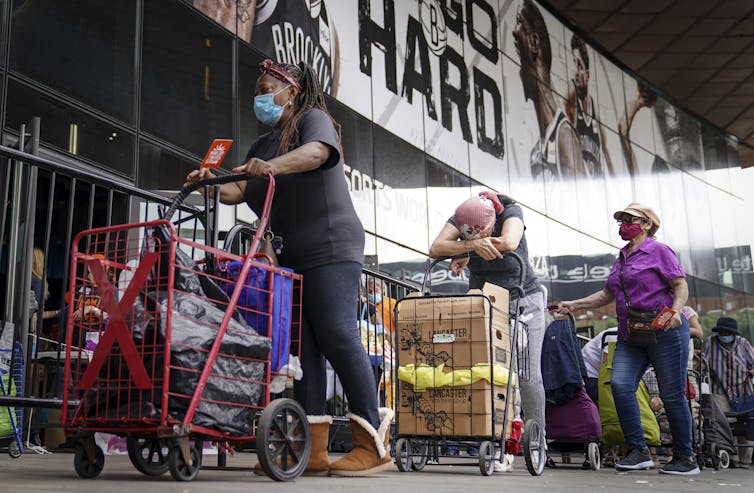
As Congress prepares another injection of COVID-19 aid for businesses and individuals, there’s been debate about whether it’s necessary on top of the US$3.5 trillion spent so far.
President Joe Biden had initially hoped to get bipartisan support for his $1.9 trillion proposal, but the only counteroffer from Republicans was a $600 billion bill, with many in the GOP suggesting more money wasn’t needed. And some economists have expressed concern that giving Americans too much right now could overheat the economy.
We are public opinion scholars at the Harvard T.H. Chan School of Public Health. In cooperation with our partners at the Robert Wood Johnson Foundation and National Public Radio, we conducted a survey in July and August of last year to try to understand how the first round of aid had affected American families in need. What we found shocked us then and feels relevant now as the government negotiates its next steps.
Despite trillions of dollars in government assistance, about two-thirds of families that suffered job losses or reduced wages during the pandemic still reported facing serious financial hardship.
Many people were struggling – and still are – just to pay for basic necessities, like food and rent.
The first round of pandemic aid
Congress passed most of the initial relief in March, including direct payments to qualifying families, expanded unemployment benefits and loans to small businesses that turned into grants if they kept workers on their payroll.
By July 1, when we began our survey, most Americans entitled to a direct check should have received it, and unemployed adults were still receiving supplemental aid of $600 a week on top of state benefits.
We wanted to understand the financial burdens experienced by American families that were economically harmed by the coronavirus pandemic. And we wanted to see whether the government aid was helping the people who needed it most.
Using a nationally representative, randomized survey design, we contacted 3,454 adults and asked them about the financial problems facing their households. We focused on the 46% who said they or other adults in their household either lost a job, had to close a business, were furloughed or had their wages or hours reduced since the start of the coronavirus pandemic. We published our findings in the economic affairs journal Challenge in January.
Serious financial problems
While it seems like a no-brainer that Americans weren’t ready for the unexpected employment disruptions caused by the COVID-19 pandemic, it was surprising to us that federal aid and charitable assistance seemed to be doing so little to support the people it was intended to help.
We found that the aid didn’t put much of a dent in the financial problems faced by families earning less than $100,000, whether because relief was delayed or wasn’t spent, the amount wasn’t adequate or the funds never made it to the intended recipients.
Among households with employment or wage losses during the pandemic, 87% of those earning less than $30,000 a year and 68% of those earning $30,000 to $99,999 told us they were still facing serious financial problems. And more than half of households in these income brackets reported they had already used up all or most of their savings – or they didn’t have savings to begin with. That share jumped to over three-quarters for people with incomes under $30,000.
Savings take years or decades to accumulate, so it’s likely these households are in even worse trouble now. What’s more, significantly less aid has been provided from the federal government since we conducted our survey.
Many Americans still need a lifeboat
Our findings suggest there is a definite need for further government aid on a large scale for tens of millions of families.
A useful way to think about this is how the government provides relief after a natural disaster. In disasters, cash payments are often sent directly to those in need, like lifeboats launched to rescue people at risk of drowning.
And in fact, the pandemic has been an economic disaster for some – particularly low-income and Black and Latino households – more than others. They still need a lifeboat to get them through the storm.
[Get the best of The Conversation, every weekend. Sign up for our weekly newsletter.]
Mary G. Findling, Research Associate at the Harvard T.H. Chan School of Public Health, Harvard University; John M. Benson, Senior Research Scientist at the Harvard T.H. Chan School of Public Health, Harvard University, and Robert J. Blendon, Richard L. Menschel Professor of Public Health and Professor of Health Policy and Political Analysis, Emeritus, Harvard University
This article is republished from The Conversation under a Creative Commons license. Read the original article.

LAKE COUNTY, Calif. – There is just something so comforting about a cup of tea, and February, with its occasional formidable weather, is a perfect month to indulge.
I’m absolutely fascinated by tea, whether white, green, fermented, smoked or otherwise. When herbal and floral tisanes are factored in, imbibing becomes a multi-faceted journey, one that can – for me – border on an obsession.
Tea has long been a pleasure of mine, but perhaps my stronger interest in it was birthed when, once upon a time, I taught a culinary class at a local tea shop, one that specialized in floral teas and flowery herbal tisanes.
Creating recipes with their inspired selection of brews stretched my awareness of what tea can be to cuisine. It doesn’t have to be relegated to the role of accompaniment; it can be the star of a meal, with flavor combinations limited only by your imagination.
All types of tea, however packaged, can be used in this way – loose leaves, tea in bags, powdered teas such as matcha, tea leaves ground at home (a dedicated coffee grinder or mortar and pestle are good for this), specialty teas like genmaicha (which includes puffed grains), smoked teas, tea blends and all manner of herbal tisanes can be fodder for your experimentation.
A favorite tea of mine is the floral blend sold at the Holy Assumption Monastery in Calistoga. While making a purchase there some years ago, I heard for the first time the term tea docent (as in, “our tea docent creates these blends”). I was immediately struck by the thought of such a blissful career.
Perhaps, if only for today, I can consider myself your tea-in-cuisine docent by providing some ideas as a starting point for you. Please read on, be inspired, and make your kitchen a place of experimentation for your own brand of tea-infused creations.
Today’s recipe is also below, a vegetable stir-fry with green tea layered throughout via infusion into the sauce as well as the rice served with it.
A Chinese proverb says, “Drinking a daily cup of tea will surely starve the apothecary.” Perhaps that’s also true if we eat our daily cup.
Bake with tea
Floral and fruity Earl Grey or warm chai spices marry well with baked goods like pound cake, shortbread, or sugar cookies. Their mild sweetness provides a perfect backdrop for the flavor of tea. Other teas work well, too, such as green matcha, black tea, or tea flavored with flowers, like rose, jasmine or lavender.
Powdered tea, whether purchased in that form like matcha or ground at home, is perfect for this purpose. You can forego the vanilla and replace with the tea or, if using a strongly flavored tea, keep the vanilla for added flavor.
Experiment with strength when adding to the dough. Start with a teaspoon and increase – or not – to taste. Powdered tea sugar can be made to roll cookies in prior to baking; use ½ teaspoon tea powder to ½ cup sugar for this.
Infuse tea in dairy
Tea can be infused into milk or cream for a variety of applications. Add the tea (there’s no need to grind as whole leaves can be used) to the liquid and slowly heat to just below boiling. Remove from the heat and allow it to cool, then strain before using.
All manner of desserts can be made with tea-infused dairy, from panna cotta to bread pudding to cheesecake.
Sencha, a Japanese steamed green tea with vegetal, grassy notes, can add savory earthiness to a cream sauce, black tea can add unexpected bold flavor to crème brulee, and floral tisanes are lovely in ice cream or whipped cream toppings.
Flavor a stir-fry with tea
Green tea, black tea and ginger tea are popular additions to Asian-inspired stir fry dishes. Brewed tea can be used as a component in a sauce, or dry tea can be added like a spice directly to the pan.
Genmaicha, a Japanese green tea with the addition of puffed rice and corn, can add a nutty, earthy component to stir-fries.
To use, add to the pan first so the leaves and grains have a chance to get toasty; set aside and add back later when things are almost cooked through. For layering of flavors, try serving your stir-fry over rice or another grain cooked in tea.
Add tea to a rub for meat
Strongly flavored black tea leaves can be added to regular rub components like salt, brown sugar, and garlic. It adds a mystery flavor – a sort of “mmmmm, that’s good but what is it?” factor to the meat. Smoky lapsang souchong (a favorite tea of mine) is perfect for this.
Flavor and color pasta with tea
Adding green tea powder to pasta dough gives it a pretty pale green color and an earthy, herbaceous flavor.
Add to noodle soups – whether Asian-inspired or otherwise – or make a green-themed pasta dish with it by adding pesto and green vegetables.
Make tea butter
Add tea to room temperature butter (it needs to be soft and pliable) and mix until well blended. Roll the butter into a log and wrap well with plastic wrap. Store in the fridge (or freeze for long-term storage).
Butter medallions cut from the log can be used to baste meat, flavor vegetables (try adding to veggies when roasting) or to slather on toast.
For those of us who prefer plant-based eating, this can also be done with coconut oil.
Tea-infused butter or coconut oil can be used for cooking, too. (Note that powdered tea will change the color of the butter, while whole leaves will add streaky designs.)
Substitute tea for stock
Tea can be subbed wherever stock is used, such as in soups or stews or for cooking grains.
It was summertime when I taught the culinary class at the tea shop, so I created a cold peach soup using hibiscus tea.
Try rooibos tea with pumpkin soup or barley cooked in green tea. Adding black tea to a mushroom-wild rice soup adds an intensely interesting flavor.
Use tea as a marinade
Tea can be used alone as a marinade or added to other ingredients. I ran across a recipe for a chicken-eggplant stir-fry where the chicken was first marinated in black tea. If other flavors are used in the dish – such as hoisin sauce and soy sauce in this one – it’s important that the tea is strong enough to stand up to them and shine through.
I once tried a recipe for grilled green beans tossed with cocoa nibs – and now I’m envisioning how wonderful the flavor combination of cocoa and tea would be if the beans were marinated with black tea and balsamic vinegar first.
Use tea straight from the bag in place of spice
I made blueberry pancakes this morning, and in hindsight I realize that adding a light floral tea to the batter would have added an interesting complementary flavor.
Mint tea from the bag sprinkled into yogurt can make a quick and easy condiment for Indian or Middle Eastern dishes.
Chai tea would be wonderful sprinkled on roasted butternut squash or into a winter fruit salad.
Use tea as a poaching liquid
This can be used in sweet or savory ways – think pears poached in rooibos or chai tea or green tea poached fish or chicken.
Make simple syrup with tea
Flavorful simple syrup can be made by mixing equal parts brewed tea and sugar and reducing it on the stove to a syrupy consistency. Imagine the delight of lemonade sweetened with ginger tea-infused simple syrup or iced green tea with a fruity tea syrup like peach or raspberry.
A few months back I visited the Calistoga Farmers’ Market and happened upon a booth stacked high with locally made teas by the Napa Valley Tea Co.
I fell in love with their Divinitea, a naturally sweet blend of white and green teas with eight different fruits, making it perfect for this application. I’m looking forward to trying a bubbly tea soda with Divinitea syrup and sparkling water.
Add tea to smoothies
Add liquid or powdered tea to your morning smoothie for added antioxidants and flavor.
As mentioned, below is today’s recipe, a hearty and healthy vegetable stir-fry with tofu as the protein. If preferred, chicken may be substituted. Beef or pork might overshadow the subtle flavor of green tea.
Garlic and Ginger Green Tea Stir Fry
Ingredients:
4 green tea bags, brewed with 4 cups water
1 ½ cups jasmine rice
1 package extra firm tofu
1 yellow or purple onion
1 red pepper
1 carrot
3 stalks broccoli
½ pound mushrooms
½ cup soy sauce
¼ cup rice vinegar
¼ cup + 2 tablespoons vegetable oil
3 to 4 garlic cloves, minced
2 tablespoons freshly grated ginger
2 tablespoons brown sugar (honey or agave nectar also work well)
2 tablespoons cornstarch
Instructions:
Prepare vegetables: Dice the onion, slice the pepper into strips, cut the carrot into matchsticks, cut the broccoli into bite-sized pieces and slice mushrooms.
Prepare the sauce: Combine ¼ cup of the brewed green tea, soy sauce, vinegar, ¼ cup of the vegetable oil, garlic, ginger, brown sugar, and cornstarch in a bowl.
Cook the rice according to package directions, substituting three cups of green tea for the water. Add ½ teaspoon salt, if desired.
Cut tofu into bite-sized cubes and heat 1 tablespoon oil in a large skillet over medium-high heat. Brown tofu cubes on each side and set aside on a paper towel-lined plate.
In the same skillet, heat the remaining tablespoon of oil and add the onions and carrots and cook for two minutes. Add the red pepper, broccoli, and mushrooms and cook, stirring constantly, for an additional five minutes. Vegetables should be barely tender.
Whisk the sauce and pour over vegetables. Add browned tofu to the pan and cook all, stirring constantly, another two to three minutes until vegetables are tender-crisp and the sauce has thickened slightly.
Serve over the green tea-infused jasmine rice. Makes six average or four large servings.
Recipe inspired by Jamie of “Love Bakes Good Cakes” and adapted by Esther Oertel.
Esther Oertel is a writer and passionate home cook from a family of chefs. She grew up in a restaurant, where she began creating recipes from a young age. She’s taught culinary classes in a variety of venues in Lake County and previously wrote “The Veggie Girl” column for Lake County News. Most recently she’s taught culinary classes at Sur La Table in Santa Rosa. She lives in Middletown.
The proclamation is timed for 11 a.m.
The presentation will be broadcast live on the county of Lake’s YouTube and Facebook channels.
Members of the public interested in commenting on this item are encouraged to participate via Zoom. The link and other details are available at https://countyoflake.legistar.com/Calendar.aspx.
Tuesday’s proclamation was proposed as one of numerous actions in response to the widely publicized and horrific deaths of George Floyd and Breonna Taylor in 2020.
An effort to form a local response self-organized into a group called A Community Call to Action: A loving response to systemic racism in America, or CCA. The group met monthly and meetings included a series of guest speakers, prioritization of areas for response and learning more about efforts in other communities across the nation.
The final proclamation is the result of a collaborative effort that began with a survey of CCA participants. The language was then refined through feedback from various community members, including members of the Board of Supervisors and county staff.
This historic proclamation notes in part: the duties, protections and laws of varying levels of government; the acknowledgment that protections are not afforded everyone equally; and a declaration that now is the time to answer these calls of reckoning together as a community.
Also included in the proclamation is an action commitment by the Board of Supervisors to host a community visioning session with the intention of developing recommendations for various related issues, including: meaningful actions and activities that foster tolerance, respect, equity and inclusion; and directing resources toward underlying causes and conditions that lead to inequitable distribution of resources and carriage of justice.
“Each one of us can contribute to ushering in the tolerant, respectful, equitable and inclusive Lake County we wish to see,” said District 4 Supervisor Tina Scott. “Showing up, and voicing your support for Tuesday’s proclamation is a great way to start.”
Dogs available for adoption this week include mixes of border collie, pit bull and Rottweiler.
Dogs that are adopted from Lake County Animal Care and Control are either neutered or spayed, microchipped and, if old enough, given a rabies shot and county license before being released to their new owner. License fees do not apply to residents of the cities of Lakeport or Clearlake.
The following dogs at the Lake County Animal Care and Control shelter have been cleared for adoption (additional dogs on the animal control Web site not listed are still “on hold”).
Call Lake County Animal Care and Control at 707-263-0278 or visit the shelter online at http://www.co.lake.ca.us/Government/Directory/Animal_Care_And_Control.htm for information on visiting or adopting.

‘Jack’
“Jack” is a young male Rottweiler mix.
He has a short red and black coat and a docked tail.
He is in kennel No. 22, ID No. 14328.

Border collie mix
This male border collie mix has a medium-length black coat with white markings.
He is in kennel No. 25, ID No. 14355.

Male pit bull terrier
This male pit bull terrier has a short brindle and white coat.
He is in kennel No. 26, ID No. 14339.

‘Sargent Chunk’
“Sargent Chunk” is a young male Rottweiler with a short red and black coat.
He is in kennel No. 28, ID No. 14303.

Male pit bull terrier
This male pit bull terrier mix has a short black and white coat.
He is in kennel No. 30, ID No. 14338.
Email Elizabeth Larson at
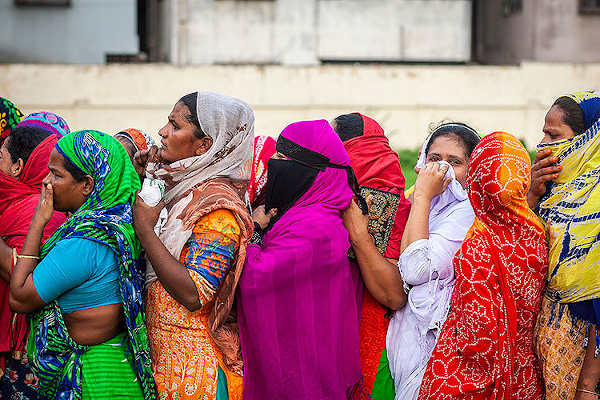
The onset of the COVID-19 pandemic last year led to a devastating loss of jobs and income across the global south, threatening hundreds of millions of people with hunger and lost savings and raising an array of risks for children, according to new research co-authored at the University of California, Berkeley.
The research, published Friday, Feb. 5, in the journal Science Advances, found “staggering” income losses after the pandemic emerged last year, with a median 70 percent of households across nine countries in Africa, Asia and Latin America reporting financial losses.
By April last year, roughly 50 percent or more of those surveyed in several countries were forced to eat smaller meals or skip meals altogether, a number that reached 87 percent for rural households in the West African country of Sierra Leone.
“In the early months of the pandemic, the economic downturn in low- and middle-income countries was almost certainly worse than any other recent global economic crisis that we know of, whether the Asian financial crisis of the late 1990s, the Great Recession that started in 2008, or the more recent Ebola crisis,” said UC Berkeley economist Edward Miguel, a co-author of the study. “The economic costs were just severe, absolutely severe.”
The pandemic has produced some hopeful innovations, including a partnership between the government of Togo in West Africa and UC Berkeley’s Center for Effective Global Action (CEGA) on a system to provide relief payments via digital networks.
But such gains are, so far, isolated.
The new study — the first of its kind globally — reports that after two decades of growth in many low- and middle-income countries, the economic crisis resulting from the COVID-19 pandemic threatens profound long-term impact: Reduced childhood nutrition could have health consequences later in life.
Closed schools may lead to delayed development for some students, while others may simply drop out. When families use their savings to eat, rather than invest in fertilizer or farm improvements, crop yields can decline.
“Such effects can slow economic development in a country or a region, which can lead to political instability, diminished growth or migration,” said Miguel, a co-director at CEGA.
A troubling picture of life during the pandemic
The study was launched in spring 2020, as China, Europe and the U.S. led global efforts to check spread of the virus through ambitious lockdowns of business, schools and transit. Three independent research teams, including CEGA, joined to conduct surveys in the countries where they already worked.
Between April and early July 2020, they connected with 30,000 households, including over 100,000 people, in nine countries with a combined population of 500 million: Burkina Faso, Ghana, Kenya, Rwanda and Sierra Leone in Africa; Bangladesh, Nepal and the Philippines in Asia; and Colombia in South America. The surveys were conducted by telephone.
Reports early in the pandemic suggested that developing countries might be less vulnerable because their populations are so much younger than those in Europe and North America.
But the research teams found that, within weeks after governments imposed lockdowns and other measures to control the virus’s spread, the pandemic was having a pervasive economic impact:
Income fell broadly. In Colombia, 87 percent of respondents nationwide reported lost income in the early phase of the pandemic. Such losses were reported by more than 80% of people nationwide in Rwanda and Ghana.
People struggled to find food. In the Philippines, 77 percent of respondents nationwide said they faced difficulty purchasing food because stores were closed, transport was shut down or food supplies were inadequate. Similar reports came from 68 percent of Colombians and 64% of respondents in Sierra Leone; rates were similar for some communities within other countries.
Food insecurity rose sharply. While the impact was worst in rural Sierra Leone, other communities were hard hit: In Bangladesh, 69 percent of landless agricultural households reported that they were forced to eat less, along with 48 percent of households in rural Kenya.
Children faced increased risk. With schools closed, the risk of educational setbacks rose. Many respondents reported delaying health care, including prenatal care and vaccinations. Some communities reported rising levels of domestic violence.
“The combination of a lengthy period of undernutrition, closed schools, and limited health care may be particularly damaging in the long run for children from poorer households who do not have alternative resources,” the authors wrote.
Miguel’s recent research has focused on economic conditions for poor people in Kenya, and he said people there scrambled to cope with the crisis.
“People moved in with relatives,” he said. “People moved back to their home areas in rural places where there was food. Other people were just relying on the generosity of friends and relatives and co-workers to get by. When you're living on only a couple of dollars a day, and you don't get that money, it's a desperate situation.”
Wealthier countries are also gripped by crisis, but co-author Susan Athey, an economist at Stanford University’s Graduate School of Business, said they’re better able to cope.
“COVID-19 and its economic shock present a stark threat to residents of low- and middle-income countries — where most of the world’s population resides — which lack the social safety nets that exist in rich countries,” Athey said. “The evidence we’ve collected shows dire economic consequences … which, if left unchecked, could thrust millions of vulnerable households into poverty.”
A model of positive, high-impact international partnership
In fact, Miguel said, governments everywhere have struggled to address the health and economic dimensions of the pandemic. In both rich and poor nations, he said, governments have used the pandemic as a reason to crack down on political opponents.
But the crisis has also produced hopeful engagements. The CEGA initiative to support Togolese leaders in developing a system for digital relief payments could be a model for international partnerships.
Under that project, CEGA co-Director Joshua Blumenstock has worked closely with top government officials in Togo to develop an advanced data-driven system for identifying people in need and delivering financial aid. The system uses new computational technologies, with data from satellite imagery, mobile phones and traditional surveys to identify people or communities in economic distress.
CEGA and the GiveDirectly aid organization have just won a $1.2 million grant under the data.org Inclusive Growth and Recovery Challenge to allow further work on the project.
“Over 550,000 Togolese individuals have received cash transfers of roughly $20 a month,” said Lauren Russell, CEGA director of operations. “The grant should allow for the project to be scaled and evaluated even further, with the hope that the methods might be well-suited for adoption by other low- and middle-income countries.”
Global crises require global solutions
Still, Miguel said the disparities between rich and poor nations have been “disheartening.” In North America and Europe, nations may be struggling with vaccination plans, but vaccines have barely arrived in most low-income countries, he said.
“We will not recover in the rich countries until the whole world gets the vaccine and until the crisis is dealt with globally,” he said. “As long as there's active pandemic in parts of the world that's affecting travel and tourism and trade, our economy and our society is going to suffer. If we can spread the wealth in terms of pandemic relief assistance and vaccine distribution, we're all going to get out of this hole faster.”
Edward Lempinen writes for the UC Berkeley News Center.

For decades after its discovery, observers could only see the solar chromosphere for a few fleeting moments: during a total solar eclipse, when a bright red glow ringed the Moon’s silhouette.
More than a hundred years later, the chromosphere remains the most mysterious of the Sun’s atmospheric layers. Sandwiched between the bright surface and the ethereal solar corona, the Sun’s outer atmosphere, the chromosphere is a place of rapid change, where temperature rises and magnetic fields begin to dominate the Sun’s behavior.
Now, for the first time, a triad of NASA missions have peered into the chromosphere to return multi-height measurements of its magnetic field. The observations – captured by two satellites and the Chromospheric Layer Spectropolarimeter 2, or CLASP2 mission, aboard a small suborbital rocket – help reveal how magnetic fields on the Sun’s surface give rise to the brilliant eruptions in its outer atmosphere. The paper was published today in Science Advances.
A major goal of heliophysics – the science of the Sun’s influence on space, including planetary atmospheres – is to predict space weather, which often begins on the Sun but can rapidly spread through space to cause disruptions near Earth.
Driving these solar eruptions is the Sun’s magnetic field, the invisible lines of force stretching from the solar surface to space well past Earth. This magnetic field is difficult to see – it can only be observed indirectly, by light from the plasma, or super-heated gas, that traces out its lines like car headlights traveling a distant highway. Yet how those magnetic lines arrange themselves – whether slack and straight or tight and tangled – makes all the difference between a quiet Sun and a solar eruption.
“The Sun is both beautiful and mysterious, with constant activity triggered by its magnetic fields,” said Ryohko Ishikawa, solar physicist at the National Astronomical Observatory of Japan in Tokyo and lead author of the paper.
Ideally, researchers could read out the magnetic field lines in the corona, where solar eruptions take place, but the plasma is way too sparse for accurate readings. (The corona is far less than a billionth as dense as air at sea level.)
Instead, scientists measure the more densely packed photosphere – the Sun’s visible surface – two layers below. They then use mathematical models to propagate that field upwards into the corona. This approach skips measuring the chromosphere, which lies between the two, instead, hoping to simulate its behavior.
Unfortunately the chromosphere has turned out to be a wildcard, where magnetic field lines rearrange in ways that are hard to anticipate. The models struggle to capture this complexity.
“The chromosphere is a hot, hot mess,” said Laurel Rachmeler, former NASA project scientist for CLASP2, now at the National Oceanic and Atmospheric Administration, or NOAA. “We make simplifying assumptions of the physics in the photosphere, and separate assumptions in the corona. But in the chromosphere, most of those assumptions break down.”
Institutions in the U.S., Japan, Spain and France worked together to develop a novel approach to measure the chromosphere’s magnetic field despite its messiness. Modifying an instrument that flew in 2015, they mounted their solar observatory on a sounding rocket, so named for the nautical term “to sound” meaning to measure. Sounding rockets launch into space for brief, few-minute observations before falling back to Earth. More affordable and quicker to build and fly than larger satellite missions, they’re also an ideal stage to test out new ideas and innovative techniques.
Launching from the White Sands Missile Range in New Mexico, the rocket shot to an altitude of 170 miles for a view of the Sun from above Earth’s atmosphere, which otherwise blocks certain wavelengths of light. They set their sights on a plage, the edge of an “active region” on the Sun where the magnetic field strength was strong, ideal for their sensors.
As CLASP2 peered at the Sun, NASA’s Interface Region Imaging Spectrograph or IRIS and the JAXA/NASA Hinode satellite, both watching the Sun from Earth orbit, adjusted their telescopes to look at the same location. In coordination, the three missions focused on the same part of the Sun, but peered to different depths.
Hinode focused on the photosphere, looking for spectral lines from neutral iron formed there. CLASP2 targeted three different heights within the chromosphere, locking onto spectral lines from ionized magnesium and manganese. Meanwhile, IRIS measured the magnesium lines in higher resolution, to calibrate the CLASP2 data. Together, the missions monitored four different layers within and surrounding the chromosphere.
Eventually the results were in: The first multi-height map of the chromosphere’s magnetic field.
“When Ryohko first showed me these results, I just couldn't stay in my seat,” said David McKenzie, CLASP2 principal investigator at NASA’s Marshall Space Flight Center in Huntsville, Alabama. “I know it sounds esoteric – but you've just showed the magnetic field at four heights at the same time. Nobody does that!”
The most striking aspect of the data was just how varied the chromosphere turned out to be. Both along the portion of the Sun they studied and at different heights within it, the magnetic field varied significantly.
“At the Sun’s surface we see magnetic fields changing over short distances; higher up those variations are much more smeared out. In some places, the magnetic field didn't reach all the way up to the highest point we measured whereas in other places, it was still at full strength.”
The team hopes to use this technique for multi-height magnetic measurements to map the entire chromosphere’s magnetic field. Not only would this help with our ability to predict space weather, it will tell us key information about the atmosphere around our star.
“I'm a coronal physicist – I'm really interested in the magnetic fields up there,” Rachmeler said. “Being able to raise our measurement boundary to the top of the chromosphere would help us understand so much more, help us predict so much more – it would be a huge step forward in solar physics.”
They’ll have a chance to take that step forward soon: A re-flight of the mission was just greenlit by NASA. Though the launch date isn’t yet set, the team plans to use the same instrument but with a new technique to measure a much broader swath of the Sun.
“Instead of just measuring the magnetic fields along the very narrow strip, we want to scan it across the target and make a two-dimensional map,” McKenzie said.
Measuring magnetic fields
To measure magnetic field strength, the team took advantage of the Zeeman effect, a century-old technique. (The first application of the Zeeman effect to the Sun, by astronomer George Ellery Hale in 1908, is how we learned that the Sun was magnetic.) The Zeeman effect refers to the fact that spectral lines, in the presence of strong magnetic fields, splinter into multiples. The farther apart they split, the stronger the magnetic field.
The chaotic chromosphere, however, tends to “smear” spectral lines, making it difficult to tell just how far apart they split – that’s why previous missions had trouble measuring it. CLASP2’s novelty was in working around this limitation by measuring “circular polarization,” a subtle shift in the light’s orientation that happens as part of the Zeeman effect.
By carefully measuring the degree of circular polarization, the CLASP2 team could discern how far apart those smeared lines must have split, and thereby how strong the magnetic field was.
Miles Hatfield works for NASA’s Goddard Space Flight Center in Greenbelt, Maryland.