 How to resolve AdBlock issue?
News
The agency said the achievement is a result of Gov. Gavin Newsom’s 2019 directive to convene a cabinet-level Work Group for Aging, as well as the Master Plan for Aging (Executive Order N-14-19).
Released earlier this year, the Master Plan for Aging outlines five bold goals and twenty-three strategies to build a California for All Ages by 2030.
AB 1118 (Blanca Rubio, Chapter 820, Statutes of 2019) directed the Secretary of California’s Health and Human Services Agency to consider applying on behalf of the state to join the age-friendly network as part of the Master Plan for Aging.
“California has the nation’s largest and most diverse aging population. We must tap into those talents and address the critical needs, so all Californians can have healthy and happy older years — especially those at greater risk of isolation, abuse, or homelessness,” said Gov. Gavin Newsom. “We are committed to creating a California for all ages where everyone has the ability to live and thrive in the community they choose.”
“California has launched a bold ten-year master plan for aging, as we recover from the COVID-19 pandemic and build back better. This new plan provides an inclusive and equitable framework for transforming aging in this state for individuals, families, and communities,” said Kim McCoy Wade, Director of the California Department of Aging. “We look forward to working with AARP to forge partnerships that will create change in every community.”
AARP’s network, an affiliate of the World Health Organization’s Global Network of Age-Friendly Cities and Communities Program, is part of an international campaign to help communities prepare for rapidly aging populations and the parallel trend of urbanization.
“By 2030, 10.8 million Californians will be aged 60 or over. That means older adults will make up one quarter of the state’s population, nearly double the number 10 years ago — a growth rate larger than any other age group,” said Nancy McPherson, AARP California state director. “The cost of being unprepared for this shift is unaffordable and untenable. AARP applauds the State of California for acting to improve livability in the state through the Master Plan for Aging and enrolling the state in the AARP Network of Age-Friendly States and Communities. The state now joins arms with communities around the world to implement innovative strategies that improve livability in communities and involve older residents in the process.”
As a member of the AARP Network of Age-Friendly States and Communities, California commits to identifying the challenges of its aging population and identifying policy and programmatic solutions that will improve the quality of life for all ages in the community — in collaboration with residents, communities and partners.
By enrolling in the AARP network, the state will gain access to national and global research, community networks, planning models and best practices to improve livability for all ages and abilities.
“We are thrilled to join this network of communities, giving us the opportunity to learn from others while also contributing to the network through our own best practices and lessons learned,” said California Health and Human Services Secretary Dr. Mark Ghaly. “California’s Master Plan for Aging is our road map to building a California Dream that is inclusive of our older and disabled neighbors.”
“Improving livability, combating ageism, enabling autonomy and supporting healthy aging for all have long been priorities of mine because they are so important to my constituents, and Californians more broadly. I authored AB 1118 because I saw it as being complementary to the Governor’s Master Plan for Aging work, and as an opportunity for California to lead on aging issues by partnering with AARP. I’m hopeful that this partnership, combined with the Master Plan for Aging, will truly help to advance more livable communities that are age and disability-friendly,” said Assemblywoman Blanca Rubio.
People of all ages and abilities benefit from the adoption of policies and programs that make neighborhoods walkable, feature safe transportation options, enable access to key services, provide opportunities to participate in community activities, and support housing that is affordable and adaptable.
Well-designed, age-friendly communities foster economic growth and make for happier, healthier residents of all ages — an important need during the current crisis.
In addition to the state’s enrollment, over 50 California communities, representing over half of the state’s population, are already enrolled in the AARP Network — ranging in size from the Town of Fairfax to Los Angeles County.
Officials said the addition of California will create synergy with the local jurisdictions and build upon and further advance building age friendly communities.
Nationwide, more than 500 communities, one U.S. territory and now eight states have received the Age-Friendly designation from AARP.
See the full list of network members here.
A copy of the proclamation can be found below.
As we celebrate and declare June as Pride Month in California, we are reminded of what makes California great – our remarkable capacity to advance together and exist as the most diverse democracy in the world.
We stand together with the lesbian, gay, bisexual, transgender and queer (LGBTQ) community of California as they declare their pride in who they are and whom they love.
The LGBTQ community has worked tirelessly for respect, equality and their very right to exist. Their battles have been fought in the courts, from marriage equality to demanding equal protection under the law.
While there has been remarkable progress towards acceptance and equality in recent years, members of the LGBTQ community in the United States and around the world still face an unacceptable level of discrimination and violence. This includes LGBTQ people who aren’t safe at home and those who do not have a home in which to stay.
We must push back against those who threaten the safety of LGBTQ Californians and challenge our progress. And we must continue to make the case that all human beings share something fundamental in common — all of us want to love and be loved.
Last Pride month, in the throes of a once-in-a-generation pandemic, we celebrated virtually. Now, as we move “beyond the blueprint” this month, we look forward to the opportunity for the community and its allies to gather together in celebration once again.
We are proud to support our LGBTQ community’s right to live their lives out loud. As we celebrate Pride across the state, we must continue to demand equal rights for all to create a California for all.
NOW THEREFORE I, GAVIN NEWSOM, Governor of the State of California, do hereby proclaim June 2021 as “LGBTQ Pride Month.”
The California Department of Finance’s annual demographic report showed the state’s population dipped by 182,083 residents last year, bringing the state’s total number of residents to 39,466,855 people as of Jan. 1, 2021.
The Department of Finance said California’s negative growth rate of -0.46% in 2020 represents the first 12-month decline since state population estimates have been recorded.
The report showed that Lake County’s population declined slightly, by -0.1%, with the most recent population totaling 63,940 as of Jan. 1.
That’s the lowest population for Lake County since January of 2007, based on Department of Finance records.
That -0.1% decline also was reported in the cities of Clearlake and Lakeport. The report said Clearlake’s population totaled 13,993 as of Jan. 1, while Lakeport’s total number of residents was 4,774. The population for the balance of the county totaled 45,173.
In Lake’s neighboring counties, the following numbers were reported:
— Colusa: 1% growth rate; population totals 22,248 residents.
— Glenn: 0.3% growth rate; population totals 29,679 residents.
— Mendocino: growth declined, -1.2%; population totals 86,669 residents.
— Napa: growth declined, -1%; population totals 137,637 residents.
— Sonoma: growth declined, -1.5%; population totals 484,207 residents.
— Yolo: growth declined, -1.7%; population totals 217,500 residents.
The Department of Finance contributed California’s year-over-year population decrease to three principal factors:
— Continuing declines in natural increase — births minus non-COVID-19 deaths, for a loss of 24,000;
— Continuing declines in foreign immigration, accelerated in recent years by federal policy that resulted in the loss of 100,000; and
— Deaths in 2020 separately associated with the COVID-19 pandemic, with 51,000 Californians dying due to the pandemic.
The report said contributing to the state’s population growth slowing and plateauing in recent years is the slowdown in natural increase, which is a nationwide trend affecting California more than other states.
The COVID-19 pandemic increased California deaths in 2020 by 51,000 — 19% above the average death rate for the three preceding years.
“Excess deaths” — rates above the past three-year average — were observed in 51 of the state’s 58 counties.
Of those 51 counties, 19 reported death rates up to 10% above average, 20 reported deaths between 10 and 20% above average, and 12 reported deaths 20% or more above average.
Email Elizabeth Larson at
The July 4 holiday, a centerpiece of the city’s event calendar, didn’t take place in 2020 due to concerns about bringing thousands of people together during the COVID-19 pandemic.
However, with COVID-19 case numbers declining and California expected to fully reopen on June 15, the city’s staff has worked over the last several months to create a plan for a safer, modified event.
“This has been a tremendous group effort going forward,” City Manager Kevin Ingram told the council.
On April 20, after an initial discussion on the plan, the council directed staff to move forward with the event, which includes COVID-19 mitigation measures.
Since then, COVID-19 guidelines have changed at least a half a dozen times, Ingram said.
One of the directions from the council at its April 20 meeting was to create a larger area for safe and sane fireworks to be used in order to ensure social distancing.
Ingram said the discharge area will be located along Fourth Street at the city’s parking area, where streets will be closed.
“That’s a much larger area than in years past,’ he said.
The fireworks barge will be moved and positioned more to the north of its usual spot offshore of Library Park, which Ingram said will make the fireworks display more visible from the former Natural High School property — where the new lakeside park is being built — as well as from Library Park.
He said the plans also have been reviewed by Lake County Public Health, which did not have immediate comments, other than to direct the city to keep reviewing and monitoring state guidance.
Ingram said the plans include Police Chief Brad Rasmussen’s recommendation to prohibit alcohol use and sales to ensure social distancing. That will be in effect just for this year.
The staff report included maps and signage that will be used for the event, showing that there will be no alcohol allowed. Participants will be asked to self-screen for COVID-19 symptoms and sanitize their hands, and masking and social distancing of 6 feet will be required.
Administrative Services Director-City Clerk Kelly Buendia said staff will continue to watch guidance from both the state and the Centers for Disease Control and Prevention for guidance on large events.
“We don’t believe this is going to rise to the large event standards that are proposed,” said Buendia. As a result, “It doesn't look like masks are going to be required for an event like this.”
Ingram said the most recent guidance they’ve seen on “mega-events” — which are defined as having 10,000 or more people participating — includes a masking requirement. But in past years, Lakeport’s July 4 event has seen in the range of 5,000 people, but never more than 7,500.
“We don’t anticipate we’re going to come near that mega-event threshold,” he said.
Mayor Kenny Parlet said he appreciated the work staff had put into the plan.
“It may be one of the best Fourth of Julys ever,” Parlet said.
Councilman Michael Green, a proponent of masking throughout the pandemic, suggested that masking and social distancing may not be enforceable for July 4 if this past weekend’s Memorial Day parade is a litmus test.
At the parade, social distancing was good but Green said masking was slim to none. As such, he said they may not want to require masks.
Ingram said that, to the best of staff’s knowledge, the new guidance the state is expected to issue on June 15 would not require masks.
Staff will wait and see what is released officially on June 15, and if masks aren’t required, they can amend the signs planned for the event, Ingram said.
Councilwoman Mireya Turner agreed with Green’s position, noting that enforcing the alcohol rules will keep everyone busy.
Councilwoman Stacey Mattina added, “We’ve followed the state the whole way,” so it makes sense to continue to do so.
Turner moved to approve event Application 2021-016 for the July 4 fireworks display, with Mattina seconding and the council voting 5-0.
Email Elizabeth Larson at
The Clear Lake Shoreline Clean-Up Day will take place from 9 a.m. to 1 p.m. Saturday, June 19.
The Lake County Water Resources Department’s AmeriCorps CivicSpark Fellows, in partnership with Lake County Special Districts and the city of Lakeport, are hosting the cleanup.
No pre-registration is required.
Participants are asked to check in with Water Resources staff at tables in Library Park in Lakeport, Redbud Park in Clearlake, or Lucerne Harbor Park in Nice anytime during the four hours of the cleanup on the day of the event.
Gloves, masks and bags will be provided. Social distancing guidelines will be followed.
Contact Connie Warthen at
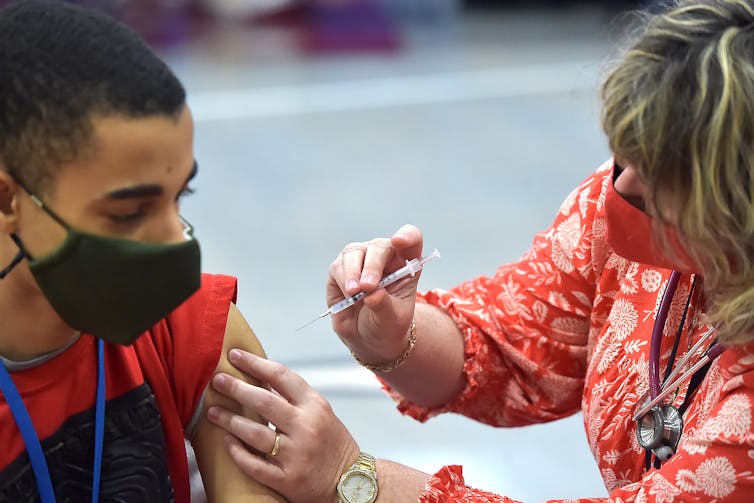
When many people think of a school nurse, they imagine a person who hands out Band-Aids for boo-boos.
But school nurses do so much more. They are school leaders who address the physical, mental and emotional health needs of students.
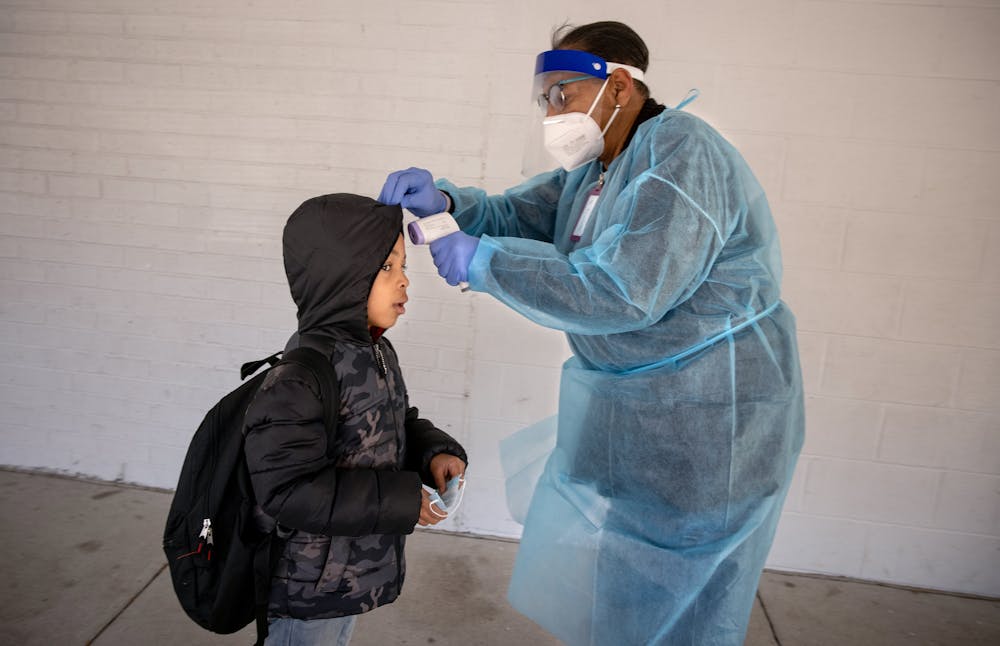
As the COVID-19 pandemic played out, many school nurses took on even greater responsibilities. These include monitoring and evaluating staff and students for COVID-19 exposure and symptoms, contact tracing and educating students, staff and community partners on vaccine and prevention measures. School nurses are also developing initiatives to deal with the anticipated increase in mental health services that students, families and staff will need in the post-pandemic world.
And yet, the U.S. Department of Health and Human Services and the Centers for Disease Control and Prevention recommend that public elementary, middle and high schools aim to have one school nurse for every 750 students.
As a former school nurse and current nurse scientist and professor of nursing, I know that this one-size-fits-all model does not consider the full role and responsibilities of the school nurse.
What’s more, as far as I can tell, no published research or evidence supports this ratio. It’s been traced at least as far back as the early 1970s and the Education for All Handicapped Children Act of 1975, now known as the Individuals with Disabilities Education Act.
Safety net for vulnerable kids
School nursing is a specialized practice that operates in environments very different from an acute care hospital setting. School nurses work alone, practice independently and are typically the sole health care provider in the building.
As part of our public health system, they play a critical role in disease surveillance, disaster preparedness, wellness and chronic disease prevention interventions, immunizations, mental health screening and asthma education.
And they are a safety net for society’s most vulnerable children. For example, if a student is experiencing food insecurity, the school nurse might coordinate with a community partner or school social worker to help the student and their family not go hungry.
Most school nurses will tell you they are unable to carry out many of these functions, often due to huge workloads or poor staffing.
I know from personal experience. From 2009 to 2014, I was the sole school nurse responsible for the health and safety of over 900 public elementary school children. This included special education classrooms for preschoolers and students with nonverbal autism. I now research how school health policies and practices effect the work environment of school nurses, and the challenges and barriers they face.
Research shows how a positive work environment for school nurses increases job satisfaction, reduces turnover and improves academic outcomes for students. A study of school nurses in Massachusetts schools demonstrated that for every dollar invested in school nursing, society would gain US$2.20 as a result of kids’ better health and disease prevention.
No one-size-fits-all ratio
A school nurse’s workload depends on a number of significant variables. For example, how many students in the school have chronic illnesses and need medication administered? How many students attend the school? What ages are they? What is the average number of student visits to the health office each school day? Are students spread across multiple buildings? What level of experience and specialized skills does the school nurse have?
The number of students in a school who are dealing with poverty or other health equity issues – including access to quality education, safe housing and health care – also impacts and increases the workload for school nurses.
These evidence-based variables can be used to guide school administrators and school nurses on what constitutes safe staffing. Making sure school nurses have a safe, appropriate workload is critical to ensuring that students have their health needs met at school.
[Get the best of The Conversation, every weekend. Sign up for our weekly newsletter.]
Parents who are concerned about their child’s health at school may want to find out how many students their child’s school nurse cares for. How many students does the school nurse see on a typical day? Is a school nurse in the building every day? Does the school nurse cover more than one building? What happens when there is an emergency, such as a child with a life-threatening allergic reaction? Where are the emergency care plans kept? Is there stock medication available such as epinephrine and albuterol for students with severe allergies or asthma?
I believe school nurses need more manageable workloads in order to provide the safe care needed for better student health and academic outcomes. This leads to better health not just in individuals but in communities that need it most.
Beth Jameson, Assistant Professor of Nursing, Seton Hall University
This article is republished from The Conversation under a Creative Commons license. Read the original article.