 How to resolve AdBlock issue?
News

The U.S. is in far different shape today than it was last Memorial Day, and many Americans are, too.
According to a recent survey by the American Psychological Association, undesired changes in weight driven by pandemic stress are widespread: 42% of adults reported gaining weight, with a median weight gain of 15 pounds, while 18% reported undesired weight loss. About 66% of people reported changes in their sleep habits, and 23% of respondents reported an increase in alcohol use.
In addition, many people have delayed routine medical and dental maintenance: Think mammograms, childhood immunizations and teeth cleaning. There’s also a mental health pandemic underway in parallel with increased substance use, which must also be addressed.
I am a physician and associate professor of medicine at Michigan State University’s College of Human Medicine. In my role as the director of wellness, resiliency and vulnerable populations, I hear the concerns of faculty and staff regarding returning to on-site work.
The switch that got flipped in March 2020 to social distancing, remote schooling, mask-wearing and long-distance work – or no work – is switching back almost as abruptly. With little preparation time, many people are faced with wanting to be in top form for reentry. Resuming – or beginning – healthier habits is a wonderful goal. Trying to get back to normal too quickly, however, may be hard on joints and hearts. Here is a guide to help you get back in shape without hurting yourself.
Attitude matters
It is vital to begin with acceptance of your current state while you plan and implement changes. It may be necessary to hold two seemingly contradictory truths at once – a core tenet of dialectical behavioral therapy, or DBT. A classic example of DBT is when a therapist tells a client, “I love you exactly the way you are, and I’m here to help you change.” The statements are simultaneously in opposition to each other and true.

Doing this in terms of pandemic-driven changes involves three steps:
-
Take note of the current reality, such as, “I am up 10 pounds,” “I am drinking more than before the pandemic,” or “I’m not getting enough exercise anymore,” but without negative self-judgment.
-
Make realistic, measurable goals for change: “I want to lose a pound in four weeks,” “I want to climb a flight of stairs without becoming breathless,” or “I will drink alcohol only when out with friends.”
-
Create a plan to achieve these goals.
Also, wanting to take good care of oneself, rather than wanting to look or be a certain way, is an important focus. A little self-knowledge goes a long way here. People who tend to go “all in,” rather than doing things gradually, need to be sure their plans are safe by seeking professional guidance from a reliable source, such as getting weight loss advice from a family doctor rather than from people or companies that a New York Times opinion writer recently described as “weight-loss profiteers.”
How can this process be applied to some common pandemic-driven health problems? Here are some suggestions.
Sleep
One of the most effective and “simple but not easy” ways to normalize sleep is to pay attention to one’s sleep hygiene. Good sleep hygiene includes having a distraction-free, dark, quiet place to sleep. This may require using a sleep mask, blackout curtains or a white noise machine, and having no TV in the bedroom.
Even parents of very young children who may find these steps unrealistic can make some changes to help improve sleep, such as avoiding naps, sticking to a schedule, developing a routine, and engaging in some physical activity to tire oneself out before bedtime. Having a cutoff time for caffeinated beverages, as well as avoiding late night dining and too much alcohol, also help.

If excessive snoring is a problem, or getting very sleepy and dozing off throughout the day, or any other unusual symptoms, consulting a doctor should be part of the plan.
Alcohol
There are many shades of alcohol consumption between complete abstinence and full blown alcohol use disorder. If the goal is to stop drinking alcohol entirely, it’s important to stay alert to signs of alcohol withdrawal, which can range in severity from symptoms of a mild hangover to delirium tremens (experiencing a sudden and severe state of confusion), seizures and delusions. The good news is that there are now medications in addition to behavioral and support groups that can help.
If you’re concerned, try a brief self-screening test and talk with your physician.
Physical activity
To come up with a safe exercise plan, start with an honest self-assessment. This includes looking at your current age and physical condition (particularly knees, hips, lungs, heart and balance); weight and weight changes during the pandemic; and activity levels before and during lockdown. The National Academy of Sports Medicine offers a downloadable questionnaire that can help with making this self-assessment.

Remember there are weight bearing, aerobic and stretching types of exercises. With each, begin at a level of comfort and gradually go slightly further. For example, if the goal is to start running, consider starting small, with a 30-minute routine a few days a week that involves a jog for one minute followed by walking for four minutes. Each week up the ante, such as shifting on the second week to jogging for two minutes then walking for three.
If the goal is to start walking, setting a time limit can help to achieve tangible goals: a 10-minute walk a few days the first week, 15 minutes the next week and so on, until the walk lasts 30 minutes and happens a few times a week. Then focus on increasing the pace.
Chest or arm pain, dizziness or extreme discomfort, are all signs to stop. While it’s useful to get to know what it feels like to be a little sore from working hard and how that differs from pushing it too far, it’s also a good idea to become familiar with the warning signs of a heart attack.
Whether they involve mental or physical health - while this tends to be an artificial separation - post-lockdown behavior changes should begin with an accurate assessment of how things are, a realistic goal for what they will become, and a plan to get there. All of these should reflect care and love for one’s self and one’s body.
Have a happy - and safe - reentry!
Claudia Finkelstein, Associate Professor of Medicine, Michigan State University
This article is republished from The Conversation under a Creative Commons license. Read the original article.

KELSEYVILLE, Calif. — Although challenges posed by the pandemic prevented some students from achieving their goals this year, Kelseyville High School FFA students had a busy and productive year, said FFA advisers and agriculture instructors Donelle McCallister, Heather Koschik and Mike Zeni.
Kelseyville has a reputation for a strong FFA program, which the advisers attribute to the hard work of the students and the consistent support of school and district administrators.
KHS Principal Mike Jones was selected as the 2021 North Coast FFA Region Star Administrator and Kelseyville Unified School District Superintendent Dave McQueen has been a vocal supporter of the program for years.
According to its mission statement, the National FFA Organization is “dedicated to making a positive difference in the lives of students by developing their potential for premier leadership, personal growth and career success through agricultural education.”
This is done through a combination of classroom learning, FFA participation, and Supervised Agriculture Experience, or SAE, projects.
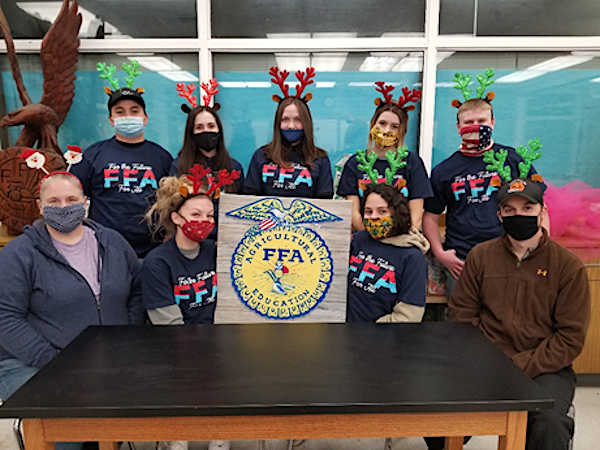
In order to offer an FFA program, high schools must have a certified and approved agriculture program.
McCallister said, “Even though the pandemic affected our schools, several agriculture students maintained SAE projects in livestock, horticulture, ag mechanics, and work experience.” At the 2020 Lake County Fair, for example, FFA students competed in market hogs, market steers, and rabbits with the following results:
— Grand Champion Market Steer and 1st in Showmanship: Laynie Wright.
— Grand Champion Market Hog: Robin Adams.
— Reserved Grand Market Hog: Laynie Wright.
— Hog Showmanship: 11 of the 14 students with hogs received showmanship pins.
— Reserved Grand Champion Rabbit Meat Pen: Katey Brown.

Students also participated in activities such as operating the Wildhurst Pumpkin Patch and Corn Maze in fall, donating toys for Lake County shelters in winter, selling thousands of plants they had grown during a two-day sale in spring, and assisting at the Lake County Gleaners with food packaging and delivery days in summer.
Although FFA officers always take on significant responsibility to manage their 300-student membership, the officers elected in May of 2020 had to overcome restrictions imposed by the pandemic.
The following students developed a program of activities and successfully ran monthly chapter meetings using Google Classroom: President Hanna Scully; Vice President Laynie Wright; Secretary Dallis Beverlin; Reporter Iyali Aguirre; Reporter Robin Adams; Treasurer Jenna Williams; Treasurer Omar Cacho; Sentinel Steven Frace; and ASB representative Macy Holt.
Four KHS students received their State FFA degree, a rare accomplishment with only 3 percent of the membership achieving this honor each year: Omar Cacho, Iyali Aguirre, Kaylie Davis, and Victor Sepulveda.
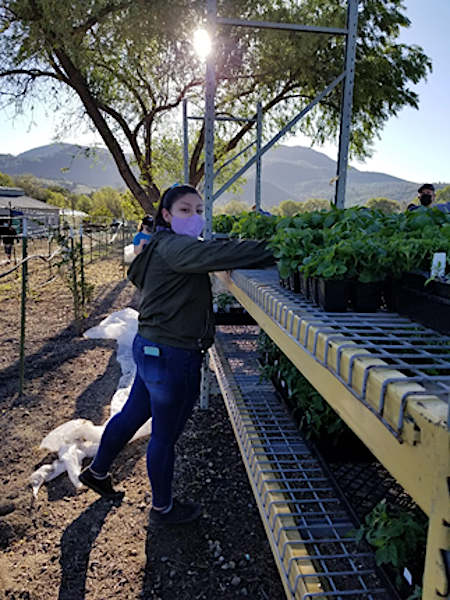
Requirements for the degree include completing two years of ag and earning or investing $1,000 in SAE; working in excess of 300 hours beyond school in SAE; 50 hours of community service participation in local-and-above chapter activities; completing agriculture experience tracker record books and submitting the books and applications.
Because FFA recognizes the importance of leadership, it hosts competitions to encourage public speaking, a key leadership skill.
At the Mendo/Lake FFA Section Job Interview Contest, Hanna Scully placed first and Iyali Aguirre placed second. At the Mendo/Lake Impromptu Speaking Contest, Steven Frace placed first.
In March, KHS junior Iyali Aguirre was elected as North Coast FFA Regional President for the 2021-22 school year, representing 38 North Coast FFA chapters. Aguirre was then selected to serve on the State FFA Nominating Committee interviewing 49 potential State Officer candidates to select 12 for the State ballot.
The 12 members of the State Nominating Committee selected Aguirre to announce the candidates for ballot and approval of the committee report during the State FFA Conference.

In March, KHS senior Hanna Scully was selected as the North Coast Regional winner in a proficiency award in Agricultural Services based on her work at her family-owned pear packing shed, Scully Packing. Based on her regional performance, she competed at the state level in May where she was announced as the winner.
She is currently in the process of submitting an application for the National Proficiency competition. Scully also won a State FFA Scholarship, the Mabel W. Jacks Memorial State Scholarship.
Kelseyville High School’s ag program features a two-acre ag farm on the high school campus with a livestock barn where students can keep and care for projects, a 7,000-square-foot greenhouse that recently got a permanent roof, a one-acre Sauvignon Blanc vineyard, a show ring, gardens, and more.
KHS also has a new ag mechanics shop, one of the projects funded by Measure U, the $24 million bond measure passed in 2016. The shop allows students to gain practical skills in woodworking, ag, metals, and mechanics.
“We cannot thank our community enough for their support,” McCallister said.

LAKE COUNTY, Calif. — When you think of orchids, it is usually along the lines of beautiful flowers, long bloom time, tropical location, then an impulse purchase of one from the grocery store, which you bring one home to enjoy for a while but it never blooms again no matter what you do and eventually shrivels up and dies.
But this is a column about native wildflowers in Lake County so why are we talking about orchids? Well, they grow here as well!
Actually, orchids grow on every continent in the world (except Antarctica) and Lake County is home to nearly 20 species of orchids and are delightful to observe in the wild and some species can be purchased from native plant nurseries to cultivate in your home garden.
“In the wild, E. gigantea lives near the water. Any water. They have been found in stream banks, perennial seeps, the edges of lakes, in marshes and even at the margins of hot springs! They are almost indifferent to water chemistry and temperature (if plants can grow in the water, it will),” according to the Orchid Society of Northern Nevada.
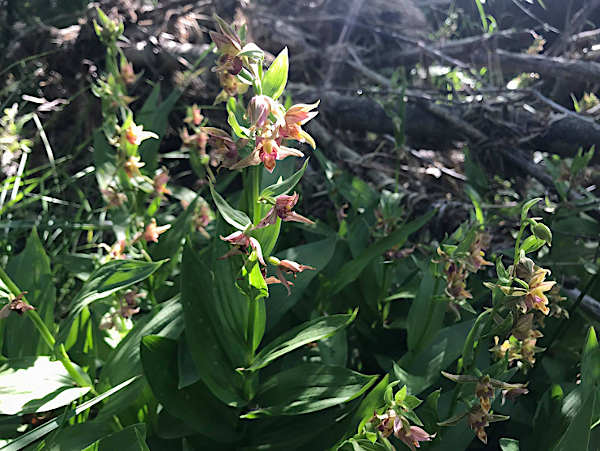
They prefer wet or marshy soils, but can survive being underwater occasionally (wet winters), which describes many of our riparian areas in Northern California and Lake County where streams go dry in the summer and when they do, giant stream orchids also dry up as well, and return in the late spring after a winter of rain even if they’ve been underwater for a while.
Tolerant of a range of soil types, giant stream orchids can grow in gravel, sand, or clay and can thrive with dappled sunlight, all the way to full sun depending on the amount of moisture in the soil, and are the best bet to attempt to grow orchids in your gardens here in Lake County.
When the two basal leaves of the Rein Orchid (Piperia elegans) begin growing in your yard in Cobb, you recognize that they look like orchid leaves — but Cobb is not a tropical environment — so you watch, and are delighted when the single stem with multiple buds open to fragrant small white/green flowers.

“Rein orchid plants are best enjoyed in their natural environment and they’re almost certain to die if you attempt to transplant wild plants into your garden,” according to the website Gardening Know How. “Like many terrestrial orchids, rein orchids have a symbiotic relationship with tree roots, fungus, and decaying plant debris in the soil and they won’t grow in a habitat that isn’t just right.”
Another orchid that relies on fungus is the phantom orchid, and is the only Cephalanthera species entirely dependent on symbiotic mycorrhizae (fungus) for its nutrition. This mycoheterotrophic orchid has no chlorophyll, so it makes no energy for itself which causes the entire plant to be white, except for parts of the flowers.
Sadly, phantom orchids are becoming more scarce as its habitat — dense, isolated forest — becomes more rare, but a few still pop up in Lake County on Cobb and other higher-elevation forests, but climate change models forecast decline and possible extinction of this species by the year 2100.

Although there are a wide variety of orchids native to Lake County, your best bet for growing some in your yard is the giant stream orchid — and it is a lovely choice if you have the right environment.
Find interesting information here on stream orchids and here for orchids in general.
To see and learn more about the species of Orchids in Lake County, visit CalFlora.
Find nurseries where you can purchase giant stream orchids here.
Terre Logsdon is an environmentalist, certified master composter, and advocate for agroecology solutions to farming. An avid fan and protector of California wildflowers, plants, natural resources, and the environment, she seeks collaborative solutions to mitigate the effects of climate change. Kim Riley is retired, an avid hiker at Highland Springs, and has lived in Lake County since 1985. After 15 years of trail recovery and maintenance on the Highland Springs trails, she is now focused on native plants, including a native plant and pollinator garden on her property as well as promoting and preserving the beauty of the Highland Springs Recreation Area. Karen Sullivan has operated two nurseries to propagate and cultivate native plants and wildflowers, has lived in Kelseyville for the past 30 years, rides horses far and wide to see as many flowers as possible, and offers native plants and wildflowers for sale to the public. You can check her nursery stock here. They are collaborating on a book, Highland Springs Recreation Area: A Field Guide, which will be published in the future. In the meanwhile, please visit https://www.facebook.com/HighlandSpringsNaturalists and https://www.facebook.com/HighlandSpringsRecreationArea.
Boating appears to be surging in popularity in California and nationwide.
California agencies combating the spread of invasive quagga and zebra mussels ask new and seasoned boaters to remain cautious over the three-day Memorial Day weekend to prevent the spread of quagga and zebra mussels by cleaning, draining and drying their watercraft after each outing.
Quagga and zebra mussels are invasive freshwater mussels native to Europe and Asia. They multiply quickly, encrust watercraft and infrastructure, alter water quality and the aquatic food web, and ultimately impact native and sport fish communities.
These mussels spread from one waterbody to another by attaching to watercraft, equipment and nearly anything that has been in an infested waterbody.
Invisible to the naked eye, microscopic juveniles are spread from infested waterbodies by water that is entrapped in boat engines, ballasts, bilges, live-wells and buckets.
Quagga mussels have infested 34 waters in Southern California and zebra mussels have infested two waters in San Benito County, 13 of which are boatable by the public.
To prevent the spread of these mussels and other aquatic invasive species, people launching vessels at any waterbody are subject to watercraft inspections and should clean, drain and dry their motorized and non-motorized boats, including personal watercraft, and any equipment that contacts the water before and after use.
“The California Department of Food and Agriculture operates Border Protection Stations that inspect trailered watercraft entering the state” said California Department of Fish and Wildlife Invasive Species Program Manager Martha Volkoff. “These inspections are an integral part of preventing further introductions of mussels and are also a window into changes in boating trends.”
In the past two years, Volkoff said CDFW has seen a nearly 20% increase in watercraft passing through border protection stations between January and May since the COVID-19 pandemic began.
“Because of the additional boats, we have seen more mussel-fouled boat interceptions, but more concerning, we have also seen a significant increase in the proportion of mussel-fouled boats. We attribute this to many new boaters, who aren’t aware of the mussel issue and how to prevent their spread. Memorial Day is a great opportunity to spread the word to these boaters about the simple actions they should take,” Volkoff said.
CDFW advises boaters to take the following steps before leaving a waterbody to prevent spreading invasive mussels, improve the efficiency of your inspection experience next time you launch, and safeguard California waterways:
CLEAN — inspect exposed surfaces and remove all plants and organisms,
DRAIN — all water, including water contained in lower outboard units, live-wells and bait buckets, and
DRY — allow the watercraft to thoroughly dry between launches. Watercraft should be kept dry for at least five days in warm weather and up to 30 days in cool weather.
CDFW has developed a brief video, shown above, demonstrating the ease of implementing the clean, drain and dry prevention method as well as a list of Watercraft inspection Programs statewide.
In addition, California State Parks Division of Boating and Waterways has a detailed guide to cleaning vessels of invasive mussels and other information available on their web page.
Travelers are also advised to be prepared for inspections at California Department of Food and Agriculture border protection stations.
Over the past decade more than 1.5 million watercraft entering California have been inspected at the border protection stations.
Inspections, which can also be conducted by CDFW and California State Parks, include a check of boats and personal watercraft, as well as trailers and all onboard items.
Contaminated vessels and equipment are subject to decontamination, rejection, quarantine or impoundment.
Quagga and zebra mussels can attach to and damage virtually any submerged surface. They can:
— Ruin a boat engine by blocking the cooling system and causing it to overheat.
— Jam a boat’s steering equipment, putting occupants and others at risk.
— Require frequent scraping and repainting of boat hulls.
— Colonize all underwater substrates such as boat ramps, docks, lines and other underwater surfaces, causing them to require constant cleaning.
— Impose large expenses to owners.
A multi-agency effort that includes CDFW, DBW, CDFA and the Department of Water Resources has been leading an outreach campaign to alert the public to the quagga and zebra mussel threats.
CDFW’s invasive species e-mail,
Dogs available for adoption this week include mixes of husky, McNab, pit bull, Rottweiler and shepherd.
Dogs that are adopted from Lake County Animal Care and Control are either neutered or spayed, microchipped and, if old enough, given a rabies shot and county license before being released to their new owner. License fees do not apply to residents of the cities of Lakeport or Clearlake.
The following dogs at the Lake County Animal Care and Control shelter have been cleared for adoption (additional dogs on the animal control website not listed are still “on hold”).
Call Lake County Animal Care and Control at 707-263-0278 or visit the shelter online at http://www.co.lake.ca.us/Government/Directory/Animal_Care_And_Control.htm for information on visiting or adopting.

Female Rottweiler-shepherd
This female Rottweiler-shepherd mix has a medium-length black and red coat.
She is in kennel No. 12, ID No. 14575.

“Stimpy” is a young female McNab mix with a medium-length white and brindle coat.
She is in kennel No. 14, ID No. 14570.

“Ren” is a young male McNab mix with a short brindle and white coat.
He has been neutered.
He is in kennel No. 15, ID No. 14571.

Female pit bull terrier
This female pit bull terrier has a short blue and white coat.
She is in kennel No. 22, ID No. 14486.

Rottweiler-pit bull mix
This female Rottweiler-pit bull mix has a short black coat.
She has been spayed.
She is in kennel No. 27, ID No. 14551.

‘Brutus’
“Brutus” is a male pit bull terrier with a short gray and white coat.
He is in kennel No. 28, ID No. 14507.
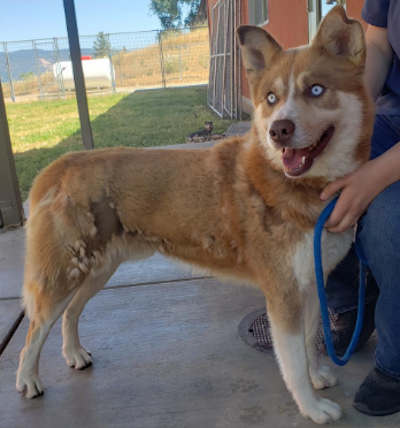
“Apollo” is a male husky mix with a medium-length red and white coat and blue eyes.
He is in kennel No. 31, ID No. 14569.

‘Ghost’
“Ghost” is as male husky mix with a white coat and blue eyes.
He has been neutered.
He’s in kennel No. 32, ID No. 14563.
Email Elizabeth Larson at
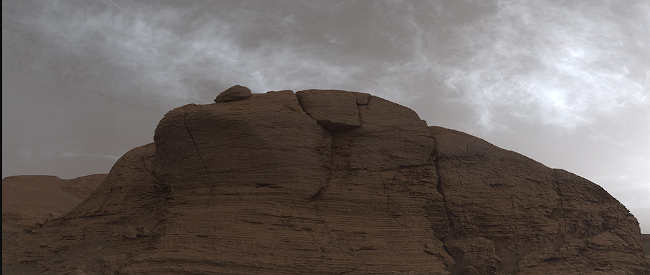
Cloudy days are rare in the thin, dry atmosphere of Mars. Clouds are typically found at the planet’s equator in the coldest time of year, when Mars is the farthest from the Sun in its oval-shaped orbit.
But one full Martian year ago — two Earth years — scientists noticed clouds forming over NASA’s Curiosity rover earlier than expected.
This year, they were ready to start documenting these “early” clouds from the moment they first appeared in late January.
What resulted are images of wispy puffs filled with ice crystals that scattered light from the setting Sun, some of them shimmering with color.
More than just spectacular displays, such images help scientists understand how clouds form on Mars and why these recent ones are different.
In fact, Curiosity’s team has already made one new discovery: The early-arrival clouds are actually at higher altitudes than is typical.
Most Martian clouds hover no more than about 37 miles in the sky and are composed of water ice. But the clouds Curiosity has imaged are at a higher altitude, where it’s very cold, indicating that they are likely made of frozen carbon dioxide, or dry ice.
Scientists look for subtle clues to establish a cloud’s altitude, and it will take more analysis to say for sure which of Curiosity’s recent images show water-ice clouds and which show dry-ice ones.
The fine, rippling structures of these clouds are easier to see with images from Curiosity’s black-and-white navigation cameras. But it’s the color images from the rover’s Mast Camera, or Mastcam, that really shine – literally.
Viewed just after sunset, their ice crystals catch the fading light, causing them to appear to glow against the darkening sky.
These twilight clouds, also known as “noctilucent” (Latin for “night shining”) clouds, grow brighter as they fill with crystals, then darken after the Sun’s position in the sky drops below their altitude. This is just one useful clue scientists use to determine how high they are.
Even more stunning are iridescent, or “mother of pearl” clouds. “If you see a cloud with a shimmery pastel set of colors in it, that’s because the cloud particles are all nearly identical in size,” said Mark Lemmon, an atmospheric scientist with the Space Science Institute in Boulder, Colorado. “That’s usually happening just after the clouds have formed and have all grown at the same rate.”
These clouds are among the more colorful things on the Red Planet, he added. If you were skygazing next to Curiosity, you could see the colors with the naked eye, although they’d be faint.
“I always marvel at the colors that show up: reds and greens and blues and purples,” Lemmon said. “It’s really cool to see something shining with lots of color on Mars.”
For more about Curiosity, visit https://mars.nasa.gov/msl/.
For more about NASA’s Mars program, visit https://mars.nasa.gov.