 How to resolve AdBlock issue?
News
LAKE COUNTY, Calif. — On Friday, the Lake County Campus of Woodland Community College held commencement ceremonies virtually.
The following students who have earned certificates of achievement were recognized for their accomplishments.
Accounting
Accounting Certificate of Achievement: Ami Landrum of Clearlake.
Business
Administrative Assistant Certificate of Achievement: Leah Desouza, Juanita Perez, Andrea Rodriquez-Aguilar and Maryann Silsby of Clearlake.
Clerical Assistant Certificate of Training: Donna Fogoros, Juanita Perez, Maryann Silsby and April Snyder of Clearlake.
Small Business Management Certificate of Achievement: Diana Partida Padilla of Clearlake.
Culinary Arts
Baking Certificate of Achievement: Ericka Dyson and Diana Partida Padilla of Clearlake, and Chloe Seal of Clearlake Oaks.
Culinary Arts Certificate of Achievement: Demarco Conklin, Ericka Dyson and Richard Rodriguez of Clearlake; Chloe Seal of Clearlake Oaks; Nia Garcia of Elk Creek; and Juan Borrayo-Cruz of Hidden Valley Lake.
Early Childhood Education
Associate Teacher Certificate of Achievement: Marilyn Stone of Lower Lake and Irma Zazueta of Middletown.
Child Development Teacher Certificate of Achievement: Teresa Lopez of Clearlake.
Infant and Toddler Certificate of Achievement: Teresa Lopez of Clearlake.
School Age Children Certificate of Achievement: Teresa Lopez of Clearlake.
Environmental Technology
Drinking Water and Waste Water Technology Certificate of Achievement: Douglas Aleman and Gerald Bloom of Clearlake; Richard Nutting of Clearlake Oaks; Raul Barajas and Elsa Gonzalez of Kelseyville; Conner Fisher of Lower Lake; Joshua Campbell of Willits; and John Veguilla of New Braunfels, Texas.
Human Services
Chemical Dependency Counselor Certificate of Achievement: Jennifer Lark of Lower Lake, and Lori Mc Allen of Clearlake.
Interdisciplinary Studies
IGETC Certificate of Achievement: Jaden Moug of Hidden Valley Lake.
ASSOCIATE DEGREES
The students graduating with associate degrees are:
Clearlake
Laura Alanis — Associate in Science, General Education: Natural Science and Mathematics
Estela Bravo Delgadillo — Associate in Science, General Education: Natural Science and Mathematics
Beenaben Dalwadi — Associate in Science for Transfer, Business Administration
Leah Desouza — Associate in Science, Administrative Assistant
Heather Jones — Associate in Science, Early Childhood Education; Associate in Science for Transfer, Early Childhood Education; and Associate in Arts for Transfer, Psychology
Crystal Kraft — Associate in Science for Transfer, Early Childhood Education
Ami Landrum — Associate in Science for Transfer, Business Administration
Teresa Lopez — Associate in Science, Early Childhood Education
Maricarmen Macias — Associate in Science, General Education: Natural Science and Mathematics
Domminic Mayer — Associate in Arts, General Education: Arts and Humanities; Associate in Science, General Education: Natural Science and Mathematics; and Associate in Arts, General Education: Social and Behavioral Science
Joshua Moss — Associate in Science, Business Administration and Associate in Science for Transfer, Business Administration
Josh Moyer — Associate in Science, Drinking Water and Wastewater Technology
Liliana Nelson — Associate in Science, General Education: Natural Science and Mathematics
Estefania Orozco — Associate in Science, General Education: Natural Science and Mathematics
Diana Partida Padilla — Associate in Arts, Culinary Arts
Juanita Perez — Associate in Science, Administrative Assistant
Alasdair Peters — Associate in Science, General Education: Natural Science and Mathematics
Viviana Ramos — Associate in Science, General Education: Natural Science and Mathematics; and Associate in Arts, General Education: Social and Behavioral Science
Vandana Reddy — Associate in Science for Transfer, Biology and Associate in Arts for Transfer, Psychology
Katherine Sheridan — Associate in Science, Early Childhood Education
Alayna Shields — Associate in Science, General Education: Natural Science and Mathematics
Alecia Shope — Associate in Arts, General Education: Social and Behavioral Science
April Snyder — Associate in Science, Administrative Assistant
Danielle Stennet — Associate in Arts for Transfer, Anthropology
Xochiltl Trejo — Associate in Science, General Education: Social and Behavioral Science
Clearlake Oaks
Darren Batzold — Associate in Arts, Arts and Humanities
Justin Farley — Associate in Science, Law Enforcement
Richard Nutting — Associate in Science, Drinking Water and Wastewater Technology
Chloe Seal — Associate in Arts, Culinary Arts
Clearlake Park
Pedro Perez — Associate in Science, Early Childhood Education and Associate in Science, General Education: Natural Science and Mathematics
Marlena Robaugh — Associate in Arts for Transfer, Anthropology and Associate in Arts for Transfer, Psychology
Cobb
David Clark — Associate in Science, Drinking Water and Wastewater Technology
Amaya Luhr Dunshee — Associate in Science, Small Business Management
Elk Creek
Nia Garcia — Associate in Arts, Culinary Arts
Hidden Valley Lake
Joshua Colen — Associate in Science, General Business Management
Kristine McDermand — Associate in Arts, Arts and Humanities
Jaden Moug — Associate in Arts for Transfer, History
Tiffany Sanders — Associate in Arts for Transfer, Psychology
Kelseyville
Elsa Gonzalez — Associate in Science, Drinking Water and Wastewater Technology
Robert Lowrie — Associate in Science, Human Services and Associate in Science, Chemical Dependency Counselor
Ariana Montero Pille — Associate in Arts for Transfer, Economics; Associate in Science for General Business Management; and Associate in Science for Transfer, Business Administration
Scott Sullivan — Associate in Science, Chemical Dependency Counselor
Lakeport
Ian Pickersgill — Associate in Arts, Culinary Arts
Lower Lake
Laura-Jean Bevan — Associate in Science for Accounting; Associate in Science for Business Computer Applications; and Associate in Science for Personnel Management
Rafael Contreras — Associate in Science in Natural Sciences and Associate in Arts in Social and Behavioral Science
Fabiola Cordova — Associate in Arts for Transfer, Sociology
Erin Evans — Associate in Science for Transfer, Business Administration
Conner Fisher — Associate in Science, Drinking Water and Wastewater Technology and Associate in Science, General Education: Natural Science and Mathematics
Jennifer Lark — Associate in Science, Human Services and Associate in Science, Chemical Dependency Counselor
Jamisynn Obryan — Associate in Science, General Business Management and Associate in Arts, Culinary Arts
Jazlynn Scroggins — Associate in Science, General Education: Natural Science and Mathematics
Danna Shaat — Associate in Science, Law Enforcement
Middletown
Deanna Hingst — Associate in Science, Accounting
Tajinder Kaur — Associate in Science, General Education: Natural Science and Mathematics
Ukiah
Ryan Lotten — Associate in Science, Drinking Water and Wastewater Technology
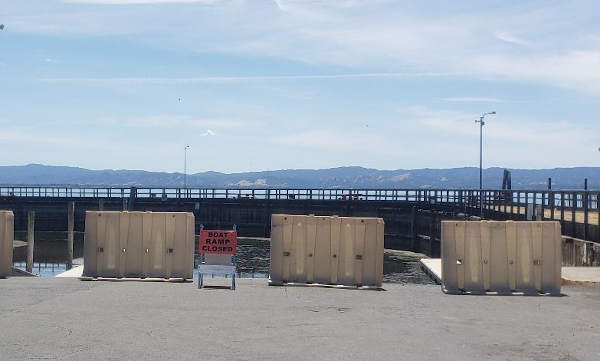
LUCERNE, Calif. — After consultation between the Lake County Sheriff’s Office Marine Patrol, Lake County Water Resources and Lake County Public Services, the boat ramp at Lucerne Harbor Park was closed on Friday due to unsafe conditions resulting from low water levels.
Alternative free public boat launch facilities in the region include the Clearlake Oaks boat launch facility at 12684 Island Drive in Clearlake Oaks and Library Park at 200 Park St. in Lakeport.
For more information contact the Lake County Public Services Department at 707-262-1618.
State officials reported that a few hundred more properties have completed the cleanup process in the state’s wildfires debris removal effort.
As of Friday, May 28, more than 1,100 properties enrolled in California's statewide Consolidated Debris Removal Program have cleared the entire debris removal process and been returned to county officials for final approval and the beginning of the reconstruction process.
The 1,106 returned properties represent 25.4% of those participating in either the full debris removal program or only the hazard tree element.
In 2020, over 8,000 climate-induced wildfires burned 4.2 million acres of California, destroying more than 5,700 homes.
Property owners incur no direct costs for participation in the state-managed clean up and recovery program, administered by the California Department of Resources Recycling and Recovery, or CalRecycle, and the California Governor's Office of Emergency Services, or Cal OES, in collaboration with 25 participating counties.
To date, the remains of 2020 wildfire survivors’ homes and property — burned metal, concrete, ash, and contaminated soil — have now been cleared from 88.1 percent of the properties enrolled in California’s statewide Consolidated Debris Removal Program.
Most properties still need critical soil testing, erosion control, and hazard tree removal to ensure the lots are safe for families to rebuild.
Wildfire survivors had the option to either use their own contractor or enroll in the state-managed program.
Of the 5,991 properties with damage from the 2020 fires, 3,760 signed up to have the remains of their homes and other structures cleared by the state.
As of May 28, state-managed crews cleared burned metal, concrete, ash and contaminated soil from 3,311, or 88.1 percent, of the properties participating in the full debris removal program.
CalRecycle said there are nine participating properties in Lake County.
Site and asbestos assessments have been completed for all nine, with three requiring asbestos abatement.
All nine properties have been cleared of burned metal, concrete, ash and contaminated soil, and erosion control work has been completed on all nine properties.
State debris officials have conducted final walk-throughs on all nine and submitted final inspection reports to county officials.
Steps left to complete
Before homeowners can begin rebuilding, cleared properties need additional work including:
— Separate contractors collect soil samples for verification at a state certified laboratory that they meet state environmental health and safety standards.
— Contractors next may install erosion control measures.
— Certified arborists or professional foresters assess wildfire-damaged trees in danger of falling on the public or public infrastructure for removal by separate contractors.
— Finally, state officials inspect the property to verify all completed work meets state standards. Debris officials submit a final inspection report to local officials to approve the property for reconstruction.
So far, 1,142 properties have gone through the entire post-debris removal steps of soil testing, erosion control, and removal of fire-damaged trees in danger of falling on public infrastructure before being returned to the county to begin reconstruction. 1,106 properties have cleared the entire process.
Property owners can track the above data on the Debris Operations Dashboard for the 2020 statewide wildfires.
The dashboard is updated every hour and provides users with the ability to search by county or address.
As of Friday, May 28, more than 1,100 properties enrolled in California's statewide Consolidated Debris Removal Program have cleared the entire debris removal process and been returned to county officials for final approval and the beginning of the reconstruction process.
The 1,106 returned properties represent 25.4% of those participating in either the full debris removal program or only the hazard tree element.
In 2020, over 8,000 climate-induced wildfires burned 4.2 million acres of California, destroying more than 5,700 homes.
Property owners incur no direct costs for participation in the state-managed clean up and recovery program, administered by the California Department of Resources Recycling and Recovery, or CalRecycle, and the California Governor's Office of Emergency Services, or Cal OES, in collaboration with 25 participating counties.
To date, the remains of 2020 wildfire survivors’ homes and property — burned metal, concrete, ash, and contaminated soil — have now been cleared from 88.1 percent of the properties enrolled in California’s statewide Consolidated Debris Removal Program.
Most properties still need critical soil testing, erosion control, and hazard tree removal to ensure the lots are safe for families to rebuild.
Wildfire survivors had the option to either use their own contractor or enroll in the state-managed program.
Of the 5,991 properties with damage from the 2020 fires, 3,760 signed up to have the remains of their homes and other structures cleared by the state.
As of May 28, state-managed crews cleared burned metal, concrete, ash and contaminated soil from 3,311, or 88.1 percent, of the properties participating in the full debris removal program.
CalRecycle said there are nine participating properties in Lake County.
Site and asbestos assessments have been completed for all nine, with three requiring asbestos abatement.
All nine properties have been cleared of burned metal, concrete, ash and contaminated soil, and erosion control work has been completed on all nine properties.
State debris officials have conducted final walk-throughs on all nine and submitted final inspection reports to county officials.
Steps left to complete
Before homeowners can begin rebuilding, cleared properties need additional work including:
— Separate contractors collect soil samples for verification at a state certified laboratory that they meet state environmental health and safety standards.
— Contractors next may install erosion control measures.
— Certified arborists or professional foresters assess wildfire-damaged trees in danger of falling on the public or public infrastructure for removal by separate contractors.
— Finally, state officials inspect the property to verify all completed work meets state standards. Debris officials submit a final inspection report to local officials to approve the property for reconstruction.
So far, 1,142 properties have gone through the entire post-debris removal steps of soil testing, erosion control, and removal of fire-damaged trees in danger of falling on public infrastructure before being returned to the county to begin reconstruction. 1,106 properties have cleared the entire process.
Property owners can track the above data on the Debris Operations Dashboard for the 2020 statewide wildfires.
The dashboard is updated every hour and provides users with the ability to search by county or address.
Retitling publicly traded securities — registered stocks or bonds — is often a necessary part of estate planning and administration.
When a person establishes a living trust, their securities are often transferred into the name of the trustee.
When a person dies owning securities in their name and a probate is required the securities are transferred into the name of the personal representative, who either sells them or later distributes them to the beneficiaries.
How securities are retitled depends on how ownership is held and whether a brokerage account is already being, or will be, used to hold title to the securities.
Securities can be held in certificate form, book-entry form, or in “street name” with a brokerage.
Traditionally, securities were held in paper certificate form bearing the name of the company, number of shares and type (e.g., common or preferred stocks), and a certificate serial number.
Securities are usually held in “street name” in a brokerage account. Securities can also be held in book entry form by the company itself maintaining the shareholder ownership records, such as in the case of a, “dividends reinvestment program” stock account.
If securities are held in paper certificate form the original certificate, along with other documents, must be sent to the issuing corporation for reissuance in the transferee’s name if the goal is to reissue the certificates in the name of the new transferee.
The process of reissuance of paper certificates in the name of new transferee requires that an authorized person endorse the assignment.
Endorsement means either signing the endorsement provision on the back of the paper certificate or signing a separate stock power (assignment).
To be effective, the signature must be certified by a medallion guarantee stamp at a commercial bank or brokerage where the client has an account and which participates in the medallion program.
The original certificate and the signed endorsement, with its medallion guarantee stamp, are mailed to the appropriate transfer agent with a letter of instructions. The corporation itself can identify whom they use as their transfer agent (e.g., computershares.com).
In addition, the submitted documents will, in the case of a transfer to a trust, also include either a notarized certificate of trust (signed by the trustee) or, in the case of a transfer to a personal representative (in a probate), also include either letters testamentary or letters of administration, issued by the court within 60 days of use, as relevant.
These documents show the authority of the trustee or personal representative to transfer the securities.
Furthermore, a death certificate (if the existing owner is deceased) and a so-called, “letter of instruction” — with supplemental information for the transfer agent to process the transfer of title, such as the transferee’s taxpayer identification number and mailing address — are also included.
If the securities are already held in a brokerage account, then the brokerage house must be contacted in order to request their own packet of forms to transfer assets held in an existing brokerage account into either an existing or else a newly established account under the transferee’s identity and taxpayer identification number.
The endorsement (assignment), with its signature medallion guarantee, and the relevant authorization documents — i.e., certificate of trust or court issued probate letters as relevant — and death certificate (if the existing account holder is deceased) must still be provided to the brokerage.
Using a broker and a brokerage account is the common approach to transferring securities. Doing so avoids using multiple transfer agents and facilitates recordkeeping and buy/sells through a single broker.
The foregoing discussion is not legal or financial advice. Anyone confronting these issues should consult an attorney or financial advisor.
Dennis A. Fordham, attorney, is a State Bar-Certified Specialist in estate planning, probate and trust law. His office is at 870 S. Main St., Lakeport, Calif. He can be reached at

Threads of superheated gas and magnetic fields are weaving a tapestry of energy at the center of the Milky Way galaxy.
A new image of this new cosmic masterpiece, shown above, was made using a giant mosaic of data from NASA's Chandra X-ray Observatory and the MeerKAT radio telescope in South Africa.
The new panorama of the Galactic Center builds on previous surveys from Chandra and other telescopes.
This latest version expands Chandra's high-energy view farther above and below the plane of the Galaxy — that is, the disk where most of the Galaxy's stars reside — than previous imaging campaigns.
In the image featured in our main graphic, X-rays from Chandra are orange, green, blue and purple, showing different X-ray energies, and the radio data from MeerKAT are shown in lilac and gray.
One thread is particularly intriguing because it has X-ray and radio emission intertwined. It points perpendicular to the plane of the galaxy and is about 20 light years long but only one-hundredth that size in width.
A new study of the X-ray and radio properties of this thread by Q. Daniel Wang of the University of Massachusetts at Amherst suggests these features are bound together by thin strips of magnetic fields. This is similar to what was observed in a previously studied thread.
Both threads are labeled with red rectangles in the image. The newly studied one in the lower left, G0.17-0.41, is much farther away from the plane of the Galaxy.
Such strips may have formed when magnetic fields aligned in different directions, collided, and became twisted around each other in a process called magnetic reconnection.
This is similar to the phenomenon that drives energetic particles away from the Sun and is responsible for the space weather that sometimes affects Earth.
A detailed study of these threads teaches us more about the Galactic space weather astronomers have witnessed throughout the region. This weather is driven by volatile phenomena such as supernova explosions, close-quartered stars blowing off hot gas, and outbursts of matter from regions near Sagittarius A*, our Galaxy's supermassive black hole.
Also labeled in the main image are X-rays reflected from dust around bright X-ray sources (green circles), Sagittarius A*, and, in purple circles and ellipses, the Arches and Quintuplet Clusters, DB00-58 and DB00-6, 1E 1743.1-28.43, the Cold Gas Cloud and Sagittarius C.
In addition to the threads, the new panorama reveals other wonders in the Galactic Center. For example, Wang's paper reports large plumes of hot gas, which extend for about 700 light years above and below the plane of the galaxy, seen here in greater detail than ever before. (They are much smaller than the Fermi Bubbles which extend for about 25,000 light years above and below the plane of the galaxy.)
These plumes may represent galactic-scale outflows, analogous to the particles driven away from the Sun. The gas is likely heated by supernova explosions and many recent magnetic reconnections occurring near the center of the galaxy.
Such reconnection events in the Galaxy are normally not sufficiently energetic to be detected in X-rays, except for the most energetic ones at the center of the Galaxy, where the interstellar magnetic field is much stronger.
Magnetic reconnection events may play a major role in heating the gas existing between stars (the interstellar medium). This process may also be responsible for accelerating particles to produce cosmic rays like those observed on Earth and driving turbulence in the interstellar medium that triggers new generations of star birth.
The image shows that the magnetic threads tend to occur at the outer boundaries of the large plumes of hot gas. This suggests that the gas in the plumes is driving magnetic fields that collide to create the threads.
The paper by Wang describing these results appears in the June issue of the Monthly Notices of the Royal Astronomical Society, and a preprint is available online. NASA's Marshall Space Flight Center manages the Chandra program. The Smithsonian Astrophysical Observatory's Chandra X-ray Center controls science from Cambridge, Massachusetts, and flight operations from Burlington, Massachusetts.
For more Chandra images, multimedia and related materials, visit http://www.nasa.gov/chandra.
LAKE COUNTY, Calif. — The city of Lakeport is moving forward with a plan to issue bonds to address its millions of dollars in unfunded pension liabilities and to remove encumbrances on key city properties that resulted from a loan taken several years ago to reduce the impacts of those retirement obligations.
At its May 18 meeting, the Lakeport City Council unanimously approved a resolution to direct the future issuance of one or more series of pension obligation bonds, approve a form of indenture of trust pursuant to which the bonds would be issued and authorize the commencement of a judicial validation action related to the issuance of pension obligation bonds.
During the same meeting, the council approved the appointment of Mayor Kenny Parlet and Councilman Michael Green to the Unfunded Accrued Liability Policy and Restructuring Ad Hoc Committee, which city staff said will make policy recommendations and evaluate restructuring options with regard to the bonds.
City Manager Kevin Ingram told the council that the matter was not about approving the bonds themselves but the process to move forward, which could last four to six months.
During that time, Ingram said they will start to dig into the specifics about how the bonds will work for the city. “It does offer us quite a few advantages moving forward.”
Ingram said a primary objective of the bonds is to “smooth” the budget, helping with predictability, sustainability and resilience to future economic shocks.
It’s also an opportunity to take advantage of low interest rates, he said.
Another key reason for the bonds is that they will allow the city to refinance a lease action the council approved in 2015 that used as collateral City Hall, the Lakeport Fire Protection District’s downtown fire station and Westside Community Park. The new funding would remove those encumbrances, Ingram said.
Mike Meyer of NHA Advisors, a city adviser on the bonds, said the city has $10.4 million in pension liability on its balance sheet.
Of that amount, $8.4 million is for unfunded accrued liabilities with the California Public Employees’ Retirement System, or CalPERS, plus $2 million remaining on the 2015 lease.
Meyer said that unfunded pension liability has increased from $4.9 million to $8.4 million over the last seven years, primarily due to CalPERS’ investment assumption changes.
The resolution also approved the city’s contract with Jones Hall, a bond counsel firm.
James Wawrzyniak of Jones Hall said they are working with other cities across California on similar actions.
Once the resolution was approved, Wawrzyniak said the firm planned to commence the validation action on May 21.
He said a workshop to review the unfunded accrued liability restructuring options will be held in June or July. At that point, the council would determine whether to proceed with the pension restructuring transaction.
If the council moved forward, Wawrzyniak said a credit rating process would take place during the summer, and then in the summer or fall the valuation process would end. Formal council approvals would be needed at that time.
Ahead of the vote to approve the resolution, Parlet noted that the council’s 2015 attempt at “lowering the curve” of its obligations was an effort to balance the annual expenses so the city could maintain its service levels.
He faulted CalPERS for the “unpredictable nature” of the organization’s investments.
Dealing with obligations
In 2015, Dan Buffalo, then the city’s finance director, took to the council a proposal to reduce the cost of its unfunded pension costs to the general fund.
Over the course of several months, the council and staff looked at issuing new, unsecured debt to replace its existing CalPERS obligations, but by August of that year changes to the bond market ruled out pursuing a pension obligation bond at that time.
That led to staff and the city’s finance committee coming back in August 2015 with a proposal the council unanimously accepted, to pursue new debt through a bank to securitize new debt.
In order to do that, the city had to use City Hall — listed as the city’s “most essential” asset, which would allow for more aggressive bidding from banks and a lower interest rate — along with the Lakeport Fire Station and Westside Community Park to secure the debt.
The city eventually would choose Umpqua Bank for a lease plan. The final lease for the pension obligations was dated Dec. 1, 2015, and notarized on Dec. 28, 2015, Ingram told Lake County News.
Ingram said in an interview this week that the process the city followed for its lease agreement in 2015 wasn’t standardized for cities as it is now, with collateral no longer being required.
He said the lease did work to help the city with its pension liabilities. Had the city not taken the action, the city would have had to use almost its entire general fund to pay for the liabilities.
“Then CalPERS didn’t meet their obligation again,” he said. “It looks like we’re in the exact same position.”
Ingram said CalPERS has “shown over and over again that we can’t trust them.”
CalPERS’ handling of retirement investments is further complicated by parameters set out for it by the Legislature, which Ingram said means that CalPERS’ investments don’t get the same returns as the rest of the market.
“They like to use it as a little bit of a political weapon,” he said of the Legislature.
He pointed to CalPERS divesting from tobacco and certain gun stocks.
The bonds will, like the lease, smooth the city’s budget and make it more predictable, Ingram said.
Before making a final decision on pursuing the bonds, the council will get information on CalPERS’ annual investment returns, Ingram said. All indications are that this year’s returns are good.
Email Elizabeth Larson atThis email address is being protected from spambots. You need JavaScript enabled to view it. . Follow her on Twitter, @ERLarson, or Lake County News, @LakeCoNews.
At its May 18 meeting, the Lakeport City Council unanimously approved a resolution to direct the future issuance of one or more series of pension obligation bonds, approve a form of indenture of trust pursuant to which the bonds would be issued and authorize the commencement of a judicial validation action related to the issuance of pension obligation bonds.
During the same meeting, the council approved the appointment of Mayor Kenny Parlet and Councilman Michael Green to the Unfunded Accrued Liability Policy and Restructuring Ad Hoc Committee, which city staff said will make policy recommendations and evaluate restructuring options with regard to the bonds.
City Manager Kevin Ingram told the council that the matter was not about approving the bonds themselves but the process to move forward, which could last four to six months.
During that time, Ingram said they will start to dig into the specifics about how the bonds will work for the city. “It does offer us quite a few advantages moving forward.”
Ingram said a primary objective of the bonds is to “smooth” the budget, helping with predictability, sustainability and resilience to future economic shocks.
It’s also an opportunity to take advantage of low interest rates, he said.
Another key reason for the bonds is that they will allow the city to refinance a lease action the council approved in 2015 that used as collateral City Hall, the Lakeport Fire Protection District’s downtown fire station and Westside Community Park. The new funding would remove those encumbrances, Ingram said.
Mike Meyer of NHA Advisors, a city adviser on the bonds, said the city has $10.4 million in pension liability on its balance sheet.
Of that amount, $8.4 million is for unfunded accrued liabilities with the California Public Employees’ Retirement System, or CalPERS, plus $2 million remaining on the 2015 lease.
Meyer said that unfunded pension liability has increased from $4.9 million to $8.4 million over the last seven years, primarily due to CalPERS’ investment assumption changes.
The resolution also approved the city’s contract with Jones Hall, a bond counsel firm.
James Wawrzyniak of Jones Hall said they are working with other cities across California on similar actions.
Once the resolution was approved, Wawrzyniak said the firm planned to commence the validation action on May 21.
He said a workshop to review the unfunded accrued liability restructuring options will be held in June or July. At that point, the council would determine whether to proceed with the pension restructuring transaction.
If the council moved forward, Wawrzyniak said a credit rating process would take place during the summer, and then in the summer or fall the valuation process would end. Formal council approvals would be needed at that time.
Ahead of the vote to approve the resolution, Parlet noted that the council’s 2015 attempt at “lowering the curve” of its obligations was an effort to balance the annual expenses so the city could maintain its service levels.
He faulted CalPERS for the “unpredictable nature” of the organization’s investments.
Dealing with obligations
In 2015, Dan Buffalo, then the city’s finance director, took to the council a proposal to reduce the cost of its unfunded pension costs to the general fund.
Over the course of several months, the council and staff looked at issuing new, unsecured debt to replace its existing CalPERS obligations, but by August of that year changes to the bond market ruled out pursuing a pension obligation bond at that time.
That led to staff and the city’s finance committee coming back in August 2015 with a proposal the council unanimously accepted, to pursue new debt through a bank to securitize new debt.
In order to do that, the city had to use City Hall — listed as the city’s “most essential” asset, which would allow for more aggressive bidding from banks and a lower interest rate — along with the Lakeport Fire Station and Westside Community Park to secure the debt.
The city eventually would choose Umpqua Bank for a lease plan. The final lease for the pension obligations was dated Dec. 1, 2015, and notarized on Dec. 28, 2015, Ingram told Lake County News.
Ingram said in an interview this week that the process the city followed for its lease agreement in 2015 wasn’t standardized for cities as it is now, with collateral no longer being required.
He said the lease did work to help the city with its pension liabilities. Had the city not taken the action, the city would have had to use almost its entire general fund to pay for the liabilities.
“Then CalPERS didn’t meet their obligation again,” he said. “It looks like we’re in the exact same position.”
Ingram said CalPERS has “shown over and over again that we can’t trust them.”
CalPERS’ handling of retirement investments is further complicated by parameters set out for it by the Legislature, which Ingram said means that CalPERS’ investments don’t get the same returns as the rest of the market.
“They like to use it as a little bit of a political weapon,” he said of the Legislature.
He pointed to CalPERS divesting from tobacco and certain gun stocks.
The bonds will, like the lease, smooth the city’s budget and make it more predictable, Ingram said.
Before making a final decision on pursuing the bonds, the council will get information on CalPERS’ annual investment returns, Ingram said. All indications are that this year’s returns are good.
Email Elizabeth Larson at