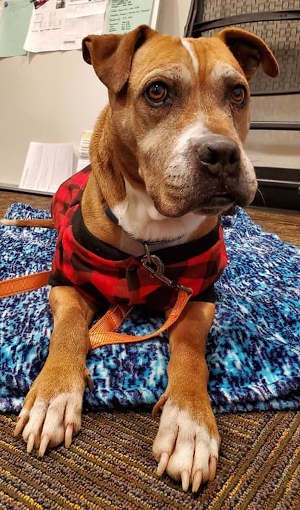
LAKE COUNTY, Calif. — Lake County Animal Care and Control has a big and varied group of dogs waiting for new homes this week.
Dogs available for adoption this week include mixes of Airedale terrier, Belgian malinois, German shepherd, Great Pyrenees, husky, Labrador retriever, McNab, pit bull, Rottweiler and shepherd.
Dogs that are adopted from Lake County Animal Care and Control are either neutered or spayed, microchipped and, if old enough, given a rabies shot and county license before being released to their new owner. License fees do not apply to residents of the cities of Lakeport or Clearlake.
The following dogs at the Lake County Animal Care and Control shelter have been cleared for adoption (additional dogs on the animal control website not listed are still “on hold”).
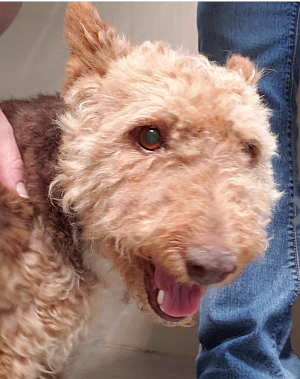
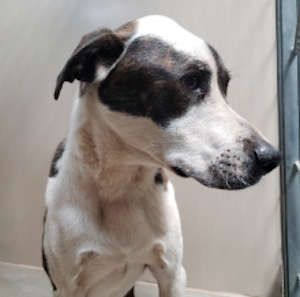
This male Airedale terrier is in kennel No. 7, ID No. LCAC-A-889. Photo courtesy of Lake County Animal Care and Control. Male Airedale terrier
This male Airedale terrier has a curly tan and red coat.
He is estimated to be 10 years old.
He is in kennel No. 7, ID No. LCAC-A-889.
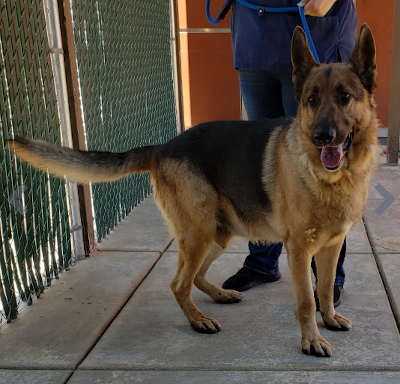
This male German shepherd is in kennel No. 11, ID No. LCAC-A-879. Photo courtesy of Lake County Animal Care and Control.Male German shepherd
This male German shepherd has a medium-length black and tan coat.
He is 8 years old and 101 pounds.
He is in kennel No. 11, ID No. LCAC-A-879.
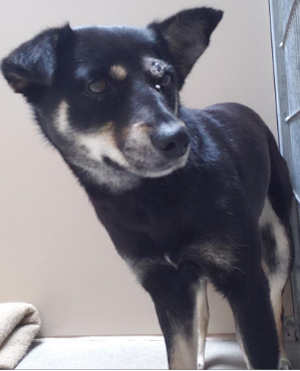
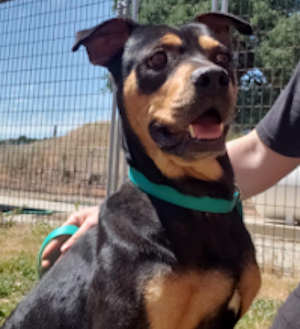
This female Rottweiler-shepherd mix is in kennel No. 12, ID No. 14575. Photo courtesy of Lake County Animal Care and Control. Female Rottweiler-shepherd
This female Rottweiler-shepherd mix has a medium-length black and red coat.
She is in kennel No. 12, ID No. 14575.
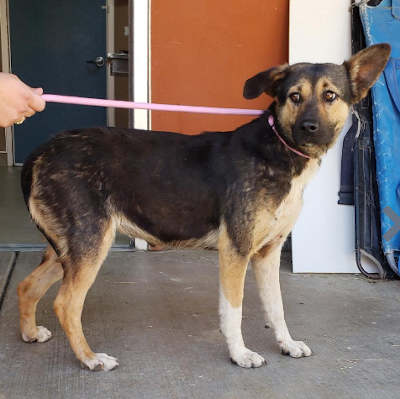
“Indie” is a female German shepherd mix in kennel No. 13, ID No. LCAC-A-768. Photo courtesy of Lake County Animal Care and Control. ‘Indie’
“Indie” is a female German shepherd mix with a short black and tan coat.
She weighs 51 pounds and is estimated to be less than 1 year old.
She is in kennel No. 13, ID No. LCAC-A-768.
“Stimpy” is a young female McNab mix in kennel No. 14, ID No. 14570. Photo courtesy of Lake County Animal Care and Control. ‘Stimpy’
“Stimpy” is a young female McNab mix with a medium-length white and brindle coat.
She is in kennel No. 14, ID No. 14570.
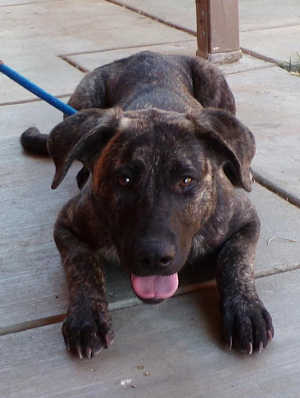
“Ren” is a young male McNab mix in kennel No. 15, ID No. 14571. Photo courtesy of Lake County Animal Care and Control. ‘Ren’
“Ren” is a young male McNab mix with a short brindle and white coat.
He has been neutered.
He is in kennel No. 15, ID No. 14571.
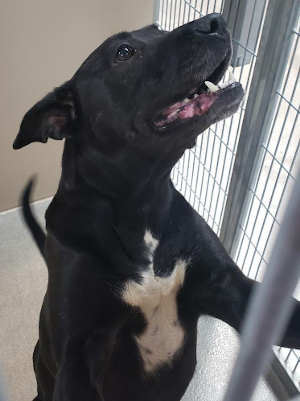
This female Labrador retriever mix is in kennel No. 16, ID No. LCAC-A-850. Photo courtesy of Lake County Animal Care and Control. Female Labrador retriever mix
This female Labrador retriever mix has a short black coat with white markings.
She is 3 years old and weighs 53 pounds.
She is in kennel No. 16, ID No. LCAC-A-850.
This young female Belgian malinois is in kennel No. 18, ID No. LCAC-A-842. Photo courtesy of Lake County Animal Care and Control. Female Belgian malinois
This young female Belgian malinois mix has a short brown brindle coat.
She is under 1-year-old and weighs 35 pounds.
She is in kennel No. 18, ID No. LCAC-A-842.
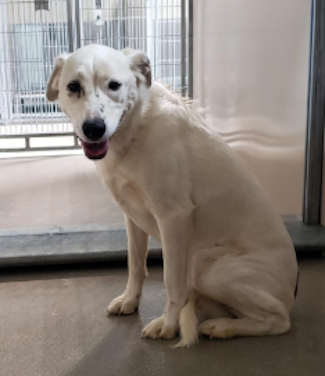
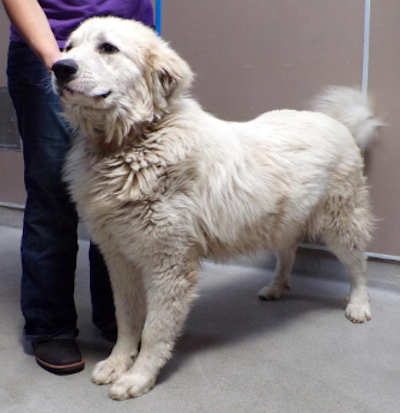
This female Great Pyrenees is in kennel No. 19, ID No. LCAC-A-892. Photo courtesy of Lake County Animal Care and Control. Female Great Pyrenees
This female Great Pyrenees has a medium-length white coat.
She is estimated to be 2 years old and 84 pounds.
She is in kennel No. 19, ID No. LCAC-A-892.
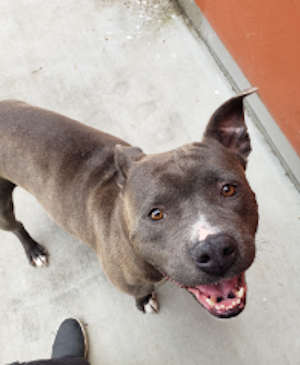
This female pit bull terrier is in kennel No. 22, ID No. 14486. Photo courtesy of Lake County Animal Care and Control. Female pit bull terrier
This female pit bull terrier has a short blue and white coat.
She is in kennel No. 22, ID No. 14486.
This female Rottweiler-pit bull mix is in kennel No. 27, ID No. 14551. Photo courtesy of Lake County Animal Care and Control. Rottweiler-pit bull mix
This female Rottweiler-pit bull mix has a short black coat.
She has been spayed.
She is in kennel No. 27, ID No. 14551.
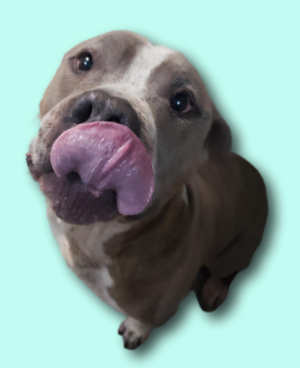
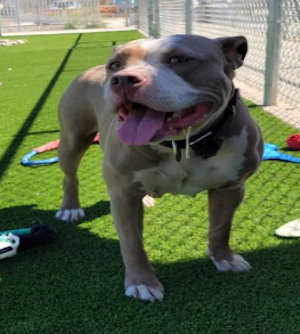
“Brutus” is a male pit bull terrier in kennel No. 28, ID No. 14507. Photo courtesy of Lake County Animal Care and Control. ‘Brutus’
“Brutus” is a male pit bull terrier with a short gray and white coat.
He is in kennel No. 28, ID No. 14507.
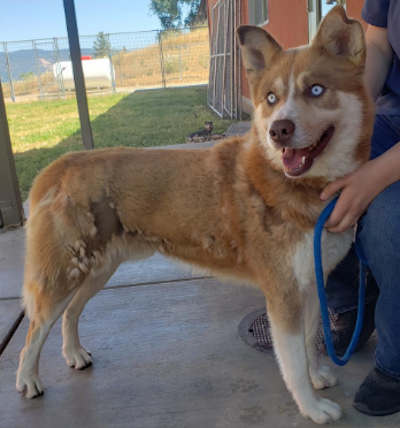
“Apollo” is a male husky mix in kennel No. 31, ID No. 14569. Photo courtesy of Lake County Animal Care and Control. ‘Apollo’
“Apollo” is a male husky mix with a medium-length red and white coat and blue eyes.
He is in kennel No. 31, ID No. 14569.
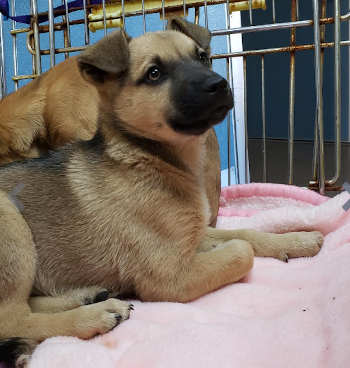
This female German shepherd mix puppy is in kennel No. 34a, ID No. LCAC-A-839. Photo courtesy of Lake County Animal Care and Control. German shepherd mix puppy
This female German shepherd mix puppy has a short tan coat.
She is in kennel No. 34a, ID No. LCAC-A-839.
This female German shepherd mix puppy is in kennel No. 34a, ID No. LCAC-A-840. Photo courtesy of Lake County Animal Care and Control. German shepherd mix puppy
This female German shepherd mix puppy has a short tan coat.
She is in kennel No. 34a, ID No. LCAC-A-840.
Email Elizabeth Larson at This email address is being protected from spambots. You need JavaScript enabled to view it.. Follow her on Twitter, @ERLarson, or Lake County News, @LakeCoNews.
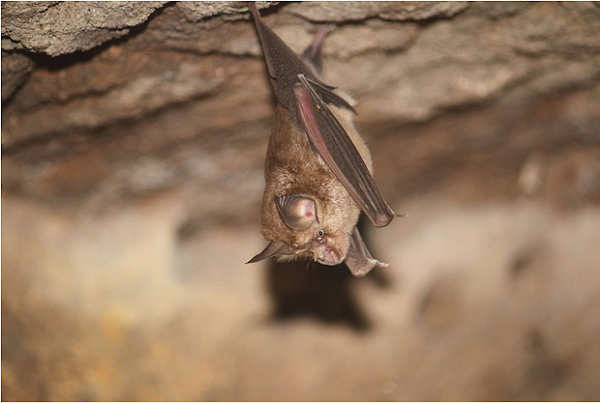
The horseshoe bat is known to carry a variety of coronaviruses, including strains that closely resemble those that cause severe acute respiratory syndrome (SARS) and COVID-19 in humans. Photo by Davidvraju via Wikimedia Commons | CC BY-SA 4.0. BERKELEY — Global land-use changes — including forest fragmentation, agricultural expansion and concentrated livestock production — are creating “hot spots” favorable for bats that carry coronaviruses and where conditions are ripe for the diseases to jump from bats to humans, finds an analysis published this week by researchers at the University of California, Berkeley, the Politecnico di Milano (Polytechnic University of Milan) and Massey University of New Zealand.
While the exact origins of the SARS-CoV-2 virus remain unclear, scientists believe that the disease likely emerged when a virus that infects horseshoe bats was able to jump to humans, either directly through wildlife-to-human contact, or indirectly by first infecting an intermediate animal host, such as the pangolin, sometimes known as the scaly anteater.
Horseshoe bats are known to carry a variety of coronaviruses, including strains that are genetically similar to ones that cause COVID-19 and severe acute respiratory syndrome, or SARS.
The new study used remote sensing to analyze land use patterns throughout the horseshoe bat’s range, which extends from Western Europe through Southeast Asia.
By identifying areas of forest fragmentation, human settlement and agricultural and livestock production, and comparing these to known horseshoe bat habitats, they identified potential hot spots where habitat is favorable for these bat species, and where these so-called zoonotic viruses could potentially jump from bats to humans.
The analysis also identified locations that could easily become hot spots with changes in land use.
“Land use changes can have an important impact on human health, both because we are modifying the environment, but also because they can increase our exposure to zoonotic disease,” said study co-author Paolo D’Odorico, a professor of environmental science, policy and management at UC Berkeley. “Every formal land use change should be evaluated not only for the environmental and social impacts on resources such as carbon stocks, microclimate and water availability, but also for the potential chain reactions that could impact human health.”
Most of the current hot spots are clustered in China, where a growing demand for meat products has driven the expansion of large-scale, industrial livestock farming.
Concentrated livestock production is particularly concerning because the practice brings together large populations of genetically similar, often immune-suppressed animals that are highly vulnerable to disease outbreaks, the researchers said.
The analysis also found that parts of Japan, the north Philippines and China south of Shanghai are at risk of becoming hot spots with further forest fragmentation, while parts of Indochina and Thailand may transition into hot spots with increases in livestock production.
The analyses aimed to identify the possible emergence of new hot spots in response to an increase in one of three land use attributes, highlighting both the areas that could become suitable for spillover and the type of land use change that could induce hot spot activation,” said study co-author Maria Cristina Rulli, a professor in hydrology and water and food security at the Politecnico di Milano in Italy. “We hope these results could be useful for identifying region-specific targeted interventions needed to increase resilience to coronavirus spillovers.”
Human encroachment into natural habitat can also indirectly increase exposure to zoonotic disease by reducing valuable biodiversity. When forest lands become fragmented and natural habitats are destroyed, species that require very specific habitat to survive, called “specialists,” may dwindle or even go extinct. Without competition from specialists, “generalist” species, which are less picky about their habitat, can take over.
Horseshoe bats are a generalist species and have often been observed in areas characterized by human disturbance. Earlier work by Rulli, D’Odorico and study co-author David Hayman has also linked forest fragmentation and habitat destruction in Africa to outbreaks of the Ebola virus.
“By creating conditions that are disadvantageous to specialist species, generalist species are able to thrive,” D’Odorico said. “While we are unable to directly trace the transmission of SARS-CoV-2 from wildlife to humans, we do know that the type of land use change that brings humans into the picture is typically associated with the presence of these bats who are known to carry the virus.”
While China has been a leader in tree planting and other greening efforts over the past two decades, many of the trees have been planted in discontinuous land areas or forest fragments. To tilt the ecological balance back in favor of specialist species, creating continuous areas of forest cover and wildlife corridors are more important than increasing total tree cover.
“Human health is intertwined with environmental health and also animal health,” D’Odorico said. “Our study is one of the first to connect the dots and really drill down into the geographic data on land use to see how humans are coming into contact with species that might be carriers.”
Co-authors of the paper also include Nikolas Galli of the Politecnico di Milano and David Hayman of Massey University
This research was supported by the Eni Enrico Mattei Foundation (FEEM), the Cariplo Foundation (SusFeed project 0737 CUP D49H170000300007), Regione Lombardia (RUD0CONV01/ASSO project D44I20002000002), a Royal Society Te Apārangi Rutherford Discovery Fellowship RDF-MAU1701 MAU1701, and the Massey University Foundation.
Kara Manke writes for the UC Berkeley News Center.
What's up for June? A partial solar eclipse, the scorpion's sting and June is for Juno!
Following last month's total lunar eclipse, June brings us a solar eclipse. On June 10, the moon will slip briefly between Earth and the sun, partially obscuring our local star from view.
Whereas May's lunar eclipse was best viewed around the Pacific, this month's solar eclipse will be a treat for those in the northeast U.S., eastern Canada and Northern Europe.
For U.S. viewers, this is a sunrise event, with the moon already appearing to have taken a bite out of the sun as it's rising. So you'll want to find a clear view toward the eastern horizon to observe it.
Those farther to the north and east will see more of the sun obscured by the moon. For those in northern Europe, it's more of a lunchtime eclipse.
Wherever you are, please review eclipse safety practices, and never look at the sun without proper protection for your eyes.
On summer evenings, you may notice a curved grouping of stars crawling across the southern sky, among them a brilliant red beacon. This is the constellation Scorpius, the scorpion, and beginning in June, it's the prime time to look for it.
This grouping of stars has been thought of as having the shape of a scorpion going back to ancient times in the Mediterranean and Middle East.
In the Greek myth, the scorpion's deadly sting brought down the great hunter Orion, and that's why — the story goes — we find them on opposite sides of the sky today.
This pattern of stars also been seen as part of a great dragon, in China, and the fish hook of the demigod Maui in Hawaii. That fish hook shape also forms the tail of the scorpion.
At the beginning of June, if you're in the northern hemisphere, the scorpion's tail might still be below the horizon for you, early in the evening. It rises over the first few hours after dark. But by the end of the month, the scorpion's tail will be above the horizon after sunset for most stargazers.
That bright, beacon-like star in Scorpius is Antares, which is a huge red giant star, and one of the brightest in the sky. It forms the blazing heart of the scorpion. So look toward the south and use Antares as your guide to find the constellation Scorpius.
Finally, this month, you'll remember back in December, when Jupiter and Saturn had their incredibly close meetup in the sky.
In the run-up to that "Great Conjunction," Jupiter led Saturn across the sky all through 2020.
Well, six months later, the pair continue to move farther apart, and now Saturn has the lead position as the two planets rise and set. Look for them in the east after midnight, or toward the south at dawn.
And for more Jupiter excitement in June, NASA's Juno spacecraft is making its next close flyby over Jupiter on June 8, and this time it will also make a low-altitude flyby over the planet-sized, icy moon Ganymede on June 7.
This is the first of several planned flybys of the Jovian moons by Juno, over the next couple of years, that include encounters with icy Europa and volcanic Io!
You can catch up on all of NASA's missions to explore the solar system and beyond at nasa.gov.
Preston Dyches works for NASA's Jet Propulsion Laboratory.
LAKE COUNTY, Calif. — Firefighters and deputies searched overnight for a man reported missing after the boat he and several other people were riding in early Saturday overturned near Clearlake Oaks.
Firefighters were first dispatched to the boating accident shortly before 12:30 a.m. Saturday.
The initial call that reported the incident said that the boat overturned about 500 yards offshore of Island Drive.
Dispatch directed firefighters and deputies to respond to the Clearlake Oaks boat launch at 12684 Island Drive for the water rescue, according to radio traffic.
The sheriff’s Marine Patrol responded and the Northshore Dive Team was requested. A REACH helicopter also came to help search from the air.
Incident command reported over the air that five people had been in the boat and that three people had gotten to shore.
It was later reported that four people were accounted for, but that they were still searching for the fifth.
The missing person was described as a Black male in his 50s who was reported to have been trying to pull someone from the water when he was last seen.
Shortly after 2 a.m., incident command reported that they had still not located the missing man and that they needed a tow truck to help pull the overturned boat to shore because the Marine Patrol boats were having difficulty navigating in the shallow water.
About a half-hour later, incident command said that all rescue personnel were out of the water and they were planning to switch from a search to a recovery mission.
Additional information will be published as it becomes available.
Email Elizabeth Larson at This email address is being protected from spambots. You need JavaScript enabled to view it.. Follow her on Twitter, @ERLarson, or Lake County News, @LakeCoNews.
Mendocino College graduates enjoyed a free dinner and virtual commencement ceremony this year.
In April, a survey was sent to all graduating students to gather input about how best to celebrate their accomplishments this year. The response from the majority of students was that they preferred a virtual ceremony.
“This past year has forever changed our world. Despite all the adversities, our graduates exemplified the resiliency the world needs,” said Mendocino College Superintendent/President Tim Karas. “Our graduates are strong and will make the world a better place for everyone. We are very proud of our graduates! They will forever be an alumnus of Mendocino College and part of our family.”
Thanks to the Mendocino College Foundation, students were given a $50 dinner voucher to be used at a select group of participating local restaurants throughout the district. This allowed students to celebrate the actual day of graduation with a meal at home with their families while at the same time supporting local restaurants.
There will also be a listing of all 2021 graduates in a special magazine that will be circulated in both Lake and Mendocino counties.
Amy Adams, who received two AS degrees, one in business management and the other in business accounting, said, “Although I was sad not to be able to walk the stage for my very first time, I felt the college did their best to celebrate my accomplishments, even in the midst of a pandemic. To top it off, they provided a graduation dinner in partnership with various local vendors. I chose Taqueria Bravo in Willits, which was delicious and the manager was so sweet and congratulated me on my graduation.”
“The foundation is honored to provide financial support towards this year’s commencement activities. Now more than ever, it’s important that we sufficiently honor and recognize our 2021 Mendocino College graduates,” said Mendocino College Foundation Board President Tom Dow.
Mendocino College hopes to have a traditional in person commencement ceremony next year and will invite all 2020 and 2021 graduates to participate if they wish.
The recording of the 2021 virtual commencement ceremony can be viewed above.
CLEARLAKE, Calif. — Clearlake Animal Control has half a dozen dogs waiting for new homes this week.
The following dogs are ready for adoption or foster. The newest dog is listed at the beginning of the list.
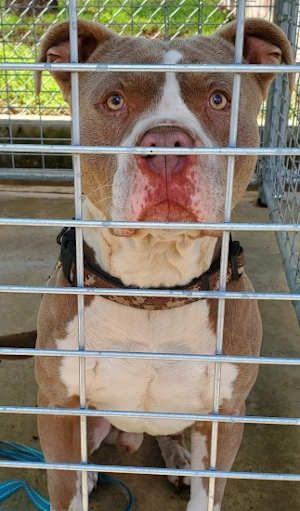
“Princess.” Photo courtesy of Clearlake Animal Control. ‘Princess’
Is a female American pit bull terrier mix with a short fawn and white coat.
She is dog No. 4840.
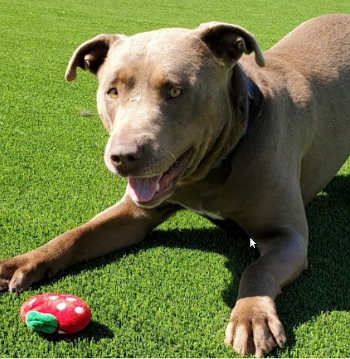
“Bear.” Photo courtesy of Clearlake Animal Control.‘Bear’
“Bear” is a male American Staffordshire terrier mix with a short brown coat.
He has been neutered.
He is dog No. 3476.
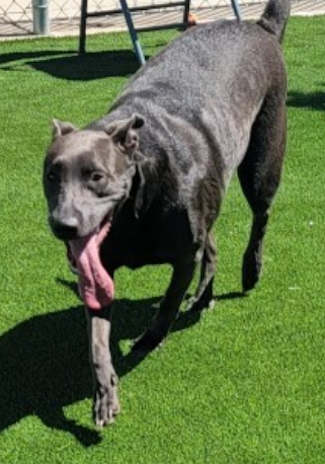
“Cleo.” Photo courtesy of Clearlake Animal Control. ‘Cleo’
“Cleo” is a female Doberman pinscher mix with a short gray coat who is new to the shelter.
She has been spayed.
She is dog No. 4865.
“Dusty.” Photo courtesy of Clearlake Animal Control. ‘Dusty’
“Dusty” is a male American Pit Bull Terrier with a tan and white coat.
He is dog No. 4750.
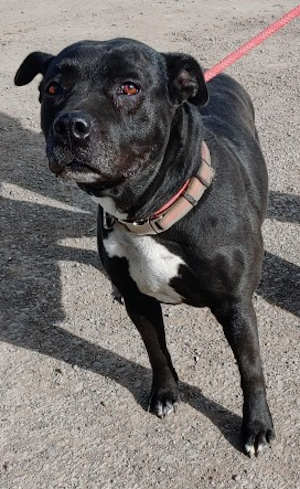
“Sassy.” Photo courtesy of Clearlake Animal Control. ‘Sassy’
“Sassy” is a female Labrador retriever and pit bull mix with a short black with white markings.
She is house-trained.
She is dog No. 4602.
“Toby.” Photo courtesy of Clearlake Animal Control. ‘Toby’
“Toby” is a friendly senior male boxer mix.
He has a short tan and white coat.
Toby is house trained and neutered.
He is dog No. 4389.
Call the Clearlake Animal Control shelter at 707-273-9440, or email This email address is being protected from spambots. You need JavaScript enabled to view it. to inquire about adoptions and schedule a visit to the shelter.
Visit Clearlake Animal Control on Facebook or on the city’s website.
Email Elizabeth Larson at This email address is being protected from spambots. You need JavaScript enabled to view it.. Follow her on Twitter, @ERLarson, or Lake County News, @LakeCoNews.
 How to resolve AdBlock issue?