 How to resolve AdBlock issue?
News
However, in granting the appeal of the We Grow LLC project permit filed by concerned neighbors, the board said it was doing so without prejudice.
That will allow owner Zarina Otchkova the chance to resubmit the proposal, which her consultant indicated she planned to do.
In early 2020, Otchkova purchased 309 acres at 16750 Herrington Road, 17610 Sandy Road and 19678 Stinson Road in Middletown.
She went to the Lake County Planning Commission in April and received a vote of approval for a major use permit for a project that includes nine acres of cultivation, 35 greenhouses, four 50-foot by 100-foot drying buildings, a 200-square-foot shed, four 2,500-gallon water tanks and fencing, as Lake County News has reported.
By the following week, an appeal had been filed by a group of neighbors, some of them on hand for the board meeting on Tuesday morning.
However, while the appellants and their supporters showed up with signs ready to protest, they were caught off guard by what happened next.
When the hearing began, Board Chair Bruno Sabatier gave the floor to Scott De Leon, the county’s Community Development, Water Resources and Public Works director.
“This is a very large project, and it’s certainly the subject of a great deal of public interest,” as evidenced by attendance at Tuesday’s hearing, said De Leon, who attended the meeting from his office via Zoom.
“We’ve been diligent in our evaluation of the appeal and the questions raised about the environmental analysis for this project,” he said.
Based on that review, Community Development was modifying its recommendations to the board because De Leon said staff had discovered “procedural errors” that have rendered the project’s initial environmental study defective.
As a result, De Leon said the project could not move forward as presented.
He explained that changes were made to the project during the review process and the potential impacts to the environment that could result from those changes were not considered.
Due to those factors, he said he and his staff recommended the board grant the appeal and deny the project without prejudice, a statement interrupted by applause from the socially distanced audience in the board chambers.
De Leon said they expected the applicant would reapply, which they have the right to do, and staff will make revisions to the environmental analysis for the modified site plan and in consideration of concerns raised by the public.
Sabatier asked County Counsel Anita Grant to explain the meaning of denial without prejudice.
Grant said that it will allow the reapplication without waiting a standard six months. She said the board was prevented from making their required finding for the project in order to grant or deny a permit because the California Environmental Quality Act — or CEQA — analysis was defective.
“You cannot rely upon it in order to make the decisions that you have to make,” she said of the analysis.
“It is not just a choice, it is effectively the only reasonable choice you can make, which is to grant the appeal and deny the use permit without prejudice,” Grant added.
She said that will allow the applicant to reapply and allow the department to take the necessary corrective action as to the CEQA analysis, which has to be done before either the planning commission can hear it or the board can move forward.
Community members outline concerns
The board moved forward with allowing comments from the concerned community members who were in attendance either in the board chambers or on Zoom.
Hidden Valley Lake resident Jim Ryan, who lives on Greenridge Road directly below the project, said the concerns will remain in a month or a year. He said the proximity of large commercial cannabis grows to major residential areas is what needs to be addressed.
“We don’t want it to be a continuing issue, but it may be,” he said, adding a main issue is water.
Ryan added the neighbors were all in shock about the property’s suggested use.
Dan Levine, who lives in the nearby Shadow Hills Subdivision, told the board, “The negative impacts from this project would have been very substantial and quite numerous.”
Like Ryan, Levine said the problems won’t go away once We Grow reapplies.
“Please don’t trade our environment and our quality of life for a few extra tax dollars,” Levine said.
Scott Nagelson, whose family owns the property adjacent to the We Grow site, said he was grateful for what transpired at the meeting.
“We’re not gonna go away. We will be back if they reapply. We are all adamant that this is not appropriate for our neighborhood,” he said.
Jesse Cude, a representative of the appellants and a Shadow Hills Subdivision resident, asked the board to uphold the appeal with prejudice and to refund the appeal fees — which county documents showed totaled $1,136.30 — because he said they shouldn’t have to pay for the mistakes of others.
He also asked them to stop allowing new permits for any growing — whether it be cannabis for winegrapes — due to the drought.
Sufyan Hamouda, We Grow’s consultant, offered brief comments during the meeting. He said they received an email from Community Development on Monday letting them know the department was changing its recommendation to the board on Tuesday due to procedural oversight and the CEQA document that was submitted for this project.
“We do agree with the staff’s new recommendations,” said Hamouda.
Hamouda said he’d spoken with his client and will work closely with Community Development to make sure the amended CEQA document is accurate for the proposed project, which he indicated they intended to pursue.
At one point, Sabatier responded to criticisms from speakers about the planning commission — including assertions that they didn’t care about the community — noting that the commissioners are shackled by the rules and regulations the board created.
Attending remotely, Bart Levenson spoke about how the planning commission had listened to solid testimony about concerns with We Grow’s plans but concluded with its members saying they had no reason to deny the project.
She said the old rules do not apply, considering issues with droughts and fires. If the commission is shackled by the rules, “It is urgent that those rules be reexamined. It’s not OK to just say, ‘The rules are the rules.’ Not anymore.”
Donna Mackiewicz, representing the Redbud Audubon Audubon Society, pointed to other deficiencies with the environmental study of the project.
She said not all of the land had been fully surveyed. The biological report said the property is home to only 10 species of bird. Yet, Mackiewicz said she walked the property perimeter for a few hours on Sunday and saw 40 bird species.
Shannon Williams told the board about the unpermitted activity that We Grow started the minute they bought the property, including construction and an illegal cannabis grow.
Both in her statements to the board on Tuesday and in a letter in the board packet, Williams outlined another concern relating to a potential conflict of interest with a planning commissioner. Although she did not name the commissioner in question, it was an apparent reference to District 4 Commissioner Christina Price, appointed by Supervisor Tina Scott.
Price is a real estate agent who works for the same brokerage that represented Otchkova when she bought the land last year, said Williams, who said she also is in real estate.
“I see a huge conflict of interest there,” Williams said.
Board takes action; chair raises issue of rule changes
As the board prepared to take action, Grant explained, “This is going to be a reapplication process. This isn’t just kicking it back to the planning commission.”
She said county staff will have the opportunity to have an accurate and sufficiently comprehensive CEQA analysis. For the use permit, she said certain findings have to be made relating to services such as water, streets and highways, and the general comfort and welfare of the neighborhood.
Sabatier said the board had no other decision other than to deny the permit without prejudice.
He suggested concerned community members speak to the supervisors should the county ordinance that allows such cannabis operations need to be changed. He said the ordinance took three years to craft and while it has had amendments, there has been no major revisions.
Sabatier said rural residential zoning, where agriculture operations are allowed, is one area where it’s starting to get sensitive for certain areas when it comes to cannabis operations.
“Let’s have that conversation and see where it goes,” he said.
Supervisor Moke Simon said establishing the new cannabis industry comes with challenges. “It is one portion of the economic development opportunities.”
At Simon’s request, Grant gave the wording of the motion, which was to grant the appeal on the basis that the CEQA analysis was defective and to deny the use permit without prejudice.
Simon offered that motion, with Supervisor Jessica Pyska seconding and the board voting 5-0.
The vote received a round of applause.
Email Elizabeth Larson at
The hearings will begin at 9 a.m. Wednesday, June 9, in the board chambers on the first floor of the Lake County Courthouse, 255 N. Forbes St., Lakeport.
The meeting can be watched live on Channel 8, online at https://countyoflake.legistar.com/Calendar.aspx and on the county’s Facebook page. Accompanying board documents, the agenda and archived board meeting videos also are available at that link.
To participate in real-time, join the Zoom meeting by clicking this link.
The meeting ID is 952 9577 3063, pass code 570411.
The meeting also can be accessed via one tap mobile at +16699006833,,95295773063#,,,,*570411#.
All interested members of the public that do not have internet access or a Mediacom cable subscription are encouraged to call 669-900-6833, and enter the Zoom meeting ID and pass code information above.
To submit a written comment on any agenda item visit https://countyoflake.legistar.com/Calendar.aspx and click on the eComment feature linked to the meeting date. If a comment is submitted after the meeting begins, it may not be read during the meeting but will become a part of the record.
On Wednesday the board will hold a public hearing on the recommended 2021-22 fiscal year budget, along with position allocations and the consideration of authorization for department heads to proceed with purchasing selected capital assets before the adoption of the final recommended budget later this year.
County Administrative Officer Carol Huchingson’s written report to the board notes that the fiscal year 2020-21 adopted budget was $322,362,410; the recommended budget for the new fiscal year is down by more than $15.3 million, for a total of $306,971,923.
Huchingson attributed the decrease to appropriation reductions in capital project funds.
Over the next two years, it’s expected Lake County will receive more than $12 million from the American Rescue Plan Act, Huchingson said.
Also on Wednesday, the supervisors — sitting as the Lake County Air Quality Management District Board of Directors — will consider the district’s 2021-22 final draft budget. That hearing is set to follow the main hearing.
Email Elizabeth Larson at
MATH will meet at 7 p.m. Thursday, June 10, via Zoom. The meeting is open to the public.
To join the Zoom meeting click on this link; the meeting ID is 935 1671 5770. Call in at 888-788-0099.
At 7:10 p.m., the group will hear from the Lake Area Planning Council regarding the Regional Transportation Plan update, with a question and answer period to follow.
Pacific Gas and Electric Co. will offer an update on its public safety power shut-offs and wildfire safety in an item scheduled for 7:40 p.m. There also will be time for community members to ask questions of the company’s representatives.
At 8:30 p.m., District 1 Supervisor Moke Simon will give MATH his monthly update.
AT 8:45 p.m., the group will discuss moving the meetings back to the in-person format.
The MATH Board includes Co-Chairs Rosemary Córdova and Monica Rosenthal, Secretary Lisa Kaplan, and Ken Gonzales and Paul Baker.
MATH — established by resolution of the Lake County Board of Supervisors on Dec. 12, 2006 — is a municipal advisory council serving the residents of Anderson Springs, Cobb, Coyote Valley (including Hidden Valley Lake), Long Valley and Middletown.
For more information email
Email Elizabeth Larson at

Tax Day has come and gone, and you think you filed your return in the nick of time. But several weeks later you receive that dreaded letter in the mail from the Internal Revenue Service informing you of missing the deadline and failing to pay your tax bill on time. Your assessed tax penalty, based on what you owe, is $450.
This type of scenario is quite common, since penalties are assessed for over 40 million taxpayers each year, according to the Taxpayer Advocacy Panel’s 2020 report. There are numerous IRS penalties, but the three most common ones are failure to file a return on time, failure to pay the estimated amount owed from the past year and failure to pay after filing.
What many people don’t know is that the IRS offers several ways to reduce late fees and other penalties. Yet only a fraction of those who are eligible take advantage of them.
As a professor of accounting and a consumer advocate, I tend to be concerned when I identify a benefit that has been underutilized. I also serve as a volunteer on the Taxpayer Advocacy Panel, an independent body that aims to help the IRS improve based on outreach and feedback from the general public.
We recently discussed the low utilization of a key penalty relief program, which prompted me to write this article.
Applying for penalty relief
The main form of relief the IRS offers to taxpayers is the first-time penalty abatement policy, which was introduced about two decades ago. It covers penalties related to a failure to file, a failure to pay or a failure to deposit the estimated taxes owed.
This program can lead to a reduction or even removal of a taxpayer’s penalty – though not the tax liability – if you meet certain conditions:
-
You didn’t previously have to file a return – because you earned too little money, for example – or you’ve had no penalties for the previous three years.
-
You filed all required returns or extensions.
-
You paid or arranged to pay any tax due.
It’s also available to taxpayers who live in areas affected by specific disasters for whom the tax deadline has been extended.
If you currently meet the first two requirements, you can still make arrangements to pay the tax you owe and then request the abatement.
In 2019, only 12% of the penalties for failure to file and failure to pay were abated.
The most common reason for the low number of abatements appears to be that many taxpayers who would otherwise qualify for relief aren’t aware this program even exists. Requesting relief is as simple as phoning the IRS and requesting it, or you may ask for it in writing.
Other resources available
In addition to penalty prevention and penalty relief, other resources are available to taxpayers who need help after Tax Day.
The taxpayer advocate service is an independent organization within the IRS, and its local taxpayer advocates provide free help to any taxpayer to provide guidance through the process of resolving tax problems. There’s at least one in every state.
The IRS also supports Low-Income Tax Clinics, which are staffed with attorneys and other professionals to help low-income filers with tax disputes that may require legal intervention. While it can be difficult to reverse penalties or challenge other IRS decisions, taxpayers with legal help stand a much better chance of succeeding with their claims.
[Like what you’ve read? Want more? Sign up for The Conversation’s daily newsletter.]
An ounce of penalty prevention
Many people may be familiar with Benjamin Franklin’s assertion that “an ounce of prevention is worth a pound of cure.”
No one enjoys paying taxes, but additional penalties can make a bad situation even worse. The good news is most penalties can be avoided by filing taxes on time and paying any taxes due. If you are unable to pay all of the taxes due right away, you can always establish a payment plan.
So next year, remember there are many resources available to you to make it easier to file on time – free, in most cases – and to avoid penalties. And taxpayer advocates are available to answer any tricky questions.
Rita W. Green, Instructor of Accountancy, University of Memphis
This article is republished from The Conversation under a Creative Commons license. Read the original article.
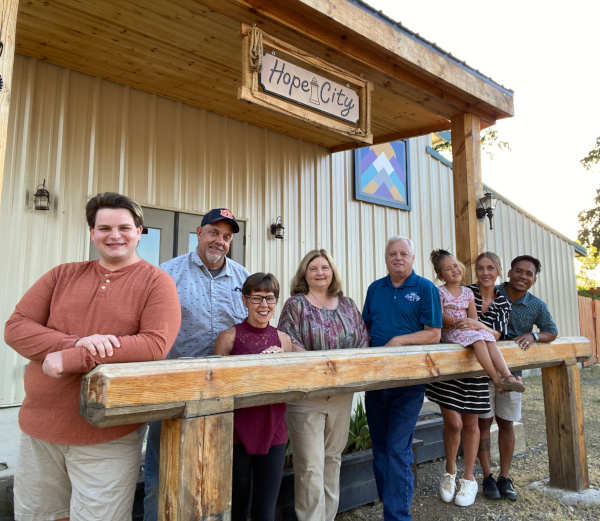
MIDDLETOWN, Calif. — The organizers of Middletown Days have selected an organization that has played an important role in rebuilding the south county in the wake of the Valley fire to be the Middletown Days grand marshal for the 60th annual Middletown Days Parade.
On Friday, May 28, Hope City — a ministry of the faith-based Hope Crisis Response Network — officially finished its work rebuilding homes for Valley fire survivors and hosted an open house to celebrate the occasion.
It’s for all of the work they’ve done for Lake County residents that the group has received the Middletown Days grand marshal honor.
Community members can show their appreciation as Hope City heads up the parade, which begins at 10 a.m. Saturday, June 19.
At the celebration that immediately follows at the Middletown Central Park stage, Hope City members will be presented with a commemorative plaque.
Kevin Cox, chief executive officer and founder of Hope City, got started in disaster recovery with crisis counseling. He quickly realized there were other needs that were not being met.
Cox decided to jump in where they were most needed, rebuilding, and Hope City immediately became a model program with the Federal Emergency Management Agency. Cox also ended up writing many of the disaster materials that FEMA uses today.
To date, Hope City has assisted 26,000 families in getting back into their homes. The organization seeks out grants wherever possible to fund their work.
One of the largest single donations to Hope City for the Valley fire rebuild, $1 million, came from Guenoc developer Yiming Xu in 2017. That donation and the donations from Lake County Rising helped to ensure there were no costs to the homeowners for the work done by Hope City.
Hope City has been working in Paradise, Butte, Mendocino, Sonoma and Shasta, and also helping out in Napa. Currently it is opening a Hope City in Siskiyou County. With 52 wildfires in the last five years it’s becoming harder and harder to find new donors.
Hope City makes it a point to circulate the donations in the same communities in which they are building. It does this by purchasing lumber and building materials locally. The organization also feeds volunteers by shopping locally for groceries.
Hope City has just 12 employees. Cox’s wife, Valarie, is the administrative assistant, handling community outreach, media and grant writing, and is also a disaster case manager.
The organization relies heavily on volunteers from faith based organizations all over North America. The volunteers donate their time, one week at a time, to come and help people “rebuild their homes and their lives.”
Cox makes sure the volunteers have beds, not cots. They make sure to provide good meals and entertainment when the volunteers aren’t working. They have all the materials they need and all the tools are in great working condition.
“The focus is on the families and restoration,” Kevin Cox said.
And, when they take care of the volunteers, productivity goes up in the field.
Before the Valley fire, Cox had been trying to get his wife to move to California, but she didn’t really want to go. She told him, “If God calls, we’ll go.”
Meanwhile, Cox was going through a lot of health problems and thought perhaps he was done in the disaster field. Six weeks later they got the Valley fire call.
Hope City was contacted by churches in Santa Rosa and Cox arrived in Middletown a few days after the Valley fire started.
He eventually worked out a deal with the Middletown Central Park Association. In exchange for allowing the volunteers to utilize the property during the yearslong rebuild, their building (also the site of the old Middletown Senior Center) was torn down and a home base dormitory was built by Hope City.
On Friday, May 28, Hope City turned over the keys just in time for the 60th annual Middletown Days celebration.
While Cox, who grew up in Sonoma, is finding it hard to say goodbye, he is looking forward to getting back to Indiana to see his granddaughter, with whom he and his wife FaceTime daily.
Middletown Central Park Association offered its thanks to Hope City for the difference they’ve made in the lives of Lake County residents over the past five and a half years.
Thompson said this is an important step before a vote on the House floor.
“Lake County roads are a critical part of keeping this rural area connected, yet far too many of them have received a poor rating,” Thompson said Monday. “That’s why I supported a more than $2.28 million request for federal funding for the county’s chip seal project to improve 55 miles of county roads in the Fifth Congressional District. I am glad to see this funding included in the bill today and will work to ensure it’s included in the final legislation.”
Thompson was able to secure $19.03 million in federal funding as part of the Member Designated Project program that was started this Congress.
This includes $742,000 for the San Pablo Avenue Rehabilitation in Pinole in Contra Costa County, $2.28 million for the chip seal program in Lake County, $3 million for the Napa Valley Vine Trail in Napa County, $4 million for the State Route 37/Fairgrounds Drive Interchange project in Solano County, $2 million for the Highway 116/West Cotati Intersection Safety Improvement project in Sonoma County and $7 million for the State Route 37 Corridor Enhancement Program in Sonoma County.
This legislation is being considered in the House Transportation and Infrastructure Committee this week and still needs to be approved by the full House and Senate and signed into law by President Joe Biden.
Thompson’s office said congressional leadership made important changes that allow members of Congress to provide greater input on how funding will be directed to specific state or local governments or eligible nonprofit recipients for Fiscal Year 2022.
Members of Congress are now allowed to submit 10 community funded project requests to the Appropriations Committee.
There are no guarantees that these community funded projects will all be funded, and the projects will be competitively evaluated by the Committee on Appropriations, Thompson’s office reported.
Thompson represents California’s Fifth Congressional District, which includes all or part of Contra Costa, Lake, Napa, Solano and Sonoma counties.