How to resolve AdBlock issue?
News
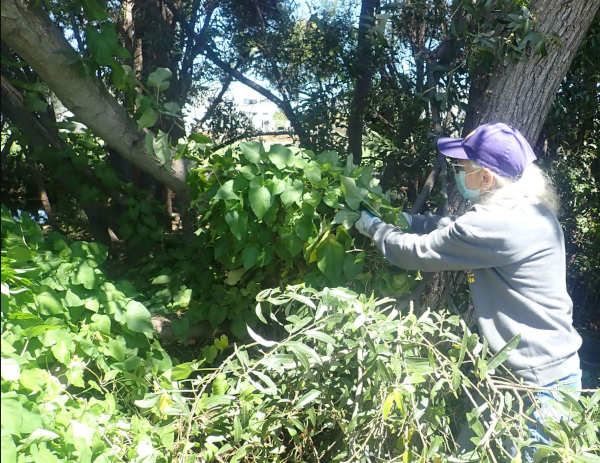
The California Department of Fish and Wildlife is inviting all Californians to learn about — and join the fight against — harmful nonnative plants and animals that threaten our state’s natural resources.
The eighth annual California Invasive Species Action Week, or #CISAW, runs from Saturday, June 5, through Sunday, June 13.
Historically, agencies, nonprofits and volunteer organizations across the state have teamed up to host events for CISAW.
This year features both in-person and virtual events including webinars, videos and Facebook live events.
Visit www.wildlife.ca.gov/Conservation/Invasives/Action-Week to view the schedule.
All Californians can help stop the spread of invasive species by taking small, everyday actions, such as landscaping with native plants, not releasing unwanted pets into the wild, reporting invasive species findings, and cleaning, draining and drying gear when recreating in bodies of water.
The Action Week website lists simple actions Californians can take all year long while visiting natural areas, boating or fishing, or at home.
Additionally, the winners of CDFW’s annual California Invasive Species Youth Art Contest will be announced on social media during CISAW. The theme of this year’s contest was “Be an Invasive Species Detective!”
The mission of CDFW’s Invasive Species Program is to reduce the impacts of invasive species on the wildlands and waterways of California.
The program is involved in efforts to prevent the introduction of these species into the state, detect and respond to introductions when they occur and prevent the spread of those species that have established.
For questions or more information about CISAW, please contact
The approach of summer in the U.S. means that it’s time to be ready for hurricanes and wildfires. The incidence of weather and climate disasters is increasing in the U.S., a trend due partly to climate change but also to human decisions.
Since the 1950s, population growth has increased significantly in Sun Belt states. Millions of people have moved to coastlines, from Texas to the Carolinas, putting more lives and property in harm’s way during hurricanes. Florida, the hurricane capital of the United States, now is the third-most-populous state in the nation.
Recognizing that Americans are increasingly vulnerable to extreme weather, the National Oceanic and Atmospheric Administration’s Weather-Ready Nation initiative is helping communities plan for events like violent tornadoes, destructive hurricanes and widespread flooding. As a meteorologist and supporter of this effort, I believe that everyone should understand what kinds of severe weather hazards could affect their family and home and be ready for them. Here are some ways to do it.
What to do instead of taping windows
The U.S. experienced a record 22 billion-dollar weather and climate disasters in 2020 that wreaked about US$95 billion in total damage. This included a historic hurricane season, with 30 named storms and seven billion-dollar tropical cyclones – the most in one year since NOAA started keeping track of billion-dollar disasters in 1980.
For Atlantic and Gulf coast residents, hurricane preparedness has to be a way of life. It means knowing whether you live in a designated evacuation zone. That’s key in the event of storm surge – when a hurricane pushes seawater up onto local beaches and inland areas. Readiness also means having a family and business disaster plan that details preparations, and maintaining a hurricane survival kit.
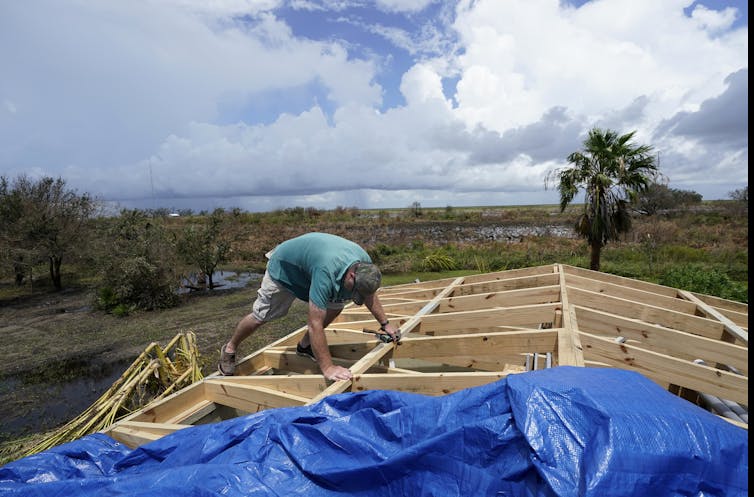
Another priority is knowing how to protect your home and business from damaging winds. Conducting a home insurance review with your agent and scheduling a wind mitigation inspection will identify what you can do to strengthen and protect vulnerable parts of the building such as windows, entry doors, garage doors and roofs.
Adding metal hurricane shutters or hurricane-resistant windows can help. So can retrofitting the attic or eaves with metal hurricane straps, which connect the rafters to the walls to prevent the roof from blowing off.
Here’s one step to skip: Putting tape onto windows for wind protection from a hurricane. Tape does nothing to reduce wind damage, so this is a waste of time.
Consumers also need to rethink how they shop for a new home in storm-prone areas. It’s OK to want granite countertops, walk-in closets and a safe neighborhood near schools and parks. But buyers should also consider how well a house is built, its age, the materials it contains, the shape and condition of the roof, and building code requirements at the time it was constructed.
And they should ask whether the house is located in a flood-prone area, has wind-resistant features or has been retrofitted against hurricanes. Even residents who don’t live in a zone where it is required should consider taking out flood insurance.
Storm-testing buildings
Florida International University’s International Hurricane Research Center, which is part of our Extreme Events Institute, was designated NOAA’s first Weather-Ready Nation ambassador in South Florida. Our Wall of Wind facility is capable of creating Category 5 hurricane conditions – winds with speeds over 157 mph.
Like crash testing for vehicles, wind testing can help ensure that structures, traffic signals and building components can hold up under stress. The Wall of Wind is part of the National Science Foundation’s Natural Hazards Engineering Research Infrastructure program.
For educational outreach, we host the yearly Wall of Wind Mitigation Challenge, in which teams of local high school students develop innovative wind mitigation concepts and solutions. And the Extreme Events Institute uses a risk equation to help the public understand and support measures to confront the “risk drivers” that lead to major losses.
For more about hurricane mitigation and preparedness, watch our 12-episode “Eye of the Storm” video series, or visit our Spanish-language hurricane website.
Wildfires, tornadoes and floods
NOAA’s National Weather Service is also investing in new forecasting tools and linking its forecasts to lifesaving decisions made in every state and county. The goal is to provide timely forecasts that emergency managers, first responders, government officials, businesses and the public can act on.
Across the United States, Weather-Ready Nation ambassadors are preparing for many types of extreme weather events.
Another extreme wildfire season is expected in many Western states. The Oregon Office of Emergency Management is asking residents to have a bag packed and to prepare an evacuation plan.
Flooding can occur almost anywhere across the country, and hazards can develop quickly. In mid-May 2021, over 12 inches of rain fell on the Lake Charles, Louisiana, area in a single day, triggering flash flooding that completely submerged parked cars. Flooded roadways can be deadly, so take heed of NOAA’s “Turn Around Don’t Drown” message and avoid walking or driving in flooded areas – it could save your life.
Tornado safety is critical: So far in 2021, twisters have killed a dozen people, in Alabama, Louisiana, Texas and North Carolina. Tornado readiness includes knowing the safest room in your home – usually a windowless interior room on the lowest floor – and tuning in to NOAA Weather Radio, which will provide severe-weather information directly from your local National Weather Service office.
During any severe weather event, such as the February 2021 deep freeze in Texas, the power may go out, so everyone should have flashlights and batteries on hand. Portable generators can be useful during extended outages, but always operate them outdoors to avoid the risk of carbon monoxide poisoning.
Apathy and complacency can also be dangerous when it comes to weather-driven disasters. In my view, weather readiness has to become a way of life – something that all Americans see as their responsibility. The best forecasts in the world may be useless if the public doesn’t respond or hasn’t taken the needed actions to protect themselves when extreme weather threatens.
Most importantly, remember to help your neighbors when needed, especially if they are elderly and can’t help themselves. In addition, consider supporting local nonprofits or churches that help residents in your community who have financial or transportation needs to be ready and safe. We are all in this together.
[Get the best of The Conversation, every weekend. Sign up for our weekly newsletter.]
Erik Salna, Associate Director of Education and Outreach, Extreme Events Institute, Florida International University
This article is republished from The Conversation under a Creative Commons license. Read the original article.
The following cats at the shelter have been cleared for adoption.
Call Lake County Animal Care and Control at 707-263-0278 or visit the shelter online at http://www.co.lake.ca.us/Government/Directory/Animal_Care_And_Control.htm for information on visiting or adopting.

Male domestic shorthair
This male domestic shorthair has a gray and white coat.
He is 1 year old and weighs nearly 6 pounds.
He is in cat room kennel No. 120, ID No. LCAC-A-874.
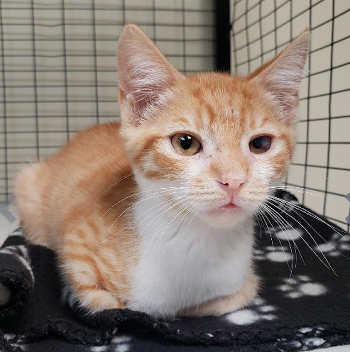
This female yellow tabby kitten has a short coat.
She is in cat room kennel No. 135, ID No. LCAC-A-822.
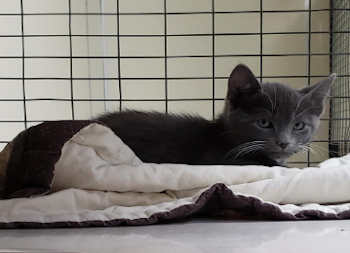
Male domestic shorthair
This young male domestic shorthair has a gray coat.
He is under 1 year old and weighs more than 2 pounds.
He is in kennel No. 150a, ID No. LCAC-A-836.

Female Abyssinian kitten
This female Abyssinian kitten has a short brown and black coat.
She weighs just over 2 pounds.
She is in cat room kennel No. 150, ID No. LCAC-A-837.
Email Elizabeth Larson at
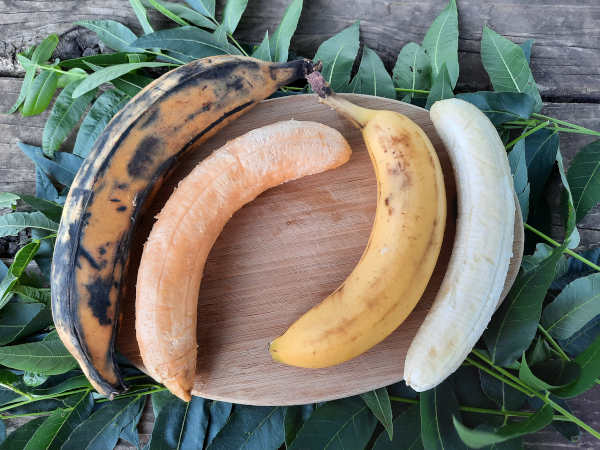
They’re the most consumed fruit in the United States and, if you exclude tomatoes (which aren’t really fruit from a culinary standpoint), they’re also the favorite fruit of the world.
Despite their ubiquity, there are some surprising things that you may not know about them. They’re far more than a creamy white fruit in a bright yellow jacket. Read on to discover a few banana facts that may be new to you.
There are pink hairy bananas and lots of other types, too.
Bananas are grown in more than 150 countries and it’s estimated that there are over 1,000 types worldwide. These include a wide variety of shapes, sizes, textures and colors, some quite exotic.
Blue Java bananas (also known as ice cream bananas) have blue skin and flesh that tastes like vanilla ice cream.
The tangy Apple banana, popular in Hawaii, has a tart apple-like flavor, and the square-sided Burro banana tastes like lemon when it’s ripe.
Diminutive Lady Finger bananas are just 3 inches long with a creamy texture and honey-like flavor.
The Macabu banana is black when fully ripe and the scarlet banana, native to China and pollinated by bats, has bright red skin.
As to the aforementioned hairy pink bananas, they’re grown mostly for ornamental purposes; however, the flesh is edible and sweet. Watch out for the seeds, though! Like wild bananas, the pea-sized seeds are hard and plentiful.
Don’t throw those skins away — you can cook with them!
While banana peels are common in some world cuisines (Southeast Asia and India, for example), in the last few years they’ve been trending as a culinary alternative in the Western world.
I recently read that British culinary superstar Nigella Lawson demonstrated a fragrant curry using banana skins and cauliflower on her television show, causing a bit of consternation in the British media. This led me to a flurry of research and to my surprise I found that using banana peels as a component of cuisine is becoming a popular topic.
I’ve learned that if banana skins are cooked with onions, garlic and barbecue sauce, they can become a no-meat alternative to pulled pork or chicken (“pulled not-pork,” as some like to call it), and that banana peels can also be made into an alternative for bacon.
Banana skins can be pureed to use in baked goods to punch up flavor (think banana bread or cake) and chopped bits of peel add texture.
If you’d like to try your hand at cooking with banana skins, be sure to buy organic bananas to avoid pesticides and scrub them well.
Banana skins are also good for some pretty surprising things!
I haven’t tested any of these claims, but banana peels are said to be useful for a plethora of ailments, bodily and otherwise!
They can be rubbed on the skin to remove ink, to soothe insect bites or to help loosen splinter fragments. Dusting plant leaves, polishing shoes, and even whitening teeth are in the banana peel’s repertoire.
Some have rubbed them on a scratched CD or DVD to prevent skipping. (They say this fills the scratches without damaging the plastic finish.)
Perhaps most surprising of all (at least to me) is that powder made from banana skins is used to clean heavy metal contamination from rivers and other water sources. Up to 65% is removed after just 40 minutes, and the process can be repeated.
Despite appearances, bananas don’t grow on trees.
Banana plants are not trees at all (though they’re called that colloquially); rather, they’re an herb distantly related to ginger. They’re classified as such because the stem is a succulent stalk rather than a woody trunk. In scientific circles the stalk is referred to as a “pseudostem.”
As a bonus, I’ll note that bananas grow in what are known as “hands” because of their fingerlike appearance.
Some scientists believe that bananas may have been the first fruit.
Bananas are believed to have originated in Southeast Asia, in the jungles of Malaysia, Indonesia or the Philippines, where many wild varieties still grow today. Some horticulturists believe they may be the world’s oldest fruit.
The first bananas were likely first cultivated some 7,000 years ago in what is now Papua New Guinea. They’re mentioned in ancient Hindu, Chinese, Roman and Greek texts, with the earliest, written in Sanskrit, dating back 5,000 years.
Apart from this and as an aside, Carl Linnaeus, an 18th century Swedish botanist, theorized that the fruit eaten by Eve in the Biblical story was a banana.
You can make paper and textiles with banana trees and it’s good for the environment!
Banana fabric is soft with a natural shine and is often compared to silk. It’s made from fiber from the stalks of the banana plant — the pseudo stem — which are often discarded once the bananas have been harvested. (This happens since fruit can only be harvested from the plant once in its lifetime.)
Fabric made from banana fiber is experiencing a rise in popularity, however, the process isn’t new. Textiles have been made in Asia from this resource since at least the 13th century, but the fabric fell out of favor with the rise of silk and cotton.
A leather-like, biodegradable paper is also made from banana fiber. Used mostly for artistic purposes or products like paper pens, notebooks, wallets, and business cards, it’s produced in a rainbow of colors.
Utilizing banana stalks in these ways drastically reduces the waste from banana agriculture which would otherwise negatively affect surrounding ecosystems.
Every part of the banana plant is useful.
The banana plant is quite generous. In addition to delicious fruit and the various beneficial uses of its skins and stalks, it offers its flowers and leaves for some interesting culinary opportunities.
Banana leaves are used in a variety of cuisines (Asian, Caribbean, Hispanic and Hawaiian, for example). They add a mild, sweet, earthy flavor to foods that are wrapped in them when cooked, and because they’re sturdy and large with a deep green color, they make decorative and practical serving vessels.
Banana flowers are subtly sweet, with a similar aromatic profile to a banana, though more delicate and less pronounced. They can be eaten raw, such as in a salad, or cooked, often in a stir-fry or soup.
Tea is made from the blossoms, as well, and is obtainable online if you’d like to try it.
Commercially grown bananas are clones and monoculture may be a death knell.
Bananas grown commercially are propagated through cuttings and not sprouted from seeds, making each banana a clone of the original. (Unlike wild bananas, the seeds of cultivated bananas are mere specks and not viable.)
There is no banana cloned more than the Cavendish variety. It’s the banana we commonly see in supermarket produce aisles.
Of the more than 1,000 varieties of bananas that are grown throughout the world, the Cavendish makes up a full 47% of global banana production.
This all means that bananas are grown in a monoculture system (i.e., planting just one type of crop rather than a variety), and while this can increase production, it makes the crop notoriously vulnerable to disease.
Before the Cavendish banana was the most popular variety, there was the Gros Michel (also known as the Big Mike), the first to be cultivated on a large scale. Unfortunately, a virulent fungus known as the Panama Disease descended on Gros Michel plantations, devastating the crop and rendering the Gros Michel banana virtually extinct.
A variety of the Panama Disease is successfully attacking Cavendish bananas because of its lack of genetic diversity and the fear of extinction once again looms.
On a brighter note, today’s recipe utilizes plantains, a member of the banana family popular in cuisine around the world, particularly in the Caribbean, Central and South America, Africa, and Southeast Asia.
Plantains are starchier and less sweet than other bananas, making them perfect for savory dishes like these griddle cakes.
Plantain Griddle Cakes
6 plantains, soft and very ripe (skin will be blackened)
1 cup milk, either dairy or plant-based
½ cup whole wheat flour
1 ½ cups cornmeal
4 tablespoons coconut oil, liquefied, plus more for the griddle*
1 small onion or medium shallot, chopped
4 scallions, chopped
1 ½ teaspoons kosher salt
Chop and mash the plantains in a large bowl.
Add the remaining ingredients (other than the oil reserved for the griddle) and combine, stirring and mashing until thoroughly mixed but slightly chunky.
Cover bowl and refrigerate mixture for about 30 minutes.
Heat a large nonstick pan or griddle and brush with coconut oil.
Ladle ½ cup plantain mixture onto pan or griddle and spread it into a circle that’s roughly four inches in diameter.
Cook over medium heat until golden brown, about 3 minutes per side.
Transfer to a paper towel-lined baking pan to allow excess fat to drain.
Repeat until all batter is used. This should make about 8 griddle cakes.
Serve hot and enjoy! (They’re yummy accompanied by black beans and avocado.)
*Note: If preferred, a neutral oil such as canola or sunflower can be used for the griddle in place of coconut oil.
Esther Oertel is a writer and passionate home cook from a family of chefs. She grew up in a restaurant, where she began creating recipes from a young age. She’s taught culinary classes in a variety of venues in Lake County and previously wrote “The Veggie Girl” column for Lake County News. Most recently she’s taught culinary classes at Sur La Table in Santa Rosa. She lives in Middletown, California.
The man, whose name so far hasn’t been released, was in a boat with four other people offshore of Clearlake Oaks when the boat capsized shortly before 12:30 a.m. Saturday, as Lake County News has reported.
Radio reports described the missing man as a Black male in his 50s.
The man was reported to have been trying to rescue someone shortly before he disappeared.
The boat was recovered near the Clearlake Oaks boat launch and removed from the scene early Saturday morning.
Lt. Corey Paulich of the Lake County Sheriff’s Office told Lake County News that the sheriff’s Marine Patrol had searched for the man throughout the day on Saturday but hadn’t located him.
Paulich said the search will continue on Sunday morning.
Email Elizabeth Larson at
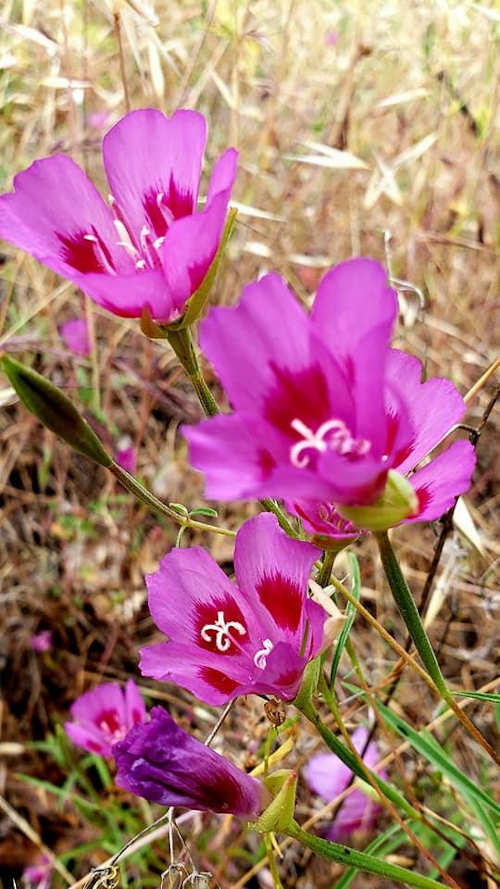
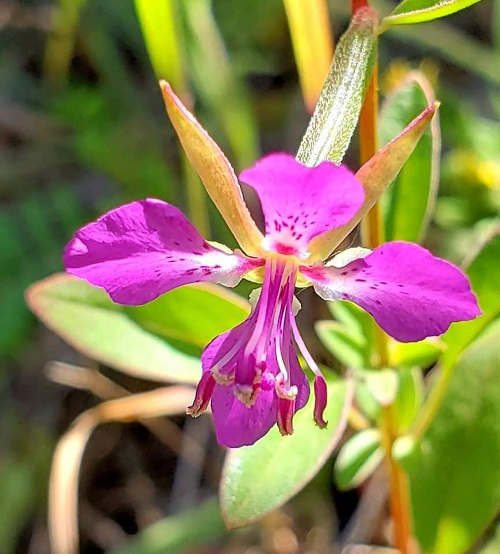
LAKE COUNTY, Calif. — As temperatures heat up in the mid to late spring and summer begins to draws near, vibrant pink to fuchsia to violet wildflowers, some with highlights of red to white, begin to show up in profusion and bid a “farewell to spring,” which is the name of one aptly-name species of clarkia that graces us in Lake County.
There are 18 different species of clarkia identified as growing in Lake County, according to CalFlora, with different blooming periods that can last from January through September and each with their slightly different bloom times, colors, petal shapes, and soil/sun preferences.
If you’re looking for a native wildflower to add to your gardens that doesn’t require a lot of water, clarkia is a great choice and with a little irrigation, bloom times can be extended to early summer, with elegant clarkia blooming into the fall.
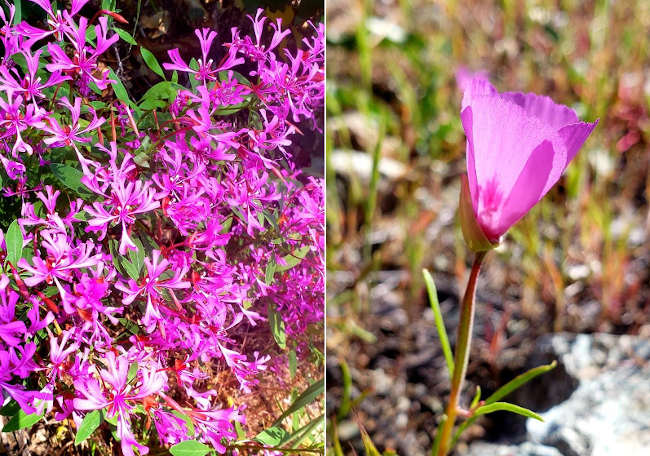
Most species of Clarkia thrive in well-drained clay soils or any dry soil that doesn't retain a lot of water and can grow well in sandy soils as long as they have full sun to partial shade.
All of the clarkia species play important roles in their local ecosystems as they provide habitat for native pollinators so are a good choice for your home gardens in Lake County.
Some pollinators even rely on clarkia exclusively, such as the “clarkia bee,” according to Wikipedia. They’re also used as host plants by some species as caterpillars, such as Sphingidae moths.
Seeds of the clarkia germinate easily when sown at the beginning of the rainy season and make a wonderful addition to your home gardens with gorgeous flowers and attractive reddish hued stems that require little to no water; ideal for our summer dry climate.
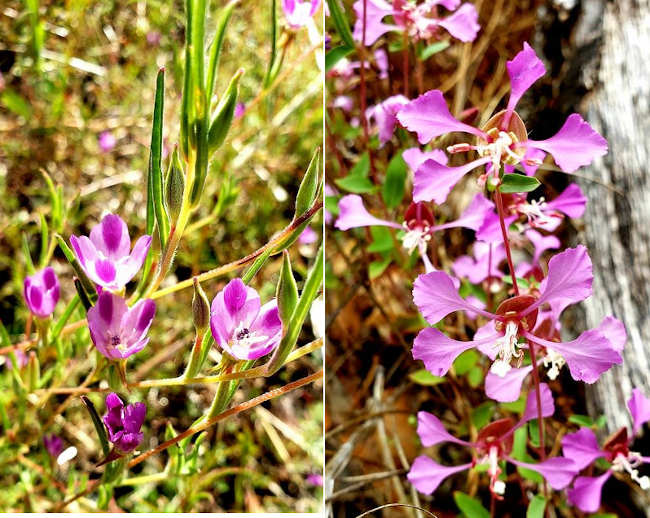
More information can be found here on the 18 species of clarkia in Lake County.
To see and learn more about the species of clarkia in Lake County, visit CalFlora.
Nurseries where you can purchase clarkias:
Diamond (or Tongue) Clarkia: https://calscape.org/nurseries.php?id=66760&showmap=1
Elegant Clarkia: https://calscape.org/nurseries.php?id=1046&showmap=1
Farewell to spring: https://calscape.org/nurseries.php?id=1023&showmap=1
Red ribbons: https://calscape.org/nurseries.php?id=1031&showmap=1
Waltham Creek Clarkia: https://calscape.org/nurseries.php?id=66756&showmap=1
Winecup Clarkia: https://calscape.org/nurseries.php?id=1041&showmap=1
Terre Logsdon is an environmentalist, certified master composter, and advocate for agroecology solutions to farming. An avid fan and protector of California wildflowers, plants, natural resources, and the environment, she seeks collaborative solutions to mitigate the effects of climate change. Kim Riley is retired, an avid hiker at Highland Springs, and has lived in Lake County since 1985. After 15 years of trail recovery and maintenance on the Highland Springs trails, she is now focused on native plants, including a native plant and pollinator garden on her property as well as promoting and preserving the beauty of the Highland Springs Recreation Area. Karen Sullivan has operated two nurseries to propagate and cultivate native plants and wildflowers, has lived in Kelseyville for the past 30 years, rides horses far and wide to see as many flowers as possible, and offers native plants and wildflowers for sale to the public. You can check her nursery stock here. They are collaborating on a book, Highland Springs Recreation Area: A Field Guide, which will be published in the future. In the meanwhile, please visit https://www.facebook.com/HighlandSpringsNaturalists and https://www.facebook.com/HighlandSpringsRecreationArea.