CLEARLAKE, Calif. — Clearlake Animal Control has five dogs waiting for their new homes this week.
The following dogs are ready for adoption or foster. The newest dog is listed at the beginning of the list.
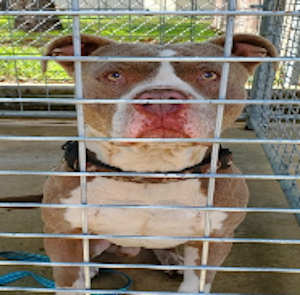
“Bear.” Photo courtesy of Clearlake Animal Control. ‘Bear’
“Bear” is a male American Staffordshire terrier mix with a short brown coat.
He has been neutered.
He is dog No. 3476.
“Cleo.” Photo courtesy of Clearlake Animal Control. ‘Cleo’
“Cleo” is a female Doberman pinscher mix with a short gray coat who is new to the shelter.
She has been spayed.
She is dog No. 4865.
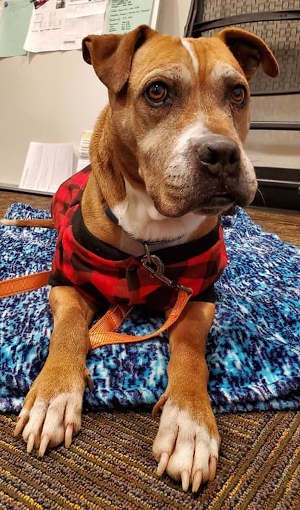
“Dusty.” Photo courtesy of Clearlake Animal Control. ‘Dusty’
“Dusty” is a male American Pit Bull Terrier with a tan and white coat.
He is dog No. 4750.
“Sassy.” Photo courtesy of Clearlake Animal Control. ‘Sassy’
“Sassy” is a female Labrador retriever and pit bull mix with a short black with white markings.
She is house-trained.
She is dog No. 4602.
“Toby.” Photo courtesy of Clearlake Animal Control. ‘Toby’
“Toby” is a friendly senior male boxer mix.
He has a short tan and white coat.
Toby is house trained and neutered.
He is dog No. 4389.
Call the Clearlake Animal Control shelter at 707-273-9440, or email This email address is being protected from spambots. You need JavaScript enabled to view it. to inquire about adoptions and schedule a visit to the shelter.
Visit Clearlake Animal Control on Facebook or on the city’s website.
Email Elizabeth Larson at This email address is being protected from spambots. You need JavaScript enabled to view it.. Follow her on Twitter, @ERLarson, or Lake County News, @LakeCoNews.
LAKE COUNTY, Calif. — The Lake County Sheriff’s Office said it is investigating another death related to Clear Lake that occurred over the weekend.
Lt. Corey Paulich said 60-year-old Efrain Antonio Menjivar of Martinez went missing while swimming on Saturday near Clearlake Oaks.
At 3:30 p.m. Saturday, Menjivar was swimming approximately 30 to 40 yards offshore near Harvey Boulevard when he went under and could not be located, Paulich said.
Menjivar’s body was located at 6 a.m. Wednesday near the shoreline in the area of Island Drive in Clearlake Oaks, Paulich said.
Paulich said an autopsy is scheduled for Friday.
Menjivar’s death is the third water-related death from the weekend, all of them from incidents that occurred offshore of Clearlake Oaks.
Early Saturday, a boating accident offshore of Island Drive led to the deaths of Webster Medley III, 51, and Novia Walton, 50, of Fresno, as Lake County News has reported.
The newly engaged couple had been out with Medley’s family on the lake when the boat began to take on water and capsized.
Medley attempted to save Walton and disappeared, while Walton was taken to an out-of-county hospital and died on Saturday night. Medley’s body was found on Sunday morning.
The sheriff’s Marine Patrol is conducting additional follow-up, including an examination of Medley’s boat.
As of Thursday, the agency had not released any updates on the investigation into the fatal boating accident.
Email Elizabeth Larson at This email address is being protected from spambots. You need JavaScript enabled to view it.. Follow her on Twitter, @ERLarson, or Lake County News, @LakeCoNews.
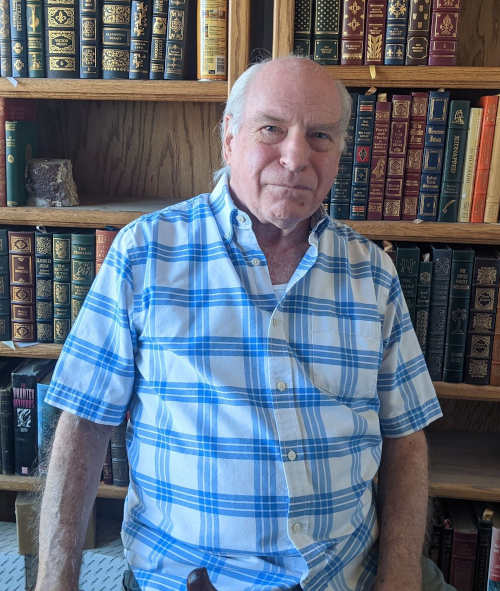
Gehlen Palmer. Courtesy photo. MIDDLETOWN, Calif. — Gehlen Palmer, longtime resident and former Middletown librarian, is this year’s Middletown Days Pioneer award recipient.
Palmer will be featured at the Middletown Days Parade this year which starts at 10 a.m. Saturday, June 19. He will also be honored for his contributions to the community with a plaque, immediately following the parade, at the celebration near the arena at Central Park.
Palmer didn’t set out to be a librarian, he originally wanted to go into science, but, “Math,” he says, “was the issue.”
Born in 1947 in San Francisco, his formative years were spent around his father’s family who were readers and former teachers. He recalls driving his grandmother nuts by asking her to read “Ferdinand,” and Dr. Seuss’s “Bartholomew and the Oobleck” over and over again.
The family moved to Middletown in June of 1953, right after he finished kindergarten. His mom, Dorothy Rees, was a housewife and charter member of the Lioness Club. His father, Reis “Finney” Palmer, was a charter member of the Lion’s Club. He was also the milk man and owned the Golden State Foremost Dairy which is now known as Clover Dairy.
Palmer attended Middletown Elementary which at the time was located on Highway 175 and Middletown High back when the middle school and high school were still one.
His favorite teacher was Dave Robertson, the English teacher. They talked about books. The high school had just gotten a new library on campus. Palmer recalls typing up the check out cards during study hall.
After graduating high school in 1965, he headed to Humboldt State to study liberal arts. Then in 1967, in order to avoid being drafted and having to go to Vietnam, he joined the Coast Guard.
He was eventually sent to Indianapolis where he attended the Defense Department Journalism School. His last duty station was Governors Island in the middle of New York Harbor where the USO would give servicemen free tickets to Broadway shows. He ended his time with the Coast Guard five years later as an E5 Second Class Journalist.
Next, he headed off to Tampa and General Telephone and Electronics Services where he was a technical writer for two years before heading back to California, specifically, Monterey.
In 1975 he began what he calls “working in the book business.” He was a book clerk at the Navy Exchange bookstore at the Naval Postgraduate school by day and worked for the Pacifica Grove Public Library in the evening.
One day, he saw an ad for a bookstore manager in Astoria, Oregon and he packed up and moved. He held that job for the next three years before deciding to run his own bookstore. He had the store for 11 years, but when his mother died in 1993 — his dad having passed in 1978 — he moved back to Middletown.
He gave himself six months to find a job. One day he went into the Middletown Library and overheard the librarian lamenting that she only had two days left, hadn’t received very many applications and, of those received, not many were qualified.
Palmer put in his application and three weeks later he was the new librarian. At that time, the position was considered extra help and only 15 hours a week.
The old Middletown Library used to be housed across the street from the current library in what is now the Gibson Museum. If you had ever visited before construction of the new library, you know just how crowded it eventually became. There were stacks and stacks of books behind the counter because there was nowhere else to put them.
In addition to his librarian duties, Palmer, the sole employee, also served as janitor and groundskeeper for many years. He says he enjoyed the position and there was lots of work to be done, so he stayed to do it.
In 2000, as part of a classification and compensation study by the county, he was rewarded for his efforts. He received the largest raise of anyone in the county based on all the jobs he was covering. His hours were also increased. He said that he gave himself a “small raise” and put the rest away for retirement.
That same year a grant from the Bill & Melinda Gates Foundation allowed the library to offer public access computers. That resulted in a conversion of an empty room into a Children's Room. The responsibility was left to Palmer who partnered with the Lioness Club to fundraise and to paint it. They also helped with the forming of the Friends of the Library.
Even with all the upgrades, the Gibson building eventually became too small to meet the needs. Planning for the new library actually began back in 1997 under then-Supervisor Ed Robey. The request for proposal didn’t actually go out until around 2010. Palmer thinks it was under Supervisor Jim Comstock.
County Librarian Susan Clayton gave Palmer leeway to help plan the new building. Palmer also helped to relay requests from library patrons as to what they would like in the new building.
“That got us the donation of the Circulation Desk from Calpine (the reception desk in the Visitor's Center) and the transfer of custom shelving from the Gibson Children's Room to the new library,” he said.
Palmer credits many individuals with helping with planning.
In April of 2013, the efforts of so many came to fruition and the new library was opened. Palmer got to enjoy the new building until he retired in November of 2018.
It should be noted that when he retired the position was still not full-time at just 30 hours a week, which, he says, gave him more time at home and to do the things he wanted to do.
These days, he still has lots to do around his house as he is one of the folks who lost his home in the Valley fire. He is enjoying his retirement and his new home, especially the back porch which has a great view of Cobb Mountain. He calls the porch a “terrible distraction.”
LAKE COUNTY, Calif. — Public Health staff updated the Board of Supervisors on Tuesday about the latest developments with COVID-19, including case and testing rates, and efforts to include vaccine coverage.
Acting Public Health Officer Dr. Evan Bloom and epidemiologist Sarah Marikos joined the board via Zoom.
“The short of it is that things remain the same,” said Bloom, noting case rates are low at 3.3 per 100,000 people, with testing positivity of 2.5 percent
“There have been some upticks in cases around Northern California,” Bloom noted.
“We are seeing some indications of possible mild upticks within Lake County, however, that remains to be seen with our numbers,” he added.
Bloom said vaccination coverage rates also remain the same.
Marikos said testing is declining statewide, with an overall test positivity rate of 0.8% and the daily case rate at 2 cases per 100,000 people.
She said the state was set to release its updated tier metrics on the Blueprint for a Safer Economy later that day, with Lake County to remain in the orange tier, indicating moderate transmission. She said that ranking is based on data from May 23 to 29.
Lake is among 35 counties in the orange tier this week, with 19 in the yellow, or minimal transmission, tier and three in the red, or substantial transmission, tier. There are none in the widespread, or purple tier, according to the state’s blueprint website.
Marikos said the state will be running the blueprint for the last time next week as it’s planning to sunset the framework on June 15.
She said Lake County’s overall case rate has been really stable since mid-April, with the number of cases ranging from 12 to 24 per week.
Testing is declining slightly in Lake County and also is declining statewide, said Marikos. Compared to a lot of other rural counties, Lake County is doing a good job of testing people and keeping the testing rate up, she added.
Over the last two week, about 950 county residents were newly vaccinated. Marikos said 53% of Lake County residents age 12 and older are now fully or partially vaccinated, compared to 66% of Californians.
Marikos offered the following vaccination breakdowns by age group: 8% of those in the 12 to 17 age group are vaccinated; 37% of those ages 18 to 49; 67%, ages 60 to 64; and 61%, age 65 and older.
With vaccinations slowing, the disparity between Lake County’s numbers and state is growing, because the state is vaccinating at a higher pace, Marikos said.
Speaking to the sunsetting of the blueprint framework, Bloom said, “Although the restrictions for businesses are going away, and that we are all happy that they are going away, the virus is not going away. The virus is still here, which is why vaccination is important.”
He said the virus comes in waves, and its impact differs in times of the year and seasons, which is why he encouraged people to get the vaccine.
Public Health is concerned that the vaccination rate and coverage is slowing, particularly in the 65-plus and 18 to 49 age ranges, he said.
“Vaccination is still important because we have not reached a level where we would feel that we could avoid a significant surge based on vaccine coverage of the county,” he said.
He encouraged people to continue to take precautions after the tiers go away on June 15, including wearing a mask if necessary and continuing to use social distancing, including in large groups.
There were some big community events recently where masking and social distancing didn’t take place, and he said Public Health is starting to see some cases from people who attended those events. That leads them to be concerned about more upcoming events, like July 4.
“The virus is still with us, unfortunately, so use your common sense,” Bloom said.
All of the vaccines are available throughout Lake County, with Bloom noting that Public Health is working on a number of different fronts to try to increase vaccination coverage incrementally.
Bloom said Public Health is working with school boards and will soon be starting clinics for children and families that will rotate throughout Lake County’s school districts.
They also are working with Behavioral Health, Medicare and Medicaid providers, and Public Health has applied for support from the state for mobile vaccination teams, he said.
Email Elizabeth Larson at This email address is being protected from spambots. You need JavaScript enabled to view it.. Follow her on Twitter, @ERLarson, or Lake County News, @LakeCoNews.
LAKE COUNTY, Calif. — The Lake County jobless rate was down slightly in April, while the state rate remained unchanged.
Lake County’s unemployment rate for April was 7.6 percent, down from 7.9 percent in March, according to the California Employment Development Department.
Statewide, unemployment held steady at 8.3 percent for the second month.
In April 2020, Lake County’s unemployment rate — as well as the statewide rate, were both 16 percent.
The Bureau of Labor Statistics said the nationwide unemployment rate in April was 6.1 percent, compared to 6 percent in March and 14.8 percent in April 2020.
In Lake County in April, total nonfarm jobs increased by 1.2 percent while the total farm jobs industry was down, -11.8 percent, over the previous month.
Total nonfarm job subcategories that showed the largest growth compared to March included transportation, warehousing and utilities, 30.5 percent; state government, 11.8 percent; mining, logging and construction, 10.1 percent; trade, transportation and utilities, 5.4 percent; and goods producing, 5.2 percent.
The five subcategories with the largest declines were information, -11.1 percent; wholesale trade, -10 percent; nondurable goods, -6.9 percent; government, -6.2 percent; and manufacturing, -5.6 percent.
Lake County was ranked No. 33 out of California’s 58 counties in this latest jobless report.
Neighboring county jobless rates and ranks for April are: Colusa, 13 percent, No. 57; Glenn, 6.9 percent, No. 25; Mendocino, 6.5 percent, No. 20; Napa, 6.3 percent, No. 17; Sonoma, 5.7 percent, No. 7; and Yolo, 6 percent, No. 11.
Marin had the lowest unemployment, 4.6 percent, while Imperial County’s 16.1 percent ranked it No. 58.
The state employment picture
California payroll jobs totaled 16,248,200 in April 2021, up by 101,800 from March 2021 and up by 1,302,100 from April 2020, the report said.
California’s April job gain accounts for 38 percent of the national gain of 266,000 jobs.
From February through April, the Employment Development Department said California added 390,300 total nonfarm payroll jobs, marking the state’s third consecutive month of gains over 100,000 jobs.
Seven of California’s 11 industry sectors gained jobs in April. Leisure and hospitality (+62,800) continued to have the state’s largest month-over increase thanks in large part to full-service restaurants. Professional and business services (+19,000) also posted a large gain thanks to strength in professional, scientific, and technical services, as did other services (+10,500) with an increase in personal care services.
Leisure and hospitality and other services, the hardest hit sectors during the pandemic, combined for nearly two-thirds of California’s job gains over the past three months.
Information (-3,500) saw the largest month-over industry sector loss, largely due to a decrease in software publishers.
The number of jobs in the agriculture industry decreased by 8,000 from March 2021 to 413,900 jobs in April. The agricultural industry had 44,700 more farm jobs in April 2021 than it did the April prior.
The Employment Development Department said there were 579,498 people certifying for Unemployment Insurance benefits during the April sample week. That compares to 680,279 people in March and 1,889,250 people in April 2020.
Concurrently, 78,640 initial claims were processed in the April 2021 sample week, which was a month-over decrease of 17,572 claims from March and a year-over decrease of 246,876 claims from April 2020, the state reported.
Email Elizabeth Larson at This email address is being protected from spambots. You need JavaScript enabled to view it.. Follow her on Twitter, @ERLarson, or Lake County News, @LakeCoNews.
As President Joe Biden and Senate Republicans grapple with determining the cost and layout of a new infrastructure plan, experts that AccuWeather spoke with explained how both a lack of upkeep as well as upward trends in damaging weather have accumulated into an "infrastructure crisis."
Dr. Marccus Hendricks told AccuWeather in an interview that the current infrastructure crisis the U.S. is facing stems mostly from prioritizing new infrastructure and focusing on initial construction and installation without attention to maintenance and management over the lifecycle of these assets.
Hendricks is an assistant professor of urban studies and planning and the director of the stormwater infrastructure resilience and justice lab at the University of Maryland.
"We've allowed these systems to drop below a condition where we can fiscally save money by doing more incremental investments to maintain these assets," he said, explaining that it now requires a large investment to repair these systems in a way that meets the needs of the community.
Like a compromised support beam, the neglect of the systems over the decades has set the stage for pending catastrophes as damaging weather hits the communities.
"The crisis has been in the making in terms of every single day with every car passing on a road, with every storm event requiring systems to manage stormwater runoff," Hendricks said.
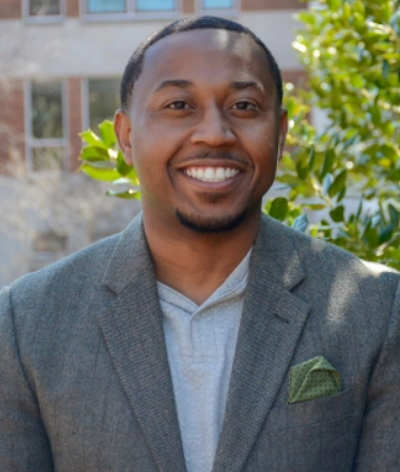
Dr. Marccus Hendricks is an assistant professor of urban studies and planning and the director of the stormwater infrastructure resilience and justice lab at the University of Maryland. Photo courtesy of AccuWeather.
What's crumbling beneath our feet
It's long been acknowledged that a warming atmosphere and ocean have contributed to stronger, more intense natural disasters such as hurricanes, but the changing climate has also had its impact on the more mundane weather events. And as the more common weather events, such as a simple rainfall, grows, the more it outgrows and strains the infrastructure designed for a past age and climate.
"Our stormwater systems as they're currently installed and designed will require complete overhaul in terms of being able to address the needs of these wet weather events in light of climate change," Hendricks said.
As the climate changes and warms, more water evaporates. For every 1 degree Fahrenheit increase in temperature, the atmosphere can hold around 4% more water vapor, leading to heavier rain and increased risk of flooding of rivers and streams, according to Climate Central.
Since the 1950s, the wettest day of the year has grown wetter in 79% of the 244 cities analyzed by Climate Central in a research brief from 2019. In addition to this, even though 78% of the cities analyzed have data dating back at least a century, 35% of them have set rainfall records since 1990.
"One of the things that we've noticed, as it relates to flooding anyways, is especially in the last, let's say, 20 to 30 years or so, is that we've seen flood risk increasingly get worse in the country," Chad Berginnis, the executive director of the Association of State Floodplain Managers, told AccuWeather.
Some communities, however, are facing a disproportionate threat of flood risk. In March 2021, an analysis of 38 major cities by the real estate brokerage Redfin found that once-redlined neighborhoods with a large population of people of color were at a greater danger of flooding caused by climate change, Reuters reported.
"Redlining" refers to a practice, common from the 1930s into the late 1960s, in which mortgage lenders refused loans in parts of the cities with mainly large minority populations. The mortgage lenders would carve up the map in red, hence the name. As a result, the practice reduced the opportunities to own homes and investments in those areas.
The analysis found that of the cities analyzed, there are $107 billion worth of homes in formerly redlined areas at high flood risk compared to $85 billion worth of homes in areas marked green as best for loans, providing a glimpse at how redlining, while now illegal, had lasting consequences on today's generations.
"Communities of color have always faced issues of elevated risk, Hendricks said, "whether it's the sighting of land areas that were set aside for them to develop their communities and those areas usually being lower-lying areas or flood plains where no one else wanted to live or even thinking about the ways in which redlining was formally incorporated within municipalities to sequester and segregate certain communities and to be able to dictate which communities receive services and had the opportunity to own or buy housing."
"When you look at those [redlining] maps, they look strikingly similar to high flood risk [maps]," Redfin Senior Economist Sheharyar Bokhari, a co-author of the study, told Reuters.
Ironically, several fair housing organizations accused Redfin of systematic racial discrimination in a lawsuit during 2020, saying the online company offered fewer services to homebuyers and sellers in minority communities in a type of digital redlining, The Associated Press reported.
Hendricks added that civil rights, social justice and environmental injustice across the country are connected to "what we're contemporarily seeing as well as what we've historically seen in terms of disenfranchisement and marginalized communities being underserved or unserved all together."
Carolyn Kousky, the executive director of the Wharton Risk Management and Decision Process Center at the University of Pennsylvania. Photo courtesy of AccuWeather. How much are these events costing us?
With an increase in damaging weather events, it's only natural to see an increase in costs alongside them.
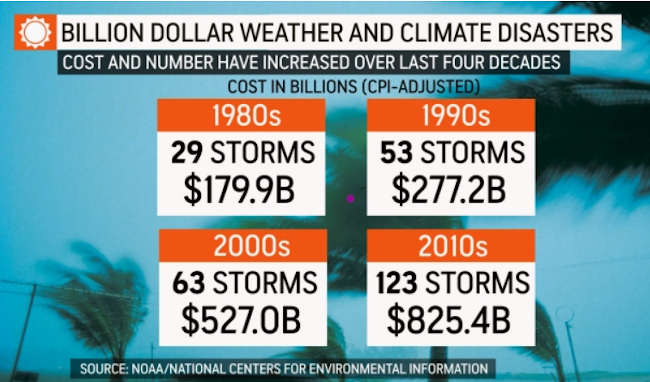
From 1980 into 2021, the U.S. has sustained 291 weather and climate disasters where the overall cost of damages reached or exceeded $1 billion, according to the National Oceanic and Atmospheric Administration (NOAA). Over the 41 years, these disasters have claimed the lives of more than 14,000 people and have racked up a price tag in excess of $1.9 trillion.
According to the NOAA data, the number of those events has increased each decade from 1980 through 2019.
The year 2020 was no less destructive. Hurricane Laura damaged the coastal area of southern Louisiana, broke water systems and severely damaged the area's electric grid; a record-breaking wildfire season scorched more than 10.2 million acres across the American West and destroyed several towns in California, Oregon and Washington; and storms and severe flooding along the shoreline of Lake Michigan in January caused significant damage to roads, homes and Port Milwaukee.
As Americans dealt with not only a global pandemic, but possibly even job loss and financial strain, 2020 generated a record-breaking 22 billion-dollar events, claiming 262 lives and costing $96.4 billion in damage. It shattered the previous annual record of 16 disaster events that occurred both in 2011 and 2017.
Carolyn Kousky, the executive director of the Wharton Risk Management and Decision Process Center at the University of Pennsylvania, told AccuWeather in an interview that low- and moderate-income households and communities typically struggle with access to resources for rebuilding efforts following disasters, despite the allocation of disaster aid.
"There's a common misperception that for big disaster events you can rely on federal disaster," Kousky said. But disaster aid is instead extremely limited and is often delayed in reaching households, she added, creating a recovery gap for lower-income households and communities after the disaster.
On the other hand, she added, there are localized events, such as intense rainfall, that are worsening with climate change that can cause flooding, but the disaster may be limited to just be one small community and neighborhood. Due to the small scale, it doesn't rise to the level that would enable the community to qualify for federal resources. But even the federal funding, such as grants from FEMA in the wake of the larger disasters, only goes so far.
The federal grants aren't designed to bring homes back to pre-disaster conditions. Instead, they are intended to make homes safe and habitable again after a disaster, Kousky said.
Another form of federal aid comes from the big events when Congress decides to allocate money through the Department of Housing and Urban Development, but it generally takes years before the money makes it into the pockets of the people impacted by the disaster.
"The challenge here, too, is that financial recovery really underpins all other aspects of recovery. So if you don't have the resources to make your home safe again and to get back into your home, then that causes all these negative sort of consequences," Kousky said.
For example, someone might have to divert funds from other important needs like health care to pay for keeping a home safe. The stress, she added, could also impact mental health.
As far as insurance goes, Kousky told AccuWeather that as climate disasters grow more severe, public policy over insuring losses from them may also change.
"As climate change is increasing the frequency and severity of many types of natural disasters, we're starting to see areas around the country where insurance becomes very difficult to get or extremely expensive," Kousky said, adding that they started to see signs of that kind of stress in California after the wildfires in 2017 and 2018.
Another example Kousky gave was that in general, the impact of sea levels on coastal area could rise through coastal flooding becoming more common.
"That's not a risk anymore," Kouksy said. "That's a certainty and we don't insure certainties, so this is going to start to be a problem in many parts of the country."
Building for tomorrow's weather
When planning for infrastructure to go up against floods, Berginnis suggests not designing it for today's weather, but for the flood conditions that might be realistic in the future, and Hendricks echoed his concerns.
"We can only expect for the intensity and frequency of wet weather and rainfall events to increase," Hendricks said. "With these increasing rainfall events, it adds a significant amount of pressure to existing systems."
However, Hendricks added that an additional challenge when planning ahead lies in the possibility that by the time the lengthy bureaucratic process is through, the designs that were developed for the systems and the costs associated with them may not be enough with the environment changing and atmospheric conditions evolving.
As far as managing insurance prices goes, Kousky suggests a tighter partnership between insurance, local-level building code and land-use decisions.
"What makes insurance cheaper and more available is lowering the risk, and so it really comes back to changing how we're living in high-risk areas, and that is a much harder conversation to have with people," Kousky said.
In addition, Hendricks added that part of the answer of how to build for the future lies not only in climate adaptation, but also climate resilience -- and making sure no communities fall behind in the process.
"If we don't provide an opportunity for just transitions, allowing for communities of color [and] low-income communities to be able to take advantage of some of these emerging technologies and green infrastructures and low-impact development, then essentially we perpetuate the same inequalities that we've seen historically and we leave communities behind," Hendricks said. "As some communities get greener, healthier or resilient, communities that have been historically overburdened and again underserved will be left behind and still burdened with antiquated systems of the past."
He went on to say that a vulnerable segment of a system anywhere makes the entire system more vulnerable.
"As cliché as it may sound, when it comes to infrastructure systems, we are quite literally only as strong as our weakest link," Hendricks said. "In order for us all to be resilient, we have to serve those vulnerable and underserved aspects of the system first."
 How to resolve AdBlock issue?